Results by title
2728 books match the query 'Education' and 161 start with s
Science for Sale
The Perils, Rewards, and Delusions of Campus CapitalismDaniel S. Greenberg
University of Chicago Press, 2007
With Science for Sale, acclaimed journalist Daniel S. Greenberg reveals that campus capitalism is more complicated—and less profitable—than media reports would suggest. While universities seek out corporate funding, news stories rarely note that those industry dollars are dwarfed by government support and other funds. Also, while many universities have set up technology transfer offices to pursue profits through patents, many of those offices have been financial busts. Meanwhile, science is showing signs of providing its own solutions, as highly publicized misdeeds in pursuit of profits have provoked promising countermeasures within the field.
But just because the threat is overhyped, Greenberg argues, doesn’t mean that there’s no danger. From research that has shifted overseas so corporations can avoid regulations to conflicts of interest in scientific publishing, the temptations of money will always be a threat, and they can only be countered through the vigilance of scientists, the press, and the public.
Based on extensive, candid interviews with scientists and administrators, Science for Sale will be indispensable to anyone who cares about the future of scientific research.
Science is Golden
A Problem-Solving Approach to Doing Science with ChildrenAnn Finkelstein
Michigan State University Press, 2002
The first book of its kind, Science is Golden discusses how to implement an inquiry-based, problem-solving approach to science education (grades K-5). Finkelstein shows parents and teachers how to help students investigate their own scientific questions. Rather than a set of guidelines for science fair projects, this book presents a method for helping students expand their creativity and develop logical thinking while learning science.
Starting with an introduction to the "brains-on method," Science is Golden explains brainstorming, experimental controls, collecting data, and how to streamline children's questions about science so that the questions define an experiment. Students will learn how to: ask good questions; clarify terminology; research, plan, and design experiments and controls; test assumptions; collect and analyze data; present results to others; and collaborate with adults.
Science is Golden is consistent with the National Science Education Standards proposed by the National Academy of Sciences, and the Michigan Essential Goals and Objectives for Science Education (K-12) from the Michigan State Board of Education.
Science, Curriculum, and Liberal Education
Selected EssaysJoseph J. Schwab
University of Chicago Press, 1982
Schwab participated in what Daniel Bell has described as the "most thoroughgoing experiment in general education in any college in the United States," the College of the University of Chicago during the thirties, forties, and fifties. He played a central role in the curriculum reform movement of the sixties, and his extraordinary command of science, the philosophy of science, and traditional and modern views of liberal education found expression in these exceptionally thoughtful essays.
Search for a Common Language
Environmental Writing and Educationedited by Melody Graulich & Paul Crumbley
Utah State University Press, 2005
Second Language Acquisition Myths
Applying Second Language Research to Classroom TeachingSteven Brown and Jenifer Larson-Hall
University of Michigan Press, 2012
This volume was conceived as a first book in SLA for advanced undergraduate or introductory master’s courses that include education majors, foreign language education majors, and English majors. It’s also an excellent resource for practicing teachers.
Both the research and pedagogy in this book are based on the newest research in the field of second language acquisition. It is not the goal of this book to address every SLA theory or teach research methodology. It does however address the myths and questions that non-specialist teacher candidates have about language learning.
Steven Brown is the co-author of the introductory applied linguistics textbook Understanding Language Structure, Interaction, and Variation textbook (and workbook).
The myths challenged in this book are:
§ Children learn languages quickly and easily while adults are ineffective in comparison.
§ A true bilingual is someone who speaks two languages perfectly.
§ You can acquire a language simply through listening or reading.
§ Practice makes perfect.
§ Language students learn (and retain) what they are taught.
§ Language learners always benefit from correction.
§ Individual differences are a major, perhaps the major, factor in SLA.
§ Language acquisition is the individual acquisition of grammar.
Second Language Writing in Transitional Spaces
Teaching and Learning across Educational ContextsLubie Grujicic-Alatriste and Cathryn Crosby Grundleger
University of Michigan Press, 2020
The chapters examine the writing that English learners are producing because of the Common Core and the writing they are required to do once they reach the college or university, and then consider where the intersections exist—that is, what do educators think English learners ought to be writing across educational levels?
Each chapter describes the educational setting where the researchers were engaged, examines specific issues related to transitions, and offers—where relevant—recommendations for classroom practices, teaching strategies, and instructional materials that may be useful for practicing teachers and all others professionally engaged in educating writers across K–16.
Secret Habits
Catholic Literacy Education for Women in the Early Nineteenth CenturyCarol Mattingly
Southern Illinois University Press, 2016
Mattingly shows that despite widespread fears and opposition, including attacks by vaunted northeastern Protestant pioneers of literacy, Catholic women nonetheless became important educators of women in many areas of America. They founded convents, convent academies, and schools; developed their own curricula and pedagogies; and persisted in their efforts in the face of significant prejudices. The convents faced sharp opposition from Protestant educators, who often played on anti-Catholic fears to gain support for their own schools. Using a performative rhetoric of good works that emphasized civic involvement, Catholic women were able to educate large numbers of women and expand opportunities for literacy instruction.
A needed corrective to studies that have focused solely on efforts by Protestant educators, Mattingly’s work offers new insights into early nineteenth-century women’s literacy, demonstrating that literacy education was more religiously and geographically diverse than previously recognized.
Securing a Place for Reading in Composition
The Importance of Teaching for TransferEllen C. Carillo
Utah State University Press, 2014
Securing a Place for Reading in Composition addresses the dissonance between the need to prepare students to read, not just write, complex texts and the lack of recent scholarship on reading-writing connections. Author Ellen C. Carillo argues that including attention-to-reading practices is crucial for developing more comprehensive literacy pedagogies. Students who can read actively and reflectively will be able to work successfully with the range of complex texts they will encounter throughout their post-secondary academic careers and beyond.
Considering the role of reading within composition from both historical and contemporary perspectives, Carillo makes recommendations for the productive integration of reading instruction into first-year writing courses. She details a “mindful reading” framework wherein instructors help students cultivate a repertoire of approaches upon which they consistently reflect as they apply them to various texts. This metacognitive frame allows students to become knowledgeable and deliberate about how they read and gives them the opportunity to develop the skills useful for moving among reading approaches in mindful ways, thus preparing them to actively and productively read in courses and contexts outside first-year composition.
Securing a Place for Reading in Composition also explores how the field of composition might begin to effectively address reading, including conducting research on reading, revising outcome statements, and revisiting the core courses in graduate programs. It will be of great interest to writing program administrators and other compositionists and their graduate students.
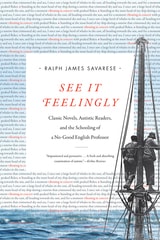
See It Feelingly
Classic Novels, Autistic Readers, and the Schooling of a No-Good English ProfessorRalph James Savarese
Duke University Press, 2018
Since the 1940s researchers have been repeating claims about autistic people's limited ability to understand language, to partake in imaginative play, and to generate the complex theory of mind necessary to appreciate literature. In See It Feelingly Ralph James Savarese, an English professor whose son is one of the first nonspeaking autistics to graduate from college, challenges this view.
Discussing fictional works over a period of years with readers from across the autism spectrum, Savarese was stunned by the readers' ability to expand his understanding of texts he knew intimately. Their startling insights emerged not only from the way their different bodies and brains lined up with a story but also from their experiences of stigma and exclusion.
For Mukhopadhyay Moby-Dick is an allegory of revenge against autism, the frantic quest for a cure. The white whale represents the autist's baffling, because wordless, immersion in the sensory. Computer programmer and cyberpunk author Dora Raymaker skewers the empathetic failings of the bounty hunters in Philip K. Dick's Do Androids Dream of Electric Sheep? Autistics, some studies suggest, offer instruction in embracing the nonhuman. Encountering a short story about a lonely marine biologist in Antarctica, Temple Grandin remembers her past with an uncharacteristic emotional intensity, and she reminds the reader of the myriad ways in which people can relate to fiction. Why must there be a norm?
Mixing memoir with current research in autism and cognitive literary studies, Savarese celebrates how literature springs to life through the contrasting responses of unique individuals, while helping people both on and off the spectrum to engage more richly with the world.
Seeing the Big Picture, Revised Edition
A Cinematic Approach to Understanding Cultures in AmericaEllen Summerfield and Sandra Lee
University of Michigan Press, 2006
In addition to increasing students' knowledge and understanding of cultural differences, Seeingthe Big Picture will help students develop strong critical-thinking and analytic abilities as they learn to recognize and question messages inherent in the films' portrayals of different populations. A unique feature of the text are the Points of View segments from directors, insiders, and students that appear throughout the text, provoking perspectives students might not otherwise encounter.
This text is the ideal coursebook for undergraduate diversity electives and other multicultural awareness courses.
Segregation by Experience
Agency, Racism, and Learning in the Early GradesJennifer Keys Adair and Kiyomi Sánchez-Suzuki Colegrove
University of Chicago Press, 2021
Early childhood can be a time of rich discovery, a period when educators have an opportunity to harness their students’ fascination to create unique learning opportunities. Some teachers engage with their students’ ideas in ways that make learning collaborative--but not all students have access to these kinds of learning environments.
In Segregation by Experience, the authors filmed and studied a a first-grade classroom led by a Black immigrant teacher who encouraged her diverse group of students to exercise their agency. When the researchers showed the film to other schools, everyone struggled. Educators admired the teacher but didn’t think her practices would work with their own Black and brown students. Parents of color—many of them immigrants—liked many of the practices, but worried that they would compromise their children. And the young children who viewed the film thought that the kids in the film were terrible, loud, and badly behaved; they told the authors that learning was supposed to be quiet, still, and obedient. In Segregation by Experience Jennifer Keys Adair and Kiyomi Sánchez-Suzuki Colegrove show us just how much our expectations of children of color affect what and how they learn at school, and they ask us to consider which children get to have sophisticated, dynamic learning experiences at school and which children are denied such experiences because of our continued racist assumptions about them.
Sensemaking for Writing Programs and Writing Centers
Rita Malenczyk
Utah State University Press, 2023
The book is divided into two sections: Sensemaking with Tutors and Teachers, and Sensemaking and Institutional Structures. Chapter authors employ several theoretical approaches to sensemaking, ranging from individual experience to institutional history to document design, providing readers with ideas for how to administer and teach within their programs more effectively; how to advocate for their programs within larger university contexts; and how to positively influence the lives and careers of those they work with.
Sensemaking for Writing Programs and Writing Centers theorizes daily experiences from working lives and suggests problem-solving strategies. Writing program administrators, writing department chairs, and writing center directors, tutors, and staff will find value in its pages.

Service Learning
Edited by Joan Schine
University of Chicago Press, 1997
Although a small number of schools and colleges have incorporated service learning in their curricula for many years, only in the last decade has it become the object of extensive study for researchers, scholars, and practitioners, as well as for policymakers and the general public. The Yearbook includes a historical overview, discussion of the roles of state and federal government in establishing and supporting service learning, and descriptions of existing programs at the school and college level. A theoretical framework for service learning is delineated, existing research is described, and additional areas for research and evaluation are suggested.
Service-Learning as a New Paradigm in Higher Education of China
Carol Ma Hok-ka
Michigan State University Press, 2018
Service-Learning
What Every ESL Teacher Needs to KnowTrisha Dowling and James M. Perren
University of Michigan Press, 2021
Serving the Academic, Social, and Emotional Needs of Multicultural Newcomers
Brenda Custodio and Judith B. O’Loughlin
University of Michigan Press, 2025
- Collaborate with school professionals to create a program specifically to meet the unique needs of new arrivals.
- Provide intensive literacy, numeracy, and content area support, especially for students with interrupted schooling.
- Develop the classroom supports necessary for students to achieve academic success.
- Provide supports that address the physical, social, and emotional challenges of newcomers.
- Work with families and communities to support students outside of a school environment.
Seton Hall University
A History, 1856–2006Dermot Quinn
Rutgers University Press, 2023
In this vivid and elegantly written history, Dermot Quinn examines how Seton Hall was able to develop as an institution while keeping faith with its founder’s vision. Looking at the men and women who made Seton Hall what it is today, he paints a compelling picture of a university that has enjoyed its share of triumphs but has also suffered tragedy and loss. He shows how it was established in an age of prejudice and transformed in the aftermath of war, while exploring how it negotiated between a distinctly Roman Catholic identity and a mission to include Americans of all faiths.
Seton Hall University not only recounts the history of a great educational institution, it also shares the personal stories of the people who shaped it and were shaped by it: the presidents, the priests, the faculty, the staff, and of course, the students.
Sex Goes to School
Girls and Sex Education before the 1960sSusan K. Freeman
University of Illinois Press, 2007

Sex in an Age of Technological Reproduction
<i>ICSI<i/> and <i>Taboos<i/>Carl Djerassi
University of Wisconsin Press, 2008

Sex, Race, and Merit
Debating Affirmative Action in Education and EmploymentFaye J. Crosby and Cheryl VanDeVeer, Editors
University of Michigan Press, 2000
Sexuality in School
The Limits of EducationJen Gilbert
University of Minnesota Press, 2014
From concerns over the bullying of LGBTQ youth and battles over sex education to the regulation of sexual activity and the affirmation of queer youth identity, sexuality saturates the school day. Rather than understand these conflicts as an interruption to the work of education, Jen Gilbert explores how sexuality comes to bear on and to enliven teaching and learning.
Gilbert investigates the breakdowns, clashes, and controversies that flare up when sexuality enters spaces of schooling. Education must contain the volatility of sexuality, Gilbert argues, and yet, when education seeks to limit the reach of sexuality, it risks shutting learning down. Gilbert penetrates this paradox by turning to fiction, film, legal case studies, and personal experiences. What, she asks, can we learn about school from a study of sexuality?
By examining the strange workings of sexuality in schools, Gilbert draws attention to the explosive but also compelling force of erotic life in teaching and learning. Ultimately, this book illustrates how the most intimate of our experiences can come to shape how we see and act in the world.

Shadow of My Shadow
Jennifer Doyle
Duke University Press, 2024
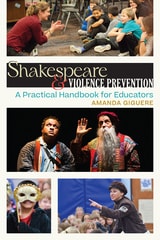
Shakespeare & Violence Prevention
A Practical Handbook for EducatorsAmanda Giguere
University of Wyoming Press, 2025
Framed by examples from Giguere’s work with the Shakespeare & Violence Prevention program, an interdisciplinary outreach project for K–12 schools developed at the University of Colorado Boulder, the text offers helpful entry points, digestible research, and practical exercises to align a violence-prevention curriculum with Shakespeare’s plays. It provides a condensed overview of key findings from violence prevention, clear synopses of the plays, and practicable strategies to implement the program. Guided by firsthand experience with a tried-and-true school program that reaches thousands of K–12 students annually, Giguere shares the Colorado Shakespeare Festival method, which focuses on “upstander” roleplays to practice violence-prevention strategies. Using a clear distillation of Shakespeare studies and violence-prevention research, she shows how the two fields naturally reinforce the concepts of teamwork, empathy, change, and hope.
Shakespeare and Violence Prevention is a new spin on these classic texts that empowers teachers and community leaders to use these tools to create research-guided university engagement programs, theatre company outreach programs, and K–12 student engagement with Shakespeare, even for those without expertise in violence prevention or Shakespeare.
Shakespeare Behind Bars
One Teacher's Story of the Power of Drama in a Women's PrisonJean Trounstine
University of Michigan Press, 2004
Originally published in cloth in 2001, the paperback includes a new foreword that will inspire all teachers who work with students others have deemed unteachable. A new afterword updates readers on the prison art's program -- and the author herself -- since 2001.
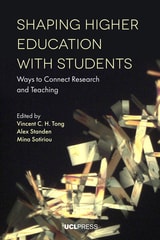
Shaping Higher Education with Students
Ways to Connect Research and TeachingEdited by Vincent C. H. Tong, Alex Standen, and Mina Sotiriou
University College London, 2018
In Shaping Higher Education with Students, leading researchers and educators from a range of disciplines lay out practical steps for shaping research-based education. Written in collaboration with university students, the book encourages active partnerships between students and educators and offers an accessible guide to accomplishing this, including connecting students with real-world projects and workplaces, working with students as partners in higher education, encouraging students to pursue research activities that transcend disciplinary boundaries, and rethinking current assessment and teaching practices. Together, the contributions poses fundamental questions about the future of education in universities.
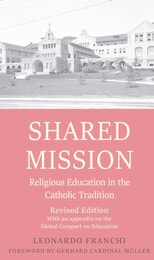
Shared Mission
Religious Education in the Catholic Tradition, Revised EditionLeonardo Franchi
Catholic University of America Press, 2023
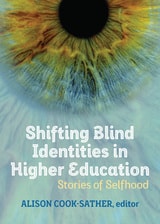
Shifting Blind Identities in Higher Education
Stories of SelfhoodEdited by Alison Cook-Sather
Lever Press, 2026
Shifting Blind Identities in Higher Education features accounts of how blindness and low vision intersect with other dimensions of identity for both students and faculty in higher education. Contributors from a range of institutional contexts illuminate “common but not comparable” experiences, as well as importantly different ones, and explore different intersections of identity while navigating higher education spaces. Each chapter addresses these questions: What is the relationship between seeing and selfhood? What choices do students and faculty make about how they experience and represent the intersections of their vision condition and other dimensions of their identity? What do authors wish others to understand, consider, let go of, and/or embrace regarding their experiences of navigating higher education with blindness or low vision?
Writing in their own unique voices, each author shares details of their lived experiences; analyses of how those are shaped by institutions, social norms, and individuals; and offers action steps for how everyone can make higher education more welcoming to and supportive of not only those with blindness or low vision but also those with a wide diversity of identities and experiences. Shifting Blind Identities in Higher Education inspires both insight and action into cultivating a more accessible and inclusive space in higher education.
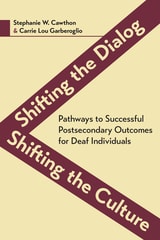
Shifting the Dialog, Shifting the Culture
Pathways to Successful Postsecondary Outcomes for Deaf IndividualsStephanie W. Cawthon
Gallaudet University Press, 2017
In addition to using a systems theory approach, the authors employ resiliency models that emphasize how deaf individuals persist through the transition process amidst the barriers that reside within larger educational and social systems. Employment, independent living, and community involvement are a few of the postsecondary outcomes that are covered. Shifting the Dialog, Shifting the Culture addresses critical issues that influence how deaf individuals reach their postsecondary goals and is designed for a diverse audience that includes professionals who work (or are training to work) with deaf individuals, policy makers, as well as federal and state personnel.
Shut Down the Business School
What's Wrong with Management EducationMartin Parker
Pluto Press, 2018
Sign Language, Sustainable Development, and Equal Opportunities
Envisioning the Future for Deaf StudentsGoedele A. M. De Clerck
Gallaudet University Press, 2016
The contributors to this volume offer creative and open-minded explorations of the construct of sustainability that are informed by their work with deaf individuals, deaf communities, families of deaf children, and other stakeholders. Sign Language, Sustainable Development, and Equal Opportunities describes sustainability in relation to:
· identity, resilience, and well-being
· participatory citizenship
· historical perspectives on sign language use in educational contexts
· sign language learning and teaching
· human rights and inclusive education
· literate thought and literacy
· the sign language factor and the development of sign language communities in sub-Saharan Africa
· sign language legislation
These changing communities’ understanding of what is required to become sustainable—in areas such as full participation and citizenship in society, economic well-being, access to quality education, and cultural and linguistic identity—is also taking new forms. This work contributes to the paradigm shifts regarding deaf emancipation and deaf education taking place around the world.

Signs of Change
New Directions in Theatre EducationJoan Lazarus
Intellect Books, 2012
Silent Life and Silent Language
The Inner Life of a Mute in an Institution for the DeafKate M. Farlow
Gallaudet University Press, 2018
Kate M. Farlow wrote this book with the goal of giving hearing parents hope that their deaf children would be able to lead happy and productive lives. She sought to raise awareness of the benefits of deaf schools and was an early advocate for the use of American Sign Language and of bilingual education. The Christian influence on the school and on the author is strongly present in her writing and reflects an important component of deaf education at the time. Descriptions of specific signs, games, ASL story nights, and other aspects of the signing community during the 1870s will be of interest to modern students and researchers in linguistics, deaf education, Deaf studies, and Deaf history. Farlow’s work reveals a sophisticated, early understanding of the importance of access to language, education, and community for deaf individuals.
Sing to the Colors
A Writer Explores Two Centuries at the University of MichiganJames Tobin
University of Michigan Press, 2021
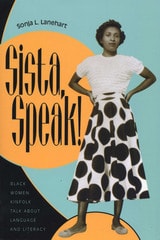
Sista, Speak!
Black Women Kinfolk Talk about Language and LiteracyBy Sonja L. Lanehart
University of Texas Press, 2002
2003 — Honorable Mention, Myers Outstanding Book Award – The Gustavus Myers Center for the Study of Bigotry and Human Rights in North America
The demand of white, affluent society that all Americans should speak, read, and write "proper" English causes many people who are not white and/or middle class to attempt to "talk in a way that feel peculiar to [their] mind," as a character in Alice Walker's The Color Purple puts it. In this book, Sonja Lanehart explores how this valorization of "proper" English has affected the language, literacy, educational achievements, and self-image of five African American women—her grandmother, mother, aunt, sister, and herself.
Through interviews and written statements by each woman, Lanehart draws out the life stories of these women and their attitudes toward and use of language. Making comparisons and contrasts among them, she shows how, even within a single family, differences in age, educational opportunities, and social circumstances can lead to widely different abilities and comfort in using language to navigate daily life. Her research also adds a new dimension to our understanding of African American English, which has been little studied in relation to women.

Skeptical Visionary
A Seymour Sarason Educational ReaderRobert Fried
Temple University Press, 2002
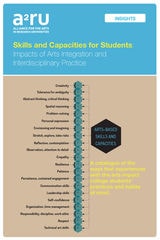
Skills and Capacities for Students
Impacts of Arts Integration and Interdisciplinary PracticeGabriel Harp
A2RU Intervals, 2020
Skim, Dive, Surface
Teaching Digital ReadingJenae Cohn
West Virginia University Press, 2021
Students are reading on screens more than ever—how can we teach them to be better digital readers?
Smartphones, laptops, tablets: college students are reading on-screen all the time, and digital devices shape students’ understanding of and experiences with reading. In higher education, however, teachers rarely consider how digital reading experiences may have an impact on learning abilities, unless they’re lamenting students’ attention spans or the distractions available to students when they’re learning online.
Skim, Dive, Surface offers a corrective to these conversations—an invitation to focus not on losses to student learning but on the spectrum of affordances available within digital learning environments. It is designed to help college instructors across the curriculum teach digital reading in their classes, whether they teach face-to-face, fully online, or somewhere in between. Placing research from cognitive psychology, neuroscience, learning science, and composition in dialogue with insight from the scholarship of teaching and learning, Jenae Cohn shows how teachers can better frame, scaffold, and implement effective digital reading assignments. She positions digital reading as part of a cluster of literacies that students should develop in order to communicate effectively in a digital environment.
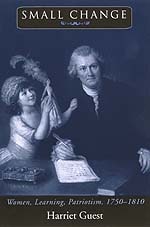
Small Change
Women, Learning, Patriotism, 1750-1810Harriet Guest
University of Chicago Press, 2000
During the second half of the eighteenth century, the social role of educated women and the nature of domesticity were the focus of widespread debate in Britain. The emergence of an identifiably feminist voice in that debate is the subject of Harriet Guest's new study, which explores how small changes in the meaning of patriotism and the relations between public and private categories permitted educated British women to imagine themselves as political subjects.
Small Change considers the celebration of learned women as tokens of national progress in the context of a commercial culture that complicates notions of gender difference. Guest offers a fascinating account of the women of the bluestocking circle, focusing in particular on Elizabeth Carter, hailed as the paradigmatic learned and domestic woman. She discusses the importance of the American war to the changing relation between patriotism and gender in the 1770s and 1780s, and she casts new light on Mary Wollstonecraft's writing of the 1790s, considering it in relation to the anti-feminine discourse of Hannah More, and the utopian feminism of Mary Hays.
Social Action Stories
Impact Tales for the School and CommunityKevin D. Cordi, Ph.D., Kirstin J. Milks, PhD., Rebecca Van Tassell
Parkhurst Brothers, Inc., 2022
Social Class Voices
Student Stories from the University of Michigan BicentennialEdited by Dwight Lang and Aubrey Schiavone
Michigan Publishing Services, 2017
These writers explore social class heritages at a time when more and more Americans are recognizing economic inequality as a core structural problem facing millions, independent of individual effort and talent. They shed light on what is too often denied both on and off college campuses: social class. By their very nature these types of explorations are political.
In America, where economic differences frequently go unnoticed when discussing inequality, openly writing about one’s personal class experiences can be controversial. These University of Michigan students and alumni have the courage to make public how social class structures American life.
Social Constructions of Deafness
Examining Deaf Languacultures in EducationThomas P. Horejes
Gallaudet University Press, 2012
Thomas P. Horejes’s new book focuses on revealing critical knowledge that addresses certain social justice issues, including deafness, language, culture, and deaf education. He conveys this information through discourses about his own experiences being deaf and through his research in which he “stresses the contingency of the social” in educational institutions.
In Social Constructions of Deafness: Examining Deaf Languacultures in Education, Horejes contends that schools as social institutions play powerful and exacting roles in the creation and maintenance of social constructions such as language and culture for deaf children. He subscribes to Michael Agar’s concept of “languaculture,” defined as the inextricable relationship between language and culture in which a specific language will shape and influence culture. His approach employs other anthropological terminology as he connects his personal experience as a deaf student (emic) to academic research on deafness (etic) to bring understanding to the multidimensional aspects of his own negotiated identities.
Horejes extends his inquiry through his analysis of two kindergarten classes for deaf students, one orally oriented and the other conducted using sing language. His findings are sobering evidence of the myriad challenges educators face in defining appropriate academic, linguistic, and cultural pedagogy for deaf children in schools and other social institutions.
Social Knowledge Creation in the Humanities
Volume 1Edited by Alyssa Arbuckle, Aaron Mauro, and Daniel Powell
Iter Press, 2017
The ubiquity of social media has transformed the scope and scale of scholarly communication in the arts and humanities. The consequences of this new participatory and collaborative environment for humanities research has allowed for fresh approaches to communicating research. Social Knowledge Creation takes up the norms and customs of online life to reorient, redistribute, and oftentimes flatten traditional academic hierarchies. This book discusses the implications of how humanists communicate with the world and looks to how social media shapes research methods. This volume addresses peer-review, open access publishing, tenure and promotion, mentorship, teaching, collaboration, and interdisciplinarity as a comprehensive introduction to these rapidly changing trends in scholarly communication, digital pedagogy, and educational technology. Collaborative structures are rapidly augmenting disciplinary focus of humanities curriculum and the public impact of humanities research teams with new organizational and disciplinary thinking. Social Knowledge Creation represents a particularly dynamic and growing field in which the humanities seeks to find new ways to communicate the legacy and traditions of humanities based inquiry in a 21st century context.
New Technologies in Medieval and Renaissance Studies Volume 7.
Edited by Alyssa Arbuckle, Aaron Mauro, and Daniel Powell
Social Knowledge Creation in the Humanities
Volume 2Edited by Aaron Mauro
Iter Press, 2022
While these countervailing influences are all around us, the essays collected in this volume represent a humanistic ethics of generosity, compassion, and care. Social knowledge creation refreshingly returns to humanist values, emphasizing that people matter more than networks, facts matter more than opinion, and ideas matter more than influence. As a result, the speed and scale of digital culture has challenged humanists from many disciplines to more clearly define the values of education, collaboration, and new knowledge in pursuit of human justice and equality. In short, online culture has presented a new opportunity to define how and why the humanities matter in the age of social media.

Social Research for our Times
Thomas Coram Research Unit past, Present and FutureEdited by Claire Cameron, Alison Koslowski, Alison Lamont, and Peter Moss
University College London, 2023
For fifty years, researchers at UCL’s Thomas Coram Research Unit have been undertaking ground-breaking policy-relevant social research. Their main focus has been social issues affecting children, young people, and families and the services provided for them. Social Research for our Times brings together different generations of researchers from the Unit to share some of the most important results of their studies.
Two sections focus on the main findings and conclusions from research into children and children services and on family life, minoritized groups, and gender. A third section is devoted to the innovative methods that have been developed and used to undertake research in these complex areas. Running through the book is a key strategic question: what should be the relationship between research and policy? Or put another way, what does “policy-relevant research” mean? This perennial question has gained new importance in the post-COVID, post-Brexit world that we have entered, making this text a timely intervention for sharing decades of experience. Taking a unique opportunity to reflect on the research context as well as research findings, this book will be of interest to researchers, teachers, students, and those involved in policy-making both in and beyond dedicated research units, and it can be read as a whole or sampled for individual standalone chapters.
Social Research in the Judicial Process
Cases, Readings, and TextWallace D. Loh
Russell Sage Foundation, 1984
Social-Emotional Learning in English Language Teaching
Luis Javier Pentón Herrera and Janine J. Darragh
University of Michigan Press, 2024
Society As Educator in an Age of Transition
Edited by Kenneth D. Benne and Steven Tozer
University of Chicago Press, 1987
Something Incredibly Wonderful Happens
Frank Oppenheimer and His Astonishing ExploratoriumK. C. Cole
University of Chicago Press, 2012
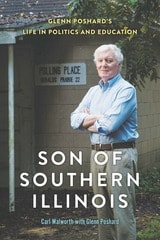
Son of Southern Illinois
Glenn Poshard’s Life in Politics and EducationCarl Walworth with Glenn Poshard
Southern Illinois University Press, 2023
A life of principles, service, and faith
This first biography of Glenn Poshard traces the life of a young man who rose from rural poverty in Southern Illinois to become a United States congressman and president of the Southern Illinois University system. This profound portrait unveils a life and career dedicated to making higher education affordable and improving the quality of life for the community of Southern Illinois.
Beginning with his childhood in a two-room home near Herald, Illinois and the early, tragic loss of his sister, this biography navigates Poshard’s service in the military, his time as a state senator and United States congressman, his run for governor, his years at Southern Illinois University, and the establishment of the Poshard Foundation for Abused Children. Intimacies of his personal life are disclosed, such as his struggles with and treatment for depression, his passion for education, and the lasting bonds he formed with his teachers. His unpopular decision to refuse PAC donations is also highlighted, along with the work that went into sponsoring the Illinois Wilderness Act, and his relationship with civil rights activist John Lewis. Glenn Poshard’s efforts for the Wilderness Act designated Southern Illinois’s famous Garden of the Gods as a National Wilderness Preservation System, which continues to attract visitors from around the world.
Poshard’s path from poverty was riddled with hardship, but his perseverance and family values ultimately allowed for longstanding personal and civic growth. From an admirable work ethic to a steadfast commitment to problem-solving, this biography illuminates the life and accomplishments of an impressive and generous leader.
Sound Pedagogy
Radical Care in MusicEdited by Colleen Renihan, John Spilker, and Trudi Wright. Foreword by William Cheng
University of Illinois Press, 2024
Contributors: Molly M. Breckling, William A. Everett, Kate Galloway, Sara Haefeli, Eric Hung, Stephanie Jensen-Moulton, Mark Katz, Nathan A. Langfitt, Matteo Magarotto, Mary Natvig, Frederick A. Peterbark, Laura Moore Pruett, Colleen Renihan, Amanda Christina Soto, John Spilker, Reba A. Wissner, and Trudi Wright