Results by title
932 books match the query 'Genres & Styles' and 80 start with s
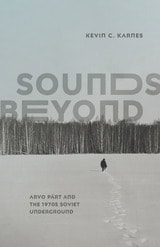
Sounds Beyond
Arvo Pärt and the 1970s Soviet UndergroundKevin C. Karnes
University of Chicago Press, 2021
In Sounds Beyond, Kevin C. Karnes studies the interconnected alternative music and art scenes in the USSR during the second half of the 1970s, revealing the audacious origins of some of Estonian composer Arvo Pärt’s most famous music. Karnes shows how Pärt’s work was created within a vital yet forgotten culture of collective experimentation, the Soviet underground.
Mining archives and oral history from across the former USSR, Sounds Beyond carefully situates modes of creative experimentation within their late socialist contexts. In documenting Pärt’s work, Karnes reveals the rich creative culture that thrived covertly in the USSR and the network of figures that made underground performances possible: students, audio engineers, sympathetic administrators, star performers, and aspiring DJs. Sounds Beyond advances a new understanding of Pärt’s music as an expression of the aesthetic and religious commitments shared, nurtured, and celebrated by many in Soviet underground circles. At the same time, this story attests to the lasting power of Pärt’s music. Dislodging the mythology of the solitary creative genius, Karnes shows that Pärt’s work would be impossible without community.

Sounds English
TRANSNATIONAL POPULAR MUSICNabeel Zuberi
University of Illinois Press, 2001
Zuberi looks at how the sounds, images, and lyrics of English popular music generate and critique ideas of national belonging, recasting the social and even the physical landscapes of cities like Manchester and London. The Smiths and Morrissey play on romanticized notions of the (white) English working class, while the Pet Shop Boys map a "queer urban Britain" in the AIDS era. The techno-culture of raves and dance clubs incorporates both an anti-institutional do-it-yourself politics and emergent leisure practices, while the potent mix of technology and creativity in British black music includes local conditions as well as a sense of global diaspora. British Asian musicians, drawing on Afrodiasporic and South Asian traditions, seek a sense of place in Britain as commercial interests try to pin down an image of them to market.
Sounds English shows how popular music complicates cherished notions of Englishness as it activates cultural outsiders and taps into a sense of not belonging. Alert and readable, Zuberi's wide-ranging discussion includes the performers Oasis, Blur, Tricky, Massive Attack, Goldie, A Guy Called Gerald, Roni Size, Bally Sagoo, Funˆdaˆmental, Echobelly, Cornershop, Talvin Singh, and others.
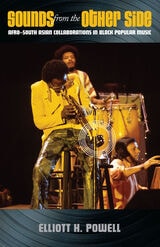
Sounds from the Other Side
Afro–South Asian Collaborations in Black Popular MusicElliott H. Powell
University of Minnesota Press, 2020
A sixty-year history of Afro–South Asian musical collaborations
From Beyoncé’s South Asian music–inspired Super Bowl Halftime performance, to jazz artists like John and Alice Coltrane’s use of Indian song structures and spirituality in their work, to Jay-Z and Missy Elliott’s high-profile collaborations with diasporic South Asian artists such as the Panjabi MC and MIA, African American musicians have frequently engaged South Asian cultural productions in the development of Black music culture. Sounds from the Other Side traces such engagements through an interdisciplinary analysis of the political implications of African American musicians’ South Asian influence since the 1960s.
Elliott H. Powell asks, what happens when we consider Black musicians’ South Asian sonic explorations as distinct from those of their white counterparts? He looks to Black musical genres of jazz, funk, and hip hop and examines the work of Miles Davis, John Coltrane, Rick James, OutKast, Timbaland, Beyoncé, and others, showing how Afro–South Asian music in the United States is a dynamic, complex, and contradictory cultural site where comparative racialization, transformative gender and queer politics, and coalition politics intertwine. Powell situates this cultural history within larger global and domestic sociohistorical junctures that link African American and South Asian diasporic communities in the United States.
The long historical arc of Afro–South Asian music in Sounds from the Other Side interprets such music-making activities as highly political endeavors, offering an essential conversation about cross-cultural musical exchanges between racially marginalized musicians.
Sounds of the Modern Nation
Music, Culture, and Ideas in Post-Revolutionary MexicoAlejandro L. Madrid
Temple University Press, 2008
Sounds of the Modern Nation explores the development of modernist and avant-garde art music styles and aesthetics in Mexico in relation to the social and cultural changes that affected the country after the 1910-1920 revolution. Alejandro Madrid argues that these modernist works provide insight into the construction of individual and collective identities based on new ideas about modernity and nationality. Instead of depicting a dichotomy between modernity and nationalism, Madrid reflects on the multiple intersections between these two ideas and the dialogic ways through which these notions acquired meaning.
Madrid challenges the view that Latin American modernist music and other art were mere imitations of European trends, advancing instead the argument that Latin American artists resignified European ideas according to their specific historical and cultural circumstances. His work shows how microtonal and futurist music, modernist and avant-garde aesthetics, as well as indigenist and indianist ideas, entered a process of negotiation that ultimately shaped the ideological framework of twentieth-century Mexico.
Sounds of the New Deal
The Federal Music Project in the WestPeter Gough
University of Illinois Press, 2015
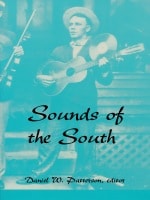
Sounds of the South
Daniel W. Patterson, ed.
Duke University Press, 1991
"Sounds of the South"—a 1989 conference that gathered record collectors, folklorists, musicians, record producers, librarians, archivists, and traditional music lovers—celebrated the official opening of the Southern Folklife Collection with the John Edwards Memorial Collection at the library of the University of North Carolina, Chapel Hill. Based on that conference, Sounds of the South includes Bill Malone's account of his own career as fan and scholar of country music, Paul Oliver on European blues scholarship, and Ray Funk on researching Black Gospel Quartets.
The contributors look at a number of topics related to the role of the archivist/folklorist in recording and documenting the music of the South—evaluating past fieldwork and current needs in documentation, archival issues, prospects for the publication of recordings, and changes in music and technology. Written in an accessible style, this volume will be of interest to all those concerned with preserving the music of the American South.
Soundscapes of Liberation
African American Music in Postwar FranceCeleste Day Moore
Duke University Press, 2021
Soundtrack Available
Essays on Film and Popular MusicPamela Robertson Wojcik and Arthur Knight, eds.
Duke University Press, 2001
With a cross-cultural emphasis, the contributors focus on movies that use popular songs from a variety of genres, including country, bubble-gum pop, disco, classical, jazz, swing, French cabaret, and showtunes. The films discussed range from silents to musicals, from dramatic and avant-garde films to documentaries in India, France, England, Australia, and the United States. The essays examine both “nondiegetic” music in film—the score playing outside the story space, unheard by the characters, but no less a part of the scene from the perspective of the audience—and “diegetic” music—music incorporated into the shared reality of the story and the audience. They include analyses of music written and performed for films, as well as the now common practice of scoring a film with pre-existing songs. By exploring in detail how musical patterns and structures relate to filmic patterns of narration, character, editing, framing, and mise-en-scene, this volume demonstrates that pop music is a crucial element in the film experience. It also analyzes the life of the soundtrack apart from the film, tracing how popular music circulates and acquires new meanings when it becomes an official soundtrack.
Contributors. Rick Altman, Priscilla Barlow, Barbara Ching, Kelley Conway, Corey Creekmur, Krin Gabbard, Jonathan Gill, Andrew Killick, Arthur Knight, Adam Knee, Jill Leeper, Neepa Majumdar, Allison McCracken, Murray Pomerance, Paul Ramaeker, Jeff Smith, Pamela Robertson Wojcik, Nabeel Zuberi
Soundtracks of Asian America
Navigating Race through Musical PerformanceGrace Wang
Duke University Press, 2015
Soundworks
Race, Sound, and Poetry in ProductionAnthony Reed
Duke University Press, 2021
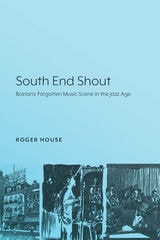
South End Shout
Boston’s Forgotten Music Scene in the Jazz AgeRoger House
Lever Press, 2023
South End Shout: Boston’s Forgotten Music Scene in the Jazz Age details the power of music in the city’s African American community, spotlighting the era of ragtime culture in the early 1900s to the rise of big band orchestras in the 1930s. This story is deeply embedded in the larger social condition of Black Bostonians and the account is brought to life by the addition of 20 illustrations of musicians, theaters, dance halls, phonographs, and radios used to enjoy the music.
South End Shout is part of an emerging field of studies that examines jazz culture outside of the major centers of music production. In extensive detail, author Roger R. House covers the activities of jazz musicians, jazz bands, the places they played, the relationships between Black and white musicians, the segregated local branches of the American Federation of Musicians (AFL-CIO), and the economics of Boston’s music industry. Readers will be captivated by the inclusion of vintage local newspaper reports, classified advertisements, and details of hard-to-access oral history accounts by musicians and residents. These precious documentary materials help to understand how jazz culture evolved as a Boston art form and contributed to the national art form between the world wars.
With this book, House makes an important contribution to American studies and jazz history. Scholars and general readers alike who are interested in jazz and jazz culture, the history of Boston and its Black culture, and 20th century American and urban studies will be enlightened and delighted by this book.
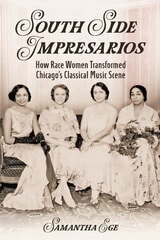
South Side Impresarios
How Race Women Transformed Chicago's Classical Music SceneSamantha Ege
University of Illinois Press, 2024
Ege focuses on composers like Florence Price, Nora Holt, and Margaret Bonds not as anomalies but as artists within an expansive cultural flowering. Overcoming racism and sexism, Black women practitioners instilled others with the skill and passion to make classical music while Race women like Maude Roberts George, Estella Bonds, Neota McCurdy Dyett, and Beulah Mitchell Hill built and fostered institutions central to the community. Ege takes readers inside the backgrounds, social lives, and female-led networks of the participants while shining a light on the scene’s audiences, supporters, and training grounds. What emerges is a history of Black women and classical music in Chicago and the still-vital influence of the world they created.
A riveting counter to a history of silence, South Side Impresarios gives voice to an overlooked facet of the Black Chicago Renaissance.
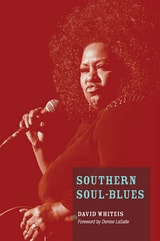
Southern Soul-Blues
David Whiteis
University of Illinois Press, 2013
Examining the history and development of southern soul from its modern roots in the 1960s and 1970s, David Whiteis highlights some of southern soul's most popular and important entertainers and provides first-hand accounts from the clubs, show lounges, festivals, and other local venues where these performers work. Profiles of veteran artists such as Denise LaSalle, the late J. Blackfoot, Latimore, and Bobby Rush--as well as contemporary artists T. K. Soul, Ms. Jody, Sweet Angel, Willie Clayton, and Sir Charles Jones--touch on issues of faith and sensuality, artistic identity and stereotyping, trickster antics, and future directions of the genre. These revealing discussions, drawing on extensive new interviews, also acknowledge the challenges of striving for mainstream popularity while still retaining the cultural and regional identity of the music and maintaining artistic ownership and control in the age of digital dissemination.
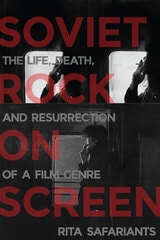
Soviet Rock on Screen
The Life, Death, and Resurrection of a Film GenreRita Safariants
University of Wisconsin Press, 2026
In Soviet Rock on Screen, Rita Safariants chronicles the birth, life, death, and resurrection of a genre that rapidly became one of the most readily recognized cultural signifiers of the perestroika era and which continues to reflect and codify Russian culture. During their initial heyday in the 1980s, rock films were influenced by and encouraged the cultural shifts of perestroika and the incipient political storm. Today, Safariants argues, the reemergence and reconfiguration of the genre indicates the extent to which Soviet-era cultural emblems inform Russian national identity and obliquely support the current political repression under Putin.

Space Is the Place
The Lives and Times of Sun RaJohn Szwed
Duke University Press, 2020
Staging Tradition
John Lair and Sarah Gertrude KnottMichael Ann Williams
University of Illinois Press, 2006
Lair and Knott's discovery of new developments in theater and entertainment during the 1920s led the pair to careers that kept each of them center stage. Inspired by programs such as WLS's Barn Dance and the success of early folk events, Lair promoted Kentucky musicians. Knott staged her own radically inclusive festival, which included Native and African American traditions and continues today as the National Folk Festival. Michael Ann Williams shows how Lair and Knott fed the public's fascination with the "art of the common man" and were in turn buffeted by cultural forces that developed around and beyond them.
Staging the Blues
From Tent Shows to TourismPaige A. McGinley
Duke University Press, 2014
Stare in the Darkness
The Limits of Hip-hop and Black PoliticsLester K. Spence
University of Minnesota Press, 2010
A growing number of black activists and artists claim that rap and hip-hop are the basis of an influential new urban social movement. Simultaneously, black citizens evince concern with the effect that rap and hip-hop culture exerts on African American communities. According to a recent Pew survey conducted on the opinions of Black Americans, 71 percent of blacks think that rap is a bad influence. To what extent are African American hopes and fears about hip-hop’s potential political power justified? In Stare in the Darkness, Lester K. Spence answers this question using a blend of neoliberal analysis, survey data, experiments, and case studies.
Spence finds that rap does in fact influence black political attitudes. However, rap also reproduces rather than critiques neoliberal ideology. Furthermore, black activists seeking to create an innovative model of hip-hop politics are hamstrung by their reliance on outmoded forms of organizing. By considering the possibilities inherent in the most prolific and prominent activities of hip-hop politics, Stare in the Darkness reveals, in a clear and practical manner, the political consequences of rap culture for black publics.
Starring Women
Celebrity, Patriarchy, and American Theater, 1790-1850Sara E. Lampert
University of Illinois Press, 2020
A revealing foray into a lost time, Starring Women returns a generation of performers to their central place in the early history of American theater.
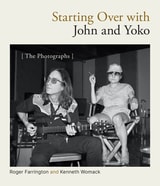
Starting Over with John and Yoko
The PhotographsRoger Farrington
Rutgers University Press, 2026
“This is one to linger over.” —Publishers Weekly
On August 7, 1980, John Lennon and Yoko Ono made their triumphant return to the recording studio after a self-imposed five-year absence. Roger Farrington, an up-and-coming photographer from Boston, was hired to get “the shot” that would announce their comeback. It would be Lennon’s most intense press scrutiny since the heady days of the Beatles’ maiden voyage to America in 1964, and for Farrington, it would be the assignment of a lifetime. Just four months later, Lennon’s assassination would plunge the world into mourning.
Reproducing, for the first time, the entire run of Farrington’s iconic photographs from that day, Starting Over transports readers back to 1980 and into Manhattan’s Hit Factory, where Lennon and Ono recorded their acclaimed LP Double Fantasy. With supporting photos and other ephemera, Farrington and renowned Beatles historian Kenneth Womack capture a poignant moment in music history and provide an insider’s look at celebrity photography in the pre-digital age.
Stiffelio
Libretto (in three acts) by Francesco Maria PiaveGiuseppe Verdi
University of Chicago Press, 2003
Not until 1992 was it revealed that Verdi's heirs possessed not only most of the canceled score, but also sixty pages of sketches for Stiffelio. These were used for the preliminary score of the critical edition, premiered in 1993 at New York's Metropolitan Opera. It was the first time Stiffelio was performed as Verdi wrote it. It has been enthusiastically received around the world.
With the publication of the critical edition, the first in full orchestral score, Stiffelio should take its rightful place in the Verdi canon.
Stolen Time
Black Fad Performance and the Calypso CrazeShane Vogel
University of Chicago Press, 2018
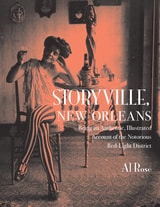
Storyville, New Orleans
Being an Authentic, Illustrated Account of the Notorious Red-Light DistrictAl Rose
University of Alabama Press, 1978
A true-to-life impression of Storyville, the only legally established red light district in the US
At the turn of the twentieth-century, there were hundreds of red-light districts in the United States, ranging in size from a discreet “house” or two in or near small towns and cities to block after bawdy block of brothels in larger cities such as Chicago and San Francisco. Storyville, New Orleans: Being an Authentic, Illustrated Account of the Notorious Red Light District seeks to offer the reader a reasonably true-to-life impression of Storyville, the most famous of the large districts and the only such district in the United States that was legally established.
Storyville was an area, carefully defined by law, outside of which prostitutes or women “notoriously abandoned to lewdness” were not permitted to live or work. Prostitutes working within the District were considered to be engaged in legal enterprises so long as they confined themselves to prostitution and other related activities such as dispensing food and drink to their customers.
From the early days of the French colony of Louisiana, a great number of prostitutes, women from correctional centers, and those with so-called “loose morals” were transported to the New World, resulting in a large proportion of the earliest female residents in New Orleans engaging in prostitution. During the course of Storyville’s legal existence from January 1, 1898 to November 12, 1917—it is evident that in establishing this district the New Orleans city council acted out of a sense of frustration after decades of attempting to deal rationally with a serious social problem. As the author says in the preface, “You may see this as a disorderly book about disorderly houses—and so it may be. But I doubt you will find it dull.”
Street Scriptures
Between God and Hip-HopAlejandro Nava
University of Chicago Press, 2022
The world of hip-hop is saturated with religion, but rarely is that element given serious consideration. In Street Scriptures, Alejandro Nava focuses our attention on this aspect of the music and culture in a fresh way, combining his profound love of hip-hop, his passion for racial and social justice, and his deep theological knowledge. Street Scriptures offers a refreshingly earnest and beautifully written journey through hip-hop’s deep entanglement with the sacred.
Nava reveals a largely unheard religious heartbeat in hip-hop, exploring crosscurrents of the sacred and profane in rap, reggaeton, and Latinx hip-hop today. Ranging from Kendrick Lamar, Chance the Rapper, Lauryn Hill, Cardi B, and Bad Bunny to St. Augustine and William James, Nava examines the ethical-political, mystical-prophetic, and theological qualities in hip-hop, probing the pure sonic and aesthetic signatures of music, while also diving deep into the voices that invoke the spirit of protest. The result is nothing short of a new liberation theology for our time, what Nava calls a “street theology.”
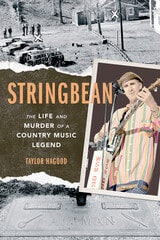
Stringbean
The Life and Murder of a Country LegendTaylor Hagood
University of Illinois Press, 2023
A beloved member of the country music community, David “Stringbean” Akeman found nationwide fame as a cast member of Hee Haw. The 1973 murder of Stringbean and his wife forever changed Nashville’s sense of itself. Millions of others mourned not only the slain couple but the passing of the way of life that country music had long represented.
Taylor Hagood merges the story of Stringbean’s life with an account of murder and courtroom drama. Mentored by Uncle Dave Macon and Bill Monroe, Stringbean was a bridge to country’s early days. His instrumental savvy and old-time singing style drew upon a deep love for traditional country music that, along with his humor and humanity, won him the reverence of younger artists and made his violent death all the more shocking. Hagood delves into the unexpected questions and uneasy resolutions raised by the atmosphere of retribution surrounding the murder trial and recounts the redemption story that followed decades later.
Stunning Males and Powerful Females
Gender and Tradition in East Javanese DanceChristina Sunardi
University of Illinois Press, 2015
Christina Sunardi ventures into the regency of Malang in east Java to study and perform with dancers. Through formal interviews and casual conversation, Sunardi learns about their lives and art. Her work shows how performers continually transform dance traditions to negotiate, and renegotiate, the boundaries of gender and sex--sometimes reinforcing lines of demarcation, sometimes transgressing them, and sometimes doing both simultaneously. But Sunardi's investigation moves beyond performance. It expands notions of the spiritual power associated with female bodies and feminine behavior, and the ways women, men, and waria (males who dress and live as female) access the magnetic power of femaleness.
A journey into understudied regions and ideas, Stunning Males and Powerful Females reveals how performances seemingly fixed by tradition are instead dynamic environments for cultural negotiation and change surrounding questions of sex and gender.
Sun Ra's Chicago
Afrofuturism and the CityWilliam Sites
University of Chicago Press, 2020
Sweet Dreams
The World of Patsy ClineEdited by Warren R. Hofstra
University of Illinois Press, 2013
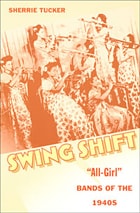
Swing Shift
"All-Girl" Bands of the 1940sSherrie Tucker
Duke University Press, 2001
Filled with firsthand accounts of more than a hundred women who performed during this era and complemented by thorough—and eye-opening—archival research, Swing Shift not only offers a history of this significant aspect of American society and culture but also examines how and why whole bands of dedicated and talented women musicians were dropped from—or never inducted into—our national memory. Tucker’s nuanced presentation reveals who these remarkable women were, where and when they began to play music, and how they navigated a sometimes wild and bumpy road—including their experiences with gas and rubber rationing, travel restrictions designed to prioritize transportation for military needs, and Jim Crow laws and other prejudices. She explains how the expanded opportunities brought by the war, along with sudden increased publicity, created the illusion that all female musicians—no matter how experienced or talented—were “Swing Shift Maisies,” 1940s slang for the substitutes for the “real” workers (or musicians) who were away in combat. Comparing the working conditions and public representations of women musicians with figures such as Rosie the Riveter, WACs, USO hostesses, pin-ups, and movie stars, Tucker chronicles the careers of such bands as the International Sweethearts of Rhythm, Phil Spitalny’s Hours of Charm, The Darlings of Rhythm, and the Sharon Rogers All-Girl Band.
Swingin' the Dream
Big Band Jazz and the Rebirth of American CultureLewis A. Erenberg
University of Chicago Press, 1998
"Swingin' the Dream is an intelligent, provocative study of the big band era, chiefly during its golden hours in the 1930s; not merely does Lewis A. Erenberg give the music its full due, but he places it in a larger context and makes, for the most part, a plausible case for its importance."—Jonathan Yardley, Washington Post Book World
"An absorbing read for fans and an insightful view of the impact of an important homegrown art form."—Publishers Weekly
"[A] fascinating celebration of the decade or so in which American popular music basked in the sunlight of a seemingly endless high noon."—Tony Russell, Times Literary Supplement