Results by title
2646 books match the query 'History & Criticism' and 244 start with s
Seeing by Electricity
The Emergence of Television, 1878-1939Doron Galili
Duke University Press, 2020
Segregating Sound
Inventing Folk and Pop Music in the Age of Jim CrowKarl Hagstrom Miller
Duke University Press, 2010
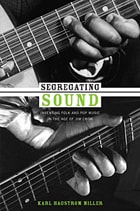
In a cultural history filled with musicians, listeners, scholars, and business people, Miller describes how folklore studies and the music industry helped to create a “musical color line,” a cultural parallel to the physical color line that came to define the Jim Crow South. Segregated sound emerged slowly through the interactions of southern and northern musicians, record companies that sought to penetrate new markets across the South and the globe, and academic folklorists who attempted to tap southern music for evidence about the history of human civilization. Contending that people’s musical worlds were defined less by who they were than by the music that they heard, Miller challenges assumptions about the relation of race, music, and the market.
Selling Science Fiction Cinema
Making and Marketing a GenreJ. P. Telotte
University of Texas Press, 2023
How science fiction films in the 1950s were marketed and helped create the broader genre itself.
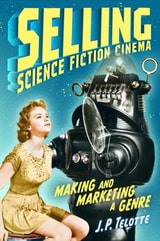
For Hollywood, the golden age of science fiction was also an age of anxiety. Amid rising competition, fluid audience habits, and increasing government regulation, studios of the 1950s struggled to make and sell the kinds of films that once were surefire winners. These conditions, the leading media scholar J. P. Telotte argues, catalyzed the incredible rise of science fiction.
Though science fiction films had existed since the earliest days of cinema, the SF genre as a whole continued to resist easy definition through the 1950s. In grappling with this developing genre, the industry began to consider new marketing approaches that viewed films as fluid texts and audiences as ever-changing. Drawing on trade reports, film reviews, pressbooks, trailers, and other archival materials, Selling Science Fiction Cinema reconstructs studio efforts to market a promising new genre and, in the process, shows how salesmanship influenced what that genre would become. Telotte uses such films as The Thing from Another World, Forbidden Planet, and The Blob, as well as the influx of Japanese monster movies, to explore the shifting ways in which the industry reframed the SF genre to market to no-longer static audience expectations. Science fiction transformed the way Hollywood does business, just as Hollywood transformed the meaning of science fiction.

Selling the Silver Bullet
The Lone Ranger and Transmedia Brand LicensingBy Avi Santo
University of Texas Press, 2015
Originating as a radio series in 1933, the Lone Ranger is a cross-media star who has appeared in comic strips, comic books, adult and juvenile novels, feature films and serials, clothing, games, toys, home furnishings, and many other consumer products. In his prime, he rivaled Mickey Mouse as one of the most successfully licensed and merchandised children’s properties in the United States, while in more recent decades, the Lone Ranger has struggled to resonate with consumers, leading to efforts to rebrand the property. The Lone Ranger’s eighty-year history as a lifestyle brand thus offers a perfect case study of how the fields of licensing, merchandizing, and brand management have operated within shifting industrial and sociohistorical conditions that continue to redefine how the business of entertainment functions.
Deciphering how iconic characters gain and retain their status as cultural commodities, Selling the Silver Bullet focuses on the work done by peripheral consumer product and licensing divisions in selectively extending the characters’ reach and in cultivating investment in these characters among potential stakeholders. Tracing the Lone Ranger’s decades-long career as intellectual property allows Avi Santo to analyze the mechanisms that drive contemporary character licensing and entertainment brand management practices, while at the same time situating the licensing field’s development within particular sociohistorical and industrial contexts. He also offers a nuanced assessment of the ways that character licensing firms and consumer product divisions have responded to changing cultural and economic conditions over the past eighty years, which will alter perceptions about the creative and managerial authority these ancillary units wield.
Senegalese Stagecraft
Decolonizing Theater-Making in Francophone AfricaBrian Valente-Quinn
Northwestern University Press, 2021
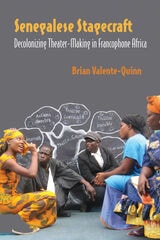
Through a study of the innovative work of Senegalese theater-makers from the 1930s onward, Senegalese Stagecraft explores a wide range of historical contexts and themes, including French colonial education, cultural Pan‑Africanism, West African Sufism, uses of television and mass media, and popular theater and activism. Using a multidisciplinary approach that includes field, archival, and literary methods, Valente‑Quinn offers a fresh look at performance cultures of West Africa and the Global South in a book that will interest students and scholars in African, Francophone, and performance studies.
Sensational Devotion
Evangelical Performance in Twenty-First-Century AmericaJill Stevenson
University of Michigan Press, 2015

Serial Fu Manchu
The Chinese Supervillain and the Spread of Yellow Peril IdeologyRuth Mayer
Temple University Press, 2013
In the series Asian American History and Culture, edited by Sucheng Chan, David Palumbo-Liu, Michael Omi, K. Scott Wong, and Linda Trinh Võ
Seriously Mad
Mental Distress and the Broadway MusicalAleksei Grinenko
University of Michigan Press, 2023
Theatermakers in the United States have long been drawn to madness as a source of dramatic spectacle. During the Broadway musical’s golden age in the mid-twentieth century, creative teams used the currently in-vogue psychoanalytic ideas about mental life to construct troubled characters at odds with themselves and their worlds. As the clinical and cultural profile of madness transformed over the twentieth century, musicals continued to delve into the experience of those living with mental pain, trauma, and unhappiness.
Seriously Mad offers a dynamic account of stage musicals’ engagement with historically significant theories about mental distress, illness, disability, and human variance in the United States. By exploring who is considered mad and what constitutes madness at different moments in U.S. history, Aleksei Grinenko shows how, in attempts to bring the musicals closer to highbrow sophistication, theater dramatized serious medical conditions and social problems. Among the many Broadway productions discussed are Next to Normal, A Strange Loop, Sweeney Todd, Man of La Mancha, Gypsy, Oklahoma!, and Lady in the Dark.
Serving Genius
Carlo Maria GiuliniThomas D. Saler
University of Illinois Press, 2020
Serving Genius tells the life story of Carlo Maria Giulini, one of the most renowned and beloved conductors of the twentieth century. Detailing Giulini's extraordinary professional career, Thomas D. Saler also chronicles Giulini's personal life, including his musical awakening while growing up amid the spectacular beauty of the Dolomite mountains, his years as a student in Rome's Academy of St. Cecilia, his conscription into the Italian army during World War II, his nine months in hiding for his anti-fascist and pacifist beliefs, and his selfless devotion to his wife, Marcella.
A humble master who shunned the limelight, Giulini took a deeply emotional and subjective approach to making music. Saler provides uniquely detailed analysis of Giulini's nuanced musicianship and the way he conveyed that musicianship to the orchestra through physical gestures. Meditating on the very art of conducting at which Giulini excelled, Saler discusses each of the conductor's major musical appointments, including stints with the Chicago Symphony Orchestra, Philharmonia Orchestra, Vienna Symphony, and Los Angeles Philharmonic. The book also addresses his repertoire of choice, leadership style, and moral framework.
Drawing on extensive interviews with Giulini's family, music critics, arts administrators, orchestra members, and collaborating soloists, Serving Genius draws out the personal amid the professional life of this giant among twentieth-century conductors.

Sessue Hayakawa
Silent Cinema and Transnational StardomDaisuke Miyao
Duke University Press, 2007
Drawing on early-twentieth-century sources in both English and Japanese, including Japanese-language newspapers in the United States, Miyao illuminates the construction and reception of Hayakawa’s stardom as an ongoing process of cross-cultural negotiation. Hayakawa’s early work included short films about Japan that were popular with American audiences as well as spy films that played upon anxieties about Japanese nationalism. The Jesse L. Lasky production company sought to shape Hayakawa’s image by emphasizing the actor’s Japanese traits while portraying him as safely assimilated into U.S. culture. Hayakawa himself struggled to maintain his sympathetic persona while creating more complex Japanese characters that would appeal to both American and Japanese audiences. The star’s initial success with U.S. audiences created ambivalence in Japan, where some described him as traitorously Americanized and others as a positive icon of modernized Japan. This unique history of transnational silent-film stardom focuses attention on the ways that race, ethnicity, and nationality influenced the early development of the global film industry.

Settler Attachments and Asian Diasporic Film
Beenash Jafri
University of Minnesota Press, 2025
A cinematic study of Asian–Indigenous relationality
Settler Attachments and Asian Diasporic Film is an interdisciplinary examination of the stubborn attachment of Asian diasporas to settler-colonial ideals and of the decolonial possibilities Asian diasporic films imagine. Beenash Jafri uniquely addresses the complexities of Asian–Indigenous relationality through film and visual media, urging film scholars to approach their subjects with an eye to the entanglements of race, diaspora, and Indigeneity.
Highlighting how Asian diasporic attachments to settler colonialism are structural, she explores how they are manifested through melancholic yearning within the figure of the Asian cowboy in films such as Cowgirl and Wild West and through the aesthetic and representational politics of body and land in experimental films by Shani Mootoo and Vivek Shraya. While recognizing the pervasive violence of settler colonialism, Jafri maintains a hopeful outlook, showcasing how Asian diasporic filmmakers persistently work toward decolonial worldmaking. This emerging vision can be seen in the radical friendship between Ali Kazimi and Onondaga artist Jeffrey Thomas in Kazimi’s film Shooting Indians, in the queer relational survivance depicted in films such as This Place and Scarborough, and in the sensory disruptions of Jin-me Yoon’s interactive art project Untunnelling Vision.
From film and media studies to diaspora studies and critical ethnic studies, Indigenous studies to queer theory, Settler Attachments and Asian Diasporic Film provides a critical framework for engaging cinematic media to understand and imagine beyond the entrenched settler-colonial dynamics within Asian diasporic communities.
Retail e-book files for this title are screen-reader friendly with images accompanied by short alt text and/or extended descriptions.
Settling the Score
Music and the Classical Hollywood FilmKathryn Kalinak
University of Wisconsin Press, 1992
Beginning with the earliest experiments in musical accompaniment carried out in the Edison Laboratories, Kathryn Kalinak uses archival material to outline the history of American music and film. Focusing on the scores of several key composers of the sound era, including Erich Wolfgang Korngold’s Captain Blood, Max Steiner’s The Informer, Bernard Herrmann’s The Magnificent Ambersons, and David Raksin’s Laura, Kalinak concludes that classical scoring conventions were designed to ensure the dominance of narrative exposition. Her analyses of contemporary work such as John Williams’ The Empire Strikes Back and Basil Poledouris’ RoboCop demonstrate how the traditions of the classical era continue to influence scoring practices today.
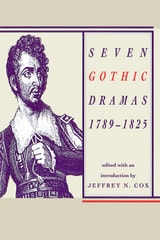
Seven Gothic Dramas, 1789–1825
1789-1825Jeffrey N. Cox
Ohio University Press, 1994
The Gothic drama came at a critical moment in the history of the theater, of British culture, and of European politics in the shadow of France’s revolution and the fall of Napoleon. It offered playwrights a medium to express the prevailing ideological tensions of romanticism and revolution, and also responded to a growing and changing theater audience.
In a wide-ranging introduction, Cox explores Gothic drama’s links with romanticism and its relation to other social and ideological shifts of the day. The texts are presented so as to reflect the dual life of dramatic works—on the stage and on the page. The plays are annotated and accompanied by biographic and bibliographic sketches.
Includes The Kentish Barons, by Francis North; Julia of Louvain; or, Monkish Cruelty, by J.C. Cross; The Castle Spectre, by Matthew G. Lewis; The Captive, by Matthew G. Lewis; De Monfort, by Joanna Baillie; Bertram; or, The Castle of St. Aldobrand, by C.R. Maturin; and Presumption; or, The Fate of Frankenstein, by R.B. Peake.
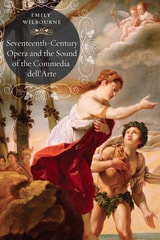
Seventeenth-Century Opera and the Sound of the Commedia dell’Arte
Emily Wilbourne
University of Chicago Press, 2016
Wilbourne considers a series of case studies structured around the most important and widely explored operas of the period: Monteverdi’s lost L’Arianna, as well as his Il Ritorno d’Ulisse and L’incoronazione di Poppea; Mazzochi and Marazzoli’s L’Egisto, ovvero Chi soffre speri; and Cavalli’s L’Ormindo and L’Artemisia. As she demonstrates, the sound-in-performance aspect of commedia dell’arte theater—specifically, the use of dialect and verbal play—produced an audience that was accustomed to listening to sonic content rather than simply the literal meaning of spoken words. This, Wilbourne suggests, shaped the musical vocabularies of early opera and facilitated a musicalization of Italian theater.
Highlighting productive ties between the two worlds, from the audiences and venues to the actors and singers, this work brilliantly shows how the sound of commedia performance ultimately underwrote the success of opera as a genre.
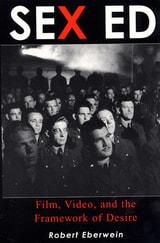
Sex Ed
Film, Video, and the Framework of DesireEberwein, Robert
Rutgers University Press, 1999
Eberwein starts his investigation in the silent and early sound eras with educational films used both to warn audiences about venereal disease and to provide basic contraception information. World War II movies, he states, waged their own war against venereal disease-in the armed services and at home. Newer works deal with birth control and focus in particular on AIDS.
Sex Ed also highlights the classroom. Eberwein draws connections between the earliest and most recent examples of educational films as he analyzes their ideological complexity. He concludes by examining marriage-manual films of the early 1970s and very recent videos for couples and individuals seeking instruction in sexual techniques to increase pleasure.
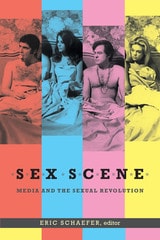
Sex Scene
Media and the Sexual RevolutionEric Schaefer, ed.
Duke University Press, 2014
Contributors. Joseph Lam Duong, Jeffrey Escoffier, Kevin M. Flanagan, Elena Gorfinkel, Raymond J. Haberski Jr., Joan Hawkins, Kevin Heffernan, Eithne Johnson, Arthur Knight, Elana Levine, Christie Milliken, Eric Schaefer, Jeffrey Sconce, Jacob Smith, Leigh Ann Wheeler, Linda Williams
Sex for Sale
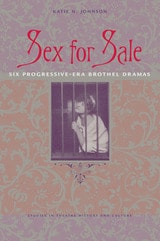
Six Progressive-Era Brothel DramasKatie N. Johnson
University of Iowa Press, 2015
The volume includes the work of major figures including Eugene O’Neill, John Reed, Rachel Crothers, and Elizabeth Robins. Now largely forgotten and some previously unpublished, these plays were among the most celebrated and debated productions of their day. Together, their portrayals of commercialized vice, drug addiction, poverty, white slavery, and interracial desire reveal the Progressive Era’s fascination with the underworld and the theatre’s power to regulate sexuality. Additional plays, commentary, and teaching materials are available at brotheldrama.lib.miamioh.edu.
Plays included:
Ourselves (1913) by Rachel Crothers
The Web (1913) by Eugene O’Neill
My Little Sister (1913) by Elizabeth Robins
Moondown (1915) by John Reed
Cocaine (1916) by Pendleton King
A Shanghai Cinderella (renamed East is West, 1918) by Samuel Shipman and John B. Hymer
Sex, Death, and Minuets
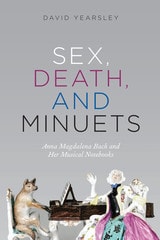
Anna Magdalena Bach and Her Musical NotebooksDavid Yearsley
University of Chicago Press, 2019
Sex, Death, and Minuets offers the first in-depth study of these notebooks and their owner, reanimating Anna Magdalena as a multifaceted historical subject—at once pious and bawdy, spirited and tragic. In these pages, we follow Magdalena from young and flamboyant performer to bereft and impoverished widow—and visit along the way the coffee house, the raucous wedding feast, and the family home. David Yearsley explores the notebooks’ more idiosyncratic entries—like its charming ditties on illicit love and searching ruminations on mortality—against the backdrop of the social practices and concerns that women shared in eighteenth-century Lutheran Germany, from status in marriage and widowhood, to fulfilling professional and domestic roles, money, fashion, intimacy and sex, and the ever-present sickness and death of children and spouses. What emerges is a humane portrait of a musician who embraced the sensuality of song and the uplift of the keyboard, a sometimes ribald wife and oft-bereaved mother who used her cherished musical notebooks for piety and play, humor and devotion—for living and for dying.
Sex, Drag, and Male Roles
Investigating Gender as PerformanceDiane Torr and Stephen Bottoms
University of Michigan Press, 2010
"Few books blend the critical and creative approaches to drag performance this provocatively and engagingly, and none provides both the historical and the personal perspectives so effectively. Torr and Bottoms fundamentally challenge many long-standing ideas about drag kings and the performance of masculinity."
---Sarah Bay-Cheng, University at Buffalo
"This book brings the reader inside an artist's creative imagination and intellect, showing us Diane Torr's work in a detailed, thoughtful, and engaging way. We discover how Torr uses different physical disciplines to explore how gender is constructed, interpreted, and expressed. Along the way---by taking us into various venues in which she performed---she evokes the lively, dynamic scene in New York in the '80s and '90s."
---Alisa Solomon, Columbia University
Why would women want to perform as men? Why is gender crossing so compelling, whether it happens onstage or in everyday life? What can drag performance teach, and what aesthetic, political, and personal questions does it raise?
Performance artist Diane Torr has been experimenting with the performance of gender for thirty years---exploring everything from feminist go-go dancing to masculine power play. One of the key pioneers of "drag king" performance, Torr has been celebrated internationally for her gender transformation workshops, in which she has taught hundreds of ordinary women how to pass as men on city streets around the world. This cultural subterfuge appeals to participants for many different reasons: personal confidence-building, sexual frisson, gender subversion, trans-curiosity, or simply the appeal of disguise and role play.
Sex, Drag, and Male Roles documents the evolution of Torr's work by blending first-person memoir and commentary from Torr with critical reflections and contextualization from leading performance critic Stephen J. Bottoms. The book includes a consideration of the long cultural history of female-to-male cross-dressing and concludes with Torr's "Do-It-Yourself" guide to becoming a "Man for a Day."
Diane Torr developed her cross-disciplinary art in the downtown New York art scene from 1976 to 2002. Now living in Scotland, Torr has earned an international reputation for her performances and gender transformation workshops (featured on HBO, BBC, and This American Life on NPR, among others). Her work is the focus of a feature film, Man for a Day.
Stephen J. Bottoms is Wole Soyinka Professor of Drama and Theatre Studies at the University of Leeds. His books include Playing Underground: A Critical History of the 1960s Off-Off-Broadway Movement and Small Acts of Repair: Performance, Ecology, and Goat Island.
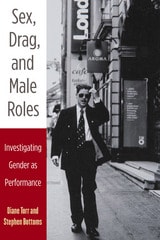
Cover: Diane Torr walks the streets of London, 1995. Photo by Debbie Humphreys.
Shaded Lives
African American Women and TelevisionBeretta E Smith-Shomade
Rutgers University Press, 2002
In Shaded Lives, Beretta Smith-Shomade sets out to dissect images of the African American woman in television from the 1980s. She calls their depiction "binaristic," or split. African American women, although an essential part of television programming today, are still presented as distorted and deviant. By closely examining the television texts of African-American women in comedy, music video, television news and talk shows (Oprah Winfrey is highlighted), Smith-Shomade shows how these voices are represented, what forces may be at work in influencing these images, and what alternate ways of viewing might be available.
Smith-Shomade offers critical examples of where the sexist and racist legacy of this country collide with the cultural strength of Black women in visual and real-lived culture. As the nation's climate of heightened racial divisiveness continues to relegate the representation of Black women to depravity and display, her study is not only useful, it is critical.
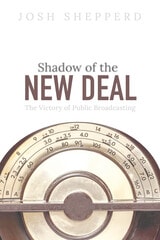
Shadow of the New Deal
The Victory of Public BroadcastingJosh Shepperd
University of Illinois Press, 2023
- Winner of the 2024 BEA Book Award
- Runner-up in the History Division of the Association for Education in Journalism and Mass Communication (AEJMC)
- Runner-up for the AJHA Book of the Year (American Journalism Historians Association).
Despite uncertain beginnings, public broadcasting emerged as a noncommercial media industry that transformed American culture. Josh Shepperd looks at the people, institutions, and influences behind the media reform movement and clearinghouse the National Association of Educational Broadcasters (NAEB) in the drive to create what became the Public Broadcasting Service and National Public Radio.
Founded in 1934, the NAEB began as a disorganized collection of undersupported university broadcasters. Shepperd traces the setbacks, small victories, and trial and error experiments that took place as thousands of advocates built a media coalition premised on the belief that technology could ease social inequality through equal access to education and information. The bottom-up, decentralized network they created implemented a different economy of scale and a vision of a mass media divorced from commercial concerns. At the same time, they transformed advice, criticism, and methods adopted from other sectors into an infrastructure that supported public broadcasting in the 1960s and beyond.
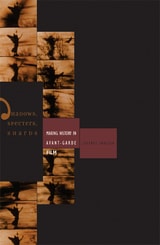
Shadows, Specters, Shards
Making History in Avant-Garde FilmJeffrey Skoller
University of Minnesota Press, 2005
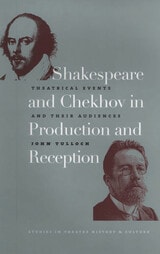
Shakespeare and Chekhov in Production and Reception
Theatrical Events and Their AudiencesTulloch, John
University of Iowa Press, 2005
With a focus on the canonical institutions of Shakespeare and Chekhov, John Tulloch brings together for the first time new concepts of “the theatrical event” with live audience analysis. Using mainstream theatre productions from across the globe that were highly successful according to both critics and audiences, this book of case studies—ethnographies of production and reception—offers a combined cultural and media studies approach to analyzing theatre history, production, and audience.
Tulloch positions these concepts and methodologies within a broader current theatrical debate between postmodernity and risk modernity. He also describes the continuing history of Shakespeare and Chekhov as a series of stories “currently and locally told” in the context of a blurring of academic genres that frames the two writers. Drawn from research conducted over nearly a decade in Australia, Britain, and the U.S., Shakespeare and Chekhov in Production and Reception will be of interest to students and scholars of theatre studies, media studies, and audience research.
Shakespeare and Contemporary Fiction
Theorizing Foundling and Lyric PlotsBarbara L. Estrin
University of Delaware Press, 2012
In the first book to use fiction as theory, Barbara L. Estrin reverses chronological direction, beginning with contemporary novels to arrive at a re-visioned Shakespeare, uncovering a telling difference in the stories that script us and that influence our political unconscious in ways that have never been explored in literary-critical interpretations. Describing the animus against foreign blood, central to the dynamic of the foundling and lyric plots that form the nexus of her study, Estrin describes how late modern writers change those plots. Reading backward through the theoretical lens of their revisions allows us to rethink the Shakespeare we thought we knew. That innovative methodology, in turn, encourages us to read forward again with different tellings, ones that challenge the mythological homogeneity of the traditional classifications and that suggest new formulaic paradigms.
With close readings of four contemporary novels and three Shakespeare plays, Estrin identifies the cultural walls that contribute to political gate-keeping as she chronicles the connection between plot variations and gender revisionism in the work of Caryl Phillips, Liz Jensen, Anne Michaels, and W.G. Sebald, as well as two film-makers (Mona Hatoum and Mieke Bal) who demonstrate an understanding that mythical repercussions prove dangerous in the twentieth and twenty-first centuries even as they suggest how the heritage shaping their work, and to which they are themselves drawn, in turn proposes an alternative Shakespeare, one who frees us to ask other questions: At the time that the nation state was beginning to coalesce, what does Shakespeare’s frequent use of the foundling plot and his significant variations portend? How does his infusion of a revised lyric dynamic in The Merchant of Venice, Othello and The Winter’s Tale change our reading of plays where the two plots coalesce as they do in the contemporary novels that shape Estrin’s late modern interpretations? All the works in this study share the underlying premise that the connection between cultural origins and political destinies is reciprocal and that it is necessary and possible to transform the constructs—in memory and imagination—that continue to shape our lives.
Published by University of Delaware Press. Distributed worldwide by Rutgers University Press.
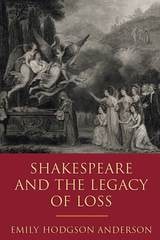
Shakespeare and the Legacy of Loss
Emily Hodgson Anderson
University of Michigan Press, 2018
How do we recapture, or hold on to, the live performances we most love, and the talented artists and performers we most revere? Shakespeare and the Legacy of Loss tells the story of how 18th-century actors, novelists, and artists, key among them David Garrick, struggled with these questions through their reenactments of Shakespearean plays. For these artists, the resurgence of Shakespeare, a playwright whose works just decades earlier had nearly been erased, represented their own chance for eternal life. Despite the ephemeral nature of performance, Garrick and company would find a way to make Shakespeare, and through him the actor, rise again.
In chapters featuring Othello, Richard III, Hamlet, The Winter’s Tale, and The Merchant of Venice, Emily Hodgson Anderson illuminates how Garrick’s performances of Shakespeare came to offer his contemporaries an alternative and even an antidote to the commemoration associated with the monument, the portrait, and the printed text. The first account to read 18th-century visual and textual references to Shakespeare alongside the performance history of his plays, this innovative study sheds new light on how we experience performance, and why we gravitate toward an art, and artists, we know will disappear.
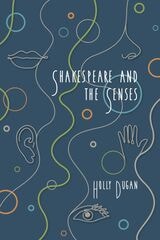
Shakespeare and the Senses
Holly E. Dugan
Arizona Center for Medieval and Renaissance Studies, 2024
Could something as seemingly natural as a smell, taste, sight, or sound be socially constructed and change over time? Shakespeare and the Senses argues that understanding the original conditions in which Shakespeare’s plays were performed allows us to explore the senses as both visceral, bodily experiences and constructed, social phenomena. As Ben Jonson famously wrote in the First Folio of 1623, Shakespeare can seem to be “not of an age, but for all time.” While this is clever marketing, Shakespeare did write his plays in a particular time and place far removed from our own. Many of his most powerful metaphors rely on sensory details—Aaron’s black hue; Cleopatra’s strange, invisible perfumes; Fluellen’s Welsh accent; Lady Macbeth’s overly scrubbed hands; Malvolio’s yellow stockings—which Elizabethan-era audiences may have understood very differently from us.
Shakespeare and the Senses draws on interdisciplinary research methods in the new field of sensory studies to expand our understanding of what Shakespeare meant to his first audiences.

Shakespeare at the Cineplex
The Kenneth Branagh EraSamuel Crowl
Ohio University Press, 2005
Samuel Crowl’s Shakespeare at the Cineplex: The Kenneth Branagh Era is the first thorough exploration of the fifteen major Shakespeare films released since the surprising success of Kenneth Branagh’s Henry V (1989). Crowl presents the rich variety of these films in the “long decade: between the fall of the Berlin Wall and the terrorist attacks on September 11, 2001.” The productions range from Hollywood-saturated films such as Franco Zeffirelli’s Hamlet and Michael Hoffman’s A Midsummer Night’s Dream to more modest, experimental offerings, such as Christine Edzard’s As You Like It. Now available in paperback, Shakespeare at the Cineplex will be welcome reading for fans, students, and scholars of Shakespeare in performance.
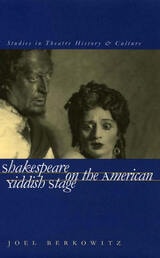
Shakespeare on the American Yiddish Stage
Joel Berkowitz
University of Iowa Press, 2002
The professional Yiddish theatre started in 1876 in Eastern Europe; with the assassination of Tsar Alexander II in 1881, masses of Eastern European Jews began moving westward, and New York—Manhattan’s Bowery and Second Avenue—soon became the world’s center of Yiddish theatre. At first the Yiddish repertoire revolved around comedies, operettas, and melodramas, but by the early 1890s America's Yiddish actors were wild about Shakespeare. In Shakespeare on the American Yiddish Stage, Joel Berkowitz knowledgeably and intelligently constructs the history of this unique theatrical culture.
The Jewish King Lear of 1892 was a sensation. The year 1893 saw the beginning of a bevy of Yiddish versions of Hamlet; that year also saw the first Yiddish production of Othello. Romeo and Juliet inspired a wide variety of treatments. The Merchant of Venice was the first Shakespeare play published in Yiddish, and Jacob Adler received rave reviews as Shylock on Broadway in both 1903 and 1905. Berkowitz focuses on these five plays in his five chapters. His introduction provides an orientation to the Yiddish theatre district in New York as well as the larger picture of Shakespearean production and the American theatre scene, and his conclusion summarizes the significance of Shakespeare’s plays in Yiddish culture.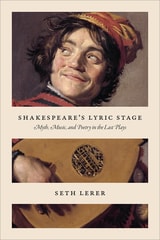
Shakespeare's Lyric Stage
Myth, Music, and Poetry in the Last PlaysSeth Lerer
University of Chicago Press, 2018
As Seth Lerer shows in this pioneering book, Shakespeare’s late plays invite us to contemplate that very question, offering up lyric as a displaced and sometimes desperate antidote to situations of duress or powerlessness. Lerer argues that the theme of lyric misalignment running throughout The Tempest, The Winter’s Tale, Henry VIII, and Cymbeline serves a political purpose, a last-ditch effort at transformation for characters and audiences who had lived through witch-hunting, plague, regime change, political conspiracies, and public executions.
A deep dive into the relationship between aesthetics and politics, this book also explores what Shakespearean lyric is able to recuperate for these “victims of history” by virtue of its disjointed utterances. To this end, Lerer establishes the concept of mythic lyricism: an estranging use of songs and poetry that functions to recreate the past as present, to empower the mythic dead, and to restore a bit of magic to the commonplaces and commodities of Jacobean England. Reading against the devotion to form and prosody common in Shakespeare scholarship, Lerer’s account of lyric utterance’s vexed role in his late works offers new ways to understand generational distance and cultural change throughout the playwright’s oeuvre.
Shape of Things
A Philosophy of DesignVilém Flusser
Reaktion Books, 1999
Shapely Bodies
The Image of Porcelain in Eighteenth-Century FranceChristine A. Jones
University of Delaware Press, 2013
Shapely Bodies: The Image of Porcelain in Eighteenth-Century France constructs the first cultural history of porcelain making in France. It takes its title from two types of “bodies” treated in this study: the craft of porcelain making shaped clods of earth into a clay body to produce high-end commodities and the French elite shaped human bodies into social subjects with the help of makeup, stylish patterns, and accessories. These practices crossed paths in the work of artisans, whose luxury objects reflected and also influenced the curves of fashion in the eighteenth century.
French artisans began trials to reproduce fine Chinese porcelain in the 1660s. The challenge proved impossible until they found an essential ingredient, kaolin, in French soil in the 1760s. Shapely Bodies differs from other studies of French porcelain in that it does not begin in the 1760s at the Sèvres manufactory when it became technically possible to produce fine porcelain in France, but instead ends there. Without the secret of Chinese porcelain, artisans in France turned to radical forms of experimentation. Over the first half of the eighteenth century, they invented artificial alternatives to Chinese porcelain, decorated them with French style, and, with equal determination, shaped an identity for their new trade that distanced it from traditional guild-crafts and aligned it with scientific invention. The back story of porcelain making before kaolin provides a fascinating glimpse into the world of artisanal innovation and cultural mythmaking.
To write artificial porcelain into a history of “real” porcelain dominated by China, Japan, and Meissen in Saxony, French porcelainiers learned to describe their new commodity in language that tapped into national pride and the mythic power of French savoir faire. Artificial porcelain cut such a fashionable image that by the mid-eighteenth century, Louis XV appropriated it for the glory of the crown. When the monarchy ended, revolutionaries reclaimed French porcelain, the fruit of a century of artisanal labor, for the Republic. Tracking how the porcelain arts were depicted in documents and visual arts during one hundred years of experimentation, Shapely Bodies reveals the politics behind the making of French porcelain’s image.
Published by University of Delaware Press. Distributed worldwide by Rutgers University Press.
Shaping the Future of African American Film
Color-Coded Economics and the Story Behind the NumbersMonica White Ndounou
Rutgers University Press, 2014
In Hollywood, we hear, it’s all about the money. It’s a ready explanation for why so few black films get made—no crossover appeal, no promise of a big payoff. But what if the money itself is color-coded? What if the economics that governs film production is so skewed that no film by, about, or for people of color will ever look like a worthy investment unless it follows specific racial or gender patterns? This, Monica Ndounou shows us, is precisely the case. In a work as revealing about the culture of filmmaking as it is about the distorted economics of African American film, Ndounou clearly traces the insidious connections between history, content, and cash in black films.
How does history come into it? Hollywood’s reliance on past performance as a measure of potential success virtually guarantees that historically underrepresented, underfunded, and undersold African American films devalue the future prospects of black films. So the cycle continues as it has for nearly a century. Behind the scenes, the numbers are far from neutral. Analyzing the onscreen narratives and off-screen circumstances behind nearly two thousand films featuring African Americans in leading and supporting roles, including such recent productions as Bamboozled, Beloved, and Tyler Perry’s Diary of a Mad Black Woman, Ndounou exposes the cultural and racial constraints that limit not just the production but also the expression and creative freedom of black films. Her wide-ranging analysis reaches into questions of literature, language, speech and dialect, film images and narrative, acting, theater and film business practices, production history and financing, and organizational history.
By uncovering the ideology behind profit-driven industry practices that reshape narratives by, about, and for people of color, this provocative work brings to light existing limitations—and possibilities for reworking stories and business practices in theater, literature, and film.
Shattering Hamlet's Mirror
Theatre and RealityMarvin Carlson
University of Michigan Press, 2016
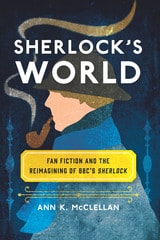
Sherlock's World
Fan Fiction and the Reimagining of BBC's SherlockAnn K. McClellan
University of Iowa Press, 2018
Sherlock Holmes remains more popular than ever some 130 years after the detective first appeared in print. These days, the iconic character’s staying power is due in large part to the success of the recent BBC series Sherlock, which brings the famous sleuth into the twenty-first century.
One of the most-watched television series in BBC history, Sherlock is set in contemporary London, where thirtysomething Sherlock and John (no longer fussy old Holmes and Watson), alongside New Scotland Yard, solve crimes with the help of smartphones, texting, online forums, and the internet. In their modernization of Sir Arthur Conan Doyle’s nineteenth-century world, Sherlock creators Stephen Moffatt and Mark Gatiss make London as much a character of their show as the actors themselves. The highly stylized series has inspired an impassioned fan community in Britain, the U.S., and beyond. Fans create and share their writings, which reimagine the characters in even more dramatic ways than the series can.
Interweaving fan fiction studies, world-building, and genre studies, Ann McClellan examines the hit series and the fan fiction it inspires. Using Sherlock to trace the changing face of fan fiction studies, McClellan’s book explores how far fans are willing to go to change the Sherlockian canon while still reinforcing its power and status as the source text. What makes Sherlock fanfic Sherlockian? How does it stay within the canon even while engaging in the wildest reimaginings? Sherlock’s World explores the boundaries between canon, genre, character, and reality through the lenses of fan fiction and world-building. This book promises to be a valuable resource for fan studies scholars, those who write fan fiction, and Sherlock fans alike.
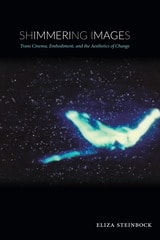
Shimmering Images
Trans Cinema, Embodiment, and the Aesthetics of ChangeEliza Steinbock
Duke University Press, 2019
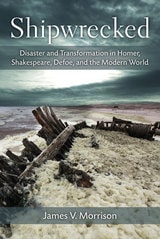
Shipwrecked
Disaster and Transformation in Homer, Shakespeare, Defoe, and the Modern WorldJames V. Morrison
University of Michigan Press, 2014
The recurrent treatment of shipwrecks in the creative arts demonstrates an enduring fascination with this archetypal scene: a shipwreck survivor confronting the elements. It is remarkable, for example, that the characters in the 2004 television show Lost share so many features with those from Homer’s Odyssey and Shakespeare’s The Tempest.
For survivors who are stranded on an island for some period of time, shipwrecks often present the possibility of a change in political and social status—as well as romance and even paradise. In each of the major shipwreck narratives examined, the poet or novelist links the castaways’ arrival on a new shore with the possibility of a new sort of life. Readers will come to appreciate the shift in attitude toward the opportunities offered by shipwreck: older texts such as the Odyssey reveals a trajectory of returning to the previous order. In spite of enticing new temptations, Odysseus—and some of the survivors in The Tempest—revert to their previous lives, rejecting what many might consider paradise. Odysseus is reestablished as king; Prospero travels back to Milan. In such situations, we may more properly speak of potential transformations. In contrast, many recent shipwreck narratives instead embrace the possibility of a new sort of existence. That even now the shipwreck theme continues to be treated, in multiple media, testifies to its long-lasting appeal to a very wide audience.
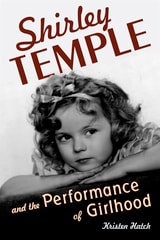
Shirley Temple and the Performance of Girlhood
Hatch, Kristen
Rutgers University Press, 2015
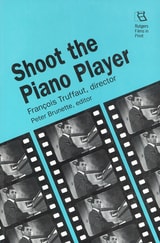
Shoot the Piano Player
Francois Truffaut, DirectorBrunette, Peter
Rutgers University Press, 1993
When it appeared in 1960, the inspired fun of François Truffaut's Shoot the Piano Player shocked and delighted critics and audiences around the world. Its sudden shifts of tone and mood, its willful play with genre stereotypes, and its hilarious in-jokes clearly signaled that Jean-Luc Godard's equally innovative Breathless was not a fluke. The two films heralded the arrival of the so-called New Wave, sharing with other New Wave films an insistence on low-budget, location shooting and, above all, on cinema as the personal statement of an author. These films had a tremendous impact on all filmmaking.
Peter Brunette's introduction to this book gives us new insight into the film, based in part on revisualizing it in terms of recent postmodern and poststructuralist thinking. He argues, in effect, that Truffaut was one of the directors who paved the way for a postmodern aesthetic. The volume also contains a complete and accurate continuity script of the film (based on the authoritative, wide-screen version), a series of interviews with Truffaut (including one by Hélène Laroche Davis, previously unpublished), a large number of reviews and essays, a filmography, and selected bibliography.
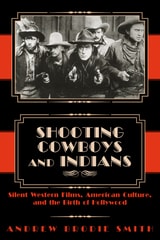
Shooting Cowboys and Indians
Silent Western Films, American Culture, and the Birth of HollywoodAndrew Brodie Smith
University Press of Colorado, 2003
Tracing the western from its hazy silent-picture origins in the 1890s to the advent of talking pictures in the 1920s, Smith examines the ways in which silent westerns contributed to the overall development of the film industry.
Focusing on such early important production companies as Selig Polyscope, New York Motion Picture, and Essanay, Smith revises current thinking about the birth of Hollywood and the establishment of Los Angeles as the nexus of filmmaking in the United States. Smith also reveals the role silent westerns played in the creation of the white male screen hero that dominated American popular culture in the twentieth century.
Illustrated with dozens of historic photos and movie stills, this engaging and substantive story will appeal to scholars interested in Western history, film history, and film studies as well as general readers hoping to learn more about this little-known chapter in popular filmmaking.
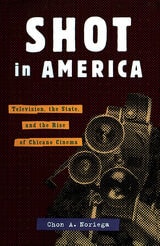
Shot In America
Television, the State, and the Rise of Chicano CinemaChon A. Noriega
University of Minnesota Press, 2000
Redefines media history through Chicano film and television.
One of the most influential figures in ethnic media studies takes direct aim at how Chicano filmmaking has been represented in the history of media in the United States. Shot in America tackles seemingly intractable dilemmas involving the political and market functions of film and TV to provide a definitive response to the debates over cultural and racial identity that have embroiled media and cultural studies over the past two decades.
Noriega offers a compelling and detailed description of an enormous body of work by Chicano media makers against the backdrop of Chicano social movements, politics, and activism over a forty-year period—an extraordinary exposition of the civil rights movement, media reform activities, and public affairs programming that constitutes the prehistory of independent and minority cinemas.Noriega reveals the ways in which Chicano and other minority protests both emerged within and were regulated by the very institutions that excluded them. Shot in America is a study with broad implications for our understanding of cultural politics and the entertainment industries.
Show & The Gaze Of Theatre
A European PerspectiveErika Fischer-Lichte
University of Iowa Press, 1997
Theatre, in some respects, resembles a market. Stories, rituals, ideas, perceptive modes, conversations, rules, techniques, behavior patterns, actions, language, and objects constantly circulate back and forth between theatre and the other cultural institutions that make up everyday life in the twentieth century. These exchanges, which challenge the established concept of theatre in a way that demands to be understood, form the core of Erika Fischer-Lichte's dynamic book.
Each eclectic essay investigates the boundaries that separate theatre from other cultural domains. Every encounter between theatre and other art forms and institutions renegotiates and redefines these boundaries as part of an ongoing process. Drawing on a wealth of fascinating examples, both historical and contemporary, Fischer-Lichte reveals new perspectives in theatre research from quite a number of different approaches. Energetically and excitingly, she theorizes history, theorizes and historicizes performance analysis, and historicizes theory.
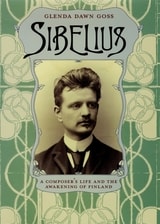
Sibelius
A Composer's Life and the Awakening of FinlandGlenda Dawn Goss
University of Chicago Press, 2009
One of the twentieth century’s greatest composers, Jean Sibelius (1865–1957) virtually stopped writing music during the last thirty years of his life. Recasting his mysterious musical silence and his undeniably influential life against the backdrop of Finland’s national awakening, Sibelius will be the definitive biography of this creative legend for many years to come.
Glenda Dawn Goss begins her sweeping narrative in the Finland of Sibelius’s youth, which remained under Russian control for the first five decades of his life. Focusing on previously unexamined events, Goss explores the composer’s formative experiences as a Russian subject and a member of the Swedish-speaking Finnish minority. She goes on to trace Sibelius’s relationships with his creative contemporaries, with whom he worked to usher in a golden age of music and art that would endow Finns with a sense of pride in their heritage and encourage their hopes for the possibilities of nationhood. Skillfully evoking this artistic climate—in which Sibelius emerged as a leader—Goss creates a dazzling portrait of the painting, sculpture, literature, and music it inspired. To solve the deepest riddles of Sibelius’s life, work, and enigmatic silence, Goss contends, we must understand the awakening in which he played so great a role.
Situating this national creative tide in the context of Nordic and European cultural currents, Sibelius dramatically deepens our knowledge of a misunderstood musical giant and an important chapter in the intellectual history of Europe.
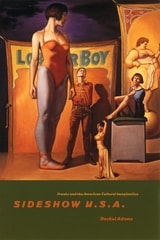
Sideshow U.S.A.
Freaks and the American Cultural ImaginationRachel Adams
University of Chicago Press, 2001
Sideshow U.S.A. begins by revisiting the terror and fascination the original freak shows provided for their audiences, as well as exploring the motivations of those who sought fame and profit in the business of human exhibition. With this history in mind, Adams turns from live entertainment to more mediated forms of cultural expression: the films of Tod Browning, the photography of Diane Arbus, the criticism of Leslie Fiedler, and the fiction Carson McCullers, Toni Morrison, and Katherine Dunn. Taken up in these works of art and literature, the freak serves as a metaphor for fundamental questions about self and other, identity and difference, and provides a window onto a once vital form of popular culture.
Adams's study concludes with a revealing look at the revival of the freak show as live performance in the late 1980s and the 1990s. Celebrated by some, the freak show's recent return is less welcome to those who have traditionally been its victims. At the beginning of a new century, Adams sees it as a form of living history, a testament to the vibrancy and inventiveness of American popular culture, as well as its capacity for cruelty and injustice.
"Because of its subject matter, this interesting and complex study is provocative, as well as thought-provoking."—Virginia Quarterly Review
Silent Film
Able, Richard
Rutgers University Press, 1996
Silent Medievalisms
Reimagining the Middle Ages During Film’s Foundational EraEdited by Tison Pugh and Angela Jane Weisl
The Ohio State University Press, 2026
Contributors:
Kimberly Ball, Elizabeth Coggeshall, John Haines, Kevin J. Harty, Valerie B. Johnson, Tison Pugh, Sabina Rahman, Carol L. Robinson, Robert Squillace, Alexandra Sterling-Hellenbrand, Alfred Thomas, Laura E. Wangerin, Angela Jane Weisl
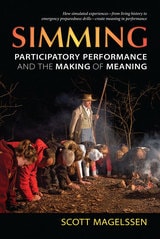
Simming
Participatory Performance and the Making of MeaningScott Magelssen
University of Michigan Press, 2014
At an ecopark in Mexico, tourists pretend to be illegal migrants, braving inhospitable terrain and the U.S. Border Patrol as they attempt to cross the border. At a living history museum in Indiana, daytime visitors return after dark to play fugitive slaves on the Underground Railroad. In the Mojave Desert, the U.S. Army simulates entire provinces of Iraq and Afghanistan, complete with bustling villages, insurgents, and Arabic-speaking townspeople, to train soldiers for deployment to the Middle East. At a nursing home, trainees put on fogged glasses and earplugs, thick bands around their finger joints, and sandbag harnesses to simulate the effects of aging and to gain empathy for their patients.
These immersive environments in which spectator-participants engage in simulations of various kinds—or “simming”—are the subject of Scott Magelssen’s book. His book lays out the ways in which simming can provide efficacy and promote social change through affective, embodied testimony. Using methodology from theater history and performance studies (particularly as these fields intersect with cultural studies, communication, history, popular culture, and American studies), Magelssen explores the ways these representational practices produce, reify, or contest cultural and societal perceptions of identity.

Since When Is Fran Drescher Jewish?
Dubbing Stereotypes in The Nanny, The Simpsons, and The SopranosBy Chiara Francesca Ferrari
University of Texas Press, 2010
"Since when is Fran Drescher Jewish?" This was Chiara Francesca Ferrari's reaction when she learned that Drescher's character on the television sitcom The Nanny was meant to be a portrayal of a stereotypical Jewish-American princess. Ferrari had only seen the Italian version of the show, in which the protagonist was dubbed into an exotic, eccentric Italian-American nanny. Since When Is Fran Drescher Jewish? explores this "ventriloquism" as not only a textual and cultural transfer between languages but also as an industrial practice that helps the media industry foster identification among varying audiences around the globe.
At the heart of this study is an in-depth exploration of three shows that moved from global to local, mapping stereotypes from both sides of the Atlantic in the process. Presented in Italy, for example, Groundskeeper Willie from The Simpsons is no longer a belligerent, alcoholic Scotsman but instead easily becomes a primitive figure from Sardinia. Ironically, The Sopranos—a show built around Italian-Americans—was carefully re-positioned by Italian TV executives, who erased the word "mafia" and all regional references to Sicily. The result of Ferrari's three case studies is evidence that "otherness" transcends translation, as the stereotypes produced by the American entertainment industry are simply replaced by other stereotypes in foreign markets. As American television studios continue to attempt to increase earnings by licensing their shows abroad, Since When Is Fran Drescher Jewish? illuminates the significant issues of identity raised by this ever-growing marketplace, along with the intriguing messages that lie in the larger realm of audiovisual cultural exchange.

Sine Ni Lav Diaz
A Long Take on the Filipino AuteurEdited by Parichay Patra and Michael Kho Lim
Intellect Books, 2021
This original collection considers Lav Diaz and his works without being confined to a specific approach or research method. On the contrary, it touches on nearly every major contemporary academic approach to cinema. Though Diaz’s contributions to slow and durational cinema are well known and his importance in contemporary world cinema is beyond doubt, the director remains largely unexplored in cinema studies. The book addresses this research gap, situating Diaz at the crucial juncture of new auteurism, Filipino New Wave, and transnational cinema, but it does not neglect the industrial-exhibitional coordinates of his cinema.
The first book-length study on the groundbreaking auteur, the collection takes a critical look at his career and corpus from various perspectives, with contributions from cinema studies researchers, film critics, festival programmers, and artists. It offers a nuanced overview of the filmmaker and the cinematic traditions he belongs to for film enthusiasts, researchers, and general readers alike.
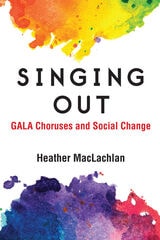
Singing Out
GALA Choruses and Social ChangeHeather MacLachlan
University of Michigan Press, 2020
Pundits often wax eloquent about the power of music, asserting that it can, in some positive way, change the world. Such statements often rest on an unexamined claim that music can and does foster social justice. Singing Out: GALA Choruses and Social Change tackles the premise underlying such claims, analyzing groups of amateur singers who are explicitly committed to an agenda of social justice.
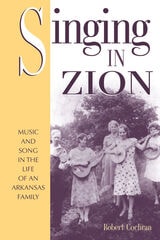
Singing in Zion
Music and Song in the Life of One Arkansas FamilyRobert Cochran
University of Arkansas Press, 1999