Results by title
936 books match the query 'LGBTQ+ Studies' and 73 start with s
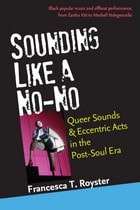
Sounding Like a No-No
Queer Sounds and Eccentric Acts in the Post-Soul EraFrancesca T. Royster
University of Michigan Press, 2012
Sounding Like a No-No traces a rebellious spirit in post–civil rights black music by focusing on a range of offbeat, eccentric, queer, or slippery performances by leading musicians influenced by the cultural changes brought about by the civil rights, black nationalist, feminist, and LGBTQ movements, who through reinvention created a repertoire of performances that have left a lasting mark on popular music. The book's innovative readings of performers including Michael Jackson, Grace Jones, Stevie Wonder, Eartha Kitt, and Meshell Ndegeocello demonstrate how embodied sound and performance became a means for creativity, transgression, and social critique, a way to reclaim imaginative and corporeal freedom from the social death of slavery and its legacy of racism, to engender new sexualities and desires, to escape the sometimes constrictive codes of respectability and uplift from within the black community, and to make space for new futures for their listeners. The book's perspective on music as a form of black corporeality and identity, creativity, and political engagement will appeal to those in African American studies, popular music studies, queer theory, and black performance studies; general readers will welcome its engaging, accessible, and sometimes playful writing style, including elements of memoir.

Sounding Like a No-No
Queer Sounds and Eccentric Acts in the Post-Soul EraFrancesca T. Royster
University of Michigan Press, 2013
Sounding Like a No-No traces a rebellious spirit in post–civil rights black music by focusing on a range of offbeat, eccentric, queer, or slippery performances by leading musicians influenced by the cultural changes brought about by the civil rights, black nationalist, feminist, and LGBTQ movements, who through reinvention created a repertoire of performances that have left a lasting mark on popular music. The book's innovative readings of performers including Michael Jackson, Grace Jones, Stevie Wonder, Eartha Kitt, and Meshell Ndegeocello demonstrate how embodied sound and performance became a means for creativity, transgression, and social critique, a way to reclaim imaginative and corporeal freedom from the social death of slavery and its legacy of racism, to engender new sexualities and desires, to escape the sometimes constrictive codes of respectability and uplift from within the black community, and to make space for new futures for their listeners. The book's perspective on music as a form of black corporeality and identity, creativity, and political engagement will appeal to those in African American studies, popular music studies, queer theory, and black performance studies; general readers will welcome its engaging, accessible, and sometimes playful writing style, including elements of memoir.
Spaces between Us
Queer Settler Colonialism and Indigenous DecolonizationScott Lauria Morgensen
University of Minnesota Press, 2011
We are all caught up in one another, Scott Lauria Morgensen asserts, we who live in settler societies, and our interrelationships inform all that these societies touch. Native people live in relation to all non-Natives amid the ongoing power relations of settler colonialism, despite never losing inherent claims to sovereignty as indigenous peoples. Explaining how relational distinctions of “Native” and “settler” define the status of being “queer,” Spaces between Us argues that modern queer subjects emerged among Natives and non-Natives by engaging the meaningful difference indigeneity makes within a settler society.
Morgensen’s analysis exposes white settler colonialism as a primary condition for the development of modern queer politics in the United States. Bringing together historical and ethnographic cases, he shows how U.S. queer projects became non-Native and normatively white by comparatively examining the historical activism and critical theory of Native queer and Two-Spirit people.
Presenting a “biopolitics of settler colonialism”—in which the imagined disappearance of indigeneity and sustained subjugation of all racialized peoples ensures a progressive future for white settlers—Spaces between Us newly demonstrates the interdependence of nation, race, gender, and sexuality and offers opportunities for resistance in the United States.
Speaking Truths
Young Adults, Identity, and Spoken Word ActivismValerie Chepp
Rutgers University Press, 2022
Drawing upon detailed observations and in-depth interviews, Chepp tells the story of a diverse group of young adults from Washington, D.C. who use spoken word to create a more just and equitable world. Outlining the contours of this approach, she interrogates spoken word activism’s emphasis on personal storytelling and “truth,” the strategic uses of aesthetics and emotions to politically engage across difference, and the significance of healing in sustainable movements for change. Weaving together their poetry and personally told stories, Chepp shows how poets tap into the beautiful, emotional, personal, and therapeutic features of spoken word to empathically connect with others, advance intersectional and systemic analyses of inequality, and make social justice messages relatable across a diverse public. By creating allies and forging connections based on friendship, professional commitments, lived experiences, emotions, artistic kinship, and political views, this activist approach is highly integrated into the everyday lives of its practitioners, online and face-to-face.
Chepp argues that spoken word activism is a product of, and a call to action against, the neoliberal era in which poets have come of age, characterized by widening structural inequalities and increasing economic and social vulnerability. She illustrates how this deeply personal and intimate activist approach borrows from, builds upon, and diverges from previous social movement paradigms. Spotlighting the complexity and mutual influence of modern-day activism and the world in which it unfolds, Speaking Truths contributes to our understanding of contemporary social change-making and how neoliberalism has shaped this political generation’s experiences with social injustice.
Spectacular Passions
Cinema, Fantasy, Gay Male SpectatorshipsBrett Farmer
Duke University Press, 2000
Building on the psychoanalytic concept of the fantasmatic, Farmer works to depathologize gay male subjectivity. While discussing such films as Kiss of the Spider Woman, The Pirate, Suddenly Last Summer, and Sunset Boulevard, and stars ranging from Mae West to Montgomery Clift, Farmer argues that the particularities of gay men’s social and psychic positionings motivate unique receptions of and investments in film. The Hollywood musical, gay camp readings of the extravagant female star, and the explicit homoeroticism of the cinematic male body in gay fanzines are further proof, says Farmer, of how the shifting libidinal profiles of homosexual desire interact with the fantasy scenarios of Hollywood film to produce a range of variable queer meanings.
This fascinating and provocative study makes a significant new contribution to discussions of cinema, spectatorship, and sexuality. As such, it will be welcomed by those in the fields of film theory, queer theory, and cultural studies.
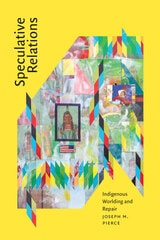
Speculative Relations
Indigenous Worlding and RepairJoseph M. Pierce
Duke University Press, 2025
Split Britches
Fifty Years OnPeggy Shaw and Lois Weaver, Edited by Benjamin Gillespie
University of Michigan Press, 2027
What does it mean to sustain a creative life over fifty years? Split Britches: Fifty Years On offers an intimate look at the enduring collaboration of Peggy Shaw and Lois Weaver, the artists behind the groundbreaking performance troupe Split Britches. The collection highlights Split Britches’ enduring queer and feminist legacies, tracing how their distinctive butch/femme lesbian aesthetic and collaborative performance practice have evolved over five decades and nearly thirty original productions. It foregrounds their shift toward increasingly autobiographical and introspective work, while also situating their later performances within key theatrical, historical, and critical frameworks–paying particular attention to issues of embodiment, aging, the archive, and queer temporality. Bringing together performance scripts, candid interviews, production photos, accessible essays, and video documentation, Split Britches: Fifty Years On demonstrates how Shaw and Weaver pull from the past in order to critique the present. For scholars, artists, and students, the volume's unique combination of primary texts, critical essays, and multimedia resources makes it an essential volume that considers theatre scholarship and practice, queer and feminist discourses, and the evolution of creativity with age and time.

Split
Class Divides UncoveredBen Tippet
Pluto Press, 2020
Foregrounding the economic nature of class, Split challenges the idea that class can be reduced to the cultural. From precarious labor to rising debt; from the housing crisis to environmental catastrophe; from an inflated prison population to the welfare state; Ben Tippet traces the class divide at the heart of all exploitation. Myth-busting meritocracy, he exposes the role that tax havens, colonialism and inheritance play in the wealth of the elite.
Split highlights the potential for a diverse and eclectic working-class bloc to fight back in an age of austerity and uncertainty.
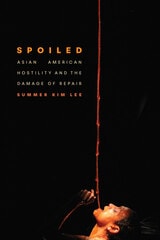
Spoiled
Asian American Hostility and the Damage of RepairSummer Kim Lee
Duke University Press, 2025

Standardizing Sex
A History of Trans MedicineKetil Slagstad
University of Chicago Press, 2025
Standardizing Sex traces the emergence of trans medicine in Scandinavia in the twentieth century, exploring the construction and negotiation of medical expertise among medical professionals, patients, and activists in the media and government bureaucracy. The book combines the author’s analysis of medical records and other archival sources with oral history interviews with former patients, activists, doctors, psychologists, and civil servants. Physician-historian Ketil Slagstad uses the Scandinavian story of sex reassignment to anchor not only the role of the state but also bureaucracy and social rights. Scandinavian countries, he shows, played a foundational role in the emergence of trans medicine internationally. As a result, Standardizing Sex tells a transnational history of medicine that sheds light on a set of relations and problems that continue to impact discussions of trans medicine and trans rights around the world.
Slagstad’s sources offer a rare opportunity to explore the emergence of trans medicine in action in the clinic, laboratory, waiting room, and operating room, as well as in the bureaucrat’s office, on the psychologist’s couch, and in the publications and meetings of activist groups. Together, these sources allow for the analysis of the increasingly complex negotiations of nosological criteria, medical knowledge, and medical practices in a formative period for transgender medicine. More generally, the book offers a story about the reshaping of the normal and the pathological in modern societies.
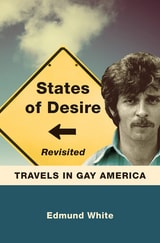
States of Desire Revisited
Travels in Gay AmericaEdmund White
University of Wisconsin Press, 2014
White frames those past travels with a brief, bracing review of gay America since the 1970s ("now we were all supposed to settle down with a partner in the suburbs and adopt a Korean daughter"), and a reflection on how Internet culture has diminished unique gay places and scenes but brought isolated individuals into a global GLBTQ community.
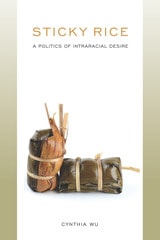
Sticky Rice
A Politics of Intraracial DesireCynthia Wu
Temple University Press, 2018
Cynthia Wu’s provocative Sticky Rice examines representations of same-sex desires and intraracial intimacies in some of the most widely read pieces of Asian American literature. Analyzing canonical works such as John Okada’s No-No Boy, Monique Truong’s The Book of Salt, H. T. Tsiang’s And China Has Hands, and Lois-Ann Yamanaka’s Blu’s Hanging, as well as Philip Kan Gotanda’s play, Yankee Dawg You Die, Wu considers how male relationships in these texts blur the boundaries among the homosocial, the homoerotic, and the homosexual in ways that lie beyond our concepts of modern gay identity.
The “sticky rice” of Wu’s title is a term used in gay Asian American culture to describe Asian American men who desire other Asian American men. The bonds between men addressed in Sticky Rice show how the thoughts and actions founded by real-life intraracially desiring Asian-raced men can inform how we read the refusal of multiple normativities in Asian Americanist discourse. Wu lays bare the trope of male same-sex desires that grapple with how Asian America’s internal divides can be resolved in order to resist assimilation.

Still Dangerous!
The Harmony Hammond ReaderHarmony Hammond. Edited by Tirza True Latimer.
Duke University Press, 2026
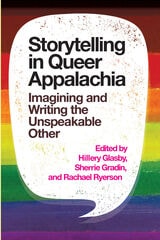
Storytelling in Queer Appalachia
Imagining and Writing the Unspeakable OtherHillery Glasby
West Virginia University Press, 2020
Focusing especially on disciplinary approaches from rhetoric and composition, the volume explores sexual identities in rural places, community and individual meaning-making among the Appalachian diaspora, the storytelling infrastructure of queer Appalachia, and the role of the metronormative in discourses of difference. Storytelling in Queer Appalachia affirms queer people, fights for queer visibility over queer erasure, seeks intersectional understanding, and imagines radically embodied queer selves through social media.

Straight Korean Female Fans and Their Gay Fantasies
Jungmin Kwon
University of Iowa Press, 2019
The FANtasy subculture started forming around text-based media, such as yaoi, fan fiction, and U.S. gay-themed dramas (like Will & Grace), and has been influenced by diverse social, political, and economic conditions, such as the democratization of Korea, an open policy toward foreign media products, the diffusion of consumerism, government investment in the culture, the Hollywoodization of the film industry, and the popularity of Korean culture abroad. While much scholarly attention has been paid to female fandom for homoerotic cultural texts in many countries, this book seeks to explore a relatively neglected aspect of the subculture: its location in and influence on Korean society at large.
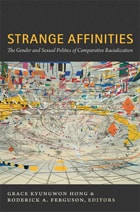
Strange Affinities
The Gender and Sexual Politics of Comparative RacializationGrace Kyungwon Hong and Roderick A. Ferguson, eds.
Duke University Press, 2011
Contributors
Victor Bascara
Lisa Marie Cacho
M. Bianet Castellanos
Martha Chew Sánchez
Roderick A. Ferguson
Grace Kyungwon Hong
Helen H. Jun
Kara Keeling
Sanda Mayzaw Lwin
Jodi Melamed
Chandan Reddy
Ruby C. Tapia
Cynthia Tolentino
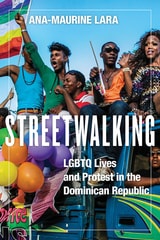
Streetwalking
LGBTQ Lives and Protest in the Dominican RepublicAna-Maurine Lara
Rutgers University Press, 2021
Streetwalking: LGBTQ Lives and Protest in the Dominican Republic is an exploration of the ways that lesbian, gay, bisexual, trans and queer persons exercise power in a Catholic Hispanic heteropatriarchal nation-state, namely the Dominican Republic. Lara presents the specific strategies employed by LGBTQ community leaders in the Dominican Republic in their struggle for subjectivity, recognition, and rights. Drawing on ethnographic encounters, film and video, and interviews, LGBTQ community leaders teach readers about streetwalking, confrontación, flipping the script, cuentos, and the use of strategic universalisms in the exercise of power and agency. Rooted in Maria Lugones's theorization of streetwalker strategies and Audre Lorde's theorization of silence and action, this text re-imagines the exercise and locus of power in examples provided by the living, thriving LGBTQ community of the Dominican Republic.

Structural Intimacies
Sexual Stories in the Black AIDS EpidemicMackenzie, Sonja
Rutgers University Press, 2013
Sonja Mackenzie elegantly argues that structural vulnerability is felt—quite literally—in the blood, in the possibilities and constraints on sexual lives, and in the rhetorics of their telling. The circulation of structural intimacies in daily life and in the political domain reflects possibilities for seeking what Mackenzie calls intimate justice at the nexus of cultural, economic, political, and moral spheres. Structural Intimacies presents a compelling case: in an era of deepening medicalization of HIV/AIDS, public health must move beyond individual-level interventions to community-level health equity frames and policy changes
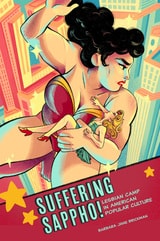
Suffering Sappho!
Lesbian Camp in American Popular CultureBarbara Jane Brickman
Rutgers University Press, 2024
Offering the first major consideration of lesbian camp in American popular culture, Suffering Sappho! traces a larger-than-life lesbian menace across midcentury media forms to propose five prototypical queer icons—the sicko, the monster, the spinster, the Amazon, and the rebel. On the pages of comics and sensational pulp fiction and the dramas of television and drive-in movies, Barbara Jane Brickman discovers evidence not just of campy sexual deviants but of troubling female performers, whose failures could be epic but whose subversive potential could inspire.
Supplemental images of interest related to this title: George and Lomas; Connie Minerva; Cat On Hot Tin; and Beulah and Oriole.



Sugarless
A NovelJames Magruder
University of Wisconsin Press, 2009
After he brings two girls in speech class to tears by reading a story aloud, Rick is coaxed onto the interscholastic forensics team to perform an eight-minute dramatic interpretation of The Boys in the Band, the controversial sixties play about homosexuality. Unexpectedly successful at this oddball event, Rick begins winning tournaments and making friends with his teammates.
Rick also discovers the joys of sex—with a speech coach from a rival school—just as his mother, reacting to a deteriorating home environment, makes an unnerving commitment to Christ. The newly confident Rick assumes this too shall pass—until the combined forces of family, sex, and faith threaten to undo him at the state meet in Peoria.
James Magruder’s Sugarless offers a ruefully entertaining take on the simultaneous struggles of coming-out, coming-of-age, and coming-to-Jesus.
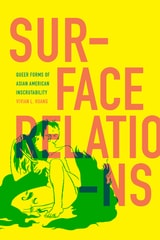
Surface Relations
Queer Forms of Asian American InscrutabilityVivian L. Huang
Duke University Press, 2022
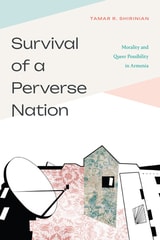
Survival of a Perverse Nation
Morality and Queer Possibility in ArmeniaTamar R. Shirinian
Duke University Press, 2024

Surviving Madness
A Therapist's Own StoryBetty Berzon
University of Wisconsin Press, 2002
Betty Berzon, renowned psychotherapist and author of the bestselling book Permanent Partners, tells her own incredible story here. Berzon’s journey from psychiatric patient on suicide watch—her wrists tethered to the bed rails in a locked hospital ward—to her present role as a groundbreaking therapist and gay pioneer makes for purely compelling reading.
Berzon is recognized today as a trailblazing co-founder of a number of important lesbian and gay organizations and one of the first therapists to focus on means of developing healthy gay relationships and overcoming homophobia. Her sometimes bumpy road to success never fails to fascinate. Along the way she encounters such luminaries as Anaïs Nin, Eleanor Roosevelt, the Sitwells, Evelyn Hooker, and Paul Monette. Her recollections here provide a collective portrait of her fellow pioneers and a stirring lesson in twentieth-century history.
It is, however, the intimate story of Berzon’s own private passage toward self-discovery—from mental breakdown and suicide attempts, through hospitalization, eventual triumphant recovery, and her own coming out as an open lesbian at the age of forty—that makes this memoir an urgent, insightful, and deeply emotional testament to human survival.