Results by title
998 books match the query 'Life' and 64 start with s
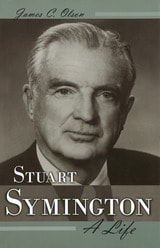
Stuart Symington
A LifeJames C. Olson
University of Missouri Press, 2003
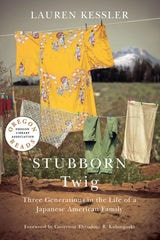
Stubborn Twig
Three Generations in the Life of a Japanese American FamilyLauren Kessler
Oregon State University Press, 2005
To celebrate Oregon's 150th birthday, the Oregon Library Association has chosen one book for all Oregonians to read: Stubborn Twig. Lauren Kessler's award-winning book, the selection for the statewide Oregon Reads program, is a classic story of immigrants making their way in a new land. It is a living work of social history that rings with the power of truth and the drama of fiction, a moving saga about the challenges of becoming an American.
Masuo Yasui traveled from Japan across the other Oregon Trail — the one that spanned the Pacific Ocean — in 1903. Like most immigrants, he came with big dreams and empty pockets. Working on the railroads, in a cannery, and as a houseboy before settling in Hood River, Oregon, he opened a store, raised a large family, and became one of the area's most successful orchardists.
As Masuo broke the race barrier in the local business community, his American-born children broke it in school, scouts and sports, excelling in most everything they tried. For the Yasuis' first-born son, the constraints and contradictions of being both Japanese and American led to tragedy. But his seven brothers and sisters prevailed, becoming doctors, lawyers, teachers, and farmers. It was a classic tale of the American dream come true — until December 7, 1941, changed their lives forever.
The Yasuis were among the 120,000 people of Japanese ancestry along the West Coast who were forced from their homes and interned in vast inland "relocation camps." Masuo was arrested as a spy and imprisoned for the rest of the war; his family was shamed and broken. Yet the Yasuis endured, as succeeding generations took up the challenge of finding their identity as Americans. Stubborn Twig is their story — a story at once tragic and triumphant, one that bears eloquent witness to both the promise and the peril of America.
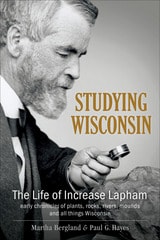
Studying Wisconsin
The Life of Increase Lapham, early chronicler of plants, rocks, rivers, mounds and all things WisconsinMartha Bergland
Wisconsin Historical Society Press, 2014
With masterful storytelling, Bergland and Hayes demonstrate how Lapham blended his ravenous curiosity with an equable temperament and a passion for detail to create a legacy that is still relevant today.
—John Gurda
In this long overdue tribute to Wisconsin’s first scientist, authors Martha Bergland and Paul G. Hayes explore the remarkable life and achievements of Increase Lapham (1811–1875). Lapham’s ability to observe, understand, and meticulously catalog the natural world marked all of his work, from his days as a teenage surveyor on the Erie Canal to his last great contribution as state geologist.
Self-taught, Lapham mastered botany, geology, archaeology, limnology, mineralogy, engineering, meteorology, and cartography. A prolific writer, his 1844 guide to the territory was the first book published in Wisconsin. Asked late in life which field of science was his specialty, he replied simply, “I am studying Wisconsin.”
Lapham identified and preserved thousands of botanical specimens. He surveyed and mapped Wisconsin’s effigy mounds. He was a force behind the creation of the National Weather Service, lobbying for a storm warning system to protect Great Lakes sailors. Told in compelling detail through Lapham’s letters, journals, books, and articles, Studying Wisconsin chronicles the life and times of Wisconsin’s pioneer citizen-scientist.
Subject to Death
Life and Loss in a Buddhist WorldRobert Desjarlais
University of Chicago Press, 2016
Subjective Lives and Economic Transformations in Mongolia
Life in the GapRebecca M. Empson
University College London, 2020
Suburban Urbanities
Suburbs and the Life of the High StreetEdited by Laura Vaughan
University College London, 2015
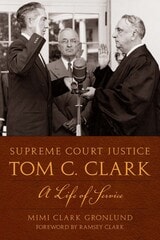
Supreme Court Justice Tom C. Clark
A Life of ServiceBy Mimi Clark Gronlund
University of Texas Press, 2010
An associate justice on the renowned Warren Court whose landmark ruling in Brown v. Board of Education overturned racial segregation in schools and other public facilities, Tom C. Clark was a crusader for justice throughout his long legal career. Among many tributes Clark received, Supreme Court Chief Justice Warren Burger opined that "no man in the past thirty years has contributed more to the improvement of justice than Tom Clark."
Supreme Court Justice Tom C. Clark is the first biography of this important American jurist. Written by his daughter, Mimi Clark Gronlund, and based on interviews with many of Clark's judicial associates, friends, and family, as well as archival research, it offers a well-rounded portrait of a lawyer and judge who dealt with issues that remain in contention today—civil rights, the rights of the accused, school prayer, and censorship/pornography, among them. Gronlund explores the factors in her father's upbringing and education that helped form his judicial philosophy, then describes how that philosophy shaped his decisions on key issues and cases, including the internment of Japanese Americans during World War II, the investigation of war fraud, the Truman administration's loyalty program (an anti-communist effort), the Brown decision, Mapp v. Ohio (protections against unreasonable search and seizure), and Abington v. Schempp (which overturned a state law that required reading from the Bible each day in public schools).
Survival under Dictatorships
Life and Death in Nazi and Communist RegimesLászló Borhi
Central European University Press, 2024
A complex array of individual responses to the abuse of power by the state is represented in this book in three horrific episodes in the history of East-Central Europe. The three events followed each other within a span of about ten years: the deportation and murder of Hungarian Jews in Nazi death and labor camps; the Arrow Cross terrorist rule in Budapest; and finally the Stalinist terror in Hungary and East-Central Europe. Through the prism of survival, László Borhi explores the relationship between the individual and power, attempting to understand the mechanism of oppression and terror produced by arbitrary, unbridled power through the experience of normal people.
Despite the obvious peculiarities of time and place, the Hungarian cases convey universal lessons about the Holocaust, Nazism, and Stalinism. In the author's conception, the National Socialist and Stalinist experiences are linked on several levels. Both regimes defended their visions of the future against social groups whom they saw as implacable enemies of those visions, and who therefore had to be destroyed for sake of social perfection. Furthermore, the social practices of National Socialism were passed on. And although Stalinism was imposed by a foreign power, some of the survival skills for coping with it were rehearsed under the previous hellish experience.
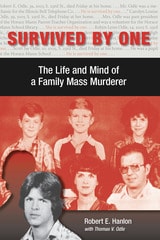
Survived by One
The Life and Mind of a Family Mass MurdererRobert E. Hanlon, PhD with Thomas V. Odle
Southern Illinois University Press, 2013
On November 8, 1985, 18-year-old Tom Odle brutally murdered his parents and three siblings in the small southern Illinois town of Mount Vernon, sending shockwaves throughout the nation. The murder of the Odle family remains one of the most horrific family mass murders in U.S. history. Odle was sentenced to death and, after seventeen years on death row, expected a lethal injection to end his life. However, Illinois governor George Ryan’s moratorium on the death penalty in 2000, and later commutation of all death sentences in 2003, changed Odle’s sentence to natural life.
The commutation of his death sentence was an epiphany for Odle. Prior to the commutation of his death sentence, Odle lived in denial, repressing any feelings about his family and his horrible crime. Following the commutation and the removal of the weight of eventual execution associated with his death sentence, he was confronted with an unfamiliar reality. A future. As a result, he realized that he needed to understand why he murdered his family. He reached out to Dr. Robert Hanlon, a neuropsychologist who had examined him in the past. Dr. Hanlon engaged Odle in a therapeutic process of introspection and self-reflection, which became the basis of their collaboration on this book.
Hanlon tells a gripping story of Odle’s life as an abused child, the life experiences that formed his personality, and his tragic homicidal escalation to mass murder, seamlessly weaving into the narrative Odle’s unadorned reflections of his childhood, finding a new family on death row, and his belief in the powers of redemption.
As our nation attempts to understand the continual mass murders occurring in the U.S., Survived by One sheds some light on the psychological aspects of why and how such acts of extreme carnage may occur. However, Survived by One offers a never-been-told perspective from the mass murderer himself, as he searches for the answers concurrently being asked by the nation and the world.
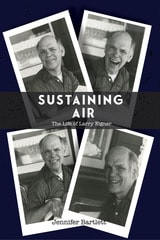
Sustaining Air
The Life of Larry EignerJennifer Bartlett
University of Alabama Press, 2023
The biography of a poet seminal to postwar American poetry
The poet Larry Eigner (1927–1996) was a key figure in New American poetry, which grew out of the Black Mountain School and San Francisco Renaissance, and a major influence on the Language poets. Eigner also had cerebral palsy as the result of an accident at birth. It is fortuitous that the poet lived his life in two locations vibrant in both poetics and disability activism. Except for brief periods attending camp and school, he lived with his parents in Swampscott, Massachusetts, until the age of 51. Later, he moved to Berkeley, California, at the height of the disability rights movement. In the 1950s, Eigner attended Camp Jened, which later became famous in the film Crip Camp.
Bartlett’s biography covers every significant phase of Eigner’s life: his childhood and young adulthood when he began typing poems with one finger on the manual typewriter that was a bar mitzvah gift; his first publications and the maturation of his poetic interests through correspondence with poets of the era; and after his move to Berkeley, the ever-expanding circle of friends, poets, caretakers, and collaborators he established there. The result is a deeply insightful account of an utterly distinctive voice whose influence widens and deepens with each new generation that encounters him.
Sweet Science
Romantic Materialism and the New Logics of LifeAmanda Jo Goldstein
University of Chicago Press, 2017
Goldstein puts apparently literary projects, such as William Blake’s poetry of embryogenesis, Goethe’s journals On Morphology, and Percy Shelley’s “poetry of life,” back into conversation with the openly poetic life sciences of Erasmus Darwin, J. G. Herder, Jean-Baptiste Lamarck, and Étienne Geoffroy Saint-Hilaire. Such poetic sciences, Goldstein argues, share in reviving Lucretius’s De rerum natura to advance a view of biological life as neither self-organized nor autonomous, but rather dependent on the collaborative and symbolic processes that give it viable and recognizable form. They summon De rerum natura for a logic of life resistant to the vitalist stress on self-authorizing power and to make a monumental case for poetry’s role in the perception and communication of empirical realities. The first dedicated study of this mortal and materialist dimension of Romantic biopoetics, Sweet Science opens a through-line between Enlightenment materialisms of nature and Marx’s coming historical materialism.
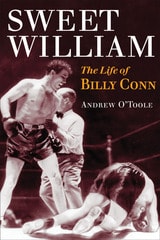
Sweet William
The Life of Billy ConnAndrew O'Toole
University of Illinois Press, 2009
An Irish working-class hero of Pittsburgh, Billy Conn captured hearts through his ebullient personality, stellar boxing record, and good looks. A light heavyweight boxing champion best remembered for his sensational near-defeat of heavyweight champion Joe Louis in 1941, Conn is still regarded as one of the greatest fighters of all time. Andrew O'Toole chronicles the boxing, Hollywood, and army careers of "the Pittsburgh Kid" by drawing from newspaper accounts, Billy's personal scrapbooks, and fascinating interviews with family. Presenting an intimate look at the champion's relationships with his girlfriend, manager, and rivals, O'Toole compellingly captures the personal life of a public icon and the pageantry of sports during the 1930s and '40s.
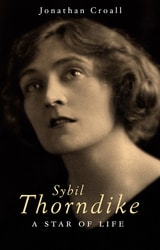
Sybil Thorndike
A Star Of LifeJonathan Croall
Haus Publishing, 2009

Sylvia Pankhurst
A Life in Radical PoliticsMary Davis
Pluto Press, 1999