Results by title
941 books match the query 'Military' and 60 start with s
Strike From the Sky
The History of Battlefield Air Attack, 1910-1945Richard P. Hallion, foreword by R. A. Mason
University of Alabama Press, 2010
The definitive history of how air power transformed the battlefield between two world wars.
Strike from the Sky: The History of Battlefield Air Attack, 1910–1945 is a comprehensive examination of the emergence and evolution of battlefield aviation during the first half of the twentieth century. Written by renowned aviation historian Richard P. Hallion, the book traces the development of air-ground warfare from the earliest military use of aircraft in combat through the decisive campaigns of World War II. Combining operational history with analysis of doctrine, technology, and leadership, Hallion reveals how battlefield air attack became a critical element of modern military strategy.
The study explores major conflicts including the First World War, the Spanish Civil War, colonial campaigns, and the global battles of World War II. Hallion examines the evolution of close air support, air interdiction, reconnaissance, command and control systems, and the aircraft that carried out these missions. He also analyzes how military organizations adapted to the challenges of integrating air and ground forces, creating doctrines that continue to influence military operations today.
Strike from the Sky demonstrates how advances in aviation transformed the battlefield and altered the conduct of war. It remains an essential resource for understanding the origins of modern air power and the technological and strategic innovations that reshaped twentieth-century combat.
Strong Soldiers, Failed Revolution
The State and Military in Burma, 1962-88Yoshihiro Nakanishi
National University of Singapore Press, 2013
The tatmadaw’s anti-communist propaganda during the 1950s was a key element in state ideology under the Ne Win regime, and the direct participation of tatmadaw officers in the Burma Socialist Programme Party and government ministries at the national and local level transformed the political party system and civilian bureaucracy. Personal relationships — between Ne Win and the tatmadaw officer corps, and within the military — were central to the growing influence of the military, and to the outcome of the political crisis and subsequent military coup d’état in 1988.
Nakanishi’s discussion of these processes reveals many heretofore-unknown facts about this “dark age” in the country’s political history, and highlights its institutional legacy for the post-1988 military regime and the reformist government that succeeded it. His thought-provoking conclusions are significant for Southeast Asia specialists and for students of politics generally, and his insights will be useful for anyone seeking to engage with Myanmar as it comes to terms with an outside world it once kept at arm’s length.
Struggle for the Gulf Borderlands
The Creek War and the Battle of New Orleans, 1812-1815Frank L. Owsley
University of Alabama Press, 2000
Using American, British, and Spanish documents, many previously unknown, Frank Owsley’s study establishes the Creek War and the struggle to control the Gulf borderlands as integral parts of the War of 1812. The war between the United States and a large part of the Creek nation is usually studied as local or regional history. These documentary sources, however, show the larger picture. They show Spain to have been a major influence in the Creek War and indicate the extent to which the British were aiding the Indians and using them to redirect American troops. On the other hand, Andrew Jackson, in charge of the American forces on the Gulf Coast, emerged from the conflict as a first-rate military commander. His victories on the Gulf gave the West a leader and aided in shifting political power from the eastern seaboard to the South and West.
Owsley concludes that the victories in the Gulf region were of sufficient magnitude to justify the claim that the War of 1812 was not a draw but a decisive American victory and that had there been a general of Jackson's caliber on the northern frontier, the United States might have had a clear-cut victory there.
As a result of the war, the United States held its claim on Louisiana, annexed the Mobile district, forced Spain out of Florida, and broke the power of the southern Indians, thus opening vast lands for settlement from the new nation on the eastern seaboard.
Success and Failure in Limited War
Information and Strategy in the Korean, Vietnam, Persian Gulf, and Iraq WarsSpencer D. Bakich
University of Chicago Press, 2014
Traditional assessments of wartime strategy focus on the relationship between the military and civilians, but Bakich argues that we must take into account the information flow patterns among top policy makers and all national security organizations. By examining the fate of American military and diplomatic strategy in four limited wars, Bakich demonstrates how not only the availability and quality of information, but also the ways in which information is gathered, managed, analyzed, and used, shape a state’s ability to wield power effectively in dynamic and complex international systems.
Utilizing a range of primary and secondary source materials, Success and Failure in Limited War makes a timely case for the power of information in war, with crucial implications for international relations theory and statecraft.
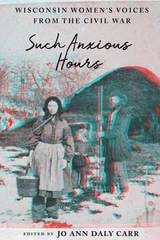
Such Anxious Hours
Wisconsin Women's Voices from the Civil WarJo Ann Daly Carr
University of Wisconsin Press, 2020
In Such Anxious Hours, Jo Ann Daly Carr places this material in historical context, detailing what was happening simultaneously in the nation, state, and local communities. Civil War history enthusiasts will appreciate these enlightening perspectives that demonstrate the variety of experiences in the Midwest during the bloody conflict.
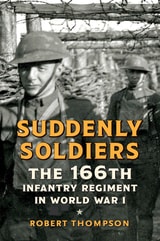
Suddenly Soldiers
The 166th Infantry Regiment in World War IRobert Thompson
Westholme Publishing, 2020
Finalist for the 2021 Army Historical Foundation Distinguished Writing Awards in Unit Histories
Americans Face the Horror of a Modern European War for the First Time
When America entered World War I in April 1917, state National Guard units had never planned to mobilize for this kind of war, and the men who made up the hometown companies of each regiment never imagined that they would be asked to fight in what was then the most savage war in human history—they were “innocents” being thrown into a horrendous European conflagration. Made up of companies from ten Ohio towns, the 166th Infantry Regiment became part of the famous 42nd Division, known as the “Rainbow Division.” They were the third American division to arrive in France, where they fought courageously in the trenches at Lunéville and Baccarat before being a key part of the American effort in the Second Battle of the Marne and the Saint Mihiel and Meuse-Argonne offensives. Despite their initial lack of training in modern warfare and weapons, the 166th Infantry compiled an impressive combat record. However, that record came at a terrible cost, with the regiment suffering over two thousand casualties in just nine months of fighting. While they battled the Germans, these hometown Guardsmen lived in trenches and foxholes for weeks at a time, while subsisting on canned beef and coffee amid near constant rain, deep mud, rats, and body lice that made their lives miserable. Because of poor planning and leadership from higher headquarters, they were often asked to achieve impossible objectives amid withering enemy machine-gun fire without proper logistics or artillery support. Yet, despite these challenges, they would persevere, overcome, and emerge victorious.
Using regimental histories and the letters and diaries of the soldiers who fought in France, Suddenly Soldiers: The 166th Infantry Regiment in World War I by author and historian Robert Thompson tells the compelling story of the young men—“citizen soldiers”—who have always borne the cost of America’s freedom with quiet courage.
Suffering Made Real
American Science and the Survivors at HiroshimaM. Susan Lindee
University of Chicago Press, 1994
Suffering Made Real is the first comprehensive history of the ABCC's research on how radiation affected the survivors of the atomic bomb. Arguing that Cold War politics and cultural values fundamentally shaped the work of the ABCC, M. Susan Lindee tells the compelling story of a project that raised disturbing questions about the ethical implications of using human subjects in scientific research.
How did the politics of the emerging Cold War affect the scientists' biomedical research and findings? How did the ABCC document and publicly present the effects of radiation? Why did the ABCC refuse to provide medical treatment to the survivors? Through a detailed examination of ABCC policies, archival materials, the minutes of committee meetings, newspaper accounts, and interviews with ABCC scientists, Lindee explores how political and cultural interests were reflected in the day-to-day operations of this controversial research program.
Set against a period of conflicting views of nuclear weapons and nuclear power, Suffering Made Real follows the course of a politically charged research program and reveals in detail how politics and cultural values can shape the conduct, results, and uses of science.
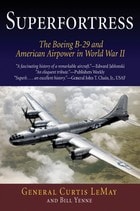
Superfortress
The Boeing B-29 and American Airpower in World War IICurtis LeMay
Westholme Publishing, 2007
"A fascinating history of a remarkable aircraft."—Edward Jablonski
"An eloquent tribute." —Publishers Weekly
"Superb. . . . an excellent history." —General John T. Chain, Jr. USAF
Among the most sophisticated aircraft flown during World War II, the Boeing B-29 Superfortress was designed to replace the B-17 as the primary long-range bomber of the U.S. Army Air Forces. With its distinctive glazed nose and long, thin wings that provided both speed at high altitude and stability at takeoff and landing, the Superfortress was the first operational bomber with a pressurized crew cabin and featured advanced radar and avionics. Armed with remote-controlled machine gun turrets and a 20,000 pound bomb load, it was the first USAAF bomber capable of mastering the vast distances of the Pacific Theater of World War II. The prototype flew in September 1942 but a series of post-production modifications delayed the bomber's first mission until April 1944. Superfortresses began attacking Japan in daylight with conventional ordnance from high altitude, but their mission was redirected in March 1945, with massive low-level formations dropping incendiary bombs! at night on Japanese cities. The ensuing firestorms, followed by the complete destruction of Hiroshima and Nagasaki by atomic bombs dropped from two specially modified "silverplate" B-29s, forced Japan to cease fighting.
Written by the man who led the B-29 into combat, Superfortress: The Boeing B-29 and American Airpower in World War II is an important document of one of the most turbulent times in world history. General Curtis LeMay recalls the early debate about whether or not the United States needed a long-range bomber, how the B-29 was created and produced despite the enormous logistical difficulties of the design, and the decision to conduct fire-bombings against Japan and ultimately drop the atomic bomb. Highly praised when it was first published, this new edition is complete with photographs, a new introduction, and statistical tables.
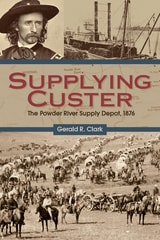
Supplying Custer
The Powder River Supply Depot, 1876Gerald R. Clark
University of Utah Press, 2014
The book details the items recovered archaeologically, including ale and soda bottles, cartridges, packing crates, and a horseshoe and ceramic doll. It also addresses the army’s knowledge of this area and how the supply depot fit into the broader military campaign. This book connects archaeology and history to explore how the American military planned, maneuvered, and operated on the northern plains from the end of the Civil War through 1876.

Surviving the Upheaval of Arctic War
Evacuation and Return of the Sámi People in Sápmi and Finland During and After the Second World WarVeli-Pekka Lehtola
University of Alaska Press, 2021