Results by title
857 books match the query 'Schools' and 60 start with s

Straight A's
Asian American College Students in Their Own WordsChristine R. Yano and Neal K. Adolph Akatsuka, editors
Duke University Press, 2018
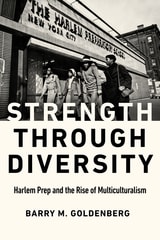
Strength through Diversity
Harlem Prep and the Rise of MulticulturalismBarry M. Goldenberg
Rutgers University Press, 2025
strengththroughdiversity.com
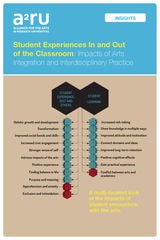
Student Experiences In and Out of the Classroom
Impacts of Arts Integration and Interdisciplinary PracticeGabriel Harp
A2RU Intervals, 2020

Studious Drift
Movements and Protocols for a Postdigital EducationPeter Hyland
University of Minnesota Press, 2022
What kind of university is possible when digital tools are not taken for granted, but hacked for a more experimental future?
The global pandemic has underscored contemporary reliance on digital environments. This is particularly true among schools and universities, which, in response, shifted much of their instruction online. Because the rise of e-learning logics, ed-tech industries, and enterprise learning-management systems all threaten to further commodify and instrumentalize higher education, these technologies and platforms have to be creatively and critically struggled over.
Studious Drift intervenes in this struggle by reviving the relationship between studying and the generative space of the studio in service of advancing educational experimentation for a world where digital tools have become a permanent part of education. Drawing on Alfred Jarry’s pataphysics, the “science of imaginary solutions,” this book reveals how the studio is a space-time machine capable of traveling beyond the limits of conventional online learning to redefine education as interdisciplinary, experimental, public study.

Study Without Ends
Aesthetic Education in Neoliberal Latin AmericaD. Bret Leraul
Northwestern University Press, 2026
Calls for aesthetic education to unite cultural practices of radical imagination with everyday practices of care
While Latin America was neoliberalism’s laboratory, Argentina and Chile have been crucibles for its cultural logics. In this book, D. Bret Leraul examines the rise of neoliberal culture in the Southern Cone through the educational infrastructures that disseminate and reproduce it. Leraul draws on literature and criticism, the history of higher education, and examples of recent social movements to propose a theory of cultural production for social transformation.
Study Without Ends charts the cultural consequences of introducing a neoliberal rationality into the region’s higher education landscape. The university’s increasing centrality within the literary institution and the rise of theoretical prose fiction suggest that poetics today is less about crafting literary works than instructing readers. At the same time, despite efforts to reduce education to human capital investment, it remains a process of personal and social transformation, as recent activism by Chilean students and Argentinean unemployed workers shows. In response to the compounding crises of social reproduction represented by the informal work and precarious livelihoods of people rendered surplus populations, and inspired by the decommodified labor of students, artists, women, and the unemployed, Leraul calls for a materialist aesthetic education that unites artistic culture’s practices of radical imagination and everyday culture’s practices of care.
Suddenly Diverse
How School Districts Manage Race and InequalityErica O. Turner
University of Chicago Press, 2020
Suddenly Diverse is an ethnographic account of two school districts in the Midwest responding to rapidly changing demographics at their schools. It is based on observations and in-depth interviews with school board members and superintendents, as well as staff, community members, and other stakeholders in each district: one serving “Lakeside,” a predominately working class, conservative community and the other serving “Fairview,” a more affluent, liberal community. Erica O. Turner looks at district leaders’ adoption of business-inspired policy tools and the ultimate successes and failures of such responses. Turner’s findings demonstrate that, despite their intentions to promote “diversity” or eliminate “achievement gaps,” district leaders adopted policies and practices that ultimately perpetuated existing inequalities and advanced new forms of racism.
While suggesting some ways forward, Suddenly Diverse shows that, without changes to these managerial policies and practices and larger transformations to the whole system, even district leaders’ best efforts will continue to undermine the promise of educational equity and the realization of more robust public schools.

Summers Off?
A History of U.S. Teachers' Other Three MonthsChristine A. Ogren
Rutgers University Press, 2026
Sunk Cost
Who’s to Blame for the Nation’s Broken Student Loan System and How to Fix ItJillian Berman
University of Chicago Press, 2025
Student-loan horror stories are a dime a dozen. But students today are faced with a seemingly insurmountable paradox: Research consistently shows that the clearest viable option to financial stability is a college degree. But if and when Americans decide to pursue diplomas, student loan payments quickly follow, and even after securing full-time employment, many borrowers struggle to make ends meet for years. In Sunk Cost, journalist Jillian Berman explores how the nation’s student loan program went from a well-intentioned initiative aimed at helping low- and middle-income students afford college to one that traps borrowers in long-term debt.
Berman interviewed dozens of borrowers and policymakers and dug into the archives to unearth the true causes of the student loan problem. A couple of generations ago, policy makers generously subsidized Americans’ college educations because they knew it would be advantageous for the entire country: a more educated population meant better quality of life for all. But today, higher education is viewed as an individual goal, so students and their families are expected to be on the hook for it themselves. Berman explains how this enormous shift happened, which industries benefit from it, and what it means for college-going Americans today. She shares real-life stories of college graduates who are being crushed under some of the harshest consequences of the student loan system. These borrowers pursued higher education in hopes of a better life and yet some have been trapped in debt for decades, making it difficult to put food on the table, much less imagine a life beyond debt.
By connecting personal accounts to the policy history of student loans, Berman makes clear that if American society continues to push students toward higher education, but fails to truly subsidize it, the financial strain will become unbearable for all but the most privileged. The current system is broken, but Berman proposes that significant changes are possible, and will require political will from state lawmakers and Congress, along with a philosophical shift, to tackle one of the largest consumer finance challenges of our time.
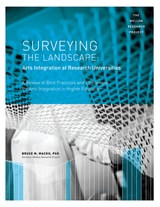
Surveying the Landscape
Arts Integration at Research Universities: A Review of Best Practices and Challenges for Arts Integration in Higher EducationBruce M. Mackh, PhD
Michigan Publishing Services, 2015
This study presents “best practices in the integration of arts practice in U.S. research universities . . . , fulfill[ing] the need for a document that articulates models, obstacles, implementation strategies, costs, and impact on students and faculty as well as on research, practice, and teaching in other knowledge areas” (ArtsEngine). Rather than providing a detailed set of instructions, this document maps the landscape of arts integration at 30 partner institutions in the Alliance for the Arts in Research Universities (a2ru) and at 16 other institutions. It highlights aspirational models and presents an overall guide to current practices linking the arts to other learning areas.
Sustaining Interdisciplinary Collaboration
A Guide for the AcademyRegina Bendix
University of Illinois Press, 2017