Results by title
254 books match the query 'Sex' and 63 start with s

Sexual Nature/Sexual Culture
Edited by Paul R. Abramson and Steven D. Pinkerton
University of Chicago Press, 1995
Using as its center the idea that sexual pleasure is the primary motivational force behind human sexuality and that reproduction is simply a byproduct of the pleasurability of sex, this book examines sexuality at the individual, societal, and cultural levels. Beginning with a look at the evolution of sexuality in humans and other primates, the essays in the first section examine the sexual ingenuity of primates, the dominant theories of sexual behavior, the differences in male and female sexual interest and behavior, and the role of physical attractiveness in mate selection. The focus then shifts to biological approaches to sexuality, especially the genetic and hormonal origins of sexual orientation, gender, and pleasure.
The essays go on to look at the role of pleasure in different cultures. Included are essays on love among the tribespeople of the Brazilian rain forest and the regulation of adolescent sexuality in India. Finally, several contributors look at the methodological issues in the study of human sexuality, paying particular attention to the problems with research that relies on people's memories of their sexual experiences.
The contributors are Angela Pattatucci, Dean Hamer, David Greenberg, Frans de Waal, Mary McDonald Pavelka, Kim Wallen, Donald Symons, Heino Meyer-Bahlburg, Jean D. Wilson, Donald Tuzin, Lawrence Cohen, Thomas Gregor, Lenore Manderson, Robert C. Bailey, Alice Schlegel, Edward H. Kaplan, Richard Berk, Paul R. Abramson, Paul Okami, and Stephen D. Pinkerton.
Spanning the chasm of the nature versus nurture debate, Sexual Nature/Sexual Culture is a look at human sexuality as a complex interaction of genetic potentials and cultural influences. This book will be of interest to a wide range of readers—from scholars and students in psychology, anthropology, sociology, and history to clinicians, researchers, and others seeking to understand the many dimensions of sexuality.
"If we ever expect to solve the sexually based problems that modern societies face, we must encourage investigations of human sexual behavior. Moreover, those investigations should employ a broad range of disciplines—looking at sex from all angles, which is precisely what Sexual Nature, Sexual Culture does."—Mike May, American Scientist
"...This timely and relevant book reminds us that we cannot rely on simple solutions to complex problems. It represents a transdiciplinary approach integrating knowledge from diverse fields and provides the reader with a challenging and rewarding experience. Especially for those who are involved in teaching human sexuality to medical students and other health care professionals, this book is highly recommended."—Gerald Wiviortt, M.D., Journal of Nervous and Mental Disease
"In short, this volume contains much to stimulate, inform, and amuse, in varying proportions. What more can one ask?"—Pierre L. van den Berghe, Journal of the History of Sexuality
"...the book succeeds in bring together some of the sharpest thinkers in the field of human sexuality, and goes a long way toward clarifying the diverse perspectives that currently exist."—David M. Buss and Todd K. Shackelford, Quarterly Review of Biology
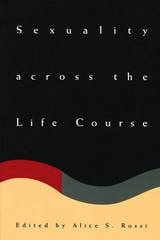
Sexuality across the Life Course
Edited by Alice S. Rossi
University of Chicago Press, 1994
In this wide-reaching volume, distinguished sociologist Alice S. Rossi addresses these questions and others through fourteen diverse essays on sexual behavior, covering adolescence through old age and studying such groups as singles, married couples, and homosexuals. This extensive study also explores the effects of chronic disease and medication on sexual functioning, recent developments in psychotherapy for sexual problems, and sexual abuse of children, incest, and rape.
"The interdisciplinary nature of the project has resulted in a text that is accessible to anyone with a behavioral science background. Well written, well edited, and well received by this reviewer."—Joan C. Chrisler, Journal of Sex & Marital Therapy
"This is a book that needs to be on the bookshelf of any AIDS researcher."—AIDS Book Review Journal

Shattering the Self in Early Modern English Verse
Gender, Sex, and Queerness Beyond the HumanGina Filo
Northwestern University Press, 2026
Rejecting the ideals of stability and sexual mastery demanded of masculine subjects, early modern English poets threw the limits of bodies and selves into question to embrace erotic experiences of genderqueer and transspecies embodiment and affiliation. Through close readings of still-canonical and lesser-read writers including William Shakespeare, John Donne, and Thomas Traherne, Gina Filo shows how these experimental encounters at the limits of the human were inextricable parts of the early modern literary and sexual imaginaries.
In its exploration of nonnormative forms of erotic attachment and embodiment, Shattering the Self in Early Modern English Verse: Gender, Sex, and Queerness Beyond the Human contributes to the burgeoning fields of early modern trans and ecocritical studies while also drawing on contemporary queer theory. Filo neither seeks to naively recuperate a fantasized past nor cedes relationality, sociality, or generativity to the normative. Instead, she shows how the embrace of erotic possibility, flexible, unstable subjectivities, and querying of the limits of “the human” were core features of early modern poetics, reconfiguring our understanding of English literary history and queer relationality today.

Side Dishes
Latina American Women, Sex, and Cultural ProductionFitch, Melissa A
Rutgers University Press, 2009
Side Dishes considers feminist pornography and literary representations of masturbation, bisexuality, lesbianism, and sexual fantasies; the treatment of lust in stand-up comedy and science fiction; critical issues in leading feminist journals; and portrayals of sexuality in four contemporary Latin American films. Melissa A. Fitch concludes with a look at the rise of women's and gender studies programs in Latin America.
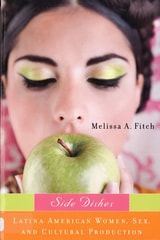
Side Dishes
Latina American Women, Sex, and Cultural ProductionFitch, Melissa A
Rutgers University Press, 2009
Side Dishes considers feminist pornography and literary representations of masturbation, bisexuality, lesbianism, and sexual fantasies; the treatment of lust in stand-up comedy and science fiction; critical issues in leading feminist journals; and portrayals of sexuality in four contemporary Latin American films. Melissa A. Fitch concludes with a look at the rise of women's and gender studies programs in Latin America.

Sins against Nature
Sex and Archives in Colonial New SpainZeb Tortorici
Duke University Press, 2018
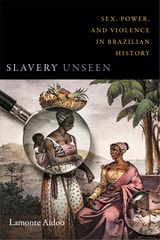
Slavery Unseen
Sex, Power, and Violence in Brazilian HistoryLamonte Aidoo
Duke University Press, 2018

Slavery at Sea
Terror, Sex, and Sickness in the Middle PassageSowande M Mustakeem
University of Illinois Press, 2016
Sowande' Mustakeem's groundbreaking study goes inside the Atlantic slave trade to explore the social conditions and human costs embedded in the world of maritime slavery. Mining ship logs, records and personal documents, Mustakeem teases out the social histories produced between those on traveling ships: slaves, captains, sailors, and surgeons. As she shows, crewmen manufactured captives through enforced dependency, relentless cycles of physical, psychological terror, and pain that led to the the making--and unmaking--of enslaved Africans held and transported onboard slave ships. Mustakeem relates how this process, and related power struggles, played out not just for adult men, but also for women, children, teens, infants, nursing mothers, the elderly, diseased, ailing, and dying. Mustakeem offers provocative new insights into how gender, health, age, illness, and medical treatment intersected with trauma and violence transformed human beings into the world's most commercially sought commodity for over four centuries.

Smut
Erotic Reality/Obscene IdeologyMurray S. Davis
University of Chicago Press, 1983
Smut investigates sex in a way that differes from nearly all previous books on the subject. Drawing on a wide variety of literary forms, including the work of novelists, poets, and even comedians–resources ranging from the most sublime theologians to the most profane pornographers–Murray S. Davis goes beyond those who regard sex merely as a biological instinct or animal behavior. He recaptures sex for the social sciences by reemphasizing the aspects of it that are unique to human beings in all their rich perplexity.
In part one, Davis employs a phenomenlogical approach to examine the differrence between sexual arousal and ordinary experience: sexual arousal, he argues, alters a person's experience of the world, resulting in an "erotic reality" that contratsts strikingly to our everyday reality; different perceptions of time, space, human bodies, and other social types occur in each realm. Davis describes in detail the movement from everyday into erotic reality from the first subtle castings-off to the shocking post-orgasmic return.
In part two the author employs a structuralist approach to determine why some people find this alternation between realities "dirty." He begins with a meditation on the similarity between sex and dirt and then asks, "How must somone view the world for him to find sex dirty?" Normal sex can be disliked, Davis concludes, only if it violates a certain conception of the individual; perverted sex can be despised only if it further violates certain conceptions of social relations and social organization. Davis ends part two with a "periodic table of perversions" that systematically summarizes the fundamental social elements out of which those who find sex dirty construct their world.
Finally, in part three Davis considers other conceptual grids affected by the alternation between everyday and erotic realities: the "pornographic," which concieves of the individual, social relations, and social organizations as deserving to disrupted by sex; and the "naturalistic," which concieves of them in a way that cannot be disrupted by sex. Throughout history these ideologies have contested for control over Western society, and, in his conlusion, Davis ofers a prognosis for the future of sex based on these historical ideological cycles.
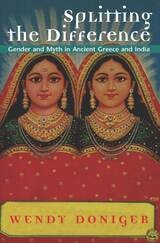
Splitting the Difference
Gender and Myth in Ancient Greece and IndiaWendy Doniger
University of Chicago Press, 1999
Myth, Doniger argues, responds to the complexities of the human condition by multiplying or splitting its characters into unequal parts, and these sloughed and cloven selves animate mythology's prodigious plots of sexuality and mortality. Doniger's comparisons show that ultimately differences in gender are more significant than differences in culture; Greek and Indian stories of doubled women resemble each other more than they do tales of doubled men in the same culture. In casting Hindu and Greek mythologies as shadows of each other, Doniger shows that culture is sometimes but the shadow of gender.

St. Augustine on Marriage and Sexuality (Selections from the Fathers of the Church, Volume 1)
Saint Augustine
Catholic University of America Press, 1996

Street Corner Secrets
Sex, Work, and Migration in the City of MumbaiSvati P. Shah
Duke University Press, 2014

Studying Human Behavior
How Scientists Investigate Aggression and SexualityHelen E. Longino
University of Chicago Press, 2013