Results by title
4038 books match the query 'Social aspects' and 325 start with s
Searching for a Different Future
The Rise of a Global Middle Class in MoroccoShana Cohen
Duke University Press, 2004
Cohen delves into the rupture that has occurred between the middle class, the individual, and the nation in Morocco and elsewhere around the world. Combining institutional economic analysis with cultural theory and ethnographic observation including interviews with seventy young adults in Casablanca and Rabat, she reveals how young, urban, educated Moroccans conceive of their material, social, and political conditions. She finds that, for the most part, they perceive improvement in their economic and social welfare apart from the types of civic participation commonly connected with nationalism and national identity. In answering classic sociological questions about how the evolution of capitalism influences identity, Cohen sheds new light on the measurable social and economic consequences of globalization and on its less tangible effects on individuals’ perception of their place in society and prospects in life.

Seaway to the Future
American Social Visions and the Construction of the Panama CanalAlexander Missal
University of Wisconsin Press, 2008
Best Books for Regional Special Interests, selected by the American Association of School Librarians, and Best Books for General Audiences, selected by the Public Library Association
“Provide[s] a useful vantage on the world bequeathed to us by the forces that set out to put America astride the globe nearly a century ago.”—Chris Rasmussen, Bookforum
Secrecy and Insurgency
Socialities and Knowledge Practices in GuatemalaSilvia Posocco
University of Alabama Press, 2014
Drawing on a broad field of contemporary theory, Silvia Posocco’s Secrecy and Insurgency presents a vivid ethnographic account of secrecy as both sociality and a set of knowledge practices. Informed by multi-sited anthropological fieldwork among displaced communities with experiences of militancy in the guerrilla organization Fuerzas Armadas Rebeldes, the book traces the contours of dispersed and intermittent guerrilla social relations, unraveling the gendered dimensions of guerrilla socialities and subjectivities in a local context marked by violence and rapid social change.
The chapters chart shifting regimes of governance in the northern departamento of Petén; the inception of violence and insurgency; guerrilla practices of naming and secret relations; moral orders based on sameness and sharing; and forms of relatedness, embodiment, and subjectivity among the combatants. The volume develops new critical idioms for grappling with partiality, perspective, and incompleteness in ethnography and contributes to new thinking on the anthropology of Guatemala.
Secrecy and Insurgency will be of interest to social and cultural anthropologists, human geographers, and scholars in Latin American studies, human rights, women’s studies, and gender studies.
See You in the Streets
Art, Action, and Remembering the Triangle Shirtwaist Factory FireRuth Sergel
University of Iowa Press, 2016
In 1911, a fire at the Triangle Shirtwaist Factory in New York City took the lives of 146 workers, most of them young immigrant women and girls. Their deaths galvanized a movement for social and economic justice then, but today’s laborers continue to battle dire working conditions. How can we bring the lessons of the Triangle fire back into practice today? For artist Ruth Sergel, the answer was to fuse art, activism, and collective memory to create a large-scale public commemoration that invites broad participation and incites civic engagement. See You in the Streets showcases her work.
It all began modestly in 2004 with Chalk, an invitation to all New Yorkers to remember the 146 victims of the fire by inscribing their names and ages in chalk in front of their former homes. This project inspired Sergel to found the Remember the Triangle Fire Coalition, a broad alliance of artists and activists, universities and unions—more than 250 partners nationwide—to mark the 2011 centennial of the infamous blaze. Putting the coalition together and figuring what to do and how to do it were not easy. This book provides a lively account of the unexpected partnerships, false steps, joyous collective actions, and sustainability of such large public works. Much more than an object lesson from the past, See You in the Streets offers an exuberant perspective on building a social art practice and doing public history through argument and agitation, creativity and celebration with an engaged public.

Seeds of Power
Environmental Injustice and Genetically Modified Soybeans in ArgentinaAmalia Leguizamón
Duke University Press, 2020
Seeing Like a Smuggler
Borders from BelowMahmoud Keshavarz and Shahram Khosravi
Pluto Press, 2022
Stories of smuggling as acts of resistance and decolonization.
'This conceptually vivid book refreshes our vision' - Ruth Wilson Gilmore
The word smuggler often unleashes a simplified, negative image painted by the media and the authorities. Such state-centric perspectives hide many social, political, and economic relations generated by smuggling. This book looks at the practice through the eyes of the smugglers, revealing how their work can be productive, subversive, and deeply sociopolitical.
By tracing the illegalized movement of people and goods across borders, Seeing Like a Smuggler shows smuggling as a contradiction within the nation-state system, and in a dialectical relation with the national order of things. It raises questions about how smuggling engages and unsettles the ethics, materialities, visualities, histories, and the colonial power relations that form borders and bordering.
Covering a wide spectrum of approaches from personal reflections and ethnographies to historical accounts, cultural analysis, and visual essays, the book spans the globe from Colombia to Ethiopia, Singapore to Guatemala, Afghanistan to Zimbabwe, and from Kurdistan to Bangladesh, to show how people deal with global inequalities and the restrictions of poverty and immobility.
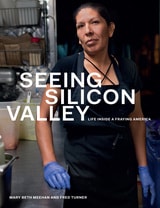
Seeing Silicon Valley
Life inside a Fraying AmericaMary Beth Meehan and Fred Turner
University of Chicago Press, 2021
It’s hard to imagine a place more central to American mythology today than Silicon Valley. To outsiders, the region glitters with the promise of extraordinary wealth and innovation. But behind this image lies another Silicon Valley, one segregated by race, class, and nationality in complex and contradictory ways. Its beautiful landscape lies atop underground streams of pollutants left behind by decades of technological innovation, and while its billionaires live in compounds, surrounded by redwood trees and security fences, its service workers live in their cars.
With arresting photography and intimate stories, Seeing Silicon Valley makes this hidden world visible. Instead of young entrepreneurs striving for efficiency in minimalist corporate campuses, we see portraits of struggle—families displaced by an impossible real estate market, workers striving for a living wage, and communities harmed by environmental degradation. If the fate of Silicon Valley is the fate of America—as so many of its boosters claim—then this book gives us an unvarnished look into the future.

Seeing Through the Eighties
Television and ReaganismJane Feuer
Duke University Press, 1995
With a cast of characters including Michael, Hope, Elliot, Nancy, Melissa, and Gary; Alexis, Krystle, Blake, and all the other Carringtons; not to mention Maddie and David; even Crockett and Tubbs, Feuer smoothly blends close readings of well-known programs and analysis of television’s commercial apparatus with a thorough-going theoretical perspective engaged with the work of Baudrillard, Fiske, and others. Her comparative look at Yuppie TV, Prime Time Soaps, and made-for-TV-movie Trauma Dramas reveals the contradictions and tensions at work in much prime-time programming and in the frustrations of the American popular consciousness. Seeing Through the Eighties also addresses the increased commodification of both the producers and consumers of television as a result of technological innovations and the introduction of new marketing techniques. Claiming a close relationship between television and the cultures that create and view it, Jane Feuer sees the eighties through televison while seeing through television in every sense of the word.
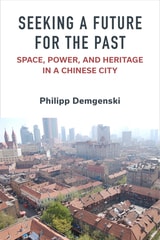
Seeking a Future for the Past
Space, Power, and Heritage in a Chinese CityPhilipp Demgenski
University of Michigan Press, 2024

Seeking the One Great Remedy
Francis George Shaw and Nineteenth-Century ReformLorien Foote
Ohio University Press, 2003
A radical abolitionist and early feminist, Francis George Shaw (1809–1882) was a prominent figure in American reform and intellectual circles for five decades. He rejected capitalism in favor of a popular utopian socialist movement; during the Civil War and Reconstruction, he applied his radical principles to the Northern war effort and to freedmen’s organizations.
A partnership with Henry George in the late 1870s provided an international audience for Shaw’s alternative vision of society. Seeking the One Great Remedy is the biography of this remarkable and influential man. In compelling detail, author Lorien Foote depicts the many aspects and exploits of the Shaw family. Their activities provide a perspective on the course of American reform that calls into question previous interpretations of the reform movement of this period.
Francis George Shaw is perhaps best known as the father of Robert Gould Shaw, subject of the movie Glory. Francis and his wife, Sarah Blake Shaw, achieved considerable notoriety for their activities, including their effort to shape public opinion during the Civil War. Turning the tragic death of their son into a public relations and propaganda triumph, they altered Northern opinion about the war and shaped a historical perception of the famous Massachusetts Fifty-fourth that continues today.
Seeking the One Great Remedy argues that social radicalism was pervasive among elite reformers before and after the Civil War and finds in the dramatic story of Francis George Shaw a model of that cause.

Seeking the Straight and Narrow
Weight Loss and Sexual Reorientation in Evangelical AmericaLynne Gerber
University of Chicago Press, 2011

Segregation Games
Boston, Busing, and the Making of Red Sox NationDavid Faflik
University of Massachusetts Press, 2026
A cultural history of race, resistance, and representation in a city divided by politics and play
When outfielder Bernie Carbo joined the Red Sox in 1974, he brought with him a toy gorilla named Mighty Joe Young that became the team’s unofficial mascot for several players and many in the local press. This seemingly innocent stuffed animal was introduced within a baseball team notorious for its stubborn discrimination, and during a particularly fraught era of racial discord in Boston. That June, after years of activism from the city’s Black community, Judge W. Arthur Garrity Jr. ruled that Boston must address the segregation of its schools through redistricting and busing. The ensuing racial animus to these policies led some of the city’s white residents to throw bananas and chant monkey sounds at African American students as they integrated the predominantly white South Boston High School. In this agitated atmosphere, cultural symbols like the Red Sox’s Mighty Joe Young mirrored and amplified the heightened racial tensions of Boston’s busing crisis.
Situated at the intersection of US cultural and social history, Segregation Games examines the surprising ties in 1970s Boston between the racial segregation of the city’s schools and the racial controversies expressed on and off the field of “Red Sox Nation.” “I found out in the black community why they don’t come out [to Fenway Park],” explained Black player Reggie Smith of his experiences with the Red Sox and the city during this period. “The team was the last to get Black players, and some of the things I hear out in the stands make me sick.” To understand these connections, Faflik erases the lines between politics and sport, which routinely blurred in a city suffused with an anti-Black racism that was both deceptively subtle and fiercely overt.
Drawing upon deep archival research from sources that have largely been ignored, such as the Black press of the time, Faflik offers a carefully nuanced portrait of Boston’s cultural life at a pivotal moment in the city’s history.
Self-Build Homes
Social Discourse, Experiences and DirectionsEdited by Michaela Benson and Iqbal Hamiduddin
University College London, 2017
Selfie Aesthetics
Seeing Trans Feminist Futures in Self-Representational ArtNicole Erin Morse
Duke University Press, 2022
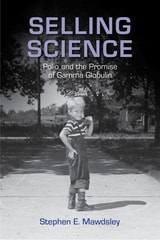
Selling Science
Polio and the Promise of Gamma GlobulinMawdsley, Stephen E
Rutgers University Press, 2016
Drawing on oral history interviews, medical journals, newspapers, meeting minutes, and private institutional records, Selling Science sheds light on the ethics of scientific conduct, and on the power of marketing to shape public opinion about medical experimentation.

Sense of History
The Place of the Past in American LifeDavid Glassberg
University of Massachusetts Press, 2001
As Americans enter the new century, their interest in the past has never been greater. In record numbers they visit museums and historic sites, attend commemorative ceremonies and festivals, watch historically based films, and reconstruct family genealogies. The question is, Why? What are Americans looking for when they engage with the past? And how is it different from what scholars call “history?”
In this book, David Glassberg surveys the shifting boundaries between the personal, public, and professional uses of the past and explores their place in the broader cultural landscape. Each chapter investigates a specific encounter between Americans and their history: the building of a pacifist war memorial in a rural Massachusetts town; the politics behind the creation of a new historical festival in San Francisco; the letters Ken Burns received in response to his film series on the Civil War; the differing perceptions among black and white residents as to what makes an urban neighborhood historic; and the efforts to identify certain places in California as worthy of commemoration. Along the way, Glassberg reflects not only on how Americans understand and use the past, but on the role of professional historians in that enterprise. Combining the latest research on American memory with insights gained from Glassberg's more than twenty years of personal experience in a variety of public history projects, Sense of History offers stimulating reading for all who care about the future of history in America.

Sensory Experiments
Psychophysics, Race, and the Aesthetics of FeelingErica Fretwell
Duke University Press, 2020
Sensory Futures
Deafness and Cochlear Implant Infrastructures in IndiaMichele Ilana Friedner
University of Minnesota Press, 2022
What happens when cochlear implants, heralded as the first successful bionic technologies, make their way around the globe and are provided by both states and growing private markets? As Sensory Futures follows these implants from development to domestication and their unequal distribution in India, Michele Ilana Friedner explores biotechnical intervention in the realm of disability and its implications for state politics in the Global South.
A signing and speaking deaf bilateral cochlear implant user, Friedner weaves personal reflections into this fine-grained ethnography of everyday negotiations, activist aspirations, and the space of the family. She places sensory anthropology in conversation with disability studies to analyze how normative sensoria are cultivated and the pursuit of listening and speaking capability is enacted. She argues that the conditions of potentiality that have emerged through cochlear implantation have, in fact, resulted in ever narrower understandings of future life possibilities. Rejecting sensory hierarchies that privilege audition, Friedner calls for multisensory, multimodal, and multipersonal ways of relating to the world.
Sensory Futures explores deaf people’s desires to create habitable worlds and grapple with what their futures might look like, in India and beyond, amid a surge in both biotechnical interventions and disability rights activism. With implications for a broad range of disability experiences, this sensitive, in-depth research focuses on the specific experiences of deaf people, both children and adults, and the structural, political, and social possibilities offered by both biotechnological and social “cures.”

Sensual Relations
Engaging the Senses in Culture and Social TheoryDavid Howes
University of Michigan Press, 2003
David Howes is Professor of Anthropology, Concordia University, Montreal, Quebec.

Settlement Ecology
The Social and Spatial Organization of Kofyar AgricultureGlenn Davis Stone
University of Arizona Press, 1996
Settler Militarism
World War II in Hawai'i and the Making of US EmpireJuliet Nebolon
Duke University Press, 2024
Settling the Boom
The Sites and Subjects of Bakken OilMary E. Thomas
University of Minnesota Press, 2023
Examines how settler colonial and sexist infrastructures and narratives order a resource boom
Over the past decade, new oil plays have unsettled U.S. energy landscapes and imaginaries. Settling the Boom studies how the disruptive forces of an oil boom in the northern Great Plains are contained through the extension of settler temporalities, reassertions of heteropatriarchy, and the tethering of life to the volatility of oil and its cruel optimisms.
This collection reveals the results of sustained research in Williston, North Dakota, the epicenter of the “Bakken Boom.” While the boom brought a rapid influx of capital and workers, the book questions simple timelines of before and after. Instead, Settling the Boom demonstrates how the unsettling forces of an oil play resolve through normative narratives and material and affective infrastructures that support settler colonialism’s violent extension and its gendered orders of time and space. Considering a wide range of evidence, from urban and regional policy, interviews with city officials, media, photography, and film, these essays analyze the ongoing material, aesthetic, and narrative ways of life and land in the Bakken.
Contributors: Morgan Adamson, Macalester College; Kai Bosworth, Virginia Commonwealth U; Thomas S. Davis, Ohio State U; Jessica Lehman, Durham U.

Sex Isn't Real
The Invention of an Incoherent BinaryBeans Velocci
Duke University Press, 2026

Sex Scene
Media and the Sexual RevolutionEric Schaefer, ed.
Duke University Press, 2014
Contributors. Joseph Lam Duong, Jeffrey Escoffier, Kevin M. Flanagan, Elena Gorfinkel, Raymond J. Haberski Jr., Joan Hawkins, Kevin Heffernan, Eithne Johnson, Arthur Knight, Elana Levine, Christie Milliken, Eric Schaefer, Jeffrey Sconce, Jacob Smith, Leigh Ann Wheeler, Linda Williams

Sex Tourism in Bahia
Ambiguous EntanglementsErica Lorraine Williams
University of Illinois Press, 2013

Sex and Scientific Inquiry
Edited by Sandra Harding and Jean F. O'Barr
University of Chicago Press, 1987

Sex in the Middle East and North Africa
L. L. Wynn
Vanderbilt University Press, 2022
The book is organized into three sections: Single and Dating, Engaged and Married, and It's Complicated. The allusion to categories of relationship status on social media is at once a nod to the compulsion to categorize, recognition of the many ways that categorization is rarely straightforward, and acknowledgment that much of the intimate lives described by the contributors is mediated by online technologies.
Sex, Shame, and Violence
A Revolutionary Practice of Public Storytelling in Poor CommunitiesKathleen Cash
Vanderbilt University Press, 2016
For more than three decades, Kathleen Cash has lived and worked with impoverished people, learning about their lives. Listening to them talk about their feelings of shame, Cash heard how people suffered from being unable to change what was happening to them--HIV infection, sexual and domestic violence, violence toward children, and environmental degradation. She saw that many interventions lacked emotional and cultural integrity and thus did little to alleviate these hardships. So Cash went outside the conventional approaches to health promotion and social justice and devised a community narrative practice, a strategy for engaging people through storytelling. From numerous ethnographic interviews, she pieced together cultural stories in a way that resonated with community people and revealed the paradoxes in their suffering. Cash recruited local artists to illustrate the stories in a form resembling a graphic novel and distributed these booklets for community discussion. (This book includes excerpts from these illustrated stories.)
In Thailand, Bangladesh, Haiti, Uganda, and the United States, people learned to talk about forbidden subjects and say what they could never say before. They stood up to each other, reconciled, and made health-seeking decisions. By helping others, they repaired themselves. In cathartic conversations they acknowledged shame, which led to acts of courage and generosity.

Sex, Sickness, and Slavery
Illness in the Antebellum SouthMarli F. Weiner with Mazie Hough
University of Illinois Press, 2014

Sexual Fields
Toward a Sociology of Collective Sexual LifeEdited by Adam Isaiah Green
University of Chicago Press, 2013
To build on the sexual fields framework, Green has gathered a distinguished group of scholars who together make a strong case for sexual field theory as the first systematic theoretical innovation since queer theory in the sociology of sexuality. Expanding on the work of Bourdieu, Green and contributors develop this distinctively sociological approach for analyzing collective sexual life, where much of the sexual life of our society resides today. Coupling field theory with the ethnographic and theoretical expertise of some of the most important scholars of sexual life at work today, Sexual Fields offers a game-changing approach that will revolutionize how sociologists analyze and make sense of contemporary sexual life for years to come.

Sexual Hegemony
Statecraft, Sodomy, and Capital in the Rise of the World SystemChristopher Chitty
Duke University Press, 2020
Sexual Labor in the Athenian Courts
Allison Glazebrook
University of Texas Press, 2021
Oratory is a valuable source for reconstructing the practices, legalities, and attitudes surrounding sexual labor in classical Athens. It provides evidence of male and female sex laborers, sex slaves, brothels, sex traffickers, the cost of sex, contracts for sexual labor, and manumission practices for sex slaves. Yet the witty, wealthy, and independent hetaira, well-known from other genres, does not feature. Its detailed narratives and character portrayals provide a unique discourse on sexual labor and reveal the complex relationship between such labor and Athenian society.
Through a holistic examination of five key speeches, Sexual Labor in the Athenian Courts considers how portrayals of sex laborers intersected with gender, the body, sexuality, the family, urban spaces, and the polis in the context of the Athenian courts. Drawing on gender theory and exploring questions of space, place, and mobility, Allison Glazebrook shows how sex laborers represented a diverse set of anxieties concerning social legitimacy and how the public discourse about them is in fact a discourse on Athenian society, values, and institutions.

Sexuality and the Politics of Ethos in the Writing Classroom
Zan Meyer Goncalves
Southern Illinois University Press, 2005
Applying the complexities of literacy development and personal ethos to the teaching of composition, Zan Meyer Goncalves challenges writing teachers to consider ethos as a series of identity performances shaped by the often-inequitable social contexts of their classrooms and communities. Using the rhetorical experiences of students who identify as lesbian, gay, bisexual, and/or transgender, she proposes a new way of thinking about ethos that addresses the challenges of social justice, identity, and transfer issues in the classroom.
Goncalves offers an innovative approach to teaching identity performance theory bound by social contexts. She applies this new approach to theories of specificity and intersectionality, illustrating how teachers can help students redefine the relationship between their social identities and their writing. She also addresses bringing social activism and identity politics into the classroom, helping writers make transfers across rhetorical contexts and linking students' interests to public conversations.
Theoretical and practical, Sexuality and the Politics of Ethos in the Writing Classroom provides teachers of first-year and advanced composition studies with useful, detailed assignments based in specific identity performance. Goncalves offers techniques to subvert oppressive language practices, while encouraging students to recognize themselves as writers, citizens, and active participants in their own educations and communities.
Shadow Lives
The Forgotten Women of the War on TerrorVictoria Brittain
Pluto Press, 2013
Shadow Lives reveals the unseen side of the '9/11 wars': their impact on the wives and families of men incarcerated in Guantanamo, or in prison or under house arrest in Britain and the US. Victoria Brittain shows how these families have been made socially invisible and a convenient scapegoat for the state in order to exercise arbitrary powers under the cover of the 'War on Terror'.
A disturbing exposé of the perilous state of freedom and democracy in our society, the book reveals how a culture of intolerance and cruelty has left individuals at the mercy of the security services’ unverifiable accusations and punitive punishments.
Both a j'accuse and a testament to the strength and humanity of the families, Shadow Lives shows the methods of incarceration and social control being used by the British state and gives a voice to the families whose lives have been turned upside down. In doing so it raises urgent questions about civil liberties which no one can afford to ignore.

Shadow Traces
Seeing Japanese/American and Ainu Women in Photographic ArchivesElena Tajima Creef
University of Illinois Press, 2022
Innovative and engaging, Shadow Traces illuminates how photographs shape the history of marginalized people and outlines a method for using such materials in interdisciplinary research.

Shadowed Ground
America’s Landscapes of Violence and TragedyBy Kenneth E. Foote
University of Texas Press, 2003
Winner, John Brinckerhoff Jackson Prize, Association of American Geographers, 1997
Shadowed Ground explores how and why Americans have memorialized—or not—the sites of tragic and violent events spanning three centuries of history and every region of the country. For this revised edition, Kenneth Foote has written a new concluding chapter that looks at the evolving responses to recent acts of violence and terror, including the destruction of the Branch Davidian compound at Waco, Texas, the Oklahoma City bombing, the Columbine High School massacre, and the terrorist attacks of 9/11.

Shadows in the Valley
A Cultural History of Illness, Death, and Loss in New England, 1840-1916Alan Swedlund
University of Massachusetts Press, 2010
How does the experience of sickness, death, and loss change over time? We know that the incidence and virulence of particular diseases have varied from one period to another, as has their medical treatment. But what was it like for the individuals who suffered and died from those illnesses, for the health practitioners and institutions that attended to them, and for the families who buried and mourned them?
In Shadows in the Valley, Alan Swedlund addresses these questions by closely examining the history of mortality in several small communities in western Massachusetts from the mid-nineteenth to the early twentieth century—from just before the acceptance of the germ theory of disease through the early days of public health reform in the United States. This was a time when most Americans lived in rural areas or small towns rather than large cities. It was also a time when a wide range of healing practices was available to the American public, and when the modern form of Western medicine was striving for dominance and authority. As Swedlund shows, this juncture of competing practices and ideologies provides a rich opportunity for exploring the rise of modern medicine and its impact on the everyday lives of ordinary Americans.
To indicate how individuals in different stages of their lives were exposed to varying assaults on their health, the book is structured in a way that superimposes what the author calls “life-course time” onto chronological time. Thus the early chapters look at issues of infancy and childhood in the 1840s and 1850s and the last chapters at the problems of old age after 1900. The reader becomes familiar with specific individuals and families as they cope with the recurrent loss of children, struggle to understand the causes of new contagions, and seek to find meaning in untimely death. By using a broad time frame and a narrow geographical lens, Swedlund is able to engage with both the particularities and generalities of evolving medical knowledge and changing practice, and to highlight the differences in personal as well as collective responses to illness and loss.

Shaky Colonialism
The 1746 Earthquake-Tsunami in Lima, Peru, and Its Long AftermathCharles F. Walker
Duke University Press, 2008
Through his ambitious rebuilding plan, the Viceroy sought to assert the power of the colonial state over the Church, the upper classes, and other groups. Agreeing with most inhabitants of the fervently Catholic city that the earthquake-tsunami was a manifestation of God’s wrath for Lima’s decadent ways, he hoped to reign in the city’s baroque excesses and to tame the city’s notoriously independent women. To his great surprise, almost everyone objected to his plan, sparking widespread debate about political power and urbanism. Illuminating the shaky foundations of Spanish control in Lima, Walker describes the latent conflicts—about class, race, gender, religion, and the very definition of an ordered society—brought to the fore by the earthquake-tsunami of 1746.

Shaky Foundations
The Politics-Patronage-Social Science Nexus in Cold War AmericaSolovey, Mark
Rutgers University Press, 2015
Numerous popular and scholarly accounts have exposed the deep impact of patrons on the production of scientific knowledge and its applications. Shaky Foundations provides the first extensive examination of a new patronage system for the social sciences that emerged in the early Cold War years and took more definite shape during the 1950s and early 1960s, a period of enormous expansion in American social science.
By focusing on the military, the Ford Foundation, and the National Science Foundation, Mark Solovey shows how this patronage system presented social scientists and other interested parties, including natural scientists and politicians, with new opportunities to work out the scientific identity, social implications, and public policy uses of academic social research. Solovey also examines significant criticisms of the new patronage system, which contributed to widespread efforts to rethink and reshape the politics-patronage-social science nexus starting in the mid-1960s.
Based on extensive archival research, Shaky Foundations addresses fundamental questions about the intellectual foundations of the social sciences, their relationships with the natural sciences and the humanities, and the political and ideological import of academic social inquiry.

Shamans and Robots
On Ritual, the Placebo Effect, and Artificial ConsciousnessRoger Bartra
University of Minnesota Press, 2024
A profound exploration of the external influences that shape human consciousness, from healing rituals to digital devices
In this voyage through thousands of years of psychosomatic healing, distinguished anthropologist and sociologist Roger Bartra examines the placebo effect as a key to our understanding of human consciousness. Shamans and Robots demonstrates how biology and technology become intertwined within human culture by using the various histories of ritual and symbolic healing to speculate about future developments in artificial intelligence.
Charting the extensive history of the placebo effect through medieval healing, shamanism, and early psychoanalytic practices, Bartra posits that consciousness is not simply the province of the mind but something equally shaped by external systems and objects. He finds evidence of this “exocerebrum”—the extension of our brains outside the body—in the shamanistic concept of the placebo, in which external objects heal our bodies, and in modern technical devices like prostheses or robots, whose development of a mechanical consciousness would have to mimic, and in turn elucidate, the processes involved in the creation of consciousness in humans. Through this radical concept, he analyzes digital media’s relationship to the functions of the human brain and probes the possibility of artificial consciousness.
Both a look at the human body’s potential to restore itself and a profound reflection on the curative power of symbolic structures, Shamans and Robots explores how our technologies increasingly serve as extensions of our cognitive selves.
Shaming into Brown
Somatic Transactions of Race in Latina/o LiteratureStephanie Fetta
The Ohio State University Press, 2018
In Shaming into Brown: Somatic Transactions of Race in Latina/o Literature, Stephanie Fetta asserts that our bodies are fundamental to how we live and how we make meaning. Anchored by two psychoanalytic theories, bioenergetic analysis developed by Alexander Lowen and affect theory put forth by Silvan Tomkins, Fetta examines Latinx fiction to draw attention to the cultural role of the intelligent, emotional, and communicative body—the soma—in relation to shame. She argues that we bring the soma—the physical, emotive, and social register of our subjectivity—to the text as we do to our lives,proposing that the power of racialization operates at the level of somatic expression and reception through habituated, socially cued behaviors that are not readily subject to intentional control.
Fetta examines shame beyond individual experiences, looking at literary renderings of the cultural practice of racial shaming that are deeply embedded into our laws, hiring practices, marketing strategies, and more. Grounding her analysis in the works of Gloria Anzaldúa and Cherríe Moraga, Shaming into Brown focuses on exposing the underpinnings of racialized shame and does so through analyzing “scenes of racialization” in prominent works by authors such as Junot Díaz, Sandra Cisneros, and Oscar Zeta Acosta.
Shanghai Rising
State Power and Local Transformations in a Global MegacityXiangming Chen
University of Minnesota Press, 2009
Analyzing a Chinese city’s dazzling rise to global megacity status
Until around 1990, Shanghai was China’s premier but sluggish industrial center. Now at the beginning of the twenty-first century, the joint impact of global forces and state power has turned Shanghai into a dynamic megacity. Shanghai’s remarkable growth in economy, infrastructure, and global presence has prompted questions about the Shanghai “miracle.” This collection places the city’s unprecedented rise in a rare comparative examination of U.S. cities, as well as with Asian megacities Singapore and Hong Kong, providing a nuanced account of how Shanghai’s politics, economy, society, and space have been transformed by macro- and micro-level forces.
Contributors: Stephen W. K. Chiu, Chinese U of Hong Kong; K. C. Ho, National U of Singapore; John D. Kasarda, U of North Carolina; Hanlong Lu, Shanghai Academy of Social Sciences; Tai-lok Lui, Chinese U of Hong Kong; Ann R. Markusen, U of Minnesota; Anthony M. Orum, U of Illinois, Chicago; Yuan Ren, Fudan U Shanghai; Saskia Sassen, Columbia U; Jiaming Sun, Texas A&M U, Commerce; Fulong Wu, Cardiff U; Pingkang Yu, George Washington U; Tingwei Zhang, U of Illinois, Chicago; Zhenhua Zhou, Development Research Center, Shanghai Municipal Government.
Shaping Losses
CULTURAL MEMORY AND THE HOLOCAUSTEdited by Julia Epstein and Lori Hope Lefkovitz
University of Illinois Press, 2001
This eloquent volume examines how memoirs, films, photographs, art, and literature, as well as family conversations and personal remembrances, embody the impulse to preserve what is destroyed. The contributors -- all distinguished women scholars, most of them survivors or daughters of survivors--examine classic memorializations such as Claude Lanzmann's film Shoah and Roman Vishniac's photographs of prewar Jews as well as several less-well-known works. They also address ways in which children of survivors of the Holocaust--and of other catastrophic traumas--struggle with inherited or vicarious memory, striving to come to terms with losses that centrally define them although they experience them only indirectly.
Shaping Losses considers the limitations of Holocaust representations and testimonies that capture shards of the experience but are necessarily selective and reductive. Contributors discuss artistic efforts to "preserve the rawness" of memory, to resist redemptive closure in Holocaust narratives and public memorials, and to prevent the Holocaust from being sealed in "the cold storage of history." The authors probe the nature of memory and of trauma, studying the use of language within and outside a traumatic context such as Auschwitz and pinpointing the qualities that make traumatic memory ineffable, untransmittable, and perhaps unreliable. Within the "haunted terrain of traumatized memory" that all Holocaust testimonies inhabit, the impulse to give form to emptiness--to shape loss--emerges as a necessary betrayal, a vital effort to bridge the gap between history and memory.
Shaping Science and Technology Policy
The Next Generation of ResearchEdited by David H. Guston and Daniel Sarewitz
University of Wisconsin Press, 2006
With scientific progress occurring at a breathtaking pace, science and technology policy has never been more important than it is today. Yet there is a very real lack of public discourse about policy-making, and government involvement in science remains shrouded in both mystery and misunderstanding. Who is making choices about technology policy, and who stands to win or lose from these choices? What criteria are being used to make decisions and why? Does government involvement help or hinder scientific research?
Shaping Science and Technology Policy brings together an exciting and diverse group of emerging scholars, both practitioners and academic experts, to investigate current issues in science and technology policy. Essays explore such topics as globalization, the shifting boundary between public and private, informed consent in human participation in scientific research, intellectual property and university science, and the distribution of the costs and benefits of research.
Contributors: Charlotte Augst, Grant Black, Mark Brown, Kevin Elliott, Patrick Feng, Pamela M. Franklin, Carolyn Gideon, Tené N. Hamilton, Brian A. Jackson, Shobita Parthasarathy, Jason W. Patton, A. Abigail Payne, Bhaven Sampat, Christian Sandvig, Sheryl Winston Smith, Michael Whong-Barr

Shaping Science
Organizations, Decisions, and Culture on NASA’s TeamsJanet Vertesi
University of Chicago Press, 2020
In Shaping Science, Janet Vertesi draws on a decade of immersive ethnography with NASA’s robotic spacecraft teams to create a comparative account of two great space missions of the early 2000s. Although these missions featured robotic explorers on the frontiers of the solar system bravely investigating new worlds, their commands were issued from millions of miles away by a very human team. By examining the two teams’ formal structures, decision-making techniques, and informal work practices in the day-to-day process of mission planning, Vertesi shows just how deeply entangled a team’s local organizational context is with the knowledge they produce about other worlds.
Using extensive, embedded experiences on two NASA spacecraft teams, this is the first book to apply organizational studies of work to the laboratory environment in order to analyze the production of scientific knowledge itself. Engaging and deeply researched, Shaping Science demonstrates the significant influence that the social organization of a scientific team can have on the practices of that team and the results they yield.
Shaping Society through Dance
Mestizo Ritual Performance in the Peruvian AndesZoila S. Mendoza
University of Chicago Press, 2000
In this fluid world, she argues, racial and ethnic identities are shaped more by notions of what is decent, elegant, and modern rather than by skin color or status. As the different troupes vie for the townspeople's recognition as the most "authentic" group, these notions are challenged and reworked. A fascinating look at a rich tradition, this innovative work is also a compelling example of the critical anthropology of performance.
Shaping the Discourse on Space
Charity and Its Wards in Nineteenth-Century San Juan, Puerto RicoBy Teresita Martínez-Vergne
University of Texas Press, 1999
As an inchoate middle class emerged in Puerto Rico in the early nineteenth century, its members sought to control not only public space, but also the people, activities, and even attitudes that filled it. Their instruments were the San Juan town council and the Casa de Beneficencia, a state-run charitable establishment charged with responsibility for the poor.
In this book, Teresita Martínez-Vergne explores how municipal officials and the Casa de Beneficencia shaped the discourse on public and private space and thereby marginalized the worthy poor and vagrants, "liberated" Africans, indigent and unruly women, and destitute children. Drawing on extensive and innovative archival research, she shows that the men who comprised the San Juan ayuntamiento and the board of charity regulated the public discourse on topics such as education, religious orthodoxy, hygiene, and family life, thereby establishing norms for "correct" social behavior and chastising the "deviant" lifestyles of the working poor.
This research clarifies the ways in which San Juan's middle class defined itself in the midst of rapid social and economic change. It also offers new insights into notions of citizenship and the process of nation-building in the Caribbean.

Shared Fantasy
Role Playing Games as Social WorldsGary Alan Fine
University of Chicago Press, 1983
Shareveillance
The Dangers of Openly Sharing and Covertly Collecting DataClare Birchall
University of Minnesota Press, 2017
Cracking open the politics of transparency and secrecy
In an era of open data and ubiquitous dataveillance, what does it mean to “share”? This book argues that we are all “shareveillant” subjects, called upon to be transparent and render data open at the same time as the security state invests in practices to keep data closed. Drawing on Jacques Rancière’s “distribution of the sensible,” Clare Birchall reimagines sharing in terms of a collective political relationality beyond the veillant expectations of the state.