Results by title
870 books match the query 'Sports & Recreation' and 92 start with s
Sport, Physical Culture, and the Moving Body
Materialisms, Technologies, EcologiesJoshua I. Newman
Rutgers University Press, 2020
The moving body—pervasively occupied by fitness activities, intense training and dieting regimes, recreational practices, and high-profile sporting mega-events—holds a vital function in contemporary society. As the body moves—as it performs, sweats, runs, and jumps—it sets in motion an intricate web of scientific rationalities, spatial arrangements, corporate imperatives, and identity politics (i.e. politics of gender, race, social class, etc.). It represents vitality in its productive and physiological capacities, it drives a complex economy of experiences and products, and it is a meaningful site of cultural identities and politics.
Contributors to Sport, Physical Culture, and the Moving Body work from a simple premise: as it moves, the material body matters. Adding to the burgeoning fields of sport studies and body studies, the works featured here draw upon the traditions of feminist theory, posthumanism, actor network theory, and new materialism to reposition the physical, moving body as crucial to the cultural, political, environmental, and economic systems that it constitutes and within which is constituted. Once assembled, the book presents a study of bodies in motion—made to move in contexts where technique, performance, speed, strength, and vitality not only define the conduct therein, but provide the very reason for the body’s being within those economies and environments. In so doing, the contributors look to how the body moving for and about rational systems of science, medicine, markets, and geopolity shapes the social and material world in important and unexpected ways.
In Sport, Physical Culture, and the Moving Body, contributors explore the extent to which the body, when moving about both ostensibly active body spaces (i.e., the gymnasium, the ball field, exercise laboratory, the track or running trail, the beach, or the sport stadium) and those places less often connected to physical activity (i.e. the home, the street, the classroom, the automobile), is bounded to technologies of life and living; and to the political arrangements that seek to capitalize upon such frames of biological vitality. To do so, the authors problematize the rise of active body science (i.e. kinesiology, sport and exercise sciences, performance biotechnology) and the effects these scientific interventions have on embodied, lived experience.
Contributors to Sport, Physical Culture, and the Moving Body will be engaging a range of new and emerging theoretical perspectives, including new materialist, political ecology, developmental systems theory, and new material feminist approaches, to examine the actors and assemblages of movement-based material, political, and economic production. In so doing, contributors will vividly and powerfully illustrate the extent to which a focus on the fleshed body and its material conditions can bring forth new insights or ontological and epistemological innovation to the sociology of sport and physical activity. They will also explore the agency of the body as and amongst things. Such a performative materialist approach explicates how complex assemblages of sport and physical activity—bringing into association everything from muscle fibers and dietary proteins to stadium concrete or regional aquifers—are not only meaningful, but ecological.
By focusing on the confluence of agentive materialities, disciplinary technologies, vibrant assemblages, speculative realities, and vital performativities, Sport, Physical Culture, and the Moving Body promises to offer a groundbreaking departure from representationalist tendencies and orthodoxies brought about by the cultural turn in sport and physical cultural studies. It brings the moving body and its physics back into focus: recentering moving flesh and bones as locus of social order, environmental change, and the global political economy.
Sport, Play, and Ethical Reflection
Randolph Feezell
University of Illinois Press, 2006
Feezell builds on these conclusions, addressing important ethical issues, arguing that sportsmanship should be seen as a kind of Aristotelian mean between the extremes of over- and under-investment in sport. Chapters on cheating, running up the score, and character building stress sport as a rule-governed, tradition-bound practice with standards of excellence and goods internal to the practice. With clear writing and numerous illuminating examples, Feezell demonstrates deep insight into both of his subjects.

Sport
A Philosophical InquiryPaul Weiss
Southern Illinois University Press, 0
This seminal book breaks new ground and explores new paths: psychological and sociological forms of human behavior exhibited in games; the physiology of athletics, and the efforts of training and conditioning; and the motivation of athletics— the rhythm and aims of contests and games, and the meaning of team play. More importantly, however, Professor Weiss’ s unique contributions lie in his discussions of the distinct contributions that sport makes to civilization.
Professor Weiss discusses at length such topics as the Olympic Games and men and women as amateur and professional athletes— and their sacrifices, defeats, and humiliations. And he delineates the stages the athlete must go through in his progress toward self-completion.
Sporting Lives
Metaphor and Myth in American Sports AutobiographiesJames W. Pipkin
University of Missouri Press, 2008
Sometimes the crack of the bat or the roar of the crowd fails to capture the meaning of sports as athletes themselves understand it. Books about sports have ignored this dimension of the subject, particularly the athletes’ own autobiographical accounts. In Sporting Lives, the first book to examine the two popular realms of sports and autobiography, James Pipkin looks at recurring patterns found in athletes’ accounts of their lives and sporting experiences, examining language, metaphor, rhetorical strategies, and other elements to analyze sports from the inside out.
Sporting Lives takes a fresh look at memoirs from baseball, football, basketball, golf, and other sports to explore how American athletes see themselves: not only how those images mesh with popular perceptions of them as heroes or celebrities but also how their accounts differ from those of sports journalists and other outsiders. Drawing on the life stories of such well-known figures as Wilt Chamberlain, Babe Ruth, and Martina Navratilova—both as-told-to and self-authored works—Pipkin follows players from the “echoing green” of eternal youth to the sometimes cultlike and isolated status of fame, interpreting recurring patterns both in the living of their lives and in the telling of them. He even considers Dennis Rodman’s four autobiographies to show how the contradictions of his self-portrayals reflect the Janus-faced quality of sports in the era of celebrity culture.
As Pipkin shows, the life of the athlete involves more than mere athleticism; it is also a world of nostalgia and sentiment, missed opportunities and lost youth. He sheds light on athletes’ common obsession with youth and body image—including gender and racial considerations—and explores their descriptions of being “in a zone,” that transcendent state when everything seems to click. And he considers the time that all athletes dread, when their bodies begin to betray them . . . and the cheering stops.
While the lives of athletes may often suggest the magic of Peter Pan, Pipkin’s engaging study reveals that they are in many ways more like the Lost Boys. Sporting Lives shows that the meaning of sports is intertwined with the telling. It is both an eminently readable book for fans and a critically sophisticated analysis that will engage scholars of literature, sports or media studies, and American popular culture.

Sportista
Female Fandom in the United StatesAndrei S. Markovits
Temple University Press, 2012
The typical female sports fan remains very different from her male counterparts. In their insightful and engaging book, Sportista, Andrei S. Markovits and Emily Albertson examine the significant ways many women have become fully conversant with sports—acquiring a knowledge of and passion for them as a way of forging identities that until recently were quite alien to women.
Sportista chronicles the relationship that women have developed with sports in the wake of the second wave of feminism of the late 1960s and early 1970s. The changes women athletes have achieved have been nothing short of revolutionary. But, as Markovits and Albertson argue, women’s identities as sports fans, though also changed in recent decades, remain notably different from that of men. Sportista highlights the impediments to these changes that women have faced and the reality that, even as bona fide fans, they “speak” sports differently from and remain largely unaccepted by men.
In the series Politics, History and Social Change, edited by John C. Torpey
Sports Illusion, Sports Reality
A Reporter's View of Sports, Journalism, and SocietyLeonard Koppett
University of Illinois Press, 1994
ever written, I'd like to see the book that beats it. . . . Should be
read by every sports fan or -- for that matter -- social critic."
--From a five-star review, West Coast Review of Books.
"Explores its subject so thoroughly and demolishes so many commonly
held assumptions that after reading it even the most knowledgeable fans
(and some journalists) should feel like drunks who have suddenly been
forced to sober up."
-- Chicago Tribune
"Required reading for anyone who calls himself a fan."
-- Chicago Sun-Times
"An invaluable contribution to sports literature."
-- Howard Cosell
Sports Movies
Lester D. Friedman
Rutgers University Press, 2020
In Sports Movies, Lester D. Friedman describes the traditional formulas that have made these movies such crowd-pleasers, including stock figures like the disgraced athlete on a quest for redemption, or the wise old coaches who help mentor the heroes to victory. He also explores how the genre’s attitudes have changed over time, especially in key issues like class, race, masculinity, and women in sports.
Along the way, he takes stock of sports films from the dawn of cinema’s silent era to the present day, including classic baseball movies like Pride of the Yankees and Bull Durham, basketball movies like Hoosiers and He’s Got Game, football movies like Friday Night Lights and Rudy, and boxing movies like Raging Bull and Million Dollar Baby. As Friedman’s analyses reveal, not only do sports movies influence our perceptions about the drama of real-life sports, but they also help to shape our attitudes toward the competitive ethos in American life.
Sports in Africa, Past and Present
Todd Cleveland
Ohio University Press, 2020
These groundbreaking essays demonstrate how Africans past and present have utilized sports to forge complex identities and shape Africa’s dynamic place in the world.
Since the late nineteenth century, modern sports in Africa have both reflected and shaped cultural, social, political, economic, generational, and gender relations on the continent. Although colonial powers originally introduced European sports as a means of “civilizing” indigenous populations and upholding then current notions of racial hierarchies and “muscular Christianity,” Africans quickly appropriated these sporting practices to fulfill their own varied interests. This collection encompasses a wide range of topics, including women footballers in Nigeria, Kenya’s world-class long-distance runners, pitches and stadiums in communities large and small, fandom and pay-to-watch kiosks, the sporting diaspora, sports pedagogy, sports as resistance and as a means to forge identity, sports heritage, the impact of politics on sports, and sporting biography.

Sports in Chicago
Edited by Elliott Gorn
University of Illinois Press, 2007
Chicago teams have won the World Series, Super Bowl, multiple Stanley Cups, and a string of National Basketball Association titles. But amateur sports also play a large role in the city's athletic traditions, especially in schools and youth leagues that allow people from across the city to add to Chicago sports history.
In Sports and Chicago, an all-star roster of experts focuses on multiple aspects of Chicago sports, including long looks at amateur boxing, the impact of gender and ethnicity in sports, the politics of horse racing and stadium building, the lasting scandal of the Black Sox, and the once-perpetual heartbreak of the Cubs. Illustrated with forty photographs, the collection encourages historians and sports fans alike to appreciate the long-standing importance of sports in the Windy City.
Contributors: Peter Alter, Robin F. Bachin, Larry Bennett, Linda J. Borish, Gerald Gems, Elliott J. Gorn, Richard Kimball, Gabe Logan, Daniel A. Nathan, Timothy Neary, Steven A. Riess, John Russick, Timothy Spears, Costas Spirou, and Loïc Wacquant.
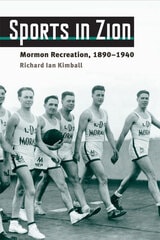
Sports in Zion
Mormon Recreation, 1890-1940Richard Ian Kimball
University of Illinois Press, 2002
If a religion cannot attract and instruct young people, it will struggle to survive, which is why recreational programs were second only to theological questions in the development of twentieth-century Mormonism. In this book, Richard Ian Kimball explores how Mormon leaders used recreational programs to ameliorate the problems of urbanization and industrialization and to inculcate morals and values in LDS youth. As well as promoting sports as a means of physical and spiritual excellence, Progressive Era Mormons established a variety of institutions such as the Deseret Gymnasium and camps for girls and boys, all designed to compete with more "worldly" attractions and to socialize adolescents into the faith.
Kimball employs a wealth of source material including periodicals, diaries, journals, personal papers, and institutional records to illuminate this hitherto underexplored aspect of the LDS church. In addition to uncovering the historical roots of many Mormon institutions still visible today, Sports in Zion is a detailed look at the broader functions of recreation in society.
Sports in the Western World
William J. Baker
University of Illinois Press, 1982
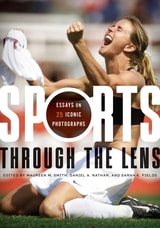
Sports through the Lens
Essays on 25 Iconic PhotographsEdited by Maureen M. Smith, Daniel A. Nathan, and Sarah K. Fields
University of Texas Press, 2024
2025 Anthology Award, North American Society for Sport History
The stories behind and legacies of important sports photos from the last 130 years.
Ever since photography and professional sports originated in the nineteenth century, photographers have shaped how we perceive sports. Sports through the Lens collects essays by twenty-five historians that consider what it means to capture and revisit a moment of cultural significance in sports, looking at each photo’s creation, its contexts, and how its meaning has shifted over time. Some essays provide fresh perspectives on such iconic images as Muhammad Ali standing over Sonny Liston at their 1965 rematch and Michael Jordan soaring at the 1988 NBA All-Star Game slam dunk competition; others introduce readers to the lesser-known stories of the first woman to officially run the Boston Marathon or the inaugural World Indigenous Games. The authors examine the photos' legacies alongside the artistry of both the athletes and the photographers. Reflecting on images of athletes from around the world engaged in sports from baseball to horse-racing to hockey, Sports through the Lens provides a wide-ranging meditation on the visual, historical, and cultural meaning of sports photographs.
Sports, Power, and Resistance
An Introduction to Critical Sports StudiesEdited by Thomas P. Oates and Travis Vogan
University of Illinois Press, 2026
Topics range from Black coaches in the National Football League to disordered eating within distance running to transgender athletes’ fight to participate in sports. The editors have organized the contributions into three sections. Part one probes how sports build communities that foster belonging as well as exclusion. The essays in part two explore multiple forms of resistance in sports through various performances and representations. In the final section, essayists analyze more explicit efforts to use sports as a platform for activism from various political viewpoints. Throughout, the works nurture and demonstrate a sensibility that encourages humanistic, critical, and interdisciplinary inquiry.
Wide-reaching and accessible, Sports, Power, and Resistance explores timely issues while demonstrating the value of blending perspectives to better understand the games we play and watch.
Contributors: Ali Bouterse, Adrian Burgos, Jr., Michael L. Butterworth, Noah Cohan, Douglas Hartmann, Victoria E. Johnson, Abraham I. Khan, Jason Kido Lopez, Theresa Runstedtler, Jaime Schultz, Samantha N. Sheppard, and Travers
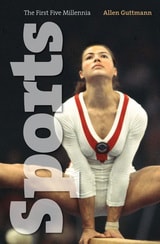
Sports
The First Five MillenniaAllen Guttmann
University of Massachusetts Press, 2004
From ancient Egyptian archery and medieval Japanese football to contemporary American baseball, every sport has been shaped by—and in turn has helped shape—the culture of which it is part. Yet as Allen Guttmann shows in this far-ranging study, for all their differences sports have followed a similar historical trajectory from traditional to modern forms.
In Sports: The First Five Millennia, Guttmann traces this evolution across continents, cultures, and historical epochs to construct a single comprehensive narrative of the world's sports.
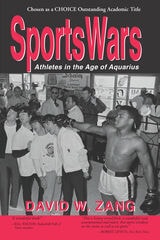
SportsWars
Athletes in the Age of AquariusDavid Zang
University of Arkansas Press, 2001
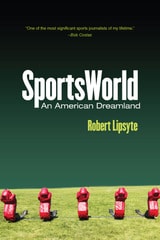
SportsWorld
An American DreamlandLipsyte, Robert
Rutgers University Press, 2018
In the America of 2017—where the SuperBowl is worth billions, athletes are penalized or forced out of sports for political and anti-racist activism, and Title IX is constantly questioned and undermined—Robert Lipsyte’s 1975 critique remains startlingly and intensely relevant.

Sportsex
Toby Miller
Temple University Press, 2002
Miller pays particular attention to the way celebrity is considered around the world through a number of different athletic activities. Along the way he also offers his own personal connection to sport as both a researcher and recipient of its abuses and pleasures.
In a world where everything is considered in its relationship to globalization, sport is one of the few arenas of social life that can be concretely seen in international terms. Sportsex opens that world up in a way that is accessible and significant for anyone interested in the shape of our emerging world culture.
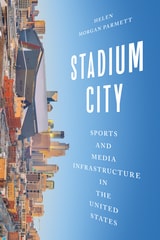
Stadium City
Sports and Media Infrastructure in the United StatesHelen Morgan Parmett
University of Illinois Press, 2025

Stagg's University
The Rise, Decline, and Fall of Big-Time Football at ChicagoRobin Lester
University of Illinois Press, 1995
The legendary University of Chicago football program had an unusual beginning, a dazzling middle, and an inglorious conclusion. Its architect: Amos Alonzo Stagg, the most creative and entrepreneurial college coach of his time. A former all-American gridiron star at Yale, Stagg joined an elite academic institution that boasted intellectual notables like John Dewey, Thorstein Veblen, and Albert Michelson. Within fifteen years, the fame of Stagg's football program had eclipsed even Michelson's renown as the first American citizen to win a Nobel Prize.
Robin Lester follows the commercial trail blazed by Stagg and University President William Rainey Harper and the subsequent transformation of college football into a mass entertainment industry that changed campuses and captured the national imagination. Fascinating and detailed, Stagg's Universityreveals how the University of Chicago's football industry prefigured today's billion-dollar sport juggernaut and details the life and leadership of one of its foundational personages.
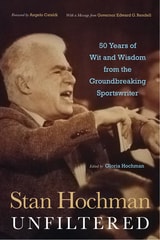
Stan Hochman Unfiltered
50 Years of Wit and Wisdom from the Groundbreaking SportswriterGloria Hochman
Temple University Press, 2020
The late Philadelphia Daily News sportswriter Stan Hochman was known for his many zingers, such as “Harry Litwack, the stoic Temple coach, stalks the sidelines like a blind man at a nudist colony.” As a reporter, he was more interested in how athletes felt, what their values were, how they lived their lives, or what made them tick than he was about how many runs they scored or punches they landed.
In Stan Hochman Unfiltered, his wife Gloria collects nearly 100 of his best columns from the Daily News about baseball, horse racing, boxing, football, hockey, and basketball (both college and pro), as well as food, films, and even Liz Taylor. Each section is introduced by a friend or colleague, including Garry Maddox, Bernie Parent, Larry Merchant, and Ray Didinger, among others.
Hochman penned a candid, cantankerous column about whether Pete Rose belongs in the Baseball Hall of Fame; wrote a graphic account of the Muhammad Ali and Joe Frazier fight of the century; and skewered Norman “Bottom Line” Braman, the one-time owner of the Eagles. He also wrote human-interest stories, including features about the importance of kids with special needs playing sports.
In addition to being a beloved writer, Hochman was also known for his stint on WIP’s radio as the Grand Imperial Poobah, where he would settle callers’ most pressing debates. Hochman long earned the respect and admiration of his subjects, peers, and readers throughout his career, and Stan Hochman Unfiltered is a testament to his enduring legacy.
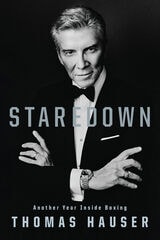
Staredown
Another Year Inside BoxingThomas Hauser
University of Arkansas Press, 2020
Staredown continues this tradition of excellence with inside reporting from the dressing room before some of last year’s biggest fights, in-depth investigations into corruption in boxing, and more. Hauser also moves beyond the norm to explore incidents like street fights and examine boxing’s storied history in new and creative ways.
Staying The Course
A Runner’s Toughest RaceDick Beardsley
University of Minnesota Press, 2004
Steel Chair to the Head
The Pleasure and Pain of Professional WrestlingNicholas Sammond, ed.
Duke University Press, 2005
The essayists include scholars in anthropology, psychology, film studies, communication studies, and sociology, one of whom used to wrestle professionally. Classic studies of wrestling by Roland Barthes, Carlos Monsiváis, Sharon Mazer, and Henry Jenkins appear alongside original essays. Whether exploring how pro wrestling inflects race, masculinity, and ideas of reality and authenticity; how female fans express their enthusiasm for male wrestlers; or how lucha libre provides insights into Mexican social and political life, Steel Chair to the Head gives due respect to pro wrestling by treating it with the same thorough attention usually reserved for more conventional forms of cultural expression.
Contributors. Roland Barthes, Douglas L. Battema, Susan Clerc, Laurence de Garis, Henry Jenkins III, Henry Jenkins IV, Heather Levi, Sharon Mazer, Carlos Monsiváis, Lucia Rahilly, Catherine Salmon, Nicholas Sammond, Phillip Serrat, Philip Sewell

Stolen Bases
Why American Girls Don't Play BaseballJennifer Ring
University of Illinois Press, 2013
Jennifer Ring questions the forces that try to keep girls who want to play baseball away from the game. Focusing on a history that, unfortunately, repeats itself, Ring describes the circumstances that twice stole baseball from American girls: once in the late nineteenth and early twentieth century, and again in the late twentieth century, after it was no longer legal to exclude girls who wanted to play. In the early twentieth century, Albert Goodwill Spalding--sporting goods magnate, baseball player, and promoter--declared baseball off limits for women and envisioned global baseball on a colonialist scale, using the American sport to teach men from non-white races and non-European cultures to become civilized and rational. And by the late twentieth century, baseball had become serious business for boys and men at all levels, with female players perceived as obstacles or detriments to rising male players' chances of success.
Stolen Bases also looks at the backgrounds of American softball, which was originally invented by men who wanted to keep playing baseball indoors during cold winter months but has become the consolation sport for most female players. Throughout her analysis, Ring searches for ways to rescue baseball from its arrogance and sense of exclusionary entitlement.
Straight Writes and Jabs
An Inside Look at Another Year in BoxingThomas Hauser
University of Arkansas Press, 2013

Straight and True
A Select History of the ArrowHugh D. H. Soar
Westholme Publishing, 2012
From Spears and Blowpipe Darts to the Ultimate Human-Powered Projectile
The arrow, essentially a specialized spear, is among the most ancient human inventions and can be found in cultures throughout the world. The need to launch a projectile farther and with greater accuracy than is possible with the human arm gave rise to a variety of solutions. Spearthrowers which extend the length of the user’s arm and therefore transfer greater power to the projectile were developed far back in prehistory, and both the American Indian atlatl and the Australian woomera are examples of this technology. Blowpipes, too, are recorded in various cultures and represent another ancient technology. It was soon discovered that a stringed bow could launch a small spearlike projectile we now know as the arrow, and this combination became the dominant method for shooting projectiles for tens of thousands of years. A wonderfully simple device, the arrow and bow revolutionized both hunting and warfare, not only because of the speed, force, and accuracy that could be achieved, but by the fact that the arrow makes almost no sound as it flies toward its target, providing an essential element of surprise.
In Straight and True: A Select History of the Arrow, Hugh D. H. Soar describes the transition from hand-thrown spear to bow-launched arrow and then follows the arrow’s developments in cultures around the world and across time. The book describes arrows found in Neolithic sites; those used by North and South American Indians—including a detailed discussion of poison-tipped arrows; arrows used in China, Japan, and Mongolia; and finally the arrow in Europe, where it was successfully paired with the longbow during the Middle Ages. After discussing the development of the arrow for sport and recreation, the author completes his survey with the changes in technology introduced during the twentieth century though the use of the alloy of aluminum with other lightweight metals as well as synthetic materials to construct parts of the arrow. Relying on his considerable knowledge accumulated through decades of research, the author provides the reader with an appreciation for a humble device that, coupled with the bow, changed the history of the world.

Strategies for Being Mindful
Workbook for Practitioners, Students, and Athletes, First EditionDouglas Barba
FiT Publishing, 2021
Written exclusively as a companion set for graduate and undergraduate students, Strategies for Being Mindful workbook, together with Being Mindful in Sport and Exercise Psychology (2017) presents and analyzes foundational mindfulness skills in real case studies and provides hands-on exercises that put these mindfulness concepts and techniques into practice.
The text teaches readers to view experiences objectively, and allow for the development of an open, nonjudging, and curious attitude, which has been shown to improve performance in sport and in daily life. Ultimately, strategies in this companion set aim to help the reader cultivate a more compassionate outlook, reduce anxiety, and increase tolerance for and acceptance of emotions, and beliefs that may hamper performance in sport and in life.
The companion workbook provides specific and effective techniques to help students better understand and accept uncomfortable emotions and beliefs, and to handle a range of issues athletes may experience in their careers. Students can work at their own pace to identify the values that align with their personal lives and goals to develop routines that can lead to lasting results for themselves, and—ultimately as practitioners—for their athletes, team, and clients.
Strength Coaching in America
A History of the Innovation That Transformed SportsBy Jason P. Shurley, Jan Todd, and Terry Todd
University of Texas Press, 2019
Shortlisted for the North American Society for Sports History 2020 Monograph Prize
It’s hard to imagine, but as late as the 1950s, athletes could get kicked off a team if they were caught lifting weights. Coaches had long believed that strength training would slow down a player. Muscle was perceived as a bulky burden; training emphasized speed and strategy, not “brute” strength. Fast forward to today: the highest-paid strength and conditioning coaches can now earn $700,000 a year. Strength Coaching in America delivers the fascinating history behind this revolutionary shift.
College football represents a key turning point in this story, and the authors provide vivid details of strength training’s impact on the gridiron, most significantly when University of Nebraska football coach Bob Devaney hired Boyd Epley as a strength coach in 1969. National championships for the Huskers soon followed, leading Epley to launch the game-changing National Strength Coaches Association. Dozens of other influences are explored with equal verve, from the iconic Milo Barbell Company to the wildly popular fitness magazines that challenged physicians’ warnings against strenuous exercise. Charting the rise of a new athletic profession, Strength Coaching in America captures an important transformation in the culture of American sport.
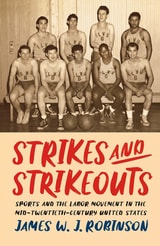
Strikes and Strikeouts
Sports and the Labor Movement in the Mid-Twentieth-Century United StatesJames W. J. Robinson
Rutgers University Press, 2027
During the first half of the twentieth century, the introduction of cheap or free recreation to the workplace provided a metaphorical place where ordinary working-class people of all races and genders gained access to physical leisure and developed bonds of camaraderie in the anti-fascist labor movement. Strikes and Strikeouts: Sports and the Labor Movement in the Mid-Twentieth-Century United States illustrates how this largely forgotten Labor Sports movement was critical in helping unions become forces for larger cultural change and essential to understanding the potency of the 1930-40s labor movement. Drawing from ten different labor and leftist social movement archives, Robinson strives to reconstruct the “people’s history." At its height, from the late 1930s to the early 1950s, the Labor Sports movement presented a real alternative to both apolitical and conservative sports and involved millions of working-class people. It was a key part of improving the lives of average Americans and helped build an anti-racist, anti-fascist, working class counterculture that helped change the United States through a strong labor movement. This movement brought higher living standards for working class people and the end of racial segregation in sports, which in turn aided the Civil Rights movement.
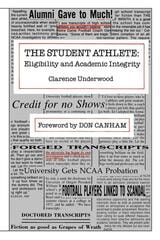
Student Athlete
Eligibility and Academic IntegrityClarence Underwood
Michigan State University Press, 1984
Student Athlete Eligibility and Academic Integrity covers areas: Characteristics of Student Athletes, Prospective Student Athletes and the NCAA, Black Student Athletes and Their Revolt, Financial Aid to Student Athletes, Support Services Staff, Recruitment and Admission, Monitoring Academic Affairs and Eligibility, Study Hall and Tutorial Programs, and Legal Implications for the Athletic Advisor.
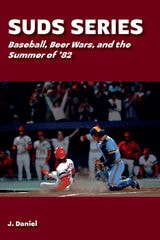
Suds Series
Baseball, Beer Wars, and the Summer of '82J. Daniel
University of Missouri Press, 2023
Even nominal baseball fans will enjoy reading about legendary players, teams, and personalities that emerged in the 1982 season: the year Ricky Henderson stole 130 bases; Reggie Jackson led the league in home runs; and Cal Ripken Jr. began his remarkable playing streak. Readers will also enjoy the cultural references, including the Pac-Man craze, a chart-topping album by Rush, and the “Light Beer Wars” waged by Anheuser-Busch and the Miller Brewing Company through a series of humorous TV commercials featuring well-loved professional sports figures.

Suicide Squeeze
Taylor Hooton, Rob Garibaldi, and the Fight against Teenage Steroid AbuseWilliam C. Kashatus
Temple University Press, 2016
Appearance- and performance-enhancing drugs—specifically, anabolic steroids (APEDs)—provide a tempting competitive advantage for amateur baseball players. But this shortcut can exact a fatal cost on talented athletes. In his urgent book Suicide Squeeze, William Kashatus chronicles the experiences of Taylor Hooton and Rob Garibaldi, two promising high school baseball players who abused APEDs in the hopes of attracting professional scouts and Division I recruiters. However, as a result of their steroid abuse, they ended up taking their own lives.
In Suicide Squeeze—named for the high-risk play in baseball to steal home—Kashatus identifies the symptoms and dangers of steroid use among teens. Using archival research and interviews with the Hooton and Garibaldi families, he explores the lives and deaths of these two troubled young men, the impact of their suicides on MLB, and the ongoing fight against adolescent APED use by their parents.
A passionate appeal to prevent additional senseless deaths by athletes, Suicide Squeeze is an important contribution to debates on youth and sports and on public policy.
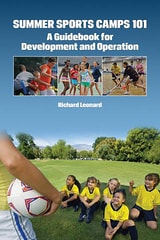
Summer Sports Camps 101
A Guidebook for Development and OperationRichard Leonard
FiT Publishing, 2016
Summer Sports Camps 101: A Guidebook for Development and Operation is a comprehensive manual that will take the reader through all of the administrative nuances of creating and operating a summer sports camp. Funding, for the majority of athletic programs, is one of the most (if not the most) consequential element for administrators and coaches. With the limited amount of resource dollars available and ever-rising expenses, athletic programs have to make difficult financial decisions, which can have long-lasting ramifications on all of the organization's teams and programs. The purpose for this comprehensive guidebook is to provide professional practitioners (coaches and administrators) with the foundations and practical applications to develop and manage a cost-efficient, profitable summer sports camp. Simply stated, professionally-run camps can promote the institution's athletic programs and provide much needed resources and funds. As you will see, the book covers the entire subject from constructing administrative models today-to-day operations. This book could be used by all athletic teams and programs―whether they are starting a summer sports camp for the first time or have an established operation―in their development and execution of lucrative summer sports camps. The book can be used as an all-inclusive handbook for new sports camps or as a reference guide and idea generator for seasoned camp administrators.
Section I: Introduction examines the basic foundations and choices involved with operating a summer sports camp as well as conducting a feasibility study to examine the practicality of the venture.
Section II: Planning defines the clear benefits and uses associated with creating a summers ports camp plan.
Section III: Administration Systems provides indispensable camp system designs for registration, filing, and accounting that are universal to all camps.
Section IV: Human Resources discusses human resource management as an essential part of any summer sports camp. Concepts that have an unmistakable impact on the entire camp, such as selection, orientation, compensation and evaluation, are reviewed.
Section V: Marketing Systems furnishes detailed marketing and promotional ideas that can enlarge the camp's exposure as well as increase revenues.
Section VI: Risk Management and Camp Operations enables the reader to become a critical thinker in the area of risk management and camper safety.

Sunlit Riffles and Shadowed Runs
Stories of Fly Fishing in AmericaKent Cowgill
University of Wisconsin Press, 2012
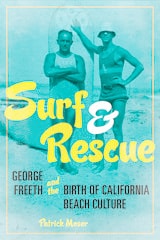
Surf and Rescue
George Freeth and the Birth of California Beach CulturePatrick Moser
University of Illinois Press, 2022
A compelling merger of biography and sports history, Surf and Rescue brings to light the forgotten figure whose novel way of seeing the beach sparked the imaginations of people around the world.
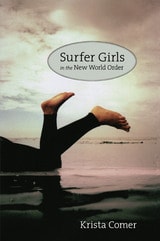
Surfer Girls in the New World Order
Krista Comer
Duke University Press, 2010
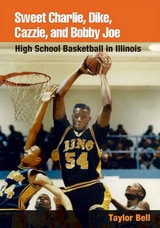
Sweet Charlie, Dike, Cazzie, and Bobby Joe
HIGH SCHOOL BASKETBALL IN ILLINOISTaylor H. A. Bell
University of Illinois Press, 2004
Far from the jaded professionals, the stories in Taylor Bell's Sweet Charlie, Dike, Cazzie, and Bobby Joe are of hungry young men playing their hearts out, where high-tops and high hopes inspire "hoop dreams" from Peoria to Pinckneyville, and Champaign to Chicago. Bell, a life-long fan and authority on high school basketball in Illinois, brings together for the first time the stories of the great players, teams, and coaches from the 1940s through the 1990s.
The book is titled for four players who reflect the unique quality of high school basketball, and whose first names are enough to trigger memories in fans who love the sport -- Sweet Charlie Brown, Dike Eddleman, Cazzie Russell, and Bobby Joe Mason. Bell offers exciting accounts of their exploits, told with a journalistic flair.
Beyond a lifetime spent covering the sport, Bell's research includes three hundred and fifty personal interviews with coaches, administrators, family members, and fans. He has attended the Elite Eight finals of every boys' state basketball tournament since 1958, and met and written about many of the most outstanding teams, coaches, and players who helped to make Illinois one of the most exciting arenas for high school basketball in the United States. Sixty photographs add depth to the accounts.
By a fan, for the fans, Sweet Charlie, Dike, Cazzie, and Bobby Joe is the authoritative book on high school basketball in Illinois, and will elate anyone who has thrilled to the poignant highs and shattering lows of high school sports.
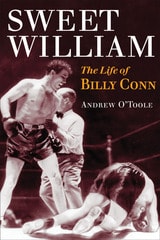
Sweet William
The Life of Billy ConnAndrew O'Toole
University of Illinois Press, 2009
An Irish working-class hero of Pittsburgh, Billy Conn captured hearts through his ebullient personality, stellar boxing record, and good looks. A light heavyweight boxing champion best remembered for his sensational near-defeat of heavyweight champion Joe Louis in 1941, Conn is still regarded as one of the greatest fighters of all time. Andrew O'Toole chronicles the boxing, Hollywood, and army careers of "the Pittsburgh Kid" by drawing from newspaper accounts, Billy's personal scrapbooks, and fascinating interviews with family. Presenting an intimate look at the champion's relationships with his girlfriend, manager, and rivals, O'Toole compellingly captures the personal life of a public icon and the pageantry of sports during the 1930s and '40s.
Swimmers
Carole FeuermanCarole Feuerman
The Artist Book Foundation, 2014
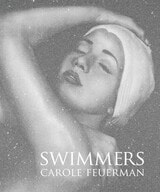
Realist sculptor Carole A. Feuerman's human-figure sculptures express a refreshing perspective on the mundane but intensely personal activities of modern life. her powers of observation and versatility find unique expression through various materials that include marble, bronze, vinyl, and painted resins, while she incorporates both ancient and contemporary methods in the creation of her works. Swimmers: Carole Feuerman is a gorgeous and shimmering glimpse at transitory, contemplative moments in time, often captured in a veil of clear resin that replicates tumbling water droplets.
In his astute and insightful essay, John Yau describes Feuerman's exquisitely rendered figures as subjects "caught in a moment of transition that radiates an intense eroticism." She evokes an inward life for her figures that invites our speculation, while revealing a mysterious chasm between them and the viewer that can never be plumbed. We cannot know their thoughts and perhaps that is exactly the point. Feuerman fuses the tactile nature of her sculpture with a visual verisimilitude that provides us a fleeting glimpse into private and isolated environments—women stepping out of the shower, in the rain, or swimming—that suggest a meditative bliss.
Swimming Science
Optimizing Training and PerformanceEdited by G. John Mullen
University of Chicago Press, 2018
Writing to competitive and novice swimmers alike, contributors to this volume break down every aspect of the sport. Swimming Science covers physiology, psychology, and safety, as well as hydrodynamics, nutrition, and technique. Each chapter examines these topics through a series of practical questions. What are the forces acting on you when you swim, and how do your muscles best generate propulsion against those forces? How much protein, salt, and iron should a swimmer consume, and how does energy from carbohydrates compare to energy from fats? How important is the “swimmer’s physique” in competitive swimming, and is technique or strength more necessary for generating speed? These questions are examined with the aid of explanatory diagrams and illustrations, and the book can be used to search for particular topics, or read straight through for a comprehensive overview.
Whether you are a competitive swimmer looking to optimize your performance or just beginning to dip a toe into the sport, Swimming Science is a must-read.
Swimming with Turtles
How Wonder Reconnects Us to the Natural WorldSusan Baur
University of Massachusetts Press, 2026
A memoir of discovery, loss, and wonder that shows us how to slow down
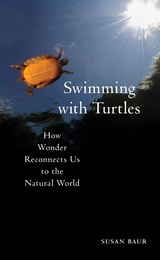
When psychologist and author Susan Baur first slipped into a Cape Cod pond with a snorkel, she wasn’t looking for transformation, just a swim. But beneath the surface, she discovered something extraordinary: minnows hiding among water lilies; fresh-water jellies like jewels and—most striking of all—painted, musk, and snapping turtles. Whether the turtles were buried in mud, teetering on a submerged branch, or drifting like ancient astronauts, they pulled her into a mysterious happiness she could not explain.
Learning to move slowly enough to see them became both her new discipline and her greatest joy. Each dive required patience, curiosity, and humility, and she learned to read the water, follow a subtle shadow, and anticipate the turtles’ rhythms without disturbing their world. As she mastered the art of swimming with turtles, Baur also fell in love with an older man whose companionship deepened her connection to the natural world. When he passed away, grief drove her deeper into the water. There, among the turtles, she found solace and purpose: a reason to keep diving, looking, and learning.
Over nearly two decades, Baur became a self-taught naturalist, children’s author (of The Turtle Sisters series), and unlikely environmental advocate, founding Old Ladies Against Underwater Garbage to protect the ponds she had grown to love. With humor, heart, and vivid observation, Baur shows that wonder isn’t reserved for the young or the lucky—it waits beneath the surface for anyone willing to slow down, look closely, and stay a while.
Swimming with Turtles
How Wonder Reconnects Us to the Natural WorldWritten by Susan Baur. Narrated by Moe Egan
University of Massachusetts Press, 2026
A memoir of discovery, loss, and wonder that shows us how to slow down
When psychologist and author Susan Baur first slipped into a Cape Cod pond with a snorkel, she wasn’t looking for transformation, just a swim. But beneath the surface, she discovered something extraordinary: minnows hiding among water lilies; fresh-water jellies like jewels and—most striking of all—painted, musk, and snapping turtles. Whether the turtles were buried in mud, teetering on a submerged branch, or drifting like ancient astronauts, they pulled her into a mysterious happiness she could not explain.
Learning to move slowly enough to see them became both her new discipline and her greatest joy. Each dive required patience, curiosity, and humility, and she learned to read the water, follow a subtle shadow, and anticipate the turtles’ rhythms without disturbing their world. As she mastered the art of swimming with turtles, Baur also fell in love with an older man whose companionship deepened her connection to the natural world. When he passed away, grief drove her deeper into the water. There, among the turtles, she found solace and purpose: a reason to keep diving, looking, and learning.
Over nearly two decades, Baur became a self-taught naturalist, children’s author (of The Turtle Sisters series), and unlikely environmental advocate, founding Old Ladies Against Underwater Garbage to protect the ponds she had grown to love. With humor, heart, and vivid observation, Baur shows that wonder isn’t reserved for the young or the lucky—it waits beneath the surface for anyone willing to slow down, look closely, and stay a while.