Results by title
1214 books match the query 'Subjects & Themes' and 86 start with s

Song of the Bamboo Spear
Poems, A Bilingual EditionNam-ju Kim (1945–1994)
Rutgers University Press, 2027
This book debuts selected poetry by Kim Nam-ju (1946–1994) in English translation, along with the original Korean. Referred to as the “Che Guevara of South Korea,” and self-described a “warrior poet,” Kim Nam-ju remains, to this day, an enduring voice of the 1970s and 80s cultures of anti-authoritarian resistance in South Korea. Kim was arrested in 1979 for his involvement with the “South Josǒn” National Liberation Front, a leftist underground group organizing against the Yushin regime. Kim wrote prolifically while in prison (1979-1988), at times by etching his poems into scraps of foil, milk carton, or cigarette packages. The work he produced in prison alone totals around 360 poems. This bilingual volume selects 65 poems from Kim's oeuvre, sampling across many different chapters of the poet’s career. Readers will find autobiographical reflections on his childhood, love poems, missives from the prison cell, commemorations of the Kwangju Uprising, the poet’s calls to arms, and more.
이 책은 김남주 시인(1946~1994)의 시 65편을 한국어 원문과 함께 영문 번역으로 처음 선보인다. ‘한국의 체 게바라’로 불리며 스스로를 ‘전사 시인’이라 칭했던 김남주는 오늘날까지도 한국의 1970·80년대 반독재 저항운동을 대표하는 사라지지 않는 목소리로 남아 있다. 김남주는 유신정권에 맞서 결성된 좌파 지하조직 ‘남조선민족해방전선준비위원회’에 가담한 혐의로 1979년에 체포되었다. 1979년부터 1988년에 이르는 수감 기간에도 꾸준히 창작 활동을 이어갔으며, 때로는 은박지 조각이나 우유곽, 담뱃갑 등에 시를 새겨 집필하기도 하였다. 이 시기에 쓴 작품만 해도 360여 편에 이른다. 이 영역시집은 시인의 전체 작품 중에서 65편의 시를 엄선하여 시인의 생애와 창작 활동의 다양한 시기를 아우르는 시적 여정을 한눈에 보여준다. 독자들은 시인의 어린 시절에 대한 자전적인 회고, 사랑의 시, 옥중 서한, 5·18 광주항쟁을 추모하는 시, 민중의 투쟁을 촉구하는 시 등 다양한 작품을 만나볼 수 있을 것이다.
English-Korean Bilingual Edition
영-한 이중언어판
This book is published with the support of the Literature Translation Institute of Korea (LTI Korea)
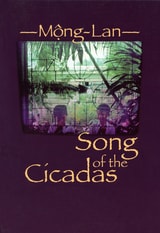
Song of the Cicadas
Anne Mong-Lan Pham
University of Massachusetts Press, 2001
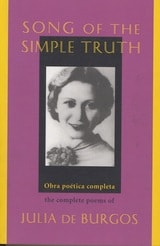
Song of the Simple Truth
The Complete Poems of Julia de BurgosJulia de Burgos
Northwestern University Press, 1995
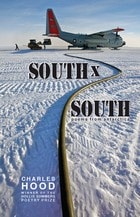
South × South
Poems from AntarcticaCharles Hood
Ohio University Press, 2013
A vivid and insightful look at the culture and terrain of Antarctica, as well as the people who choose to live and work there, South × South celebrates and explores life at the extreme edge of our planet. Blending travel narrative, historical research, and the surprises of magical realism, Hood presents life in Antarctica and the history of polar aviation as both a miracle of achievement yet also as a way to understand humanity’s longing to be creatures of the heavens as well as the earth. South × South is poetry at its most inventive and surprising, insisting that the world is stranger and more glorious than we ever might have guessed.
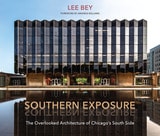
Southern Exposure
The Overlooked Architecture of Chicago's South SideLee Bey; Foreword by Amanda Willliams
Northwestern University Press, 2019
Inspired by Bey’s 2017 Chicago Architecture Biennial exhibition, Southern Exposure visits sixty sites, including lesser-known but important work by luminaries such as Jeanne Gang, Frank Lloyd Wright, and Eero Saarinen, as well as buildings by pioneering black architects such as Walter T. Bailey, John Moutoussamy, and Roger Margerum.
Pushing against the popular narrative that depicts Chicago’s South Side as an architectural wasteland, Bey shows beautiful and intact buildings and neighborhoods that reflect the value—and potential—of the area. Southern Exposure offers much to delight architecture aficionados and writers, native Chicagoans and guests to the city alike.
Southern Illinois Coal
A PortfolioC. William Horrell. Edited with an Introduction by Herbert K. Russell. Foreword by Jeffrey L. Horrell
Southern Illinois University Press, 1995
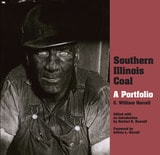
The coal mining photographs of C. William Horrell, taken across the southern Illinois Coal Belt over a twenty-year period from 1966 to 1986, are extraordinary examples of documentary photography—so stark and striking that captions often seem superfluous.
Horrell’s photographs capture the varied phenomena of twentieth-century coal mining technology: the awesome scale of surface mining machines and their impact on the land; massive machines forced into narrow passageways with inches to spare as they carry coal from the face to conveyer belts; and, more significant, the advent of continuous miners, machines that can handle four previously separate processes and which have been a fixture in underground or “deep” mines since the mid-1960s.
Horrell was also intrigued by the related activities of mining, including coal’s processing, cleaning, and transportation, as well as the daily, behind-the-scenes operations that keep mines and miners working. His photographs reflect the beauty of the commonplace—the clothes of the miners, their dinner pails, and their tools—and reveal the picturesque remnants of closed mines: the weathered boards of company houses, the imposing iron beauty of an ancient tipple, and an abandoned building against the lowering sky of an approaching storm. Finally, his portraits of coal minersshow the strength, dignity, and enduring spirit of the men and women who work the southern Illinois coal mines.

Sovereignty
A PlayMary Kathryn Nagle
Northwestern University Press, 2020
A powerful meditation of the echoes of history and the never-ending struggle for sovereignty
Sovereignty unfolds over two parallel timelines. In present-day Oklahoma, a young Cherokee lawyer, Sarah Ridge Polson, and her colleague Jim Ross defend the inherent jurisdiction of Cherokee Nation in the U.S. Supreme Court when a non-Indian defendant challenges the Nation’s authority to prosecute non-Indian perpetrators of domestic violence. Their collaboration is juxtaposed with scenes from 1835, when Cherokee Nation was eight hundred miles to the east in the southern Appalachians. That year, Sarah’s and Jim’s ancestors, historic Cherokee rivals, were bitterly divided over a proposed treaty with the administration of Andrew Jackson, the Treaty of New Echota, which led to the nation’s removal to Oklahoma on the infamous Trail of Tears.
A direct descendant of nineteenth-century Cherokee leaders John Ridge and Major Ridge, Mary Kathryn Nagle has penned a play that twists and turns from violent outbursts to healing monologues, illuminating a provocative double meaning for the sovereignty of both tribal territory and women’s bodies. Taking as its point of departure the story of one lawyer’s passionate defense of the rights of her people to prosecute non-natives who commit crimes on reservations, Sovereignty opens up into an expansive exploration of the circular continuity of history, human memory, and the power of human relationships.

Spanish Peaks
Land and LegendsConger Beasley, Jr.
University Press of Colorado, 2006
Speaking of Real Animals and Their History
From the Deep Past to the PresentLinda Kalof
Michigan State University Press, 2027
Speaking of Real Animals and Their History offers an interdisciplinary exploration of animal lives across time, from dinosaurs and long-extinct cave bears to contemporary animals like the giant panda and bald eagles. Drawing on iconography, palaeozoology, zooarchaeology, osteobiography, and textual accounts that document animals’ natural behaviors, Linda Kalof reconstructs in vivid prose a synthesis of interdisciplinary research on the life histories of animals through a realist lens, presenting true‑to‑life portraits of the creatures who have lived on Earth across time.

Speculative Whiteness
Science Fiction and the Alt-RightJordan S. Carroll
University of Minnesota Press, 2024
Reveals the alt-right’s project to claim science fiction and—by extension—the future
Fascists such as Richard Spencer interpret science fiction films and literature as saying only white men have the imagination required to invent a high-tech future. Other white nationalists envision racist utopias filled with Aryan supermen and all-white space colonies. Speculative Whiteness traces these ideas through the entangled histories of science fiction culture and white supremacist politics, showing that debates about representation in science fiction films and literature are struggles over who has the right to imagine and inhabit the future. Although fascists insist that tomorrow belongs to them, they have always been and will continue to be contested by antifascist fans willing to fight for the future.
Spirit Within, Spirits Throughout
A Spiritual Exploration Through PoetryAntoinette M. Schippers
Parkhurst Brothers, Inc., 2022
Spiritual Moderns
Twentieth-Century American Artists and ReligionErika Doss
University of Chicago Press, 2022
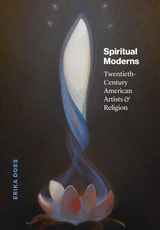
Andy Warhol is one of the best-known American artists of the twentieth century. He was also an observant Catholic who carried a rosary, went to mass regularly, kept a Bible by his bedside, and depicted religious subjects throughout his career. Warhol was a spiritual modern: a modern artist who appropriated religious images, beliefs, and practices to create a distinctive style of American art.
Spiritual Moderns centers on four American artists who were both modern and religious. Joseph Cornell, who showed with the Surrealists, was a member of the Church of Christ, Scientist. Mark Tobey created pioneering works of Abstract Expressionism and was a follower of the Bahá’í Faith. Agnes Pelton was a Symbolist painter who embraced metaphysical movements including New Thought, Theosophy, and Agni Yoga. And Warhol, a leading figure in Pop art, was a lifelong Catholic. Working with biographical materials, social history, affect theory, and the tools of art history, Doss traces the linked subjects of art and religion and proposes a revised interpretation of American modernism.
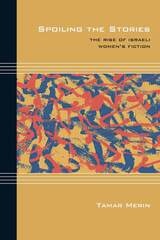
Spoiling the Stories
The Rise of Israeli Women's FictionTamar Merin
Northwestern University Press, 2016

Spoon River Anthology
An Annotated EditionEdgar Lee Masters. Edited and with an Introduction and Annotations by John E. Hallwas
University of Illinois Press, 1992
What lies beneath the surface of Masters' timeless classic
One of the most striking and original achievements in American poetry is now available in a remarkable edition that comprehends the poet and his book in an entirely new way.
This edition of Spoon River Anthology probes the social background of the small-town world that Edgar Lee Masters loved and hated--and finally transmuted into powerful literary art. Extensive annotations identify the people whose lives inspired the 243 poetic accounts of frustration, violence, struggle, and triumph that shocked American readers.
The most extraordinary feature of this edition is the extensive introduction that provides the key to this misunderstood American classic. The book's relationship to Whitman is clearly established, and the important influences of Browning, Goethe, Spinoza, and others are revealed for the first time. John Hallwas' approach combines cultural, biographical, philosophical, psychoanalytic, mythic, and symbolic insights--and concludes with a stunning reassessment of "Our New Poet."
The annotated Spoon River Anthology supersedes seventy-five years of largely misdirected critical commentary. It will send a new generation of readers back to this surprisingly complex book that probes so deeply into the American consciousness.

Sports through the Lens
Essays on 25 Iconic PhotographsEdited by Maureen M. Smith, Daniel A. Nathan, and Sarah K. Fields
University of Texas Press, 2024
2025 Anthology Award, North American Society for Sport History
The stories behind and legacies of important sports photos from the last 130 years.
Ever since photography and professional sports originated in the nineteenth century, photographers have shaped how we perceive sports. Sports through the Lens collects essays by twenty-five historians that consider what it means to capture and revisit a moment of cultural significance in sports, looking at each photo’s creation, its contexts, and how its meaning has shifted over time. Some essays provide fresh perspectives on such iconic images as Muhammad Ali standing over Sonny Liston at their 1965 rematch and Michael Jordan soaring at the 1988 NBA All-Star Game slam dunk competition; others introduce readers to the lesser-known stories of the first woman to officially run the Boston Marathon or the inaugural World Indigenous Games. The authors examine the photos' legacies alongside the artistry of both the athletes and the photographers. Reflecting on images of athletes from around the world engaged in sports from baseball to horse-racing to hockey, Sports through the Lens provides a wide-ranging meditation on the visual, historical, and cultural meaning of sports photographs.
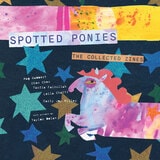
Spotted Ponies
The Collected ZinesMag Gabbert, Chen Chen, Tarfia Faizullah, Leila Chatti, and Carly Joy Miller with artwork by Taylor Dolan
Bridwell Press, 2025
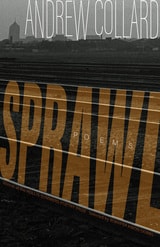
Sprawl
PoemsAndrew Collard
Ohio University Press, 2023
Within the larger geographical space of the metropolis are the in-between places of personal significance: the gas stations, burger joints, malls, and parking lots where many of the defining moments of ordinary lives occur. These poems take deep inspiration from such places, insisting on the value of the people found there, along with their experiences. What might be considered high and low culture are as inextricably linked in the formal cues of the poems as they are in the Michigan landscape, influenced by pop music, midcentury modern aesthetics, comic books, and cars.
While the sprawl of the title refers to the seemingly endless succession of businesses and neighborhoods extending north from Detroit (“a sprawl this extensive breeds / empty pockets”), it also invokes the sprawl of history through poems that move between the past and present. One sequence of poems built on old newspaper clippings draws attention to a Chrysler plant that once constructed Redstone missiles. Elsewhere, two poems refer to the Detroit newspaper strike of the 1990s, a local controversy with lasting implications for the community. Sprawl ultimately illuminates the relationship of one place to other places, contextualizing its characters and locales within a wider societal frame.
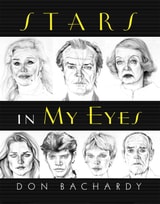
Stars in My Eyes
Don Bachardy
University of Wisconsin Press, 2011
Stars in My Eyes is a revealing and entertaining collection of celebrity portraits, rendered both in acute drawings and in finely observed prose. In the 1970s and 1980s, internationally known artist Don Bachardy made portraits from life, depicting the actors, writers, artists, composers, directors, and Hollywood elite that he and his partner Christopher Isherwood knew. He then made detailed notes about these portrait sittings in the journal he has kept for more than forty years. The result is a unique document: we enter the mind of the artist as he records the images and behavior of his celebrity subjects—from Ruby Keeler and Barbara Stanwyck to Jack Nicholson and Linda Ronstadt—during their often intense collaboration with him.
Finalist, Lambda Literary Foundation Book Award
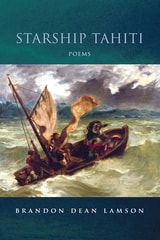
Starship Tahiti
PoemsBrandon Dean Lamson
University of Massachusetts Press, 2013
The poems in Brandon Dean Lamson's first volume, Starship Tahiti, explore imprisoned bodies and the tension between captivity and imagination. Beginning on Rikers Island, the book traces a creation myth in reverse, moving from prison to the spacious arches of Grand Central Station to the shores of the Chesapeake Bay.
Lamson examines themes of violence, gender, and identity in various real and imagined settings where inmates read Antigone, Howlin' Wolf sings in a black barbershop, and Metallica records burn on a Viking altar. Throughout these shifts, the poems construct fractured narratives that subvert linear storytelling. The layering of voice and imagery in this collection transgresses boundaries between the secular and the sacred, and between the communal and the personal. As the speaker of “Portland Bardo” says, “The fragile, in between state of larvae hatching / is no less desirable than full bloom in a city of roses, if such a city can ever be found.”
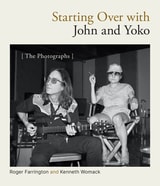
Starting Over with John and Yoko
The PhotographsRoger Farrington
Rutgers University Press, 2026
“This is one to linger over.” —Publishers Weekly
On August 7, 1980, John Lennon and Yoko Ono made their triumphant return to the recording studio after a self-imposed five-year absence. Roger Farrington, an up-and-coming photographer from Boston, was hired to get “the shot” that would announce their comeback. It would be Lennon’s most intense press scrutiny since the heady days of the Beatles’ maiden voyage to America in 1964, and for Farrington, it would be the assignment of a lifetime. Just four months later, Lennon’s assassination would plunge the world into mourning.
Reproducing, for the first time, the entire run of Farrington’s iconic photographs from that day, Starting Over transports readers back to 1980 and into Manhattan’s Hit Factory, where Lennon and Ono recorded their acclaimed LP Double Fantasy. With supporting photos and other ephemera, Farrington and renowned Beatles historian Kenneth Womack capture a poignant moment in music history and provide an insider’s look at celebrity photography in the pre-digital age.
Status Pending
Adrian Blevins
Four Way Books, 0
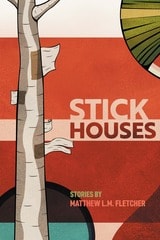
Stick Houses
StoriesMatthew L.M. Fletcher
Michigan State University Press, 2025
These stories explore themes of home and belonging, and how Native people are not just one thing; they are both Native and non-Native blood. Some are deeply connected to their Anishinaabe heritage, while others have suffered a complete loss of their culture. Many Native people are conflicted about their background and suffer intergenerational trauma. These stories originate in dynamic environments and situations such as airports, college, Indian lawyering, and high school baseball games.
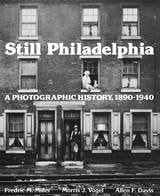
Still Philadelphia
Fredric Miller
Temple University Press, 1983
This is a book about Philadelphia and about photography, but it is not the usual book about either. On one level, this is the pictorial story of a great industrial metropolis in transition. It is the story of a railroad city, a city of trolleys and subways and horse-drawn vehicles, as it gradually succumbed to the automobile. It is the story of a city filled with neighborhood industry giving way to suburbs, to commuter travel, and to a change in the very nature of work. It is the story of a city spreading out, expanding and doubling in population in fifty years. It is the story of urban exuberance and vitality where ethnic groups mixed and mingled, but it is also the story of slums and poverty, crime and conflict. A Philadelphia family album, filled with pictures of ordinary people, Still Philadelphia focuses on the city of immigrants and industry, not on the lives and houses of the wealthy.
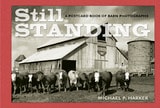
Still Standing
A Postcard Book of Barn PhotographsMichael P. Harker
University of Iowa Press, 2006
Storage Unit for the Spirit House
Maw Shein Win
Omnidawn, 2020
Assemblages of both earthly and noncorporeal possessions throughout the collection become resonant and alive, and Win must summon “a circle of drums and copper bells” to appease the nats who have moved into a long-ago family house. This careful curation of unlikely objects and images becomes an act of ritual collection that uses language to interrogate how pain in life can transform someone into a nat or a siren that lives on. Restrained lines request our imagination as we move with the poet through haunted spaces and the objects that inhabit them.
Strange Hymn
PoemsCarlene Kucharczyk
University of Massachusetts Press, 2025
Winner of the 2025 Vermont Book Award for Poetry!
“I’ll tell you everything I know. Though there might not be much to tell,” confesses the speaker in Strange Hymn by Carlene Kucharczyk, in a meticulously crafted lyrical journey exploring morality and humanity. The poems here grapple with understanding physical loss: “I wanted / to know at once and definitively our animal bodies / were not all we were. It is shameful to be this fragile.” They also engage with the more abstract slipping away of memory and time: “Since I was born, I have been forgetting. Forgetting what I have wanted to remember.” Kucharczyk’s insightful poems blur the lines between history and myth, love and grief, song and silence.
Caught between lamenting the passage of time and rejoicing in small beauties, she writes, “I tell you, I wish we could stay here longer / in this hotel of lost grandeur, this palace of interesting disarray, / and stay here with these pieces of the impersonal past / that have somehow not yet outlasted their small lights.” Each moment reflects on our ephemeral lives from musings on art and nature to reflections on the self, asking “Is a mirror a sort of glass house? / And, is there a way to see ourselves besides through the glass?”
As readers traverse this collection, they learn how the body sings, the many iterations of Mary, what sirens truly think of Odysseus, how a Morning Glory unfurls, and lessons in orthodontics, but most importantly, how to live with absence. Kucharczyk is a master of manipulating time and space through her dynamic use of form, creating a narrative that begs, “After I’m gone, don’t bury my body— / Burn it, and turn it into song.”
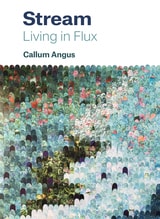
Stream
Living in FluxCallum Angus
Northwestern University Press, 2027
A nonfiction work examining a confluence of bodily and worldwide transition
Stream is an exploration of the large- and small-scale changes taking place in a single body and on our planet as a whole. Using a stream as a biological, technological, and psychological metaphor, Angus layers lyric essay, journal entries, and the detritus of a life spent writing about the climate within and without to consider how we remain fluid in a time of constant change. Each section of Stream flows into the next, weaving through thaws, floods, cataracts, and eddies while asking how a melting of rigid categories, from seasons to gender, might help us approach a changing world anew. From winery workers dying in the fields to endangered desert tortoises unable to outrun the flames, Stream is an outpouring of climatological grief toward those who perpetuate inaction, an elegy for those we’ve lost to the heat, and a tribute to the tributaries that help us see the world from other perspectives.
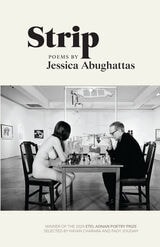
Strip
PoemsJessica Abughattas
University of Arkansas Press, 2020
“The mystery that Abughattas composes is always moving toward an impossible freeing of the self from its numerous frames. Yet frame by frame . . . she suspends our disbelief, catalogs those potentialities in an America always ready to shoot, direct, and produce the film of itself. Strip is ‘in love with possibility,’ ‘in praise of here I am, here I’ve been,’ USA style. Strip celebrates the body—its rise and fall, ebb and flow, in a carnival of parties—restlessly, shamelessly, searching for a way out…. Even as Abughattas claims that ‘I can’t believe sometimes I have a body,’ her poems teem with an awareness of the body’s unavoidable centrality in our lives—in how we view our lives, and how others view them; in how they progress, and how they end; in how they become meaningful, and how they are stripped of meaning. And no stripping escapes memory. Whether in terms of dispossession or sexuality, admiration or pity, Abughattas renders her treatment of the body with candor and poignancy. . . . The most startling moments in Abughattas’s poems, however, depend not on shocking or intimate details—but on the ‘I’ pulling away from the self, abandoning the ego, and gazing outward. She tries to see something else, to escape the body’s restraints.”
—Fady Joudah and Hayan Charara, from the Preface
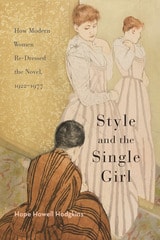
Style and the Single Girl
How Modern Women Re-Dressed the Novel, 1922–1977Hope Howell Hodgkins
The Ohio State University Press, 2016
Hodgkins delineates how in the 1920s and 1930s, popular novels by Dorothy Sayers and high-art fiction by Jean Rhys used dress to comment wittily and bitterly on gender relations. During World War II, changes in British Vogue and compromises made by the literary journal Horizon signaled the death of modernist styles, as Elizabeth Bowen’s gender-bent wartime stories show. Then demure and reserved postwar styles—Dior’s curvy New Look, the Movement’s understated literary irony—were intertwined in the fictions of Barbara Pym and Muriel Spark, who re-dressed the novel with a vengeance. Whether fashioning detective fiction, literary impressionism, or postwar comedy, these novelists used style in every sense to redefine that famous question, “What do women want?”
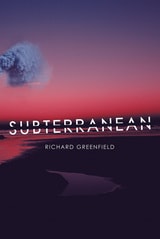
Subterranean
Richard Greenfield
Omnidawn, 2018

Surviving Literary Suicide
Jeffrey Berman
University of Massachusetts Press, 1999
An exploration of the relationship between literature and life, this study examines the effect on readers of “suicidal literature”—novels and poems that depict, and sometimes glorify, the act of suicide. Beginning with a discussion of the growing incidence of suicide in American culture, Jeffrey Berman investigates the portrayal of suicide in the works of four authors who later took their own lives—Virginia Woolf, Ernest Hemingway, Sylvia Plath, and Anne Sexton— and two who did not—Kate Chopin and William Styron. In each case Berman discusses the writer's shifting attitude toward suicide, the tendency of critics to romanticize fictional suicide, and the impact of writing about suicide on the artist's own life. At the same time, Berman draws on his experiences as a teacher of these writings, analyzing student reactions to “literary suicide” as recorded in class diaries—responses ranging from grief and confusion to anger and guilt. By looking at the connection between real and imagined suicide, Berman seeks to shed fresh light on a subject long enshrouded in silence, fear, and mystery.
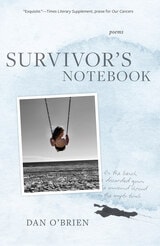
Survivor's Notebook
PoemsDan O'Brien
Acre Books, 2023
Dan O’Brien’s powerful companion to Our Cancers catalogs the recovery of a cancer survivor, whose wife has recently survived her own cancer, as he returns to his daily life while raising a young daughter. This prose-poem sequence is a true survivor’s notebook, using photos and the tools of memoir to evoke how disaster can constellate our past, present, and future.
In his poems, plays, and nonfiction, Dan O’Brien has explored, as he says in a 2023 interview, “how trauma shatters identity, and in its aftermath we reconfigure and rewrite, as it were, the story of who we were and are and maybe will be.” In highly personal poems reminiscent of dramatic monologues, as well as shorter lyric fragments, the protagonist reconsiders the people and places he knew before his illness, including his estranged family and others with cancer. While looking back he moves forward again, resuming his career as a writer and teacher, revisiting Ireland, and making a kind of pilgrimage to the Holy Land. There is a confiding and at times comical tone in these poems as O’Brien awakens to the delights, absurdities, and wonders of existence, and as he and his wife work through the aftershocks of their trauma toward a deeper love.
With text and image, Survivor’s Notebook shows how we go on, with resilience, gratitude, and joy, when “the emergency’s elsewhere” now.
Survivor's Notebook
PoemsDan O’Brien
Acre Books, 2023
In his poems, plays, and nonfiction, Dan O’Brien has explored, as he says in a 2023 interview, “how trauma shatters identity, and in its aftermath we reconfigure and rewrite, as it were, the story of who we were and are and maybe will be.” In highly personal poems reminiscent of dramatic monologues, as well as shorter lyric fragments, the protagonist reconsiders the people and places he knew before his illness, including his estranged family and others with cancer. While looking back he moves forward again, revisiting Ireland, resuming his career as a writer and teacher, and making a kind of pilgrimage to the Holy Land. There is a confiding and at times comical tone in these poems, as he awakens to the delights, absurdities, and wonders of existence, and as he and his wife work through the aftershocks of their trauma toward a deeper love.
Survivor’s Notebook shows how we go on, with resilience, gratitude, and joy, when “the emergency’s elsewhere” now.
Susanna Rowson
Sentimental Prophet of Early American LiteratureSteven Epley
Northwestern University Press, 2016
Sweet Repetition
Cynthia Cruz
University of Chicago Press, 2025
Integrating Lacanian and Freudian psychoanalysis, continental philosophy, and the works of other poets, this collection explores narrative through abstraction and considers how repetition holds both the power to constrain and to generate. Freud explains how what we repress—what we know but don’t want to acknowledge—reappears in our actions through repetition. Through slips of the tongue or selective memory, we engage with what our unconscious knows, finding knowledge through unknowing. The psychoanalytic session is centered on bringing forth repressed knowledge through acts of unknowing—speaking without thinking—which brings one closer to recognizing an obscured desire.
The poetry of Sweet Repetition works in ways akin to the psychoanalytic act. These pulsing poems follow the definitions of the word revolution—to revolve, change direction, unroll, unwind, happen again, repeat, orbit around. Images and words reappear in the motion of Cynthia Cruz’s poems, inviting us into their revolutionary, political, and cumulative effects.
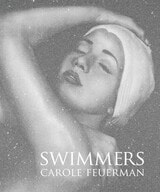
Swimmers
Carole FeuermanCarole Feuerman
The Artist Book Foundation, 2014
Realist sculptor Carole A. Feuerman's human-figure sculptures express a refreshing perspective on the mundane but intensely personal activities of modern life. her powers of observation and versatility find unique expression through various materials that include marble, bronze, vinyl, and painted resins, while she incorporates both ancient and contemporary methods in the creation of her works. Swimmers: Carole Feuerman is a gorgeous and shimmering glimpse at transitory, contemplative moments in time, often captured in a veil of clear resin that replicates tumbling water droplets.
In his astute and insightful essay, John Yau describes Feuerman's exquisitely rendered figures as subjects "caught in a moment of transition that radiates an intense eroticism." She evokes an inward life for her figures that invites our speculation, while revealing a mysterious chasm between them and the viewer that can never be plumbed. We cannot know their thoughts and perhaps that is exactly the point. Feuerman fuses the tactile nature of her sculpture with a visual verisimilitude that provides us a fleeting glimpse into private and isolated environments—women stepping out of the shower, in the rain, or swimming—that suggest a meditative bliss.