Results by title
967 books match the query 'Theater' and 108 start with s
So Much Wasted
Hunger, Performance, and the Morbidity of ResistancePatrick Anderson
Duke University Press, 2010
Solo
The Everything Guide to Writing, Performing, and Producing Your One-Person ShowArlene Malinowski and Julie Ganey
Northwestern University Press, 2026
The art of solo performance has exploded in the last twenty years as an immediate and accessible art form. The number of solo festivals grows every year, and artists are hungry for the opportunity to center their own voices and experiences. Solo is designed to feed that hunger.
Seasoned theater educators and performers Arlene Malinowski and Julie Ganey have compiled an invaluable guide for students and practitioners alike. Topics include high-stakes narratives, compelling characters, and the role of narrators, as well as practical exercises, interviews with performers at every stage of their careers, and examples from real one-person shows. Performers will also find advice on collaborating with directors, incorporating technical elements, and producing and marketing strategies.
Whether you’re just starting out or are a seasoned professional looking to refine your show-in-progress, Solo is an essential volume for anyone ready to bring their story to life onstage.

Sonic Strategies
Performing Mexico's War on Drugs, Mourning, and FeminicideChristina Baker
Vanderbilt University Press, 2023
In Sonic Strategies, author Christina Baker highlights the tactics employed by contemporary performance artists in Mexico in response to the violence surrounding the nation’s War on Drugs. The introduction opens with a description of the 2007 reenactment of the Grito, or “cry,” of independence, a moment fraught with sonic sparring, setting the stage for how each subsequent chapter focuses on themes related to war and violence. Each chapter focuses on the works of one or more performance artist, and taken together, the case studies illuminate how critiques of the nation’s rising death tolls, governmental corruption, and gendered violence very literally sound, whether in Música de balas, a post-dramatic piece by Hugo Salcedo; the lamentations of the nation’s Antigones in works by Violeta Luna and Lukas Avendaño; satirical revisions of Mexican Golden Age film in the cabaret piece Nosotras las proles; or the story of transfeminicide in César Enríquez’s La Prietty Guoman by way of US pop music.
Written in an accessible style grounded in theater studies but interdisciplinary by design, Sonic Strategies will appeal to literary critics, students, musicologists, and theater and performance scholars alike. By paying close attention to planned and spontaneous sounds within live and textual experiences, Sonic Strategies contends that conscientious listening reveals dynamic practices that reside beyond the linguistic and embodied gesture.
Source Work for Actors
Diane Edgecomb
Seagull Books, 2025
The legacy of Polish theatre director Jerzy Grotowski and the skills of his legendary actors come to life in this personal account of a workshop and intensive with Laboratory Theatre master actor Zbigniew Cynkutis. Drawing from her extensive notes and recordings, Diane Edgecomb takes us to the heart of the workshop experience as a young actor determined to make this process her own. Cynkutis guides the participants to a deep understanding of his artistic philosophy and craft, giving them invaluable tools and sources to enrich their acting. Stimulated by a developing series of tasks, Laboratory Theatre training exercises, and by Cynkutis’ startling demonstrations, the group is challenged to bring their whole selves to the work and to reimagine what is possible in theatre.
The intensive proceeds from exercises familiar to those who have studied Grotowski to innovative explorations of dramatic text and character which draw from theatre sources based in the primal energies of nature. Those who have been mystified by academic writings on the work of the Laboratory Theatre will find this personal story refreshing and accessible, filled with advice and exercises grounded in the rich conversational style of a charismatic master actor. Links to audio files of Cynkutis speaking as he leads the work lend an invaluable immersive element to the book.
This compelling volume bears witness to the power of a deeply visceral form of theatre and illustrates why the work of Grotowski and his actors has had such a profound impact on generations of theatre artists. It is sure to stimulate students, challenge directors and inspire innovative work.
Southern Stages
Space and Memory in US PerformanceHopkins, Chandra
University of Iowa Press, 2025
Through the eyes of actors and everyday people, Southern Stages offers an engaging new model for interrogating the performance of southernness, as well as how memory and imagination intersect in spaces that have shaped hundreds of years of American history. Chandra Owenby Hopkins employs cultural memory and lived realities of Black and white communities to examine the earliest and most enduring southern stages: the playhouse and the public square.
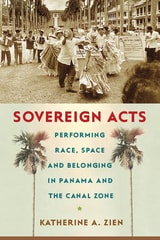
Sovereign Acts
Performing Race, Space, and Belonging in Panama and the Canal ZoneZien, Katherine A.
Rutgers University Press, 2017
Winner of the 2017 Annual Book Prize from the Canadian Association of Latin American and Caribbean Studies (CALACS)
Sovereign Acts explores how artists, activists, and audiences performed and interpreted sovereignty struggles in the Panama Canal Zone, from the Canal Zone’s inception in 1903 to its dissolution in 1999. In popular entertainments and patriotic pageants, opera concerts and national theatre, white U.S. citizens, West Indian laborers, and Panamanian artists and activists used performance as a way to assert their right to the Canal Zone and challenge the Zone’s sovereignty, laying claim to the Zone’s physical space and imagined terrain.
By demonstrating the place of performance in the U.S. Empire’s legal landscape, Katherine A. Zien transforms our understanding of U.S. imperialism and its aftermath in the Panama Canal Zone and the larger U.S.-Caribbean world.

Space in Greek Tragedy (BICS Supplement 131)
Edited by Vassiliki Kampourelli
University of London Press, 2016
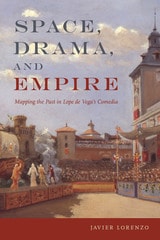
Space, Drama, and Empire
Mapping the Past in Lope de Vega's ComediaJavier Lorenzo
Bucknell University Press, 2023
Speaking Our Selves
New Plays by African WomenAsiimwe Deborah Kawe and Robert H. Vorlicky, Editors
University of Michigan Press, 2025
The plays within Speaking Our Selves confront a range of ideas and issues, including women embracing the potential of agency in often contested subject positions; confronting their historical object positions in worlds of devastating patriarchal authority; resisting toxic masculinity and persistent, oppressive binaries of gender roles; finding power in communities of women; increasing their acumen in financial, business, and economic spheres; facing tensions between traditional religious tenets and efforts toward secularization; living with perpetual acts of violence toward their bodies; and the rising mental health issues among girls and women across the continent. Readers and audiences are challenged by these plays not to be passive witnesses by observing from safe vantage points, but rather to be active participants in the stories being told.
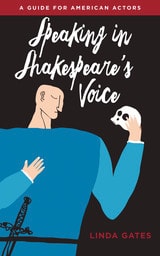
Speaking in Shakespeare's Voice
A Guide for American ActorsLinda Gates
Northwestern University Press, 2019
Speaking in Shakespeare's Voice: A Guide for American Actors is a book for undergraduate and graduate students of acting as well as for the professional who would like to perform Shakespeare with the skill of a classical actor. It is also valuable for European actors interested in performing Shakespeare in American English and British actors who would like to explore Shakespeare from an American perspective.
This guide focuses on the technical elements of voice and speech, including breathing, resonance, and diction, as well as providing an introduction to verse speaking and scansion and to Shakespeare’s rhetorical devices, such as antithesis, alliteration, onomatopoeia, irony, metaphor, and wordplay. These topics are annotated with examples from Shakespeare’s plays to demonstrate how an actor can apply the lessons to actual performance. The book also explores the history of Shakespearean performance in the United States and provides guidance on current editions of Shakespeare’s text from the Folio to online Open Source Shakespeare. A helpful appendix offers examples of two-person scenes and contextualized monologues.
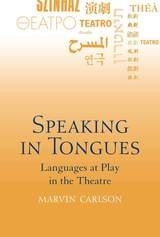
Speaking in Tongues
Languages at Play in the TheatreMarvin Carlson
University of Michigan Press, 2010
The book begins by investigating various "levels" of language-high and low style, prose and poetry-and the ways in which these have been used historically to mark social positions and relationships. It next considers some of the political and historical implications of dialogue theatre, as well as theatre that literally employs several languages, from classical Greek examples to the postmodern era. Carlson treats with special attention the theatre of the postcolonial world, and especially the triangulation of the local language, the national language, and the colonial language, drawing on examples of theatre in the Caribbean, Africa, Australia, and New Zealand. Finally, Carlson considers the layering of languages in the theatre, such as the use of supertitles or simultaneous signing.
Speaking in Tongues draws important social and political conclusions about the role of language in cultural power, making a vital contribution to the fields of theatre and performance.
Marvin Carlson is Sidney E. Cohn Professor of Theatre and Comparative Literature, CUNY Graduate Center. He is author of Performance: A Critical Introduction; Theories of the Theatre: A Historical and Critical Survey, from the Greeks to the Present; and The Haunted Stage: The Theatre as Memory Machine, among many other books.
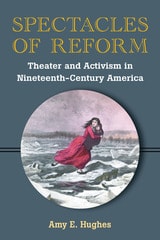
Spectacles of Reform
Theater and Activism in Nineteenth-Century AmericaAmy E. Hughes
University of Michigan Press, 2014
In the nineteenth century, long before film and television arrived to electrify audiences with explosions, car chases, and narrow escapes, it was America's theaters that offered audiences such thrills, with "sensation scenes" of speeding trains, burning buildings, and endangered bodies, often in melodramas extolling the virtues of temperance, abolition, and women's suffrage. In Spectacles of Reform , Amy E. Hughes scrutinizes these peculiar intersections of spectacle and reform, revealing that spectacle plays a crucial role in American activism. By examining how theater producers and political groups harnessed its power and appeal, Hughes suggests that spectacle was—and remains—central to the dramaturgy of reform.
Engaging evidence from lithographs to children's books to typography catalogs, Hughes traces the cultural history of three famous sensation scenes—the drunkard suffering from the delirium tremens, the fugitive slave escaping over a river, and the victim tied to the railroad tracks—assessing how they conveyed, allayed, and denied concerns about the rights and responsibilities of citizenship. These images also appeared in printed propaganda, suggesting that the coup de théâtre was an essential part of American reform culture. Additionally, Hughes argues that today's producers and advertisers continue to exploit the affective dynamism of spectacle, reaching an even broader audience through film, television, and the Internet.
To be attuned to the dynamics of spectacle, Hughes argues, is to understand how we see. Consequently, Spectacles of Reform will interest not only theater historians, but also scholars and students of political, literary, and visual culture who are curious about how U.S. citizens saw themselves and their world during a pivotal period in American history.

Spectacular Disappearances
Celebrity and Privacy, 1696-1801Julia H. Fawcett
University of Michigan Press, 2016
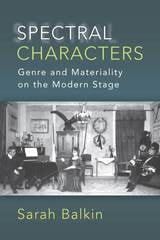
Spectral Characters
Genre and Materiality on the Modern StageSarah Balkin
University of Michigan Press, 2019
Theater’s materiality and reliance on human actors has traditionally put it at odds with modernist principles of aesthetic autonomy and depersonalization. Spectral Characters argues that modern dramatists in fact emphasized the extent to which humans are fictional, made and changed by costumes, settings, props, and spoken dialogue. Examining work by Ibsen, Wilde, Strindberg, Genet, Kopit, and Beckett, the book takes up the apparent deadness of characters whose selves are made of other people, whose thoughts become exteriorized communication technologies, and whose bodies merge with walls and furniture. The ghostly, vampiric, and telepathic qualities of these characters, Sarah Balkin argues, mark a new relationship between the material and the imaginary in modern theater. By considering characters whose bodies respond to language, whose attempts to realize their individuality collapse into inanimacy, and who sometimes don’t appear at all, the book posits a new genealogy of modernist drama that emphasizes its continuities with nineteenth-century melodrama and realism.

Split Britches
Fifty Years OnPeggy Shaw and Lois Weaver, Edited by Benjamin Gillespie
University of Michigan Press, 2027
What does it mean to sustain a creative life over fifty years? Split Britches: Fifty Years On offers an intimate look at the enduring collaboration of Peggy Shaw and Lois Weaver, the artists behind the groundbreaking performance troupe Split Britches. The collection highlights Split Britches’ enduring queer and feminist legacies, tracing how their distinctive butch/femme lesbian aesthetic and collaborative performance practice have evolved over five decades and nearly thirty original productions. It foregrounds their shift toward increasingly autobiographical and introspective work, while also situating their later performances within key theatrical, historical, and critical frameworks–paying particular attention to issues of embodiment, aging, the archive, and queer temporality. Bringing together performance scripts, candid interviews, production photos, accessible essays, and video documentation, Split Britches: Fifty Years On demonstrates how Shaw and Weaver pull from the past in order to critique the present. For scholars, artists, and students, the volume's unique combination of primary texts, critical essays, and multimedia resources makes it an essential volume that considers theatre scholarship and practice, queer and feminist discourses, and the evolution of creativity with age and time.

Stage Blood
Vampires of the 19th Century StageRoxana Stuart
University of Wisconsin Press, 1994
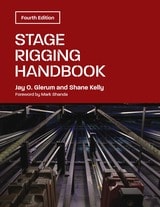
Stage Rigging Handbook, Fourth Edition
Jay O. Glerum and Shane Kelly with a foreword by Mark Shanda
Southern Illinois University Press, 2024
Updating the industry standard stage rigging text for a new generation
First published in 1987 and revised in 1997 and 2007, Stage Rigging Handbook remains the only book in any language that covers the design, operation, and maintenance of stage rigging equipment. Though often unnoticed, these systems are critical in both easing the workload of stage technicians and creating storytelling magic for the audience. This landmark text imparts the foundations for understanding and implementing rigging systems, such that upon completion of the book, the reader is ready to begin hands-on training and practice.
Organized into four sections, the handbook combines research and practical experience to guide riggers through their work. It begins by explaining the construction and care of basic lifting media. Part two analyzes types of rigging systems; then the handbook details the forces that impact rigging, from Newtonian physics to calculating expansive modern systems. Finally, it presents day-to-day best safety practices, including brand new sections on risk assessment and fall protection.
This reorganized and greatly expanded fourth edition of Jay O. Glerum’s industry standard text updates much of the information in the previous editions with the addition of chapters on truss (the framework that supports lighting, screens, and other accessories), motorized chain hoists, hardware, and job safety, including fall protection systems. Award-winning production manager Shane Kelly preserves Glerum’s voice while bringing fresh information to a new generation of riggers, supplementing the text with updated versions of earlier photographs and drawings as well as an additional one hundred illustrations. The handbook facilitates the development of a rigging practice rooted in safety, precision, and professionalism.
Stage Rigging Handbook, Third Edition
Jay O. Glerum
Southern Illinois University Press, 2007
Stage for Action
U.S. Social Activist Theatre in the 1940sChrystyna Dail
Southern Illinois University Press, 2016
Exploring the intersection between performance and politics and the direct impact of the arts on social activism, Dail argues Stage for Action is a theatrical reflection of progressivism and the pro-working-class theatrical aesthetic of the 1940s. The theatre group, which used performance to encourage direct action and personal responsibility for change, eventually would function as the theatrical voice of the United States Progressive Party in the failed presidential campaign of former vice president Henry A. Wallace.
Calling into question the widely held belief that U.S. theatre in the early years of the Cold War was indifferent to activism, Stage for Action offers historians a new interpretation of social activist performance at midcentury.
Stage, Page, Scandals, & Vandals
William E. Burton and Nineteenth-Century American TheatreDavid L. Rinear
Southern Illinois University Press, 2004
In this first modern book-length biography of native Englander William E. Burton, theatre historian David L. Rinear explores Burton’s diary, letters, published reviews, and various reminiscences to reveal the tumultuous personal and professional lives of the mid-nineteenth-century actor/manager and his role in American literary history. Stage, Page, Scandals, and Vandals: William E. Burton and Nineteenth-Century American Theatre also provides insight into the cultural and artistic climate of an early period in American history when the country was still forming a national identity.
Burton fled England in 1834 and came to America in the wake of a public scandal caused by his marriage to a sixteen-year-old orphan. Burton was then already married with a ten-year-old son. Settling in Philadelphia, the thirty-two-year-old actor rapidly established himself in the city’s theatrical productions and quickly became an audience favorite.
In 1837, while continuing to act, Burton founded and edited The Gentleman’s Magazine, a monthly literary publication later called Burton’s Gentleman’s Magazine. Burton hired struggling author Edgar Allan Poe as coeditor, and the journal achieved literary acclaim as it first published many of Poe’s short stories and poems.
Burton sold the journal in 1841 and used the money to build a new theatre, which he managed, although the depression of the early 1840s soon drove his venture out of business. After declaring bankruptcy the following year, Burton worked as a touring actor before returning to theatre management in 1845. For the next thirteen years, Burton managed a succession of theatres in Philadelphia, Baltimore, and New York.
Burton’s work as a producer of Shakespearean comedies and romances marks him as the first of the intellectual theatre managers to raise the theatrical experience from mere popular culture to high art. Burton made a fortune in his ventures, amassed the finest private Shakespearean library in the country, and built a grand seaside estate in Glen Cove, Long Island. Shrewd in his personal affairs and in business, Burton also had a violent temper, which led him to viciously attack his competitors. His peculiar domestic relationships marred his brilliant career as an actor, manager, and man of letters; he may have been married to three women at once and lived with two of these women simultaneously.
Fully revealing Burton’s contributions to American culture, Rinear traces Burton’s personal and professional pursuits from his emigration to his death in 1860. Bolstered by twenty-two illustrations, Stage, Page, Scandals, and Vandals sheds light on the history of American entertainment during the antebellum era, exposes the ruthless business practices required to succeed in theatre and literary magazine publishing, and reveals a sense of what constituted celebrity status in mid-nineteenth-century America.
Stagecraft for Nonprofessionals
F. A. Buerki; Revised by Susan J. Christensen
University of Wisconsin Press, 1983
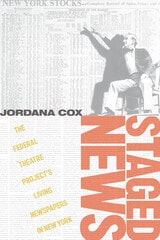
Staged News
The Federal Theatre Project’s Living Newspapers in New YorkJordana Cox
University of Massachusetts Press, 2023
Finalist for the 2023 Frank Luther Mott - Kappa Tau Alpha Journalism and Mass Communication Research Award
In 1935, a group of journalists and theater artists embarked on an unusual collaboration. With funds from the Federal Theatre Project (FTP), a Depression-era employment initiative established by President Roosevelt’s New Deal, they set out to produce news for the theatrical stage. Over the next four years, the New York–based team created six productions, known as the Living Newspapers. Covering a variety of public issues that included affordable housing, the plight of Dust Bowl farmers, the Tennessee Valley Authority, and labor law, Living Newspaper productions would reach hundreds of thousands of spectators and inspire adaptations across the country.
Staged News interprets the Living Newspaper’s process and repertoire amid journalists’ changing conceptions of their profession. Jordana Cox spotlights marginalized “newsmakers,” particularly Black artists, who challenged the parameters of public knowledge and assumptions surrounding newsworthiness. This timely analysis reveals how a vital theatrical form sprouted from a changing news landscape and reimagined what journalism could do for people seeking democratic change.
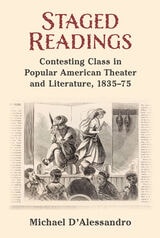
Staged Readings
Contesting Class in Popular American Theater and Literature, 1835-75Michael D’Alessandro
University of Michigan Press, 2022
Based in the historical archive, Staged Readings presents a panoramic display of mid-century leisure and entertainment. It examines best-selling novels, such as Harriet Beecher Stowe’s Uncle Tom’s Cabin and George Lippard’s The Quaker City. But it also analyzes a series of sensational melodramas, parlor theatricals, doomsday speeches, tableaux vivant displays, curiosity museum exhibits, and fake volcano explosions. These oft-overlooked spectacles capitalized on consumers’ previous cultural encounters and directed their social identifications. The book will be particularly appealing to those interested in histories of popular theater, literature and reading, social class, and mass culture.
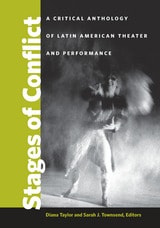
Stages of Conflict
A Critical Anthology of Latin American Theater and PerformanceDiana Taylor and Sarah J. Townsend, Editors
University of Michigan Press, 2008
"An invaluable resource to teachers of Latin American theater, with texts that provide an accurate panorama of Latin American theater."
---Adam Versenyi, University of North Carolina at Chapel Hill
"A most welcome and needed collection . . . Not only is it the first English-language anthology of theater and performance in Latin America from the Conquest onward, but it also includes excellent introductory and background material . . . certain to become an essential source book."
---Marvin Carlson, City University of New York
"A rich resource for teachers and students, and for everyone intrigued by the history of performing Latin America . . . Diana Taylor and Sarah Townsend locate an animating tension between indigenous and colonial performance practices, and between the irreducibly local character of performance and the insistent pressure---as visible in the sixteenth century as in the twenty-first---of a globalizing, often oppressive modernity."
---W. B. Worthen, Barnard College, Columbia University
Stages of Conflict brings together a vast array of dramatic texts, ambitiously tracing the intersection of theater and social and political life in the Americas over the past five centuries. Including eighteen works faithfully translated into English, the collection moves from a sixteenth century Mayan dance-drama to a 2003 production by the first published indigenous playwright in Mexico. Historical pieces from the sixteenth century to the present highlight the encounter between indigenous tradition and colonialism, while contributions from modern playwrights such as Virgilio Pinero, Jose Triana, and Denise Stolkos take on the tumultuous political and social upheavals of the past century.
The editors have added comprehensive critical commentary that details the origins of each play, affording scholars and students of theater, performance studies, and Latin American studies the opportunity to view the history of a continent through its rich and diverse theatrical traditions.
Diana Taylor is Director of The Hemispheric Institute of Performance and Politics and Professor of Performance Studies and Spanish at New York University. Her books include the award-winning volume The Archive and the Repertoire: Performing Cultural Memory in the Americas.
Sarah J. Townsend is a doctoral student at New York University.
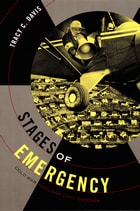
Stages of Emergency
Cold War Nuclear Civil DefenseTracy C. Davis
Duke University Press, 2007
Stages of Emergency covers public education campaigns and school programs—such as the ubiquitous “duck and cover” drills—meant to heighten awareness of the dangers of a possible attack, the occupancy tests in which people stayed sequestered for up to two weeks to simulate post-attack living conditions as well as the effects of confinement on interpersonal dynamics, and the British first-aid training in which participants acted out psychological and physical trauma requiring immediate treatment. Davis also brings to light unpublicized government exercises aimed at anticipating the global effects of nuclear war. Her comparative analysis shows how the differing priorities, contingencies, and social policies of the three countries influenced their rehearsals of nuclear catastrophe. When the Cold War ended, so did these exercises, but, as Davis points out in her perceptive afterword, they have been revived—with strikingly similar recommendations—in response to twenty-first-century fears of terrorists, dirty bombs, and rogue states.
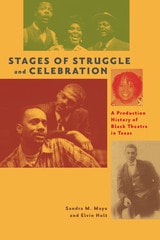
Stages of Struggle and Celebration
A Production History of Black Theatre in TexasBy Sandra M. Mayo and Elvin Holt
University of Texas Press, 2015
From plantation performances to minstrel shows of the late nineteenth century, the roots of black theatre in Texas reflect the history of a state where black Texans have continually created powerful cultural emblems that defy the clichés of horses, cattle, and bravado. Drawing on troves of archival materials from numerous statewide sources, Stages of Struggle and Celebration captures the important legacies of the dramatic arts in a historical field that has paid most of its attention to black musicians.
Setting the stage, the authors retrace the path of the cakewalk and African-inspired dance as forerunners to formalized productions at theaters in the major metropolitan areas. From Houston’s Ensemble and Encore Theaters to the Jubilee in Fort Worth, gospel stage plays of the Black Academy of Arts and Letters in Dallas, as well as San Antonio’s Hornsby Entertainment Theater Company and Renaissance Guild, concluding with ProArts Collective in Austin, Stages of Struggle and Celebration features founding narratives, descriptions of key players and memorable productions, and enlightening discussions of community reception and the business challenges faced by each theatre. The role of drama departments in historically black colleges in training the companies’ founding members is also explored, as is the role the support of national figures such as Tyler Perry plays in ensuring viability. A canon of Texas playwrights completes the tour. The result is a diverse tribute to the artistic legacies that continue to inspire new generations of producers and audiences.
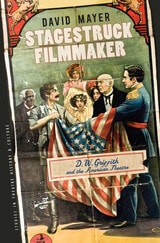
Stagestruck Filmmaker
D. W. Griffith and the American TheatreDavid Mayer
University of Iowa Press, 2009
Combining the raw materials of theatre, circus, minstrelsy, and dance with the newer visual codes of motion pictures, Griffith became the first acknowledged artist of American film. Birth of a Nation in particular demonstrates the degree to which he was influenced by the racist justifications and distorting interpretations of the Civil War and the Reconstruction era. Moving through the major phases of Griffith’s career in chapters organized around key films or groups of films, Mayer provides a mesmerizing account of the American stage and cinema in the final years of the nineteenth century and the first three decades of the twentieth century.
Griffith’s relationship to the theatre was intricate, complex, and enduring. Long recognized as the dominant creative figure of American motion pictures, throughout twenty-six years of making more than five hundred films he pillaged, adapted, reshaped, revitalized, preserved, and extolled. By historicizing his representations of race, ethnicity, and otherness, Mayer places Griffith within an overall template of American life in the years when film rivaled and then surpassed the theatre in popularity.

Stagestruck
Theater, AIDS, and the Marketing of Gay AmericaSarah Schulman
Duke University Press, 1998
Closely recounting her discovery of the ways in which Rent took materials from her own novel, Schulman takes us on her riveting and infuriating journey through the power structures of New York theater and media, a journey she pursued to seek legal restitution and make her voice heard. Then, to provide a cultural context for the emergence of Rent—which Schulman experienced first-hand as a weekly theater critic for the New York Press at the time of Rent’s premiere—she reveals in rich detail the off- and off-off-Broadway theater scene of the time. She argues that these often neglected works and performances provide more nuanced and accurate depictions of the lives of gay men, Latinos, blacks, lesbians and people with AIDS than popular works seen in full houses on Broadway stages. Schulman brings her discussion full circle with an incisive look at how gay and lesbian culture has become rapidly commodified, not only by mainstream theater productions such as Rent but also by its reduction into a mere demographic made palatable for niche marketing. Ultimately, Schulman argues, American art and culture has made acceptable a representation of “the homosexual” that undermines, if not completely erases, the actual experiences of people who continue to suffer from discrimination or disease. Stagestruck’s message is sure to incite discussion and raise the level of debate about cultural politics in America today.
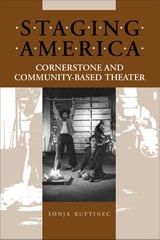
Staging America
Cornerstone and Community-Based TheaterSonja Kuftinec
Southern Illinois University Press, 2005
This captivating studymaps a history and theory of community-based theater in the United States through the Cornerstone Theater Company. Detailing how the performance-making process contributes to an ongoing negotiation of American identity, Sonja Kuftinec investigates community-based theater to trace the historical affiliations of the form and critically examines how community-based theater both enables community and challenges the very notion of “community” as a stable site.
The process of making and unmaking community is vividly illuminated in the work of the Cornerstone Theater Company, a Los Angeles-based ensemble founded in 1986. From 1986 to 1991, Cornerstone toured nationwide, working mainly with rural towns to create adaptations of classical texts. A Wild West musical Hamlet was performed with residents of Marmarth, North Dakota (population 190), and The House on Walker River, an adaptation of the Oresteia trilogy, was developed with a Native American reservation in Nevada. Since 1991, Cornerstone has performed with urban communities, developing original shows and adaptations of Western and non-Western texts incorporating local histories and community players. These performances rearticulate distinctions among various urban group and between amateur and professional theater.
While Cornerstone’s contemporary work can be contextualized within a historical tradition of grassroots performance, it also complicates this tradition, suggesting that identity may be more dynamic than rooted. By using Cornerstone as a case study, Kuftinec’s analysis of community-based theater’s impact upon rural, urban, and professional sites across the United States proposes that “community” and “America” are vital terms of negotiation rather than fixed entities.
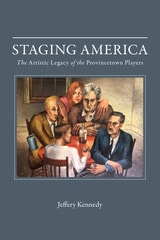
Staging America
The Artistic Legacy of the Provincetown PlayersJeffery Kennedy
University of Alabama Press, 2023
A comprehensive history of the Provincetown Players and their influence on modern American theatre
The Provincetown Players created a revolution in American theatre, making room for truly modern approaches to playwriting, stage production, and performance unlike anything that characterized the commercial theatre of the early twentieth century. In Staging America: The Artistic Legacy of the Provincetown Players, Jeffery Kennedy gives readers the unabridged story in a meticulously researched and comprehensive narrative that sheds new light on the history of the Provincetown Players. This study draws on many new sources that have only become available in the last three decades; this new material modifies, refutes, and enhances many aspects of previous studies.
At the center of the study is an extensive account of the career of George Cram Cook, the Players’ leader and artistic conscience, as well as one of the most significant facilitators of modernist writing in early twentieth-century American literature and theatre. It traces Cook’s mission of “cultural patriotism,” which drove him toward creating a uniquely American identity in theatre. Kennedy also focuses on the group of friends he calls the “Regulars,” perhaps the most radical collection of minds in America at the time; they encouraged Cook to launch the Players in Provincetown in the summer of 1915 and instigated the move to New York City in fall 1916.
Kennedy has paid particular attention to the many legends connected to the group (such as the “discovery” of Eugene O’Neill), and also adds to the biographical record of the Players’ forty-seven playwrights, including Susan Glaspell, Neith Boyce, Edna St. Vincent Millay, Floyd Dell, Rita Wellman, Mike Gold, Djuna Barnes, and John Reed. Kennedy also examines other fascinating artistic, literary, and historical personalities who crossed the Players’ paths, including Emma Goldman, Charles Demuth, Berenice Abbott, Sophie Treadwell, Theodore Dreiser, Claudette Colbert, and Charlie Chaplin. Kennedy highlights the revolutionary nature of those living in bohemian Greenwich Village who were at the heart of the Players and the America they were responding to in their plays.
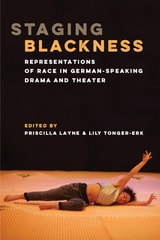
Staging Blackness
Representations of Race in German-Speaking Drama and TheaterPriscilla Dionne Layne and Lily Tonger-Erk, Editors
University of Michigan Press, 2024
Written by scholars and theater professionals with a wide variety of historical and theoretical expertise, the chapters seek to explore the connections between the German discourse on national theater and emerging ideas about race, analyze how dramaturges deal with older representations of Blackness in current productions, and discuss the contributions Black German playwrights and dramaturges have made to this discourse. Historians question how these plays were staged in their time, while cultural studies scholars contemplate how to interpret the function of race in these plays and how they can continue to be staged today.
Staging Consciousness
Theater and the Materialization of MindWilliam W. Demastes
University of Michigan Press, 2002
William W. Demastes makes use of the writings of such varied theater practitioners as Antonin Artaud, Jerzy Grotowski, Samuel Beckett, Tony Kushner, Sam Shepard, Spalding Gray, Peter Shaffer, and others, illuminating theater as proof that mind is an extension of body. The living stage incubates and materializes thought in a way that highlights the processes of daily existence outside the theater. This book offers a new way for theater practitioners to look at the unique value of the theater and an invitation for philosophers and scientists to search for new paradigms in theater, the oldest of art forms.
William W. Demastes is Professor of English, Louisiana State University. His previous books include Theatre of Chaos: Beyond Absurdism, into Disorderly Order.
Staging Desire
Queer Readings of American Theater HistoryKim Marra and Robert A. Schanke, Editors
University of Michigan Press, 2002
Essays cover the careers of major figures Clyde Fitch, Rachel Crothers, Mercedes de Acosta, Djuna Barnes, Cole Porter, Lorenz Hart, George Kelly, William Inge, James "Acorn" Oaks, Adam "Vagabond" Badeau, Eric Bentley, Loie Fuller, Robert Edmond Jones, and Jean Rosenthal. Grounded in research into the history of sexuality, the book engages central problems of terminology and evidence in analyzing sexual practices of the past and the modes of articulation of sexuality in theater, conditioned by American culture's peculiar anxieties about both.
Kim Marra is Associate Professor of Theatre Arts, University of Iowa. Robert A. Schanke is Professor of Theatre, Central College, Iowa. They edited Passing Performances: Queer Readings of Leading Players in American Theater History, a previous volume in this series.
Staging Existence
Chekhov's TetralogySvetlana Evdokimova
University of Wisconsin Press, 2023
Svetlana Evdokimova tackles this gap in Chekhov scholarship, examining the profound connections between his unstated philosophy and his artistic production. Arguing that Chekhov’s four major plays (The Cherry Orchard, Three Sisters, The Seagull, and Uncle Vanya) constitute a kind of cycle, Staging Existence offers a major reappraisal of this critical playwright in Russian intellectual history. Evdokimova’s deep, careful research into Chekhov’s engagement with contemporary philosophy provides insight into both Chekhov’s oeuvre and the writer himself.
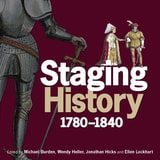
Staging History
1780-1840Edited by Michael Burden, Wendy Heller, Jonathan Hicks, and Ellen Lockhart
Bodleian Library Publishing, 2016
Drawing on copious new research, Staging History reexamines extraordinary theatrical works of the period to show the role they played in shaping popular interpretations of history. Editors Michael Burden, Wendy Heller, Jonathan Hicks, and Ellen Lockhart are joined by other experts in the field in analyzing theatrical documents, including playbills, set designs, and musical scores, as well as paintings, prints, and other illustrations, in order to explore what counted as historical truth for the writers, performers, and audiences of these plays.
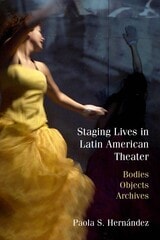
Staging Lives in Latin American Theater
Bodies, Objects, ArchivesPaola S. Hernández
Northwestern University Press, 2021
Richly detailed, nuanced, and theoretically wide-ranging, Staging Lives in Latin American Theater reveals a range of interpretations about how documentary theater can conceptualize the idea of self while also proclaiming a new mode of testimony through theatrical practices.
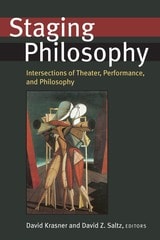
Staging Philosophy
Intersections of Theater, Performance, and PhilosophyDavid Krasner and David Z. Saltz, Editors
University of Michigan Press, 2010
Staging Philosophy raises issues of critical importance by providing case studies of various philosophical movements and schools of thought, including aesthetics, analytic philosophy, phenomenology, deconstruction, critical realism, and cognitive science. The essays, which are organized into three sections—history and method, presence, and reception—take up fundamental issues such as spectatorship, empathy, ethics, theater as literature, and the essence of live performance. While some essays challenge assertions made by critics and historians of theater and performance, others analyze the assumptions of manifestos that prescribe how practitioners should go about creating texts and performances. The first book to bridge the disciplines of theater and philosophy, Staging Philosophy will provoke, stimulate, engage, and ultimately bring theater to the foreground of intellectual inquiry while it inspires further philosophical investigation into theater and performance.
David Krasner is Associate Professor of Theater Studies, African American Studies, and English at Yale University. His books include A Beautiful Pageant: African American Theatre, Drama, and Performance in the Harlem Renaissance, 1910-1920 and Renaissance, Parody, and Double Consciousness in African American Theatre, 1895-1910. He is co-editor of the series Theater: Theory/Text/Performance.
David Z. Saltz is Professor of Theatre Studies and Head of the Department of Theatre and Film Studies at the University of Georgia. He is coeditor of Theater Journal and is the principal investigator of the innovative Virtual Vaudeville project at the University of Georgia.
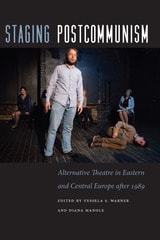
Staging Postcommunism
Alternative Theatre in Eastern and Central Europe after 1989Vessela S. Warner and Diana Manole
University of Iowa Press, 2020
Contributors: Dennis Barnett, Dennis C. Beck, Violeta Decheva, Luule Epner, John Freedman, Barry Freeman, Margarita Kompelmakher, Jaak Rahesoo, Angelina Ros¸ca, Ban¸uta Rubess, Christopher Silsby, Andrea Tompa, S. E. Wilmer
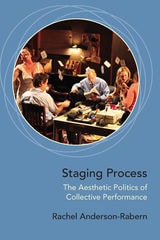
Staging Process
The Aesthetic Politics of Collective PerformanceRachel Anderson-Rabern
Northwestern University Press, 2020
Rachel Anderson-Rabern explores the ideas of boredom and quotidian employment that permeate particular performance projects. Using Henri Lefebvre’s concepts of work roles within everyday philosophy, she demonstrates that collective creation gives rise to new economies of performance. The book also presents theories of the political stakes of danced gestural forms in performance, informed by Giorgio Agamben’s writings on gesture, and elaborates the ways in which these ensembles make use of durational performance to posit ethical frameworks: ways of living in the world.
Conversing with the ideas of Paul Virilio and Guy Debord among others, Anderson- Rabern claims that these groups posit new models of aesthetic politics through careful, speed-based investigations of construction and destruction that unearth the powerful potential of contemporary collaborative methods to be at once aesthetically minded, ethically driven, and politically engaged.
Staging Resistance
Essays on Political TheaterJeanne Colleran and Jenny S. Spencer, Editors
University of Michigan Press, 1998
Staging Social Justice
Collaborating to Create Activist TheatreEdited by Norma Bowles and Daniel-Raymond Nadon
Southern Illinois University Press, 2013
Normal.dotm0011901163SIU Press195141012.00false18 pt18 pt00falsefalsefalseFringe Benefits, an award-winning theatre company, collaborates with schools and communities to create plays that promote constructive dialogue about diversity and discrimination issues. Staging Social Justice is a groundbreaking collection of essays about Fringe Benefits’ script-devising methodology and their collaborations in the United States, Australia, Canada and the United Kingdom. The anthology also vividly describes the transformative impact of these creative initiatives on participants and audiences. By reflecting on their experiences working on these projects, the contributing writers—artists, activists and scholars—provide the readerwith tools and inspiration to create their own theatre for social change.
“Contributors to this big-hearted collection share Fringe Benefits’ play devising process, and a compelling array of methods for measuring impact, approaches to aesthetics (with humor high on the list), coalition and community building, reflections on safe space, and acknowledgement of the diverse roles needed to apply theatre to social justice goals. The book beautifully bears witness to both how generative Fringe Benefits’ collaborations have been for participants and to the potential of engaged art in multidisciplinary ecosystems more broadly.”—Jan Cohen-Cruz, editor of Public: A Journal of Imagining America
Staging Visitation
Tourist Performances and Theatricalized PlacesBryan Schmidt and Weston Twardowski
University of Michigan Press, 2026
Staging Visitation frames tourism and travel as complex social performances that shape identities, communities, and global imaginaries. This volume proposes “visitation” as a framework that emphasizes the participatory and relational dimensions of travel. While tourism is often pejoratively framed as a commodified or exploitative leisure activity for those with means, its reality is far more nuanced. Tourism stages heritage, provokes encounters across cultural divides, and prompts both visitors and hosts to negotiate values and identities—all while sustaining economies (and the power relations they produce) at global and local scales.
From museums and theme parks to festivals and influencer culture, the essays in this volume trace how transitory encounters—embodied, affective, and historically layered—build travel destinations into theatricalized places. These essays bring theater and performance studies into conversation with cultural geography, sociology, anthropology, and media studies to demonstrate how tourism functions as both a stage and a repertoire for modern life.
Staging Visitation argues that travel is not only about movement across space, but also about the performance of culture itself—its preservation, reinvention, and transformation.
Staging the Savage God
The Grotesque in PerformanceRalf Remshardt
Southern Illinois University Press, 2004
In this broadly conceived study, Ralf Remshardt delineates the theatre’s deep connection with the grotesque and traces the historically extensive and theoretically intensive relationship between performance and its “other,” the grotesque. Staging the Savage God: The Grotesque in Performance examines the aesthetic complicity shared by the two in both art and theatre and presents a general theory of the grotesque.
Performing the grotesque is both a challenge to a culture’s order and the affirmation of certain ethical principles that it recognizes as its own. Remshardt investigates the aesthetics and ideology of grotesque theatre from antiquity—in works such as The Bacchae and Thyestes—to modernity—in Ubu Roi and Hamletmachine—and opens up new critical possibilities for the analysis of both classical and avant-gardetheatre.
Divided into three sections, Staging the Savage God first interrogates the grotesque as primarily a visual artistic and theatrical mode and then inventories various critical approaches to the grotesque, establishing the outlines of a theory with regard to drama. In the most extensive part of the study, Remshardt shifts his emphasis to the theatre of the grotesque, from self-consuming tragedies and the modernist trope of the artificial human figure to the characterology of the grotesque. Remshardt’s conclusion takes bold steps toward unraveling the paradox inherent in the grotesque theatre.
Written in an engaging style and aided by nine illustrations, Staging the Savage God is a comprehensive and rigorous study that incorporates critical approaches from disciplines such as philosophy, psychoanalysis, art history, literature, and theatre to fully investigate the historical function of the grotesque in performance.
Standby
An Approach to Theatrical DesignJoshua Langman
Southern Illinois University Press, 2022
A groundbreaking philosophy of design for the stage
Standby proposes a practical philosophy of contemporary theatrical design that addresses all design disciplines, all theatrical collaborators, and all forms of theatre, from the traditional to the avant-garde. In a field that is too often dismissed as purely technical, Joshua Langman celebrates design as a transformative force with the power to elevate a performance and enable it to resonate beyond the bounds of its physical production. Beginning with the proposition that design contributes essential layers of meaning to an experience, Standby argues for a unique approach centered on the creation of revelatory theatrical moments.
In a mission to illuminate the soul of the craft, Langman investigates the purposes of design, details the elements of a production concept, uncovers the mechanics of creating meaning, explores the relationship of theatrical design to fine art and art history, and offers practical guidance on designing productions. He also considers what has changed as designers have embraced digital technology and suggests fifteen concrete methods for preserving the magic of live theatre in a digital age. Blending scholarship and storytelling, personal experience and contrarian wisdom, Standby challenges theatre-makers to harness the rich dramatic potential of theatrical design.
For additional information and supplemental materials, please visit www.standbybook.com.
Starring Women
Celebrity, Patriarchy, and American Theater, 1790-1850Sara E. Lampert
University of Illinois Press, 2020
A revealing foray into a lost time, Starring Women returns a generation of performers to their central place in the early history of American theater.
Sticking Stigma
Performance, Affect, and the Movement of Social NormsDani Snyder-Young
Vanderbilt University Press, 2026
Applied theater projects have been used to reduce the stigma related to many health conditions including bipolar disorder, HIV, suicide bereavement, mental illness, autism, and substance use disorder. Beyond this applied theater tradition, theater and performance studies tend not to use the framework or language of stigma very often. Stigma is a more commonly used framework in social science fields such as health and sociology. However, theater and performance regularly attends to the material and affective violence of stigma power: oppression, dispossession, abjection, objectification, expulsion. Snyder-Young examines a set of activist performance projects attempting to use the force of stigma to redistribute and recenter social power.
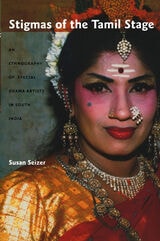
Stigmas of the Tamil Stage
An Ethnography of Special Drama Artists in South IndiaSusan Seizer
Duke University Press, 2005
Special Drama is looked down upon by the middle- and upper-classes as too popular, too vulgar, and too “mixed.” The artists are stigmatized: people insult them in public and landlords refuse to rent to them. Stigma falls most heavily, however, on actresses, who are marked as “public women” by their participation in Special Drama. As Susan Seizer’s sensitive study shows, one of the primary ways the performers deal with such stigma is through humor and linguistic play. Their comedic performances in particular directly address questions of class, culture, and gender deviations—the very issues that so stigmatize them. Seizer draws on extensive interviews with performers, sponsors, audience members, and drama agents as well as on careful readings of live Special Drama performances in considering the complexities of performers’ lives both on stage and off.
Stolen Time
Black Fad Performance and the Calypso CrazeShane Vogel
University of Chicago Press, 2018
Stone Tower
The Political Theater of Arthur MillerJeffrey D. Mason
University of Michigan Press, 2008
Strange Duets
Impresarios and Actresses in the American Theatre, 1865-1914Kim Marra
University of Iowa Press, 2006