Results by title
22279 books match the query 'Social Science' and 1635 start with s
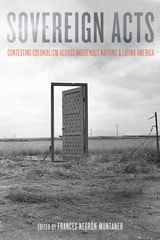
Sovereign Acts
Contesting Colonialism Across Indigenous Nations and Latinx AmericaEdited by Frances Negrón-Muntaner
University of Arizona Press, 2017
Editor Frances Negrón-Muntaner and the contributors to Sovereign Acts engage in a debate around these questions with surprising results. Moving the idea of sovereignty beyond the narrow confines of the nation-state, beyond the concept of a power that one either has or lacks, this paradigm-shifting work examines the multiple ways that Indigenous nations and U.S. territorial peoples act as sovereign and the possible limits of such sovereign acts within the current globalized context. A valuable contribution to the debate around indigenous and other conceptions of sovereignty, Sovereign Acts goes further than legal frameworks to investigate the relationships among sovereignty, gender, sexuality, representation, and the body.
From activist style and choreography to the politics of recognition, the scholars and artists featured in this unique volume map out how people disrupt modern notions of sovereignty, attempt to redefine what being sovereign means, or seek alternative political vocabularies. Sovereignty is not only, after all, a kingdom and a crown.
CONTRIBUTORS
Michael Lujan Bevacqua
Glen Coulthard
Jennifer Nez Denetdale
Adriana María Garriga-López
Jessica A. F. Harkins
Brian Klopotek
Davianna Pomaika‘i McGregor
Frances Negrón-Muntaner
Yasmin Ramírez
Mark Rifkin
Madeline Román
Stephanie Nohelani Teves
Fa‘anofo Lisaclaire Uperesa
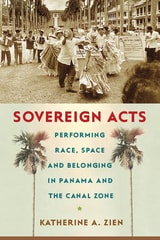
Sovereign Acts
Performing Race, Space, and Belonging in Panama and the Canal ZoneZien, Katherine A.
Rutgers University Press, 2017
Winner of the 2017 Annual Book Prize from the Canadian Association of Latin American and Caribbean Studies (CALACS)
Sovereign Acts explores how artists, activists, and audiences performed and interpreted sovereignty struggles in the Panama Canal Zone, from the Canal Zone’s inception in 1903 to its dissolution in 1999. In popular entertainments and patriotic pageants, opera concerts and national theatre, white U.S. citizens, West Indian laborers, and Panamanian artists and activists used performance as a way to assert their right to the Canal Zone and challenge the Zone’s sovereignty, laying claim to the Zone’s physical space and imagined terrain.
By demonstrating the place of performance in the U.S. Empire’s legal landscape, Katherine A. Zien transforms our understanding of U.S. imperialism and its aftermath in the Panama Canal Zone and the larger U.S.-Caribbean world.
Sovereign Women in a Muslim Kingdom
The Sultanahs of Aceh, 1641-1699Sher Banu Khan
National University of Singapore Press, 2018
Sovereign, Settler, Leaker, Lie
Forms of the Secret in US Political RhetoricAtilla Hallsby
The Ohio State University Press, 2026
In Sovereign, Settler, Leaker, Lie, Atilla Hallsby argues that secrets play a pivotal role in organizing political discourse in the United States. Hallsby takes up contemporary case studies—ranging from the Valerie Plame scandal during the George W. Bush presidency, to the use of Saul Alinsky’s name as a partisan codeword for politicizing Obama’s Blackness, to Chelsea Manning’s public naming and outing—to show how dramatic revelations increasingly fail to produce meaningful change and instead reproduce entrenched racial, gendered, and colonial hierarchies.
The core feature of these interlinked moments of crisis is the secret: a rhetorical patterning of political life organized by specific forms, each one lending a familiar shape to the shadows of American empire. These forms, theorized here as tropes, connect decades of secrets, linking the George W. Bush administration’s War on Terror to the Trump-era reemergence of “deep state” conspiracy theories. As an extension of secrecy and surveillance studies, and with the aim of attaining a more accountable and just form of US governmentality, Sovereign, Settler, Leaker, Lie explains how still-unfolding political realities in the United States emerged, transformed, and regenerate.
Sovereigns of Gold, Spirits of Silver
Ritual, History, and Hierarchy in MadagascarMaurizio Esposito La Rossa
HAU, 2026
How the inhabitants of Western Madagascar reshape their collective identity and negotiate their place within contemporary society through royal rituals and the reinterpretation of the past.
In a postcolonial republic marked by recurrent crises, royal hierarchy continues to frame social inequalities. Within this context, both the descendants of slaves and the newly rich seek to claim or legitimize new hierarchical positions by reformulating historical narratives and establishing them through royal rituals. Focusing on a cult dedicated to the spirits of the ancestors of the Silver Dynasty, Maurizio Esposito La Rossa investigates the categories of “silver” and “gold” that structure the hierarchy of the Sakalava monarchy and are also mobilized by politicians to legitimize their power.
Through multi-sited ethnography, the book offers a broader reflection on the link between narratives and places and on contrasting ways of conceiving history. Whereas Western historiography—and the rise of the nation-state—tends to produce unified historical narratives, the Sakalava monarchies conceive of history as rooted in specific places and social groups, where multiple versions coexist and contend. Combining the divergent demands of a historical anthropology and an anthropology of history, this book endeavors to recount another history of the Sakalava monarchy, without neglecting the polyphony that characterizes it. By tracing how the past is mobilized, transformed, and contested in the present, the book speaks to anthropologists, historians, and readers interested in the intricate entanglements of history, ritual, and political power in postcolonial settings.
Sovereignty Unhinged
An Illustrated Primer for the Study of Present Intensities, Disavowals, and Temporal DerangementsDeborah A. Thomas and Joseph Masco, editors
Duke University Press, 2023
Contributors. Alex Blanchette, Yarimar Bonilla, Jessica Cattelino, María Elena García, Akhil Gupta, Lochlann Jain, Purnima Mankekar, Joseph Masco, Michael Ralph, Danilyn Rutherford, Arjun Shankar, Kristen L. Simmons, Deborah A. Thomas, Leniqueca A. Welcome, Kaya Naomi Williams, Jessica Winegar
Sovereignty and Extortion
A New State Form in MexicoClaudio Lomnitz
Duke University Press, 2024

Sovereignty and Survival
Power, Conflict and Climate Change in BurmaAshley South
National University of Singapore Press, 2027
Evaluates Burma at a pivotal tipping point after the 2021 military coup.
The 2021 military coup in Burma/Myanmar triggered popular resistance and a spreading civil war, reigniting long-standing struggles for ethnic self-determination. The chaos has enabled a huge rise in transnational criminal activities, including drug trafficking and the emergence of scam centers. The country's geopolitical importance, not least as a source of rare earths, is also heightening the struggle for power. At the same time, accelerating climate change is destabilizing local ecologies and livelihoods, driving food production, socio-economic systems, and civil society towards collapse or massive change. Together, these forces have undermined the coherence of Burma as a centralized state. However, new forms of resistance and political organization have emerged in liberated areas across the country. At this critical juncture, rather than “state failure,” Burma demonstrates novel forms of complex, asymmetrical, and sometimes messy state-building, a “bottom-up” federalism based on the agency and resilience of Indigenous communities and anti-junta forces.
Sovereignty, Inc.
Three Inquiries in Politics and EnjoymentWilliam Mazzarella, Eric L. Santner, and Aaron Schuster
University of Chicago Press, 2020
Drawing on anthropology, political theory, philosophy, psychoanalysis, and theater, William Mazzarella, Eric L. Santner, and Aaron Schuster show how politics in the age of Trump functions by mobilizing a contradictory and convoluted enjoyment, an explosive mixture of drives and fantasies that eludes existing portraits of our era. The current political moment turns out to be not so much exceptional as exceptionally revealing of the constitutive tension between enjoyment and economy that has always been a key component of the social order. Santner analyzes the collective dream-work that sustains a new sort of authoritarian charisma or mana, a mana-facturing process that keeps us riveted to an excessively carnal incorporation of sovereignty. Mazzarella examines the contemporary merger of consumer brand and political brand and the cross-contamination of politics and economics, warning against all too easy laments about the corruption of politics by marketing. Schuster, focusing on the extreme theatricality and self-satirical comedy of the present, shows how authority reasserts itself at the very moment of distrust and disillusionment in the system, profiting off its supposed decline. A dazzling diagnostic of our present, Sovereignty, Inc., forces us to come to terms with our complicity in Trump’s political presence and will immediately take its place in discussions of contemporary politics.

Sovereignty, Indigeneity, and the Law, Volume 110
Eric Cheyfitz
Duke University Press, 0
This wide-ranging collection addresses the political possibilities of Western law and the international meanings of sovereignty and Indigeneity. One essay analyzes the autonomous government through which local citizens in Indigenous Zapatista communities in Mexico hope to dissolve systems of top-down sovereignty altogether. Another explores narratives of Native American law and the treatment of sovereignty in contemporary Mohawk visual culture. Several essays discuss the legal and political implications of the field’s pivotal public documents, including the 2007 U.N. Declaration on the Rights of Indigenous Peoples.
Eric Cheyfitz is the Ernest I. White Professor of American Studies and Humane Letters in the Department of English at Cornell University. N. Bruce Duthu is the Samson Occom Professor of Native American Studies and Chair of the Native American Studies Program at Dartmouth College. Shari M. Huhndorf is Associate Professor of English at the University of Oregon.
Contributors: Christine Black, Eric Cheyfitz, Gordon Christie, Chris Cunneen, Jonathan Goldberg-Hiller, Lorie M. Graham, Roy M. Huhndorf, Shari M. Huhndorf, Forrest Hylton, Mara Kaufman, Alvaro Reyes, Jolene Rickard, Carlos Salinas, Noenoe K. Silva, Cheryl Suzack, Siegfried Wiessner
Soviet Factography
Reality without RealismDevin Fore
University of Chicago Press, 2024
This is the first major English-language study of factography, an avant-garde movement of 1920s modernism. Devin Fore charts this style through the work of its key figures, illuminating factography’s position in the material culture of the early Soviet period and situating it as a precursor to the genre of documentary that arose in the 1930s. Factographers employed photography and film practices in their campaign to inscribe facts and to chronicle modernization as it transformed human experience and society. Fore considers factography in light of the period’s explosion of new media technologies—including radio broadcasting, sound in film, and photo-media innovations—that allowed the press to transform culture on a massive scale.
This theoretically driven study uses material from Moscow archives and little-known sources to highlight factography as distinct from documentary and Socialist Realism and to establish it as one of the major twentieth-century avant-garde forms. Fore covers works of photography, film, literature, and journalism together in his considerations of Soviet culture, the interwar avant-gardes, aesthetics, and the theory of documentary.

Soviet Signoras
Personal and Collective Transformations in Eastern European MigrationMartina Cvajner
University of Chicago Press, 2019
Cvajner details the personal and collective changes brought about by the experience of migration for these women: from the first hours arriving in a new country with no friends, relatives, or existing support networks, to later remaking themselves for their new environment. In response to their traumatic displacement, the women of Soviet Signoras—nearly all of whom found work in their new Western homes as elder care givers—refashioned themselves in highly sexualized, materialistic, and intentionally conspicuous ways. Cvajner’s focus on overt sexuality and materialism is far from sensationalist, though. By zeroing in on these elements of personal identity, she reveals previously unexplored sides of the social psychology of migration, coloring our contemporary discussion with complex shades of humanity.
Sowing Change
The Making of Havana's Urban AgricultureAdriana Premat
Vanderbilt University Press, 2012
Sowing the American Dream
How Consumer Culture Took Root in the Rural MidwestDavid Blanke
Ohio University Press, 2000
From 1840 to 1900, midwestern Americans experienced firsthand the profound economic, cultural, and structural changes that transformed the nation from a premodern, agrarian state to one that was urban, industrial, and economically interdependent. Midwestern commercial farmers found themselves at the heart of these changes. Their actions and reactions led to the formation of a distinctive and particularly democratic consumer ethos, which is still being played out today.
By focusing on the consumer behavior of midwestern farmers, Sowing the American Dream provides illustrative examples of how Americans came to terms with the economic and ideological changes that swirled around them. From the formation of the Grange to the advent of mail-order catalogs, the buying patterns of rural midwesterners set the stage for the coming century.
Carefully documenting the rise and fall of the powerful purchasing cooperatives, David Blanke explains the shifting trends in collective consumerism, which ultimately resulted in a significant change in the way that midwestern consumers pursued their own regional identity, community, and independence.
Sowing the Forest
A Historical Ecology of People and Their LandscapesWilliam Balée
University of Alabama Press, 2023
Explores how, over centuries, Amazonian people and their cultures have interacted with rainforests
William Balée is a world-renowned expert on the cultural and historical ecology of the Amazon basin. His new collection, Sowing the Forest, is a companion volume to the award-winning Cultural Forests of the Amazon, published in 2013. Sowing the Forest engages in depth with how, over centuries, Amazonian people and their cultures have interacted with rainforests, making the landscapes of palm forests and other kinds of forests, and how these and related forests have fed back into the vocabulary and behavior of current indigenous occupants of the remotest parts of the vast hinterlands.
The book is divided into two parts. Part 1, “Substrate of Intentionality,” comprises chapters on historical ecology, indigenous palm forests, plant names in Amazonia, the origins of the Amazonian plantain, and the unknown “Dark Earth people” of thousands of years ago and their landscaping. Together these chapters illustrate the phenomenon of feedback between culture and environment.
In Part 2, “Scope of Transformation,” Balée lays out his theory of landscape transformation, which he divides into two rubrics—primary landscape transformation and secondary landscape transformation—and for which he provides examples and various specific effects. One chapter compares environmental and social interrelationships in an Orang Asli group in Malaysia and the Ka’apor people of eastern Amazonian Brazil, and another chapter covers loss of language and culture in the Bolivian Amazon. A final chapter addresses the controversial topic of monumentality in the rainforest. Balée concludes by emphasizing the common thread in Amazonian historical ecology: the long-term phenomenon of encouraging diversity for its own sake, not just for economic reasons.
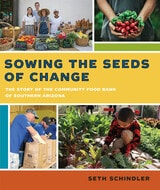
Sowing the Seeds of Change
The Story of the Community Food Bank of Southern ArizonaSeth Schindler
University of Arizona Press, 2021
The numbers are no less shocking in southern Arizona: one in six residents, and one in four children, are food insecure. How can this be in the richest country in the world? This book explores that paradox and the innovative solutions that one organization has developed to create a healthier, more secure tomorrow for the less fortunate among us.
The Community Food Bank of Southern Arizona (CFB) is one of the oldest and most respected food banks in America. It is a widely recognized leader not simply in providing hunger relief but in attacking the root causes of hunger and poverty through community development, education, and advocacy. In 2018, Feeding America—the national organization of food banks—named it “Food Bank of the Year.” The CFB serves as a model for all nonprofits to follow, no matter their mission.
This profusely illustrated book chronicles the CFB’s amazing success and evolution from a tiny grassroots hunger-relief organization to one with more than six thousand workers and an annual budget exceeding $100 million. The book gives voice to the thousands of CFB participants past and present, weaving their profiles and quotes throughout the book. These profiles personalize the history of the CFB and give readers an insider’s perspective on the people and events that shaped the food bank’s success. It shows how individuals working together can help prevent hunger and break the cycle of poverty that is its cause.
The aim of Sowing the Seeds of Change is not to laud the CFB’s achievements. It is to demonstrate to readers that the war against hunger, despite the obstacles, can be won. And not tomorrow. Now!
Sown in Earth
Essays of Memory and BelongingFred Arroyo
University of Arizona Press, 2020
In Sown in Earth, Arroyo often roots his thoughts and feelings in place, expressing a deep connection to the small homes he inhabited in his childhood, his warm and hazy memories of his grandmother’s kitchen in Puerto Rico, the rivers and creeks he fished, and the small cafés in Madrid that inspired writing and reflection in his adult years. Swirling in romantic moments and a refined love for literature, Arroyo creates a sense of belonging and appreciation for his life despite setbacks and complex anxieties along the way.
By crafting a written journey through childhood traumas, poverty, and the impact of alcoholism on families, Fred Arroyo clearly outlines how his lived experiences led him to become a writer. Sown in Earth is a shocking yet warm collage of memories that serves as more than a memoir or an autobiography. Rather, Arroyo recounts his youth through lyrical prose to humanize and immortalize the hushed lives of men like his father, honoring their struggle and claiming their impact on the writers and artists they raised.
Space And Place
The Perspective of ExperienceYi-Fu Tuan
University of Minnesota Press, 2001

Space Is the Place
The Lives and Times of Sun RaJohn Szwed
Duke University Press, 2020

Space Monkeys!
Remembering the Nonhuman Astronauts in US Space ExplorationJohn A. Lynch
University of Alabama Press, 2026
Exposes how emotion, memory, and national pride shape the stories we tell about science, animals, and the history of the “race to space”
Before humans ever left Earth’s atmosphere, a handful of primates paved the way—earning fame and fascination but leaving behind a complicated and often highly debated legacy. As the Cold War intensified, the US space program turned to monkeys—Able, Baker, Ham, and Enos—to test and explore the limits of human survival in space. These animals became media sensations, museum exhibits, and symbols of American ingenuity, even as their suffering was often overlooked.
With insight and empathy, Lynch unpacks the stories we tell about these primates and how they are remembered through culture and time, both modern and historically. Lynch argues that the public memory of these animals often justifies their use in the name of scientific progress. Sometimes they are portrayed as tools, other times as human stand-ins, and frequently as objects of sympathy—but rarely as subjects of critique.
Lynch shows how feelings—compassion, cuteness, patriotism, and the technological sublime—shape the stories we tell about these animals and the ethical frameworks we build around them. Each chapter focuses on a different genre of memory-making, from newspaper and photojournalism to museum exhibits, children’s literature, and fictional films.
By reframing these animal pioneers, Lynch uncovers the ethical and emotional narratives that shape how we remember science. Space Monkeys! is a vital reflection on memory, identity, and the more-than-human costs of progress.
Space and Place in Jewish Studies
Mann, Barbara E
Rutgers University Press, 2012
Scholars in the humanities have become increasingly interested in questions of how space is produced and perceived—and they have found that this consideration of human geography greatly enriches our understanding of cultural history. This “spatial turn” equally has the potential to revolutionize Jewish Studies, complicating familiar notions of Jews as “people of the Book,” displaced persons with only a common religious tradition and history to unite them.
Space and Place in Jewish Studies embraces these exciting critical developments by investigating what “space” has meant within Jewish culture and tradition—and how notions of “Jewish space,” diaspora, and home continue to resonate within contemporary discourse, bringing space to the foreground as a practical and analytical category. Barbara Mann takes us on a journey from medieval Levantine trade routes to the Eastern European shtetl to the streets of contemporary New York, introducing readers to the variety of ways in which Jews have historically formed communities and created a sense of place for themselves. Combining cutting-edge theory with rabbinics, anthropology, and literary analysis, Mann offers a fresh take on the Jewish experience.
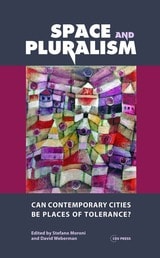
Space and Pluralism
Can Contemporary Cities Be Places of Tolerance?Stefano Moroni
Central European University Press, 2016
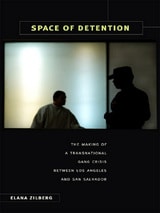
Space of Detention
The Making of a Transnational Gang Crisis between Los Angeles and San SalvadorElana Zilberg
Duke University Press, 2011

Space, Place, and Gender
Doreen Massey
University of Minnesota Press, 1994
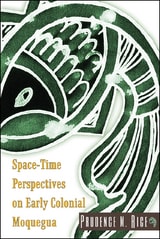
Space-Time Perspectives on Early Colonial Moquegua
Prudence M. Rice
University Press of Colorado, 2024
Space-Time Perspectives on Early Colonial Moquegua looks at the encounters between existing populations and newcomers from successive waves of colonization, from indigenous expansion states (Wari, Tiwanaku, and Inka) to the foreign Spaniards, and the way each group “re-spatialized” the landscape according to its own political and economic ends. Viewing these spatializations from political, economic, and religious perspectives, Rice considers both the ideological and material occurrences.
Concluding with a special focus on the multiple space-time considerations involved in Spanish-inspired ceramics from the region, Space-Time Perspectives on Early Colonial Moquegua integrates the local and rural with the global and urban in analyzing the events and processes of colonialism. It is a vital contribution to the literature of Andean studies and will appeal to students and scholars of archaeology, historical archaeology, history, ethnohistory, and globalization.
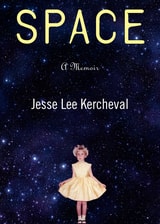
Space
A MemoirJesse Lee Kercheval
University of Wisconsin Press, 2014
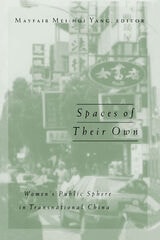
Spaces Of Their Own
Women’s Public Sphere in Transnational ChinaMayfair Mei-Hui Yang
University of Minnesota Press, 1999
An exploration of women’s public expression--in China and beyond.
How are the public and political lives of Chinese women constrained by states and economies? And how have pockets of women’s consciousness come to be produced in and disseminated from this traditionally masculine milieu? The essays in this volume examine the possibilities for a public sphere for Chinese women, one that would emerge from concrete historical situations and local contexts and also cut across the political boundaries separating the Mainland, Taiwan, Hong Kong, and the West.
The challenges of this project are taken up in essays on the legacy of state feminism on the Mainland as contrasted with a grassroots women’s movement in Taiwan; on the role of the capitalist consumer economy in the emerging lesbian movement in Taiwan; and on the increased trafficking of women as brides, prostitutes, and mistresses between the Mainland and wealthy male patrons in Taiwan and Hong Kong. The writers’ examples of masculine domination in the media include the reformulation of Chinese women in Fifth Generation films for a transnational Western male film audience and the portrayal of Mainland women in Taiwanese and Hong Kong media. The contributors also consider male nationalism as it is revealed through both international sports coverage on television and in a Chinese television drama. Other works examine a women’s museum, a telephone hotline in Beijing, the films of Hong Kong filmmaker Ann Hui, the transnational contacts of a Taiwanese feminist organization, the diaspora of Mainland women writers, and the differences between Chinese and Western feminist themes.Contributors: Susan Brownell, U of Missouri; Virginia Cornue; Dai Jinhua, Beijing U; Kathleen Erwin; Elaine Yee Lin Ho, Hong Kong U; Lee Yuan-chen, Tamkang U; Li Xiaojiang, Zhengzhou U and Henan U; Lisa Rofel, U of California, Santa Cruz; Tze-lan Deborah Sang, U of Oregon; Shu-mei Shih, UCLA; Zhang Zhen. ISBN 0-8166-3145-X Cloth $49.95xxISBN 0-8166-3146-8 Paper $19.95x336 pages 9 black-and-white photos 5 7/8 x 9 FebruaryPublic Worlds Series, volume 4Translation inquiries: University of Minnesota Press
Spaces between Us
Queer Settler Colonialism and Indigenous DecolonizationScott Lauria Morgensen
University of Minnesota Press, 2011
We are all caught up in one another, Scott Lauria Morgensen asserts, we who live in settler societies, and our interrelationships inform all that these societies touch. Native people live in relation to all non-Natives amid the ongoing power relations of settler colonialism, despite never losing inherent claims to sovereignty as indigenous peoples. Explaining how relational distinctions of “Native” and “settler” define the status of being “queer,” Spaces between Us argues that modern queer subjects emerged among Natives and non-Natives by engaging the meaningful difference indigeneity makes within a settler society.
Morgensen’s analysis exposes white settler colonialism as a primary condition for the development of modern queer politics in the United States. Bringing together historical and ethnographic cases, he shows how U.S. queer projects became non-Native and normatively white by comparatively examining the historical activism and critical theory of Native queer and Two-Spirit people.
Presenting a “biopolitics of settler colonialism”—in which the imagined disappearance of indigeneity and sustained subjugation of all racialized peoples ensures a progressive future for white settlers—Spaces between Us newly demonstrates the interdependence of nation, race, gender, and sexuality and offers opportunities for resistance in the United States.
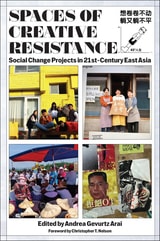
Spaces of Creative Resistance
Social Change Projects in Twenty-First-Century East AsiaAndrea Gevurtz Arai
Rutgers University Press, 2025

Spaces, Worlds, and Grammar
Edited by Gilles Fauconnier and Eve Sweetser
University of Chicago Press, 1996
These twelve original papers extend the mental-spaces framework and demonstrate its utility in solving deep problems in linguistics and discourse theory. Investigating the ties between mental constructs, they analyze a wide range of phenomena, including analogical counterfactuals; the metaphor system for conceptualizing the self; abstract change expressions in Japanese; mood in Spanish; deictic expressions; copular sentences in Japanese; conditional constructions; and reference in American Sign Language.
The ground-breaking research presented in this volume will be of interest to linguists and cognitive scientists.
The contributors are Claudia Brugman, Gilles Fauconnier, George Lakoff, Yo Matsumoto, Errapel Mejias-Bikandi, Laura A. Michaelis, Gisela Redeker, Jo Rubba, Shigeru Sakahara, Jose Sanders, Eve Sweetser, and Karen van Hoek.
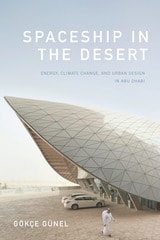
Spaceship in the Desert
Energy, Climate Change, and Urban Design in Abu DhabiGökçe Günel
Duke University Press, 2019
Spacing Debt
Obligations, Violence, and Endurance in Ramallah, PalestineChristopher Harker
Duke University Press, 2020
Spain's Long Shadow
The Black Legend, Off-Whiteness, and Anglo-American EmpireMaría DeGuzmán
University of Minnesota Press, 2005
England and the Netherlands, Spain’s imperial rivals of the sixteenth and seventeenth centuries, imagined Spain as a land of cruel and degenerate barbarians of la leyenda negra (the Black Legend), in league with the powers of “blackest darkness” and driven by “dark motives.” In Spain’s Long Shadow, María DeGuzmán explores how this convenient demonization made its way into American culture—and proved essential to the construction of whiteness. DeGuzmán’s work reaches from the late eighteenth century—in the wake of the American Revolution—to the present. Surveying a broad range of texts and images, from Poe’s “William Wilson” and John Singer Sargent’s El Jaleo to Richard Wright’s Pagan Spain and Kathy Acker’s Don Quixote, Spain’s Long Shadow shows how the creation of Anglo-American ethnicity as specifically American has depended on the casting of Spain as a colonial alter ego. The symbolic power of Spain in the American imagination, DeGuzmán argues, is not just a legacy of that nation’s colonial presence in the Americas; it lives on as well in the “blackness” of Spain and Spaniards—in the assigning of people of Spanish origin to an “off-white” racial category that reserves the designation of white for Anglo-Americans. By demonstrating how the Anglo-American imagination needs Spain and Spaniards as figures of attraction and repulsion, DeGuzmán makes a compelling and illuminating case for treating Spain as the imperial alter ego of the United States. Cross-cultural and interdisciplinary, ambitious in its chronological sweep, and elegant in its interpretation of literary and visual works, DeGuzmán’s book leads us to a powerful new understanding of the nature—and history—of American ethnicity.
Span the World with Friendship
Edited by Douglas Bourn and Richard Palser
University College London, 2025
For nearly a century, the Woodcraft Folk has championed radical social change through education, but its contributions remain largely overlooked in histories of progressive youth movements. Span the World with Friendship is the first major academic study of this pioneering organization, tracing its role in fostering internationalism, cooperative learning, and environmental activism long before these became mainstream concerns. The Woodcraft Folk’s impact is inspected through diverse disciplinary perspectives, including political theory, anthropology, and youth work studies. Through a review of multiple archival sources—letters, meeting records, and oral testimonies—contributors bring a critical lens to a movement often narrated uncritically.
Beginning with a biography of founder Leslie Paul, the book looks into the Folk’s relationship with the labor movement, its engagement with eugenics debates, and its use of folk traditions as tools for social cohesion. Concluding with an exploration of its transition into a youth-led movement, this volume positions the Woodcraft Folk within broader discussions on education for global justice and activism, ensuring its legacy is finally given the academic attention it deserves.

Spanish Cinema of the New Millennium
And the Winner Is...Thomas G. Deveny
Intellect Books, 2019
Spanish Colonial Tucson
A Demographic HistoryHenry F. Dobyns
University of Arizona Press, 1976
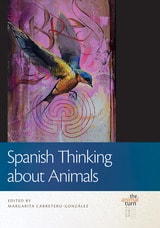
Spanish Thinking about Animals
Margarita Carretero-González
Michigan State University Press, 2020
Spanish-Guarani Relations in Early Colonial Paraguay
Elman R. Service
University of Michigan Press, 1954
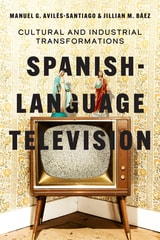
Spanish-Language Television
Cultural and Industrial TransformationsManuel G. Avilés-Santiago and Jillian M. Báez
University of Texas Press, 2025
How Spanish-language television networks continue to thrive in a rapidly changing media landscape.
The US television industry has suffered blow after blow amid media convergence and the rise of streaming. Those legacy broadcasters that survive are much diminished and highly dependent on live programming—the last redoubt of old media. There is an exception, though: Spanish-language television is thriving.
Spanish-Language Television surveys the Latinx media landscape to better appreciate why Univision and Telemundo have flourished while others faltered. Manuel G. Avilés-Santiago and Jillian M. Báez show that the major Spanish-language networks are unusually flexible and open to innovation in hopes of reaching new demographics. Univision and Telemundo were early to streaming. To appeal to “billennial” audiences—bilingual millennials—who threatened to stray from TV, they rebuilt the telenovela, which now features social commentary, diverse characters, and genre crossovers. Today’s reality programs defy old norms of linguistic correctness, and the airwaves are becoming less hospitable to racism and sexism, resulting in rising ratings and ad revenues. The first book-length treatment of reception patterns in Latinx TV, Spanish-Language Television deepens our understanding of new media in a moment of transformation and possibility.
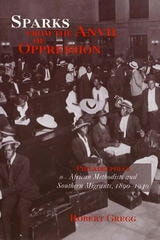
Sparks from the Anvil of Oppression
Philadelphia's African Methodists and Southern Migrants, 1890-1940Robert Gregg
Temple University Press, 1998
Spatial and Discursive Violence in the US Southwest
Rosaura Sánchez and Beatrice Pita
Duke University Press, 2020
Spatializing Blackness
Architectures of Confinement and Black Masculinity in ChicagoRashad Shabazz
University of Illinois Press, 2015
A geographic study of race and gender, Spatializing Blackness casts light upon the ubiquitous--and ordinary--ways carceral power functions in places where African Americans live. Moving from the kitchenette to the prison cell, and mining forgotten facts from sources as diverse as maps and memoirs, Rashad Shabazz explores the myriad architectures of confinement, policing, surveillance, urban planning, and incarceration. In particular, he investigates how the ongoing carceral effort oriented and imbued black male bodies and gender performance from the Progressive Era to the present. The result is an essential interdisciplinary study that highlights the racialization of space, the role of containment in subordinating African Americans, the politics of mobility under conditions of alleged freedom, and the ways black men cope with--and resist--spacial containment.
A timely response to the massive upswing in carceral forms within society, Spatializing Blackness examines how these mechanisms came to exist, why society aimed them against African Americans, and the consequences for black communities and black masculinity both historically and today.
Speak Peace
Words of Wisdom, Work, and WonderLynette Ford
Parkhurst Brothers, Inc., 2019
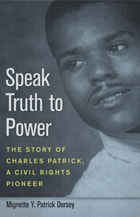
Speak Truth to Power
The Story of Charles Patrick, a Civil Rights PioneerMignette Y. Patrick Dorsey
University of Alabama Press, 2010
"Patrick did not intend to become a civil rights pioneer, but a minor dispute over a parking spot led to his arrest, beating while in custody, and eventual legal tribulations. His daughter's account of his ordeal is well researched, beautifully narrated, and extremely informative." —Journal of Southern History
On December 11, 1954, Charles Patrick drove to downtown Birmingham to buy a Boy Scout uniform for his son. Christmas traffic around the downtown department stores was heavy, and Patrick circled unsuccessfully until at last a streetside spot opened up and he began to pull in. As he did so, he was cut off by a woman who ordered him out of the way, as she was the wife of a city police officer. Patrick pulled away, remarking, "Ma’am, he doesn’t own the streets of Birmingham."
Normal low-level urban hassle? Not in 1954 Birmingham, when the woman was white and Patrick black. The woman reported to her husband that a black man had sassed her, and Patrick was summarily arrested, charged with disorderly conduct, and placed in a cell where he was beaten by the husband and another police officer.
Usually that would have been the end of it, but Patrick was not the sort of man to meekly endure an injustice. He found an attorney, went to court to fight the charges, and brought his assailants to justice--as whites, blacks, politicians and the press offered public support.
This book tells the story of Patrick’s quest for justice in segregated Alabama on the eve of the civil rights movement and represents a telling instance of the growing determination of African Americans to be treated fairly, part of the broadening and deepening stream of resolve that led to the widespread activism of the civil rights movement.
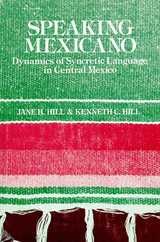
Speaking Mexicano
Dynamics of Syncretic Language in Central MexicoJane H. Hill and Kenneth C. Hill
University of Arizona Press, 1986
"The genius of this work is the integration of the linguistic analysis with the cultural and political analysis."—Latin American Anthropology Review
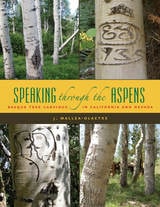
Speaking Through the Aspens
Basque Tree Carvings in California and NevadaJ. Mallea-Olaetxe
University of Nevada Press, 2008
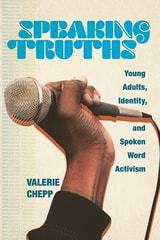
Speaking Truths
Young Adults, Identity, and Spoken Word ActivismValerie Chepp
Rutgers University Press, 2022
Drawing upon detailed observations and in-depth interviews, Chepp tells the story of a diverse group of young adults from Washington, D.C. who use spoken word to create a more just and equitable world. Outlining the contours of this approach, she interrogates spoken word activism’s emphasis on personal storytelling and “truth,” the strategic uses of aesthetics and emotions to politically engage across difference, and the significance of healing in sustainable movements for change. Weaving together their poetry and personally told stories, Chepp shows how poets tap into the beautiful, emotional, personal, and therapeutic features of spoken word to empathically connect with others, advance intersectional and systemic analyses of inequality, and make social justice messages relatable across a diverse public. By creating allies and forging connections based on friendship, professional commitments, lived experiences, emotions, artistic kinship, and political views, this activist approach is highly integrated into the everyday lives of its practitioners, online and face-to-face.
Chepp argues that spoken word activism is a product of, and a call to action against, the neoliberal era in which poets have come of age, characterized by widening structural inequalities and increasing economic and social vulnerability. She illustrates how this deeply personal and intimate activist approach borrows from, builds upon, and diverges from previous social movement paradigms. Spotlighting the complexity and mutual influence of modern-day activism and the world in which it unfolds, Speaking Truths contributes to our understanding of contemporary social change-making and how neoliberalism has shaped this political generation’s experiences with social injustice.
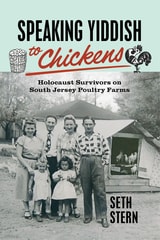
Speaking Yiddish to Chickens
Holocaust Survivors on South Jersey Poultry FarmsSeth Stern
Rutgers University Press, 2023
Most of the roughly 140,000 Holocaust survivors who came to the United States in the first decade after World War II settled in big cities such as New York. But a few thousand chose an alternative way of life on American farms. More of these accidental farmers wound up raising chickens in southern New Jersey than anywhere else. Speaking Yiddish to Chickens is the first book to chronicle this little-known chapter in American Jewish history when these mostly Eastern European refugees – including the author’s grandparents - found an unlikely refuge and gateway to new lives in the US on poultry farms. They gravitated to a section of south Jersey anchored by Vineland, a small rural city where previous waves of Jewish immigrants had built a rich network of cultural and religious institutions.
This book relies on interviews with dozens of these refugee farmers and their children, as well as oral histories and archival records to tell how they learned to farm while coping with unimaginable grief. They built small synagogues within walking distance of their farms and hosted Yiddish cultural events more frequently found on the Lower East Side than perhaps anywhere else in rural America at the time. Like refugees today, they embraced their new American identities and enriched the community where they settled, working hard in unfamiliar jobs for often meager returns. Within a decade, falling egg prices and the rise of industrial-scale agriculture in the South would drive almost all of these novice poultry farmers out of business, many into bankruptcy. Some hated every minute here; others would remember their time on south Jersey farms as their best years in America. They enjoyed a quieter way of life and more space for themselves and their children than in the crowded New York City apartments where so many displaced persons settled. This is their remarkable story of loss, renewal, and perseverance in the most unexpected of settings.
Author Facebook page (https://www.facebook.com/YiddishtoChickens)
Speaking for Themselves
Ethnographic Interviews with Adults with Learning DisabilitiesPaul J. Gerber, Ph.D. and Henry B. Reiff, Ph.D.
University of Michigan Press, 1991

Speaking for the Dying
Life-and-Death Decisions in Intensive CareSusan P. Shapiro
University of Chicago Press, 2019
Speaking for the Dying tells their story, drawing on daily observations over more than two years in two intensive care units in a diverse urban hospital. From bedsides, hallways, and conference rooms, you will hear, in their own words, how physicians really talk to families and how they respond. You will see how decision makers are selected, the interventions they weigh in on, the information they seek and evaluate, the values and memories they draw on, the criteria they weigh, the outcomes they choose, the conflicts they become embroiled in, and the challenges they face. Observations also provide insight into why some decision makers authorize one aggressive intervention after the next while others do not—even on behalf of patients with similar problems and prospects. And they expose the limited role of advance directives in structuring the process decision makers follow or the outcomes that result.
Research has consistently found that choosing life or death for another is one of the most difficult decisions anyone can face, sometimes haunting families for decades. This book shines a bright light on a role few of us will escape and offers steps that patients and loved ones, health care providers, lawyers, and policymakers could undertake before it is too late.