Results by title
28167 books match the query 'History' and 1838 start with s
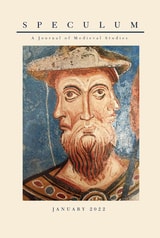
Speculum, volume 97 number 1 (January 2022)
The University of Chicago Press
University of Chicago Press Journals, 2022
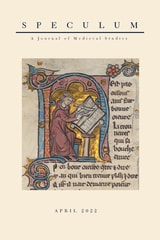
Speculum, volume 97 number 2 (April 2022)
The University of Chicago Press
University of Chicago Press Journals, 2022
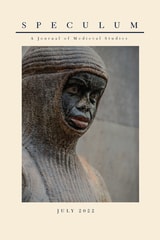
Speculum, volume 97 number 3 (July 2022)
The University of Chicago Press
University of Chicago Press Journals, 2022
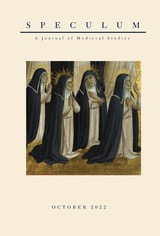
Speculum, volume 97 number 4 (October 2022)
The University of Chicago Press
University of Chicago Press Journals, 2022
Speculum, volume 98 number 1 (January 2023)
The University of Chicago Press
University of Chicago Press Journals, 2023
Speculum, volume 98 number 2 (April 2023)
The University of Chicago Press
University of Chicago Press Journals, 2023

Speculum, volume 98 number 4 (October 2023)
The University of Chicago Press
University of Chicago Press Journals, 2023
Speculum, volume 99 number 1 (January 2024)
The University of Chicago Press
University of Chicago Press Journals, 2024
Speculum, volume 99 number 2 (April 2024)
The University of Chicago Press
University of Chicago Press Journals, 2024
Speculum, volume 99 number 3 (July 2024)
The University of Chicago Press
University of Chicago Press Journals, 2024
Speculum, volume 99 number 4 (October 2024)
The University of Chicago Press
University of Chicago Press Journals, 2024
Speech Rights in America
The First Amendment, Democracy, and the MediaLaura Stein
University of Illinois Press, 2005
The First Amendment is the principle guarantor of speech rights in the United States. But the Supreme Court's interpretations of it often privilege the interests of media owners over those of the broader citizenry.
Laura Stein argues that such rulings alienate citizens from their rights, corrupt the essential workings of democracy, and prevent the First Amendment from performing its critical role as a protector of free speech. Drawing on the best of the liberal democratic tradition, Stein demonstrates that there is a significant gap between First Amendment law and the speech rights necessary to democratic communication, and proposes an alternative set of principles to guide future judicial, legislative, and cultural policy on old and new media.
Speeches from Athenian Law
Edited by Michael Gagarin
University of Texas Press, 2011
This is the sixteenth volume in the Oratory of Classical Greece. This series presents all of the surviving speeches from the late fifth and fourth centuries BC in new translations prepared by classical scholars who are at the forefront of the discipline. These translations are especially designed for the needs and interests of today's undergraduates, Greekless scholars in other disciplines, and the general public.
Classical oratory is an invaluable resource for the study of ancient Greek life and culture. The speeches offer evidence on Greek moral views, social and economic conditions, political and social ideology, law and legal procedure, and other aspects of Athenian culture that have recently been attracting particular interest: women and family life, slavery, and religion, to name just a few.
This volume assembles twenty-two speeches previously published in the Oratory series. The speeches are taken from a wide range of different kinds of cases—homicide, assault, commercial law, civic status, sexual offenses, and others—and include many of the best-known speeches in these areas. They are Antiphon, Speeches 1, 2, 5, and 6; Lysias 1, 3, 23, 24, and 32; Isocrates 17, 20; Isaeus 1, 7, 8; Hyperides 3; Demosthenes 27, 35, 54, 55, 57, and 59; and Aeschines 1. The volume is intended primarily for use in teaching courses in Greek law or related areas such as Greek history. It also provides the introductions and notes that originally accompanied the individual speeches, revised slightly to shift the focus onto law.

Speechwright
An Insider's Take on Political RhetoricWilliam F. Gavin
Michigan State University Press, 2011
For almost thirty years, William F. Gavin wrote speeches at the highest levels of government. Speechwright is his insider’s view of politics, a shrewd critique of presidential and congressional rhetoric, and a personal look at the political leaders for whom he wrote speeches. While serving President Richard Nixon and candidate Ronald Reagan, Gavin advocated for “working rhetoric”—well-crafted, clear, hard-hitting arguments that did not off er visions of the unattainable, but instead limited political discourse to achievable ends reached through practical means. Filled with hard-earned wisdom about politics and its discontents, Speechwright describes Gavin’s successes, his failures, and his call for political rhetoric built on strong argument rather than the mere search for eloquence.
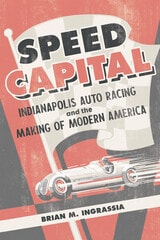
Speed Capital
Indianapolis Auto Racing and the Making of Modern AmericaBrian M. Ingrassia
University of Illinois Press, 2024
The 1909 opening of the Indianapolis Motor Speedway marked a foundational moment in the history of automotive racing. Events at the famed track and others like it also helped launch America’s love affair with cars and an embrace of road systems that transformed cities and shrank perceptions of space.
Brian Ingrassia tells the story of the legendary oval’s early decades. This story revolves around Speedway cofounder and visionary businessman Carl Graham Fisher, whose leadership in the building of the transcontinental Lincoln Highway and the iconic Dixie Highway had an enormous impact on American mobility. Ingrassia looks at the Speedway’s history as a testing ground for cars and airplanes, its multiple close brushes with demolition, and the process by which racing became an essential part of the Golden Age of Sports. At the same time, he explores how the track’s past reveals the potent links between sports capitalism and the selling of nostalgia, tradition, and racing legends.
Spenser, Milton, and the Redemption of the Epic Hero
Christopher Bond
University of Delaware Press, 2011
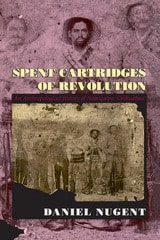
Spent Cartridges of Revolution
An Anthropological History of Namiquipa, ChihuahuaDaniel Nugent
University of Chicago Press, 1993
Daniel Nugent's approach combines an emphasis on peasants' own perceptions of Mexican society after the revolution with an analysis of the organization and formation of state power. He shows that popular discontent in Chihuahua is motivated not only by immediate economic crises but by two centuries of struggle between the people of Northern Mexico and the government.

Spider Web
The Birth of American AnticommunismNick Fischer
University of Illinois Press, 2016
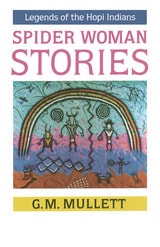
Spider Woman Stories
G. M. Mullett
University of Arizona Press, 1979
"This is a fine introduction to Hopi mythology and values. It recreates an authentic poetic spirit and makes the reader eager to read more Hopi tales." —New Mexico Humanities Review
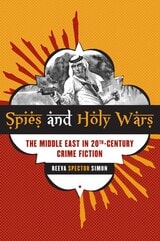
Spies and Holy Wars
The Middle East in 20th-Century Crime FictionBy Reeva Spector Simon
University of Texas Press, 2010
Illuminating a powerful intersection between popular culture and global politics, Spies and Holy Wars draws on a sampling of more than eight hundred British and American thrillers that are propelled by the theme of jihad—an Islamic holy war or crusade against the West. Published over the past century, the books in this expansive study encompass spy novels and crime fiction, illustrating new connections between these genres and Western imperialism.
Demonstrating the social implications of the popularity of such books, Reeva Spector Simon covers how the Middle Eastern villain evolved from being the malleable victim before World War II to the international, techno-savvy figure in today's crime novels. She explores the impact of James Bond, pulp fiction, and comic books and also analyzes the ways in which world events shaped the genre, particularly in recent years. Worldwide terrorism and economic domination prevail as the most common sources of narrative tension in these works, while military "tech novels" restored the prestige of the American hero in the wake of post-Vietnam skepticism. Moving beyond stereotypes, Simon examines the relationships between publishing trends, political trends, and popular culture at large—giving voice to the previously unexamined truths that emerge from these provocative page-turners.
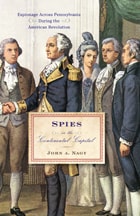
Spies in the Continental Capital
Espionage Across Pennsylvania During the American RevolutionJohn A. Nagy
Westholme Publishing, 2011
The Critical Role of British, French, and American Intelligence Operations in Colonial Pennsylvania
It did not take long after the Seven Years’ War—the French and Indian War in North America—for France to return spies to America in order to determine the likelihood of regaining the territory they lost to Britain. One of the key places of French espionage was the colony of Pennsylvania since its frontier had been an important crossroads of French influence in North America. The French recognized then that there was a real possibility that the colonies would seek their independence from Britain. Against this backdrop, award-winning historian John A. Nagy begins his investigation of espionage in colonial Pennsylvania.
Philadelphia played a key role in the history of spying during the American Revolution because it was the main location for the Continental Congress, was occupied by the British Command, and then returned to Continental control. Philadelphia became a center of spies for the British and Americans—as well as double agents. George Washington was a firm believer in reliable military intelligence; after evacuating New York City, he neglected to have a spy network in place: when the British took over Philadelphia, he did not make the same mistake, and Washington was able to keep abreast of British troop strengths and intentions. Likewise, the British used the large Loyalist community around Philadelphia to assess the abilities of their Continental foes, as well as the resolve of Congress. In addition to describing techniques used by spies and specific events, such as the Major André episode, Nagy has scoured rare primary source documents to provide new and compelling information about some of the most notable agents of the war, such as Lydia Darragh, a celebrated American spy.
An important contribution to Revolutionary War history, Spies in the Continental Capital: Espionage Across Pennsylvania During the American Revolution demonstrates that intelligence operations on both sides emanating from Pennsylvania were vast, well-designed, and critical to understanding the course and outcome of the war.

Spiral of Silence
A NovelElvira Sánchez-Blake; Translated from the Spanish by Lorena Terando; Foreword by Debra A. Castillo
Northwestern University Press, 2019
A multigenerational epic, Spiral of Silence (Espiral de Silencios) opens in the early 1980s, as peace and amnesty agreements spark optimism and hope. We meet Norma, a privileged, upper-class woman who is married to an army general; Maria Teresa (Mariate), a young rebel who loves a guerrilla fighter and navigates commitments to motherhood and revolutionary activism; and Amparo, a woman who comes of age later, and carries the confusion and dislocation of a younger generation. Each contends with the consequences of war and violence on her life; each is empowered through community-building and working for change.
Few authors have considered the role of women in Colombia during this wartime period, and Sánchez-Blake's nuanced exploration of gender and sexism—framed by conflict and social upheaval—distinguishes the novel. Drawing on stories from women who have worked within organizations in Colombia to end state violence, Spiral of Silence celebrates resistance, reinvention, and how women create and protect their families and communities.
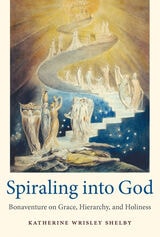
Spiraling Into God
Bonaventure on Grace, Hierarchy , and HolinessKatherine Wrisley Shelby
Catholic University of America Press, 2023
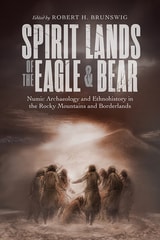
Spirit Lands of the Eagle and Bear
Numic Archaeology and Ethnohistory in the Rocky Mountains and BorderlandsRobert H. Brunswig
University Press of Colorado, 2020
New research into Numic archaeology, ethnohistory, and ethnography is significantly changing the understanding of migratory patterns, cultural interactions, chronology, and shared cultural-religious practices of regionally defined Numic branches and non-Numic populations of the American West. Contributors examine case studies of Ute and Shoshone material culture (ceramics, lithics, features and structures, trade and seasonal migration), chronology (dendrochronology, radiocarbon dating, thermoluminescence), and subsistence systems (hunting camps, game drives, faunal and botanical evidence of food sources). They also delineate different hunter-gatherer “ethnic groups” who co-occupied or interacted within one another’s territories through trade, raiding, or seasonal subsistence migrations, such as the Late Fremont/Ute and the Shoshone or the early Navajo/Ute and the Shoshone.
With a strong emphasis on diverse cases and new and original archaeological, ethnohistoric, and ethnographic lines of evidence, Spirit Lands of the Eagle and Bear interweaves anthropological theory and innovative applications of leading-edge scientific methodologies and technologies. The book presents a cross-section of field, laboratory, and ethnohistoric studies—including indigenous consultation—that explore past, recent, and ongoing developments in Numic cultural history and prehistory. It will be of interest to scholars of Southwestern archaeology, as well as private and government cultural resource specialists and museum staff.
Contributors:
Richard Adams, John Cater, Christine Chady, David Diggs, Rand Greubel, John Ives, Byron Loosle, Curtis Martin, Sally McBeth, Lindsay Montgomery, Bryon Schroeder, Matthew Stirn
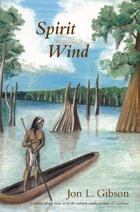
Spirit Wind
Jon L. Gibson
University of Alabama Press, 2009
A coming-of-age story set in the isolated, murky swamps of Louisiana.
When the mighty wind blows through the swamps of southern Louisiana, it changes not only the land, but the inhabitants as well. Just such a wind brought a lone infant into the care of the Chitimacha Indians deep in the Atchafalaya swamp. Raised by the tribal holy man, Storm Rider grows to adolescence as a respected tribal member, steeped in the wisdom and traditions of his adopted people. Their clan competitions, life-cycle rituals, social interactions, and subsistence labors are well explained in this historical novel.
When captured by an enemy raiding party, Storm Rider and his nemesis, the village bully, forge a bond that delivers them from danger and charts their futures. Love, hate, friendship, and loyalty ride the dark bayou waters and converge at the sacred Rain Tree. Swamps, hurricanes, cannibals, and unforgettable characters are interwoven as tightly as one of old Cane Basket's watertight baskets in this anthropologically accurate story of American Indian cultures in conflict.

Spirit Wives and Church Mothers
Marriage, Survival, and Healing in Central MozambiqueChristy K. Schuetze
University of Wisconsin Press, 2023
Drawing on years of field research, Schuetze offers a richly drawn ethnographic analysis of these important religious transformations in the lives of female participants. Illustrating how economic and social context shapes the possibilities for—and forms of—women’s empowerment, Spirit Wives andChurch Mothers intervenes in scholarly debates about the nature of agency and challenges universalist Western feminist assumptions about the form of women’s liberation.
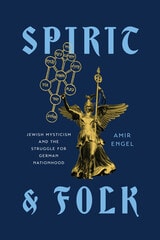
Spirit and Folk
Jewish Mysticism and the Struggle for German NationhoodAmir Engel
University of Chicago Press, 2027
A study of the twentieth-century construction of a Jewish mystical tradition by German Jewish intellectuals.
For most of European history, the notion of Jewish spirituality was unthinkable—buried beneath a pervasive desire to understand Judaism as uniquely material and Christianity as uniquely spiritual. In Spirit and Folk, Amir Engel tells the story of how a group of Jewish intellectuals, seeking greater involvement in political life, worked to invent a mystical tradition for Judaism amid the existential crises of twentieth-century Germany.
Beginning with Martin Buber in 1900 and ending with Gershom Scholem in 1942, Engel traces the rich debate among thinkers both well-known and forgotten about the need to imagine and construct a uniquely Jewish mystical tradition from historical religious sources. This quest and the tradition that emerged, Engel argues, developed in response to one of the most volatile questions of the last century: can Jews be Germans? The invention of Jewish spirituality, Engel shows, was not only a religious innovation but also a political gambit—a demand to be accepted as equal contributors to the German national project.
Spirit and System
Media, Intellectuals, and the Dialectic in Modern German CultureDominic Boyer
University of Chicago Press, 2005
Boyer analyzes the creation and mediation of the social knowledge of "German-ness" from nineteenth-century university culture and its philosophies of history, to the media systems and redemptive public cultures of the Third Reich and the German Democratic Republic, to the present-day experiences of former East German journalists seeking to explain life in post-unification Germany. Throughout this study, Boyer reveals how dialectical knowledge of "German-ness"—that is, knowledge that emphasizes a cultural tension between an inner "spirit" and an external "system" of social life —is modeled unconsciously upon intellectuals' self-knowledge as it tracks their fluctuation between alienation and utopianism in their interpretations of nation and modernity.
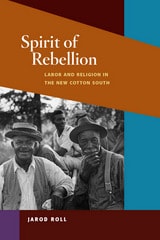
Spirit of Rebellion
Labor and Religion in the New Cotton SouthJared Roll
University of Illinois Press, 2010
Winner of the Herbert G. Gutman Prize from the Labor and Working-Class History Association
In Spirit of Rebellion, Jarod Roll documents an alternative tradition of American protest by linking working-class political movements to grassroots religious revivals. He reveals how ordinary rural citizens in the south used available resources and their shared faith to defend their agrarian livelihoods amid the political and economic upheaval of the first half of the twentieth century.On the frontier of the New Cotton South in Missouri's Bootheel, the relationships between black and white farmers were complicated by racial tensions and bitter competition. Despite these divisions, workers found common ground as dissidents fighting for economic security, decent housing, and basic health, ultimately drawing on the democratic potential of evangelical religion to wage working-class revolts against commodity agriculture and the political forces that buoyed it. Roll convincingly shows how the moral clarity and spiritual vigor these working people found in the burgeoning Pentecostal revivals gave them the courage and fortitude to develop an expansive agenda of workers' rights by tapping into the powers of existing organizations such as the Socialist Party, the Universal Negro Improvement Association, the NAACP, and the interracial Southern Tenant Farmers' Union.

Spirit of the New England Tribes
Indian History and Folklore, 1620–1984William S. Simmons
University Press of New England, 1986
Spirit of the Place
From Mauthausen to MomaPéter György
Central European University Press, 2008
Spirit, Structure, and Flesh
Gender and Power in Yoruba African Instituted ChurchesDeidre Helen Crumbley
University of Wisconsin Press, 2008
Spirited Things
The Work of "Possession" in Afro-Atlantic ReligionsEdited by Paul Christopher Johnson
University of Chicago Press, 2014
Spirits Of America
A Social History Of AlcoholEric Burns
Temple University Press, 2004

Spirits of Earth
The Effigy Mound Landscape of Madison and the Four LakesRobert A. Birmingham
University of Wisconsin Press, 2010
Spirits of Just Men
Mountaineers, Liquor Bosses, and Lawmen in the Moonshine Capital of the WorldCharles D. Thompson, Jr.
University of Illinois Press, 2011

Spirits of the Cold War
Contesting Worldviews in the Classical Age of American Security StrategyNed O'Gorman
Michigan State University Press, 2012
In spring of 1953, newly elected President Eisenhower sat down with his staff to discuss the state of American strategy in the cold war. America, he insisted, needed a new approach to an urgent situation. From this meeting emerged Eisenhower’s teams of “bright young fellows,” charged with developing competing policies, each of which would come to shape global politics. In Spirits of the Cold War, Ned O’Gorman argues that the early Cold War was a crucible not only for contesting political strategies, but also for competing conceptions of America and its place in the world. Drawing on extensive archival research and wide reading in intellectual and rhetorical histories, this comprehensive account shows cold warriors debating “worldviews” in addition to more strictly instrumental tactical aims. Spirits of the Cold War is a rigorous scholarly account of the strategic debate of the early Cold War—a cultural diagnostic of American security discourse and an examination of its origins.
Spiritual Criminals
How the Camden 28 Put the Vietnam War on TrialMichelle M. Nickerson
University of Chicago Press, 2024
When the FBI arrested twenty-eight people in connection to a break-in at a Camden, New Jersey, draft board in 1971, the Bureau celebrated. The case should have been an easy victory for the department—the perpetrators had been caught red-handed attempting to destroy conscription documents for draftees into the Vietnam War. But the results of the trial surprised everyone, and in the process shook the foundations of American law, politics, and religion.
In Spiritual Criminals, Michelle M. Nickerson shares a complex portrait of the Camden 28, a passionate group of grassroots religious progressives who resisted both their church and their government as they crusaded against the Vietnam War. Founded by priests, nuns, and devout lay Catholics, members of this coalition accepted the risks of felony convictions as the cost of challenging the nation’s military-industrial complex and exposing the illegal counterintelligence operations of the FBI. By peeling away the layers of political history, theological traditions, and the Camden 28’s personal stories, Nickerson reveals an often-unseen spiritual side of the anti-war movement. At the same time, she probes the fractures within the group, detailing important conflicts over ideology, race, sex, and gender that resonate in the church and on the political Left today.
Spiritual Criminals
How the Camden 28 Put the Vietnam War on TrialMichelle M. Nickerson
University of Chicago Press, 2024
A surprising look at the 28 Catholic radicals who raided a draft board in 1971—and got away with it.
When the FBI arrested twenty-eight people in connection to a break-in at a Camden, New Jersey, draft board in 1971, the Bureau celebrated. The case should have been an easy victory for the department—the perpetrators had been caught red-handed attempting to destroy conscription documents for draftees into the Vietnam War. But the results of the trial surprised everyone, and in the process shook the foundations of American law, politics, and religion.
In Spiritual Criminals, Michelle M. Nickerson shares a complex portrait of the Camden 28, a passionate group of grassroots religious progressives who resisted both their church and their government as they crusaded against the Vietnam War. Founded by priests, nuns, and devout lay Catholics, members of this coalition accepted the risks of felony convictions as the cost of challenging the nation’s military-industrial complex and exposing the illegal counterintelligence operations of the FBI. By peeling away the layers of political history, theological traditions, and the Camden 28’s personal stories, Nickerson reveals an often-unseen spiritual side of the anti-war movement. At the same time, she probes the fractures within the group, detailing important conflicts over ideology, race, sex, and gender that resonate in the church and on the political Left today.
Spiritual Despots
Modern Hinduism and the Genealogies of Self-RuleJ. Barton Scott
University of Chicago Press, 2016
Through this alternative genealogy of the self-ruling subject, Spiritual Despots demonstrates that Hindu reform movements cannot be understood solely within the precolonial tradition, but rather need to be read alongside other movements of their period. The book’s focus moves fluidly between Britain and India—engaging thinkers such as James Mill, Keshub Chunder Sen, Max Weber, Karsandas Mulji, Helena Blavatsky, M. K. Gandhi, and others—to show how colonial Hinduism shaped major modern discourses about the self. Throughout, Scott sheds much-needed light how the rhetoric of priestcraft and practices of worldly asceticism played a crucial role in creating a new moral and political order for twentieth-century India and demonstrates the importance of viewing the emergence of secularism through the colonial encounter.
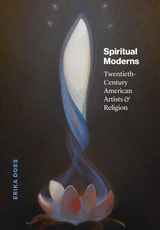
Spiritual Moderns
Twentieth-Century American Artists and ReligionErika Doss
University of Chicago Press, 2022
Andy Warhol is one of the best-known American artists of the twentieth century. He was also an observant Catholic who carried a rosary, went to mass regularly, kept a Bible by his bedside, and depicted religious subjects throughout his career. Warhol was a spiritual modern: a modern artist who appropriated religious images, beliefs, and practices to create a distinctive style of American art.
Spiritual Moderns centers on four American artists who were both modern and religious. Joseph Cornell, who showed with the Surrealists, was a member of the Church of Christ, Scientist. Mark Tobey created pioneering works of Abstract Expressionism and was a follower of the Bahá’í Faith. Agnes Pelton was a Symbolist painter who embraced metaphysical movements including New Thought, Theosophy, and Agni Yoga. And Warhol, a leading figure in Pop art, was a lifelong Catholic. Working with biographical materials, social history, affect theory, and the tools of art history, Doss traces the linked subjects of art and religion and proposes a revised interpretation of American modernism.

Spiritual Sonnets
A Bilingual EditionGabrielle de Coignard
University of Chicago Press, 2003
Spiritual Sonnets presents the first English translation of 129 of Coignard's highly autobiographical poems, giving us a startlingly intimate view into the life and mind of this Renaissance woman. The sonnets are all written "in the shadow of the Cross" and include elegies, penitential lyrics, Biblical meditations, and more. Rich with emotion, Coignard's poems reveal anguished moments of loneliness and grief as well as ecstatic experiences of mystical union. They also reveal her mastery of sixteenth-century literary conventions and spiritual traditions.
This edition, printed in bilingual format with Melanie E. Gregg's translations facing the French originals, will be welcomed by teachers and students of poetry, French literature, women's studies, and religious and Renaissance studies.

Spirituality, Gender, and the Self in Renaissance Italy
Angela Merici and the Company of St. Ursula (1474–1540)Querciolo Mazzonis
Catholic University of America Press, 2007
Spirituals and the Birth of a Black Entertainment Industry
Sandra Jean Graham
University of Illinois Press, 2018

Spitting on Diamonds
A Spitball Pitcher's Journey to the Major Leagues, 1911-1919Clyde H. Hogg
University of Missouri Press, 2005
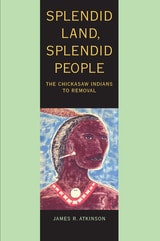
Splendid Land, Splendid People
The Chickasaw Indians to RemovalJames R. Atkinson
University of Alabama Press, 2003
Before the Chickasaws were removed to lands in Oklahoma in the 1800s, the heart of the Chickasaw Nation was located east of the Mississippi River in the upper watershed of the Tombigbee River in what is today northeastern Mississippi. Their lands had been called "splendid and fertile" by French governor Bienville at the time they were being coveted by early European settlers. The people were also termed “splendid” and described by documents of the 1700s as “tall, well made, and of an unparalleled courage. . . . The men have regular features, well-shaped and neatly dressed; they are fierce, and have a high opinion of themselves.”
The progenitors of the sociopolitical entity termed by European chroniclers progressively as Chicasa, Chicaca, Chicacha, Chicasaws, and finally Chickasaw may have migrated from west of the Mississippi River in prehistoric times. Or migrating people may have joined indigenous populations. Despite this longevity in their ancestral lands, the Chickasaw were the only one of the original "five civilized tribes" to leave no remnant community in the Southeast at the time of removal.
Atkinson thoroughly researches the Chickasaw Indians, tracing their history as far back as the documentation and archaeological record will allow. He historicizes from a Native viewpoint and outlines political events leading to removal, while addressing important issues such as slave-holding among Chickasaws, involvement of Chickasaw and neighboring Indian tribes in the American Revolution, and the lives of Chickasaw women.
Splendid Land, Splendid People will become a fundamental resource for current information and further research on the Chickasaw. A wide audience of librarians, anthropologists, historians, and general readers have long awaited publication of this important volume.
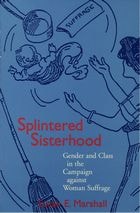
Splintered Sisterhood
Gender and Class in the Campaign against Woman SuffrageSusan E. Marshall
University of Wisconsin Press, 1997
When Tennessee became the thirty-sixth and final state needed to ratify the Nineteenth Amendment in August 1920, giving women the right to vote, one group of women expressed bitter disappointment and vowed to fight against “this feminist disease.” Why this fierce and extended opposition? In Splintered Sisterhood, Susan Marshall argues that the women of the antisuffrage movement mobilized not as threatened homemakers but as influential political strategists.
Drawing on surviving records of major antisuffrage organizations, Marshall makes clear that antisuffrage women organized to protect gendered class interests. She shows that many of the most vocal antisuffragists were wealthy, educated women who exercised considerable political influence through their personal ties to men in politics as well as by their own positions as leaders of social service committees. Under the guise of defending an ideal of “true womanhood,” these powerful women sought to keep the vote from lower-class women, fearing it would result in an increase in the “ignorant vote” and in their own displacement from positions of influence. This book reveals the increasingly militant style of antisuffrage protest as the conflict over female voting rights escalated. Splintered Sisterhood adds a missing piece to the history of women’s rights activism in the United States and illuminates current issues of antifeminism.

Split and Splice
A Phenomenology of ExperimentationHans-Jörg Rheinberger
University of Chicago Press, 2023
The experiment has long been seen as a test bed for theory, but in Split and Splice, Hans-Jörg Rheinberger makes the case, instead, for treating experimentation as a creative practice. His latest book provides an innovative look at the experimental protocols and connections that have made the life sciences so productive.
Delving into the materiality of the experiment, the first part of the book assesses traces, models, grafting, and note-taking—the conditions that give experiments structure and make discovery possible. The second section widens its focus from micro-level laboratory processes to the temporal, spatial, and narrative links between experimental systems. Rheinberger narrates with accessible examples, most of which are drawn from molecular biology, including from the author’s laboratory notebooks from his years researching ribosomes.
A critical hit when it was released in Germany, Split and Splice describes a method that involves irregular results and hit-or-miss connections—not analysis, not synthesis, but the splitting and splicing that form a scientific experiment. Building on Rheinberger’s earlier writing about science and epistemology, this book is a major achievement by one of today’s most influential theorists of scientific practice.
Spoils of the Kingdom
Clergy Misconduct and Religious CommunityAnson Shupe
University of Illinois Press, 2006
Drawing on case evidence, Shupe employs classical and modern social exchange theories to explain the institutional dynamics of clergy misconduct. He argues that there is an implicit contract of reciprocity and compliance between congregants and religious leaders that, when amplified by the charismatic awe often associated with religious authorities, can lead to misconduct.
Spokesmen for the Despised
Fundamentalist Leaders of the Middle EastEdited by R. Scott Appleby
University of Chicago Press, 1997
The deeds of the men profiled in this book make history and headlines, whether through the anti-American rhetoric of the late Iranian revolutionary, Ayatollah Ruhollah Khomeini; the violent acts of Hizbullah, the Lebanese Shi'ite movement headed by Sayyid Muhammad Husayn Fadlallah; or the group of Jewish rabbis who appear to have inspired the assassination of Israeli Prime Minister Yitzhak Rabin. No one better exemplifies this history-making than Shaykh Ahmad Yasin, the spiritual leader of Hamas, who from his Israeli jail cell continues to influence Hamas's efforts to eliminate both Israel and the PLO. Also featured are the spiritual guides of the radical Jewish settler movement Gush Emunim, the Sudanese sponsor of "the Islamic Awakening," the preacher who inflamed Upper Egypt, and the ideological leader of the Zionist International Christian Embassy.
These riveting biographies include interviews with true believers and bitter opponents, and in several cases with the subjects themselves, carefully placing the lives of these charismatic leaders in the contexts of their religious traditions and their varied social, political, and religious settings. Spokesmen for the Despised is an essential volume for anyone wishing to understand the relationship between religion and politics in the Middle East.
Contributors: Ziad Abu Amr, Gideon Aran, Yaakov Ariel, Daniel Brumberg, Patrick D. Gaffney, Samuel Heilman, Martin Kramer, and Judith Miller