Results by title
3703 books match the query '19th century' and 256 start with s
Sherman's Mississippi Campaign
Buck T. Foster
University of Alabama Press, 2006
The campaign that shaped Sherman's path to victory and changed the future of Civil War warfare.
With the fall of Vicksburg to Union forces in mid-1863, the Federals began work to extend and consolidate their hold on the lower Mississippi Valley. As a part of this plan, Major General William Tecumseh Sherman set out from Vicksburg on February 3, 1864, with an army of some 25,000 infantry and a battalion of cavalry. They expected to be joined by another Union force moving south from Memphis and supported themselves off the land as they traveled due east across Mississippi.
Sherman entered Meridian on February 14 and thoroughly destroyed its railroad facilities, munitions plants, and cotton stores, before returning to Vicksburg. Though not a particularly effective campaign in terms of enemy soldiers captured or killed, it offers a rich opportunity to observe how this large-scale raid presaged Sherman’s Atlanta and Carolina campaigns, revealing the transformation of Sherman’s strategic thinking.
Shoddy
From Devil’s Dust to the Renaissance of RagsHanna Rose Shell
University of Chicago Press, 2020
In Shoddy: From Devil’s Dust to the Renaissance of Rags, Hanna Rose Shell takes readers on a journey to discover shoddy, from Haiti to the “shoddy towns” of West Yorkshire in England, to the United States, back in time to the British cholera epidemics and the American Civil War, and into agricultural fields, textile labs, and rag-shredding factories. Shell’s narrative is both literary and historical, drawing on an extraordinary range of sources, from court cases to military uniforms, mattress labels to medical textbooks, political cartoons to high art. Shoddy moves between genres, bringing richly drawn characters and unexpected objects to life. Along the way, shoddy becomes equally an evocative object and a portal into another world.
Almost since the time it first appeared, shoddy was both ubiquitous and controversial. In part because it was often so hard to detect, it was inherently suspicious. Public health experts worried about sanitation and disease—how could old clothes be disinfected? As well, the idea of wearing someone else’s old clothes so close to your own skin was discomforting in and of itself. Could you sleep peacefully knowing that your mattress was very likely to be stuffed with dead soldiers’ overcoats? The use of the term “virgin” wool, the idea of virginity in relation to clothes, in fact emerged as an effort by the wool industry to counter shoddy’s appeal: to make shoddy seem shoddy. Over time, shoddy would capture a host of personal, ethical, commercial, and societal failings. And yet, there was always, within shoddy, the alluring concept of regeneration, of what we today think of as conscious clothing, eco-fashion, sustainable textiles.
Shell exposes an interwoven tale of industrial espionage, political infighting, scientific inquiry, ethnic prejudices, and war profiteering. Discarded clothes may make many journeys over the course of several lifetimes. Not only in your garments, but under your rug, in your mattress pads, piano blankets, in the peculiar confetti-like stuffing in your mailing envelopes, even in the insulation in your walls. Though it began with wool, over the past century the shredding “devil” has turned to synthetics from nylon stockings to Kevlar. Shoddy is likely connected to something you are wearing right now. After reading, you will never use the word shoddy or think about your clothes, the environment, sustainability, or the intermingled world around you the same way again.
Shoshonean Peoples and the Overland Trail
Frontiers of the Utah Superintendency of Indian Affairs, 1849–1869Richard Saunders
Utah State University Press, 2007
This compilation of Dale Morgan’s historical work on Indians in the Intermountain West focuses primarily on the Shoshone who lived near the Oregon and California trails. Three connected works by Morgan are included: First is his classic article on the history of the Utah Superintendency of Indian Affairs. This is followed by an important set of government reports and correspondence from the National Archives concerning the Eastern Shoshone and their leader Washakie. Morgan heavily annotated these for serial publication in the Annals of Wyoming. He also wrote a previously unpublished history of early relations among the Western Shoshone, emigrants, and the government along the California Trail. Morgan biographer Richard L. Saunders introduced, edited, and further annotated this collection. His introduction includes an intellectual biography of Morgan that focuses on the place of the anthologized pieces in Morgan’s corpus. Gregory E. Smoak, a leading historian of the Shoshone, contributed an ethnohistorical essay as additional context for Morgan’s work.
Shot in Alabama
A History of Photography, 1839–1941, and a List of PhotographersFrances Osborn Robb
University of Alabama Press, 2016
A landmark study of vernacular and professional photography, from 1839 to 1941, that frames Alabama’s history through its images.
Shot in Alabama by Frances Osborn Robb is a visual and textual narrative of Alabama’s photographic history from 1839 to 1941. It describes the phenomenon of photography as practiced in Alabama as a major cultural force, paying close attention to the particular contexts from which each image emerges and the fragments of microhistory that each image documents.
Presented chronologically—from the very first photograph ever taken in the state to the appearance of cameras as commonplace possessions in mid-twentieth-century households—Robb draws into sharp relief the eras of daguerreotypes, Civil War photography, photographic portraiture at the end of the nineteenth century, urban and rural photography in the early twentieth century, WPA photography during the Great Depression, postcards and tourist photography, and pre–World War II illustrated books and art photographs. Robb also examines a wide spectrum of vernacular photography: Alabama-made photographs of everyday people and places, the photographs that fill dresser drawers and shoeboxes, a vast array of unusual images against which Alabama’s more typical iconography can be measured.
She also chronicles the work of hundreds of photographers—black and white, amateur and professional, women and men—some little-known outside their communities, some of them the medium’s most important practitioners. “Who Shot Alabama?” is an accompanying appendix that includes 1,400 photographers by name, working dates, and location—a resource that will help countless individuals, families, and archives identify the specific Alabama photographers whose names appear on family photographs or those in institutional collections.
Shot in Alabama is an insightful document of photography as both a communicator and creator of social, cultural, economic, and visual history. It highlights the very personal worlds rendered by individual photographs as well as the larger panorama of Alabama history as seen through the photographs collectively. A landmark work of research, curation, and scholarship, it fills the void of published history on Alabama photography and is an invaluable resource for historians, archivists, librarians, collectors, hobbyists, and readers with an interest in Alabama history or historic photography. Shot in Alabama is a book that all Alabamians will want on their coffee tables.
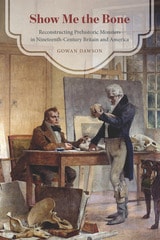
Show Me the Bone
Reconstructing Prehistoric Monsters in Nineteenth-Century Britain and AmericaGowan Dawson
University of Chicago Press, 2016
Show Me the Bone tells the story of the rise and fall of this famous claim, tracing its fortunes from Europe to America and showing how it persisted in popular science and literature and shaped the practices of paleontologists long after the method on which it was based had been refuted. In so doing, Gowan Dawson reveals how decisively the practices of the scientific elite were—and still are—shaped by their interactions with the general public.
Siblings in Tolstoy and Dostoevsky
The Path to Universal BrotherhoodAnna A. Berman
Northwestern University Press, 2015
Anna A. Berman’s book brings to light the significance of sibling relationships in the writings of Tolstoy and Dostoevsky. Relationships in their works have typically been studied through the lens of erotic love in the former, and intergenerational conflict in the latter.
In close readings of their major novels, Berman shows how both writers portray sibling relationships as a stabilizing force that counters the unpredictable, often destructive elements of romantic entanglements and the hierarchical structure of generations. Power and interconnectedness are cast in a new light. Berman persuasively argues that both authors gradually come to consider siblinghood a model of all human relations, discerning a career arc in each that moves from the dynamics within families to a much broader vision of universal brotherhood.
Sierra Leone's Settler Women Traders
Women on the Afro-European FrontierE. Frances White
University of Michigan Press, 1987

Silent Life and Silent Language
The Inner Life of a Mute in an Institution for the DeafKate M. Farlow
Gallaudet University Press, 2018
Kate M. Farlow wrote this book with the goal of giving hearing parents hope that their deaf children would be able to lead happy and productive lives. She sought to raise awareness of the benefits of deaf schools and was an early advocate for the use of American Sign Language and of bilingual education. The Christian influence on the school and on the author is strongly present in her writing and reflects an important component of deaf education at the time. Descriptions of specific signs, games, ASL story nights, and other aspects of the signing community during the 1870s will be of interest to modern students and researchers in linguistics, deaf education, Deaf studies, and Deaf history. Farlow’s work reveals a sophisticated, early understanding of the importance of access to language, education, and community for deaf individuals.

Simon Baruch
Rebel in the Ranks of Medicine, 1840-1921Patricia Spain Ward
University of Alabama Press, 1994
Recounts the remarkable life of a Prussian/Polish Jew who immigrated to the United States as a teenager in the 1850s and became one of the nation’s best-known physicians by the turn of the century
After medical study in South Carolina and Virginia on the eve of the Civil War, Simon Baruch served the Confederacy as a surgeon for three years, twice undergoing capture and internment. Despite economic hardships while practicing in South Carolina during Reconstruction, he helped to reactivate the State Medical Association and served as president of the State Board of Health.
In 1881 he joined the exodus of southern physicians and scientists of that period, taking up residence in New York City, where he rose to prominence through his advocacy of surgery in one of the early operations for appendicitis and through is role as the protective physician in a widely publicized “child cruelty” case involving the musical prodigy, Josef Hofmann. Baruch became a leader in the nationwide movement to establish free public baths for tenement dwellers and in the development of expert medical journalism. Although his advocacy of such natural remedies as water, fresh air, and diet often made him appear unaccountably iconoclastic to his contemporaries, he has gained posthumous recognition as a pioneer in physical medicine.
Bernard N. Baruch, one of his four sons, has memorialized this work through endowments for research and instruction in physical medicine and rehabilitation. Ward reconstructs the life of a medical student in the South at the opening of the Civil War, the adventures of a Confederate surgeon, and the difficulties of a practitioner in Reconstruction South Carolina. Simon Baruch’s physician’s registers and his correspondence with colleagues afford the reader an immediate sense of the therapeutic dilemmas facing physicians and patients of his era. Baruch’s experiences while establishing himself in New York City after 1881 reflect the challenges facing those trying to break into what was then the nation’s medical capital—as well as that city’s rich opportunities and heady intellectual atmosphere. His energetic campaign for free public baths illustrates one of the most colorful chapters of American social history, as immigrants flooded the cities at the turn of the century. As medical editor of the New York Sun from 1912 to 1918, Baruch touched on most of the health concerns of that period and a few—such as handgun control—that persist to this day.
Singing Sappho
Improvisation and Authority in Nineteenth-Century Italian OperaMelina Esse
University of Chicago Press, 2021

Singing the Chaos
Madness and Wisdom in Modern PoetryWilliam Pratt
University of Missouri Press, 1996
Singing the Chaos: Madness and Wisdom in Modern Poetry combines both a historical and a critical approach toward the works of major British, American, French, German, and Russian poets. Comprehensive in scope and arranged chronologically to survey a century of high poetic achievement, the study is unified by Pratt's overriding argument that "modern poets have endowed a disintegrating civilization with humane wisdom by 'singing the chaos' that surrounds them, making ours a great age in spite of itself."
In developing this central theme, Pratt brings alive the energy, the freshness, and the originality of technique that made Baudelaire, Pound, Yeats, Rilke, Eliot, and others the initiators of the revolution in poetry. He brings a more complete, clearer perspective to other major themes: modernism as an age of irony; poets as both madmen and geniuses; the modern poet as tragic hero; the dominance of religious or visionary truths over social or political issues; and the combination of radical experiments in poetic form with an apocalyptic view of Western civilization. His detailed treatment of the Fugitive poets and his recognition of their prominent role in twentieth-century literature constitute an important historical revision.
Brilliantly informed, insightful, and, above all, accurately sympathetic to the points of view of the poets Pratt presents, Singing the Chaos is that rare book that belongs on all shelves devoted to modernist poetry.
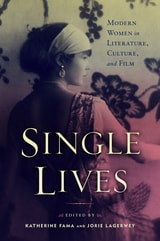
Single Lives
Modern Women in Literature, Culture, and FilmKatherine Fama
Rutgers University Press, 2022
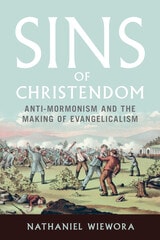
Sins of Christendom
Anti-Mormonism and the Making of EvangelicalismNathaniel Wiewora
University of Illinois Press, 2024
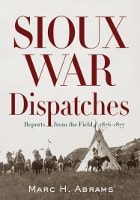
Sioux War Dispatches
Reports from the Field, 1876-1877Marc H. Abrams
Westholme Publishing, 2012
Rare, First-Hand Accounts from Newspaper Correspondents Describing the Course of America’s Largest Indian War, Compiled and Edited for the First Time in One Volume
“No one commands better the story of the Great Sioux War of 1876–1877 as presented in the nation’s newspapers than does Marc Abrams. Here is Abrams’s story of America’s greatest Indian war woven from those timely reports, augmented with insightful introductions and annotations. Abrams has produced a significant addition to the historiography of this endlessly fascinating struggle and its colorful personalities.” —Paul L. Hedren, author of After Custer: Loss and Transformation in Sioux Country
“Marc Abrams has provided an invaluable service to both scholars and lay readers in compiling this treasure trove of primary information. Like the correspondents he has come to know through his research, Marc has done the hard work; we need only read in comfort and benefit from his efforts.” —Douglas W. Ellison, author of Sole Survivor: An Examination of the Frank Finkel Narrative
“Marc Abrams’s book is an exciting and innovative approach that brings immediacy to the campaigns of Custer, Crook, and Miles, and teems with fascinating new detail. Sioux War Dispatches not only offers a gripping contemporary window into those times, it fills an important reference need as well.” —Jerome A. Greene, author of Stricken Field: The Little Bighorn Since 1876
Sioux War Dispatches: Reports from the Field, 1876-1877, tells the story of the Great Sioux War, including the battle of the Little Big Horn, primarily through the eyes of contemporary newspaper correspondents, both civilian and military. The volume begins with the Black Hills dilemma and the issue of the unceded territory (the disputed lands that were adjacent to the Great Sioux Reservation) and continues through to the spring of 1877 with the surrender of the legendary Sioux leader Crazy Horse. Along the way readers will learn about the Reynolds battle, the skirmish at Tongue River Heights, the battle of the Rosebud, the battle of the Little Big Horn, the skirmish at Warbonnet Creek, the fight at Slim Buttes, and more. In addition to numerous annotated excerpts from those who were there, are rare original dispatches, reprinted in full, that will take readers on a wild ride through several battles.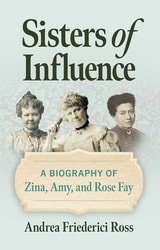
Sisters of Influence
A Biography of Zina, Amy, and Rose FayAndrea Friederici Ross
Southern Illinois University Press, 2025
WINNER, Certificate of Excellence in “Scholarly Publications” from the Illinois State Historical Society’s 2026 Best of Illinois History Awards!
Three sisters who forged intertwined paths to empowerment
A real-life Little Women, Sisters of Influence is the untold story of three extraordinary sisters who defied Victorian-era expectations to leave their marks on history. Andrea Friederici Ross breathes new life into the fascinating stories of Zina, Amy, and Rose Fay, intertwining their narratives into a captivating family biography.
Born into modest circumstances as daughters of an Episcopal rector and a poet, the seven Fay siblings’ upbringing in small-town Vermont was shaped by financial struggles, rare educational opportunities, and the early loss of their mother. While their sisters pursued traditional paths and their brother Norman helped them all, Zina, Amy, and Rose boldly charted their own courses, becoming trailblazers in music, writing, and women’s advocacy.
Zina Fay Peirce envisioned a life of intellectual partnership with her husband, philosopher Charles Sanders Peirce, only to find her dreams frustrated by domestic expectations. Undeterred, she became a writer and a conservative feminist, championing improved education for women and pioneering cooperative housekeeping initiatives. Despite challenges, Zina’s vision for women’s empowerment laid a foundation for future reform.
Amy Fay, a gifted pianist, pursued music studies abroad, including under the tutelage of Franz Liszt. Her letters home, filled with vivid accounts of her experiences in Europe, were edited into a memoir by Zina and published to critical acclaim. As a concert pianist, music teacher, and advocate for women in music, Amy inspired generations of women to follow their artistic passions.
Rose Fay Thomas, initially a quiet supporter of her sisters, emerged as a formidable force in her own right, becoming a founder of the Anti-Cruelty Society. Her leadership in Chicago’s Amateur Musical Club and the National Federation of Music Clubs helped shape the American classical music scene. As the wife of conductor Theodore Thomas, Rose played a pivotal role in establishing the Chicago Symphony Orchestra. Her later writings on gardening and her husband’s life further solidified her legacy.
Through her exploration of the Fay sisters’ lives, Ross illuminates the shifting roles of women during a transformative era. From advocating for women’s education to advancing the arts and social reform, Zina, Amy, and Rose exemplify the resilience and determination that bridged the restrictive norms of the Victorian age and the activism of the Progressive Era. Their remarkable journeys will inspire readers to reimagine the possibilities of women’s contributions to history and culture.
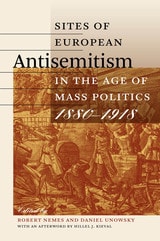
Sites of European Antisemitism in the Age of Mass Politics, 1880–1918
Edited by Robert Nemes and Daniel Unowsky
Brandeis University Press, 2014

Sitting Bull
Bill Yenne
Westholme Publishing, 2008
An Acclaimed Biography of the Greatest American Indian Leader
Sitting Bull's name is still the best known of any American Indian leader, but his life and legacy remain shrouded with misinformation and half-truths. Sitting Bull's life spanned the entire clash of cultures and ultimate destruction of the Plains Indian way of life. He was a powerful leader and a respected shaman, but neither fully captures the enigma of Sitting Bull. He was a good friend of Buffalo Bill and skillful negotiator with the American government, yet erroneously credited with both murdering Custer at the Little Big Horn and with being the chief instigator of the Ghost Dance movement. The reality of his life, as Bill Yenne reveals in his absorbing new portrait, Sitting Bull, is far more intricate and compelling. Tracing Sitting Bull's history from a headstrong youth and his first contact with encroaching settlers, through his ascension as the spiritual and military leader of the Lakota, friendship with a Swiss-American widow from New York, and death at the hands of the Indian police on the eve of the massacre at Wounded Knee, Yenne scoured rare contemporary records and consulted Sitting Bull's own "Hieroglyphic Autobiography" in the course of his research. While Sitting Bull was the leading figure of Plains Indian resistance his message, as Yenne explains, was of self-reliance, not violence. At the Battle of the Little Bighorn, Sitting Bull was not confronting Custer as popular myth would have it, but riding through the Lakota camp making sure the most defenseless of his tribe--the children--were safe. In Sitting Bull we find a man who, in the face of an uncertain future, helped ensure the survival of his people.
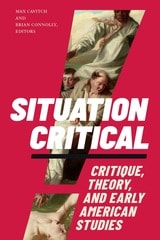
Situation Critical
Critique, Theory, and Early American StudiesMax Cavitch and Brian Connolly, editors
Duke University Press, 2024
Contributors. Max Cavitch, Brian Connolly, Matthew Crow, John J. Garcia, Christopher Looby, Michael Meranze, Mark J. Miller, Justine S. Murison, Britt Rusert, Ana Schwartz, Joan W. Scott, Jordan Alexander Stein
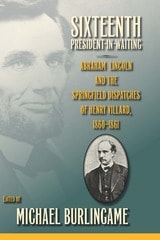
Sixteenth President-in-Waiting
Abraham Lincoln and the Springfield Dispatches of Henry Villard, 1860–1861Edited by Michael Burlingame
Southern Illinois University Press, 2018
Between Abraham Lincoln’s election in November 1860 and his departure for Washington three months later, journalist Henry Villard sent scores of dispatches from Springfield, Illinois, to various newspapers describing the president-elect’s doings, quoting or paraphrasing his statements, chronicling events in the Illinois capital, and analyzing the city’s mood. With Sixteenth President-in-Waiting Michael Burlingame has collected all of these dispatches in one insightful and informative volume.
Best known as a successful nineteenth-century railroad promoter and financier, German-born Henry Villard (1835–1900) was also among the most conscientious and able journalists of the 1860s. The dispatches gathered in this volume constitute the most intensive journalistic coverage that Lincoln ever received, for Villard filed stories from the Illinois capital almost daily to the New York Herald, slightly less often to the Cincinnati Commercial, and occasionally to the San Francisco Bulletin.
Lincoln welcomed Villard and encouraged him to ask questions, as he was the only full-time correspondent for out-of-town papers. He spoke with inside sources, such as Lincoln’s private secretaries John G. Nicolay and John Hay, devoted friends like Jesse K. Dubois and Stephen T. Logan, political leaders like Governor Richard Yates, and journalists like William M. Springer and Robert R. Hitt.
Villard boasted that he did Lincoln a service by scaring off would-be office seekers who, fearing to see their names published in newspapers, gave up plans to visit the Illinois capital to badger the president-elect. Villard may have done an even greater service by publicizing Lincoln’s views on the secession crisis.
His little-known coverage of the 1858 Lincoln-Douglas Senate race, translated from the German for the first time, is included as an appendix. At the time Villard was an ardent Douglas supporter, and his reports criticized Lincoln.
Not only informative but also highly readable, Villard’s vivid descriptions of Lincoln’s appearance, daily routine, and visitors, combined with fresh information about Springfielders, state political leaders, and the capital, constitute an invaluable resource.

Skepticism And Ideology
Shelley'S Political ProseTerence Allan Hoagwood
University of Iowa Press, 1988
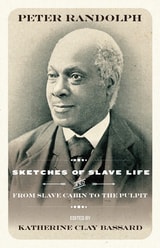
Sketches of Slave Life and From Slave Cabin to Pulpit
Katherine Clay Bassard
University of Delaware Press, 0
This book is the first anthology of the autobiographical writings of Peter Randolph, a prominent nineteenth-century former slave who became a Black abolitionist, pastor, and community leader. Randolph’s story is unique because he was freed and relocated from Virginia to Boston, along with his entire plantation cohort. A lawsuit launched by Randolph against his former master’s estate left legal documents that corroborate his autobiographies.
Randolph's writings give us a window into a different experience of slavery and freedom than other narratives currently available and will be of interest to students and scholars of African American literature, history, and religious studies, as well as those with an interest in Virginia history and mid-Atlantic slavery.
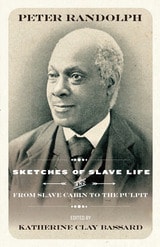
Sketches of Slave Life and From and From Slave Cabin to the Pulpit
Peter Randolph
West Virginia University Press, 2016
This book is the first anthology of the autobiographical writings of Peter Randolph, a prominent nineteenth-century former slave who became a black abolitionist, pastor, and community leader.
Randolph’s story is unique because he was freed and relocated from Virginia to Boston, along with his entire plantation cohort. A lawsuit launched by Randolph against his former master’s estate left legal documents that corroborate his autobiographies.
Randolph's writings give us a window into a different experience of slavery and freedom than other narratives currently available and will be of interest to students and scholars of African American literature, history, and religious studies, as well as those with an interest in Virginia history and mid-Atlantic slavery.
Slandering the Sacred
Blasphemy Law and Religious Affect in Colonial IndiaJ. Barton Scott
University of Chicago Press, 2023
Why is religion today so often associated with giving and taking offense? To answer this question, Slandering the Sacred invites us to consider how colonial infrastructures shaped our globalized world. Through the origin and afterlives of a 1927 British imperial law (Section 295A of the Indian Penal Code), J. Barton Scott weaves a globe-trotting narrative about secularism, empire, insult, and outrage. Decentering white martyrs to free thought, his story calls for new histories of blasphemy that return these thinkers to their imperial context, dismantle the cultural boundaries of the West, and transgress the borders between the secular and the sacred as well as the public and the private.

Slaughterhouse
Chicago's Union Stock Yard and the World It MadeDominic A. Pacyga
University of Chicago Press, 2015
Slaughterhouse tells the story of the Union Stock Yard, chronicling the rise and fall of an industrial district that, for better or worse, served as the public face of Chicago for decades. Dominic A. Pacyga is a guide like no other—he grew up in the shadow of the stockyards, spent summers in their hog house and cattle yards, and maintains a long-standing connection with the working-class neighborhoods around them. Pacyga takes readers through the packinghouses as only an insider can, covering the rough and toxic life inside the plants and their lasting effects on the world outside. He shows how the yards shaped the surrounding neighborhoods and controlled the livelihoods of thousands of families. He looks at the Union Stock Yard’s political and economic power and its sometimes volatile role in the city’s race and labor relations. And he traces its decades of mechanized innovations, which introduced millions of consumers across the country to an industrialized food system.
Once the pride and signature stench of a city, the neighborhood is now home to Chicago’s most successful green agriculture companies. Slaughterhouse is the engrossing story of the creation and transformation of one of the most important—and deadliest—square miles in American history.
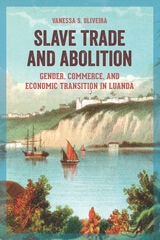
Slave Trade and Abolition
Gender, Commerce, and Economic Transition in LuandaVanessa S. Oliveira
University of Wisconsin Press, 2022
Vanessa S. Oliveira traces how existing commercial networks adapted to changes in the Atlantic slave trade during the first half of the nineteenth century. Slave Trade and Abolition reveals how women known as donas (a term adapted from the title granted to noble and royal women in the Iberian Peninsula) were often important cultural brokers. Acting as intermediaries between foreign and local people, they held high socioeconomic status and even competed with the male merchants who controlled the trade. Oliveira provides rich evidence to explore the many ways this Luso-African community influenced its society. In doing so, she reveals an unexpectedly nuanced economy with regard to the dynamics of gender and authority.
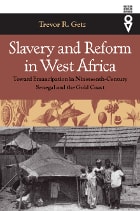
Slavery and Reform in West Africa
Toward Emancipation in Nineteenth-Century Senegal and the Gold CoastTrevor R. Getz
Ohio University Press, 2004
A series of transformations, reforms, and attempted abolitions of slavery form a core narrative of nineteenth-century coastal West Africa. As the region’s role in Atlantic commercial networks underwent a gradual transition from principally that of slave exporter to producer of “legitimate goods” and dependent markets, institutions of slavery became battlegrounds in which European abolitionism, pragmatic colonialism, and indigenous agency clashed.
In Slavery and Reform in West Africa, Trevor Getz demonstrates that it was largely on the anvil of this issue that French and British policy in West Africa was forged. With distant metropoles unable to intervene in daily affairs, local European administrators, striving to balance abolitionist pressures against the resistance of politically and economically powerful local slave owners, sought ways to satisfy the latter while placating or duping the former.
The result was an alliance between colonial officials, company agents, and slave-owning elites that effectively slowed, sidetracked, or undermined serious attempts to reform slave holding. Although slavery was outlawed in both regions, in only a few isolated instances did large-scale emancipations occur. Under the surface, however, slaves used the threat of self-liberation to reach accommodations that transformed the master-slave relationship.
By comparing the strategies of colonial administrators, slave-owners, and slaves across these two regions and throughout the nineteenth century, Slavery and Reform in West Africa reveals not only the causes of the astounding success of slave owners, but also the factors that could, and in some cases did, lead to slave liberations. These findings have serious implications for the wider study of slavery and emancipation and for the history of Africa generally.
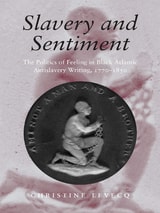
Slavery and Sentiment
The Politics of Feeling in Black Atlantic Antislavery Writing, 1770-1850Christine Levecq
University of New Hampshire Press, 2008
Levecq examines liberalism and republicanism, the main Anglo-American political ideologies of the period, in the antislavery texts of a range of African-American and Afro-British authors. Disclosing the political content hitherto unexamined in this kind of writing, she shows that while the overall story is one of increased liberalization of ideology on both sides of the Atlantic, the republican ideal persisted, particularly among black authors with transatlantic connections.
Demonstrating that such writers as Phillis Wheatley, Ignatius Sancho, Olaudah Equiano, Frederick Douglass, and Mary Prince were men and women of their times, Levecq provides valuable new insight into the ideological world of black Atlantic writers and puts them, for the first time, on modernity’s political map.
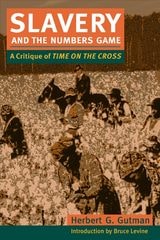
Slavery and the Numbers Game
A CRITIQUE OF TIME ON THE CROSSHerbert G. Gutman
University of Illinois Press, 1975
This detailed analysis of slavery in the antebellum South was written in 1975 in response to the prior year's publication of Robert Fogel and Stanley Engerman's controversial Time on the Cross, which argued that slavery was an efficient and dynamic engine for the southern economy and that its success was due largely to the willing cooperation of the slaves themselves.
Noted labor historian Herbert G. Gutman was unconvinced, even outraged, by Fogel and Engerman's arguments. In this book he offers a systematic dissection of Time on the Cross, drawing on a wealth of data to contest that book's most fundamental assertions. A benchmark work of historical inquiry, Gutman's critique sheds light on a range of crucial aspects of slavery and its economic effectiveness.
Gutman emphasizes the slaves' responses to their treatment at the hands of slaveowners. He shows that slaves labored, not because they shared values and goals with their masters, but because of the omnipresent threat of 'negative incentives,' primarily physical violence.
In his introduction to this new edition, Bruce Levine provides a historical analysis of the debate over Time on the Cross. Levine reminds us of the continuing influence of the latter book, demonstrated by Robert W. Fogel's 1993 Nobel Prize in Economic Sciences, and hence the importance and timeliness of Gutman's critique.
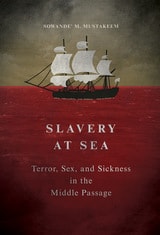
Slavery at Sea
Terror, Sex, and Sickness in the Middle PassageSowande M Mustakeem
University of Illinois Press, 2016
Sowande' Mustakeem's groundbreaking study goes inside the Atlantic slave trade to explore the social conditions and human costs embedded in the world of maritime slavery. Mining ship logs, records and personal documents, Mustakeem teases out the social histories produced between those on traveling ships: slaves, captains, sailors, and surgeons. As she shows, crewmen manufactured captives through enforced dependency, relentless cycles of physical, psychological terror, and pain that led to the the making--and unmaking--of enslaved Africans held and transported onboard slave ships. Mustakeem relates how this process, and related power struggles, played out not just for adult men, but also for women, children, teens, infants, nursing mothers, the elderly, diseased, ailing, and dying. Mustakeem offers provocative new insights into how gender, health, age, illness, and medical treatment intersected with trauma and violence transformed human beings into the world's most commercially sought commodity for over four centuries.
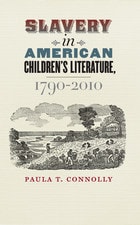
Slavery in American Children's Literature, 1790-2010
Paula T. Connolly
University of Iowa Press, 2013
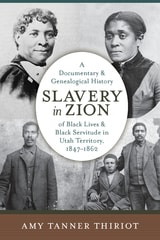
Slavery in Zion
A Documentary and Genealogical History of Black Lives and Black Servitude in Utah Territory, 1847-1862Amy Tanner Thiriot
University of Utah Press, 2022
Slavery in Zion has two major parts. The first section provides an introductory history, chapters on southern and western experiences, and information on life after emancipation. The second section is a biographical encyclopedia of names, relationships, and events. Although Slavery in Zion contains material applicable to legal history and the history of race and Mormonism, its most important contribution is as an archive of the experiences of Utah’s enslaved Black people, at last making their stories an integral part of the record of Utah and the American West—no longer forgotten or written out of history.
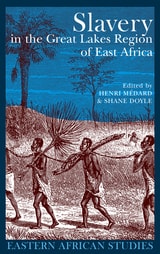
Slavery in the Great Lakes Region of East Africa
Henri Médard
Ohio University Press, 2007
Slavery in the Great Lakes Region of East Africa is a collection of ten studies by the most prominent historians of the region. Slavery was more important in the Great Lakes region of Eastern Africa than often has been assumed, and Africans from the interior played a more complex role than was previously recognized. The essays in this collection reveal the connections between the peoples of the region as well as their encounters with the conquering Europeans. The contributors challenge the assertion that domestic slavery increased in Africa as a result of the international trade. Slavery in this region was not a uniform phenomenon and the line between enslaved and non-slave labor was fine. Kinship ties could mark the difference between free and unfree labor. Social categories were not always clear-cut and the status of a slave could change within a lifetime.
Contents:
- Introduction by Henri Médard
- Language Evidence of Slavery to the Eighteenth Century by David Schoenbrun
- The Rise of Slavery & Social Change in Unyamwezi 1860–1900 by Jan-Georg Deutsch
- Slavery & Forced Labour in the Eastern Congo 1850–1910 by David Northrup
- Legacies of Slavery in North West Uganda ‘The One-Elevens’ by Mark Leopold
- Human Booty in Buganda: The Seizure of People in War, c.1700–c.1900 by Richard Reid
- Stolen People & Autonomous Chiefs in Nineteenth-Century Buganda by Holly Hanson
- Women’s Experiences of Slavery in Late Nineteenth- & Early Twentieth-Century Uganda by Michael W. Tuck
- Slavery & Social Oppression in Ankole 1890–1940 by Edward I. Steinhart
- The Slave Trade in Burundi & Rwanda at the Beginning of German Colonisation 1890–1906 by Jean-Pierre Chretien
- Bunyoro & the Demography of Slavery Debate by Shane Doyle
Slavery's Descendants
Shared Legacies of Race and ReconciliationJill Strauss
Rutgers University Press, 2019
Slavery’s Descendants brings together contributors from a variety of racial backgrounds, all members or associates of a national racial reconciliation organization called Coming to the Table, to tell their stories of dealing with America’s racial past through their experiences and their family histories. Some are descendants of slaveholders, some are descendants of the enslaved, and many are descendants of both slaveholders and slaves. What they all have in common is a commitment toward collective introspection, and a willingness to think critically about how the nation’s histories of oppression continue to ripple into the present, affecting us all.
The stories in Slavery’s Descendants deal with harrowing topics—rape, lynching, cruelty, shame—but they also describe acts of generosity, gratitude, and love. Together, they help us confront the legacy of slavery to reclaim a more complete picture of U.S. history, one cousin at a time.
Funding for the production of this book was provided by Furthermore, a program of the J. M. Kaplan Fund (https://www.furthermore.org).

Slavery's End In Tennessee
John Cimprich
University of Alabama Press, 1985
Slavery, Emancipation and Colonial Rule in South Africa
Wayne Dooling
Ohio University Press, 2008
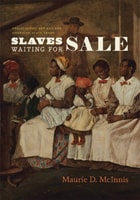
Slaves Waiting for Sale
Abolitionist Art and the American Slave TradeMaurie D. McInnis
University of Chicago Press, 2011
In 1853, Eyre Crowe, a young British artist, visited a slave auction in Richmond, Virginia. Harrowed by what he witnessed, he captured the scene in sketches that he would later develop into a series of illustrations and paintings, including the culminating painting, Slaves Waiting for Sale, Richmond, Virginia.
Slaves, Spices and Ivory in Zanzibar
Integration of an East African Commercial Empire into the World Economy, 1770–1873Abdul Sheriff
Ohio University Press, 1987
The rise of Zanzibar was based on two major economic transformations. Firstly slaves became used for producing cloves and grains for export. Previously the slaves themselves were exported.
Secondly, there was an increased international demand for luxuries such as ivory. At the same time the price of imported manufactured gods was falling. Zanzibar took advantage of its strategic position to trade as far as the Great Lakes.
However this very economic success increasingly subordinated Zanzibar to Britain, with its anti-slavery crusade and its control over the Indian merchant class.
Professor Sheriff analyses the early stages of the underdevelopment of East Africa and provides a corrective to the dominance of political and diplomatic factors in the history of the area.

Slavic Excursions
Essays on Russian and Polish LiteratureDonald Davie
University of Chicago Press, 1991
Sleep Fictions
Rest and Its Deprivations in Progressive-Era LiteratureHannah L. Huber
University of Illinois Press, 2023
A turn-of-the-century influx of new technologies and the enormous impact of the electric light transformed not only individual sleeping habits but the ways American culture conceived and valued sleep. Hannah L. Huber analyzes the works of Henry James, Edith Wharton, Charles Chesnutt, and Charlotte Perkins Gilman to examine the literary response to the period’s obsession with wakefulness. As these writers blurred the separation of public and private space, their characters faced exhaustion in a modern world that permeated every moment of their lives with artificial light, traffic noise, and the social pressure to remain active at all hours. The implacable cultural clock and constant stress over physical limitations had an even greater impact on marginalized figures. Huber pays particular attention to how these writers rebutted Americans’ confidence in the body’s ability to conquer sleep with vivid portraits of the devastating consequences of sleep disruption and deprivation.
The author also provides a website and text visualization tool that offers readers an interdisciplinary, deconstructed analysis of the book’s primary texts. The website can be found at: https://sleepfictions.org/sleep/scalar/index
Slow Disturbance
Infrastructural Mediation on the Settler Colonial Resource FrontierRafico Ruiz
Duke University Press, 2021
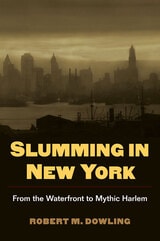
Slumming in New York
From the Waterfront to Mythic HarlemRobert M. Dowling
University of Illinois Press, 2006
Using the methods of ethnicity theory, black studies, regional studies, literary studies, and popular culture, Robert M. Dowling reveals the way in which "outsider" authors helped alleviate New York's mounting social anxieties by popularizing "insider" voices from neighborhoods as distinctive as the East Side waterfront, the Bowery, the Tenderloin's "black Bohemia," the Jewish Lower East Side, and mythic Harlem.
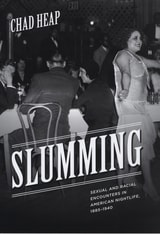
Slumming
Sexual and Racial Encounters in American Nightlife, 1885-1940Chad Heap
University of Chicago Press, 2009
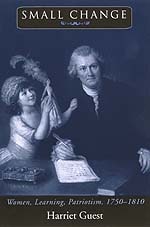
Small Change
Women, Learning, Patriotism, 1750-1810Harriet Guest
University of Chicago Press, 2000
During the second half of the eighteenth century, the social role of educated women and the nature of domesticity were the focus of widespread debate in Britain. The emergence of an identifiably feminist voice in that debate is the subject of Harriet Guest's new study, which explores how small changes in the meaning of patriotism and the relations between public and private categories permitted educated British women to imagine themselves as political subjects.
Small Change considers the celebration of learned women as tokens of national progress in the context of a commercial culture that complicates notions of gender difference. Guest offers a fascinating account of the women of the bluestocking circle, focusing in particular on Elizabeth Carter, hailed as the paradigmatic learned and domestic woman. She discusses the importance of the American war to the changing relation between patriotism and gender in the 1770s and 1780s, and she casts new light on Mary Wollstonecraft's writing of the 1790s, considering it in relation to the anti-feminine discourse of Hannah More, and the utopian feminism of Mary Hays.
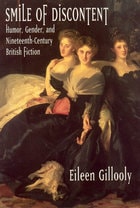
Smile of Discontent
Humor, Gender, and Nineteenth-Century British FictionEileen Gillooly
University of Chicago Press, 1999
Gillooly shows how such humor became, for mostly female writers at the time, an unobtrusive and prudent means of expressing discontent with a culture that was ideologically committed to restricting female agency and identity. If the aggression and emotional distance of irony and satire mark them as "masculine," then for Gillooly, the passivity, indirection, and sympathy of the humor she discusses render it "feminine." She goes on to disclose how the humorous tactics employed by writers from Burney to Wharton persist in the work of Barbara Pym, Anita Brookner, and Penelope Fitzgerald.
The book won the Barbara Perkins and George Perkins Award given by the Society for the Study of Narrative Literature.
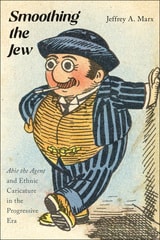
Smoothing the Jew
"Abie the Agent" and Ethnic Caricature in the Progressive EraJeffrey A. Marx
Rutgers University Press, 2024
Smoothing the Jew investigates how Jewish artists of the time attempted to “smooth over” these demeaning portrayals by focusing on the first Jewish comic strip published in English, Harry Hershfield’s Abie the Agent. Jeffrey Marx demonstrates how Hershfield created a Jewish protagonist who in part reassured nativists of the Jews’ ability to assimilate into American society while also encouraging immigrants and their children that, over time, they would be able to adopt American customs without losing their distinctly Jewish identity.

So Great Was the Slaughter
Market Hunters, Sportsmen, and Wildlife Conservation in ArkansasBuckley T. Foster
University of Alabama Press, 2025
Winner of the 2026 J.G. Ragsdale Book Award
So Great Was the Slaughter reveals the untold story of Arkansas conservation pioneers who saved the state’s game and fish populations. As Arkansas entered the twentieth century, the national demand for meat combined with the ability to ship millions of animals to hungry cities like New Orleans, Memphis, and Chicago had driven many species, including bison and passenger pigeons, to extinction in Arkansas. Many others, including deer, bear, turkey, quail, and fish, were in danger of disappearing.
In response, an unlikely coalition of Arkansas sportsmen, hunters, and conservationists created a vision for conservation legislation, game laws, and the establishment of fish hatcheries and wildlife refuges. With support from influential outsiders like E. A. McIlhenny and the United States Biological Survey, they waged a long battle against entrenched political and commercial interests.
Buckley Foster’s meticulous research reveals how these pioneers fought to save the state’s wildlife resources from destruction and laid the foundations for sustainable, modern wildlife management in Arkansas. So Great Was the Slaughter will fascinate hunters, conservationists, historians, and those interested in the history of wildlife conservation and conflicts between market hunters and sportsmen in the United States and the American South.
Social Figures
George Eliot, Social History, and Literary RepresentationDaniel Cottom
University of Minnesota Press, 1987
Centers on the discourse of the liberal intellectual as exemplified in the novels of George Eliot, whose awareness of her aesthetic and social task was keener than that of most Victorian writers.
“…Daniel Cottom has produced a readable, well-researched, and thoroughly referenced work that speaks to a broad scholarly audience composed of philosophers, psychologists, sociolinguists, literary critics, historians, sociologists, and anthropologists, to name but a few.” Anthropology and Humanism Quarterly
Society and Power
Five New England Towns, 1800-1860Doherty, Robert
University of Massachusetts Press, 1977
Robert Doherty's groundbreaking study examines the transformation of social structure and power dynamics across five representative New England towns during the formative decades of the nineteenth century. Through careful analysis of occupational mobility, community leadership patterns, and social stratification, Doherty traces how these previously cohesive rural communities experienced profound changes between the American Revolution and the Civil War era.
The work challenges conventional assumptions about early American society, revealing how power became increasingly concentrated despite the era's democratic rhetoric. By studying wealth distribution, occupational hierarchies, and patterns of geographic mobility, Doherty demonstrates how social relationships fundamentally shifted as communities transitioned from agriculture-based economies toward industrialization. His research methodology combines demographic analysis with social history to illuminate the lived experiences of ordinary townspeople alongside elites.
This compact but authoritative volume contributes significantly to our understanding of how New England communities adapted to modernization while grappling with questions of class, opportunity, and social order. Doherty's insights remain relevant for historians studying community formation, social stratification, and regional development in early America.

Society, Culture, and the State in Germany, 1870-1930
Geoff Eley, Editor
University of Michigan Press, 1997
Socrates' Children
Contemporary: The 100 Greatest PhilosophersPeter Kreeft
St. Augustine's Press, 2014
This is the fourth and final part of Kreeft’s four-volume history of philosophy . . . on ancient, medieval, modern, and contemporary philosophy.
Kreeft focuses on the “big ideas” that have influenced present people and present times, and includes relevant biographical data, proportionate to its importance for each thinker. Moreover, the aim of the work is to stimulate philosophizing, controversy, and argument. It uses ordinary language and logic, not jargon and symbolic logic, and it is commonsensical (like Aristotle) and existential in the sense that it sees philosophy as something to be lived and experienced in life. Philosophy, after all, is not about philosophy but reality . . . about wisdom, life and death, good and evil, and God.
Kreeft seeks to be simple and direct and clear. But it is not dumbed down and patronizing. It will stretch the reader, but it is meant for beginnings, not just scholars. It can be used for college classes or do-it-yourselfers. It emphasizes surprises; remember, “philosophy begins in wonder.” And it includes visual aids: charts, cartoons, line drawings, and drawings of philosophers.
Peter Kreeft teaches philosophy at Boston College and is a very prolific author of philosophy and theology texts, including, from St. Augustine’s Press, Socratic Logic, An Ocean Full of Angels, The Philosophy of Jesus, Jesus-Shock, The Sea Within, I Surf Therefore I Am, If Einstein Had Been a Surfer, the first nine titles in his Socrates Meets series, including Philosophy 101 by Socrates and the titles on Machiavelli, Descartes, Hume, Kant, Marx, and Sartre, and the first three volumes of this series, Socrates’ Children: Ancient, Socrates’ Children: Medieval, and Socrates’ Children: Modern.