Results by title
8642 books match the query '20th century' and 572 start with s
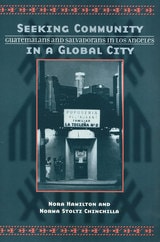
Seeking Community In Global City
Guatemalans & Salvadorans In Los AngelesNora Hamilton
Temple University Press, 2001
Based on twenty years of work with the Los Angeles Central American community and filled with facts, figures, and personal narratives, Seeking Community in a Global City presents this saga from many perspectives. The authors examine the forces in Central America that sent thousands of people streaming across international borders. They discuss economic, political, and demographic changes in the Los Angeles region and the difficulties the new immigrants faced in negotiating a new, urban environment. They look at family roles, networking, work strategies, and inter-ethnic relations. But they also consider policy issues and alliances, changing expectations, shifting priorities, and the reciprocal effect of the migrants and the city on each other.
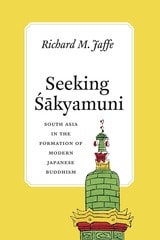
Seeking Sakyamuni
South Asia in the Formation of Modern Japanese BuddhismRichard M. Jaffe
University of Chicago Press, 2019
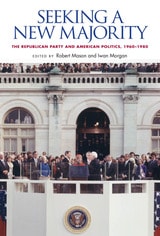
Seeking a New Majority
The Republican Party and American Politics, 1960-1980Robert Mason
Vanderbilt University Press, 2013
Seeking a New Majority assembles an international group of scholars to move beyond the ideas and activities of party leaders who have hitherto received the bulk of historical attention. It illuminates how the Republican Party expanded its regional base, especially in the South, appealed to new constituencies ranging from blue-collar workers to Christian fundamentalists, and enhanced the political appeal of conservatism. It also examines how Republicans engaged in a remarkable organizational and intellectual mobilization to challenge Democratic Party dominance--in search of a new majority.
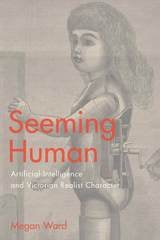
Seeming Human
Artificial Intelligence and Victorian Realist CharacterMegan Ward
The Ohio State University Press, 2018
In Seeming Human, Megan Ward contends that mid-twentieth-century versions of artificial intelligence (AI) offer a theory of verisimilitude omitted by traditional histories of character, which often focus on the development of interiority and the shift from “flat” to “round” characters in the Victorian era. Instead, by reading character through AI, Megan Ward’s Seeming Human argues that routinization, predictability, automation, and even flatness are all features of realist characters.
Early artificial intelligence movements such as cybernetics, information theory, and the Turing test define ways of seeming—rather than being—human. Using these theories of verisimilitude to read Victorian novelists such as Elizabeth Gaskell, Margaret Oliphant, Anthony Trollope, Thomas Hardy, and Henry James, Seeming Human argues that mechanicity has been perceived as anti-realist because it is the element that we least want to identify as human. Because AI produces human-like intelligence, it makes clear that we must actually turn to machines in order to understand what makes realist characters seem so human.
Segregating Cities
An Arnold R. Hirsch ReaderArnold R. Hirsch
University of Chicago Press, 2026
Arnold R. Hirsch (1949–2018) was one of the preeminent urban historians of his generation, a reputation cemented by his landmark book, Making the Second Ghetto. With compelling clarity, Hirsch demonstrated that segregation is not the inevitable result of individual choices, natural tendencies, or cultural traits—it is a structural phenomenon, reinforced on every level by state power.
Segregating Cities collects the author’s key essays, some previously unpublished, to reveal a more complete picture of a remarkable scholar and his exploration of race, place, politics, and policy in the twentieth-century American city. Together, these essays can help us see segregation for what it is, so that we can then begin to truly work to overcome it.
Segregating Sound
Inventing Folk and Pop Music in the Age of Jim CrowKarl Hagstrom Miller
Duke University Press, 2010
In a cultural history filled with musicians, listeners, scholars, and business people, Miller describes how folklore studies and the music industry helped to create a “musical color line,” a cultural parallel to the physical color line that came to define the Jim Crow South. Segregated sound emerged slowly through the interactions of southern and northern musicians, record companies that sought to penetrate new markets across the South and the globe, and academic folklorists who attempted to tap southern music for evidence about the history of human civilization. Contending that people’s musical worlds were defined less by who they were than by the music that they heard, Miller challenges assumptions about the relation of race, music, and the market.
Segregation Games
Boston, Busing, and the Making of Red Sox NationDavid Faflik
University of Massachusetts Press, 2026
A cultural history of race, resistance, and representation in a city divided by politics and play
When outfielder Bernie Carbo joined the Red Sox in 1974, he brought with him a toy gorilla named Mighty Joe Young that became the team’s unofficial mascot for several players and many in the local press. This seemingly innocent stuffed animal was introduced within a baseball team notorious for its stubborn discrimination, and during a particularly fraught era of racial discord in Boston. That June, after years of activism from the city’s Black community, Judge W. Arthur Garrity Jr. ruled that Boston must address the segregation of its schools through redistricting and busing. The ensuing racial animus to these policies led some of the city’s white residents to throw bananas and chant monkey sounds at African American students as they integrated the predominantly white South Boston High School. In this agitated atmosphere, cultural symbols like the Red Sox’s Mighty Joe Young mirrored and amplified the heightened racial tensions of Boston’s busing crisis.
Situated at the intersection of US cultural and social history, Segregation Games examines the surprising ties in 1970s Boston between the racial segregation of the city’s schools and the racial controversies expressed on and off the field of “Red Sox Nation.” “I found out in the black community why they don’t come out [to Fenway Park],” explained Black player Reggie Smith of his experiences with the Red Sox and the city during this period. “The team was the last to get Black players, and some of the things I hear out in the stands make me sick.” To understand these connections, Faflik erases the lines between politics and sport, which routinely blurred in a city suffused with an anti-Black racism that was both deceptively subtle and fiercely overt.
Drawing upon deep archival research from sources that have largely been ignored, such as the Black press of the time, Faflik offers a carefully nuanced portrait of Boston’s cultural life at a pivotal moment in the city’s history.
Seizing the Means of Reproduction
Entanglements of Feminism, Health, and TechnoscienceM. Murphy
Duke University Press, 2012
Murphy traces the transnational circulation of cheap, do-it-yourself health interventions, highlighting the uneasy links between economic logics, new forms of racialized governance, U.S. imperialism, family planning, and the rise of NGOs. In the twenty-first century, feminist health projects have followed complex and discomforting itineraries. The practices and ideologies of alternative health projects have found their way into World Bank guidelines, state policies, and commodified research. While the particular moment of U.S. feminism in the shadow of Cold War and postcolonialism has passed, its dynamics continue to inform the ways that health is governed and politicized today.

Selected Plays of Stan Lai
Volume 1: Secret Love in Peach Blossom Land and Other PlaysStan Lai, edited by Lissa Tyler Renaud
University of Michigan Press, 2021
Volume One contains:
Secret Love in Peach Blossom Land
Look Who's Crosstalking Tonight
The Island and the Other Shore
I Me She Him
Ménage à 13
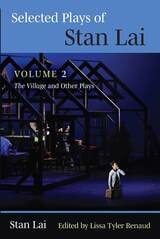
Selected Plays of Stan Lai
Volume 2: The Village and Other PlaysStan Lai, edited by Lissa Tyler Renaud
University of Michigan Press, 2021
Volume Two contains:
Millennium Teahouse
Sand on a Distant Star
Like Shadows
The Village
Writing in Water
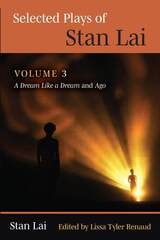
Selected Plays of Stan Lai
Volume 3: A Dream Like a Dream and AgoStan Lai, edited by Lissa Tyler Renaud
University of Michigan Press, 2021
Volume Three contains:
A Dream Like a Dream
Ago

Selected Writings on Visual Arts and Culture
Detour to the ImaginaryStuart Hall. Edited by Gilane Tawadros
Duke University Press, 2024
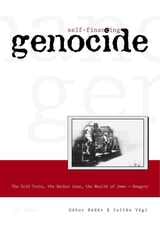
Self-Financing Genocide
The Gold Train, the Becher Case and the Wealth of Hungarian JewsGábor Kádár
Central European University Press, 2004
Discusses the process of the economic annihilation of the Jews in Hungary, who– from the economic point of view – were more influential than any other Jewish community in Europe. Following the German occupation in March 1944 the collaborating Hungarian government attempted to assert its claim concerning the complete confiscation of Jewish assets at all stages of the road leading to the extermination camps. The cooperation with the Germans proved to be the most problematic in this area.
The story of the Jewish Gold Train is a relatively small but all the more emblematic chapter of the economic annihilation. The circumstances of the freight’s assembling, the German-Hungarian conflicts concerning the train, the looting attempts, the fate of the assets seized by the Allies (double victimization of the survivors) provide the reader with an insight into the history of the repeated looting of the Hungarian Jewry
The book analyzes the role played by SS-Obersturmbannführer Kurt Becher, one of the most controversial and mysterious figures in the Hungarian and universal history of the Holocaust. Becher, delegated to Hungary by Himmler, administered and benefited from the confiscation of an enormous amount of Jewish assets.
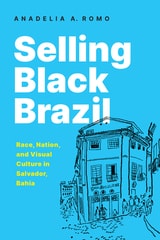
Selling Black Brazil
Race, Nation, and Visual Culture in Salvador, BahiaAnadelia Romo
University of Texas Press, 2022
2023 Honorable Mention, Brazil Section Humanities Book Prize, Latin American Studies Association (LASA)
This book explores visual portrayals of blackness in Brazil to reveal the integral role of visual culture in crafting race and nation across Latin America.
In the early twentieth century, Brazil shifted from a nation intent on whitening its population to one billing itself as a racial democracy. Anadelia Romo shows that this shift centered in Salvador, Bahia, where throughout the 1950s, modernist artists and intellectuals forged critical alliances with Afro-Brazilian religious communities of Candomblé to promote their culture and their city. These efforts combined with a growing promotion of tourism to transform what had been one of the busiest slaving depots in the Americas into a popular tourist enclave celebrated for its rich Afro-Brazilian culture. Vibrant illustrations and texts by the likes of Jorge Amado, Pierre Verger, and others contributed to a distinctive iconography of the city, with Afro-Bahians at its center. But these optimistic visions of inclusion, Romo reveals, concealed deep racial inequalities. Illustrating how these visual archetypes laid the foundation for Salvador’s modern racial landscape, this book unveils the ways ethnic and racial populations have been both included and excluded not only in Brazil but in Latin America as a whole.
Selling Black History for Carter G. Woodson
A Diary, 1930-1933Lorenzo J. Greene, Edited & Intro by Arvarh E. Strickland
University of Missouri Press, 1996
In the summer of 1930, Lorenzo Johnston Greene, a graduate of Howard University and a doctoral candidate at Columbia University, became a book agent for the man with the undisputed title of "Father of Negro History," Carter G. Woodson. With little more than determination, Greene, along with four Howard University students, traveled throughout the South and Southeast selling books published by Woodson's Associated Publishers. Their dual purpose was to provide needed funds for the Association for the Study of Negro Life and History and to promote the study of African American history. Greene returned east by way of Chicago, and, for a time, he settled in Philadelphia, selling books there and in the nearby cities of Delaware and New Jersey. He left Philadelphia in 1931 to conduct a survey in Washington, D.C., of firms employing and not employing black workers.
From 1930 until 1933, when Greene began teaching at Lincoln University in Jefferson City, Missouri, Selling Black History for Carter G. Woodson provides a unique firsthand account of conditions in African American communities during the Great Depression. Greene describes in the diary, often in lyrical terms, the places and people he visited. He provides poignant descriptions of what was happening to black professional and business people, plus working-class people, along with details of high school facilities, churches, black business enterprises, housing, and general conditions in communities. Greene also gives revealing accounts of how the black colleges were faring in 1930.
Selling Black History for Carter G. Woodson offers important glimpses into the private thoughts of a young man of the 1930s, a developing intellectual and scholar. Greene's diary also provides invaluable insights into the personality of Carter Woodson that are not otherwise available. This fascinating and comprehensive view of black America during the early thirties will be a welcome addition to African American studies.
Selling Modernity
Advertising in Twentieth-Century GermanyPamela E. Swett, S. Jonathan Wiesen, and Jonathan R. Zatlin, eds.
Duke University Press, 2007
While the essays are informed by the burgeoning literature on consumer society, Selling Modernity focuses on the actors who had the greatest stake in successful merchandising: company managers, advertising executives, copywriters, graphic artists, market researchers, and salespeople, all of whom helped shape the depiction of a company’s products, reputation, and visions of modern life. The contributors consider topics ranging from critiques of capitalism triggered by the growth of advertising in the 1890s to the racial politics of Coca-Cola’s marketing strategies during the Nazi era, and from the post-1945 career of an erotica entrepreneur to a federal anti-drug campaign in West Germany. Whether analyzing the growing fascination with racialized discourse reflected in early-twentieth-century professional advertising journals or the postwar efforts of Lufthansa to lure holiday and business travelers back to a country associated with mass murder, the contributors reveal advertising’s central role in debates about German culture, business, politics, and society.
Contributors. Shelley Baranowski, Greg Castillo, Victoria de Grazia, Guillaume de Syon, Holm Friebe, Rainer Gries, Elizabeth Heineman, Michael Imort, Anne Kaminsky, Kevin Repp , Corey Ross, Jeff Schutts, Robert P. Stephens, Pamela E. Swett, S. Jonathan Wiesen, Jonathan R. Zatlin
Selling Power
Economics, Policy, and Electric Utilities Before 1940John L. Neufeld
University of Chicago Press, 2016
John L. Neufeld offers a comprehensive historical treatment of the economics that shaped electric utilities. Compared with most industries, the organization of the electric utility industry is not—and cannot be—economically efficient. Most industries are kept by law in a state of fair competition, but the capital necessary to start an electric company—generators, transmission and distribution systems, and land and buildings—is so substantial that few companies can enter the market and compete. Therefore, the natural state of the electric utility industry since its inception has been a monopoly subject to government oversight. These characteristics of electric utilities—and electricity’s importance—have created over time sharp political controversies, and changing public policies have dramatically changed the industry’s structure to an extent matched by few other industries. Neufeld outlines the struggles that shaped the industry’s development, and shows how the experience of electric utilities provides insight into the design of economic institutions, including today’s new large-scale markets.
Selling Science
Polio and the Promise of Gamma GlobulinMawdsley, Stephen E
Rutgers University Press, 2016
Drawing on oral history interviews, medical journals, newspapers, meeting minutes, and private institutional records, Selling Science sheds light on the ethics of scientific conduct, and on the power of marketing to shape public opinion about medical experimentation.
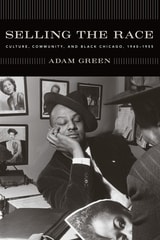
Selling the Race
Culture, Community, and Black Chicago, 1940-1955Adam Green
University of Chicago Press, 2006
In Selling the Race, Adam Green tells the story of how black Chicagoans were at the center of a national movement in the 1940s and ’50s, a time when African Americans across the country first started to see themselves as part of a single culture. Along the way, he offers fascinating reinterpretations of such events as the 1940 American Negro Exposition, the rise of black music and the culture industry that emerged around it, the development of the Associated Negro Press and the founding of Johnson Publishing, and the outcry over the 1955 lynching of Emmett Till.
By presenting African Americans as agents, rather than casualties, of modernity, Green ultimately reenvisions urban existence in a way that will resonate with anyone interested in race, culture, or the life of cities.
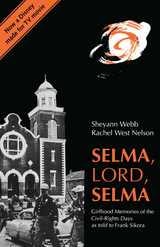
Selma, Lord, Selma
Girlhood Memories of the Civil Rights DaysSheyann Webb
University of Alabama Press, 1997
Witness the Civil Rights Movement through the eyes of two children.
Sheyann Webb was eight years old and Rachel West was nine when Dr. Martin Luther King Jr. arrived in Selma, Alabama, on January 2, 1965. He came to organize non-violent demonstrations against discriminatory voting laws. Selma, Lord, Selma is their firsthand account of the events from that turbulent winter of 1965--events that changed not only the lives of these two little girls but the lives of all Alabamians and all Americans. From 1975 to 1979, award-winning journalist Frank Sikora conducted interviews with Webb and West, weaving their recollections into this luminous story of fear and courage, struggle and redemption that readers will discover is Selma, Lord, Selma.
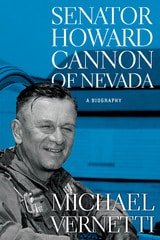
Senator Howard Cannon of Nevada
A BiographyMichael Vernetti
University of Nevada Press, 2015
Born to a devout Mormon family in a small farming community in southwest Utah, Cannon served in the Army Air Force during World War II and emerged from the war as a hero. Soon he was part of the postwar migration of ambitious, adventurous Americans to the booming desert city of Las Vegas, where he practiced law and entered local politics. In 1958 he was elected to the U.S. Senate and joined a group of influential young Democratic senators who were to play a major role in shaping the country’s future. His service on the Aeronautical and Space Sciences Committee and the Armed Services Committee led to major changes in the air travel industry, including deregulation, and to increased support for national military preparedness.
Send Down Einstein
Paul Hecht
Swan Isle Press, 2026
A comic and melancholy novel about translation and living between cultures, set during one historic day in Spain: February 21, 1981, the attempted coup against the newborn Spanish democracy.
Early one morning in 1981, Peter Carp, an American poet and translator living in Granada, wakes to the sounds of shouting and the revving of a motorcycle. These interruptions to Peter’s sleep provoke a series of interrelated thoughts, delivered with wry humor, about personal relations in Spain, gossip, the role of women in a patriarchal society, and the after-effects of expelling the Jewish population from Spain in 1492. We are introduced to Peter’s associative view of the world as he draws on a lifetime of reading poetry, of making sense of his own Jewish sensibility, and how it relates to the cultural history of the Spain he has come to love for its music, people, food, and language.
Peter lives in the home of Alberto, a professor of translation, who was once jailed under Franco’s regime. He has fallen in love with Ana, a young woman who is exploring the new freedoms of post-Franco Spain. Years ago, he had befriended flamenco singers of the Roma community, and his current task is to translate the flamenco lyrics he has collected, a process that challenges his understanding of Spanish and the capacity of language to convey meaning. His day brings him into contact with a wide range of Spaniards, including a gardener at the Alhambra, a group of children playing in the street, a professional beggar, a diverse range of personalities at a neighborhood bar before the midday dinner, and in the evening, a small band of fascist sympathizers encouraged by the attempted coup now taking place in the Spanish parliament.
With prose that mixes social observation, linguistic conjecture, and vivid description, Paul Hecht examines how living is itself a form of translation when moving from one language or culture to another, and how history can erupt into our own world. In Send Down Einstein, Hecht creates a tension between what we dream will happen and what actually does happen. In this bouillabaisse of emotion, the reader will taste how, for Peter Carp—with the right food and the best company—dreams, hope, and words can matter.

Send the Alabamians
World War I Fighters in the Rainbow DivisionNimrod T. Frazer
University of Alabama Press, 2014
The Remarkable Story of Alabama's Soldiers in America's Great War.
Send the Alabamians recounts the story of the 167th Infantry Regiment of the WWI Rainbow Division from their recruitment to their valiant service on the bloody fields of eastern France in the climactic final months of World War I.
To mark the centenary of World War I, Send the Alabamians tells the remarkable story of a division of Alabama recruits whose service Douglas MacArthur observed had not “been surpassed in military history.” The book borrows its title from a quip by American General Edward H. Plummer who commanded the young men during the inauspicious early days of their service. Impressed with their ferocity and esprit de corps but exasperated by their rambunctiousness, Plummer reportedly exclaimed: In time of war, send me all the Alabamians you can get, but in
time of peace, for Lord’s sake, send them to somebody else!
The ferocity of the Alabamians, so apt to get them in trouble at home, proved invaluable in the field. At the climactic Battle of Croix Rouge, the hot-blooded 167th exhibited unflinching valor and, in the face of machine guns, artillery shells, and poison gas, sustained casualty rates over 50 percent to dislodge and repel the deeply entrenched and heavily armed enemy.
Relying on extensive primary sources such as journals, letters, and military reports, Frazer draws a vivid picture of the individual soldiers who served in this division, so often overlooked but critical to the war’s success. After Gettysburg, the Battle of Croix Rouge is the most significant military engagement to involve Alabama soldiers in the state’s history. Families and genealogists will value the full roster of the 167th that accompanies the text.
Richly researched yet grippingly readable, Nimrod T. Frazer’s Send the Alabamians will delight those interested in WWI, the World Wars, Alabama history, or southern military history in general. Historians of the war, regimental historians, military history aficionados, and those interested in previously unexplored facets of Alabama history will prize this unique volume as well.
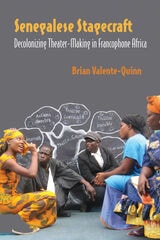
Senegalese Stagecraft
Decolonizing Theater-Making in Francophone AfricaBrian Valente-Quinn
Northwestern University Press, 2021
Through a study of the innovative work of Senegalese theater-makers from the 1930s onward, Senegalese Stagecraft explores a wide range of historical contexts and themes, including French colonial education, cultural Pan‑Africanism, West African Sufism, uses of television and mass media, and popular theater and activism. Using a multidisciplinary approach that includes field, archival, and literary methods, Valente‑Quinn offers a fresh look at performance cultures of West Africa and the Global South in a book that will interest students and scholars in African, Francophone, and performance studies.
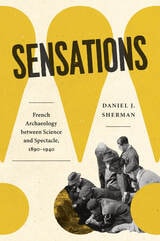
Sensations
French Archaeology between Science and Spectacle, 1890–1940Daniel J. Sherman
University of Chicago Press, 2025
For well over a century, from Heinrich Schliemann’s sensational discoveries at Troy in the 1880s, through the Tutankhamun excavations of the 1920s, to the recent LIDAR-aided uncovering of lost Maya cities, archaeology has made headlines. In this new history of archaeology and its archival traces, Daniel J. Sherman treats the friction between science and spectacle as constitutive of the field. By exploring two long-running controversies that roiled the French archaeological world and its wider public in the first third of the twentieth century, he gives the science/media relationship a unique place in the history of archaeology—and its present.
The first controversy involves a dispute over the conduct of excavations at Carthage in Tunisia, then under French colonial rule. In the second, accusations of forgery clouded what seemed to be a stunning Neolithic find at a hamlet called Glozel, in the Auvergne region in central France. The affair divided the scholarly community and attracted enormous media attention across Europe and North America. Both controversies occurred at a transitional moment between what has been called the heroic age of archaeology, dominated by explorers and adventurers with little specialized training, and the beginnings of its professionalization. As Sherman shows, the two affairs put the methods, procedures, and networks of archaeology in the spotlight and profoundly shaped its history.
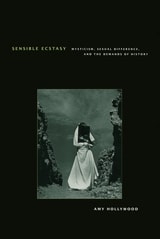
Sensible Ecstasy
Mysticism, Sexual Difference, and the Demands of HistoryAmy Hollywood
University of Chicago Press, 2001
What is particular to these thinkers, Hollywood reveals, is their attention to forms of mysticism associated with women. They regard mystics such as Angela of Foligno, Hadewijch, and Teresa of Avila not as emotionally excessive or escapist, but as unique in their ability to think outside of the restrictive oppositions that continue to afflict our understanding of subjectivity, the body, and sexual difference. Mystics such as these, like their twentieth-century descendants, bridge the gaps between action and contemplation, emotion and reason, and body and soul, offering new ways of thinking about language and the limits of representation.
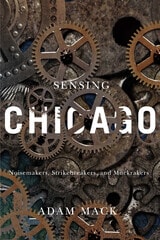
Sensing Chicago
Noisemakers, Strikebreakers, and MuckrakersAdam Mack
University of Illinois Press, 2015
In Sensing Chicago, Adam Mack lets fresh air into the sensory history of Chicago in the nineteenth and early twentieth centuries by examining five case studies: the Chicago River, the Great Fire, the 1894 Pullman Strike, the publication of Upton Sinclair's The Jungle, and the rise and fall of the White City amusement park. His vivid recounting of the smells, sounds, and tactile miseries of city life reveals how input from the five human senses influenced the history of class, race, and ethnicity in the city. At the same time, he transports readers to an era before modern refrigeration and sanitation, when to step outside was to be overwhelmed by the odor and roar of a great city in progress.
Sensing Qualia
Solving the Hard Problem of ConsciousnessPaul G. Skokowski
University of Chicago Press, 2026
Philosophers of mind and neuroscientists often debate what they call the hard problem of consciousness, that is, how we might account for qualia—our subjective experiences of phenomena like color, taste, pain, smell, and more. In Sensing Qualia, Paul G. Skokowski surveys the most influential theories of mind since Descartes in order to establish a new theory he calls sensory naturalism, which recognizes the senses as natural detectors of physical properties in the world.
Drawing on neuroscience, physics, and philosophy, Skokowski provides a naturalistic framework for studying qualia in the physical world and explores the limits of qualia in androids and AI. The result is a compelling explanation of qualia for anyone curious about the nature of conscious experience in humans and AI.
Sensing the Future
Experiments in Art and Technology (E.A.T.)Nancy Perloff
J. Paul Getty Trust, The, 2024
In 1966, Billy Klüver and Fred Waldhauer, engineers at Bell Labs in Murray Hill, New Jersey, teamed up with artists Robert Rauschenberg and Robert Whitman to form a nonprofit organization, Experiments in Art and Technology (E.A.T.). E.A.T.’s debut event, 9 Evenings: Theatre & Engineering, integrated art, theater, and groundbreaking technology in a series of performances at the 69th Regiment Armory in Manhattan. Its second major event, the Pepsi Pavilion at Expo ’70 in Osaka, Japan, presented a multisensory environment for the first world exposition held in Asia. At these events, and in the hundreds of collaborations E.A.T. facilitated in between, the participants—including John Cage, Lucinda Childs, Deborah Hay, Steve Paxton, Yvonne Rainer, and David Tudor—imagined innovative ways for art and science to intersect and enrich society.
Sensing the Future tells the story of these collaborations between artists and engineers and how they led to new installations and technology-based artworks. Through the examination of films, photographs, diagrams, and artists’ records from the E.A.T. archive at the Getty Research Institute, this volume provides a new perspective on multimedia art in the 1960s and ’70s and highlights the ways E.A.T. pushed the role of the artist beyond the traditional art world.
This volume is published to accompany an exhibition on view at the Getty Research Institute at the Getty Center from September 10, 2024, to February 23, 2025.

Separate Spheres No More
Gender Convergence in American Literature, 1830-1930Monika Elbert
University of Alabama Press, 2000
Examines the intersection of male and female spheres in American literature
Although they wrote in the same historical milieu as their male counterparts, women writers of the 19th- and early 20th-centuries have generally been "ghettoized" by critics into a separate canonical sphere. These original essays argue in favor of reconciling male and female writers, both historically and in the context of classroom teaching.
While some of the essays pair up female and male authors who write in a similar style or with similar concerns, others address social issues shared by both men and women, including class tensions, economic problems, and the Civil War experience. Rather than privileging particular genres or certain well-known writers, the contributors examine writings ranging from novels and poetry to autobiography, utopian fiction, and essays. And they consider familiar figures like Harriet Beecher Stowe, Emily Dickinson, and Ralph Waldo Emerson alongside such lesser-known writers as Melusina Fay Peirce, Susie King Taylor, and Mary Gove Nichols.
Each essay revises the binary notions that have been ascribed to males and females, such as public and private, rational and intuitive, political and domestic, violent and passive. Although they do not deny the existence of separate spheres, the contributors show the boundary between them to be much more blurred than has been assumed until now.

Separated by Worlds
Letters from Nazi Germany to a Distant SonFiona Burdette
Rutgers University Press, 2027
In 1937, Josef and Marie Baum, of Bamberg, Germany, sent their seventeen-year-old son Kurt to begin a new life in America. Their letters, provided here in both the original German and English translation, recount the story of this middle-class Jewish family during the Nazi era. Kurt’s struggles to adapt to his new circumstances were met with little understanding from his parents, who were enduring a steadily worsening existence at the hands of the Nazis. The father’s desperate pleas prior to his forced deportation and murder constitute a final rupture in this poignant story.
Bridging the Holocaust experience from both sides of the Atlantic, Separated by Worlds sheds light both on life in Nazi Germany and on the refugee experience in the United States. Unlike traditional exile literature focused on intellectual and cultural elites, the book documents the experiences of average citizens navigating escape and assimilation. The fifty letters at the center of the book, which communicate the parents’ needs, fears, and hopes to their son, offer an unusually intimate window into daily life under Nazi rule. The book is richly illustrated, and the letters are annotated and contextualized by several essays.

Serbia under the Swastika
A World War II OccupationAlexander Prusin
University of Illinois Press, 2017
Deftly merging political and social history, Serbia under the Swastika looks at the interactions between Germany’s occupation policies, the various forces of resistance and collaboration, and the civilian population. Alexander Prusin reveals a German occupying force at war with itself. Pragmatists intent on maintaining a sedate Serbia increasingly gave way to Nazified agencies obsessed with implementing the expansionist racial vision of the Third Reich. As Prusin shows, the increasing reliance on terror catalyzed conflict between the nationalist Chetniks, communist Partisans, and the collaborationist government. Prusin unwraps the winding system of expediency that at times led the factions to support one-another against the Germans--even as they fought a ferocious internecine civil war to determine the future of Yugoslavia.
Comprehensive and judicious, Serbia under the Swastika is a rare English-language foray into the still-fraught history of Serbia in World War II.

Sermons from Duke Chapel
Voices from "A Great Towering Church"William H. Willimon, ed.
Duke University Press, 2005
Opening with the sermon preached in June 1935 at the dedication of the Chapel and closing with one by Willimon delivered at the beginning of the 2003–04 school year, this volume presents Protestant Christianity at its most eloquent and prophetic. Some sermons are pure meditations on biblical texts; others are period pieces in the best sense of the term, reflecting on such contemporary concerns as civil rights, the assassinations of Martin Luther King Jr. and Robert F. Kennedy, and the wars in Europe, Vietnam, and Iraq. Willimon provides a brief introduction to each sermon, commenting on the work and thought of the preacher. Diverse in subject and style, the sermons collected in this volume are a treasure for those who love fine preaching, a resource for those studying the history of homiletics, and a light to rekindle the memories of those who have worshiped in the Chapel over the years.
Service Denied
Marginalized Veterans in Modern American HistoryEdited by John M. Kinder and Jason A. Higgins
University of Massachusetts Press, 2022
Wartime military service is held up as a marker of civic duty and patriotism, yet the rewards of veteran status have never been equally distributed. Certain groups of military veterans—women, people of color, LGBTQ people, and former service members with stigmatizing conditions, “bad paper” discharges, or criminal records—have been left out of official histories, excised from national consciousness, and denied state recognition and military benefits.
Chronicling the untold stories of marginalized veterans in the twentieth and twenty-first centuries, Service Denied uncovers the generational divides, cultural stigmas, and discriminatory policies that affected veterans during and after their military service. Together, the chapters in this collection recast veterans beyond the archetype, inspiring an innovative model for veterans studies that encourages an intersectional and interdisciplinary analysis of veterans history. In addition to contributions from the volume editors, this collection features scholarship by Barbara Gannon, Robert Jefferson, Evan P. Sullivan, Steven Rosales, Heather Marie Stur, Juan Coronado, Kara Dixon Vuic, John Worsencroft, and David Kieran.

Service as Mandate
How American Land-Grant Universities Shaped the Modern World, 1920–2015Edited by Alan I Marcus
University of Alabama Press, 2015
From their founding, land-grant schools have provided educational opportunities to millions, producing many of the nation’s scientific, technical, and agricultural leaders and spawning countless technological and agricultural innovations. Nevertheless, their history has not always been smooth or without controversy or setbacks. These vital centers of learning and research have in fact been redefined and reconceptualized many times and today bear only a cursory resemblance to their original incarnations.
The thirteen essays in this collection explore such themes as the emphasis on food science and home economics, the country life movement, the evolution of a public research system, the rise of aerospace engineering, the effects of the GI Bill, the teaching of military science, the sustainable agriculture movement, and the development of golf-turf science. Woven together, these expertly curated scenes, vignettes, and episodes powerfully illustrate these institutions’ ability to flex and adapt to serve the educational needs of an ever-changing American citizenry.
By dint of their mission to remedy social, economic, and technical problems; to improve standards of living; and to enhance the quality of life, land-grant universities are destined and intended to be agents of change—a role that finds them at times both celebrated and hotly contested, even vilified. A readable and fascinating exploration of land-grant universities, Service as Mandate offers a vital exploration of these dynamic institutions to educators, policy makers, students, and the wider communities that land-grant universities serve.
Serving the Reich
The Struggle for the Soul of Physics under HitlerPhilip Ball
University of Chicago Press, 2014
After World War II, most scientists in Germany maintained that they had been apolitical or actively resisted the Nazi regime, but the true story is much more complicated. In Serving the Reich, Philip Ball takes a fresh look at that controversial history, contrasting the career of Peter Debye, director of the Kaiser Wilhelm Institute for Physics in Berlin, with those of two other leading physicists in Germany during the Third Reich: Max Planck, the elder statesman of physics after whom Germany’s premier scientific society is now named, and Werner Heisenberg, who succeeded Debye as director of the institute when it became focused on the development of nuclear power and weapons.
Mixing history, science, and biography, Ball’s gripping exploration of the lives of scientists under Nazism offers a powerful portrait of moral choice and personal responsibility, as scientists navigated “the grey zone between complicity and resistance.” Ball’s account of the different choices these three men and their colleagues made shows how there can be no clear-cut answers or judgment of their conduct. Yet, despite these ambiguities, Ball makes it undeniable that the German scientific establishment as a whole mounted no serious resistance to the Nazis, and in many ways acted as a willing instrument of the state.
Serving the Reich considers what this problematic history can tell us about the relationship between science and politics today. Ultimately, Ball argues, a determination to present science as an abstract inquiry into nature that is “above politics” can leave science and scientists dangerously compromised and vulnerable to political manipulation.
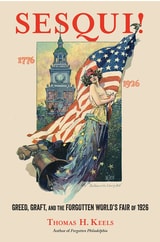
Sesqui!
Greed, Graft, and the Forgotten World's Fair of 1926Thomas H. Keels
Temple University Press, 2017
In 1916, Philadelphia department-store magnate John Wanamaker launched plans for a Sesqui-Centennial International Exposition in 1926. It would be a magnificent world's fair to celebrate the 150th anniversary of the Declaration of Independence. The “Sesqui” would also transform sooty, industrial Philadelphia into a beautiful Beaux Arts city.
However, when the Sesqui opened on May 31, 1926, in the remote, muddy swamps of South Philadelphia, the fair was unfinished, with a few shabbily built and mostly empty structures. Crowds stayed away in droves: fewer than five million paying customers attended, costing the city millions of dollars. Philadelphia became a national scandal—a city so corrupt that one political boss could kidnap an entire world’s fair.
In his fascinating history Sesqui!, noted historian Thomas Keels situates this ill-fated celebration—a personal boondoggle by the all-powerful Congressman William S. Vare—against the transformations taking place in America during the 1920s. Keels provides a comprehensive account of the Sesqui as a meeting ground for cultural changes sweeping the country: women’s and African-American rights, anti-Semitism, eugenics, Prohibition, and technological advances.
Set in Motion
Essays, Interviews, and DialoguesA. R. Ammons
University of Michigan Press, 1996
Setting the Agenda for American Archaeology
The National Research Council Archaeological Conferences of 1929, 1932, and 1935Edited and with an introduction by Michael J. O'Brien and R. Lee Lyman
University of Alabama Press, 2001
A Dan Josselyn Memorial Publication
This collection elucidates the key role played by the National Research Council seminars, reports, and pamphlets in setting an agenda that has guided American archaeology in the 20th century.
In the 1920s and 1930s, the fascination that Americans had for the continent's prehistoric past was leading to a widespread and general destruction of archaeological evidence. In a drive toward the commercialization of antiquities, amateur collectors and "pot hunters" pillaged premier and lesser-known sites before the archaeological record could be properly investigated and documented. Adding to the problem was a dearth of professionals and scholars in the field to conduct professional investigations and to educate the public about the need for preservation and scientific research methods.
In stepped the National Research Council, a division of the National Academy of Sciences, the Committee on State Archaeological Surveys. The CSAS initiated an enormously successful outreach program to enlist the aid of everyday citizens in preserving the fragile but valuable prehistoric past. Meetings held in St. Louis, Birmingham, and Indianapolis provided nuts-and-bolts demonstrations by trained archaeologists and laid out research agendas that both professionals and amateurs could follow.
Setting the Agenda contains the complete reports of the three NRC conferences, a short publication on the methods and techniques for conducting archaeological surveys, and a guide for amateur archaeologists. An extensive introduction by the editors sets these documents in context and provides insight into the intentions of the NRC committee members as they guided the development of American archaeology.
Settlement Folk
Social Thought and the American Settlement Movement, 1885-1930Mina Carson
University of Chicago Press, 1990
These extraordinary individuals left an enduring legacy of beliefs about professional and voluntary responsibility for welfare services. As Carson shows, however, their genius for image creation and their myriad connections with other intellectual and social leaders extended the influence of the settlement ideology in many directions: fostering new attitudes toward the American city and the equality of the sexes, initiating a new social-scientific approach to social problems, and shaping the self-definition of the American educated middle class.
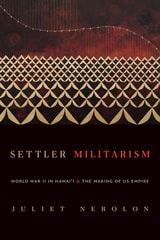
Settler Militarism
World War II in Hawai'i and the Making of US EmpireJuliet Nebolon
Duke University Press, 2024
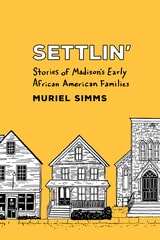
Settlin’
Stories of Madison’s Early African American FamiliesMuriel Simms
Wisconsin Historical Society Press, 2018

Seven American Women Writers of the Twentieth Century
An IntroductionMaureen Howard, Editor
University of Minnesota Press, 1977
Seven American Women Writers of the Twentieth Century was first published in 1977. Minnesota Archive Editions uses digital technology to make long-unavailable books once again accessible, and are published unaltered from the original University of Minnesota Press editions.

Seven Days to the Funeral
Ján Rozner
Karolinum Press, 2024
Seven Days to the Funeral is the fictionalized memoir of Ján Rozner, a leading Slovak journalist, critic, dramaturg, and translator. Rozner and his wife Zora Jesenská were champions of the Prague Spring and were blacklisted after the Soviet-led invasion of Czechoslovakia in 1968. When Jesenská died in 1972, her funeral became a political event and attendees faced recriminations.
A painstaking account of the week after his wife’s death, Seven Days to the Funeral is a historical record of the devastating impact of the period after the invasion. Through ruthless portraits of key figures in Slovak culture, the book provides a fascinating cultural history of Slovakia from 1945 to 1972. It is also a moving love story of an unlikely couple. Although Rozner began the book in 1976, it was left unfinished upon his death. The book was published posthumously in 2009 by his second wife Sláva Roznerová.
Seven Faces
Brazilian Poetry Since ModernismCharles A. Perrone
Duke University Press, 1996
Perrone introduces the most important poetic themes of the second half of this century with a look back at Brazilian modernismo and the avant-garde legacy of poets of the 1920s and 30s. Brazilian poets, the author reveals, have long drawn inspiration from the other arts, experimenting with the inclusion of music, graphic arts, and other nontraditional elements within lyric forms. Relating aesthetic concerns to cultural issues, Perrone elucidates the major poetic movements in Brazil since modernismo: concretism and vanguard poetry, politically committed verse of the 60s, youth poetry of the 70s, the lyricism of Brazil’s renowned popular music, and the rethinking of poetry through postmodernism in the final decades of this century.
Providing a window on the ways in which poetry reflects a national spirit and offers a measure of the status of culture in a consumer society, Seven Faces is the only book-length study in English of contemporary Brazilian poetry. It will be welcomed by students and scholars of Latin American literature as well as by general readers interested in poetry and its influence on culture and society.
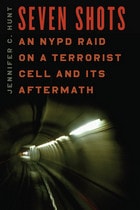
Seven Shots
An NYPD Raid on a Terrorist Cell and Its AftermathJennifer C. Hunt
University of Chicago Press, 2010
On July 31, 1997, a six-man Emergency Service team from the NYPD raided a terrorist cell in Brooklyn and narrowly prevented a suicide bombing of the New York subway that would have cost hundreds, possibly thousands of lives.
Seven Shots tells the dramatic story of that raid, the painstaking police work involved, and its paradoxical aftermath, which drew the officers into a conflict with other rank-and-file police and publicity-hungry top brass. Jennifer C. Hunt draws on her personal knowledge of the NYPD and a network of police contacts extending from cop to four-star chief, to trace the experience of three officers on the Emergency Service entry team and the two bomb squad detectives who dismantled the live device. She follows their lives for five years, from that near-fatal day in 1997, through their encounters inside the brutal world of departmental politics, and on to 9/11, when they once again put their lives at risk in the fight against terrorism, racing inside the burning towers and sorting through the ash, debris, and body parts. Throughout this fast paced narrative, Hunt maintains a strikingly fine-grained, street-level view, allowing us to understand the cops on their own terms—and often in their own words. The result is a compelling insider’s picture of the human beings who work in two elite units in the NYPD and the moral and physical danger and courage involved.
As gripping as an Ed McBain novel—and just as steeped in New York cop culture and personalities—Seven Shots takes readers on an unforgettable journey behind the shield and into the hearts of New York City police.
Seventeen Syllables and Other Stories
Yamamoto, Hisaye
Rutgers University Press, 2001
In addition to the contents of the original volume, this edition brings back into print the following works:
- Death Rides the Rails to Poston
- Eucalyptus
- A Fire in Fontana
- Florentine Gardens
Seventeen Syllables and Other Stories
Yamamoto, Hisaye
Rutgers University Press, 2001
Sewing the Fabric of Statehood
Garment Unions, American Labor, and the Establishment of the State of IsraelAdam Howard
University of Illinois Press, 2017
Sewn in the Sweatshops of Marx
Beuys, Warhol, Klein, DuchampThierry de Duve
University of Chicago Press, 2012