Results by title
1832 books match the query 'Essays' and 137 start with s
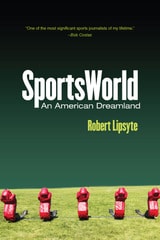
SportsWorld
An American DreamlandLipsyte, Robert
Rutgers University Press, 2018
In the America of 2017—where the SuperBowl is worth billions, athletes are penalized or forced out of sports for political and anti-racist activism, and Title IX is constantly questioned and undermined—Robert Lipsyte’s 1975 critique remains startlingly and intensely relevant.

Springs of Scientific Creativity
Essays on Founders of Modern Scienceclaire Aris
University of Minnesota Press, 1983
Staging Resistance
Essays on Political TheaterJeanne Colleran and Jenny S. Spencer, Editors
University of Michigan Press, 1998
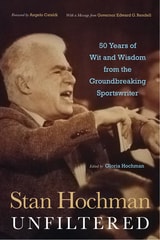
Stan Hochman Unfiltered
50 Years of Wit and Wisdom from the Groundbreaking SportswriterGloria Hochman
Temple University Press, 2020
The late Philadelphia Daily News sportswriter Stan Hochman was known for his many zingers, such as “Harry Litwack, the stoic Temple coach, stalks the sidelines like a blind man at a nudist colony.” As a reporter, he was more interested in how athletes felt, what their values were, how they lived their lives, or what made them tick than he was about how many runs they scored or punches they landed.
In Stan Hochman Unfiltered, his wife Gloria collects nearly 100 of his best columns from the Daily News about baseball, horse racing, boxing, football, hockey, and basketball (both college and pro), as well as food, films, and even Liz Taylor. Each section is introduced by a friend or colleague, including Garry Maddox, Bernie Parent, Larry Merchant, and Ray Didinger, among others.
Hochman penned a candid, cantankerous column about whether Pete Rose belongs in the Baseball Hall of Fame; wrote a graphic account of the Muhammad Ali and Joe Frazier fight of the century; and skewered Norman “Bottom Line” Braman, the one-time owner of the Eagles. He also wrote human-interest stories, including features about the importance of kids with special needs playing sports.
In addition to being a beloved writer, Hochman was also known for his stint on WIP’s radio as the Grand Imperial Poobah, where he would settle callers’ most pressing debates. Hochman long earned the respect and admiration of his subjects, peers, and readers throughout his career, and Stan Hochman Unfiltered is a testament to his enduring legacy.
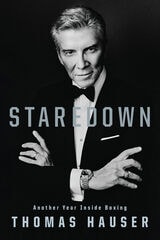
Staredown
Another Year Inside BoxingThomas Hauser
University of Arkansas Press, 2020
Staredown continues this tradition of excellence with inside reporting from the dressing room before some of last year’s biggest fights, in-depth investigations into corruption in boxing, and more. Hauser also moves beyond the norm to explore incidents like street fights and examine boxing’s storied history in new and creative ways.
State of Israel, Diaspora, and Jewish Continuity
Essays on the “Ever-Dying People”Simon Rawidowicz
Brandeis University Press, 1998
Statemaking and Social Movements
Essays in History and TheoryEdited by Charles Bright and Susan Harding
University of Michigan Press, 1984
Statemaking and Social Movements
Essays in History and TheoryCharles Bright and Susan Harding, Editors
University of Michigan Press, 1984

Stature, Living Standards, and Economic Development
Essays in Anthropometric HistoryEdited by John Komlos
University of Chicago Press, 1994
Analyzing the differences in physical stature by social group, gender, age, provenance, and date and place of birth, these essays illuminate urban and rural differences in well-being, explore the effects of market integration on previously agricultural societies, contrast the experiences of several segments of society, and explain the proximate causes of downturns and upswings in well-being. Particularly intriguing is the researchers' conclusion that the environment of the New World during this period was far more propitious than that of Europe, based on data showing that European aristocrats were in worse health than even the poorest members of American society.
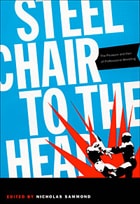
Steel Chair to the Head
The Pleasure and Pain of Professional WrestlingNicholas Sammond, ed.
Duke University Press, 2005
The essayists include scholars in anthropology, psychology, film studies, communication studies, and sociology, one of whom used to wrestle professionally. Classic studies of wrestling by Roland Barthes, Carlos Monsiváis, Sharon Mazer, and Henry Jenkins appear alongside original essays. Whether exploring how pro wrestling inflects race, masculinity, and ideas of reality and authenticity; how female fans express their enthusiasm for male wrestlers; or how lucha libre provides insights into Mexican social and political life, Steel Chair to the Head gives due respect to pro wrestling by treating it with the same thorough attention usually reserved for more conventional forms of cultural expression.
Contributors. Roland Barthes, Douglas L. Battema, Susan Clerc, Laurence de Garis, Henry Jenkins III, Henry Jenkins IV, Heather Levi, Sharon Mazer, Carlos Monsiváis, Lucia Rahilly, Catherine Salmon, Nicholas Sammond, Phillip Serrat, Philip Sewell
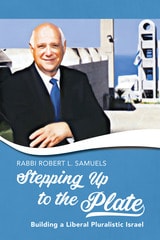
Stepping Up to the Plate
Building a Liberal Pluralistic IsraelRabbi Robert L. Samuels
Central Conference of American Rabbis, 2017
U'vamakom she'ein anashim, hishtadel l'hiyot ish…"In the place where no one stands up to do what is right, be the one who steps up to the plate."
Stepping Up to the Plate is the autobiography of Rabbi Robert L. Samuels, a visionary who fused Zionism and Progressive Judaism and who had a tremendous impact on Israel.
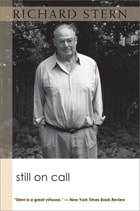
Still on Call
Richard Stern
University of Michigan Press, 2010
"Richard Stern is a literary treasure."
---Scott Turow
"Stern's new miscellany reveals a literary mind of the first order, thinking in elegant prose about dozens of interesting subjects."
---Philip Roth
"Stern is a great virtuoso. . . . [I]n an ailing literary culture, we should be grateful for a work like this and a career, too, spanning the American half-century."
---New York Times Book Review
"Stern's skill gives vitality to everything he treats."
---Edmund White, Los Angeles Times
"Like a gifted dancer in a small space, Stern has tremendous grace and ease on the page, executing dynamic turns and dips with a fine economy of motion and without sacrificing nuance."
---Booklist
Still on Call is the sixth and final collection of critically acclaimed novelist and educator Richard Stern. "Orderly miscellany" is the author's term for this aggregation of reflections, essays, reviews, reportage, commentary, and observations on writing and fellow writers, life, and contemporary culture.
The collection's three sections, Coasting, Posting, and Hosting, contain pieces that range from reflections on becoming a writer in the 1940s to assessments of such major writers and close colleagues as Saul Bellow, and Donald Justice to topical offerings from Stern's popular blog for the New Republic.
This wide-ranging collection is intended as the culmination of sixty years of the writing life but, first and foremost, as provocative entertainment. Stern is a prolific writer, and this selection of some of his highest-quality writing both educates and enthralls.
Richard Stern is the Helen A. Regenstein Emeritus Professor of English and of the Humanities at the University of Chicago and the author of nineteen works of fiction and nonfiction. His books include the novels A Father's Words and Golk, and, most recently, the collection What Is What Was. Stern has been the subject of two books: The Writings of Richard Stern: The Education of an Intellectual Everyman by David Garret Izzo and Richard Stern by James Schiffer.
Stones, Bones, and the Sacred
Essays on Material Culture and Ancient Religion in Honor of Dennis E.Alan H. Cadwallader
SBL Press, 2016
A crucial text for any university course on the interaction of archaeology and the Bible
The world of early Christians was not a world lived in texts; it was a world saturated with material reality and concerns: what, where and when to eat or drink; how to present oneself in the space of bodily life and that of death; how to move from one place to another; what impacted status or the adjudication of legal charges. All these and more controlled so much of life in the ancient world. The Christians were not immune from the impact of these realities. Sometimes they absorbed their surrounds; sometimes they quite explicitly rejected the material practices bearing in on them; frequently they modified the practice and the rationale to create a significant Christian alternative. The collection of essays in this volume come from a range of international scholars who, for all their different interests and critical commitments, are yet united in treasuring research into the Greek and Roman worlds in which Christians sought to make their way. They offer these essays in honor of one who has made a lifetime's work in mining ancient material culture to extract nuggets of insight into early Christian dining practices: Dennis E. Smith.
Features
- Rich examples of method in the utilization of ancient material culture for biblical interpretation.
- Thirteen essays with a response from Dennis E. Smith
- Maps, diagrams, and plates
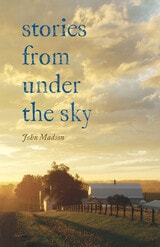
Stories From Under The Sky
John Madson
University of Iowa Press, 2006
Whatever the topic, Madson’s love of nature shines through, be it coon hunting or an explanation of the incredible bird machine. His obvious affection is tempered with the recognition that not everything “natural” is a pretty sight. All of which leaves readers with a better understanding of life under the sky.
Stories and Stone
Writing the Ancestral Pueblo HomelandReuben Ellis
University of Arizona Press, 1997
Collected here are more than fifty selections from a striking body of literature about the prehistoric Southwest: essays, stories, travelers' reports, and poems spanning more than four centuries of visitation. They include timeless writings such as John Wesley Powell's The Exploration of the Colorado River and Its Tributaries and Frank Hamilton Cushing's "Life at Zuni," plus contemporary classics ranging from Colin Fletcher's The Man Who Walked Through Time to Wallace Stegner's Beyond the Hundredth Meridian to Edward Abbey's "The Great American Desert." Reuben Ellis's introduction brings contemporary insight and continuity to the collection, and a section on "reading in place" invites readers to experience these great works amidst the landscapes that inspired them. For anyone who loves to roam ancient lands steeped in mystery, Stories and Stone is an incomparable companion that will enhance their enjoyment.
Stories of a Forest Ranger
Tales of Life in the U.S. Forest ServicePete Griffin
Parkhurst Brothers, Inc., 2020
Storm Beat
A Journalist Reports from the Oregon CoastLori Tobias
Oregon State University Press, 2020
The Oregon Coast is a rugged, beautiful region. Separated from the state’s population centers by the Coast Range, it is a land of small towns reliant primarily on fishing and tourism, known for its dramatic landscapes and dramatic storms. Many of the stories Tobias covered were tragedies: car crashes, falls, drownings, capsizings. And those are just the accidents; Tobias covered plenty of violent crimes as well. But her stories also include more lighthearted moments, including her own experiences learning to live on and cover the coast. Tobias’s story is as much her own as it is the coast’s; she takes the reader through familiar beats of life (regular trips back east as her parents age), the decline of journalism in the twenty-first century, and the unexpected (and not entirely glamorous) experiences of a working reporter—such as a bout of vertigo after rappelling from a helicopter onto a ship. Ultimately, Tobias tells a compelling story of a region that many visit but few truly know.

Storm Warnings
Science Fiction Confronts the FutureGeorge E Slusser
Southern Illinois University Press, 1987
These 17 original essays, written for the sixth Eaton Conference on Fantasy and Science Fiction, explore the uses, origins, and forms of future fiction. The contributors are George E. Slusser, Paul Alkon, Marie-Hélène Huet, Howard V. Hendrix, Bradford Lyau, Gregory Benford, José Manuel Mota, Frederik Pohl, George Hay, Colin Greenland, John Huntington, Elizabeth Maslen, W. M. S. and Claire Russell, T. A. Shippey, Kenneth V. Bailey, Gary Kern, and Frank McConnell.
The essays address the question “Do we call up images of future societies in order to prepare for them, or to forestall their ever coming into existence?”
Strange Attractors
Lives Changed by ChanceEdie Meidav
University of Massachusetts Press, 2019
Has a stunning surprise or lucky encounter ever propelled you in an unanticipated direction? Are you doing what you always thought you would be doing with your life or has some unseen magnetism changed your course? And has that redirection come to seem inevitable? Edie Meidav and Emmalie Dropkin asked leading contemporary writers to consider these questions, which they characterize through the metaphor of “the strange attractor,” a scientific theory describing an inevitable occurrence that arises out of chaos. Meidav's introduction and the thirty-five pieces collected here offer imaginative, arresting, and memorable replies to this query, including guidance from a yellow fish, a typewriter repairman, a cat, a moose, a bicycle, and a stranger on a train. Absorbing and provocative, this is nonfiction to be read in batches and bursts and returned to again and again.
Strange Good Fortune
Essays on Contemporary PoetryDavid Wojahn
University of Arkansas Press, 2000
Strength to Strength
Essays in Honor of Shaye J. D. CohenMichael L. Satlow
SBL Press, 2018
Essays that engage the scholarship of Shaye J. D. Cohen
The essays in Strength to Strength honor Shaye J. D. Cohen across a range of ancient to modern topics. The essays seek to create an ongoing conversation on issues of identity, cultural interchange, and Jewish literature and history in antiquity, all areas of particular interest for Cohen. Contributors include: Moshe J. Bernstein, Daniel Boyarin, Jonathan Cohen, Yaakov Elman, Ari Finkelstein, Charlotte Elisheva Fonrobert, Steven D. Fraade, Isaiah M. Gafni, Gregg E. Gardner, William K. Gilders, Martin Goodman, Leonard Gordon, Edward L. Greenstein, Erich S. Gruen, Judith Hauptman, Jan Willem van Henten, Catherine Hezser, Tal Ilan, Richard Kalmin, Yishai Kiel, Ross S. Kraemer, Hayim Lapin, Lee I. Levine, Timothy H. Lim, Duncan E. MacRae, Ivan Marcus, Mahnaz Moazami, Rachel Neis, Saul M. Olyan, Jonathan J. Price, Jeffrey L. Rubenstein, Michael L. Satlow, Lawrence H. Schiffman, Daniel R. Schwartz, Joshua Schwartz, Karen Stern, Stanley Stowers, and Burton L. Visotzky.
Features:
- A full bibliography of Cohen’s published works
- An essay on the contributions of Cohen
Studies in Medieval and Renaissance History
Volume 13Joel T. Rosenthal
Arizona Center for Medieval and Renaissance Studies, 2018
Style and Time
Essays on the Politics of AppearanceAndrew Benjamin
Northwestern University Press, 2006
Nothing less than a rethinking of the conditions of Western art as it relates to politics, architecture, and time, this study of Walter Benjamin's modernity in temporal and spatial terms is a provocative and original work of philosophy in its own right—a work that suggests that the time has come to revise existing paradigms.
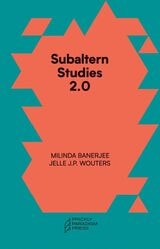
Subaltern Studies 2.0
Being against the CapitaloceneMilinda Banerjee and Jelle J.P. Wouters
Prickly Paradigm Press, 2022
State and Capital reign over the Age of Sorrow. We face inequality, pandemics, ethnocide, climate crisis, and mass extinction. Our desire for security and power governs us as State. Our desire for possessions governs us as Capital. Our desires imprison and rule us beings as Unbeing. Yet, from Nagaland to New Zealand, Bhutan to Bolivia, a second wave of anti-colonial revolutions has begun. Arising from assemblies of humans and other-than-humans, these revolutions replace possessive individualism with non-exploitative interdependence. Naga elders, Bhutanese herders and other indigenous communities, feminists, poets, seers, yaks, cranes, vultures, and fungi haunt this pamphlet. The original Subaltern Studies narrated how Indian peasant communities destroyed the British empire. Subaltern Studies 2.0 prophesies the multi-being demos and liberates Being from Unbeing. Re-kin, Re-nomad, Re-animate, Re-wild! The Animist Revolution has come.
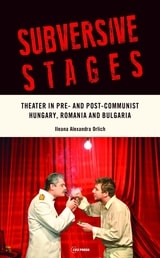
Subversive Stages
Theater in Pre- and Post-Communist Hungary, Romania and BulgariaIleana Alexandra Orlich
Central European University Press, 2017
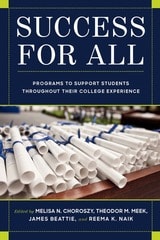
Success for All
Programs to Support Students Throughout Their College ExperienceMelisa N. Choroszy
University of Nevada Press, 2019
Success for All is a strategic guide for administrators and educators that offers methods for advising students through the myriad of challenges they face. Every bit of success contributes to the accomplishment of a larger goal, and this book highlights success at every level. It provides a specific roadmap to the research, services, and programs at the University of Nevada, Reno and Truckee Meadows Community College that support student success in undergraduate and graduate programs regardless of a student’s social, emotional, or prior academic experiences. Contributors discuss how to make students feel welcome in their social and educational environments and how to directly assist them with the timely completion of their degree. Administrators and educators demonstrate how these programs help make a positive contribution to the students and the institutions they serve while implementing practical solutions to increase graduation rates.

Sum Total Of Human Happiness
James V. Schall
St. Augustine's Press, 2006
Summa metaphysicae ad mentem Sancti Thomae
Essays in Honor of John F. WippelTherese Scarpelli Cory
Catholic University of America Press, 2023
Sundancers and River Demons
Essays on Landscape and RitualConger Beasley Jr.
University of Arkansas Press, 1990
Superior North Shore
A Natural History of Lake Superior’s Northern Lands and WatersThomas F. Waters
University of Minnesota Press, 1999
Supremely Tiny Acts
A Memoir of a DaySonya Huber
The Ohio State University Press, 2021
“I think we have to get to the real, to catch the facts we have, to hold on to what we see. . . .in this time where lies are currency,” Sonya Huber writes in her book-length essay Supremely Tiny Acts: A Memoir of a Day. On the theory that naming the truths of quotidian experience can counter the dangerous power of lies, she carefully recounts two anxiety-fueled days one fall. On the first, she is arrested as part of a climate protest in Times Square. On the other, she must make it to her court appearance while also finding time to take her son to get his learner's permit. Paying equal attention to minor details, passing thoughts, and larger political concerns around activism and parenting in the Trump-era United States, Huber asks: How can one simultaneously be a good mother, a good worker, and a good citizen? As she reflects on the meaning of protest and on whiteness and other forms of privilege within political activism, Huber offers a wry, self-aware, and stirring testament to the everyday as a seedbed for meaningful change.
Surrender (But Don't Give Yourself Away)
Old Cars, Found Hope, and Other Cheap TricksBy Spike Gillespie
University of Texas Press, 2003
Spike Gillespie tells it like it is. Whether she's writing about men, mothering or money, she cuts to the chase, unabashedly recounting the exhilaration and uncertainty she is forever encountering along the odd path that is her life. Gillespie approaches her subjects with a keen eye for curious details and a readiness to ask hard questions and give honest, even brutal, answers. Her willingness to "put it all down—the painful, the funny, the mundane, the embarrassing" has won legions of readers for her print and online columns.
Surrender (But Don't Give Yourself Away) collects forty-six essays, which initially appeared in such publications as the Washington Post, Austin Chronicle, Dallas Morning News, Bust, Gargoyle, and thecommonspace.org. As Gillespie describes them, "There are odes to my good days and bad, to trips I've taken—both real and metaphorical, to holiness found in unexpected places, to men I have not slept with, to learning to live sober. Too, there are miscellaneous ruminations on my alter-ego, my inner-teen, the floor mat in my car, a dead squirrel in the road." Binding these pieces is the thread of hope: there are moments the thread slips out of view only to resurface in some unexpected location. Sometimes it takes awhile, but Gillespie always relocates hope, discovering even in her darkest times that life is full of an embarrassment of riches.
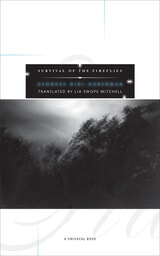
Survival of the Fireflies
Georges Didi-Huberman
University of Minnesota Press, 2018
Seeking out the minor lights of friendship in a time of fascism
Dante once spoke, in his Divine Comedy, of the miniscule lights, in the twenty-sixth canto of the Inferno, who, contrary to the great lights that shined bright within the sublime circles of Paradise, frailly wandered in the somber pockets of glimmering light within the darkness. Pliny the Elder was once preoccupied by a type of fly named pyrallis or pyrotocon, which was only able to fly within fire: “as long as it remains in the fire, it can fly; when its flight takes it out too far a distance, it dies.”
Through his readings of Dante, Pasolini, Walter Benjamin, and others, Georges Didi-Huberman seeks again to understand this strange, minor light, the signals of small beings in search of love and friendship. Their flickering presence serves as a counterforce to the blinding sovereign power that Giorgio Agamben calls The Kingdom and the Glory, that artificial brilliance that once surrounded dictators and today emanates from every screen. In this timely reflection, much needed in our time of excessive light, Didi-Huberman’s Survival of the Fireflies offers a humble yet powerful image of individual hope and desire: the firefly-image.

Susan Glaspell
Essays on Her Theater and FictionLinda Ben-Zvi, Editor
University of Michigan Press, 1995
The career of Susan Glaspell (1876-1948), the American playwright and novelist, follows closely the trajectory of other "reclaimed" American women writers of the century such as Kate Chopin, Charlotte Perkins Gilman, and Zora Neale Hurston. She was well known in her time, effaced from canonical consideration after her death, and rediscovered years later through the surfacing of one work around which critical attention has focused. Glaspell was a respected international playwright and novelist who amassed some of the most impressive credentials in American theater history, including the Pulitzer Prize in 1931. Over the past fifteen years, she has been rediscovered through the work of leading feminist scholars; and her one-act play Trifles and its short story form, "A Jury of Her Peers," have become classics. This book is the first collection devoted to the study of the body of Glaspell's work. Essays by leading playwrights and scholars provide an array of perspectives on the writer and her work. The book features the first complete Glaspell bibliography, including original reviews of her plays and fiction and recent critical studies of her writing.
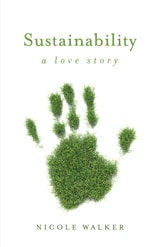
Sustainability
A Love StoryNicole Walker
The Ohio State University Press, 2018
This book is for the burnt-out environmentalist, the lazy environmentalist, the would-be environmentalist. It’s for those who believe the planet is dying. For those who believe they are dying. And for those who question what it means to live and love sustainably, and maybe even with hope.
Swaying
Essays On Intercultural LoveJessie Carroll Grearson
University of Iowa Press, 1995
Intercultural couples struggle, often quite successfully, with the kind of questions anyone who wants to live responsibly in a multicultural world must raise. They live, as we must all learn to do, in a place where multiple cultures find expression. This engaging anthology of literary nonfiction celebrates the creative potential of choosing diversity and explores in many voices the real-life social, cultural, and spiritual consequences of this choice. These are the honest voices of women who have made commitments across national and cultural lines, who have moved toward the revitalizing and educating potential of such partnerships.
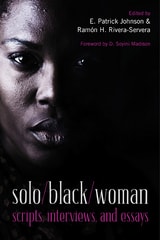
solo/black/woman
scripts, interviews, and essaysEdited by E. Patrick Johnson and Ramón H. Rivera-Servera and with a foreword by D. Soyini Madison
Northwestern University Press, 2013