Results by title
2646 books match the query 'History & Criticism' and 244 start with s
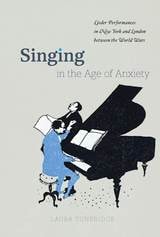
Singing in the Age of Anxiety
Lieder Performances in New York and London between the World WarsLaura Tunbridge
University of Chicago Press, 2018
Laura Tunbridge explores the renewed vitality of this refugee musical form between the world wars, offering a fresh perspective on a period that was pervaded by anxieties of displacement. Through richly varied case studies, Singing in the Age of Anxiety traces how lieder were circulated, presented, and consumed in metropolitan contexts, shedding new light on how music facilitated unlikely crossings of nationalist and internationalist ideologies during the interwar period.

Singing in the Wilderness
Music and Ecology in the Twentieth CenturyWilfrid Mellers
University of Illinois Press, 2001
Beginning with two turn-of-the-century operas--Frederick Delius's A Village Romeo and Juliet and Claude Debussy's Pelléas et Mélisande -- that present humankind as lost in a tangled wood that is at once internal and external, Mellers develops the theme of wilderness in sociological, psychological, ecological, and even geological terms. He discusses Leoš Janá ek's Cunning Little Vixen ("the ultimate ecological opera") as a parable of redemption and explores the delicate yet dangerous equilibrium between civilization and the dark forest in works by Charles Koechlin and Darius Milhaud. Elements of wilderness and the city combine to infuse the music of Heitor Villa-Lobos and Carlos Chávez with a blend of primitivism and sophistication, while a creative tension between desert landscape and industrial mechanization inspires the works of Carl Ruggles, Harry Partch, Steve Reich, and Australia's Peter Sculthorpe. The volume culminates in a discussion of two American urban folk musicians, Duke Ellington and George Gershwin.
By suggesting how the "musicking" of ecological issues articulates twinned perspectives on music and our place in the world, Mellers raises intriguing questions about the links among tradition, talent, learning, and instinct. Brimming over with fresh ideas and unexpected cross-pollinations, Singing in the Wilderness is a stimulating addition to the oeuvre of a distinguished and inventive scholar.
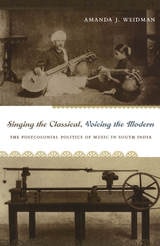
Singing the Classical, Voicing the Modern
The Postcolonial Politics of Music in South IndiaAmanda J. Weidman
Duke University Press, 2006
Combining ethnographic observation derived from her experience as a student and performer of South Indian music with close readings of archival materials, Weidman traces the emergence of this politics of voice through compelling analyses of the relationship between vocal sound and instrumental imitation, conventions of performance and staging, the status of women as performers, debates about language and music, and the relationship between oral tradition and technologies of printing and sound reproduction. Through her sustained exploration of the way “voice” is elaborated as a trope of modern subjectivity, national identity, and cultural authenticity, Weidman provides a model for thinking about the voice in anthropological and historical terms. In so doing, she shows that modernity is characterized as much by particular ideas about orality, aurality, and the voice as it is by regimes of visuality.
Single Lives
Modern Women in Literature, Culture, and FilmKatherine Fama
Rutgers University Press, 2022
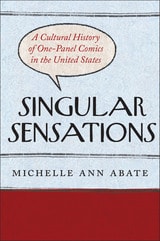
Singular Sensations
A Cultural History of One-Panel Comics in the United StatesMichelle Ann Abate
Rutgers University Press, 2024
Shortlisted for the 2024 Eisner Award for Best Academic/Scholarly Book
What do The Family Circus, Ziggy, and The Far Side have in common? They are all single-panel comics, a seemingly simple form that cartoonists have used in vastly different ways.
Singular Sensations is the first book-length critical study to examine this important but long-neglected mode of cartoon art. Michelle Ann Abate provides an overview of how the American single-panel comic evolved, starting with Thomas Nast’s political cartoons and R.F. Outcault’s groundbreaking Yellow Kid series in the nineteenth century. In subsequent chapters, she explores everything from wry New Yorker cartoons to zany twenty-first-century comics like Bizarro. Offering an important corrective to the canonical definition of comics as “sequential art,” Abate reveals the complexity, artistry, and influence of the single-panel art form.
Engaging with a wide range of historical time periods, sociopolitical subjects, and aesthetic styles, Singular Sensations demonstrates how comics as we know and love them would not be the same without single-panel titles. Abate’s book brings the single-panel comic out of the margins and into the foreground.
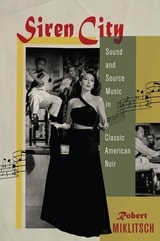
Siren City
Sound and Source Music in Classic American NoirMiklitsch, Robert
Rutgers University Press, 2011
Focusing on a wide range of celebrated and less well known films and offering an introductory discussion of film sound, Robert Miklitsch mobilizes the notion of audiovisuality to investigate period sound technologies such as the radio and jukebox, phonograph and Dictaphone, popular American music such as "hot" black jazz, and "big numbers" featuring iconic performers such as Lauren Bacall, Veronica Lake, and Rita Hayworth. Siren City resonates with the sounds and source music of classic American noir-gunshots and sirens, swing riffs and canaries. Along with the proverbial private eye and femme fatale, these audiovisuals are central to the noir aesthetic and one important reason the genre reverberates with audiences around the world.
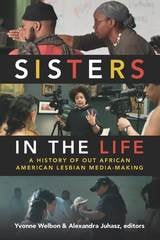
Sisters in the Life
A History of Out African American Lesbian Media-MakingYvonne Welbon and Alexandra Juhasz, editors
Duke University Press, 2018
Contributors. Jennifer DeVere Brody, Jennifer DeClue, Raul Ferrera-Balanquet, Alexis Pauline Gumbs, Thomas Allen Harris, Devorah Heitner, Pamela L. Jennings, Alexandra Juhasz, Kara Keeling, Candace Moore, Marlon Moore, Michelle Parkerson, Roya Rastegar, L. H. Stallings, Yvonne Welbon, Patricia White, Karin D. Wimbley
Sistuhs in the Struggle
An Oral History of Black Arts Movement Theater and PerformanceLa Donna L. Forsgren
Northwestern University Press, 2021
Outstanding Academic Title, CHOICE
The first oral history to fully explore the contributions of black women intellectuals to the Black Arts Movement, Sistuhs in the Struggle reclaims a vital yet under-researched chapter in African American, women’s, and theater history. This groundbreaking study documents how black women theater artists and activists—many of whom worked behind the scenes as directors, designers, producers, stage managers, and artistic directors—disseminated the black aesthetic and emboldened their communities.
Drawing on nearly thirty original interviews with well-known artists such as Ntozake Shange and Sonia Sanchez as well as less-studied figures including distinguished lighting designer Shirley Prendergast, dancer and choreographer Halifu Osumare, and three-time Tony-nominated writer and composer Micki Grant, La Donna L. Forsgren centers black women’s cultural work as a crucial component of civil rights and black power activism. Sistuhs in the Struggle is an essential collection for theater scholars, historians, and students interested in learning how black women’s art and activism both advanced and critiqued the ethos of the Black Arts and Black Power movements.
Site Unscene
The Offstage in English Renaissance DramaJonathan Walker
Northwestern University Press, 2017
Jonathan Walker demonstrates that by removing scenes from visible performance, playwrights take up the nondramatic mode of storytelling in order to transcend the limits of the stage. Through this technique, they present dramatic action from the subjective, self-interested, and idiosyncratic perspectives of individual characters. By recovering these offstage elements, Walker reveals the pervasive and formative dynamic between the onstage and offstage and between the seen and unseen in Renaissance drama.
Examining premodern dramatic theory, Renaissance plays, period amphitheaters, and material texts, this interdisciplinary work considers woodcuts, engravings, archaeology, architecture, rhetoric, the history of the book, as well as plays by Shakespeare, Marlowe, Kyd, Ford, Middleton, and Webster, among others. It addresses readers engaged in literary criticism, dramatic theory, theater history, and textual studies.
Six Turkish Filmmakers
Laurence Raw
University of Wisconsin Press, 2017
In analysis of and personal interviews with Dervis Zaim, Zeki Demirkubuz, Semih Kaplanoglu, Çagan Irmak, Tolga Örnek, and Palme d'Or winner Nuri Bilge Ceylan, Raw draws connections with Turkish theater, art, sculpture, literature, poetry, philosophy, and international cinema. A native of England and a twenty-five-year resident of Turkey, Raw interleaves his film discussion with thoughtful commentary on nationalism, gender, personal identity, and cultural pluralism.
Skin Shows
Gothic Horror and the Technology of MonstersJack Halberstam
Duke University Press, 1995
Deploying feminist and queer approaches to the monstrous body, Halberstam views the Gothic as a broad-based cultural phenomenon that supports and sustains the economic, social, and sexual hierarchies of the time. She resists familiar psychoanalytic critiques and cautions against any interpretive attempt to reduce the affective power of the monstrous to a single factor. The nineteenth-century monster is shown, for example, as configuring otherness as an amalgam of race, class, gender, and sexuality. Invoking Foucault, Halberstam describes the history of monsters in terms of its shifting relation to the body and its representations. As a result, her readings of familiar texts are radically new. She locates psychoanalysis itself within the gothic tradition and sees sexuality as a beast created in nineteenth century literature. Excessive interpretability, Halberstam argues, whether in film, literature, or in the culture at large, is the actual hallmark of monstrosity.

Skyscraper Cinema
Architecture and Gender in American FilmMerrill Schleier
University of Minnesota Press, 2008
Schleier analyzes cinematic works in which skyscrapers are an integral component, interpreting the iconography and spatial practices in these often fictional modern buildings, especially on concepts of gender. Organized chronologically and thematically, she offers close readings of films including Safety Last, Skyscraper Souls, Wife vs. Secretary, Baby Face, The Fountainhead, and Desk Set. Opening with the humorous antics of Harold Lloyd, the premier skyscraper actor of the silent era, the book moves through the disillusionment of the Depression era, in which skyscrapers are employed as players in moralistic, class-conscious stories, to post–World War II and its reimagining of American political and economic values and ends with the complicated prosperity of the 1950s and the lives of white-collar workers and their spouses.
Taking inspiration from Walter Benjamin’s Arcades Project, among works of other critical theorists, Schleier creates in this book a model for understanding architecture as a purveyor of desire and class values and, ultimately, contributes broadly to thinking on the rich intersection of the built environment, cinema, and gender.
Slapstick Modernism
Chaplin to Kerouac to Iggy PopWilliam Solomon
University of Illinois Press, 2018
William Solomon charts the origins and evolution of what he calls slapstick modernism--a merging of artistic experimentation with the socially disruptive lunacy made by the likes of Charlie Chaplin. Romping through texts, films, and theory, Solomon embarks on an intellectual odyssey from the high modernism of Dos Passos and Williams to the late modernism of the Beats and Burroughs before a head-on crash into the raw power of punk rock. Throughout, he shows the links between the experimental writers and silent screen performers of the early century, and explores the potent cultural undertaking that drew inspiration from anarchical comedy after World War II.
Slaves to Fashion
Black Dandyism and the Styling of Black Diasporic IdentityMonica L. Miller
Duke University Press, 2009
Dandyism was initially imposed on black men in eighteenth-century England, as the Atlantic slave trade and an emerging culture of conspicuous consumption generated a vogue in dandified black servants. “Luxury slaves” tweaked and reworked their uniforms, and were soon known for their sartorial novelty and sometimes flamboyant personalities. Tracing the history of the black dandy forward to contemporary celebrity incarnations such as Andre 3000, Miller explains how black people became arbiters of style and how they have historically used the dandy’s signature tools—clothing, gesture, and wit—to break down limiting identity markers and propose new ways of fashioning political and social possibility in the black Atlantic world. With an aplomb worthy of her iconographic subject, she considers the black dandy in relation to nineteenth-century American literature and drama, W. E. B. Du Bois’s reflections on black masculinity and cultural nationalism, the modernist aesthetics of the Harlem Renaissance, and representations of black cosmopolitanism in contemporary visual art.
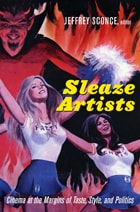
Sleaze Artists
Cinema at the Margins of Taste, Style, and PoliticsJeffrey Sconce, ed.
Duke University Press, 2007
Writing about horror, exploitation, and sexploitation films, the contributors delve into topics ranging from the place of the “Aztec horror film” in debates about Mexican national identity to a cycle of 1960s films exploring homosexual desire in the military. One contributor charts the distribution saga of Mario Bava’s 1972 film Lisa and the Devil through the highs and lows of art cinema, fringe television, grindhouse circuits, and connoisseur DVD markets. Another offers a new perspective on the work of Doris Wishman, the New York housewife turned sexploitation director of the 1960s who has become a cult figure in bad-cinema circles over the past decade. Other contributors analyze the relation between image and sound in sexploitation films and Italian horror movies, the advertising strategies adopted by sexploitation producers during the early 1960s, the relationship between art and trash in Todd Haynes’s oeuvre, and the ways that the Friday the 13th series complicates the distinction between “trash” and “legitimate” cinema. The volume closes with an essay on why cinephiles love to hate the movies.
Contributors. Harry M. Benshoff, Kay Dickinson, Chris Fujiwara, Colin Gunckel, Joan Hawkins, Kevin Heffernan, Matt Hills, Chuck Kleinhans, Tania Modleski, Eric Schaefer, Jeffrey Sconce, Greg Taylor

Sleep with Spectators
Feminist Performance and PracticeDanielle Drees
University of Minnesota Press, 2026
A rejuvenating look at sleep’s integral role in feminist practice, critique, and imagination
Inequality is notoriously exhausting to confront, but through theater, performance art, and theory, feminist artists and thinkers have explored a radical counter to this exhaustion: sleep. Centering creative work on this restorative practice, Sleep with Spectators is a refreshing and visionary counterhistory of feminism that offers sleep as a tool for imagining new ways of living—ones that prioritize not only rest but also care and interdependence.
Taking performance as a unique means of perceiving private and unconscious aspects of daily life, Danielle Drees draws from opera, plays, and avant-garde theater to find instances of sleep and sleeplessness as novel embodiments of core feminist concerns. Among her subjects are Sarah Kane’s free verse text 4.48 Psychosis; María Irene Fornés’s queer drama of racial–sexual transformation, Enter THE NIGHT; and Regina José Galindo’s America’s Family Prison, in which Galindo, her partner, and their baby spent twenty-four hours in a “family-sized” cell rented from a private prison outfitter. Adeptly engaging this fascinating collection of international archival material through the lenses of Marxist feminism, trans and queer studies, and disability studies, Sleep with Spectators illuminates how sleep performances reveal and critique inequalities rooted in gender, sexuality, race, class, and disability.
Idiosyncratic and interdisciplinary, Sleep with Spectators charts an original path through the feminist performance archive, presenting new ways of indexing injustice and interrogating the political conditions of rest.
Retail e-book files for this title are screen-reader friendly.
Slow Death
Contemporary Japanese Performance in Times of Suspended CrisesKyoko Iwaki, Jessica Nakamura, Corey Wakeling
Northwestern University Press, 2027
Bringing together performance studies, critical theory, and contemporary Japanese cultural studies to offer an unsettling glimpse into a global future of crisis already arriving
Slow Death examines contemporary artistic practice as a form of active engagement with the condition of “slow death”: the diffused feeling of decline with no end in sight. The theater and performance artists discussed here confront the realities of a state that is no longer tenable, rehearsing slow death’s modalities, probing its implications, and imagining possible endpoints through dramaturgy. As these artists show, the very notion of progress—whether framed as a march toward a hopeful future or a retreat into the comforts of a nostalgic past—carries an inescapable irony. Both trajectories seem equally unsustainable, rendering any prospect of radical transformation elusive. This sense of endless suspendedness emerges as a pervasive motif across the artworks discussed, such as the anticapitalist performance spaces created by Tanino Kurō and the queer feminist dramaturgy of Ichihara Satoko. Yet, as coauthors Kyoko Iwaki, Jessica Nakamura, and Corey Wakeling identify throughout, to enact slow death in performance is not to capitulate to despair but to expose its structure and, in doing so, uncover latent forms of everyday resistance.

Slow TV
An Analysis of Minute-by-Minute Television in NorwayRoel Puijk
Intellect Books, 2020
“Slow TV” refers to a form of broadcasting long events for their entire duration, preferably in real time. Popularized by the Norwegian Broadcasting Corporation (NRK), the form became a phenomenon in 2009 after NRK’s broadcast of a seven-hour train ride between Bergen and Oslo. Since then, slow TV programming has gained traction outside of Norway on television stations around the world and via streaming services like Netflix.
In this academic study, Roel Puijk combines quantitative and qualitative research methods to explore different aspects of the Norwegian slow TV phenomenon, from the programming’s production and development to its viewing and ultimate reception. Puijk relates slow TV to media events and media tourism, discussing its effects on cultural and economic developments and its evolving relationship to local and national identity. The result is an illuminating interdisciplinary study of media innovation and its effects on contemporary culture.
Small Nation, Global Cinema
The New Danish CinemaMette Hjort
University of Minnesota Press, 2005
Hjort offers two key strategies underwriting the transformation and globalization of contemporary Danish cinema—the processes of cultural circulation and the psychological efficacy of heritage. Exploring the Dogma 95 movement initiated by Lars von Trier and Thomas Vinterberg as well as films by Erik Clausen, Gabriel Axel, Henning Carlsen, and Ole Bornedal, among others, Hjort examines means for cinematic globalization specific to Denmark, but then evolves her investigation into a truly comparative framework encompassing references to Hong Kong, Latin America, and Hollywood filmmaking. Providing a fresh way of looking at cultural influence in the era of globalization, Hjort’s concept of “small” nation points as much to the dynamics of recognition, indifference, and participation as it does to more common measures of population size, economic strength, or linguistic reach.
Mette Hjort is professor of intercultural studies at Aalborg University.
Smut and Sandwiches
A History of Stag FilmRussell Sheaffer
Duke University Press, 2027
So Much Wasted
Hunger, Performance, and the Morbidity of ResistancePatrick Anderson
Duke University Press, 2010
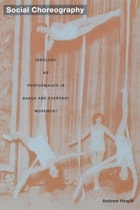
Social Choreography
Ideology as Performance in Dance and Everyday MovementAndrew Hewitt
Duke University Press, 2005
Hewitt focuses on the period between the mid-nineteenth century and the early twentieth and considers dancers and social theorists in Germany, Britain, France, and the United States. Analyzing the arguments of writers including Friedrich Schiller, Theodor Adorno, Hans Brandenburg, Ernst Bloch, and Siegfried Kracauer, he reveals in their thinking about the movement of bodies a shift from an understanding of play as the condition of human freedom to one prioritizing labor as either the realization or alienation of embodied human potential. Whether considering understandings of the Charleston, Isadora Duncan, Nijinsky, or the famous British chorus line the Tiller Girls, Hewitt foregrounds gender as he uses dance and everyday movement to rethink the relationship of aesthetics and social order.
Social Voices
The Cultural Politics of Singers around the GlobeEdited by Levi S. Gibbs
University of Illinois Press, 2023
Around the world and across time, singers and their songs stand at the crossroads of differing politics and perspectives. Levi S. Gibbs edits a collection built around the idea of listening as a political act that produces meaning. Contributors explore a wide range of issues by examining artists like Romani icon Esma Redžepova, Indian legend Lata Mangeshkar, and pop superstar Teresa Teng. Topics include gendered performances and the negotiation of race and class identities; the class-related contradictions exposed by the divide between highbrow and pop culture; links between narratives of overcoming struggle and the distinction between privileged and marginalized identities; singers’ ability to adapt to shifting notions of history, borders, gender, and memory in order to connect with listeners; how the meanings we read into a singer’s life and art build on one another; and technology’s ability to challenge our ideas about what constitutes music.
Cutting-edge and original, Social Voices reveals how singers and their songs equip us to process social change and divergent opinions.
Contributors: Christina D. Abreu, Michael K. Bourdaghs, Kwame Dawes, Nancy Guy, Ruth Hellier, John Lie, Treva B. Lindsey, Eric Lott, Katherine Meizel, Carol A. Muller, Natalie Sarrazin, Anthony Seeger, Carol Silverman, Andrew Simon, Jeff Todd Titon, and Elijah Wald
Sociology on Film
Postwar Hollywood's Prestige CommodityCagle, Chris
Rutgers University Press, 2016

Soldiers' Stories
Military Women in Cinema and Television since World War IIYvonne Tasker
Duke University Press, 2011
Some Kind of Mirror
Creating Marilyn MonroeKonkle, Amanda
Rutgers University Press, 2019
Some Kind of Mirror offers the first extended scholarly analysis of Marilyn Monroe’s film performances, examining how they united the contradictory discourses about women’s roles in 1950s America. Amanda Konkle suggests that Monroe’s star persona resonated with audiences precisely because it engaged with the era’s critical debates regarding femininity, sexuality, marriage, and political activism. Furthermore, she explores how Monroe drew from the techniques of Method acting and finely calibrated her performances to better mirror her audience’s anxieties and desires.
Drawing both from Monroe’s filmography and from 1950s fan magazines, newspaper reports, and archived film studio reports, Some Kind of Mirror considers how her star persona was coauthored by the actress, the Hollywood publicity machine, and the fans who adored her. It is about why 1950s America made Monroe a star, but it is also about how Marilyn defined an era.

Someday All the Adults Will Die!
The Birth of Texas PunkPat Blashill
University of Texas Press, 2025
A deep dive into the early days of punk in Austin, Texas, this oral history immerses readers in a diverse and influential music scene.
Texas has always teemed with music and counterculture. When punk came to the state in 1978, it flourished in San Antonio, Dallas, Houston, and, especially, Austin. Punk and post-punk musicians, including nationally acclaimed bands like the Butthole Surfers, the Big Boys, the Dicks, and Daniel Johnston influenced local culture before slashing into the American musical psyche. (See Kurt Cobain sporting Johnston’s “Hi, How are you?” T-shirt.) Someday All the Adults Will Die! is an oral history of punk in Texas, from its rise in the late 1970s, through its strong anti-racist, feminist, and queer peak, to its dissolution in the late 1980s.
Now a seasoned music journalist, Blashill experienced the zenith of Texas punk as a teenager, and he captures its intensity in words and pictures. Someday All the Adults Will Die! is rife with electrifying images and firsthand tales of what made this scene such a storm of pleasures and terrors, uncompromising artists, and wild performances. This dynamic portrait of an untamed, all-out musical era is a must-read for fans of punk music, counterculture, and live music.
Somerset Maugham and the Cinema
Robert Calder
University of Wisconsin Press, 2024
This study of the famous author explores the relationship between literature and film, what is involved in adaptation, and how best to judge films based on celebrated books. Robert Calder, the world’s leading scholar of Maugham’s work, offers fascinating production histories, insight into both fortunate and misguided casting decisions, shrewd analyses of performances and film techniques, and summaries of public and critical responses. Maugham’s characters were often conflicted, iconoclastic, and morally out of step with their times, which may have accounted for the popularity of his fiction. Most of Maugham’s works could be adapted to satisfy the tastes of moviegoers and the demands of the Hays Office censors, if not the expectations of their author.
Something Ain't Kosher Here
The Rise of the 'Jewish' SitcomBrook, Vincent
Rutgers University Press, 2003
From 1989 through 2002 there was an unprecedented surge in American sitcoms featuring explicitly Jewish lead characters, thirty-two compared to seven in the previous forty years. Several of these—Mad About You, The Nanny, and Friends—were among the most popular and influential of all shows over this period; one program—Seinfeld—has been singled out as the “defining” series of the nineties. In addition, scriptwriters have increasingly created “Jewish” characters, although they may not be perceived to be by the show’s audience, Rachel Green on Friends being only one example.
In Something Ain’t Kosher Here, Vincent Brook asks two key questions: Why has this trend appeared at this particular historical moment and what is the significance of this phenomenon for Jews and non-Jews alike? He takes readers through three key phases of the Jewish sitcom trend: The early years of television before and after the first Jewish sitcom, The Goldbergs’, appeared; the second phase in which America found itself “Under the Sign of Seinfeld”; and the current era of what Brook calls “Post- Jewishness.”
Interviews with key writers, producers, and “showrunners” such as David Kohan, (Will and Grace), Marta Kauffman (Friends and Dream On), Bill Prady (Dharma and Greg), Peter Mehlman and Carol Leifer (Seinfeld), and close readings of individual episodes and series provoke the inescapable conclusion that we have entered uncharted “post-Jewish” territory. Brook reveals that the acceptance of Jews in mainstream white America at the very time when identity politics have put a premium on celebrating difference reinforces and threatens the historically unique insider/outsider status of Jews in American society. This paradox upsets a delicate balance that has been a defining component of American Jewish identity.
The rise of the Jewish sitcom represents a broader struggle in which American Jews and the TV industry, if not American society as a whole, are increasingly operating at cross-purposes— torn between the desire to celebrate unique ethnic identities, yet to assimilate: to assert independence, yet also to build a consensus to appeal to the widest possible audience. No reader of this book will ever be able to watch these television programs in quite the same way again.
Something Completely Different
British Television And American CultureJeffrey S. Miller
University of Minnesota Press, 2000
The first comprehensive study of the influence British programming had on American television.
The first comprehensive study of the influence British programming had on American television.
Between Emma Peel and the Ministry of Silly Walks, British television had a significant impact on American popular culture in the 1960s and 1970s. In Something Completely Different, Jeffrey Miller offers the first comprehensive study of British programming on American television, discussing why the American networks imported such series as The Avengers and Monty Python’s Flying Circus; how American audiences received these uniquely British shows; and how the shows’ success reshaped American television.Miller’s lively analysis covers three genres: spy shows, costume dramas, and sketch comedies. In addition to providing his close readings of the series themselves, Miller considers the networks’ packaging of the programs for American viewers and the influences that led to their acceptance, including the American television industry’s search for new advertising revenue and the creation of PBS.Something Completely Different concludes with a discussion of the American programs and genres that owed their existence to British progenitors. Miller convincingly argues that much of what came to define American television by 1980 was in fact British in origin, a contention that casts a new light on traditional discussions of American cultural imperialism.ISBN 0-8166-3240-5 Cloth £31.00 $44.95xxISBN 0-8166-3241-3 Paper £12.50 $17.95x208 Pages 17 black-and-white photos 5 7/8 x 9 JanuaryTranslation inquiries: University of Minnesota Press
Songbooks
The Literature of American Popular MusicEric Weisbard
Duke University Press, 2021

Sonic Strategies
Performing Mexico's War on Drugs, Mourning, and FeminicideChristina Baker
Vanderbilt University Press, 2023
In Sonic Strategies, author Christina Baker highlights the tactics employed by contemporary performance artists in Mexico in response to the violence surrounding the nation’s War on Drugs. The introduction opens with a description of the 2007 reenactment of the Grito, or “cry,” of independence, a moment fraught with sonic sparring, setting the stage for how each subsequent chapter focuses on themes related to war and violence. Each chapter focuses on the works of one or more performance artist, and taken together, the case studies illuminate how critiques of the nation’s rising death tolls, governmental corruption, and gendered violence very literally sound, whether in Música de balas, a post-dramatic piece by Hugo Salcedo; the lamentations of the nation’s Antigones in works by Violeta Luna and Lukas Avendaño; satirical revisions of Mexican Golden Age film in the cabaret piece Nosotras las proles; or the story of transfeminicide in César Enríquez’s La Prietty Guoman by way of US pop music.
Written in an accessible style grounded in theater studies but interdisciplinary by design, Sonic Strategies will appeal to literary critics, students, musicologists, and theater and performance scholars alike. By paying close attention to planned and spontaneous sounds within live and textual experiences, Sonic Strategies contends that conscientious listening reveals dynamic practices that reside beyond the linguistic and embodied gesture.
Sophia Loren
Moulding the StarPauline Small
Intellect Books, 2009
In films from Houseboat to The Millionairess to Two Women, Sophia Loren established herself as an actress whose stardom spanned Italy, Europe, and finally Hollywood. Hers was a highly original rise to fame for a European film actress, and in Sophia Loren, Pauline Small highlights a unique career which transcended Italian film culture.
Sophia Loren is the first book to explore in detail the transfer of Loren’s stardom from Italy to Hollywood and the reasons for her American success, particularly during the 1960s. Looking individually at Loren’s major films and drawing on rare archival materials in Italy, Small provides a thorough exploration of the commercial and cultural forces that combined to ensure Loren’s enduring star status.
Perfect for scholars and aficionados of 1960s Italian and American film, Sophia Loren is a fascinating look at one of the major personalities of modern cinema.
Sound Authorities
Scientific and Musical Knowledge in Nineteenth-Century BritainEdward J. Gillin
University of Chicago Press, 2021
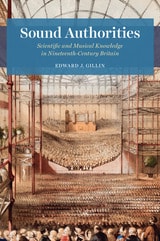
Sound Authorities shows how experiences of music and sound played a crucial role in nineteenth-century scientific inquiry in Britain.
In Sound Authorities, Edward J. Gillin focuses on hearing and aurality in Victorian Britain, claiming that the development of the natural sciences in this era cannot be understood without attending to the study of sound and music.
During this time, scientific practitioners attempted to fashion themselves as authorities on sonorous phenomena, coming into conflict with traditional musical elites as well as religious bodies. Gillin pays attention to sound in both musical and nonmusical contexts, specifically the cacophony of British industrialization. Sound Authorities begins with the place of acoustics in early nineteenth-century London, examining scientific exhibitions, lectures, spectacles, workshops, laboratories, and showrooms. He goes on to explore how mathematicians mobilized sound in their understanding of natural laws and their vision of a harmonious ordered universe. In closing, Gillin delves into the era’s religious and metaphysical debates over the place of music (and humanity) in nature, the relationship between music and the divine, and the tensions between spiritualist understandings of sound and scientific ones.
Sound Changes
Improvisation and Transcultural DifferenceDaniel Fischlin and Eric Porter, Editors
University of Michigan Press, 2021
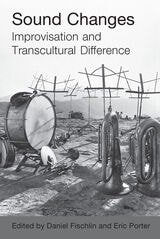
Sound Changes responds to a need in improvisation studies for more work that addresses the diversity of global improvisatory practices and argues that by beginning to understand the particular, material experiences of sonic realities that are different from our own, we can address the host of other factors that are imparted or sublimated in performance. These factors range from the intimate affect associated with a particular performer’s capacity to generate a distinctive “voicing,” or the addition of an unexpected sonic intervention only possible with one particular configuration of players in a specific space and time. Through a series of case studies drawn from Africa, Asia, the Americas, and Oceania, Sound Changes offers readers an introduction to a range of musical expressions across the globe in which improvisation plays a key role and the book demonstrates that improvisation is a vital site for the production of emergent social relationships and meanings. As it does this work, Sound Changes situates the increasingly transcultural dimensions of improvised music in relation to emergent networks and technologies, changing patterns of migration and immigration, shifts in the political economy of music, and other social, cultural, and economic factors.
Improvisation studies is a recently developed, but growing, interdisciplinary field of study. The discipline—which has only truly come into focus in the early part of the twenty-first century—has been building a lexicon of key terms and developing assumptions about core practices. Yet, the full breadth of improvisatory practices has remained a vexed, if not impossibly ambitious, subject of study. This volume offers a step forward in the movement away from critical tendencies that tend to homogenize and reduce practices and vocabularies in the name of the familiar.

Sound Design and Science Fiction
By William Whittington
University of Texas Press, 2007
Sound is half the picture, and since the 1960s, film sound not only has rivaled the innovative imagery of contemporary Hollywood cinema, but in some ways has surpassed it in status and privilege because of the emergence of sound design.
This in-depth study by William Whittington considers the evolution of sound design not only through cultural and technological developments during the last four decades, but also through the attitudes and expectations of filmgoers. Fans of recent blockbuster films, in particular science fiction films, have come to expect a more advanced and refined degree of film sound use, which has changed the way they experience and understand spectacle and storytelling in contemporary cinema.
The book covers recent science fiction cinema in rich and compelling detail, providing a new sounding of familiar films, while offering insights into the constructed nature of cinematic sound design. This is accomplished by examining the formal elements and historical context of sound production in movies to better appreciate how a film sound track is conceived and presented.Whittington focuses on seminal science fiction films that have made specific advances in film sound, including 2001: A Space Odyssey, THX 1138, Star Wars, Alien, Blade Runner (original version and director's cut), Terminator 2: Judgment Day and The Matrix trilogy and games—milestones of the entertainment industry's technological and aesthetic advancements with sound.
Setting itself apart from other works, the book illustrates through accessible detail and compelling examples how swiftly such advancements in film sound aesthetics and technology have influenced recent science fiction cinema, and examines how these changes correlate to the history, theory, and practice of contemporary Hollywood filmmaking.
Sound Diplomacy
Music and Emotions in Transatlantic Relations, 1850-1920Jessica C. E. Gienow-Hecht
University of Chicago Press, 2009

Sound Ideas
Music, Machines, and ExperienceAden Evens
University of Minnesota Press, 2005
Sound Knowledge
Music and Science in London, 1789-1851Edited by J. Q. Davies and Ellen Lockhart
University of Chicago Press, 2017
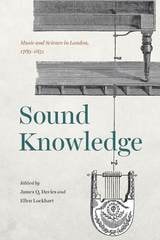
Sound Knowledge examines how scientific truth was accrued by means of visual and aural experience, and, in turn, how musical knowledge was located in relation to empirical scientific practice. James Q. Davies and Ellen Lockhart gather work by leading scholars to explore a crucial sixty-year period, beginning with Charles Burney’s ambitious General History of Music, a four-volume study of music around the globe, and extending to the Great Exhibition of 1851, where musical instruments were assembled alongside the technologies of science and industry in the immense glass-encased collections of the Crystal Palace. Importantly, as the contributions show, both the power of science and the power of music relied on performance, spectacle, and experiment. Ultimately, this volume sets the stage for a new picture of modern disciplinarity, shining light on an era before the division of aural and visual knowledge.
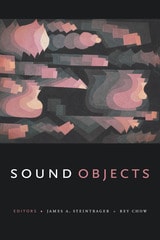
Sound Objects
James A. Steintrager and Rey Chow, editors
Duke University Press, 2019
Contributors. Georgina Born, Michael Bull, Michel Chion, Rey Chow, John Dack, Veit Erlmann, Brian Kane, Jairo Moreno, John Mowitt, Pooja Rangan, Gavin Steingo, James A. Steintrager, Jonathan Sterne, David Toop
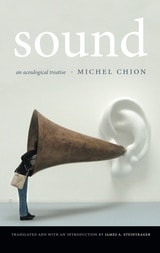
Sound
An Acoulogical TreatiseMichel Chion
Duke University Press, 2016
Sound
Dialogue, Music, and EffectsKalinak, Kathryn
Rutgers University Press, 2015
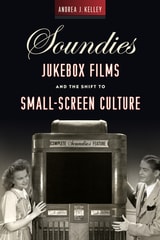
Soundies Jukebox Films and the Shift to Small-Screen Culture
Kelley, Andrea J
Rutgers University Press, 2018

Sounding Dissent
Rebel Songs, Resistance, and Irish RepublicanismStephen R. Millar
University of Michigan Press, 2020
Sounding Dissent draws on three years of sustained fieldwork within Belfast's rebel music scene, in-depth interviews with republican musicians, contemporary audiences, and former paramilitaries, as well as diverse historical and archival material, including songbooks, prison records, and newspaper articles, to understand the history of political violence in Ireland.The book examines the potential of rebel songs to memorialize a pantheon of republican martyrs, and demonstrates how musical performance and political song not only articulate experiences and memories of oppression and violence, but also play a central role in the reproduction of conflict and exclusion in times of peace.
Sounding Human
Music and Machines, 1740/2020Deirdre Loughridge
University of Chicago Press, 2023
From the mid-eighteenth century on, there was a logic at work in musical discourse and practice: human or machine. That discourse defined a boundary of absolute difference between human and machine, with a recurrent practice of parsing “human” musicality from its “merely mechanical” simulations. In Sounding Human, Deirdre Loughridge tests and traverses these boundaries, unmaking the “human or machine” logic and seeking out others, better characterized by conjunctions such as and or with.
Sounding Human enters the debate on posthumanism and human-machine relationships in music, exploring how categories of human and machine have been continually renegotiated over the centuries. Loughridge expertly traces this debate from the 1737 invention of what became the first musical android to the creation of a “sound wave instrument” by a British electronic music composer in the 1960s, and the chopped and pitched vocals produced by sampling singers’ voices in modern pop music. From music-generating computer programs to older musical instruments and music notation, Sounding Human shows how machines have always actively shaped the act of music composition. In doing so, Loughridge reveals how musical artifacts have been—or can be—used to help explain and contest what it is to be human.
Sounding Together
Collaborative Perspectives on U.S. Music in the 21st CenturyCharles Hiroshi Garrett and Carol J. Oja, Editors
University of Michigan Press, 2021
Sounding Together: Collaborative Perspectives on U.S. Music in the Twenty-21st Century is a multi-authored, collaboratively conceived book of essays that tackles key challenges facing scholars studying music of the United States in the early twenty-first century. This book encourages scholars in music circles and beyond to explore the intersections between social responsibility, community engagement, and academic practices through the simple act of working together. The book’s essays—written by a diverse and cross-generational group of scholars, performers, and practitioners—demonstrate how collaboration can harness complementary skills and nourish comparative boundary-crossing through interdisciplinary research. The chapters of the volume address issues of race, nationalism, mobility, cultural domination, and identity; as well as the crisis of the Trump era and the political power of music. Each contribution to the volume is written collaboratively by two scholars, bringing together contributors who represent a mix of career stages and positions. Through the practice of and reflection on collaboration, Sounding Together breaks out of long-established paradigms of solitude in humanities scholarship and works toward social justice in the study of music.
Sounding the Modern Woman
The Songstress in Chinese CinemaJean Ma
Duke University Press, 2015
Sounds Beyond
Arvo Pärt and the 1970s Soviet UndergroundKevin C. Karnes
University of Chicago Press, 2021
In Sounds Beyond, Kevin C. Karnes studies the interconnected alternative music and art scenes in the USSR during the second half of the 1970s, revealing the audacious origins of some of Estonian composer Arvo Pärt’s most famous music. Karnes shows how Pärt’s work was created within a vital yet forgotten culture of collective experimentation, the Soviet underground.
Mining archives and oral history from across the former USSR, Sounds Beyond carefully situates modes of creative experimentation within their late socialist contexts. In documenting Pärt’s work, Karnes reveals the rich creative culture that thrived covertly in the USSR and the network of figures that made underground performances possible: students, audio engineers, sympathetic administrators, star performers, and aspiring DJs. Sounds Beyond advances a new understanding of Pärt’s music as an expression of the aesthetic and religious commitments shared, nurtured, and celebrated by many in Soviet underground circles. At the same time, this story attests to the lasting power of Pärt’s music. Dislodging the mythology of the solitary creative genius, Karnes shows that Pärt’s work would be impossible without community.
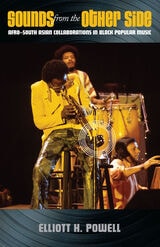
Sounds from the Other Side
Afro–South Asian Collaborations in Black Popular MusicElliott H. Powell
University of Minnesota Press, 2020
A sixty-year history of Afro–South Asian musical collaborations
From Beyoncé’s South Asian music–inspired Super Bowl Halftime performance, to jazz artists like John and Alice Coltrane’s use of Indian song structures and spirituality in their work, to Jay-Z and Missy Elliott’s high-profile collaborations with diasporic South Asian artists such as the Panjabi MC and MIA, African American musicians have frequently engaged South Asian cultural productions in the development of Black music culture. Sounds from the Other Side traces such engagements through an interdisciplinary analysis of the political implications of African American musicians’ South Asian influence since the 1960s.
Elliott H. Powell asks, what happens when we consider Black musicians’ South Asian sonic explorations as distinct from those of their white counterparts? He looks to Black musical genres of jazz, funk, and hip hop and examines the work of Miles Davis, John Coltrane, Rick James, OutKast, Timbaland, Beyoncé, and others, showing how Afro–South Asian music in the United States is a dynamic, complex, and contradictory cultural site where comparative racialization, transformative gender and queer politics, and coalition politics intertwine. Powell situates this cultural history within larger global and domestic sociohistorical junctures that link African American and South Asian diasporic communities in the United States.
The long historical arc of Afro–South Asian music in Sounds from the Other Side interprets such music-making activities as highly political endeavors, offering an essential conversation about cross-cultural musical exchanges between racially marginalized musicians.
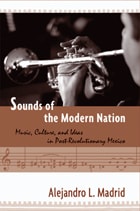
Sounds of the Modern Nation
Music, Culture, and Ideas in Post-Revolutionary MexicoAlejandro L. Madrid
Temple University Press, 2008
Sounds of the Modern Nation explores the development of modernist and avant-garde art music styles and aesthetics in Mexico in relation to the social and cultural changes that affected the country after the 1910-1920 revolution. Alejandro Madrid argues that these modernist works provide insight into the construction of individual and collective identities based on new ideas about modernity and nationality. Instead of depicting a dichotomy between modernity and nationalism, Madrid reflects on the multiple intersections between these two ideas and the dialogic ways through which these notions acquired meaning.
Madrid challenges the view that Latin American modernist music and other art were mere imitations of European trends, advancing instead the argument that Latin American artists resignified European ideas according to their specific historical and cultural circumstances. His work shows how microtonal and futurist music, modernist and avant-garde aesthetics, as well as indigenist and indianist ideas, entered a process of negotiation that ultimately shaped the ideological framework of twentieth-century Mexico.