Results by title
1993 books match the query 'Latin America' and 136 start with s
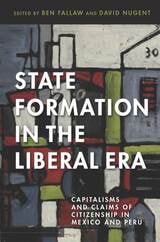
State Formation in the Liberal Era
Capitalisms and Claims of Citizenship in Mexico and PeruEdited by Ben Fallaw and David Nugent
University of Arizona Press, 2020
Mexico and Peru are widely regarded as two great centers of Latin American civilization. In State Formation in the Liberal Era, a diverse group of historians and anthropologists from the United States, the United Kingdom, and Latin America compare how the two countries advanced claims of statehood from the dawning of the age of global liberal capitalism to the onset of the Cold War. Chapters cover themes ranging from foreign banks to road building and labor relations. The introductions serve as an original interpretation of Peru’s and Mexico’s modern histories from a comparative perspective.
Focusing on the tensions between disparate circuits of capital, claims of statehood, and the contested nature of citizenship, the volume spans disciplinary and geographic boundaries. It reveals how the presence (or absence) of U.S. influence shaped Latin American history and also challenges notions of Mexico’s revolutionary exceptionality. The book offers a new template for ethnographically informed comparative history of nation building in Latin America.
State Repression and the Labors of Memory
Elizabeth Jelin
University of Minnesota Press, 2003
A timely exploration of the nature of memory and its political uses
Hearing the news from South America at the turn of the millennium can be like traveling in time: here are the trials of Pinochet, the searches for “the disappeared” in Argentina, the investigation of the death of former president Goulart in Brazil, the Peace Commission in Uruguay, the Archive of Terror in Paraguay, a Truth Commission in Peru. As societies struggle to come to terms with the past and with the vexing questions posed by ineradicable memories, this wise book offers guidance.
Combining a concrete sense of present urgency and a theoretical understanding of social, political, and historical realities, State Repression and the Labors of Memory fashions tools for thinking about and analyzing the presences, silences, and meanings of the past. With unflappable good judgment and fairness, Elizabeth Jelin clarifies the often muddled debates about the nature of memory, the politics of struggles over memories of historical injustice, the relation of historiography to memory, the issue of truth in testimony and traumatic remembrance, the role of women in Latin American attempts to cope with the legacies of military dictatorships, and problems of second-generation memory and its transmission and appropriation. Jelin’s work engages European and North American theory in its exploration of the various ways in which conflicts over memory shape individual and collective identities, as well as social and political cleavages. In doing so, her book exposes the enduring consequences of repression for social processes in Latin America, and at the same time enriches our general understanding of the fundamentally conflicted and contingent nature of memory.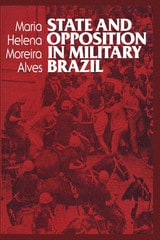
State and Opposition in Military Brazil
By Maria Helena Moreira Alves
University of Texas Press, 1985
Based on extensive research into opposition and government documents, including the previously unavailable Manual Básico da Escola de Guerra, Maria Helena Moreira Alves provides a rich description of the long and tortuous attempt by the Brazilian military government to create a workable “national security state” in the face of determined and resilient opposition.
She interviewed more than one hundred key figures in government, the military, business, professional associations, the Catholic church, grassroots organizations, and trade unions in order to analyze politically and historically the relationship between civil society and government structures in Brazil during the years 1964–1983. Her study charts the rise and subsequent decline of the military government’s power, concluding with a discussion of the abertura policy instituted under General João Batista Figueiredo.
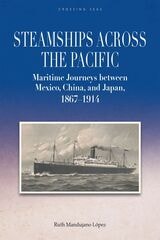
Steamships across the Pacific
Maritime Journeys between Mexico, China, and Japan, 1867–1914Ruth Mandujano López
Hong Kong University Press, 2025
During the nineteenth century, the Trans-Pacific world underwent a profound transformation due to the transition from sail to steam navigation that was accompanied by a reconfiguration of power. Steamships across the Pacific explores how diverse Mexican, British, Chinese, and Japanese interests participated, particularly during Porfirio Díaz’s presidency at the peak of Mexico’s participation, in the steam network. It investigates this network in its 1860s outset through a time of many revolutionary changes, including the World War, the Mexican Revolution, the opening of the Panama Canal, and the introduction of a new maritime technology—vessels run by oil. These transoceanic exchanges, generated within these new geographies of power, contributed not only to the formation of a Trans-Pacific region but also to the refashioning of the Mexican national imaginary.
With transnationalism, global, and migration studies as its main frameworks, this study draws upon a dazzling array of primary sources to center Mexico’s Trans-Pacific relations and the influence they wielded over the region at the height of the steamship period.
Steel and Economic Growth in Mexico
By William E. Cole
University of Texas Press, 1967
Iron ore is widely distributed over the world and has been mined from ancient times, but Mexico, with a good supply of ore, was a relative newcomer to the ranks of iron- and steel-producing nations. This distinctive book offers a history of the Mexican iron and steel industry through the 1960s.
Archaeological evidence, the author states, shows that the indigenous peoples of Mexico had developed a technology of metallurgy—relying on gold, silver, copper, tin and bronze—before the arrival of the Spaniards, but those same peoples had no knowledge of iron. That knowledge and accompanying technology arrived with the conquistadores.
Extremely slow development characterized the progress of iron mining in Mexico and until the twentieth century ore mining and metal forging continued to be handled on a small scale.
By the turn of the century two occurrences had combined to give Mexico an embryonic steel market: the railroad grid had come to link Mexico’s diverse regions and Porfirio Díaz had used his personal power to eliminate interstate tariff barriers to trade. In 1900 the first integrated steel mill in Latin America was established in Monterrey—the city that was to become the capital of Mexico’s manufacturing sector.
Forty years later, shortages of steel imports provided the motivation for the second stage of growth of the steel industry. Much of the book is devoted to the study of this period of growth.
William E. Cole tells the whole story in this scholarly study, which has as its twofold purpose a complete examination of the iron and steel industry of Mexico and an assessment of the impact of that industry on other sectors of the economy. Much space is devoted to an analysis of the role of the Mexican government in promoting and regulating the steel industry and to discussion of the efficiency of the promotional tools employed by the government. Further, he studies the status of the industry in the 1960s, its production and its consumption, and presents a projection for the future.
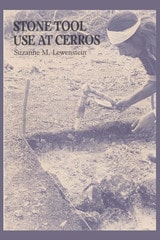
Stone Tool Use at Cerros
The Ethnoarchaeological and Use-Wear EvidenceBy Suzanne M. Lewenstein
University of Texas Press, 1987
For centuries scholars have pondered and speculated over the uses of the chipped stone implements uncovered at archaeological sites. Recently a number of researchers have attempted to determine prehistoric tool function through experimentation and through observation of the few remaining human groups who still retain this knowledge. Learning how stone tools were made and used in the past can tell us a great deal about ancient economic systems, exchange networks, and the social and political structure of prehistoric societies.
Suzanne M. Lewenstein used the artifacts from Cerros, an important Late Preclassic (200 BC–AD 200) Mayan site in northern Belize, to study stone tool function. Through a comprehensive program of experimentation with stone tool replicas, she was able not only to infer the tasks performed by individual tool specimens but also to recognize a wide variety of past activities for which stone tools were used.
Unlike previous works that focused on hunter-gatherer groups, Stone Tool Use at Cerros is the first comprehensive experimental study of tool use in an agricultural society. The lithic data are used in an economic interpretation of a lowland Mayan community within a hierarchically complex society.
Apart from its significance to Mayan studies, this innovative work offers the beginnings of a reference collection of identifiable tool functions that may be documented for sedentary, complex society. It will be of major interest to all archaeologists and anthropologists, as well as those interested in economic specialization and artisanry in complex societies.
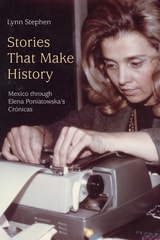
Stories That Make History
Mexico through Elena Poniatowska’s CrónicasLynn Stephen
Duke University Press, 2021
Storytelling Globalization from the Chaco and Beyond
Mario Blaser
Duke University Press, 2010
Strange Enemies
Indigenous Agency and Scenes of Encounters in AmazoniaAparecida Vilaça
Duke University Press, 2010
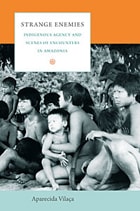
During the 1940s and 1950s, white rubber tappers invading the Wari’ lands raided the native villages, shooting and killing their victims as they slept. These massacres prompted the Wari’ to initiate a period of intense retaliatory warfare. The national government and religious organizations subsequently intervened, seeking to “pacify” the Indians. Aparecida Vilaça was able to interview both Wari’ and non-Wari’ participants in these encounters, and here she shares their firsthand narratives of the dramatic events. Taking the Wari’ perspective as its starting point, Strange Enemies combines a detailed examination of these cross-cultural encounters with analyses of classic ethnological themes such as kinship, shamanism, cannibalism, warfare, and mythology.

Strange Tastes
Aesthetics and the Public in Latin American and Latinx FeminismsMonique Roelofs
Duke University Press, 2026
Street Occupations
Urban Vending in Rio de Janeiro, 1850–1925By Patricia Acerbi
University of Texas Press, 2017
Winner, Warren Dean Memorial Prize, Conference on Latin American History (CLAH), 2018
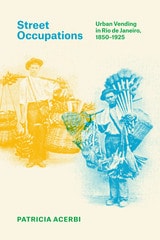
Street vending has supplied the inhabitants of Rio de Janeiro with basic goods for several centuries. Once the province of African slaves and free blacks, street commerce became a site of expanded (mostly European) immigrant participation and shifting state regulations during the transition from enslaved to free labor and into the early post-abolition period. Street Occupations investigates how street vendors and state authorities negotiated this transition, during which vendors sought greater freedom to engage in commerce and authorities imposed new regulations in the name of modernity and progress.
Examining ganhador (street worker) licenses, newspaper reports, and detention and court records, and considering the emergence of a protective association for vendors, Patricia Acerbi reveals that street sellers were not marginal urban dwellers in Rio but active participants in a debate over citizenship. In their struggles to sell freely throughout the Brazilian capital, vendors asserted their citizenship as urban participants with rights to the city and to the freedom of commerce. In tracing how vendors resisted efforts to police and repress their activities, Acerbi demonstrates the persistence of street commerce and vendors’ tireless activity in the city, which the law eventually accommodated through municipal street commerce regulation passed in 1924.
A focused history of a crucial era of transition in Brazil, Street Occupations offers important new perspectives on patron-client relations, slavery and abolition, policing, the use of public space, the practice of free labor, the meaning of citizenship, and the formality and informality of work.
Street Scriptures
Between God and Hip-HopAlejandro Nava
University of Chicago Press, 2022
The world of hip-hop is saturated with religion, but rarely is that element given serious consideration. In Street Scriptures, Alejandro Nava focuses our attention on this aspect of the music and culture in a fresh way, combining his profound love of hip-hop, his passion for racial and social justice, and his deep theological knowledge. Street Scriptures offers a refreshingly earnest and beautifully written journey through hip-hop’s deep entanglement with the sacred.
Nava reveals a largely unheard religious heartbeat in hip-hop, exploring crosscurrents of the sacred and profane in rap, reggaeton, and Latinx hip-hop today. Ranging from Kendrick Lamar, Chance the Rapper, Lauryn Hill, Cardi B, and Bad Bunny to St. Augustine and William James, Nava examines the ethical-political, mystical-prophetic, and theological qualities in hip-hop, probing the pure sonic and aesthetic signatures of music, while also diving deep into the voices that invoke the spirit of protest. The result is nothing short of a new liberation theology for our time, what Nava calls a “street theology.”
Strength in Unity
Christian Base Communities and the Urban Popular Movement in Guadalajara, 1965–1994Brad H. Wright
University of Alabama Press, 2026
Examines how poor and working-class communities in Guadalajara organized through faith, education, and culture to claim dignity, justice, and the right to the city.
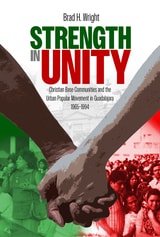
Strength in Unity: Christian Base Communities and the Urban Popular Movement in Guadalajara, 1965–1994 presents the grassroots history of Guadalajara’s urban popular movement, centering the voices and struggles of poor and working-class communities, especially women, who organized for dignity, justice, and the right to the city. Brad H. Wright brings to light the transformative role of Christian base communities and Freirean popular education as incubators of political consciousness and collective action in the face of authoritarian repression and neoliberal coaptation.
Drawing from oral histories, personal archives, and the records of the Sagrado Corazón nuns, Wright reconstructs a powerful counternarrative to dominant portrayals of marginalized populations as “apathetic” and “uneducated.” Strength in Unity reveals a vibrant culture of resistance where women led campaigns for basic services, built schools, and demanded access to transportation, using tools such as community newspapers, street theater, and music to mobilize and sustain solidarity.
This deeply researched and compellingly told history challenges conventional accounts of urban development and social movements in Latin America. Strength in Unity is essential reading for scholars, students, and activists interested in grassroots organizing, liberation theology, and the enduring power of community-led change.
Stringing Together a Nation
Cândido Mariano da Silva Rondon and the Construction of a Modern Brazil, 1906–1930Todd A. Diacon
Duke University Press, 2004
Using an impressive array of archival and documentary sources, Diacon chronicles the Rondon Commission’s arduous construction of telegraph lines across more than eight hundred miles of the Amazon Basin; its exploration, surveying, and mapping of vast areas of northwest Brazil; and its implementation of policies governing relations between the Brazilian state and indigenous groups. He considers the importance of Positivist philosophy to Rondon’s thought, and he highlights the Rondon Commission’s significant public relations work on behalf of nation-building efforts. He reflects on the discussions—both contemporaneous and historiographical—that have made Rondon such a fundamental and controversial figure in Brazilian cultural history.
Students of Revolution
Youth, Protest, and Coalition Building in Somoza-Era NicaraguaBy Claudia Rueda
University of Texas Press, 2019
Students played a critical role in the Sandinista struggle in Nicaragua, helping to topple the US-backed Somoza dictatorship in 1979—one of only two successful social revolutions in Cold War Latin America. Debunking misconceptions, Students of Revolution provides new evidence that groups of college and secondary-level students were instrumental in fostering a culture of insurrection—one in which societal groups, from elite housewives to rural laborers, came to see armed revolution as not only legitimate but necessary.
Drawing on student archives, state and university records, and oral histories, Claudia Rueda reveals the tactics by which young activists deployed their age, class, and gender to craft a heroic identity that justified their political participation and to help build cross-class movements that eventually paralyzed the country. Despite living under a dictatorship that sharply curtailed expression, these students gained status as future national leaders, helping to sanctify their right to protest and generating widespread outrage while they endured the regime’s repression. Students of Revolution thus highlights the aggressive young dissenters who became the vanguard of the opposition.
Stumbling Its Way through Mexico
The Early Years of the Communist InternationalDaniela Spenser, translated by Peter Gellert
University of Alabama Press, 2011
Stunted Lives, Stagnant Economies
Poverty, Disease, and UnderdevelopmentStillwaggon, Eileen
Rutgers University Press, 1998
This is a fascinating, lively, and well-written book. The author has a clear message which she states at the beginning, namely, that health is primarily an economic, not a medical problem, and she follows that to the end.Keith Griffin, University of California, Riverside
Houses made of rags and flattened soda cans, filthy water that breeds disease, counterfeit medicines, no access to decent medical care how can children growing up in such an environment become productive workers contributing to a developing economy?
Stunted Lives, Stagnant Economies describes in vivid detail the living conditions of the poor in developing countries and the diseases and injuries that result from this environment of need. Most of the diseases that affect the poor cholera, summer diarrhea, tuberculosis, lice, worms, leprosy result from the poverty of their environment. Poverty also determines the availability and effectiveness of the medical response. Using Argentina as a case study, Eileen Stillwaggon argues that making good health available to everyone is not a scientific problem but an economic one.
The debt crisis of the 1980s and the subsequent structural adjustment policies adopted by most developing countries exacerbated the problems faced by the poor. What kind of future can a nation build when the health of the majority of the population its workforceÑis at risk or compromised because social services have been reduced? Without adequate health care and social services, people cannot live up to their potential, and the spiral of poverty continues. But there are ways to fight this cycle of poverty.
Subalternity and Representation
Arguments in Cultural TheoryJohn Beverley
Duke University Press, 1999
Dismissed by some as simply another new fashion in the critique of culture and by others as a postmarxist heresy, subaltern studies began with the work of Ranajit Guha and the South Asian Subaltern Studies collective in the 1980s. Beverley’s focus on Latin America, however, is evidence of the growing province of this field. In assessing subaltern studies’ purposes and methods, the potential dangers it presents, and its interactions with deconstruction, poststructuralism, cultural studies, Marxism, and political theory, Beverley builds his discussion around a single, provocative question: How can academic knowledge seek to represent the subaltern when that knowledge is itself implicated in the practices that construct the subaltern as such? In his search for answers, he grapples with a number of issues, notably the 1998 debate between David Stoll and Rigoberta Menchú over her award-winning testimonial narrative, I, Rigoberta Menchú. Other topics explored include the concept of civil society, Florencia Mallon’s influential Peasant and Nation, the relationship between the Latin American “lettered city” and the Túpac Amaru rebellion of 1780–1783, the ideas of transculturation and hybridity in postcolonial studies and Latin American cultural studies, multiculturalism, and the relationship between populism, popular culture, and the “national-popular” in conditions of globalization.
This critique and defense of subaltern studies offers a compendium of insights into a new form of knowledge and knowledge production. It will interest those studying postcolonialism, political science, cultural studies, and Latin American culture, history, and literature.

Subalternity, Antagonism, Autonomy
Constructing the Political SubjectMassimo Modonesi
Pluto Press, 2013
In this bold and innovative book, Massimo Modonesi weaves together theory and political practice by relating the concepts of subalternity, antagonism and autonomy to contemporary movements in Latin America and elsewhere.
In a sophisticated account, Modonesi reconstructs the debates between Marxist authors and schools of thought in order to sketch out informed strategies of resistance. He reviews the works of Gramsci, Negri, Castoriadis and Lefort, and engages with the arguments made by E. P. Thompson, Spivak, Laclau and Mouffe.
Subalternity, Antagonism, Autonomy firmly roots key theoretical arguments from a range of critical thinkers within specific political movements in order to recover these concepts as analytical instruments which can help to guide contemporary struggles.
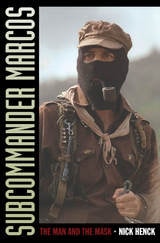
Subcommander Marcos
The Man and the MaskNick Henck
Duke University Press, 2007
In this, the first English-language biography of Subcommander Marcos, Nick Henck describes the thought, leadership, and personality of this charismatic rebel spokesperson. He traces Marcos’s development from his provincial middle-class upbringing, through his academic career and immersion in the clandestine world of armed guerrillas, to his emergence as the iconic Subcommander. Henck reflects on what motivated an urbane university professor to reject a life of comfort in Mexico City in favor of one of hardship as a guerrilla in the mountainous jungles of Chiapas, and he examines how Marcos became a conduit through which impoverished indigenous Mexicans could communicate with the world.
Henck fully explores both the rebel leader’s renowned media savvy and his equally important flexibility of mind. He shows how Marcos’s speeches and extensive writings demonstrate not only the Subcommander’s erudition but also his rejection of Marxist dogmatism. Finally, Henck contextualizes Marcos, locating him firmly within the Latin American guerrilla tradition.
Substance and Seduction
Ingested Commodities in Early Modern MesoamericaEdited by Stacey Schwartzkopf and Kathryn E. Sampeck
University of Texas Press, 2017
Chocolate and sugar, alcohol and tobacco, peyote and hallucinogenic mushrooms—these seductive substances have been a nexus of desire for both pleasure and profit in Mesoamerica since colonial times. But how did these substances seduce? And when and how did they come to be desired and then demanded, even by those who had never encountered them before? The contributors to this volume explore these questions across a range of times, places, and peoples to discover how the individual pleasures of consumption were shaped by social, cultural, economic, and political forces.
Focusing on ingestible substances as a group, which has not been done before in the scholarly literature, the chapters in Substance and Seduction trace three key links between colonization and commodification. First, as substances that were taken into the bodies of both colonizers and colonized, these foods and drugs participated in unexpected connections among sites of production and consumption; racial and ethnic categories; and free, forced, and enslaved labor regimes. Second, as commodities developed in the long transition from mercantile to modern capitalism, each substance in some way drew its enduring power from its ability to seduce: to stimulate bodies; to alter minds; to mark class, social, and ethnic boundaries; and to generate wealth. Finally, as objects of scholarly inquiry, each substance rewards interdisciplinary approaches that balance the considerations of pleasure and profit, materiality and morality, and culture and political economy.
Subterranean Matters
Cooperative Mining and Resource Nationalism in Plurinational BoliviaAndrea Marston
Duke University Press, 2024
Subterranean Struggles
New Dynamics of Mining, Oil, and Gas in Latin AmericaEdited by Anthony Bebbington and Jeffrey Bury
University of Texas Press, 2013
Subverting Colonial Authority
Challenges to Spanish Rule in Eighteenth-Century Southern AndesSergio Serulnikov
Duke University Press, 2003
Drawing on court records, government papers, personal letters, census documents, and other testimonies from Bolivian and Argentine archives, Subverting Colonial Authority addresses issues that illuminate key aspects of indigenous rebellion, European colonialism, and Andean cultural history. Serulnikov analyzes long-term patterns of social conflict rooted in local political cultures and regionally based power relations. He examines the day-to-day operations of the colonial system of justice within the rural villages as well as the sharp ideological and political strife among colonial ruling groups. Highlighting the emergence of radical modes of anticolonial thought and ethnic cooperation, he argues that Andean peasants were able to overcome entrenched tendencies toward internal dissension and fragmentation in the very process of marshaling both law and force to assert their rights and hold colonial authorities accountable. Along the way, Serulnikov shows, they not only widened the scope of their collective identities but also contradicted colonial ideas of indigenous societies as either secluded cultures or pliant objects of European rule.

Sugar and Slavery in Puerto Rico
The Plantation Economy of Ponce, 1800–1850Francisco A. Scarano
University of Wisconsin Press, 1984
This important study of Ponce, a major sugar-producing district in Puerto Rico, examines in detail the processes by which a predominantly peasant economy an society was transformed into a plantation system. Scarano’s work, one of the first full investigations into Puerto Rico’s nineteenth-century economic history, dispels the long-held belief that slavery was an inconsequential factor in this society; indeed, he finds that the new plantation system was fully dependent on African slave labor, and that the initial stimuli for economic change came from immigrants.
Sugarcane and Rum
The Bittersweet History of Labor and Life on the Yucatán PeninsulaJohn R. Gust and Jennifer P. Mathews
University of Arizona Press, 2020
While the Yucatán Peninsula of Mexico may conjure up images of vacation getaways and cocktails by the sea, these easy stereotypes hide a story filled with sweat and toil. The story of sugarcane and rum production in the Caribbean has been told many times. But few know the bittersweet story of sugar and rum in the jungles of the Yucatán Peninsula during the nineteenth century. This is much more than a history of coveted commodities. The unique story that unfolds in John R. Gust and Jennifer P. Mathews’s new history Sugarcane and Rum is told through the lens of Maya laborers who worked under brutal conditions on small haciendas to harvest sugarcane and produce rum.
Gust and Mathews weave together ethnographic interviews and historical archives with archaeological evidence to bring the daily lives of Maya workers into focus. They lived in a cycle of debt, forced to buy all of their supplies from the company store and take loans from the hacienda owners. And yet they had a certain autonomy because the owners were so dependent on their labor at harvest time. We also see how the rise of cantinas and distilled alcohol in the nineteenth century affected traditional Maya culture and that the economies of Cancún and the Mérida area are predicated on the rum-influenced local social systems of the past. Sugarcane and Rum brings this bittersweet story to the present and explains how rum continues to impact the Yucatán and the people who have lived there for millennia.
Supplement to the Handbook of Middle American Indians, Volume 2
LinguisticsVictoria Reifler Bricker, general editor
University of Texas Press, 1984
The sixteen-volume Handbook of Middle American Indians, completed in 1976, has been acclaimed the world over as the single most valuable resource ever produced for those involved in the study of Mesoamerica. When it was determined in 1978 that the Handbook should be updated periodically, well-known cultural anthropologist Victoria Reifler Bricker was selected to be general editor.
This second volume of the Supplement is devoted to Mesoamerican languages. It differs in both scope and content from its forerunner, Volume 5 of the Handbook of Middle American Indians: Linguistics, which presents a general survey of Middle American linguistics and descriptions of Classical Nahuatl, Yucatec, Quiche, Popoluca, Zapotec, Mazatec, Pame, and Chontal de Oaxaca.
The aim of the present volume is to provide detailed sketches of five additional languages: Mixe, Chichimeco Jonaz, Choltí, Tarascan, and Huastec. All the grammatical sketches deal with the phonology, morphology, and syntax of the languages treated; most cover discourse as well. Taken together, these new essays represent a substantial enrichment of the earlier Handbook volume on linguistics. Alone, the Supplement stands as an invaluable reference guide for all who are interested in learning about these important and heretofore poorly treated languages of Middle America.
Supplement to the Handbook of Middle American Indians, Volume 4
EthnohistoryVictoria R. Bricker, general editor<br>Ronald Spores, volume editor
University of Texas Press, 1986
The sixteen-volume Handbook of Middle American Indians, completed in 1976, has been acclaimed the world over as the single most valuable resource ever produced for those involved in the study of Mesoamerica. When it was determined in 1978 that the Handbook should be updated periodically, Victoria Reifler Bricker, well-known cultural anthropologist, was elected to be general editor.
This fourth volume of the Supplement is devoted to colonial ethnohistory. Four of the eleven chapters review research and ethnohistorical resources for Guatemala, South Yucatan, North Yucatan, and Oaxaca, areas that received less attention than the central Mexican area in the original Guide to Ethnohistorical Sources (HMAI vols. 12-15).
Six substantive and problem-oriented studies cover the use of colonial texts in the study of pre-colonial Mayan languages; political and economic organization in the valleys of Mexico, Puebla-Tlaxcala, and Morelos; urban-rural relations in the Basin of Mexico; kinship and social organization in colonial Tenochtitlan; tlamemes and transport in colonial central Mexico; and land tenure and titles in central Mexico as reflected in colonial codices.
Supplement to the Handbook of Middle American Indians, Volume 5
EpigraphyEdited by Victoria Reifler Bricker
University of Texas Press, 1991
In 1981, under the editorship of Victoria Bricker, UT Press began to issue supplemental volumes to the classic sixteen-volume work Handbook of Middle American Indians. These supplements are intended to update scholarship in various areas and to cover topics of current interest that may not have been included in the original Handbook.
This volume is designed to recognize the important role that epigraphy has come to play in Middle American scholarship and to document significant achievements in three areas: dynastic history, phonetic decipherment, and calendrics. The book covers four of the major pre-Columbian scripts in the region (Zapotec, Mixtec, Aztec, and Maya) and one that is relatively unknown (Tlapanec).
Surviving Mexico's Dirty War
A Political Prisoner's MemoirAlberto Ulloa Bornemann, edited by Arthur Schmidt and Aurora Camacho de Schmidt
Temple University Press, 2007
Surviving Mexico
Resistance and Resilience among Journalists in the Twenty-first CenturyBy Celeste González de Bustamante and Jeannine E. Relly
University of Texas Press, 2021
Mott KTA Journalism and Mass Communication Research Award, Kappa Tau Alpha
Tankard Book Award, Association for Education in Journalism and Mass Communication (AEJMC)
Knudson Latin America Prize, Association for Education in Journalism and Mass Communication (AEJMC)
Since 2000, more than 150 journalists have been killed in Mexico. Today the country is one of the most dangerous in the world in which to be a reporter. In Surviving Mexico, Celeste González de Bustamante and Jeannine E. Relly examine the networks of political power, business interests, and organized crime that threaten and attack Mexican journalists, who forge ahead despite the risks.
Amid the crackdown on drug cartels, overall violence in Mexico has increased, and journalists covering the conflict have grown more vulnerable. But it is not just criminal groups that want reporters out of the way. Government forces also attack journalists in order to shield corrupt authorities and the very criminals they are supposed to be fighting. Meanwhile some news organizations, enriched by their ties to corrupt government officials and criminal groups, fail to support their employees. In some cases, journalists must wait for a “green light” to publish not from their editors but from organized crime groups. Despite seemingly insurmountable constraints, journalists have turned to one another and to their communities to resist pressures and create their own networks of resilience. Drawing on a decade of rigorous research in Mexico, González de Bustamante and Relly explain how journalists have become their own activists and how they hold those in power accountable.

Sustaining Activism
A Brazilian Women's Movement and a Father-Daughter CollaborationJeffrey W. Rubin and Emma Sokoloff-Rubin
Duke University Press, 2013
Starting in 2002, Rubin and Sokoloff-Rubin traveled together to southern Brazil, where they interviewed activists over the course of ten years. Their vivid descriptions of women’s lives reveal the hard work of sustaining a social movement in the years after initial victories, when the political way forward was no longer clear and the goal of remaking gender roles proved more difficult than activists had ever imagined. Highlighting the tensions within the movement about how best to effect change, Sustaining Activism ultimately shows that democracies need social movements in order to improve people’s lives and create a more just society.
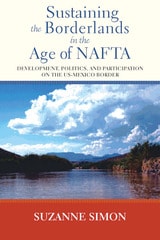
Sustaining the Borderlands in the Age of NAFTA
Development, Politics, and Participation on the US-Mexico BorderSuzanne Simon
Vanderbilt University Press, 2014
Although the key to the side accords' anticipated success lay in their ostensibly generous encouragement of a participatory politics and sustainable development opportunities, Sustaining the Borderlands reveals that the Mexican border populations for which they were largely created are effectively excluded from participating due to the ongoing online, territorial, class, and cultural barriers that shape the borderlands. Rather than experiencing the side accords and their companion institutions as transparent and accessible, residents experienced them as opaque and indecipherable. Simon concludes that the side accords have failed to deliver on their promise of bringing democracy to Mexico because practical mechanisms that would ensure their effective implementation were never put in place.
NAFTA took effect at a time when Mexico was undergoing a democratic transition. The treaty was supposed to encourage this transition and improve environmental and labor conditions on the US-Mexico border. This book demonstrates that, twenty years later, the promises of NAFTA have not come to pass.
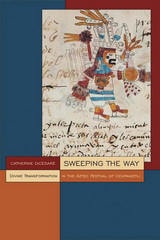
Sweeping the Way
Divine Transformation in the Aztec Festival of OchpaniztliCatherine DiCesare
University Press of Colorado, 2022
Symbolism and Ritual in a One-Party Regime
Unveiling Mexico's Political CultureLarissa Adler-Lomnitz, Rodrigo Salazar Elena, and Ilya Adler
University of Arizona Press, 2010
Discussing Mexican presidential politics from the perspectives of anthropology, political science, and communications science, the authors analyze the 1988 presidential campaign of Carlos Salinas de Gortari—the last great campaign of the PRI to display the characteristics traditionally found in the twentieth century. These detailed descriptions of campaign events show that their ritualistic nature expressed both a national culture and an aura of domination.
The authors describe the political and cultural context in which this campaign took place—an authoritarian presidential system that dated from the 1920s—and explain how the constitutional provisions of the state interacted with the informal practices of the party to produce highly scripted symbolic rituals. Their analysis probes such topics as the meanings behind the candidate’s behavior, the effects of public opinion polling, and the role of the press, then goes on to show how the system has begun to change since 2000.
By dealing with the campaign from multiple perspectives, the authors reveal it as a rite of passage that sheds light on the political culture of the country. Their study expands our understanding of authoritarianism during the years of PRI dominance and facilitates comparison of current practices with those of the past.
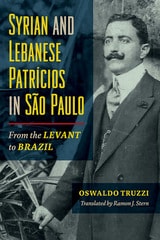
Syrian and Lebanese Patricios in São Paulo
From the Levant to BrazilOswaldo Truzzi. Translated by Ramon J. Stern
University of Illinois Press, 2018
Oswaldo Truzzi's original work on these so-called patrícios changed the face of Brazilian studies. Now available in an English translation, Truzzi's pioneering book identifies the complex social paths blazed by Syrian and Lebanese immigrants and their descendants from the 1890s to the 1960s. He considers their relationships to other groups within São Paulo's kaleidoscopic mix of cultures. He also reveals the differences--real and perceived--between Syrians and Lebanese in terms of religious and ethnic affinities and in the economic sphere. Finally, he compares the two groups with their counterparts in the United States and looks at the wave of Lebanese Muslims to São Paulo that began in the 1960s.