Results by title
3258 books match the query 'Art' and 185 start with s
Strange Tastes
Aesthetics and the Public in Latin American and Latinx FeminismsMonique Roelofs
Duke University Press, 2026
Strategic Giving
The Art and Science of PhilanthropyPeter Frumkin
University of Chicago Press, 2006
The philanthropic landscape is changing dramatically as a new generation of wealthy donors seeks to leave its mark on the public sphere. Peter Frumkin reveals in Strategic Giving why these donors could benefit from having a comprehensive plan to guide their giving. And with this thoughtful and timely book, he provides the much-needed framework to understand and develop this kind of philanthropic strategy.
After listening for years to scores of individual and institutional funders discuss the challenges of giving wisely, Frumkin argues here that contemporary philanthropy requires a thorough rethinking of its underlying logic. Philanthropy should be seen, he contends, as both a powerful way to meet public needs and a meaningful way to express private beliefs and commitments. He demonstrates that finding a way to simultaneously fulfill both of these functions is crucial to the survival of philanthropy and its potential to support pluralism in society. And he goes on to identify the five essential elements donors must consider when developing a philanthropic strategy—the vehicle through which giving will flow, the way impact will be achieved, the level of engagement and profile sought, the time frame for giving, and the underlying purpose of the gift. Frumkin’s point is that donors must understand strategic giving as the integration of these five critical dimensions to giving.
Essential reading for donors, researchers, and anyone involved with the world of philanthropy, Strategic Giving provides a new basis for understanding philanthropic effectiveness and a promising new way for philanthropy to achieve the legitimacy that has at times eluded it.
Street Nihonga
The Art of Jimmy Tsutomu MirikitaniMaki Kaneko
Amsterdam University Press, 2026
This volume features 163 color illustrations alongside scholarly essays and reflections that frame Mirikitani’s practice as both artistic achievement and political intervention. Maki Kaneko’s introduction situates the exhibition within the artist’s distinctive “street Nihonga” aesthetic—a collaged form of artmaking, storytelling, and community collaboration. Contributors Noriko Murai, Scott Tsuchitani, Yukinori Okamura, and Kris Ercums offer wide-ranging perspectives, including the transnational legacy of Nihonga, the memory politics of Japanese American incarceration, the evolving lineage of “A-bomb art,” and the curatorial process behind the exhibition. Linda Hattendorf and Masa Yoshikawa, Mirikitani’s close friends and documentarians, provide intimate insights into his life and art.
At once scholarly and inviting, Street Nihonga encourages readers to encounter Mirikitani not as an artist of the margins but as a radical reinterpreter of convention and a witness to histories often left untold. This catalogue remains open-ended—a living collage and a call to engage with Mirikitani’s extraordinary life and work.

Streets of Crocodiles
Photography, Media, and Postsocialist Landscapes in PolandPhotographs by Kamil Turowski, Introduction by J. Hoberman, Essays by Katarzyna Marciniak
Intellect Books, 2011
This powerful presentation of photographs of Poland from the late 1980s to the present depicts the hybridized landscape of this pivotal Eastern European nation following its entry into the European Union. A visual record of the country's transition from socialism to capitalism, it focuses on the industrial blue-collar city ofLodz—located in the heart of New Europe and home to nearly one million people. Photographer Kamil Turowski's monotones are captivating—seeming to conceal a looming threat—while Katarzyna Marciniak's accompanying text expands on the photos and the "crocodilian" texture of contemporary Eastern Europe. A walk on the wild side, Streets of Crocodiles captures viscerally the changing landscape of postsocialist Poland.
Striding Lines
The Unique Story Quilts of Rumi O'BrienBobbie Malone
University of Wisconsin Press, 2019
Bobbie Malone reaches beyond the quilts to tell O'Brien's own story, from her initial foray into the quilting world to her developed dedication to the craft. Contributions from leaders in the art, textile and quilting community, including Melanie Herzog and Marin Hanson, contextualize O'Brien's work in the greater community of quiltmakers and artists. This book celebrates the life and ingenuity of a Japanese-born American immigrant whose oeuvre is equally Japanese and Wisconsinite—and entirely distinctive.
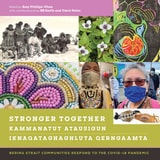
Stronger Together / Kammanatut Atausigun / Iknaqataghaghluta Qerngaamta
Bering Strait Communities Respond to the COVID-19 PandemicAmy Phillips-Chan
University of Alaska Press, 2024
The featured artists narrativize works inspired by the pandemic, from walrus ivory masks and sealskin face coverings to scenes of subsistence activities and informal family portraits. Full-color illustrations enliven the text with vibrant images of local community members, activities, and artwork from those who call this northern expanse of rolling tundra and icy seas home.
Stronger Together features hopeful and redemptive behind-the-scenes perspectives of how remote Alaskan communities endured the COVID-19 pandemic and appeals to anyone looking for hopeful and redemptive stories of this time, as well as museum, public arts, and culture program administrators; student and scholars of Indigenous and Alaska Native languages and culture; the Alaska anthropology community; artists and art enthusiasts; and those with a general interest in Alaska.
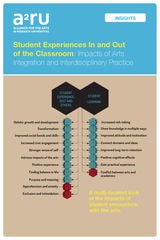
Student Experiences In and Out of the Classroom
Impacts of Arts Integration and Interdisciplinary PracticeGabriel Harp
A2RU Intervals, 2020
Studies in East Christian and Roman Art
Walter Dennison and Charles R. Morey
University of Michigan Press, 1918

Studies into Darkness
The Perils and Promise of Freedom of SpeechEdited by Carin Kuoni and Laura Raicovich
Amherst College Press, 2022
Contributions by Zach Blas, Mark Bray, Natalie Diaz, Aruna D’Souza, Silvia Federici and Gabriela López Dena, Jeanne van Heeswijk, shawné michaelain holloway, Prathibha Kanakamedala and Obden Mondésir, Amar Kanwar, Carin Kuoni, Lyndon, Debora, and Abou, Svetlana Mintcheva, Mendi + Keith Obadike, Vanessa Place, Laura Raicovich, Michael Rakowitz, Kameelah Janan Rasheed, and Nabiha Syed.
Studies on the Illuminated Chronicle
János M. Bak
Central European University Press, 2018
The present volume of studies—a joint publication with the National Széchényi Library, Budapest—is the first Subsidium of the Central European Medieval Text series, accompanying CEMT vol. IX on the Illuminated Chronicle, composed in the fourteenth century at the royal court of Louis I of Hungary. The large size of the volume, with the text and its annotations, did not permit the inclusion of a detailed scholarly introduction, unlike other CEMT items, so it is here printed separately.
The first essays analyze the text and the illuminations of the Illuminated Chronicle (formerly called the Vienna Chronicle) from literary-historical, art historical and heraldic perspectives. They also summarize the literature on the chronicle for the past two hundred years. Additional studies address the narrative. Since the chronicle starts with the history of the Huns, the imaginary ancestors of the Hungarians, one essay addresses the Attila tradition in Hungarian historiography. Others devote attention to the dynastic struggles of the eleventh century, placing them in the context of amicitia and deditio, and to the image of St. Ladislas I as the “ideal king”. The final essays examine the fate of the fourteenth-century chronicle texts over the subsequent centuries, their appearance in legal texts, and their reception abroad.
Studiolo
Giorgio Agamben
Seagull Books, 2022
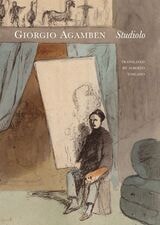
In Renaissance palaces, the studiolo was a small room to which the prince withdrew to meditate or read, surrounded by paintings he particularly loved. This book is a kind of studiolo for its author, Giorgio Agamben, as he turns his philosophical lens on the world of Western art.
Studiolo is a fascinating take on a selection of artworks created over millennia; some are easily identifiable, others rarer. Though they were produced over an arc of time stretching from 5000 BCE to the present, only now have they achieved their true legibility. Agamben contends that we must understand that the images bequeathed by the past are really addressed to us, here and now; otherwise, our historical awareness is broken. Notwithstanding the attention to detail and the critical precautions that characterize the author’s method—they provoke us with a force, even a violence, that we cannot escape. When we understand why Dostoevsky feared losing his faith before Holbein’s Body of the Dead Christ, when Chardin’s Still Life with Hare is suddenly revealed to our gaze as a crucifixion or Twombly’s sculpture shows that beauty must ultimately fall, the artwork is torn from its museological context and restored to its almost prehistoric emergence. These artworks are beautifully reproduced in color throughout Agamben’s short but significant addition to his scholarly oeuvre in English translation.
Studying Unmade, Unseen, and Unreleased Film and Television
Histories, Theories, MethodsJames Fenwick and Kieran Foster
Intellect Books, 2026
Unmade, unseen, and unreleased film and television are a strikingly underexplored aspect of media history, even though significant financial investment and creative labor in these industries are devoted to projects that never reach production or distribution. This groundbreaking collection offers a comprehensive examination of this phenomenon, bringing together interdisciplinary perspectives from film history, gender and sexuality studies, industry studies, archival research, and creative practice.
Each chapter presents a state-of-the-art overview of a key theme, debate, method, or theory, drawing on illuminating case studies from different historical periods and global contexts. Together, the contributions define what it means for a work to remain unmade, unseen, or unreleased, while showcasing innovative research approaches and mapping the scale of unfinished projects in film and television. Serving as both a foundational text for students and a valuable reference for established researchers, the volume’s scope will offer an essential resource for anyone seeking to understand the hidden histories of the screen industries.
Style and Seduction
Jewish Patrons, Architecture, and Design in Fin de Siècle ViennaElana Shapira
Brandeis University Press, 2016
Sub(e)merging
Experiences, Practices and Politics from BelowEdited by Marie Sophie Beckmann and Petra Löffler
Diaphanes, 2025
Whether it is the ocean, the ground, or soil, a metaphorical or symbolic underworld, or a political figure of thought, the subsurface intervenes in recent debates about ecological, social, and postcolonial conflicts and power inequalities in the humanities and beyond. However, turning to the unstable grounds of the subterranean always involves a conceptual or methodological movement and a practice of submersion, and thus a critical reflection on the conditions, technologies, aesthetics, and politics of knowledge production.
It is precisely at this point that this volume picks up with approaches from the fields of artistic practice as well as media studies, art history, queer theory, and decolonial studies. From this transdisciplinary perspective, this anthology explores the medial, aesthetic, and material aspects of sub(e)merging, as well as its potential as a resistant practice and figure of thought: from submerging to emerging.
Subject–Object Art Theory
Pyotr Pavlensky
Seagull Books, 2025
Pyotr Pavlensky turns state violence into his medium—now, in his own words, he reveals the theory behind the fire.
Pyotr Pavlensky’s Subject–Object Art Theory is both a manifesto and a method—an incendiary redefinition of what art can and should be in an era of increasing repression. Known for his radical public events, such as setting fire to government buildings, stitching his lips shut, or nailing his own body to the ground, Pavlensky has been called a provocateur. In this book, he offers his own framework: subject–object art, a practice that redefines the position of art with respect to power and forces state mechanisms to work for art.
Venturing past the confines of political art, he examines the historical intersections of art and power, situating his work within a lineage of radical avant-garde movements. Whether seen as a guide or an act of defiance in itself, Subject–Object Art Theory urges the reader to rethink artistic freedom but as a means of bringing art back to its true independence.
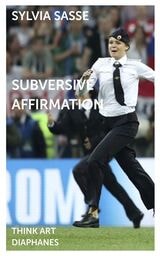
Subversive Affirmation
Critique of Critique RevisitedSylvia Sasse
Diaphanes, 2025
Since the 1960s, theory, the arts, and political activism have increasingly rejected the notion of resistance through negation, raising such arguments as: Doesn’t a critique based on negation make itself dependent on the very system it wants to overcome? Does it not remain trapped in a thinking of oppositions? Although coming from radically different angles, the formulation of concepts like subversive affirmation, hyperaffirmation, overidentification, paradoxical intervention, revolution of the yes, and affirmative sabotage all reflect the emergence of an affirmative critique that overcomes this negation while also making us aware of the difference between conscious consent and conformity, capitulation, indifference, or pragmatism. In her new book, Sylvia Sasse explores and analyzes subversive affirmation as a critical practice in different political systems. She examines the effectiveness of such criticism and its relevance at a time when various political actors have begun appropriating subversive affirmation and are no longer using it as a method of criticism.
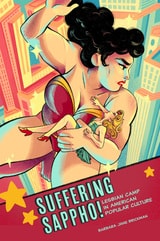
Suffering Sappho!
Lesbian Camp in American Popular CultureBarbara Jane Brickman
Rutgers University Press, 2024
Offering the first major consideration of lesbian camp in American popular culture, Suffering Sappho! traces a larger-than-life lesbian menace across midcentury media forms to propose five prototypical queer icons—the sicko, the monster, the spinster, the Amazon, and the rebel. On the pages of comics and sensational pulp fiction and the dramas of television and drive-in movies, Barbara Jane Brickman discovers evidence not just of campy sexual deviants but of troubling female performers, whose failures could be epic but whose subversive potential could inspire.
Supplemental images of interest related to this title: George and Lomas; Connie Minerva; Cat On Hot Tin; and Beulah and Oriole.


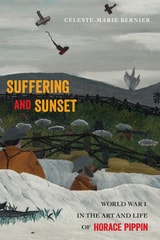
Suffering and Sunset
World War I in the Art and Life of Horace PippinCeleste-Marie Bernier
Temple University Press, 2017
For self-made artist and soldier Horace Pippin—who served in the 369th all-black infantry in World War I until he was wounded—war provided a formative experience that defined much of his life and work. His ability to transform combat service into canvases of emotive power, psychological depth, and realism showed not only how he viewed the world but also his mastery as a painter. In Suffering and Sunset, Celeste-Marie Bernier painstakingly traces Pippin’s life story of art as a life story of war.
Illustrated with more than sixty photographs, including works in various mediums—many in full color—this is the first intellectual history and cultural biography of Pippin. Working from newly discovered archives and unpublished materials, Bernier provides an in-depth investigation into the artist’s development of an alternative visual and textual lexicon and sheds light on his work in its aesthetic, social, and political contexts.
Suffering and Sunset illustrates Pippin’s status as a groundbreaking artist as it shows how this African American painter suffered from but also staged many artful resistances to racism in a white-dominated art world.
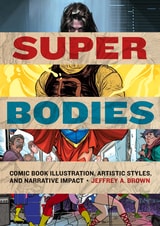
Super Bodies
Comic Book Illustration, Artistic Styles, and Narrative ImpactJeffrey A. Brown
University of Texas Press, 2023
Finalist — San Diego Comic-Con International 2024 Eisner Award in Best Academic/Scholarly Work
2024 MPCA/ACA Best Book for Use in the Classroom, Midwest Popular Culture Association / Midwest American Culture Association (MPCA/ACA)
An examination of the art in superhero comics and how style influences comic narratives.
For many, the idea of comic book art implies simplistic four-color renderings of stiff characters slugging it out. In fact, modern superhero comic books showcase a range of complex artistic styles, with diverse connotations. Leading comics scholar Jeffrey A. Brown assesses six distinct approaches to superhero illustration—idealism, realism, cute, retro, grotesque, and noir—examining how each visually represents the superhero as a symbolic construct freighted with meaning.
Whereas comic book studies tend to focus on text and narrative, Super Bodies gives overdue credit to the artwork, which is not only a principal source of the appeal of comic books but also central to the values these works embody. Brown argues that superheroes are to be taken not as representations of people but as iconic types, and the art conveys this. Even the most realistic comic illustrations are designed to suggest not persons but ideas—ideas about bodies and societies. Thus the appearance of superheroes both directly and indirectly influences the story being told as well as the opinions readers form concerning justice, authority, gender, puberty, sexuality, ethnicity, violence, and other concepts central to political and cultural life.
Superheroes and Contemporary Cultures
Cross-Medial Explorations and Societal PerspectivesEdited by Torsten Caeners and Danny Graydon
Intellect Books, 2026
Offering a global and interdisciplinary perspective on the superhero genre across comics, television, and film, this book presents a diverse range of contemporary superhero scholarship. It combines close readings of iconic characters like Batman, Iron Man, and The Watchmen with critical analysis of broader cultural and societal discourses.
The volume explores how superheroes reflect and problematize ideology, the military-industrial complex, and notions of public and private responsibility. Key themes include identity construction through secret identities and masking, as well as cultural and personal grief and trauma in relation to race and politics. Designed for students, scholars, and fans alike, this work reveals the enduring mainstream appeal of superheroes and their complex intersections with global popular culture.
Superman
The Movie: The 40th-Anniversary InterviewsGary Bettinson
Intellect Books, 2018
Marking forty years since the film’s release, this book presents original interview transcripts with the cast and crew. It serves as a rare insider account of an acclaimed blockbuster that was steeped in controversy throughout production, from its record-breaking budget to conflicts between the director and producers. With refreshing candor, the interviewees cast light on the daily realities on set, as well as on the film’s release and reception. Beginning with the film’s inception and continuing through its runaway success, this book provides valuable insights into the practical logistics and day-to-day realities of mounting a big-budget production, at a time when high-concept Hollywood blockbusters were only just emerging as a genre.
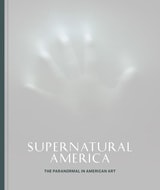
Supernatural America
The Paranormal in American ArtEdited by Robert Cozzolino
University of Chicago Press, 2021
Featuring artists from James McNeill Whistler and Kerry James Marshall to artist/mediums who made images with spirits during séances, this catalog covers more than two hundred years of the supernatural in American art. Here we find works that explore haunting, UFO sightings, and a broad range of experiential responses to other worldly contact.
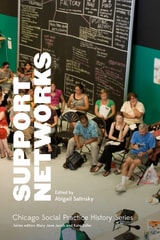
Support Networks
Edited by Abigail Satinsky
School of the Art Institute of Chicago, 2014
The contributors to this collection explore how the city continues to inform and shape contemporary cultural work and the development of informal organizations. Many of the authors are contributors to the scene themselves, having envisioned, founded, and activated these new ways of working. The unconventional systems explored in Support Networks call attention to stories and experiences often overlooked in this history. Ranging from artists’ reflections to essays, interviews, and ephemera, these perspectives challenge existing narratives and foreground underrepresented voices. Through more than twenty-five diverse examples of community building, activism, and catalytic projects, readers will find the inspiration they need to build their own counter-institutions.
Support Networks is part of the new Chicago Social Practice History series, edited by Mary Jane Jacob and Kate Zeller in the Department of Exhibitions and Exhibition Studies at the School of the Art Institute of Chicago (SAIC).

Surface Encounters
Thinking with Animals and ArtRon Broglio
University of Minnesota Press, 2011
What it is like to be an animal? Ron Broglio wants to know from the inside, from underneath the fur and feathers. In examining this question, he bypasses the perspectives of biology or natural history to explore how one can construct an animal phenomenology, to think and feel as an animal other—or any other.
Until now phenomenology has grappled with how humans are embedded in their world. According to philosophical tradition, animals do not practice the self-reflexive thought that provides humans with depth of being. Without human interiority, philosophers have believed, animals live on the surface of things. But, Broglio argues, the surface can be a site of productive engagement with the world of animals, and as such he turns to humans who work with surfaces: contemporary artists.
Taking on the negative claim of animals living only on the surface and turning the premise into a positive set of possibilities for human–animal engagement, Broglio considers artists—including Damien Hirst, Carolee Schneemann, Olly and Suzi, and Marcus Coates—who take seriously the world of the animal on its own terms. In doing so, these artists develop languages of interspecies expression that both challenge philosophy and fashion new concepts for animal studies.
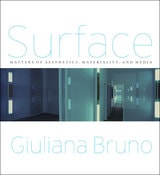
Surface
Matters of Aesthetics, Materiality, and MediaGiuliana Bruno
University of Chicago Press, 2014
Arguing that materiality is not a question of the materials themselves but rather the substance of material relations, Bruno investigates the space of those relations, examining how they appear on the surface of different media—on film and video screens, in gallery installations, or on the skins of buildings and people. The object of visual studies, she contends, goes well beyond the image and engages the surface as a place of contact between people and art objects. As Bruno threads through these surface encounters, she unveils the fabrics of the visual—the textural qualities of works of art, whether manifested on canvas, wall, or screen. Illuminating the modern surface condition, she notes how façades are becoming virtual screens and the art of projection is reinvented on gallery walls. She traverses the light spaces of artists Robert Irwin, James Turrell, Tacita Dean, and Anthony McCall; touches on the textured surfaces of Isaac Julien’s and Wong Kar-wai’s filmic screens; and travels across the surface materiality in the architectural practices of Diller Scofidio + Renfro and Herzog & de Meuron to the art of Doris Salcedo and Rachel Whiteread, where the surface tension of media becomes concrete. In performing these critical operations on the surface, she articulates it as a site in which different forms of mediation, memory, and transformation can take place.
Surveying object relations across art, architecture, fashion, design, film, and new media, Surface is a magisterial account of contemporary visual culture.
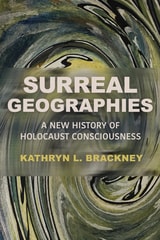
Surreal Geographies
A New History of Holocaust ConsciousnessKathryn L. Brackney
University of Wisconsin Press, 2024
Brackney offers a new look at familiar works by authors and artists such as Claude Lanzmann, W. G. Sebald, and Paul Celan, while making surprising connections to contemporary scholars like Timothy Snyder and Donna Haraway, and events such as the Space Race. In the process, she maps out a decades-long process through which transnational conventions of mourning have emerged in Western Europe, North America, and Israel, functioning to constitute Jewish victimization as “grievable life.” Ultimately, she shows how the Holocaust has developed into a figure for the destabilization and reformulation of the category of humanity and the problem of mourning across difference.
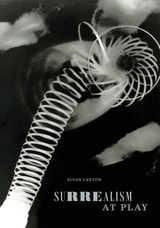
Surrealism at Play
Susan Laxton
Duke University Press, 2019
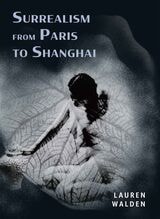
Surrealism from Paris to Shanghai
Lauren Walden
Hong Kong University Press, 2024
Surrealism from Paris to Shanghai is the first English language book dedicated to introducing Chinese Surrealism, enlarging the geographical authority of Surrealist studies beyond a Eurocentric prism of analysis. The book reveals the mutual cultural influence between China and the Western avant-garde, moving beyond notions of “copying from the West.” Utilizing primary source materials, particularly periodicals, Lauren Walden reveals the underexplored dissemination of Surrealism in Shanghai. Highlighting how Surrealism was applied across a broad political spectrum in Shanghai including anti-colonialism, communism, and nationalism, Walden also demonstrates why Shanghai’s former French concession became the birthplace of Surrealism in China.
Surveying the Landscape
Arts Integration at Research Universities: A Review of Best Practices and Challenges for Arts Integration in Higher EducationBruce M. Mackh, PhD
Michigan Publishing Services, 2015
This study presents “best practices in the integration of arts practice in U.S. research universities . . . , fulfill[ing] the need for a document that articulates models, obstacles, implementation strategies, costs, and impact on students and faculty as well as on research, practice, and teaching in other knowledge areas” (ArtsEngine). Rather than providing a detailed set of instructions, this document maps the landscape of arts integration at 30 partner institutions in the Alliance for the Arts in Research Universities (a2ru) and at 16 other institutions. It highlights aspirational models and presents an overall guide to current practices linking the arts to other learning areas.
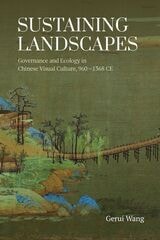
Sustaining Landscapes
Governance and Ecology in Chinese Visual Culture, 960–1368 CEGerui Wang
Hong Kong University Press, 2025
Sustaining Landscapes: Governance and Ecology in Chinese Visual Culture, 960–1368 CE examines ecological thought contested amid the rise of the Chinese landscape genre, tracing its intersections with infrastructure governance, natural resource management, and geospatial knowledge. It traces the pre-industrial notion of “sustainability” in policy debates, legal regulations, and arts. Landscape imagery on paintings, maps, as well as mass-produced artifacts such as fans and ceramic pillows documented both appropriate and exploitative use of natural resources, and critiqued on social inequity and political turmoil. This book breaks new ground by bringing together research on visual and material culture with analysis of politics and ecology. Wang argues that the Chinese landscape genre embodied a holistic approach to negotiating debates on human-nature interdependence and people-state relationships. It joins the increasing literature on ecocriticism and offers alternative perspectives to address contemporary challenges, ranging from environmental crisis to global governance.
Sweet Dreams
Contemporary Art and ComplicityJohanna Drucker
University of Chicago Press, 2005
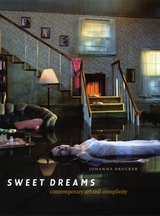
Drucker shows that artists today are aware of working within the ideologies of mainstream culture and have replaced avant-garde defiance with eager complicity. Finding their materials at flea markets or exploring celebrity culture, contemporary artists have created a vibrantly participatory movement that exudes enthusiasm and affirmation—all while critics continue to cling to an outmoded vocabulary of opposition and radical negativity that defined modernism's avant-garde. At the cutting edge of new media research, Drucker surveys a wide range of exciting contemporary artists, demonstrating their clear departure from the past and petitioning viewers and critics to shift their terms and sensibilities as well. Sweet Dreams is a testament to the creative processes and self-conscious heterogeneity of art today as well as a revolutionary effort to solicit collaboration that will encourage the production of imaginative thought and contribute to contemporary life.
Swimmers
Carole FeuermanCarole Feuerman
The Artist Book Foundation, 2014
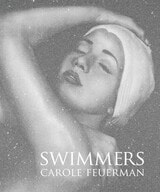
Realist sculptor Carole A. Feuerman's human-figure sculptures express a refreshing perspective on the mundane but intensely personal activities of modern life. her powers of observation and versatility find unique expression through various materials that include marble, bronze, vinyl, and painted resins, while she incorporates both ancient and contemporary methods in the creation of her works. Swimmers: Carole Feuerman is a gorgeous and shimmering glimpse at transitory, contemplative moments in time, often captured in a veil of clear resin that replicates tumbling water droplets.
In his astute and insightful essay, John Yau describes Feuerman's exquisitely rendered figures as subjects "caught in a moment of transition that radiates an intense eroticism." She evokes an inward life for her figures that invites our speculation, while revealing a mysterious chasm between them and the viewer that can never be plumbed. We cannot know their thoughts and perhaps that is exactly the point. Feuerman fuses the tactile nature of her sculpture with a visual verisimilitude that provides us a fleeting glimpse into private and isolated environments—women stepping out of the shower, in the rain, or swimming—that suggest a meditative bliss.
Switching Codes
Thinking Through Digital Technology in the Humanities and the ArtsEdited by Thomas Bartscherer and Roderick Coover
University of Chicago Press, 2011
Half a century into the digital era, the profound impact of information technology on intellectual and cultural life is universally acknowledged but still poorly understood. The sheer complexity of the technology coupled with the rapid pace of change makes it increasingly difficult to establish common ground and to promote thoughtful discussion.
Responding to this challenge, Switching Codes brings together leading American and European scholars, scientists, and artists—including Charles Bernstein, Ian Foster, Bruno Latour, Alan Liu, and Richard Powers—to consider how the precipitous growth of digital information and its associated technologies are transforming the ways we think and act. Employing a wide range of forms, including essay, dialogue, short fiction, and game design, this book aims to model and foster discussion between IT specialists, who typically have scant training in the humanities or traditional arts, and scholars and artists, who often understand little about the technologies that are so radically transforming their fields. Switching Codes will be an indispensable volume for anyone seeking to understand the impact of digital technology on contemporary culture, including scientists, educators, policymakers, and artists, alike.
Symbols of Wealth and Power
Architectural Terracotta Decoration in Etruria and Central Italy, 640-510 B.C.Nancy A. Winter
University of Michigan Press, 2009
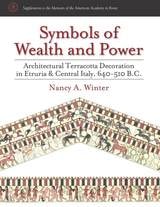
Although initially intended for the innovative, if prosaic, purpose of providing waterproof and fireproof cover for earlier thatch-roofed homes, fired clay tiles, in seventh- and sixth-century Etruria and Central Italy, combined with Etruscan love of adornment to create exceptional domestic and religious building decoration. Featuring statues and figured friezes of humans, animals, and mythological figures intended to convey the status of the owner or dedicator, the surviving terracotta roofs provide important insights into the architectural history of Etruria. With Symbols of Wealth and Power, Nancy A. Winter has provided a definitive overview of the evidence for these roofing elements that will enhance our knowledge of Etruscan---and more broadly, ancient---architecture.
Nancy A. Winter is an archaeologist and former librarian of the American School of Classical Studies, Athens. She is the author of Greek Architectural Terracottas: From the Prehistoric to the End of the Archaic Period (1993).
Role Models in the Roman World: Identity and Assimilation, edited by Sinclair Bell and Inge Lyse Hansen
The Maritime World of Ancient Rome, edited by Robert L. Hohlfelder
Cosa: The Black-Glaze Pottery 2, by Ann Reynolds Scott
Systems We Have Loved
Conceptual Art, Affect, and the Antihumanist TurnEve Meltzer
University of Chicago Press, 2013