Results by title
2706 books match the query 'European' and 204 start with s

Spectacular Disappearances
Celebrity and Privacy, 1696-1801Julia H. Fawcett
University of Michigan Press, 2016
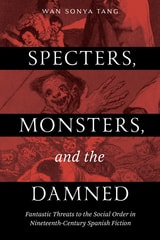
Specters, Monsters, and the Damned
Fantastic Threats to the Social Order in Nineteenth-Century Spanish FictionWan Sonya Tang
Vanderbilt University Press, 2024
Tang offers innovative readings of eleven fantastic short stories and one novella as they first appeared, some serialized and others illustrated, in Spanish periodicals from the late 1800s and early 1900s. Drawing on original archival research, she demonstrates how these stories—in which the everyday is suddenly and inexplicably disrupted by the supernatural—often employ gothic imagery (specifically that of the specter, the monster, and the curse) to depict as threatening those who deviate from cultural norms in terms of class, gender, and race. Tang argues, however, that these unsettling, open‑ended narratives likewise allow readers to question how and why certain designated groups are privileged by society. She contends that the fantastic depiction of reality as unstable in these works ultimately facilitates an interrogation of those values that are accepted as natural by the reigning social order, gesturing toward the inhumanity not of the marginalized, but of the dominant group.
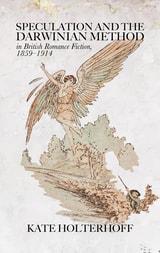
Speculation and the Darwinian Method in British Romance Fiction, 1859-1914
Kate Holterhoff
Ohio University Press, 2025
This study explores how British romance fictions published between 1859 and 1914 absorbed distinctly Darwinian attitudes toward the epistemology of science—one that accorded with scientific speculation. Following the 1859 publication of On the Origin of Species, in which Charles Darwin acknowledged arriving at his thesis by allowing himself “to speculate on the subject” of species transmutation, many romance fiction writers embraced, criticized, and promoted acts of speculating characterized as scientific. The romance fictions discussed in this book recurred to Darwin’s speculative methodology more than to rigorous Baconian empiricism because it permitted them to draw pointedly imaginative conclusions in reasonable ways. Kate Holterhoff’s book examines how romance authors like Grant Allen, H. G. Wells, and Arthur Conan Doyle incorporated Darwinian ideas and speculative thinking into their works to advance their ideological and aesthetic goals. Holterhoff uses five paired genres and methods to analyze this engagement:
- scientific romance and experimentation,
- metaphysical romance and thought experiments,
- anthropological romance and reasoning with imperfect data,
- gothic romance and probability, and
- utopian romance and Malthusian political economy.
By focusing on Darwin’s influence in legitimizing speculative methods in science, the book places the interplay between British science and romance fiction into critical perspective and highlights Darwin’s enduring impact on Western culture.
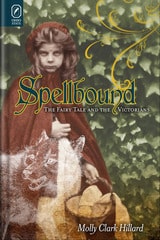
Spellbound
The Fairy Tale and the VictoriansMolly Clark Hillard
The Ohio State University Press, 2014
Through close readings of the novels of Dickens, Eliot, and Charlotte Brontë; the poetry of Tennyson and Christina Rossetti; the visual artistry of Burne-Jones and Punch; and the popular theatricals of dramatists like Planche and Buckingham, Spellbound opens fresh territory into well-traversed titles of the Victorian canon. Hillard demonstrates that these literary forms were all cross-pollenated by the fairy tale and that their authors were—however reluctantly—purveyors of disruptive fairy tale matter over which they had but imperfect control.
Spenser Studies, volume 37 number 1 (2023)
The University of Chicago Press
University of Chicago Press Journals, 2023
Spenser Studies, volume 38 number 1 (2024)
The University of Chicago Press
University of Chicago Press Journals, 2024
Spenser Studies, volume 39 number 1 (2025)
The University of Chicago Press
University of Chicago Press Journals, 2025
Spenser Studies, volume 40 number 1 (January 2026)
The University of Chicago Press
University of Chicago Press Journals, 2026
Spenser Studies
A Renaissance Poetry Annual, volume 35 number 1 (2021)The University of Chicago Press
University of Chicago Press Journals, 2021
Spenser Studies
A Renaissance Poetry Annual, volume 36 number 1 (2022)The University of Chicago Press
University of Chicago Press Journals, 2022
Spenser, Milton, and the Redemption of the Epic Hero
Christopher Bond
University of Delaware Press, 2011
Spies and Holy Wars
The Middle East in 20th-Century Crime FictionBy Reeva Spector Simon
University of Texas Press, 2010
Illuminating a powerful intersection between popular culture and global politics, Spies and Holy Wars draws on a sampling of more than eight hundred British and American thrillers that are propelled by the theme of jihad—an Islamic holy war or crusade against the West. Published over the past century, the books in this expansive study encompass spy novels and crime fiction, illustrating new connections between these genres and Western imperialism.
Demonstrating the social implications of the popularity of such books, Reeva Spector Simon covers how the Middle Eastern villain evolved from being the malleable victim before World War II to the international, techno-savvy figure in today's crime novels. She explores the impact of James Bond, pulp fiction, and comic books and also analyzes the ways in which world events shaped the genre, particularly in recent years. Worldwide terrorism and economic domination prevail as the most common sources of narrative tension in these works, while military "tech novels" restored the prestige of the American hero in the wake of post-Vietnam skepticism. Moving beyond stereotypes, Simon examines the relationships between publishing trends, political trends, and popular culture at large—giving voice to the previously unexamined truths that emerge from these provocative page-turners.
Spiritual Sonnets
A Bilingual EditionGabrielle de Coignard
University of Chicago Press, 2003
Spiritual Sonnets presents the first English translation of 129 of Coignard's highly autobiographical poems, giving us a startlingly intimate view into the life and mind of this Renaissance woman. The sonnets are all written "in the shadow of the Cross" and include elegies, penitential lyrics, Biblical meditations, and more. Rich with emotion, Coignard's poems reveal anguished moments of loneliness and grief as well as ecstatic experiences of mystical union. They also reveal her mastery of sixteenth-century literary conventions and spiritual traditions.
This edition, printed in bilingual format with Melanie E. Gregg's translations facing the French originals, will be welcomed by teachers and students of poetry, French literature, women's studies, and religious and Renaissance studies.

Spiritual Writings of Sister Margaret of the Mother of God (1635-1643)
Margaret Van Noort
Iter Press, 2015
In 1635, as directed by her confessor so that he might understand “the state of her soul,” Margaret Van Noort, a lay sister of the royal convent of Discalced Carmelite nuns in Brussels, composed her spiritual autobiography. This text was followed by two diaries in 1636 and 1637 recording the workings of her inner life and relation to God, and reflecting the cosmopolitan Catholic tradition of her homeland. Now gathered in this volume, these works illustrate Margaret’s development from a troubled young lay sister into a woman of spiritual experience and authority.

Squandered Advice
Ilse Aichinger
Seagull Books, 2022
Austrian writer Ilse Aichinger (1921–2016) was a member of the Gruppe 47 writers’ group, which sought to renew German-language literature after World War II. From a wide-ranging literary career that encompassed all genres, Squandered Advice was Aichinger’s sole poetry collection. The book gathers poems written over several decades, yet Aichinger’s poetic voice remains remarkably consistent, frequently addressing us or a third party, often in the imperative, with many poems written in the form of a question. Even though they use free verse throughout, the poems are still tightly structured, often around sounds or repetition, using spare language. Phrases are often fragmentary, torn off, and juxtaposed as if in a collage. Isolated and haunting, the images are at times everyday, at other times surreal, suggesting dreams or memories. The tone ranges from reassuring and gentle to disjointed and disturbing, but the volume was carefully composed by the author into an integral whole, not chronological but following its own poetic logic. This new translation makes Aichinger’s critically acclaimed book, which has inspired poets in the German-speaking world for decades, available to English-language readers for the first time.
State Anti-Intellectualism and the Politics of Gender and Race
Illiberal France and BeyondÉric Fassin
Central European University Press, 2024
Eric Fassin examines the trend of State anti-intellectualism in France using the nation as a case study to demonstrate that this tendency is not limited to ostensibly illiberal regimes. He argues that today’s world requires an examination of this phenomenon beyond Cold War geopolitical divisions and highlights a global shift towards authoritarian neoliberalism. His book is a plea for the political urgency of intellectual work in a global moment of political anti-intellectualism.
The book covers the period from President Sarkozy to Prime Minister Valls and includes both firsthand and public cases of attacks against academics, not only in France, but also in Brazil, Hungary, Russia, Turkey, and the United States, with examples of State racism and the argument of the State against antiracism. The book also considers issues of censorship and cancel culture, concluding with Fassin’s firsthand account of attacks on him from the far-right.
States of Plague
Reading Albert Camus in a PandemicAlice Kaplan and Laura Marris
University of Chicago Press, 2022
As one of the most discussed books of the COVID-19 crisis, Albert Camus’s classic novel The Plague has become a new kind of literary touchstone. Surrounded by terror and uncertainty, often separated from loved ones or unable to travel, readers sought answers within the pages of Camus’s 1947 tale about an Algerian city gripped by an epidemic. Many found in it a story about their own lives—a book to shed light on a global health crisis.
In thirteen linked chapters told in alternating voices, Alice Kaplan and Laura Marris hold the past and present of The Plague in conversation, discovering how the novel has reached people in their current moment. Kaplan’s chapters explore the book’s tangled and vivid history, while Marris’s are drawn to the ecology of landscape and language. Through these pages, they find that their sense of Camus evolves under the force of a new reality, alongside the pressures of illness, recovery, concern, and care in their own lives. Along the way, Kaplan and Marris examine how the novel’s original allegory might resonate with a new generation of readers who have experienced a global pandemic. They describe how they learned to contemplate the skies of a plague spring, to examine the body politic and the politics of immunity.
Both personal and eloquently written, States of Plague uncovers for us the mysterious way a novel can imagine the world during a crisis and draw back the veil on other possible futures.
Stendhal
Fiction and the Themes of FreedomVictor Brombert
University of Chicago Press, 2017
For Brombert, Stendhal’s work is deeply personal; elsewhere, he has written about the myriad connections between Stendhal’s ironic inquiries into identity and his own boyhood in France on the brink of World War II. Proceeding via careful and nuanced readings of passages from Stendhal’s fiction and autobiography, Brombert pays particular attention to style, tone, and meaning. Paradoxically, Stendhal’s heroes often feel most free when in prison, and in a statement of stunning relevance for our contemporary world, Brombert contends that Stendhal is far clearer than any writer before him on the “crisis and contradictions of modern humanism that . . . render political freedom illusory.” Featuring a new introduction in which Brombert explores his earliest encounters with Stendhal—the beginnings of his “affair” during a year spent as a Fulbright scholar in Rome—Stendhal remains a spirited, elegant, and resonant account.
Stigma, Fear and Foreign Policy
Serbia’s Destigmatization Dilemma in the Western BalkansMilan Krstic
Central European University Press, 2026
The central argument is that Serbia’s decision-makers grappled with a “destigmatization dilemma,” perceiving that actions aimed at facilitating Serbia’s destigmatization within international society could simultaneously undermine its security in regional relations with former adversaries. This produced a dillema between prioritizing destigmatization or security concerns. Through an examination of Serbia’s relations with Croatia and Bosnia and Herzegovina, the book explores how decision-makers navigated this dilemma, focusing on two key perceptions: the level of threat posed by the former adversary, and the perceived importance of the bilateral relationship for its destigmatization goals.
Stop Reading! Look!
Modern Vision and the Weimar Photographic BookPepper Stetler
University of Michigan Press, 2015
Storm Still
Peter Handke
Seagull Books, 2018
In Storm Still, Handke’s most recent work, he returns to the land of his birth, the Austrian province of Carinthia. There on the Jaunfeld, the plain at the center of Austria’s Slovenian settlement, the dead and the living of a family meet and talk. Composed as a series of monologues, Storm Still chronicles both the battle of the Slovene minority against Nazism and their love of the land. Presenting a panorama that extends back to the author’s bitter roots in the region, Storm Still blends penetrating prose and poetic drama to explore Handke’s personal history, taking up themes from his earlier books and revisiting some of their characters. In this book, the times of conflict and peace, war and prewar, and even the seasons themselves shift and overlap. And the fate of an orchard comes to stand for the fate of a people.
Storytelling in Sixteenth-Century France
Negotiating Shifting FormsEmily E. Thompson
University of Delaware Press, 2022
Published by the University of Delaware Press. Distributed worldwide by Rutgers University Press.
Strange Likeness
Description and the Modernist NovelDora Zhang
University of Chicago Press, 2020
Description is the novelistic technique charged with establishing a common world, but in the early twentieth century, there was little agreement about how a common world could be known and represented. Zhang argues that the protagonists in her study responded by shifting description away from visualizing objects to revealing relations—social, formal, and experiential—between disparate phenomena. In addition to shedding new light on some of the best-known works of modernism, Zhang opens up new ways of thinking about description more broadly. She moves us beyond the classic binary of narrate-or-describe and reinvigorates our thinking about the novel. Strange Likeness will enliven conversations around narrative theory, affect theory, philosophy and literature, and reading practices in the academy.
Strange Meetings
Anglo-German Literary Encounters from 1910 to 1960Peter Edgerly Firchow
Catholic University of America Press, 2008
Strange Science
Investigating the Limits of Knowledge in the Victorian AgeEdited by Lara Karpenko and Shalyn Claggett
University of Michigan Press, 2017
Strata
Ewa Chrusciel
Omnidawn, 2018
Streetwise
How Taxi Drivers Establish Customer's TrustworthinessDiego Gambetta
Russell Sage Foundation, 2005

Strindberg's Letters
August Strindberg
University of Chicago Press, 1992
Strindberg's plays, novels, and short stories, which influenced film and theatre artists from Artaud and the German Expressionists to Ingmar Bergman and Woody Allen, chart an artistic evolution from Naturalism to the revolt against realism that issued in Expressionist drama. These letters help to explain Strindberg's seminal force and testify to the broad range of his interests, energies, and imaginative instincts. An essential part of their author's oeuvre, the letters provide invaluable insight into Strindberg the artist, the political thinker, and the person, and were regarded by Strindberg himself as an integral component of his autobiographical project.
The letters, some of them published here for the first time, have been meticulously edited and are supported by an extensive introduction and notes.
Strindberg's Letters, Volume 1
1862-1892August Strindberg
University of Chicago Press, 1992
Strindberg's Letters, Volume 2
1892-1912August Strindberg
University of Chicago Press, 1992
Strong Voices, Weak History
Early Women Writers and Canons in England, France, and ItalyPamela J Benson and Victoria Kirkham, Editors
University of Michigan Press, 2005
Struggle over Identity
The Official and the Alternative "Belarusianness"Nelly Bekus
Central European University Press, 2010
Rejecting the cliché about “weak identity and underdeveloped nationalism,” Bekus argues for the co-existence of two parallel concepts of Belarusianness—the official and the alternative one—which mirrors the current state of the Belarusian people more accurately and allows for a different interpretation of the interconnection between the democratization and nationalization of Belarusian society.
The book describes how the ethno-symbolic nation of the Belarusian nationalists, based on the cultural capital of the Golden Age of the Belarusian past (17th century) competes with the “nation” institutionalized and reified by the numerous civic rituals and social practices under the auspices of the actual Belarusian state.
Comparing the two concepts not only provides understanding of the logic that dominates Belarusian society’s self-description models, but also enables us to evaluate the chances of alternative Belarusianness to win this unequal struggle over identity.
Stubborn Structures
Reconceptualizing Post-Communist RegimesHenry E. Hale
Central European University Press, 2019

Studies in Criticism and Aesthetics, 1660-1800
Essays in Honor of Samuel Holt MonkHoward Anderson and John S. Shea, Editors
University of Minnesota Press, 1967
Studies in Criticism and Aesthetics, 1660–1800 was first published in 1967. Minnesota Archive Editions uses digital technology to make long-unavailable books once again accessible, and are published unaltered from the original University of Minnesota Press editions.
In this volume nineteen contributors, in as many essays, discuss various aspects of critical and aesthetic development in the late seventeenth and the eighteenth centuries, from the time of Dryden to Wordsworth. This was a period in which traditional literary criticism progressed in important new directions and which saw the rise of aesthetic theory. The book is published in honor of Samuel Holt Monk, professor of English at the University of Minnesota, and distinguished American scholar in the field of eighteenth century English literature, literary criticism, and aesthetics.
The essays, all of which were written for this volume, analyze the literary theories and assumptions of some of the most important artists and critics of the time, as well as the aesthetic theories which influenced painting and literature. During the period under discussion, the progress of social and philosophical thought stimulated an intensive examination of the nature and function of art. Although neoclassical ideals dominated Restoration criticism and continued to influence Pope and later critics like Johnson and Reynolds, other tendencies were gaining ground, and throughout the eighteenth century the effort to reconcile a growing interest in "the pleasing emotions" with the tenets of classicism created criticism and aesthetic theory of extraordinary complexity. These essays illuminate that complexity without oversimplifying it.
The book is illustrated with reproductions of works of art of the period. In addition to the essays, there is a bibliography of Professor Monk's writings.
Studies in French-Classical Tragedy
Lacy Lockert
Vanderbilt University Press, 0
Numerous, often lengthy, quoted passages (with an English verse translation accompanying the French in every case) exemplify the achievement and exhibit the qualities of the dramas and dramatists discussed.
That portion of the author’s critical work in this field which has already appeared, as introductions in his volumes of translated plays, has been much appreciated, as witness the following brief excerpts from reviews of those books:
“The plays…are discussed with insight and enthusiasm.”—(London) Notes and Queries.
“Refreshingly original and yet free from specious pleading or naïve enthusiasm.”—Chattanooga Times.
“Thoughtful, discerning appraisals.”—Seventeenth Century News.
“An excellent critical introduction.”—The Library Journal.
“A judicious introduction.”—Arthur Knodel in The Personalist.
“The very best interpretative treatment of Corneille that has appeared.”—C. Maxwell Lancaster.
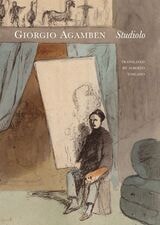
Studiolo
Giorgio Agamben
Seagull Books, 2022
In Renaissance palaces, the studiolo was a small room to which the prince withdrew to meditate or read, surrounded by paintings he particularly loved. This book is a kind of studiolo for its author, Giorgio Agamben, as he turns his philosophical lens on the world of Western art.
Studiolo is a fascinating take on a selection of artworks created over millennia; some are easily identifiable, others rarer. Though they were produced over an arc of time stretching from 5000 BCE to the present, only now have they achieved their true legibility. Agamben contends that we must understand that the images bequeathed by the past are really addressed to us, here and now; otherwise, our historical awareness is broken. Notwithstanding the attention to detail and the critical precautions that characterize the author’s method—they provoke us with a force, even a violence, that we cannot escape. When we understand why Dostoevsky feared losing his faith before Holbein’s Body of the Dead Christ, when Chardin’s Still Life with Hare is suddenly revealed to our gaze as a crucifixion or Twombly’s sculpture shows that beauty must ultimately fall, the artwork is torn from its museological context and restored to its almost prehistoric emergence. These artworks are beautifully reproduced in color throughout Agamben’s short but significant addition to his scholarly oeuvre in English translation.
Stumbling Blocks
Roman PoemsKarl Kirchwey
Northwestern University Press, 2017
As in his 1998 New York Times Notable Book The Engrafted Word, the city of Rome becomes a lens through which to understand the contemporary human experience and the upheavals of human loss. Stumbling Blocks takes as its starting point the shattered ancient Roman ruins described in Renaissance poet Joachim du Bellay's celebrated sonnet—a landscape of death feeding upon itself and restored to life in the imagination of each successive generation to salvage its own narratives.
Kirchwey builds new arches and mythological intersections in exquisite poems that take long walks in the Eternal City, through landscapes far away and deep within. This gorgeous collection takes us back in time and brings us forward through our Old and New Worlds, revealing through the religion of art both beauty and atrocity.
Style and Time
Essays on the Politics of AppearanceAndrew Benjamin
Northwestern University Press, 2006
Nothing less than a rethinking of the conditions of Western art as it relates to politics, architecture, and time, this study of Walter Benjamin's modernity in temporal and spatial terms is a provocative and original work of philosophy in its own right—a work that suggests that the time has come to revise existing paradigms.
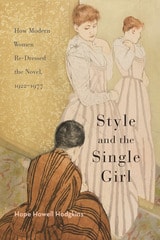
Style and the Single Girl
How Modern Women Re-Dressed the Novel, 1922–1977Hope Howell Hodgkins
The Ohio State University Press, 2016
Hodgkins delineates how in the 1920s and 1930s, popular novels by Dorothy Sayers and high-art fiction by Jean Rhys used dress to comment wittily and bitterly on gender relations. During World War II, changes in British Vogue and compromises made by the literary journal Horizon signaled the death of modernist styles, as Elizabeth Bowen’s gender-bent wartime stories show. Then demure and reserved postwar styles—Dior’s curvy New Look, the Movement’s understated literary irony—were intertwined in the fictions of Barbara Pym and Muriel Spark, who re-dressed the novel with a vengeance. Whether fashioning detective fiction, literary impressionism, or postwar comedy, these novelists used style in every sense to redefine that famous question, “What do women want?”
Stylistic and Narrative Structures in the Middle English Romances
By Susan Wittig
University of Texas Press, 1978
This volume provides a generic description, based on a formal analysis of narrative structures, of the Middle English noncyclic verse romances. As a group, these poems have long resisted generic definition and are traditionally considered to be a conglomerate of unrelated tales held together in a historical matrix of similar themes and characters. As single narratives, they are thought of as random collections of events loosely structured in chronological succession. Susan Wittig, however, offers evidence that the romances are carefully ordered (although not always consciously so) according to a series of formulaic patterns and that their structures serve as vehicles for certain essential cultural patterns and are important to the preservation of some community-held beliefs.
The analysis begins on a stylistic level, and the same theoretical principles applied to the linguistic formulas of the poems also serve as a model for the study of narrative structures. The author finds that there are laws that govern the creation, selection, and arrangement of narrative materials in the romance genre and that act to restrict innovation and control the narrative form.
The reasons for this strict control are to be found in the functional relationship of the genre to the culture that produced it. The deep structure of the romance is viewed as a problem-solving pattern that enables the community to mediate important contradictions within its social, economic, and mythic structures. Wittig speculates that these contradictions may lie in the social structures of kinship and marriage and that they have been restructured in the narratives in a “practical” myth: the concept of power gained through the marriage alliance, and the reconciliation of the contradictory notions of marriage for power’s sake and marriage for love’s sake.
This advanced, thorough, and completely original study will be valuable to medieval specialists, classicists, linguists, folklorists, and Biblical scholars working in oral-formulaic narrative structure.
Subject Without Nation
Robert Musil and the History of Modern IdentityStefan Jonsson
Duke University Press, 2001
It was to this society that Musil responded in his great work The Man Without Qualities. Exploring the nooks and crannies of this modernist classic, Jonsson shows that Musil’s narrative evolves along two axes that must be considered in tandem: Whereas the central plot portrays a Viennese elite that in 1913 attempts to restore social cohesion by gathering popular support for the cultural essence of the empire, the protagonist discovers that he lacks essence altogether and finds himself attracted by monsters, criminals, and revolutionary figures that reject the social order. In this way, Musil’s novel traces the disappearance of what Jonsson calls the expressivist paradigm—the conviction that identities such as gender, nationality, class, and social character are expressions of permanent intrinsic dispositions. This, Jonsson argues, is Musil’s great legacy. For not only did the Austrian author seek to liquidate prevailing conceptions of personal and cultural identity; he also projected “a new human being,” one who would resist assimilation into imperialist, nationalist, or fascist communities.
Subject Without Nation presents a new interpretation of Viennese modernity and uncovers the historical foundations of poststructural and postcolonial reconceptualizations of human subjectivity. Illuminating links between Musil’s oeuvre as a whole and post-war developments in critical thought, this book locates an important crossroads between literary criticism, intellectual history, and cultural theory.
Subject/Object and Beyond
Women in Early Modern FranceEdited by Nancy M. Frelick and Edith Benkov
Iter Press, 2023
Subject/Object and Beyond brings together essays by established and emerging scholars to honor the exceptionally rich contributions and career of scholar Colette H. Winn. It also celebrates fifty years of sustained scholarship on early modern women, along with the foundation of Women’s Studies as a recognized academic discipline in North America. The collection comprises seventeen articles that explore multiple perspectives on early modern women, including their writings, translations, reception, and contributions to various fields, including literature, music, politics, religion, and science.
Subjects on Display
Psychoanalysis, Social Expectation, and Victorian FemininityBeth Newman
Ohio University Press, 2004
Subjects on Display explores a recurrent figure at the heart of many nineteenth-century English novels: the retiring, self-effacing woman who is conspicuous for her inconspicuousness. Beth Newman draws upon both psychoanalytic theory and recent work in social history as she argues that this paradoxical figure, who often triumphs over more dazzling, eye-catching rivals, is a response to the forces that made personal display a vexed issue for Victorian women. Chief among these is the changing socioeconomic landscape that made the ideal of the modest woman outlive its usefulness as a class signifier even as it continued to exert moral authority.
This problem cannot be grasped in its full complexity, Newman shows, without considering how the unstable social meanings of display interacted with psychical forces-specifically, the desire to be seen by others that is central to both masculine and feminine subjectivity. This desire raises an issue that feminist theorists have been reluctant to address: the importance of pleasure in being the object of the look. Their reluctance is characteristic of cultural theory, which has tended to equate subjectivity with the position of the observer rather than the observed.
Through a consideration of fiction by Charlotte Brontë, Charles Dickens, George Eliot, and Henry James, Newman shifts the inquiry toward the observed in the experience of being seen. In the process she reopens the question of the gaze and its relation to subjectivity.
Subjects on Display will appeal to scholars and students in several disciplines as it returns psychoanalysis to a central position within literary and cultural studies.

Sublimity and Skepticism in Montaigne and Milton
David L. Sedley
University of Michigan Press, 2005
Sedley uses the juxtaposition of Montaigne and Milton to argue that two seminal early modern phenomena, the rise of the sublime as an aesthetic category and the emergence of skepticism as a philosophical problem, are interrelated. The comparison of these two Renaissance writers highlights the traditions that have canonized them and also complicates the canonical views: Sedley's perspective reveals how Montaigne cultivated his famous skepticism in order to produce sublimity, while Milton forged his renowned sublimity through his encounter with skepticism. Sedley's first argument is that sublimity motivated skepticism: the sense that a force existed outside the aesthetic categories conventional in the Renaissance drove authors into a skeptical frame of mind. His second argument is that skepticism created sublimity: the skeptical mind-set offered alternative resources of aesthetic power and enabled authors to fashion a sublime style. These claims revise standard views of skepticism and sublimity, suggesting a mandate for an enriched aesthetics behind late-Renaissance loss of belief and exposing the Renaissance impulse behind modern notions of sublimity.
"Sedley's work takes seriously our ongoing engagement with doubt. It is a brisk and brilliant guide to the disparate pathways through which early modern skepticism made its way to the sublime."
-Eileen Reeves, Associate Professor of Comparative Literature, Princeton University
"Sublimity and Skepticism in Montaigne and Milton is a powerful piece of revisionist intellectual history. By demonstrating the close links between the rise of skepticism and the power of the sublime, Sedley offers a welcome antidote to the heavily ideological tenor of much recent cultural studies. With clarity and elegance Sedley shows that two of the greatest writers of the late Renaissance, Montaigne and Milton, are haunted by a crisis of authority, which is accompanied by the irruption of the sublime, by an inchoate sense of being overwhelmed by the phenomenal world. Through deft and intelligent readings Sedley shows how key moments in the works of these two great authors are structured by the intersection of the sublime and the skeptical. This book should be of great interest to literary scholars, aestheticians, and intellectual historians working in several languages. It is a very fine piece of work."
-Tim Hampton, Professor of French, UC Berkeley
"A refreshingly modern and elegant understanding of Montaigne and Milton as inaugurating the sublime possibilities of the fragmentary and incomprehensible. Sedley reinserts these writers into a history of the transformation of admiration into awe, and makes us revisit the beginnings and the justifications of our own esthetics of the sublime."
-Ullrich Langer, Professor of French and Italian, University of Wisconsin
Subtle Subversions
Reading Golden Age Sonnets by Iberian WomenGwyn Fox
Catholic University of America Press, 2008
Such Is My Love
A Study of Shakespeare's SonnetsJoseph Pequigney
University of Chicago Press, 1985
Sunspots and the Sun King
Sovereignty and Mediation in Seventeenth-Century FranceEllen M. McClure
University of Illinois Press, 2006
Mediation, monarchy, and Louis XIV's attempts to legitimize his reign
In order to assert his divine right, Louis XIV missed no opportunity to identify himself as God’s representative on earth. However, in Sunspots and the Sun King Ellen McClure explores the contradictions inherent in attempting to reconcile the logical and mystical aspects of divine right monarchy. McClure analyzes texts devoted to definitions of sovereignty, presents a meticulous reading of Louis XIV’s memoirs to the crown prince, and offers a novel analysis of diplomats and ambassadors as the mediators who preserved and transmitted the king’s authority. McClure asserts that these discussions, ranging from treatises to theater, expose incommensurable models of authority and representation permeating almost every aspect of seventeenth-century French culture.
Surplus Citizens
Struggle and Nationalism in the Greek CrisisDimitra Kotouza
Pluto Press, 2018
Surrealism in Greece
An AnthologyEdited and translated by Nikos Stabakis
University of Texas Press, 2008
In the decades between the two World Wars, Greek writers and artists adopted surrealism both as an avant-garde means of overturning the stifling traditions of their classical heritage and also as a way of responding to the extremely unstable political situation in their country. Despite producing much first-rate work throughout the rest of the twentieth century, Greek surrealists have not been widely read outside of Greece. This volume seeks to remedy that omission by offering authoritative translations of the major works of the most important Greek surrealist writers.
Nikos Stabakis groups the Greek surrealists into three generations: the founders (such as Andreas Embirikos, Nikos Engonopoulos, and Nicolas Calas), the second generation, and the Pali Group, which formed around the magazine Pali. For each generation, he provides a very helpful introduction to the themes and concerns that animate their work, as well as concise biographies of each writer. Stabakis anthologizes translations of all the key surrealist works of each generation—poetry, prose, letters, and other documents—as well as a selection of rarer texts. His introduction to the volume places Greek surrealism within the context of the international movement, showing how Greek writers and artists used surrealism to express their own cultural and political realities.
Surrealism
The Road to the AbsoluteAnna Balakian
University of Chicago Press, 1987
This volume includes photographs of the poets and reproductions of paintings by Ernst, Dali, Tanguy, and others.