Results by title
1947 books match the query 'Music' and 183 start with s
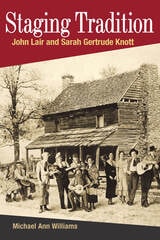
Staging Tradition
John Lair and Sarah Gertrude KnottMichael Ann Williams
University of Illinois Press, 2006
Lair and Knott's discovery of new developments in theater and entertainment during the 1920s led the pair to careers that kept each of them center stage. Inspired by programs such as WLS's Barn Dance and the success of early folk events, Lair promoted Kentucky musicians. Knott staged her own radically inclusive festival, which included Native and African American traditions and continues today as the National Folk Festival. Michael Ann Williams shows how Lair and Knott fed the public's fascination with the "art of the common man" and were in turn buffeted by cultural forces that developed around and beyond them.
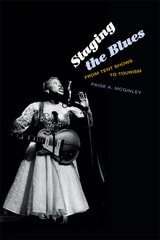
Staging the Blues
From Tent Shows to TourismPaige A. McGinley
Duke University Press, 2014

Stambeli
Music, Trance, and Alterity in TunisiaRichard C. Jankowsky
University of Chicago Press, 2010
Part ethnography, part history of the complex relationship between Tunisia’s Arab and sub-Saharan populations, Stambeli will be welcomed by scholars and students of ethnomusicology, anthropology, African studies, and religion.
Stare in the Darkness
The Limits of Hip-hop and Black PoliticsLester K. Spence
University of Minnesota Press, 2010
A growing number of black activists and artists claim that rap and hip-hop are the basis of an influential new urban social movement. Simultaneously, black citizens evince concern with the effect that rap and hip-hop culture exerts on African American communities. According to a recent Pew survey conducted on the opinions of Black Americans, 71 percent of blacks think that rap is a bad influence. To what extent are African American hopes and fears about hip-hop’s potential political power justified? In Stare in the Darkness, Lester K. Spence answers this question using a blend of neoliberal analysis, survey data, experiments, and case studies.
Spence finds that rap does in fact influence black political attitudes. However, rap also reproduces rather than critiques neoliberal ideology. Furthermore, black activists seeking to create an innovative model of hip-hop politics are hamstrung by their reliance on outmoded forms of organizing. By considering the possibilities inherent in the most prolific and prominent activities of hip-hop politics, Stare in the Darkness reveals, in a clear and practical manner, the political consequences of rap culture for black publics.
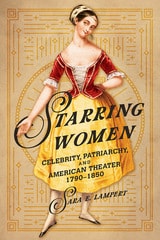
Starring Women
Celebrity, Patriarchy, and American Theater, 1790-1850Sara E. Lampert
University of Illinois Press, 2020
A revealing foray into a lost time, Starring Women returns a generation of performers to their central place in the early history of American theater.

Starting Over with John and Yoko
The PhotographsRoger Farrington
Rutgers University Press, 2026
“This is one to linger over.” —Publishers Weekly
On August 7, 1980, John Lennon and Yoko Ono made their triumphant return to the recording studio after a self-imposed five-year absence. Roger Farrington, an up-and-coming photographer from Boston, was hired to get “the shot” that would announce their comeback. It would be Lennon’s most intense press scrutiny since the heady days of the Beatles’ maiden voyage to America in 1964, and for Farrington, it would be the assignment of a lifetime. Just four months later, Lennon’s assassination would plunge the world into mourning.
Reproducing, for the first time, the entire run of Farrington’s iconic photographs from that day, Starting Over transports readers back to 1980 and into Manhattan’s Hit Factory, where Lennon and Ono recorded their acclaimed LP Double Fantasy. With supporting photos and other ephemera, Farrington and renowned Beatles historian Kenneth Womack capture a poignant moment in music history and provide an insider’s look at celebrity photography in the pre-digital age.
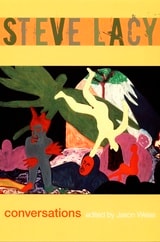
Steve Lacy
ConversationsJason Weiss, ed.
Duke University Press, 2006
This volume brings together interviews that appeared in a variety of magazines between 1959 and 2004. Conducted by writers, critics, musicians, visual artists, a philosopher, and an architect, the interviews indicate the evolution of Lacy’s extraordinary career and thought. Lacy began playing the soprano saxophone at sixteen, and was soon performing with Dixieland musicians much older than he. By nineteen he was playing with the pianist Cecil Taylor, who ignited his interest in the avant-garde. He eventually became the foremost proponent of Thelonious Monk’s music. Lacy played with a broad range of musicians, including Monk and Gil Evans, and led his own bands. A voracious reader and the recipient of a MacArthur “genius” grant, Lacy was particularly known for setting to music literary texts—such as the Tao Te Ching, and the work of poets including Samuel Beckett, Robert Creeley, and Taslima Nasrin—as well as for collaborating with painters and dancers in multimedia projects.
Lacy lived in Paris from 1970 until 2002, and his music and ideas reflect a decades-long cross-pollination of cultures. Half of the interviews in this collection originally appeared in French sources and were translated specifically for this book. Jason Weiss provides a general introduction, as well as short introductions to each of the interviews and to the selection of Lacy’s own brief writings that appears at the end of the book. The volume also includes three song scores, a selected discography of Lacy’s recordings, and many photos from the personal collection of his wife and longtime collaborator, Irene Aebi.
Interviews by: Derek Bailey, Franck Bergerot, Yves Bouliane, Etienne Brunet, Philippe Carles, Brian Case, Garth W. Caylor Jr., John Corbett, Christoph Cox, Alex Dutilh, Lee Friedlander, Maria Friedlander, Isabelle Galloni d'Istria, Christian Gauffre, Raymond Gervais, Paul Gros-Claude, Alain-René Hardy, Ed Hazell, Alain Kirili, Mel Martin, Franck Médioni, Xavier Prévost, Philippe Quinsac, Ben Ratliff, Gérard Rouy, Kirk Silsbee, Roberto Terlizzi, Jason Weiss

Stiffelio
Libretto (in three acts) by Francesco Maria PiaveGiuseppe Verdi
University of Chicago Press, 2003
Not until 1992 was it revealed that Verdi's heirs possessed not only most of the canceled score, but also sixty pages of sketches for Stiffelio. These were used for the preliminary score of the critical edition, premiered in 1993 at New York's Metropolitan Opera. It was the first time Stiffelio was performed as Verdi wrote it. It has been enthusiastically received around the world.
With the publication of the critical edition, the first in full orchestral score, Stiffelio should take its rightful place in the Verdi canon.
Stolen Time
Black Fad Performance and the Calypso CrazeShane Vogel
University of Chicago Press, 2018
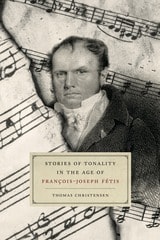
Stories of Tonality in the Age of François-Joseph Fétis
Thomas Christensen
University of Chicago Press, 2019
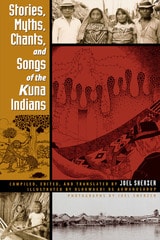
Stories, Myths, Chants, and Songs of the Kuna Indians
Compiled, edited, and translated by Joel Sherzer
University of Texas Press, 2004
The Kuna Indians of Panama, probably best known for molas, their colorful appliqué blouses, also have a rich literary tradition of oral stories and performances. One of the largest indigenous groups in the South American tropics, the majority of them (about 70,000) reside in Kuna Yala, a string of island and mainland villages stretching along the Caribbean coast. It is here that Joel Sherzer lived among them, photographing and recording their verbal performances, which he feels are representative of the beauty, complexity, and diversity of the oral literary traditions of the indigenous peoples of Latin America.
This book is organized into three types of texts: humorous and moralistic stories; myths and magical chants; and women's songs. While quite different from one another, they share features characteristic of Kuna literature as a whole, including appreciation of their environment and a remarkable knowledge of their plants and animals; a belief in spirits as an important component of their world in curing, magic, and aesthetics; and, especially, great humor and a sense of play.
Vividly illustrated by a Kuna artist and accompanied by photographs that lend a sense of being present at the performances, the texts provide readers with a unique aesthetic perspective on this rich culture while preserving an endangered and valuable indigenous oral tradition.

Storytelling in Siberia
The Olonkho Epic in a Changing WorldRobin P. Harris
University of Illinois Press, 2017
Drawing on her ten years of living in the Russian North, Robin P. Harris documents how the Sakha have used the Masterpiece program to revive olonkho and strengthen their cultural identity. Harris’s personal relationships with and primary research among Sakha people provide vivid insights into understanding olonkho and the attenuation, revitalization, transformation, and sustainability of the Sakha’s cultural reemergence. Interdisciplinary in scope, Storytelling in Siberia considers the nature of folklore alongside ethnomusicology, anthropology, comparative literature, and cultural studies to shed light on how marginalized peoples are revitalizing their own intangible cultural heritage.
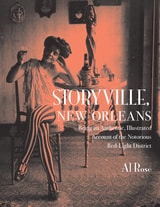
Storyville, New Orleans
Being an Authentic, Illustrated Account of the Notorious Red-Light DistrictAl Rose
University of Alabama Press, 1978
A true-to-life impression of Storyville, the only legally established red light district in the US
At the turn of the twentieth-century, there were hundreds of red-light districts in the United States, ranging in size from a discreet “house” or two in or near small towns and cities to block after bawdy block of brothels in larger cities such as Chicago and San Francisco. Storyville, New Orleans: Being an Authentic, Illustrated Account of the Notorious Red Light District seeks to offer the reader a reasonably true-to-life impression of Storyville, the most famous of the large districts and the only such district in the United States that was legally established.
Storyville was an area, carefully defined by law, outside of which prostitutes or women “notoriously abandoned to lewdness” were not permitted to live or work. Prostitutes working within the District were considered to be engaged in legal enterprises so long as they confined themselves to prostitution and other related activities such as dispensing food and drink to their customers.
From the early days of the French colony of Louisiana, a great number of prostitutes, women from correctional centers, and those with so-called “loose morals” were transported to the New World, resulting in a large proportion of the earliest female residents in New Orleans engaging in prostitution. During the course of Storyville’s legal existence from January 1, 1898 to November 12, 1917—it is evident that in establishing this district the New Orleans city council acted out of a sense of frustration after decades of attempting to deal rationally with a serious social problem. As the author says in the preface, “You may see this as a disorderly book about disorderly houses—and so it may be. But I doubt you will find it dull.”
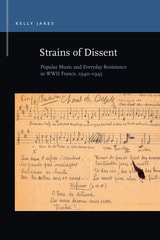
Strains of Dissent
Popular Music and Everyday Resistance in WWII France, 1940 - 1945Kelly Jakes
Michigan State University Press, 2019
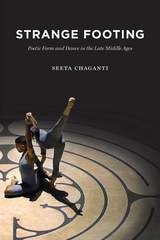
Strange Footing
Poetic Form and Dance in the Late Middle AgesSeeta Chaganti
University of Chicago Press, 2018
Exploring the complex relationship between medieval dance and medieval poetry, Strange Footing argues that the intersection of texts and dance produced an experience of poetic form based in disorientation, asymmetry, and even misstep. Medieval dance guided audiences to approach poetry not in terms of the body’s regular marking of time and space, but rather in the irregular and surprising forces of virtual motion around, ahead of, and behind the dancing body. Reading medieval poems through artworks, paintings, and sculptures depicting dance, Seeta Chaganti illuminates texts that have long eluded our full understanding, inviting us to inhabit their strange footings askew of conventional space and time.
Strange Footing deploys the motion of dance to change how we read medieval poetry, generating a new theory of poetic form for medieval studies and beyond.
Streaming Music, Streaming Capital
Eric Drott
Duke University Press, 2024
Street Scriptures
Between God and Hip-HopAlejandro Nava
University of Chicago Press, 2022
The world of hip-hop is saturated with religion, but rarely is that element given serious consideration. In Street Scriptures, Alejandro Nava focuses our attention on this aspect of the music and culture in a fresh way, combining his profound love of hip-hop, his passion for racial and social justice, and his deep theological knowledge. Street Scriptures offers a refreshingly earnest and beautifully written journey through hip-hop’s deep entanglement with the sacred.
Nava reveals a largely unheard religious heartbeat in hip-hop, exploring crosscurrents of the sacred and profane in rap, reggaeton, and Latinx hip-hop today. Ranging from Kendrick Lamar, Chance the Rapper, Lauryn Hill, Cardi B, and Bad Bunny to St. Augustine and William James, Nava examines the ethical-political, mystical-prophetic, and theological qualities in hip-hop, probing the pure sonic and aesthetic signatures of music, while also diving deep into the voices that invoke the spirit of protest. The result is nothing short of a new liberation theology for our time, what Nava calls a “street theology.”

Stringbean
The Life and Murder of a Country LegendTaylor Hagood
University of Illinois Press, 2023
A beloved member of the country music community, David “Stringbean” Akeman found nationwide fame as a cast member of Hee Haw. The 1973 murder of Stringbean and his wife forever changed Nashville’s sense of itself. Millions of others mourned not only the slain couple but the passing of the way of life that country music had long represented.
Taylor Hagood merges the story of Stringbean’s life with an account of murder and courtroom drama. Mentored by Uncle Dave Macon and Bill Monroe, Stringbean was a bridge to country’s early days. His instrumental savvy and old-time singing style drew upon a deep love for traditional country music that, along with his humor and humanity, won him the reverence of younger artists and made his violent death all the more shocking. Hagood delves into the unexpected questions and uneasy resolutions raised by the atmosphere of retribution surrounding the murder trial and recounts the redemption story that followed decades later.
Strong on Music
The New York Music Scene in the Days of George Templeton Strong, Volume 1: Resonances, 1836-1849Vera Brodsky Lawrence
University of Chicago Press, 1995
Formerly a concert pianist, Vera Brodsky Lawrence spent the last third of her life as a historian of American music (she died in 1996). She was editor of The Piano Works of Louis Moreau Gottschalk and The Complete Works of Scott Joplin.
On Volume 1: "A marvelous book. There is nothing like it in the literature of American music."—Harold C. Schonberg, New York Times Book Review
On Volume 2: "A monumental achievement."—Victor Fell Yellin, Opera Quarterly

Strong on Music
The New York Music Scene in the Days of George Templeton Strong, Volume 2: Reverberations, 1850-1856Vera Brodsky Lawrence
University of Chicago Press, 1995
Each chapter presents one year in the musical life of New York City, with Lawrence's extensive commentary enriched both by excerpts from Strong's diaries and a lavish selection of little-known music criticism and comment from the period. The reviews, written by an often truculent, sometimes venal tribe of music journalists, cover the entire world of music—from opera to barrel organ, salon to saloon.
In this New York, operas performed by renowned artists are parodied by blackface minstrels; performances of the Philharmonic Society are drowned by the raucous chatter of flirtatious adolescents, who turn concerts into a noisy singles' hangout; and irate critics trash the first performances of Verdi operas, calling the plots indecent and the scores noisy and unmelodic. In this volatile atmosphere, a native musical culture is born; its whose first faltering efforts are dubiously received, and the first American composers begin to emerge.
Strong on Music
The New York Music Scene in the Days of George Templeton Strong, Volume 3: Repercussions, 1857-1862Vera Brodsky Lawrence
University of Chicago Press, 1999
Among the many striking scenes vividly portrayed in Repercussions are the rapturous reception of Verdi's Ballo in maschera in 1861; the impact of the Civil War on New York's music scene, from theaters closing as their musicians enlisted to the performance of "The Star-Spangled Banner" at every possible occasion; and open-air concerts in the developing Central Park. Throughout, Lawrence mines a treasure trove of primary source materials including daily newspapers, memoirs, city directories, and architectural drawings.
Indispensable for scholars, Repercussions will also fascinate music fans with its witty writing and detailed descriptions of the cultural life of America's first metropolis.
Formerly a concert pianist, Vera Brodsky Lawrence spent the last third of her life as a historian of American music (she died in 1996). She was editor of The Piano Works of Louis Moreau Gottschalk and The Complete Works of Scott Joplin.
On Volume 1: "A marvelous book. There is nothing like it in the literature of American music."—Harold C. Schonberg, New York Times Book Review
On Volume 2: "A monumental achievement."—Victor Fell Yellin, Opera Quarterly
Studies in Malaysian Oral and Musical Traditions
William P. Malm and Amin Sweeney
University of Michigan Press, 1974
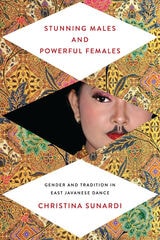
Stunning Males and Powerful Females
Gender and Tradition in East Javanese DanceChristina Sunardi
University of Illinois Press, 2015
Christina Sunardi ventures into the regency of Malang in east Java to study and perform with dancers. Through formal interviews and casual conversation, Sunardi learns about their lives and art. Her work shows how performers continually transform dance traditions to negotiate, and renegotiate, the boundaries of gender and sex--sometimes reinforcing lines of demarcation, sometimes transgressing them, and sometimes doing both simultaneously. But Sunardi's investigation moves beyond performance. It expands notions of the spiritual power associated with female bodies and feminine behavior, and the ways women, men, and waria (males who dress and live as female) access the magnetic power of femaleness.
A journey into understudied regions and ideas, Stunning Males and Powerful Females reveals how performances seemingly fixed by tradition are instead dynamic environments for cultural negotiation and change surrounding questions of sex and gender.
Style and Music
Theory, History, and IdeologyLeonard B. Meyer
University of Chicago Press, 1997
Meyer devotes the latter part of his book to a sketch-history of nineteenth-century music. He shows explicitly how the beliefs and attitudes of Romanticism influenced the choices of composers from Beethoven to Mahler and into our own time.
"A monumental work. . . . Most authors concede the relation of music to its cultural milieu, but few have probed so deeply in demonstrating this interaction."—Choice
"Probes the foundations of musical research precisely at the joints where theory and history fold into one another."—Kevin Korsyn, Journal of American Musicological Society
"A remarkably rich and multifaceted, yet unified argument. . . . No one else could have brought off this immense project with anything like Meyer's command."—Robert P. Morgan, Music Perception
"Anyone who attempts to deal with Romanticism in scholarly depth must bring to the task not only musical and historical expertise but unquenchable optimism. Because Leonard B. Meyer has those qualities in abundance, he has been able to offer fresh insight into the Romantic concept."—Donal Henahan, New York Times
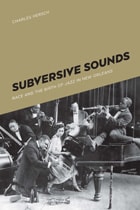
Subversive Sounds
Race and the Birth of Jazz in New OrleansCharles B. Hersch
University of Chicago Press, 2008
Subversive Sounds probes New Orleans’s history, uncovering a web of racial interconnections and animosities that was instrumental to the creation of a vital American art form—jazz. Drawing on oral histories, police reports, newspaper accounts, and vintage recordings, Charles Hersch brings to vivid life the neighborhoods and nightspots where jazz was born.
This volume shows how musicians such as Jelly Roll Morton, Nick La Rocca, and Louis Armstrong negotiated New Orleans’s complex racial rules to pursue their craft and how, in order to widen their audiences, they became fluent in a variety of musical traditions from diverse ethnic sources. These encounters with other music and races subverted their own racial identities and changed the way they played—a musical miscegenation that, in the shadow of Jim Crow, undermined the pursuit of racial purity and indelibly transformed American culture.
“More than timely . . . Hersch orchestrates voices of musicians on both sides of the racial divide in underscoring how porous the music made the boundaries of race and class.”—New Orleans Times-Picayune
Sun Ra's Chicago
Afrofuturism and the CityWilliam Sites
University of Chicago Press, 2020
Sweet Air
Modernism, Regionalism, and American Popular SongEdward Comentale
University of Illinois Press, 2013
Sweet Dreams
The World of Patsy ClineEdited by Warren R. Hofstra
University of Illinois Press, 2013
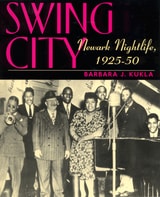
Swing City
Newark Lightlife, 1925-50Kukla, Barbara J.
Rutgers University Press, 2002
When people think of the hottest cities of the Jazz Age and Swing Era, New York, Nashville, New Orleans, Memphis, Kansas City, and Chicago immediately spring to mind. But Newark, New Jersey was just as happening as each of these towns. On any given evening, you could listen to a legendary singer like Sarah Vaughan or laugh at the celebrated comedy of Red Foxx. Newark was a veritable maze of thriving theaters, clubs, and after-hours joints where the sporting folks rambled through the night. There were plenty of jobs for musicians and entertainers, so the city was teaming with musical talent.
Swing City reveals Newark’s role as an undocumented entertainment mecca between 1922 and 1950. The book is based on interviews with musicians, singers, dancers, comedians, bartenders, waitresses, nightclub owners, and their families and is heavily illustrated with rare photographs from the author’s personal collection. Barbara J. Kukla presents a musical tour of the city, covering the vaudeville acts, the musicians who started at Newark’s Orpheum Theater and went on to join famous bands, and the teenage dancers who started as chorus girls and eventually toured with famous tap dancers. She also describes the house rent parties of the 1930s, the “colored only” clubs, the entertainment at Newark’s 1,000 saloons during Prohibition, and the Coleman Hotel where Billie Holiday often stayed. Throughout the book, which concentrates on performers’ lives and personalities, Kukla discusses music and other forms of entertainment as social and economic survival tools in Newark’s Third Ward during a time of ruthless segregation.
Swing City includes several appendixes that provide a virtual “Who’s Who” of 25 years of nightlife activities in Newark. Music and nostalgia buffs, students of African American history, and anyone who’s ever been to Newark will find in this bookfabulous entertainment.
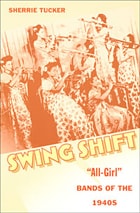
Swing Shift
"All-Girl" Bands of the 1940sSherrie Tucker
Duke University Press, 2001
Filled with firsthand accounts of more than a hundred women who performed during this era and complemented by thorough—and eye-opening—archival research, Swing Shift not only offers a history of this significant aspect of American society and culture but also examines how and why whole bands of dedicated and talented women musicians were dropped from—or never inducted into—our national memory. Tucker’s nuanced presentation reveals who these remarkable women were, where and when they began to play music, and how they navigated a sometimes wild and bumpy road—including their experiences with gas and rubber rationing, travel restrictions designed to prioritize transportation for military needs, and Jim Crow laws and other prejudices. She explains how the expanded opportunities brought by the war, along with sudden increased publicity, created the illusion that all female musicians—no matter how experienced or talented—were “Swing Shift Maisies,” 1940s slang for the substitutes for the “real” workers (or musicians) who were away in combat. Comparing the working conditions and public representations of women musicians with figures such as Rosie the Riveter, WACs, USO hostesses, pin-ups, and movie stars, Tucker chronicles the careers of such bands as the International Sweethearts of Rhythm, Phil Spitalny’s Hours of Charm, The Darlings of Rhythm, and the Sharon Rogers All-Girl Band.
Swingin' the Dream
Big Band Jazz and the Rebirth of American CultureLewis A. Erenberg
University of Chicago Press, 1998
"Swingin' the Dream is an intelligent, provocative study of the big band era, chiefly during its golden hours in the 1930s; not merely does Lewis A. Erenberg give the music its full due, but he places it in a larger context and makes, for the most part, a plausible case for its importance."—Jonathan Yardley, Washington Post Book World
"An absorbing read for fans and an insightful view of the impact of an important homegrown art form."—Publishers Weekly
"[A] fascinating celebration of the decade or so in which American popular music basked in the sunlight of a seemingly endless high noon."—Tony Russell, Times Literary Supplement
Swinging the Machine
Modernity, Technology, and African American Culture between the World WarsJoel Dinerstein
University of Massachusetts Press, 2003
In any age and any given society, cultural practices reflect the material circumstances of people's everyday lives. According to Joel Dinerstein, it was no different in America between the two World Wars—an era sometimes known as the “machine age”—when innovative forms of music and dance helped a newly urbanized population cope with the increased mechanization of modern life. Grand spectacles such as the Ziegfeld Follies and the movies of Busby Berkeley captured the American ethos of mass production, with chorus girls as the cogs of these fast, flowing pleasure vehicles.
Yet it was African American culture, Dinerstein argues, that ultimately provided the means of aesthetic adaptation to the accelerated tempo of modernity. Drawing on a legacy of engagement with and resistance to technological change, with deep roots in West African dance and music, black artists developed new cultural forms that sought to humanize machines. In “The Ballad of John Henry,” the epic toast “Shine,” and countless blues songs, African Americans first addressed the challenge of industrialization. Jazz musicians drew on the symbol of the train within this tradition to create a set of train-derived aural motifs and rhythms, harnessing mechanical power to cultural forms. Tap dance and the lindy hop brought machine aesthetics to the human body, while the new rhythm section of big band swing mimicked the industrial soundscape of northern cities. In Dinerstein's view, the capacity of these artistic innovations to replicate the inherent qualities of the machine-speed, power, repetition, flow, precision-helps explain both their enormous popularity and social function in American life.
Sync
Stylistics of Hieroglyphic TimeAuthored by James Tobias
Temple University Press, 2010
In Sync, James Tobias examines the development of musical sound and image in cinema and media art, indicating how these elements define the nature and experience of reception. Placing musicality at the center of understanding streaming media, Tobias presents six interwoven stories about synchronized audiovisual media—from filmmaker Sergei Eisenstein’s Alexander Nevsky to today’s contemporary digital art and computer games—to show how these effects are never merely "musical" in the literal sense of organized sound.