Results by title
3745 books match the query 'Europe' and 247 start with s
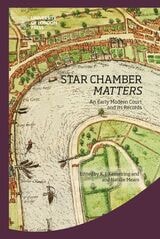
Star Chamber Matters
The Court and Its RecordsEdited by Natalie Mears and Krista Kesselring
University of London Press, 2021
Star Chamber Matters details some of the fascinating, tragic, and startling cases brought before the Star Chamber, an English court that sat at the Royal Palace of Westminster from the late fifteenth century to the mid-seventeenth century. Through close examination of the breadth and depth of cases brought before the court in its day, readers will experience the trials and tribulations of life, love, and death in Tudor Britain. These cases touch on changing gender roles, shifting religious views, and more. Star Chamber Matters witnesses the birth of English common and civil law as we know it today.
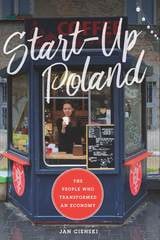
Start-Up Poland
The People Who Transformed an EconomyJan Cienski
University of Chicago Press, 2018
As the Warsaw bureau chief for the Financial Times, Jan Cienski spent more than a decade talking with the people who did something that had never been done before: recreating a market economy out of a socialist one. Poland had always lagged behind wealthier Western Europe, but in the 1980s the gap had grown to its widest in centuries. But the corrupt Polish version of communism also created the conditions for its eventual revitalization, bringing forth a remarkably resilient and entrepreneurial people prepared to brave red tape and limited access to capital. In the 1990s, more than a million Polish people opened their own businesses, selling everything from bicycles to leather jackets, Japanese VCRs, and romance novels. The most business-savvy turned those primitive operations into complex corporations that now have global reach.
Well researched and accessibly and entertainingly written, Start-Up Poland tells the story of the opening bell in the East, painting lively portraits of the men and women who built successful businesses there, what their lives were like, and what they did to catapult their ideas to incredible success. At a time when Poland’s new right-wing government plays on past grievances and forms part of the populist and nationalist revolution sweeping the Western world, Cienski’s book also serves as a reminder that the past century has been the most successful in Poland’s history.

State of Exception
Giorgio Agamben
University of Chicago Press, 2004
The sequel to Agamben's Homo Sacer: Sovereign Power and Bare Life, State of Exception is the first book to theorize the state of exception in historical and philosophical context. In Agamben's view, the majority of legal scholars and policymakers in Europe as well as the United States have wrongly rejected the necessity of such a theory, claiming instead that the state of exception is a pragmatic question. Agamben argues here that the state of exception, which was meant to be a provisional measure, became in the course of the twentieth century a normal paradigm of government. Writing nothing less than the history of the state of exception in its various national contexts throughout Western Europe and the United States, Agamben uses the work of Carl Schmitt as a foil for his reflections as well as that of Derrida, Benjamin, and Arendt.
In this highly topical book, Agamben ultimately arrives at original ideas about the future of democracy and casts a new light on the hidden relationship that ties law to violence.
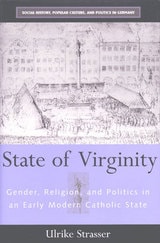
State of Virginity
Gender, Religion, and Politics in an Early Modern Catholic StateUlrike Strasser
University of Michigan Press, 2006
Winner: 2005 Book Award from the Society for the Study of Early Modern Women; Selected by the German Studies Association as one of the top five books of 2004 in early modern history
"A fresh, original study of gender roles and religious ideology in the early modern Catholic state. . . . Using a rich array of archival sources, Strasser explores ways in which an increasingly centralized Bavarian government in Munich inaugurated marriage and convent reforms and a civil religion based on the veneration of the Virgin Mary. Her carefully selected case studies show how church and state collaborated to produce a shared discourse and consistent policies proscribing extramarital sex, and excluding those without property from marriage. "
Ulrike Strasser is Associate Professor of History, Affiliate Faculty in Women's Studies, and Core Faculty in Religious Studies at the University of California, Irvine.
Statelessness
On Almost Not ExistingTony C. Brown
University of Minnesota Press, 2022
A pathbreaking new genealogy of statelessness
Just as the modern state and the citizenship associated with it are commonly thought of as a European invention, so too is citizenship’s negation in the form of twentieth-century diaspora and statelessness. Statelessness sets forth a new genealogy, suggesting that Europe first encountered mass statelessness neither inside its own borders nor during the twentieth century, as Hannah Arendt so influentially claimed, but outside of itself—in the New World, several hundred years earlier.
Through close readings of political philosophers from Hobbes to Rousseau to Kant, Tony C. Brown argues that statelessness became a central problem for political thought early on, with far-reaching implications for thinking both on the state and on being human. What Europeans thought they saw among the “savages” of the Americas was life without political order, life less than human. Lacking almost everything those deemed clearly human had achieved, the stateless existed in a radically precarious, almost inhuman privation.
And yet this existence also raised the unsettling possibility that state-based existence may not be inevitable, necessary, or even ideal. This possibility, as Brown shows, prompts the response—as defensive as it was aggressive—that we call Enlightenment political philosophy, which arguably still orders much thinking on being stateless today, including our discourses concerning migrants and Indigenous peoples.
Statesmanship and Party Government
A Study of Burke and BolingbrokeHarvey C. Mansfield
University of Chicago Press, 1965
Mansfield points out that while parties have always existed, the party government that we know today is possible only because parties are now considered respectable. In Burke’s day, however, they were thought by detractors to be a cancer in a free polity. Even many supporters of the parties viewed them as a dangerous instrument, only to be used cautiously by statesmen in dire times. Burke, however, was an early champion of the party system in Britain and made his arguments with a clear-eyed realism. In Statesmanship and Party Government, Mansfield provides a skillful evaluation of Burke’s writings and sheds light present-day party politics through a profound understanding of the historical background of the their inception.

Stations in the Field
A History of Place-Based Animal Research, 1870-1930Raf De Bont
University of Chicago Press, 2015
Raf De Bont’s Stations in the Field focuses on the early history of biological field stations and the role these played in the rise of zoological place-based research. Beginning in the 1870s, a growing number of biological field stations were founded—first in Europe and later elsewhere around the world—and thousands of zoologists received their training and performed their research at these sites. Through case studies, De Bont examines the material and social context in which field stations arose, the actual research that was produced in these places, the scientific claims that were developed there, and the rhetorical strategies that were deployed to convince others that these claims made sense. From the life of parasitic invertebrates in northern France and freshwater plankton in Schleswig-Holstein, to migratory birds in East Prussia and pest insects in Belgium, De Bont’s book is fascinating tour through the history of studying nature in nature.

Staying Power
The History of Black People in BritainPeter Fryer
Pluto Press, 2018
Stretching back to the Roman conquest, encompassing the court of Henry VIII, and following a host of characters from the pioneering nurse and war hero Mary Seacole to the abolitionist Olaudah Equiano, Peter Fryer paints a picture of two thousand years of black presence in Britain. By rewriting black Britons into British history, showing where they influenced political traditions, social institutions, and cultural life, Staying Power presented a radical challenge to racist and nationalist agendas. This edition includes a new foreword by Gary Younge examining the book’s continued significance in shaping black British identity today, alongside the now-classic introduction by Paul Gilroy.

Steam-Powered Knowledge
William Chambers and the Business of Publishing, 1820-1860Aileen Fyfe
University of Chicago Press, 2012
With the overwhelming amount of new information that bombards us each day, it is perhaps difficult to imagine a time when the widespread availability of the printed word was a novelty. In early nineteenth-century Britain, print was not novel—Gutenberg’s printing press had been around for nearly four centuries—but printed matter was still a rare and relatively expensive luxury. All this changed, however, as publishers began employing new technologies to astounding effect, mass-producing instructive and educational books and magazines and revolutionizing how knowledge was disseminated to the general public.
Steamboat Modernity
Travel, Transport, and Social Transformation on the Lower Danube, 1830–1860Constantin Ardeleanu
Central European University Press, 2024
Through a skillful combination of economic and cultural history, this book describes the impact on Moldavia and Wallachia of steam navigation on the Danube. The Danube route integrated the two principalities into a dense network of European roads and waterways. From the 1830s to the 1860s, steamboat transport transformed time and space for the areas that benefited from regular services. River traffic accelerated urban development along the Lower Danube and contributed directly to institutional modernization in one of Europe’s peripheries.
Beyond technological advances and the transportation of goods on a trans-imperial waterway, steamboat travel revolutionized human interactions, too. The book offers a fascinating insight into the social and cultural milieu of the nineteenth century, drawing on first-hand accounts of Danube cruising. Describing the story of travelers who interacted, met, and visited the places they stopped, Constantin Ardeleanu creates a transnational history of travel up and down the Danube from Vienna to Constantinople. The pleasures and sometimes the travails of the travelers unfold against a backdrop of technical and economic transformation in the crucial period of modernization.
Stone
An Ecology of the InhumanJeffrey Jerome Cohen
University of Minnesota Press, 2015
Stone maps the force, vivacity, and stories within our most mundane matter, stone. For too long stone has served as an unexamined metaphor for the “really real”: blunt factuality, nature’s curt rebuke. Yet, medieval writers knew that stones drop with fire from the sky, emerge through the subterranean lovemaking of the elements, tumble along riverbeds from Eden, partner with the masons who build worlds with them. Such motion suggests an ecological enmeshment and an almost creaturely mineral life.
Although geological time can leave us reeling, Jeffrey Jerome Cohen argues that stone’s endurance is also an invitation to apprehend the world in other than human terms. Never truly inert, stone poses a profound challenge to modernity’s disenchantments. Its agency undermines the human desire to be separate from the environment, a bifurcation that renders nature “out there,” a mere resource for recreation, consumption, and exploitation.
Written with great verve and elegance, this pioneering work is notable not only for interweaving the medieval and the modern but also as a major contribution to ecotheory. Comprising chapters organized by concept —“Geophilia,” “Time,” “Force,” and “Soul”—Cohen seamlessly brings together a wide range of topics including stone’s potential to transport humans into nonanthropocentric scales of place and time, the “petrification” of certain cultures, the messages fossils bear, the architecture of Bordeaux and Montparnasse, Yucca Mountain and nuclear waste disposal, the ability of stone to communicate across millennia in structures like Stonehenge, and debates over whether stones reproduce and have souls.
Showing that what is often assumed to be the most lifeless of substances is, in its own time, restless and forever in motion, Stone fittingly concludes by taking us to Iceland⎯a land that, writes the author, “reminds us that stone like water is alive, that stone like water is transient.”
Stop Reading! Look!
Modern Vision and the Weimar Photographic BookPepper Stetler
University of Michigan Press, 2015
Stories of Tonality in the Age of François-Joseph Fétis
Thomas Christensen
University of Chicago Press, 2019
Storming Heaven
Class Composition and Struggle in Italian Autonomist MarxismSteve Wright
Pluto Press, 2017
Storytelling in Sixteenth-Century France
Negotiating Shifting FormsEmily E. Thompson
University of Delaware Press, 2022
Published by the University of Delaware Press. Distributed worldwide by Rutgers University Press.
Strains of Dissent
Popular Music and Everyday Resistance in WWII France, 1940 - 1945Kelly Jakes
Michigan State University Press, 2019
Strange Footing
Poetic Form and Dance in the Late Middle AgesSeeta Chaganti
University of Chicago Press, 2018
Exploring the complex relationship between medieval dance and medieval poetry, Strange Footing argues that the intersection of texts and dance produced an experience of poetic form based in disorientation, asymmetry, and even misstep. Medieval dance guided audiences to approach poetry not in terms of the body’s regular marking of time and space, but rather in the irregular and surprising forces of virtual motion around, ahead of, and behind the dancing body. Reading medieval poems through artworks, paintings, and sculptures depicting dance, Seeta Chaganti illuminates texts that have long eluded our full understanding, inviting us to inhabit their strange footings askew of conventional space and time.
Strange Footing deploys the motion of dance to change how we read medieval poetry, generating a new theory of poetic form for medieval studies and beyond.
Strange Tales of an Oriental Idol
An Anthology of Early European Portrayals of the BuddhaEdited by Donald S. Lopez Jr.
University of Chicago Press, 2016
Featuring writings by soldiers, adventurers, merchants, missionaries, theologians, and colonial officers, this volume contains a wide range of portraits of the Buddha. The descriptions are rarely flattering, as all manner of reports—some accurate, some inaccurate, and some garbled—came to circulate among European savants and eccentrics, many of whom were famous in their day but are long forgotten in ours. Taken together, these accounts present a fascinating picture, not only of the Buddha as he was understood and misunderstood for centuries, but also of his portrayers.
Strangers in Berlin
Modern Jewish Literature between East and West, 1919–1933Rachel Seelig
University of Michigan Press, 2016
Author Rachel Seelig portrays Berlin during the Weimar Republic as a “threshold” between exile and homeland in which national and artistic commitments were reexamined, reclaimed, and rebuilt. In the pulsating yet precarious capital of Germany’s first fledgling democracy, the collision of East and West engendered a broad spectrum of poetic styles and Jewish national identities.
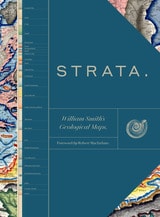
Strata
William Smith’s Geological MapsEdited by the Oxford University Museum of Natural History
University of Chicago Press, 2020
This sumptuous volume begins with an introduction by Douglas Palmer that places Smith’s work in the context of earlier, concurrent, and subsequent ideas regarding the structure and natural processes of the earth, geographical mapping, and biostratigraphical theories. The book is then organized into four parts, each beginning with four sheets from Smith’s hand-colored, 1815 strata map, accompanied by related geological cross-sections and county maps, and followed by fossil illustrations by Smith contemporary James Sowerby, all organized by strata. Essays between each section explore the aims of Smith’s work and its application in the fields of mining, agriculture, cartography and hydrology. Strata concludes with reflections on Smith’s later years as an itinerant geologist and surveyor, plagiarism by a rival, receipt of the first Wollaston Medal in recognition of his achievements, and the influence of his geological mapping and biostratigraphical theories on the sciences—all of which culminated in the establishment of the modern geological timescale.
Featuring a foreword by Robert Macfarlane, Strata is a glorious testament to the lasting geological and illustrative genius of William Smith, a collection as colossal and awe-inspiring as the layers of the Earth themselves.

Street by Street
Dispossessing Jewish Apartments in Wartime ParisIsabelle Backouche
Rutgers University Press, 2027
During the Holocaust, nearly 40,000 apartments in Paris inhabited by Jewish families were completely emptied by the German authorities, and many of their tenants lost their rights to continue renting the apartments. In Street by Street, Isabelle Backouche, Sarah Gensburger, and Eric Le Bourhis tell this little-known history of how Parisians took advantage of the persecution of the Jews to improve their own housing in a time of crisis. In the aftermath of the war, the French Republic ensured that the dispossession became permanent, silencing Jewish claims to their prewar homes.
Based on a ten-year investigation and written in a narrative style, this recounting of an unknown chapter of the history of the Holocaust in Western Europe goes beyond the study of individual behavior to highlight how material benefits and privileges can foster systemic antisemitism. The book includes a map of the sites and neighborhoods discussed, as well as photographs of views from windows and doors, courtyards, and building entryways, in both affluent and working-class neighborhoods. The authors tell the story of the organized disappearance of tenants identified as Jewish and the lack of justice that persists to this day.
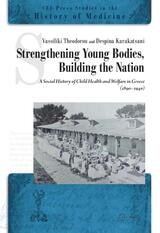
Strengthening Young Bodies, Building the Nation
A Social History of the Child Health and Welfare in Greece (1890–1940)Vassiliki Theodorou
Central European University Press, 2019
Strictly from Hungary
Ladislas Farago
Westholme Publishing, 2004
Known for his best-selling military histories, Ladislas Farago also wrote a witty tribute to his homeland, Strictly from Hungary. Noting that Hungary has produced some of the world's most renowned artists, scientists, and financiers as well as its share of world-class con-artists, charlatans, and rakes, Farago sets out to explain just how one tiny country can be responsible for so much talent, both good and bad. Using stories from his days as a struggling writer in the bustling café scenes of Budapest and New York City, Farago demonstrates the Hungarian knack for remaining irrepressible and optimistic even in the face of catastrophe. Here we meet Zoltan, a fellow Bohemian who presents his astonished benefactor with a play "about nothing," a theme later made famous by another writer of Hungarian descent, Jerry Seinfeld. Farago also introduces us to "Baby Kiss," a vivacious Hungarian beauty queen, and the story of how she ended up in Fort Worth, Texas; Orkeny, a double agent for America at the height of the Cold War who "spiced up" his reports to keep everyone happy, and the author's own experience getting mustered into the supposedly non-existent Royal Hungarian Army. Farago's reminiscence validates what most Hungarians believe: that Hungary is the center of the world and that everyone has some connection to the land of the Magyars. In that spirit, Farago learns that George Washington himself was "strictly from Hungary." This edition is introduced by the author's son, who shows that the same vibrant spirit described by his father remains the hallmark of the Hungarian temperament.
Strong Voices, Weak History
Early Women Writers and Canons in England, France, and ItalyPamela J Benson and Victoria Kirkham, Editors
University of Michigan Press, 2005
Studies in Medieval and Renaissance History
Volume 14Edited by Joel T. Rosenthal and Paul E. Szarmach
Arizona Center for Medieval and Renaissance Studies, 2019
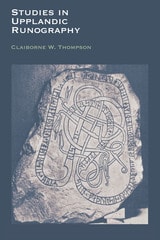
Studies in Upplandic Runography
By Claiborne W. Thompson
University of Texas Press, 1975
Studies in Upplandic Runography is a detailed treatment of the runic inscriptions from the province of Uppland, Sweden, where runic art reached a high point in A.D. 1200 and where runic inscriptions are most numerous. Most of the runic monuments discussed are from the eleventh century, an important period when Sweden was making the transition from paganism to Christianity.
The names of nearly fifty rune-carvers (runographers), professional and amateur, are known. However, many of the inscriptions were left unsigned. Claiborne Thompson examines the major problem of how an unsigned inscription is attributed to a known carver. Since each carver had a distinctive style which must be delineated, the book contains an exhaustive survey of the norms of Upplandic runography. In order to match the inscriptions with their carvers, Thompson analyzes the entire corpus of inscriptions from Uppland, their formation, the artistic designs they bear, the shapes of the runes on them, the orthography and language on them, and the manner in which they were carved.
Thompson then establishes a set of criteria for determining the authorship of a runic monument, stressing rune forms. All of the criteria are used in an extensive discussion of the carvings of Asmund Karasun, an interesting and influential carver from the first half of the eleventh century.
In addition, Thompson’s review of research describes scholarly interest in the problems of runography beginning in the early seventeenth century. The book includes an introductory sketch of the cultural background of Uppland and relates the runic tradition to historical and cultural traditions in eleventh-century Sweden.
Studies on the Illuminated Chronicle
János M. Bak
Central European University Press, 2018
The present volume of studies—a joint publication with the National Széchényi Library, Budapest—is the first Subsidium of the Central European Medieval Text series, accompanying CEMT vol. IX on the Illuminated Chronicle, composed in the fourteenth century at the royal court of Louis I of Hungary. The large size of the volume, with the text and its annotations, did not permit the inclusion of a detailed scholarly introduction, unlike other CEMT items, so it is here printed separately.
The first essays analyze the text and the illuminations of the Illuminated Chronicle (formerly called the Vienna Chronicle) from literary-historical, art historical and heraldic perspectives. They also summarize the literature on the chronicle for the past two hundred years. Additional studies address the narrative. Since the chronicle starts with the history of the Huns, the imaginary ancestors of the Hungarians, one essay addresses the Attila tradition in Hungarian historiography. Others devote attention to the dynastic struggles of the eleventh century, placing them in the context of amicitia and deditio, and to the image of St. Ladislas I as the “ideal king”. The final essays examine the fate of the fourteenth-century chronicle texts over the subsequent centuries, their appearance in legal texts, and their reception abroad.
Stumbling Blocks Before the Blind
Medieval Constructions of a DisabilityEdward Wheatley
University of Michigan Press, 2010
"Bold, deeply learned, and important, offering a provocative thesis that is worked out through legal and archival materials and in subtle and original readings of literary texts. Absolutely new in content and significantly innovative in methodology and argument, Stumbling Blocks Before the Blind offers a cultural geography of medieval blindness that invites us to be more discriminating about how we think of geographies of disability today."
---Christopher Baswell, Columbia University
"A challenging, interesting, and timely book that is also very well written . . . Wheatley has researched and brought together a leitmotiv that I never would have guessed was so pervasive, so intriguing, so worthy of a book."
---Jody Enders, University of California, Santa Barbara
Stumbling Blocks Before the Blind presents the first comprehensive exploration of a disability in the Middle Ages, drawing on the literature, history, art history, and religious discourse of England and France. It relates current theories of disability to the cultural and institutional constructions of blindness in the eleventh through fifteenth centuries, examining the surprising differences in the treatment of blind people and the responses to blindness in these two countries. The book shows that pernicious attitudes about blindness were partially offset by innovations and ameliorations---social; literary; and, to an extent, medical---that began to foster a fuller understanding and acceptance of blindness.
A number of practices and institutions in France, both positive and negative---blinding as punishment, the foundation of hospices for the blind, and some medical treatment---resulted in not only attitudes that commodified human sight but also inhumane satire against the blind in French literature, both secular and religious. Anglo-Saxon and later medieval England differed markedly in all three of these areas, and the less prominent position of blind people in society resulted in noticeably fewer cruel representations in literature.
This book will interest students of literature, history, art history, and religion because it will provide clear contexts for considering any medieval artifact relating to blindness---a literary text, a historical document, a theological treatise, or a work of art. For some readers, the book will serve as an introduction to the field of disability studies, an area of increasing interest both within and outside of the academy.
Edward Wheatley is Surtz Professor of Medieval Literature at Loyola University, Chicago.

Subject/Object and Beyond
Women in Early Modern FranceEdited by Nancy M. Frelick and Edith Benkov
Iter Press, 2023
Subject/Object and Beyond brings together essays by established and emerging scholars to honor the exceptionally rich contributions and career of scholar Colette H. Winn. It also celebrates fifty years of sustained scholarship on early modern women, along with the foundation of Women’s Studies as a recognized academic discipline in North America. The collection comprises seventeen articles that explore multiple perspectives on early modern women, including their writings, translations, reception, and contributions to various fields, including literature, music, politics, religion, and science.
Suddenly Soldiers
The 166th Infantry Regiment in World War IRobert Thompson
Westholme Publishing, 2020
Finalist for the 2021 Army Historical Foundation Distinguished Writing Awards in Unit Histories
Americans Face the Horror of a Modern European War for the First Time
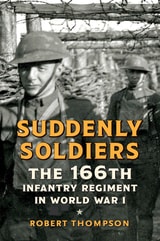
When America entered World War I in April 1917, state National Guard units had never planned to mobilize for this kind of war, and the men who made up the hometown companies of each regiment never imagined that they would be asked to fight in what was then the most savage war in human history—they were “innocents” being thrown into a horrendous European conflagration. Made up of companies from ten Ohio towns, the 166th Infantry Regiment became part of the famous 42nd Division, known as the “Rainbow Division.” They were the third American division to arrive in France, where they fought courageously in the trenches at Lunéville and Baccarat before being a key part of the American effort in the Second Battle of the Marne and the Saint Mihiel and Meuse-Argonne offensives. Despite their initial lack of training in modern warfare and weapons, the 166th Infantry compiled an impressive combat record. However, that record came at a terrible cost, with the regiment suffering over two thousand casualties in just nine months of fighting. While they battled the Germans, these hometown Guardsmen lived in trenches and foxholes for weeks at a time, while subsisting on canned beef and coffee amid near constant rain, deep mud, rats, and body lice that made their lives miserable. Because of poor planning and leadership from higher headquarters, they were often asked to achieve impossible objectives amid withering enemy machine-gun fire without proper logistics or artillery support. Yet, despite these challenges, they would persevere, overcome, and emerge victorious.
Using regimental histories and the letters and diaries of the soldiers who fought in France, Suddenly Soldiers: The 166th Infantry Regiment in World War I by author and historian Robert Thompson tells the compelling story of the young men—“citizen soldiers”—who have always borne the cost of America’s freedom with quiet courage.

Suffrage and citizenship in Ireland, 1912-18
Senia Pašeta
University of London Press, 2019
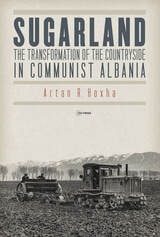
Sugarland
The Transformation of the Countryside in Communist AlbaniaArtan R. Hoxha
Central European University Press, 2023
In this historical monograph on non-urban communist Albania, Artan Hoxha discusses the ambitious development project that turned a swampland into a site of sugar production after 1945. The author seeks to free the history of Albanian communism from the stereotypes that still circulate about it with stigmas of an aberration, paranoia, extreme nationalism, and xenophobia.
This micro-history of the agricultural and industrial transformation of a zone in southeastern Albania, explores a wide range of issues including modernization, development, and social, cultural, and economic policies. In addition to analyzing the collectivization of agriculture, Hoxha shows how communism affected the lives of ordinary rural people. As elsewhere in the Communist Bloc, the Albanian regime borrowed developmental projects from the past and implemented them using social mobilization and a command economy. The abundant archival resources along with interviews in the field attest to the authorities’ efforts to increase consumption and to radically transform people’s tastes. But the book argues that despite the repressive environment, people involved in the sugar project were not simply passive receivers of models from the nation's capital. The author also describes that—in defiance of Cold War bipolarity—technological requirements and social policy considerations required a degree of engagement with the broader world.

Sumerian Economic Texts from the Third Ur Dynasty
Tom B. Jones, , , and
University of Minnesota Press, 1961
Sumerian Economic Texts from the Third Ur Dynasty was first published in 1961. Minnesota Archive Editions uses digital technology to make long-unavailable books once again accessible, and are published unaltered from the original University of Minnesota Press editions.
This is a study and catalogue of some 350 hitherto unpublished Sumerian cuneiform documents, nearly all economic in nature. The authors describe the transliterate each document and present viewpoints regarding certain important classes of the texts. The findings of the study may lead to renewed interest in the third Ur Dynasty, which scholars have long regarded as relatively unimportant because its history is the swan song of Sumerian autonomy and culture.
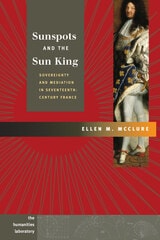
Sunspots and the Sun King
Sovereignty and Mediation in Seventeenth-Century FranceEllen M. McClure
University of Illinois Press, 2006
Mediation, monarchy, and Louis XIV's attempts to legitimize his reign
In order to assert his divine right, Louis XIV missed no opportunity to identify himself as God’s representative on earth. However, in Sunspots and the Sun King Ellen McClure explores the contradictions inherent in attempting to reconcile the logical and mystical aspects of divine right monarchy. McClure analyzes texts devoted to definitions of sovereignty, presents a meticulous reading of Louis XIV’s memoirs to the crown prince, and offers a novel analysis of diplomats and ambassadors as the mediators who preserved and transmitted the king’s authority. McClure asserts that these discussions, ranging from treatises to theater, expose incommensurable models of authority and representation permeating almost every aspect of seventeenth-century French culture.

Superstitions
Omens, Charms, Cures 1787Francis Grose
Bodleian Library Publishing, 2011
Superstitions are surprisingly enduring. From dodging black cats to crossing one’s fingers while making a wish to an aversion to staff meetings on Friday the thirteenth, it is remarkable how many superstitions remain intact—even in this age of rationalism and swift scientific advancement.
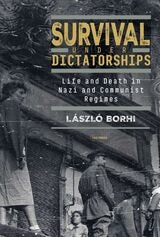
Survival under Dictatorships
Life and Death in Nazi and Communist RegimesLászló Borhi
Central European University Press, 2024
A complex array of individual responses to the abuse of power by the state is represented in this book in three horrific episodes in the history of East-Central Europe. The three events followed each other within a span of about ten years: the deportation and murder of Hungarian Jews in Nazi death and labor camps; the Arrow Cross terrorist rule in Budapest; and finally the Stalinist terror in Hungary and East-Central Europe. Through the prism of survival, László Borhi explores the relationship between the individual and power, attempting to understand the mechanism of oppression and terror produced by arbitrary, unbridled power through the experience of normal people.
Despite the obvious peculiarities of time and place, the Hungarian cases convey universal lessons about the Holocaust, Nazism, and Stalinism. In the author's conception, the National Socialist and Stalinist experiences are linked on several levels. Both regimes defended their visions of the future against social groups whom they saw as implacable enemies of those visions, and who therefore had to be destroyed for sake of social perfection. Furthermore, the social practices of National Socialism were passed on. And although Stalinism was imposed by a foreign power, some of the survival skills for coping with it were rehearsed under the previous hellish experience.
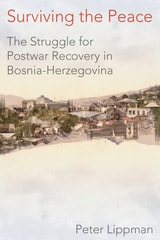
Surviving the Peace
The Struggle for Postwar Recovery in Bosnia-HerzegovinaPeter Lippman
Vanderbilt University Press, 2019
Essential reading for students of the former Yugoslavia and anyone interested in postwar or post-genocide studies, Surviving the Peace is an instant classic of long-form reporting, an impossible accomplishment without a lifetime of dedication to a place and people.
Peter Lippman's website is http://survivingthepeace.org/.

Surviving the Upheaval of Arctic War
Evacuation and Return of the Sámi People in Sápmi and Finland During and After the Second World WarVeli-Pekka Lehtola
University of Alaska Press, 2021

Sweden and Visions of Norway
Politics and Culture 1814-1905H. Arnold Barton
Southern Illinois University Press, 2002
H. Arnold Barton investigates Norwegian political and cultural influences in Sweden during the period of the Swedish-Norwegian dynastic union from 1814 to 1905.
Although closely related in origins, indigenous culture, language, and religion, Sweden and Norway had very different histories, resulting in strongly contrasting societies and forms of government before 1814. After a proud medieval past, Norway had come under the Danish crown in the fourteenth century and had been reduced to virtually a Danish province by the sixteenth.
In 1814, as a spin-off of the Napoleonic Wars, Denmark relinquished Norway, which became a separate kingdom, dynastically united with Sweden with its own government under a constitution independently framed that year. Disputes during the next ninety-one years caused Norway unilaterally to dissolve the tie.
Seeing the union a failure, most historians have concentrated on its conflicts. Barton, however, examines the impact of the union on internal developments, particularly in Sweden. Prior to 1814, Norway, unlike Sweden, had no constitution and only the rudiments of higher culture, yet paradoxically, Norway exerted a greater direct influence on Sweden than vice versa.
Reflecting a society lacking a native nobility, Norway’s 1814 constitution was—with the exception of that of the United States—the most democratic in the world. It became the guiding star of Swedish liberals and radicals striving to reform the antiquated system of representation in their parliament. Norway’s cultural void was filled with a stellar array of artists, writers, and musicians, led by Bjørnsjerne Børnson, Henrik Ibsen, and Edvard Grieg. From the 1850s through the late 1880s, this wave of Norwegian creativity had an immense impact on literature, art, and music in Sweden. By the 1880s, however, August Strindberg led a revolt against an exaggerated “Norvegomania” in Sweden. Barton sees this reaction as a fundamental inspiration to Sweden’s intense search for its own cultural character in the highly creative Swedish National Romanticism of the 1890s and early twentieth century.
Thirty-three illustrations of art and architecture enhance Sweden and Visions of Norway.

Sweden, Enlarged Edition
The Nation's HistoryBy Franklin D. Scott. Epilogue by Steven Koblik
Southern Illinois University Press, 1988
Steven Koblik’s epilogue extends Scott’s now standard text with an analysis of contemporary Swedish political, economic, and social behavior. In addition to the epilogue, Scott has made a number of alterations in the text in order to maintain the timeliness and comprehensiveness of the work.
Using a chronological-topical structure, Scott shows how and why Sweden progressed from times of backwardness to an age of military greatness, through two centuries of cultural development and relapse into poverty followed by a sudden outburst of productive energy and the creation of an exceptionally prosperous welfare state where the ideal is consensus rather than confrontation.
Sweden
A Modern Democracy on Ancient FoundationsNils Herlitz
University of Minnesota Press, 1939
Sweden was first published in 1939. Minnesota Archive Editions uses digital technology to make long-unavailable books once again accessible, and are published unaltered from the original University of Minnesota Press editions.
Believing the journalists have done both the United States and Sweden a disservice in playing up Sweden as a democratic utopia and overemphasizing the importance of cooperatives, the author presents the facts as they appear to a Swedish publicist with a profound knowledge of the government and problems of his country.
To the English-reading public he now offers this succinct yet comprehensive survey of Swedish government and the essentials of its historical background. He has succeeded in presenting at the same time much of the spirit and the life of the Swedish people and their politics.
The aspects of Swedish life which Professor Herlitz treats are very little understood in foreign countries and should be taken into account by anyone who aspires to know the Sweden of today. His opening review of the historical development of the Swedish constitution may be studied with profit by all who are interested in government.
Of particular timeliness is his account of the rise of the Socialist party to dominance and his explanation of why many people see in the present government (with its majority coalition) the beginning of dictatorship.
After describing the organization and work of the riksdag and its relations to the government, he surveys public administration and civil service in Sweden. His chapter on "The Service-State" covers numerous topics of current interest, such as government monopolies, social legislation, relief problems, old-age pensions, and farm adjustment.
The book is an amplification of a series of lectures delivered by Professor Herlitz in the United States in the spring of 1938 in connection with the Swedish Tercentenary celebration.
Sweden’s Development From Poverty to Affluence, 1750-1970
Steven Koblik, EditorTranslated by Joanne Johnson
University of Minnesota Press, 1975
Sweden's Development From Poverty to Affluence, 1750–1970 was first published in 1975. Minnesota Archive Editions uses digital technology to make long-unavailable books once again accessible, and are published unaltered from the original University of Minnesota Press editions.
Contemporary Sweden commands a degree of interest and attention from foreigners that is all out of proportion to its small size and its present position among the world powers. The country, at least since the publication of Marquis Childs's book Sweden: The Middle Way in 1936, has become synonymous with the idea of a welfare state or cradle-to-grave social security. But accurate, unbiased information about the development of modern Sweden has been scanty, and this book is designed to fill the gap.
Thirteen Swedish scholars—historians, political scientists, sociologists, and an economist—look at particular aspects of Swedish history over the last two centuries. Steven Koblik, the editor, provides an extensive general introduction as well as brief introductions as background for each of the essays.
Swedish Exodus
Lars Ljungmark. Translated by Kermit B. Westerberg
Southern Illinois University Press, 1979
"America fever" gripped Sweden in the middle of the nineteenth century, seethed to a peak in 1910, when one-fifth of the world’s Swedes lived in America, cooled during World War I, and chilled to dead ash with the advent of the Great Depression in 1930.
Swedish Exodus, the first English translation and revision of Lars Ljungmark’s Den Stora Utvandringen, recounts more than a century of Swedish emigration, concentrating on such questions as who came to America, how the character of the emigrants changed with each new wave of emigration, what these people did when they reached their adopted country, and how they gradually became Americanized.
Ljungmark’s essential challenge was to capture in a factual account the broad sweep of emigration history. But often he narrows his focus to look closely at those who took part in this mass migration. Through historical records and personal letters, Ljungmark brings many of these people back to life. One young woman, for example, loved her parents, but loved America more: "I never expect to speak to you in this life. . . . Your loving daughter unto death." Like most immigrants, she never expected to return. Another immigrant wrote back seeking a wife: "I wonder how you have it and if you are living. . . . Are you married or unmarried? If you are unmarried, you can have a good home with me."
Ljungmark also focuses closely on some of the leaders: Peter Cassel, a liberal temperance supporter and free-church leader whose community in America prospered; Hans Mattson, a colonel in the Civil War and founder of a colony in Minnesota; Erik Jansson, a book burner, self-proclaimed messiah, and founder of the Bishop Hill Colony; Gustaf Unonius, a student idealist and founder of a Wisconsin colony that faltered.
The story of Swedish immigrants in the United States is the story in miniature of the greatest mass migration in human history, that of thirty-five million Europeans who left their homes to come to America. It is a human story of interest not only to Swedes but to everyone.
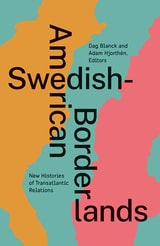
Swedish-American Borderlands
New Histories of Transatlantic RelationsDag Blanck
University of Minnesota Press, 2021
Reframing Swedish–American relations by focusing on contacts, crossings, and convergences beyond migration
Studies of Swedish American history and identity have largely been confined to separate disciplines, such as history, literature, or politics. In Swedish–American Borderlands, this collection edited by Dag Blanck and Adam Hjorthén seeks to reconceptualize and redefine the field of Swedish–American relations by reviewing more complex cultural, social, and economic exchanges and interactions that take a broader approach to the international relationship—ultimately offering an alternative way of studying the history of transatlantic relations.
Swedish–American Borderlands studies connections and contacts between Sweden and the United States from the seventeenth century to today, exploring how movements of people have informed the circulation of knowledge and ideas between the two countries. The volume brings together scholars from a wide range of disciplines within the humanities and social sciences to investigate multiple transcultural exchanges between Sweden and the United States. Rather than concentrating on one-way processes or specific national contexts, Swedish–American Borderlands adopts the concept of borderlands to examine contacts, crossings, and convergences between the nations, featuring specific case studies of topics like jazz, architecture, design, genealogy, and more.
By placing interactions, entanglements, and cross-border relations at the center of the analysis, Swedish–American Borderlands seeks to bridge disciplinary divides, joining a diverse set of scholars and scholarship in writing an innovative history of Swedish–American relations to produce new understandings of what we perceive as Swedish, American, and Swedish American.
Contributors: Philip J. Anderson, North Park U; Jennifer Eastman Attebery, Idaho State U; Marie Bennedahl, Linnaeus U; Ulf Jonas Björk, Indiana U–Indianapolis; Thomas J. Brown, U of South Carolina; Margaret E. Farrar, John Carroll U; Charlotta Forss, Stockholm U; Gunlög Fur, Linnaeus U; Karen V. Hansen, Brandeis U; Angela Hoffman, Uppsala U; Adam Kaul, Augustana College; Maaret Koskinen, Stockholm U; Merja Kytö, Uppsala U; Svea Larson, U of Wisconsin–Madison; Franco Minganti, U of Bologna; Frida Rosenberg, KTH Royal Institute of Technology, Stockholm; Magnus Ullén, Stockholm U.

Switzerland
A Village HistoryDavid Birmingham
Ohio University Press, 2004
Switzerland: A Village History is an account of an Alpine village that illuminates the broader history of Switzerland and its rural, local underpinnings. It begins with the colonization of the Alps by Romanized Celtic peoples who came from the plain to clear the wilderness, establish a tiny monastic house, and create a dairy economy that became famous for its cheeses. Over ten centuries the village, like the rest of Switzerland, went through the traumas of religious reformation and political revolution. A single currency, a unified postal service, and eventually an integrated army brought improved stability and prosperity to the union of two dozen small republics.
Yet Switzerland’s enduring foundation remains the three thousand boroughs to which the Swiss people feel they truly belong. In Switzerland: A Village History, distinguished scholar David Birmingham tells the story of his childhood village-Château-d’Oex-where records of cheesemaking date to 1328. The evolution of this ancient grazing and forest economy included the rise of the legal profession to keep track of complex deeds, grazing allotments, and animal rights-of-way. Switzerland’s eventual privatization of communal grazing land drove many highlanders to emigrate to the European plains and overseas to the Americas. The twentieth century brought wealth from foreign tourism to Switzerland, punctuated by austerities imposed by Europe’s wars. Alpine peasants were integrated into Swiss union society and began at last to share in some of the prosperity flowing from urban industry.
Switzerland: A Village History replaces the mythology and patriotic propaganda that too often have passed for Swiss history with a rigorous, insightful, and charming account of the daily life, small-scale rivalries, and local loyalties that actually make up Swiss history.
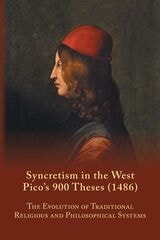
Syncretism in the West
Pico's 900 Theses (1486) With Text, Translation, and CommentaryEdited by S. A. Farmer
Arizona Center for Medieval and Renaissance Studies, 2016
This is the 2016 paperback printing of the 2008 edition of the popular text, translation, and commentary by S. A. Farmer. (The 2008 edition was a revised edition of the 1998 original publication).
Published by ACMRS (Arizona Center for Medieval and Renaissance Studies) in Tempe, Arizona as part of the MRTS (Medieval and Renaissance Texts and Studies) Series, this book -- previously available only in hardcover and otherwise out-of-print since 2014 -- is now available in its entirety in paperback format.
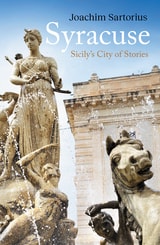
Syracuse
Sicily's City of StoriesJoachim Sartorius
Haus Publishing, 2026
Twenty-five hundred years ago, the city of Syracuse on the eastern coast of Sicily was, for the Ancient Greeks, one of the centers of the classical world. It was in Syracuse that Aeschylus premiered his plays, and to Syracuse that Plato would visit from Athens, where the tyrant Dionysius bought Euripides's lyre at auction, and the languishing nymph Arethusa hid in the papyrus grove.
Living in the city, the poet Joachim Sartorius learned that this history and myth are still present today. At Sartorius's side, we walk with nymphs and cyclops through the old town of Ortigia and meet the people of the city: its notables, police officers, artists, and barbers.
Unraveling the depths of Sicilian history and bringing the juxtaposition, superimposition, and commingling of cultures, styles, and attitudes to life, Sartorius shows a city of ancient luminosity, bringing us, through the baroque, to the contemporary world.