Results by title
8642 books match the query '20th century' and 572 start with s

Sixteen Modern American Authors
A Survey of Research and CriticismJackson R. Bryer, ed.
Duke University Press, 1973
Sixteen Modern American Authors
A Survey of Research and Criticism since 1972Jackson R. Bryer, ed.
Duke University Press, 1989
“Students of modern American literature have for some years turned to Fifteen Modern American Authors (1969) as an indispensable guide to significant scholarship and criticism about twentieth-century American writers. In its new form—Sixteenth Modern American Authors—it will continue to be indispensable. If it is not a desk-book for all Americanists, it is a book to be kept in the forefront of the bibliographical compartment of their brains.”—American Studies
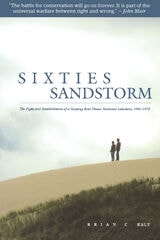
Sixties Sandstorm
The Fight over Establishment of a Sleeping Bear Dunes National Lakeshore, 1961-1970Brian C. Kalt
Michigan State University Press, 2001
Sixties Sandstorm is not a book about dunes as much as it is a book about people and their government. It chronicles the public meetings, bills, protests, and congressional interactions that led to the signing of the Sleeping Bear Sand Dunes Act in 1970. The Dunes park fight is a case study of the politics, the legislative process, citizen response to the expanded role of government in the 1960s, and the rise of the environmental movement in America during that decade. Since Hart's legislation was made law, millions of Americans have traveled to the Sleeping Bear Sand Dunes National Lakeshore. Few imagine what the area would look like today if not for the efforts of people like Senator Hart. On the other hand, few appreciate the sacrifice of the landowners who-not always willingly-gave up their property in this place where, as one resident put it, "stars are closer to the earth than anywhere else in the world."

Skeptical Music
Essays on Modern PoetryDavid Bromwich
University of Chicago Press, 2001
The two general essays that frame Skeptical Music make Bromwich's aesthetic commitments clear. In "An Art without Importance," published here for the first time, Bromwich underscores the trust between author and reader that gives language its subtlety and depth, and makes the written word adequate to the reality that poetry captures. For Bromwich, understanding the work of a poet is like getting to know a person; it is a kind of reading that involves a mutual attraction of temperaments. The controversial final essay, "How Moral Is Taste?," explores the points at which aesthetic and moral considerations uneasily converge. In this timely essay, Bromwich argues that the wish for excitement that poetry draws upon is at once primitive and irreducible.
Skeptical Music most notably offers incomparable readings of individual poets. An essay on the complex relationship between Hart Crane and T. S. Eliot shows how the delicate shifts of tone and shading in their work register both affinity and resistance. A revealing look at W. H. Auden traces the process by which the voice of a generation changed from prophet to domestic ironist. Whether discussing heroism in the poetry of Wallace Stevens, considering self-reflection in the poems of Elizabeth Bishop, or exploring the battle between the self and its images in the work of John Ashbery, Skeptical Music will make readers think again about what poetry is, and even more important, why it still matters.

Skyscraper Cinema
Architecture and Gender in American FilmMerrill Schleier
University of Minnesota Press, 2008
Schleier analyzes cinematic works in which skyscrapers are an integral component, interpreting the iconography and spatial practices in these often fictional modern buildings, especially on concepts of gender. Organized chronologically and thematically, she offers close readings of films including Safety Last, Skyscraper Souls, Wife vs. Secretary, Baby Face, The Fountainhead, and Desk Set. Opening with the humorous antics of Harold Lloyd, the premier skyscraper actor of the silent era, the book moves through the disillusionment of the Depression era, in which skyscrapers are employed as players in moralistic, class-conscious stories, to post–World War II and its reimagining of American political and economic values and ends with the complicated prosperity of the 1950s and the lives of white-collar workers and their spouses.
Taking inspiration from Walter Benjamin’s Arcades Project, among works of other critical theorists, Schleier creates in this book a model for understanding architecture as a purveyor of desire and class values and, ultimately, contributes broadly to thinking on the rich intersection of the built environment, cinema, and gender.
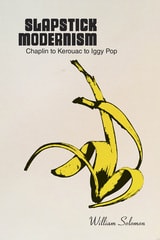
Slapstick Modernism
Chaplin to Kerouac to Iggy PopWilliam Solomon
University of Illinois Press, 2018
William Solomon charts the origins and evolution of what he calls slapstick modernism--a merging of artistic experimentation with the socially disruptive lunacy made by the likes of Charlie Chaplin. Romping through texts, films, and theory, Solomon embarks on an intellectual odyssey from the high modernism of Dos Passos and Williams to the late modernism of the Beats and Burroughs before a head-on crash into the raw power of punk rock. Throughout, he shows the links between the experimental writers and silent screen performers of the early century, and explores the potent cultural undertaking that drew inspiration from anarchical comedy after World War II.
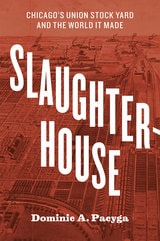
Slaughterhouse
Chicago's Union Stock Yard and the World It MadeDominic A. Pacyga
University of Chicago Press, 2015
Slaughterhouse tells the story of the Union Stock Yard, chronicling the rise and fall of an industrial district that, for better or worse, served as the public face of Chicago for decades. Dominic A. Pacyga is a guide like no other—he grew up in the shadow of the stockyards, spent summers in their hog house and cattle yards, and maintains a long-standing connection with the working-class neighborhoods around them. Pacyga takes readers through the packinghouses as only an insider can, covering the rough and toxic life inside the plants and their lasting effects on the world outside. He shows how the yards shaped the surrounding neighborhoods and controlled the livelihoods of thousands of families. He looks at the Union Stock Yard’s political and economic power and its sometimes volatile role in the city’s race and labor relations. And he traces its decades of mechanized innovations, which introduced millions of consumers across the country to an industrialized food system.
Once the pride and signature stench of a city, the neighborhood is now home to Chicago’s most successful green agriculture companies. Slaughterhouse is the engrossing story of the creation and transformation of one of the most important—and deadliest—square miles in American history.

Slavery and the Catholic Church in the United States
Historical StudiesDavid J. Endres
Catholic University of America Press, 2023
Slavery in American Children's Literature, 1790-2010
Paula T. Connolly
University of Iowa Press, 2013
Slavery in the Great Lakes Region of East Africa
Henri Médard
Ohio University Press, 2007
Slavery in the Great Lakes Region of East Africa is a collection of ten studies by the most prominent historians of the region. Slavery was more important in the Great Lakes region of Eastern Africa than often has been assumed, and Africans from the interior played a more complex role than was previously recognized. The essays in this collection reveal the connections between the peoples of the region as well as their encounters with the conquering Europeans. The contributors challenge the assertion that domestic slavery increased in Africa as a result of the international trade. Slavery in this region was not a uniform phenomenon and the line between enslaved and non-slave labor was fine. Kinship ties could mark the difference between free and unfree labor. Social categories were not always clear-cut and the status of a slave could change within a lifetime.
Contents:
- Introduction by Henri Médard
- Language Evidence of Slavery to the Eighteenth Century by David Schoenbrun
- The Rise of Slavery & Social Change in Unyamwezi 1860–1900 by Jan-Georg Deutsch
- Slavery & Forced Labour in the Eastern Congo 1850–1910 by David Northrup
- Legacies of Slavery in North West Uganda ‘The One-Elevens’ by Mark Leopold
- Human Booty in Buganda: The Seizure of People in War, c.1700–c.1900 by Richard Reid
- Stolen People & Autonomous Chiefs in Nineteenth-Century Buganda by Holly Hanson
- Women’s Experiences of Slavery in Late Nineteenth- & Early Twentieth-Century Uganda by Michael W. Tuck
- Slavery & Social Oppression in Ankole 1890–1940 by Edward I. Steinhart
- The Slave Trade in Burundi & Rwanda at the Beginning of German Colonisation 1890–1906 by Jean-Pierre Chretien
- Bunyoro & the Demography of Slavery Debate by Shane Doyle

Slavic Excursions
Essays on Russian and Polish LiteratureDonald Davie
University of Chicago Press, 1991
Sleep Fictions
Rest and Its Deprivations in Progressive-Era LiteratureHannah L. Huber
University of Illinois Press, 2023
A turn-of-the-century influx of new technologies and the enormous impact of the electric light transformed not only individual sleeping habits but the ways American culture conceived and valued sleep. Hannah L. Huber analyzes the works of Henry James, Edith Wharton, Charles Chesnutt, and Charlotte Perkins Gilman to examine the literary response to the period’s obsession with wakefulness. As these writers blurred the separation of public and private space, their characters faced exhaustion in a modern world that permeated every moment of their lives with artificial light, traffic noise, and the social pressure to remain active at all hours. The implacable cultural clock and constant stress over physical limitations had an even greater impact on marginalized figures. Huber pays particular attention to how these writers rebutted Americans’ confidence in the body’s ability to conquer sleep with vivid portraits of the devastating consequences of sleep disruption and deprivation.
The author also provides a website and text visualization tool that offers readers an interdisciplinary, deconstructed analysis of the book’s primary texts. The website can be found at: https://sleepfictions.org/sleep/scalar/index
Slips of the Mind
Poetry as ForgettingJennifer Soong
University of Chicago Press, 2025
In Slips of the Mind, poet and critic Jennifer Soong turns away from forgetting’s long-standing associations with suppression, privation, and error to argue that the absence or failure of memory has often functioned as a generative creative principle. Exploring forgetting not as the mere rejection of a literary past or a form of negative poetics, Soong puts to the test its very aesthetic meaning. What new structures, forms of desires, styles, and long and short feelings do lapses in time allow? What is oblivion’s relationship to composition? And how does the twentieth-century poet come to figure as the quintessential embodiment of such questions?
Soong uncovers forgetting’s influence on Gertrude Stein, Lyn Hejinian, Tan Lin, Harryette Mullen, Lissa Wolsak, and New York School poets John Ashbery, James Schuyler, Bernadette Mayer, and Ted Berrigan, among others. She reveals that forgetting’s shapeshifting produces differences in poetic genre, interest, and degrees of intentionality—and that such malleability is part of forgetting’s nature. Most provocatively, Soong shows how losing track of things, leaving them behind, or finding them already gone resists overdetermination and causality in the name of surprise, as poets leverage forgetting in order to replace identity with style. Slips of the Mind is the kind of literary criticism that will reward all readers of modern and contemporary poetry.
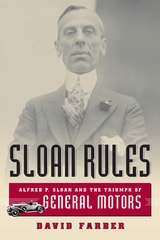
Sloan Rules
Alfred P. Sloan and the Triumph of General MotorsDavid Farber
University of Chicago Press, 2002
Here, for the first time, is a study of both the difficult man and the pathbreaking executive. Sloan Rules reveals the GM genius as not only a driven manager of men, machines, money, and markets but also a passionate and not always wise participant in the great events of his day. Sloan, for example, reviled Franklin Roosevelt and the New Deal; he firmly believed that politicians, government bureaucrats, and union leaders knew next to nothing about the workings of the new consumer economy, and he did his best to stop them from intervening in the private enterprise system. He was instrumental in transforming GM from the country's largest producer of cars into the mainstay of America's "Arsenal of Democracy" during World War II; after the war, he bet GM's future on renewed American prosperity and helped lead the country into a period of economic abundance. Through his business genius, his sometimes myopic social vision, and his vast fortune, Sloan was an architect of the corporate-dominated global society we live in today.
David Farber's story of America's first corporate genius is biography of the highest order, a portrait of an extraordinarily compelling and skillful man who shaped his era and ours.
Slow Disturbance
Infrastructural Mediation on the Settler Colonial Resource FrontierRafico Ruiz
Duke University Press, 2021
Slow Fuse of the Possible
A Memoir of Poetry and PsychoanalysisKate Daniels
West Virginia University Press, 2022
Slow Fuse of the Possible is a poet’s narrative of a troubled psychoanalysis. It is also a commanding meditation on the powers of language, for good and for ill.
From the beginning of their time together, it is clear that the enigmatic analyst and Daniels are not a good match, yet both are determined to continue their work—the former in nearly complete silence, and the latter as best she can with the tools at her disposal: careful attention to language, deep reading, and literary imagination. Throughout, the story is filtered through the mind of Emily Dickinson, whose poetry Daniels uses as a fulcrum for the interpretation of her own experience. The book is saturated with Dickinson’s verse, and Dickinson is an increasingly haunting presence as crises emerge and the author unravels.
This compelling lyric memoir, so richly steeped in all facets of language and the literary, allows readers a glimpse into the mind of a renowned poet, revealing the dazzling and anguished connections between poetry and psychoanalysis.
Slow Narrative across Media
Edited by Marco Caracciolo and Ella Mingazova
The Ohio State University Press, 2024
Slowness is frequently seen as a response to modernity’s cult of speed and efficiency, and its influence in contemporary culture can be felt in artistic trends such as “slow cinema” or “slow TV.” Despite the popularity of these labels, however, slowness remains undertheorized in contemporary narrative scholarship. What makes a narrative slow, and what conceptual and analytical tools are best suited to account for this slowness? Is slowness a feature of certain narratives, an experiential response to these narratives, or both? How is narrative slowness related to the pace and rhythm of plot, and how does it carry cultural significance?
Slow Narrative across Media illuminates the concept of slow narrative and demonstrates how it manifests across media forms: from short stories to novel cycles, to comics, to music, to experimental film. Led by editors Marco Caracciolo and Ella Mingazova, contributors draw on cognitive and rhetorical approaches to narrative as well as on econarratology to bring into focus both the media-specific ways in which narrative evokes slowness and the usefulness of a transmedial approach to this phenomenon.
Contributors:
Jan Baetens, Raphaël Baroni, Lars Bernaerts, Marco Caracciolo, Karin Kukkonen, Ella Mingazova, Peggy Phelan, Greice Schneider, Roy Sommer, Carolien Van Nerom, Gary Weissman
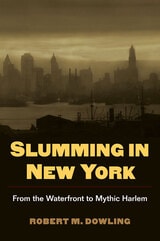
Slumming in New York
From the Waterfront to Mythic HarlemRobert M. Dowling
University of Illinois Press, 2006
Using the methods of ethnicity theory, black studies, regional studies, literary studies, and popular culture, Robert M. Dowling reveals the way in which "outsider" authors helped alleviate New York's mounting social anxieties by popularizing "insider" voices from neighborhoods as distinctive as the East Side waterfront, the Bowery, the Tenderloin's "black Bohemia," the Jewish Lower East Side, and mythic Harlem.
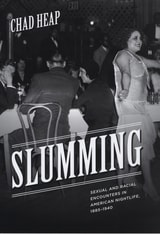
Slumming
Sexual and Racial Encounters in American Nightlife, 1885-1940Chad Heap
University of Chicago Press, 2009

Small Town America in World War II
War Stories from Wrightsville, PennsylvaniaRonald E. Marcello
University of North Texas Press, 2014
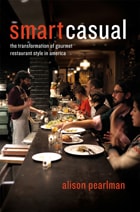
Smart Casual
The Transformation of Gourmet Restaurant Style in AmericaAlison Pearlman
University of Chicago Press, 2013
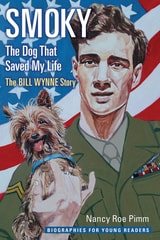
Smoky, the Dog That Saved My Life
The Bill Wynne StoryNancy Roe Pimm
Ohio University Press, 2019
World War II soldier Bill Wynne met Smoky while serving in New Guinea, where the dog, who was smaller than Wynne’s army boot, was found trying to scratch her way out of a foxhole. After he adopted her, she served as the squadron mascot and is credited as being the first therapy dog for the emotional support she provided the soldiers. When they weren’t fighting, Bill taught Smoky hundreds of tricks to entertain the troops. Smoky became a war hero herself at an airstrip in Luzon, the Philippines, where she helped save forty airplanes and hundreds of soldiers from imminent attack.
After the war, Bill worked as a Hollywood animal trainer and then returned to his hometown of Cleveland, Ohio. He and Smoky continued to perform their act, even getting their own TV show, How to Train Your Dog with Bill Wynne and Smoky.
Nancy Roe Pimm presents Bill and Smoky’s story to middle-grade readers in delightful prose coupled with rich archival illustrations. Children will love learning about World War II from an unusual perspective, witnessing the power of the bond between a soldier and his dog, and seeing how that bond continued through the exciting years following the war.
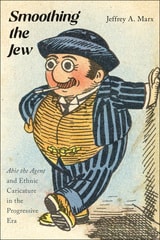
Smoothing the Jew
"Abie the Agent" and Ethnic Caricature in the Progressive EraJeffrey A. Marx
Rutgers University Press, 2024
Smoothing the Jew investigates how Jewish artists of the time attempted to “smooth over” these demeaning portrayals by focusing on the first Jewish comic strip published in English, Harry Hershfield’s Abie the Agent. Jeffrey Marx demonstrates how Hershfield created a Jewish protagonist who in part reassured nativists of the Jews’ ability to assimilate into American society while also encouraging immigrants and their children that, over time, they would be able to adopt American customs without losing their distinctly Jewish identity.

Smugglers Secessionists & Loyal Citizens
On The Ghana-Togo FrontierPaul Nugent
Ohio University Press, 2002
Paul Nugent contends that whatever the origins of partition, border peoples quickly became knowing and active participants in the shaping of this international boundary. The study itself straddles the conventional divide between social and political history and offers a reconstruction of a long-range history of smuggling and a reappraisal of Ewe identity.
Addressing topics such as imperialism, cocoa, the Customs Preventive Service, Christianity, and Ewe unification, this study will be of interest to scholars and to others concerned with issues of criminality, identity, and the state.

Snapshots and Short Notes
Images and Messages of Early Twentieth-Century Photo PostcardsKenneth Wilson
University of North Texas Press, 2020

Snow on the Cane Fields
Women’s Writing and Creole SubjectivityJudith Raiskin
University of Minnesota Press, 1995
Snow on the Cane Fields was first published in 1995. Minnesota Archive Editions uses digital technology to make long-unavailable books once again accessible, and are published unaltered from the original University of Minnesota Press editions.
In a probing analysis of creole women's writing over the past century, Judith Raiskin explores the workings and influence of cultural and linguistic colonialism. Tracing the transnational and racial meanings of creole identity, Raiskin looks at four English-speaking writers from South Africa and the Caribbean: Olive Schreiner, Jean Rhys, Michelle Cliff, and Zoë Wicomb. She examines their work in light of the discourses of their times: nineteenth-century "race science" and imperialistic rhetoric, turn-of-the-century anti-Semitic sentiment and feminist pacifism, postcolonial theory, and apartheid legislation.
In their writing and in their multiple identities, these women highlight the gendered nature of race, citizenship, culture, and the language of literature. Raiskin shows how each writer expresses her particular ambivalences and divided loyalties, both enforcing and challenging the proprietary British perspective on colonial history, culture, and language. A new perspective on four writers and their uneasy places in colonial culture, Snow on the Cane Fields reveals the value of pursuing a feminist approach to questions of national, political, and racial identity.
Judith Raiskin is assistant professor of women's studies at the University of California, Santa Barbara.
Snowshoeing Through Sewers
Adventures in New York City, New Jersey, and PhiladelphiaMichael Aaron Rockland
Rutgers University Press, 2008
In these ten alternately poetic and comic tales of adventure in the New York/Philadelphia corridor, the most densely populated chunk of America, Rockland walks and bikes areas meant only for cars and paddles through waters capable of dissolving canoes. He hikes the length of New York's Broadway, camps in New York City, treks across Philadelphia, pedals among the tractor trailers of Route 1 in New Jersey, and paddles around Manhattan and through the dark tunnels under Trenton.
Whereas Henry David Thoreau built his cabin on Walden Pond to get out of town, for Rockland, the challenge is to head into town. As he writes, "in the late twentieth century, a weed and trash-filled city lot . . . may be a better place than the wilderness to contemplate one's relationship to nature."
So Ask
Essays, Conversations, and InterviewsPhilip Levine
University of Michigan Press, 2002
So Black and Blue
Ralph Ellison and the Occasion of CriticismKenneth W. Warren
University of Chicago Press, 2003
What would it mean to read Invisible Man as a document of Jim Crow America? Using Ralph Ellison's classic novel and many of his essays as starting points, Kenneth W. Warren illuminates the peculiar interrelation of politics, culture, and social scientific inquiry that arose during the post-Reconstruction era and persisted through the Civil Rights movement. Warren argues that Ellison's novel expresses the problem of who or what could represent and speak for the Negro in an age of limited political representation.
So Black and Blue shows that Ellison's successful transformation of these limits into possibilities has also, paradoxically, cast a shadow on the postsegregation world. What can be the direction of African American culture once the limits that have shaped it are stricken down? Here Warren takes up the recent, ongoing, and often contradictory veneration of Ellison's artistry by black writers and intellectuals to reveal the impoverished terms often used in discussions about the political and cultural future of African Americans. Ultimately, by showing what it would mean to take seriously the idea of American novels as creatures of their moment, Warren questions whether there can be anything that deserves the label of classic American literature.

So Great Was the Slaughter
Market Hunters, Sportsmen, and Wildlife Conservation in ArkansasBuckley T. Foster
University of Alabama Press, 2025
Winner of the 2026 J.G. Ragsdale Book Award
So Great Was the Slaughter reveals the untold story of Arkansas conservation pioneers who saved the state’s game and fish populations. As Arkansas entered the twentieth century, the national demand for meat combined with the ability to ship millions of animals to hungry cities like New Orleans, Memphis, and Chicago had driven many species, including bison and passenger pigeons, to extinction in Arkansas. Many others, including deer, bear, turkey, quail, and fish, were in danger of disappearing.
In response, an unlikely coalition of Arkansas sportsmen, hunters, and conservationists created a vision for conservation legislation, game laws, and the establishment of fish hatcheries and wildlife refuges. With support from influential outsiders like E. A. McIlhenny and the United States Biological Survey, they waged a long battle against entrenched political and commercial interests.
Buckley Foster’s meticulous research reveals how these pioneers fought to save the state’s wildlife resources from destruction and laid the foundations for sustainable, modern wildlife management in Arkansas. So Great Was the Slaughter will fascinate hunters, conservationists, historians, and those interested in the history of wildlife conservation and conflicts between market hunters and sportsmen in the United States and the American South.
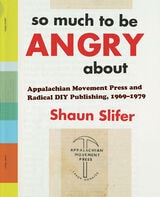
So Much to Be Angry About
Appalachian Movement Press and Radical DIY Publishing, 1969–1979Shaun Slifer
West Virginia University Press, 2021
In a remarkable act of recovery, So Much to Be Angry About conjures an influential but largely obscured strand in the nation’s radical tradition—the “movement” printing presses and publishers of the late 1960s and 1970s, and specifically Appalachian Movement Press in Huntington, West Virginia, the only movement press in Appalachia. More than a history, this craft- and activist-centered book positions the frontline politics of the Appalachian Left within larger movements in the 1970s. As Appalachian Movement Press founder Tom Woodruff wrote: “Appalachians weren’t sitting in the back row during this struggle, they were driving the bus.”
Emerging from the Students for a Democratic Society chapter at Marshall University, and working closely with organizer and poet Don West, Appalachian Movement Press made available an eclectic range of printed material, from books and pamphlets to children’s literature and calendars. Many of its publications promoted the Appalachian identity movement and “internal colony” theory, both of which were cornerstones of the nascent discipline of Appalachian studies. One of its many influential publications was MAW, the first feminist magazine written by and for Appalachian women.
So Much to Be Angry About combines complete reproductions of five of Appalachian Movement Press’s most engaging publications, an essay by Shaun Slifer about his detective work resurrecting the press’s history, and a contextual introduction to New Left movement publishing by Josh MacPhee. Amply illustrated in a richly produced package, the volume pays homage to the graphic sensibility of the region’s 1970s social movements, while also celebrating the current renaissance of Appalachia’s DIY culture—in many respects a legacy, Slifer suggests, of the movement publishing documented in his book.
So Unimaginable a Price
Baldwin and the Black AtlanticJohn E. Drabinski
Northwestern University Press, 2026
James Baldwin’s nonfiction offers some of the most important and challenging thinking on the experience of race, history, and memory in the Black Atlantic world. Yet much of the scholarly literature on Baldwin’s writing reads his work from inside the sociocultural context of the United States, alongside key interlocutors like Richard Wright, Ralph Ellison, and Lorraine Hansberry. So Unimaginable a Price: Baldwin and the Black Atlantic shifts the critical frame, examining Baldwin’s work as part of a midcentury moment across the wider Atlantic world and tying his reflections to those of thinkers in the Caribbean and Africa to underscore the widening sense, as well as the particularity, of his critical claims. Who is Baldwin to the Atlantic world? And who, then, is Baldwin to the United States? John E. Drabinski recasts Baldwin as a Black Atlantic writer whose unique qualities as a thinker are enhanced by their similarities and differences with fellow writers of liberation in the global Black world.
So We Died
A Memoir of Life and Death in the Ghetto of Šiauliai, LithuaniaLevi Shalit, translated and edited by Veronica Belling, Ellen Cassedy, and Andrew Cassel, introduction by Veronica Belling, afterword by Justin Cammy
University of Alabama Press, 2025
In the shadow of death, Levi Shalit wrote to remember—so we would never forget.
So We Died: A Memoir of Life and Death in the Ghetto of Šiauliai, Lithuania (Azoy zaynen mir geshtorbn) is a powerful eyewitness account of the Shavl ghetto during the Nazi occupation of Lithuania. Written in Yiddish by Levi Shalit and available now for the first time in English, the work fills a stark void in historical records.
Shalit divided his work into four sections. In the first, he describes the German invasion of Šiauliai, the murder of thousands of Jews in the city and surrounding countryside, and the forced relocation of the surviving Jews into the Shavl ghetto. In the second, he describes daily life in the ghetto in engrossing detail. In the third, titled “The Masada Book,” Shalit describes ghetto residents’ attempt to organize a resistance group of which he himself was a member. In the fourth, he narrates the transformation of the ghetto into a concentration camp and the seizure and deportation of the community’s children.
Few accounts of the Shavl ghetto survived the war. Shalit’s work offers English-language readers a rare insight into a vital chapter of history. The translators artfully reveal Shalit’s literary prowess and the ways he illuminated the Shavl ghetto’s daily struggles, false hopes, and atrocities.
More than an account of a previously overlooked episode in Holocaust history, So We Died is a testament to the enduring power of the human spirit in the face of unspeakable tragedy. It offers keen insight into a time of war, fascism, and resistance. A must-read for anyone seeking understanding and remembrance.
Soapbox Rebellion
The Hobo Orator Union and the Free Speech Fights of the Industrial Workers of the World, 1909-1916Matthew S. May
University of Alabama Press, 2013
Sociability and Its Enemies
German Political Theory After 1945Jakob Norberg
Northwestern University Press, 2014
Social Contracts Under Stress
The Middle Classes of America, Europe, and Japan at the Turn of the CenturyOlivier Zunz
Russell Sage Foundation, 2002
Social Controversy and Public Address in the 1960s and Early 1970s
A Rhetorical History of the United States, Volume IXRichard J. Jensen
Michigan State University Press, 2017
Social Justice for Women
The International Labor Organization and WomenCarol Riegelman Lubin and Anne Winslow
Duke University Press, 1990
Carol Riegelman Lubin, a staff member of ILO for seventeen years, and Anne Winslow, for twenty-two years editor for the Carnegie Endowment, explore the important role played by women of the American and British trade union movement in the founding of the ILO. In surveying the organization’s history and structure, they ask how the ILO’s concern with women has manifested over the years, if it was faithful to its constitution, how it dealt with conflicting needs of women from industrialized nations and Third World countries, and what its relationship was to the international feminist movement. Drawing on case studies and analyses of literature on women and work, the authors identify the role of other international organizations in response to the ILO in fostering, or sometimes hindering, women’s development in the labor area.

Social Science in the Crucible
The American Debate over Objectivity and Purpose, 1918–1941Mark C. Smith
Duke University Press, 1994
Mark C. Smith first provides a historical overview of the controversy over the nature and future of the social sciences in early twentieth-century America and, then through a series of intellectual biographies, offers an intensive study of the work and lives of major figures who participated in this debate. Using an extensive range of materials, from published sources to manuscript collections, Smith examines "objectivists"—economist Wesley Mitchell and political scientist Charles Merriam—and the more "purposive thinkers"—historian Charles Beard, sociologist Robert Lynd, and political scientist and neo-Freudian Harold Lasswell. He shows how the debate over objectivity and social purpose was central to their professional and personal lives as well as to an understanding of American social science between the two world wars. These biographies bring to vivid life a contentious moment in American intellectual history and reveal its significance in the shaping of social science in this country.
Social Stratification and Mobility in Central Veracruz
By Hugo G. Nutini
University of Texas Press, 2005
Since the Revolution of 1910, Mexican society has undergone a profound transformation, characterized by the disempowerment of the landed aristocracy and the rise of a new ruling class of plutocrats and politicians; the development of a middle class of white-collar professionals; and the upward mobility of formerly disenfranchised Indians who have become urban, working-class Mestizos. Indeed, Mexico's class system today increasingly resembles that of Western industrialized nations, proving that, while further democratic reforms are needed, the Revolution initiated an ongoing process of change that has created a more egalitarian society in Mexico with greater opportunities for social advancement.
This authoritative ethnography examines the transformation of social classes in the Córdoba-Orizaba region during the latter half of the twentieth century to create a model of provincial social stratification in Mexico. Hugo Nutini focuses on the increased social mobility that has affected all classes of society, especially the rural Indians who have taken advantage of education, job opportunities, and contact with the wider world to achieve Mestizo status. He also traces the transfer of power that followed the demise of the hacienda system, as well as the growing importance of the middle class. This description and analysis of the provincial social stratification system complements the work Nutini has done on the national class system, centered in Mexico City, to offer a comprehensive picture of social stratification and mobility in Mexico today.
Socialist Joy in the Writing of Langston Hughes
Jonathan Scott
University of Missouri Press, 2007
Jonathan Scott has written the first book-length study to analyze the extraordinary range of Hughes’s creative output, showing that his unassailable reputation as one of America’s finest “folk poets” barely scratches the surface of his oeuvre. Scott offers a robust account of the relations between Hughes and political activism to show that Hughes’s direct involvement with the U.S. socialist movement of the 1920s and 1930s was largely responsible for the variety of his writing. Scott also contends that the goal of overthrowing white oppression produced a “socialist joy” that would express itself repeatedly in Hughes’s work during the anticommunist crusades of the 1950s and 1960s.
In his provocative study, Scott explores four areas of Hughes’s intellectual work: his relationship with Afro-Caribbean arts, Soviet Russia, and the Harlem Renaissance; his postwar newspaper writing for the African American press; his extensive cultural work as an anthologist; and his writings for young people. Through these analyses, Scott proposes the concept of “red, white, and black” as an alternative paradigm for appreciating Hughes in particular and the American scene in general.
Scott views Hughes not simply as a great author but as an American working-class intellectual trickster whose eccentric projects require a redefinition of the very concept of authorship. By focusing on Hughes’s intellectual method, Scott also contests the notion of reducing all African Americans to one undifferentiated social status beneath that of any class within the white oppressing group—a hallmark of racial oppression that has diminished, in the U.S. academy, Hughes’s international status.
As Scott persuasively argues, it is only through an understanding of Hughes’s literary method that we can undertake a thorough account of his prolific production during the cold war era. His book situates Hughes’s life and work in their proper contexts, both reconfirming Hughes’s reputation as an intellectual of the American Left and establishing his long-denied place in American studies as the most well-rounded writer of his time.

Socialist Realism without Shores
Thomas Lahusen and Evgeny Dobrenko, eds.
Duke University Press, 1997
The contributors here argue that socialist realism has never been a monolithic art form. Essays demonstrate, among other things, that its literature could accommodate psychoanalytic criticism; that its art and architecture could affect the aesthetic dictates of Moscow that made "Soviet" art paradoxically heterogeneous; and that its aesthetics could accommodate both high art and crafted kitsch. Socialist Realism without Shores also addresses the critical discourse provoked by socialist realism—Stalinist aesthetics, "anthropological" readings; ideology critique and censorship; and the sublimely ironic approaches adapted from sots art, the Soviet version of postmodernism.
Contributors. Antoine Baudin, Svetlana Boym, Greg Castillo, Katerina Clark, Evgeny Dobrenko, Boris Groys, Hans Günther, Julia Hell, Leonid Heller, Mikhail Iampolski, Thomas Lahusen, Régine Robin, Yuri Slezkine, Lily Wiatrowski Phillips, Xudong Zhang, Sergei Zimovets

Society and its Outsiders in the Novels of Jakob Wassermann
Katharina Volckmer
University of London Press, 2016

Society, Culture, and the State in Germany, 1870-1930
Geoff Eley, Editor
University of Michigan Press, 1997
Sociology on Film
Postwar Hollywood's Prestige CommodityCagle, Chris
Rutgers University Press, 2016
Socrates' Children
Contemporary: The 100 Greatest PhilosophersPeter Kreeft
St. Augustine's Press, 2014
This is the fourth and final part of Kreeft’s four-volume history of philosophy . . . on ancient, medieval, modern, and contemporary philosophy.
Kreeft focuses on the “big ideas” that have influenced present people and present times, and includes relevant biographical data, proportionate to its importance for each thinker. Moreover, the aim of the work is to stimulate philosophizing, controversy, and argument. It uses ordinary language and logic, not jargon and symbolic logic, and it is commonsensical (like Aristotle) and existential in the sense that it sees philosophy as something to be lived and experienced in life. Philosophy, after all, is not about philosophy but reality . . . about wisdom, life and death, good and evil, and God.
Kreeft seeks to be simple and direct and clear. But it is not dumbed down and patronizing. It will stretch the reader, but it is meant for beginnings, not just scholars. It can be used for college classes or do-it-yourselfers. It emphasizes surprises; remember, “philosophy begins in wonder.” And it includes visual aids: charts, cartoons, line drawings, and drawings of philosophers.
Peter Kreeft teaches philosophy at Boston College and is a very prolific author of philosophy and theology texts, including, from St. Augustine’s Press, Socratic Logic, An Ocean Full of Angels, The Philosophy of Jesus, Jesus-Shock, The Sea Within, I Surf Therefore I Am, If Einstein Had Been a Surfer, the first nine titles in his Socrates Meets series, including Philosophy 101 by Socrates and the titles on Machiavelli, Descartes, Hume, Kant, Marx, and Sartre, and the first three volumes of this series, Socrates’ Children: Ancient, Socrates’ Children: Medieval, and Socrates’ Children: Modern.
Soft Matter
The Poetics of Weakness in Late Soviet SocialismJulia Vaingurt
Northwestern University Press, 2025
Identifies and examines a poetics of weakness in Soviet underground literature
Artists of the late Soviet era sought new, nonconformist ways of approaching literary fiction, arriving at weakness as a crucial principle of narrative and character formation. Julia Vaingurt argues that this counter-discourse of strategic weakness constituted both an aesthetic strategy and an ethical code, affording like-minded authors a feeling of recognition and commonality and uniting an international community of artists in resistance to the divisiveness of their worlds. Soft Matter: The Poetics of Weakness in Late Soviet Socialism explores the cultivation of weak subjectivity through modes such as gender subversion, queer holy foolishness, intoxication, madness, and writing disorders like graphomania and writer’s block. Identifying the poetics of weakness as formative for Soviet underground literature of the 1960s and ’70s, Vaingurt also traces the inheritance of a far older tradition within Russian culture of salutary weakness. As democratic deliberation continues to be under threat around the world, alternatives to the ubiquitous politics of force are an aesthetic, ethical, and ideological imperative.
Sojourning for Freedom
Black Women, American Communism, and the Making of Black Left FeminismErik S. McDuffie
Duke University Press, 2011
Sol Butler
An Olympian's Odyssey through Jim Crow AmericaBrian Hallstoos
University of Illinois Press, 2026

Solar Adobe
Energy, Ecology, and Earthen ArchitectureAlbert Narath
University of Minnesota Press, 2024
How a centuries-old architectural tradition reemerged as a potential solution to the political and environmental crises of the 1970s
Against the backdrop of a global energy crisis, a widespread movement embracing the use of raw earth materials for building construction emerged in the 1970s. Solar Adobe examines this new wave of architectural experimentation taking place in the United States, detailing how an ancient tradition became a point of convergence for issues of environmentalism, architecture, technology, and Indigenous resistance.
Utilized for centuries by the Pueblo people of the American Southwest and by Spanish colonialists, adobe construction found renewed interest as various groups contended with the troubled legacies of modern architecture and an increasingly urgent need for sustainable design practices. In this period of critical experimentation, design networks that included architects, historians, counterculture communities, government weapons labs, and Indigenous activists all looked to adobe as a means to address pressing environmental and political issues.
Albert Narath charts the unique capacities of adobe construction across a wide range of contexts, consistently troubling simple distinctions between traditional and modern technologies, high design and vernacular architecture. Drawing insightful parallels between architecture, environmentalism, and movements for Indigenous sovereignty, Solar Adobe stresses the importance of considering the history of the built environment in conjunction with architecture’s larger impact on the natural world.