Results by title
8642 books match the query '20th century' and 572 start with s
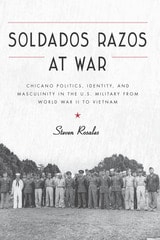
Soldados Razos at War
Chicano Politics, Identity, and Masculinity in the U.S. Military from World War II to VietnamSteven Rosales
University of Arizona Press, 2017
What were the catalysts that motivated Mexican American youth to enlist or readily accept their draft notices in World War II, Korea, or Vietnam? In Soldados Razos at War, historian and veteran Steven Rosales chronicles the experiences of Chicano servicemen who fought for the United States, explaining why these men served, how they served, and the impact of their service on their identity and political consciousness.
As a social space imbued with its own martial and masculine ethos, the U.S. military offers an ideal way to study the aspirations and behaviors that carried over into the civilian lives of these young men. A tradition of martial citizenship forms the core of the book. Using rich oral histories and archival research, Rosales investigates the military’s transformative potential with a particular focus on socioeconomic mobility, masculinity, and postwar political activism across three generations.
The national collective effort characteristic of World War II and Korea differed sharply from the highly divisive nature of American involvement in Vietnam. Thus, for Mexican Americans, military service produced a wide range of ideological reactions, with the ideals of each often in opposition to the others. Yet a critical thread connecting these diverse outcomes was a redefined sense of self and a willingness to engage in individual and collective action to secure first-class citizenship.
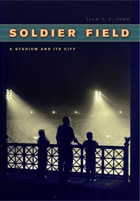
Soldier Field
A Stadium and Its CityLiam T. A. Ford
University of Chicago Press, 2009
Sports fans nationwide know Soldier Field as the home of the Chicago Bears. For decades its signature columns provided an iconic backdrop for gridiron matches. But few realize that the stadium has been much more than that. Soldier Field: A Stadium and Its City explores how this amphitheater evolved from a public war memorial into a majestic arena that helped define Chicago.
Chicago Tribune staff writer Liam Ford led the reporting on the stadium’s controversial 2003 renovation—and simultaneously found himself unearthing a dramatic history. As he tells it, the tale of Soldier Field truly is the story of Chicago, filled with political intrigue and civic pride. Designed by Holabird and Roche, Soldier Field arose through a serendipitous combination of local tax dollars, City Beautiful boosterism, and the machinations of Mayor “Big Bill” Thompson. The result was a stadium that stood at the center of Chicago’s political, cultural, and sporting life for nearly sixty years before the arrival of Walter Payton and William “The Refrigerator” Perry.
Ford describes it all in the voice of a seasoned reporter: the high school football games, track and field contests, rodeos, and even NASCAR races. Photographs, including many from the Chicago Park District’s own collections, capture these remarkable scenes: the swelling crowds at ethnic festivals, Catholic masses, and political rallies. Few remember that Soldier Field hosted Billy Graham and Martin Luther King Jr., Judy Garland and Johnny Cash—as well as Grateful Dead’s final show.
Soldier Field captures the dramatic history of Chicago’s stadium on the lake and will captivate sports fans and historians alike.
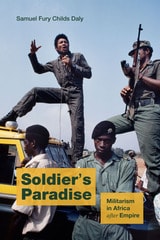
Soldier's Paradise
Militarism in Africa after EmpireSamuel Fury Childs Daly
Duke University Press, 2024
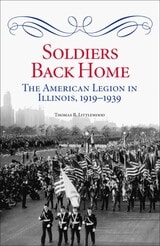
Soldiers Back Home
The American Legion in Illinois, 1919-1939Thomas B. Littlewood
Southern Illinois University Press, 2004
This first political and social history of the American Legion in Illinois from its formation in 1919 to the onset of World War II focuses on the organization’s influence on the two political parties and on public opinion at the state and local levels. Gauging the singular influence of the organization in a particularly turbulent time in Illinois and American history, Thomas B. Littlewood argues that the local orientation of individual posts was probably more important to most Legionnaires than the activities of the organization’s national leaders. At the same time, he shows how the conflicts within the Legion mirrored those in the larger society.
Soldiers Back Home: The American Legion in Illinois, 1919–1939 traces the origins of the organization nationally and in Illinois, showing it to be the biggest and most politically committed of the several organizations of World War I veterans. First and foremost a fraternal association of men whose military service set them apart, it was also a social mechanism through which veterans contained and redirected their anger and alienation. Littlewood details how the organization developed quickly into a vigorous pressure group working to influence public policy on behalf of veterans and their families. Concentrating at first on the welfare of children who had lost their fathers in the war, the Legion later became involved in a variety of community service activities and served as a political training ground.
World War I was the first conflict to be fought by a largely conscripted army. When the soldiers returned from the war, labor unions were pressing hard to organize American workers in rapidly growing concentrations of industry. Business enjoyed generally high esteem, but the ensuing social and economic turbulence led to a shattering of civil order in some parts of Illinois. Prohibition, bootleggers, and organized crime gave way to the crumbling of the economy and the lean, hard years of the Depression. While these events were unfolding in Illinois, rural citizens resisted the rebalancing of power caused by massive migrations of citizens from farm to city by refusing to reapportion legislative districts.
Organized thematically, Soldiers Back Home traces the Legion’s impact on politics, community life, labor relations, race relations, and the struggle for veterans’ benefits in Illinois. Littlewood maintains that the Legion experienced significant divisions along regional lines, especially over the issues of the Ku Klux Klan and labor. Likewise, brutal sectional tensions grew between rural and urban populations. Littlewood looks at the role of the veteran in American politics and society, discussing the careers of famed Illinois leaders such as Scott Lucas, William Dawson, and Everett Dirksen and their involvement with the Legion. He also addresses issues of diversity and division within the organization.
Resisting the polemics of some contemporary interpretations of the American Legion and avoiding the tone of the sanitized official histories of the organization, Soldiers Back Home is a major contribution to the history of the interwar years—in Illinois and nationally—that will interest general readers and historians alike. The volume is augmented by thirteen illustrations.
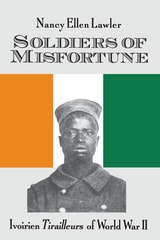
Soldiers Of Misfortune
lvoirien Tirailleurs of World War IINancy Ellen Lawler
Ohio University Press, 1992
This is a study of the African veterans of a European war. It is a story of men from the Cote d‘Ivoire, many of whom had seldom traveled more than a few miles from their villages, who served France as tirailleurs (riflemen) during World War II.
Thousands of them took part in the doomed attempt to hold back the armies of the Third Relch in 1940; many were to spend the rest of the war as prisoners in Germany or Occupied France.
Others more fortunate came under the authority of Vichy France, and were deployed in the Defense of the “Motherland” and its overseas possessions against the threat posed by the Allies. By 1943, the tirailleur regiments had passed into the service of de Gaulle’s free French and under Allied command, played a significant role in the liberation of Europe.
In describing these complex events, Dr. Lawler draws upon archives in both France and the Cote d’Ivoire. She also carried out an extensive series of interviews with Ivoirien veterans principally, but not exclusively, from the Korhogo region. The vividness of their testimony gives this study a special character. They talk freely not only of their wartime exploits, but also of their experiences after repatriation.
Lawler allows them to speak for themselves. They express their hatred of forced labor and military conscription, which were features of the colonial system, yet at the same time reveal a pride in having come to the defense of France. They describe their role in the nationalist struggle, as foot soldiers of Felix Houphouet-Boigny, but also convey their sense of having become a lost generation. They recognize that their experiences as French soldiers had become sadly irrelevant in a new nation in quest of its history.
Soldiers Once and Still
Ernest Hemingway, James Salter, and Tim O'BrienAlex Vernon
University of Iowa Press, 2007
Hemingway, Salter, and O’Brien form the core of Soldiers Once and Still because each represents a different warring generation of twentieth-century America: World War I with Hemingway, World War II and Korea with Salter, and Vietnam with O’Brien. Each author also represents a different literary voice of the twentieth century, from modern to mid-century to postmodern, and each presents a different battlefield experience: Hemingway as noncombatant, Salter as air force fighter pilot, and O’Brien as army grunt.
War’s pervasive influence on the individual means that, for veterans-turned-writers like Hemingway, Salter, and O’Brien, the war experience infiltrates their entire body of writing—their works can be seen not only as war literature but also as veterans’ literature. As such, their entire postwar oeuvre, regardless of whether an individual work explicitly addresses the war or the military, is open to Vernon’s exploration of war, society, gender, and literary history.
Vernon’s own experiences as a soldier, a veteran, a writer, and a critic inform this enlightening critique of American literature, offering students and scholars of American literature and war studies an invaluable tool for understanding war’s effects on the veteran writer and his society.
Soldiers of the Pen
The Writers' War Board in World War IIThomas Howell
University of Massachusetts Press, 2019
The WWB received federal money while retaining its status as a private organization that could mount campaigns without government oversight. Historian Thomas Howell argues that this unique position has caused its history to fall between the cracks, since it was not recognized as an official part of the government's war effort. Yet the WWB's work had a huge impact on the nation's wartime culture, and this fascinating history will inform contemporary thinking on propaganda, the media, and American society.
Soldiers, Saints, and Shamans
Indigenous Communities and the Revolutionary State in Mexico's Gran Nayar, 1910–1940Nathaniel Morris
University of Arizona Press, 2020
To make sense of this complex history, Nathaniel Morris offers the first systematic understanding of the participation of the Náayari, Wixárika, O’dam, and Mexicanero peoples in the Mexican Revolution. They are known for being among the least “assimilated” of all Mexico’s Indigenous peoples. It’s often been assumed that they were stuck up in their mountain homeland—“the Gran Nayar”—with no knowledge of the uprisings, civil wars, military coups, and political upheaval that convulsed the rest of Mexico between 1910 and 1940.
Based on extensive archival research and years of fieldwork in the rugged and remote Gran Nayar, Morris shows that the Náayari, Wixárika, O’dam, and Mexicanero peoples were actively involved in the armed phase of the revolution. This participation led to serious clashes between an expansionist, “rationalist” revolutionary state and the highly autonomous communities and heterodox cultural and religious practices of the Gran Nayar’s inhabitants. Morris documents confrontations between practitioners of subsistence agriculture and promoters of capitalist development, between rival Indian generations and political factions, and between opposing visions of the world, of religion, and of daily life. These clashes produced some of the most severe defeats that the government’s state-building programs suffered during the entire revolutionary era, with significant and often counterintuitive consequences both for local people and for the Mexican nation as a whole.
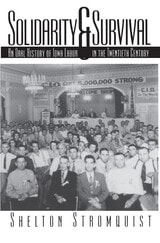
Solidarity and Survival
An Oral History of Iowa Labor in the Twentieth CenturyShelton Stromquist
University of Iowa Press, 1993
In Solidarity and Survival, three generations of Iowa workers tell of their unrelenting efforts to create a labor movement in the coal mines and on the rails, in packinghouses and farm equipment plants, on construction sites and in hospital wards. Drawing on nearly one thousand interviews collected over more than a decade by oral historians working for the Iowa Federation of Labor, AFL-CIO, Shelton Stromquist presents the resonant voices of the men and women who defined a new, prominent place for themselves in the lives of their communities and in the politics of their state.

Solidarity with the Other Beings on the Planet
Alice Walker, Ecofeminism, and Animals in LiteraturePamela B. June
Northwestern University Press, 2020
Grounded in ecofeminist theory, this literary analysis examines Walker’s evolving views on animals in relation to her discussions of other oppressed groups. Pamela B. June argues that Walker’s fiction can help readers understand and perhaps challenge American culture’s mistreatment of nonhuman animals. Walker has withstood criticism for her decision to abandon vegetarianism, and this book also problematizes the slippery territory of viewing writers as moral guides. Solidarity with the Other Beings on the Planet will appeal to readers in literary studies, ecofeminist studies, African American studies, and critical animal studies.
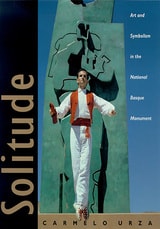
Solitude
Art And Symbolism In The National Basque MonumentCarmelo Urza
University of Nevada Press, 1993
Urza discusses the genesis of the National Basque Monument to the Basque Sheepherder that is located in Reno, Nevada. He also describes the competition held to determine the monument's design and the debates arising from the modern sculpture created by renowned Basque artist Nestor Basterrextea. Urza examines the arguments of those who favored the selection of a figurative, traditional symbol and those who preferred a modern, forward-looking symbol. He utilizes this discussion to explore the evolution of Basque ethnicity and its relationship to society.
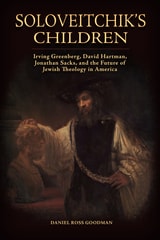
Soloveitchik's Children
Irving Greenberg, David Hartman, Jonathan Sacks, and the Future of Jewish Theology in AmericaDaniel Ross Goodman
University of Alabama Press, 2023
A revealing account of the three main disciples of Rabbi Joseph B. Soloveitchik, an essential figure in Orthodox Judaism in America
Orthodox Judaism is one of the fastest-growing religious communities in contemporary American life. Anyone who wishes to understand more about Judaism in America will need to consider the tenets and practices of Orthodox Judaism: who its adherents are, what they believe in, what motivates them, and to whom they turn for moral, intellectual, and spiritual guidance.
Among those spiritual leaders none looms larger than Rabbi Joseph B. Soloveitchik, heir to the legendary Talmudic dynasty of Brisk and a teacher and ordainer of thousands of rabbis during his time as a Talmud teacher at Yeshiva University from the Second World War until the 1980s. Soloveitchik was not only a Talmudic authority but a scholar of Western philosophy. While many books and articles have been written about Soloveitchik’s legacy and his influence on American Orthodoxy, few have looked carefully at his disciples in Torah and Talmud study, and even fewer at his disciples in Jewish thought and philosophy.
Soloveitchik’s Children: Irving Greenberg, David Hartman, Jonathan Sacks, and the Future of Jewish Theology in America is the first book to study closely three of Soloveitchik’s major disciples in Jewish thought and philosophy: Rabbis Irving (“Yitz”) Greenberg, David Hartman, and Jonathan Sacks. Daniel Ross Goodman narrates how each of these three major modern Jewish thinkers learned from and adapted Soloveitchik’s teachings in their own ways, even while advancing his philosophical and theological legacy.
The story of religious life and Judaism in contemporary America is incomplete without an understanding of how three of the most consequential Jewish thinkers of this generation adapted the teachings of one of the most consequential Jewish thinkers of the previous generation. Soloveitchik’s Children tells this gripping intellectual and religious story in a learned and engaging manner, shining a light on where Jewish religious thought in the United States currently stands—and where it may be heading in future generations.

Some Catholic Writers
Ralph McInerny
St. Augustine's Press, 2007
Some Measure of Justice
The Holocaust Era Restitution Campaign of the 1990sMichael R. Marrus; Foreword by William A. Schabas
University of Wisconsin Press, 2009
Writings on the subject of Holocaust reparations have largely come from participants, lawyers, philosophers, journalists, and social scientists specializing in restitution. In Some Measure of Justice Michael Marrus takes up the issue as a historian deeply involved with legal issues. He engages with larger questions about historical understanding and historical interpretation as they enter the legal arena. Ultimately this book asks, What constitutes justice for a great historic wrong? And, Is such justice possible?
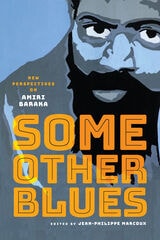
Some Other Blues
New Perspectives on Amiri BarakaEdited by Jean-Philippe Marcoux
The Ohio State University Press, 2021
(Include contributors if space allows) Contributors: Tony Bolden, Jeremy Glick, William J. Harris, Benjamin Lee, Aidan Levy, John Lowney, Jean-Philippe Marcoux, Kim McMillon, Fred Moten, Michael New, Aldon Lynn Nielsen, Amy Abugo Ongiri, Gregory Pierrot, Howard Rambsy II, Emily Ruth Rutter, Anthony Reed, Lauri Scheyer, Kathy Lou Schultz, Michael Simanga, James Smethurst, Laura Vrana, Tyrone Williams, Kalamu ya Salaam.

Some Wear Leather, Some Wear Lace
The Worldwide Compendium of Postpunk and Goth in the 1980sAndi Harriman and Marloes Bontje
Intellect Books, 2014
A book about the music, the individual, and the creativity of a worldwide community rather than theoretical definitions of a subculture, Some Wear Leather, Some Wear Lace considers a subject not often covered by academic books. Whether you were part of the scene or are just fascinated by different modes of expression, this book will transport you to another time and place.
Some Write to the Future
Essays on Contemporary Latin American FictionAriel Dorfman
Duke University Press, 1991
Praise for Ariel Dorfman
“One of the most important voices coming out of Latin America.”—Salman Rushdie
“A remarkable writer . . . writing out of a very different cultural perspective from comfortable American readers.”—Digby Diehl, Los Angeles Herald Examiner
“One of the six greatest Latin American novelists.”—Jacobo Timmerman, Newsweek
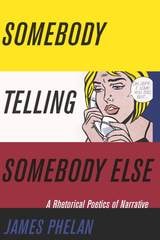
Somebody Telling Somebody Else
A Rhetorical Poetics of NarrativeJames Phelan
The Ohio State University Press, 2017
In doing so, he offers new readings of a wide range of narratives from Jane Austen’s Pride and Prejudice to Joan Didion’s The Year of Magical Thinking, from Joseph Conrad’s Lord Jim to George V. Higgins’s The Friends of Eddie Coyle, from Franz Kafka’s “Das Urteil” to Toni Morrison’s “Recitatif,” from David Small’s Stitches to Jhumpa Lahiri’s “Third and Final Continent,” from John O’Hara’s “Appearances” to Ian McEwan’s Enduring Love. Phelan contends that the standard view of narrative as a synthesis of story and discourse is inadequate to handle the complexities of narrative communication, and he demonstrates the greater explanatory power of his rhetorical view. Furthermore, Phelan gives new prominence to the presence and activity of the “somebody else,” as he shows that an audience’s unfolding responses to a narrative often influence its very construction.
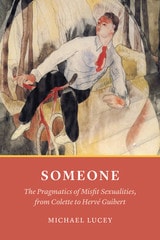
Someone
The Pragmatics of Misfit Sexualities, from Colette to Hervé GuibertMichael Lucey
University of Chicago Press, 2019
In Someone, Michael Lucey considers characters from twentieth-century French literary texts whose sexual forms prove difficult to conceptualize or represent. The characters expressing these “misfit” sexualities gravitate towards same-sex encounters. Yet they differ in subtle but crucial ways from mainstream gay or lesbian identities—whether because of a discordance between gender identity and sexuality, practices specific to a certain place and time, or the fleetingness or non-exclusivity of desire. Investigating works by Simone de Beauvoir, Colette, Jean Genet, and others, Lucey probes both the range of same-sex sexual forms in twentieth-century France and the innovative literary language authors have used to explore these evanescent forms.
As a portrait of fragile sexualities that involve awkward and delicate maneuvers and modes of articulation, Someone reveals just how messy the ways in which we experience and perceive sexuality remain, even to ourselves.
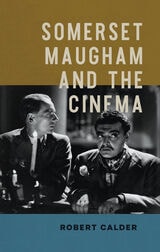
Somerset Maugham and the Cinema
Robert Calder
University of Wisconsin Press, 2024
This study of the famous author explores the relationship between literature and film, what is involved in adaptation, and how best to judge films based on celebrated books. Robert Calder, the world’s leading scholar of Maugham’s work, offers fascinating production histories, insight into both fortunate and misguided casting decisions, shrewd analyses of performances and film techniques, and summaries of public and critical responses. Maugham’s characters were often conflicted, iconoclastic, and morally out of step with their times, which may have accounted for the popularity of his fiction. Most of Maugham’s works could be adapted to satisfy the tastes of moviegoers and the demands of the Hays Office censors, if not the expectations of their author.
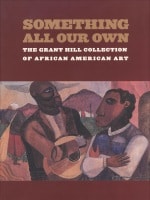
Something All Our Own
The Grant Hill Collection of African American ArtGrant Hill
Duke University Press, 2003
The forty-six pieces documented here include thirteen works that span the career of the great Romare Bearden, from his 1941 gouache painting Serenade to the important collages of the 1980s. Hill’s fascination with artists’ depiction of women is represented in Elizabeth Catlett’s lithographs, many of them from the 1992 series “For My People,” and her sculptures in stone, bronze, and onyx. In addition to these two giants of twentieth-century art, the Hill Collection features pieces by Phoebe Beasley, Arthello Beck Jr., John Biggers, Malcolm Brown, John Coleman, Edward Jackson, and Hughie Lee Smith.
Hill began collecting art in the early 1990s after learning from his parents to appreciate artworks not only as objects of beauty but as expressions of heritage and culture. According to the internationally known curator Alvia J. Wardlaw, he is part of an emerging group of young African American collectors who have “raised the bar for others.” Hill writes, “Getting to know yourself means understanding your background and appreciating those who have come before you. My father has a saying he uses in speeches: ‘To be ignorant of your past is to remain a boy. ‘The interest in my heritage as an African American is reflected in this collection.”
Something All Our Own features Wardlaw’s essay on the history of African American collecting. It also features articles about Bearden and Catlett by the scholars Elizabeth Alexander and Beverly Guy-Sheftall and reflections about Hill by the historian John Hope Franklin, Duke’s basketball coach Mike Krzyzewski, and the sportswriter William C. Rhoden. Hill and his father, the NFL great Calvin Hill, contribute a dialogue that explores their motivations for collecting art.
At the heart of the book are the exquisite color photographs of the forty-six artworks included in the exhibition, with commentary by Wardlaw and by Hill himself.
As a star athlete, Grant Hill is well aware that African Americans who excel in sports and entertainment are more broadly recognized than their counterparts in artistic fields. He strives to inspire young people to explore their heritage and broaden their concept of excellence by learning more about African American art. By sharing his artworks with collectors and fans, Hill reminds us that while the jump shot is ephemeral, art is enduring.
Something We Have That They Don't
British and American Poetic Relations since 1925Steve & Mark Clark & Ford
University of Iowa Press, 2004
(I like the way the English spell it
They’re so clever about some things
Probably smarter generally than we are
Although there is supposed to be something
We have that they don’'t—'don’t ask me
What it is. . . .)
—John Ashbery, “Tenth Symphony”
Something We Have That They Don’t presents a variety of essays on the relationship between British and American poetry since 1925. The essays collected here all explore some aspect of the rich and complex history of Anglo-American poetic relations of the last seventy years. Since the dawn of Modernism poets either side of the Atlantic have frequently inspired each other’s developments, from Frost’s galvanizing advice to Edward Thomas to rearrange his prose as verse, to Eliot’s and Auden’s enormous influence on the poetry of their adopted nations (“whichever Auden is,” Eliot once replied when asked if he were a British or an American poet, “I suppose, I must be the other”); from the impact of Charles Olson and other Black Mountain poets on J. H. Prynne and the Cambridge School, to the widespread influence of Frank O'Hara and Robert Lowell on a diverse range of contemporary British poets. Clark and Ford’s study aims to chart some of the currents of these ever-shifting relations. Poets discussed in these essays include John Ashbery, W. H. Auden, Elizabeth Bishop, T. S. Eliot, Mark Ford, Robert Graves, Thom Gunn, Lee Harwood, Geoffrey Hill, Michael Hofmann, Susan Howe, Robert Lowell, and W. B. Yeats.
“Poetry and sovereignty,” Philip Larkin remarked in an interview of 1982, “are very primitive things”: these essays consider the ways in which even seemingly very “unprimitive” poetries can be seen as reflecting and engaging with issues of national sovereignty and self-interest, and in the process they pose a series of fascinating questions about the national narratives that currently dominate definitions of the British and American poetic traditions.
This innovative and exciting new collection will be of great interest to students and scholars of British and American poetry and comparative literature.
Something and Nothingness
The Fiction of John Updike and John FowlesJohn Neary
Southern Illinois University Press, 1992
John Neary shows that the theological dichotomy of via negativa (which posits the authentic experience of God as absence, darkness, silence) and via affirmativa (which emphasizes presence, images, and the sounds of the earth) is an overlooked key to examining and comparing the works of John Fowles and John Updike.
Drawing on his extensive knowledge of both Christian and secular existentialism within the modern theology of Barth and Levinas and the contemporary critical theory of Derrida and J. Hillis Miller, Neary demonstrates the ultimate affinity of these authors who at first appear such opposites. He makes clear that Fowles’s postmodernist, metafictional experiments reflect the stark existentialism of Camus and Sartre while Updike’s social realism recalls Kierkegaard’s empirical faith in a generous God within a kind of Christian deconstructionism.
Neary’s perception of uncanny similarities between the two authors—whose respective careers are marked by a series of novels that structurally and thematically parallel each other—and the authors’ shared long-term interest in existentialism and theology support both his critical comparison and his argument that neither author is "philosophically more sophisticated nor aesthetically more daring."
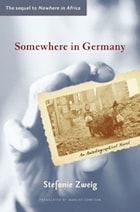
Somewhere in Germany
A NovelStefanie Zweig, Translated by Marlies Comjean
University of Wisconsin Press, 2006
In Frankfurt, Regina matures into a woman and, though her parents want her to marry an upstanding Jewish man, her love life progresses in its own idiosyncratic fashion. She develops a passion for art and journalism and begins her professional career at a Frankfurt newspaper. Walter at last finds professional success as a lawyer, but never quite adjusts to life in Frankfurt, recalling with nostalgia his childhood in Upper Silesia and his years in Africa. Only his son Max truly finds what Walter had hoped for: a new homeland in Germany.
Although the Redlichs receive kindness from strangers, they also learn anti-Semitism still prevails in post-Nazi Germany. They partake in the West German “economic miracle” with their own home, a second-hand car, and the discovery of television, but young Max’s discovery of the Holocaust revives long-buried memories. Rich in memorable moments and characters, this novel portrays the reality of postwar German society in vivid and candid detail.

Song for Uncle Tom, Tonto, and Mr. Moto
Poetry and IdentityDavid Mura
University of Michigan Press, 2002
Mura's writings recently have been at the center of various debates concerning race and literary standards. In this book, he argues the need for a more complicated and diverse set of literary standards than the canon has previously allowed, an opening up to the many voices that are "great within us." He contends that, when placed against a gathering awareness of a world literature, particularly in the so-called Third World, the boundaries of the traditional Anglo-American canon and its present-day proponents like Harold Bloom come to be seen as too narrow and parochial, reenacting the "tribal" label that many throw now at the advocates of multiculturalism.
Beyond its theoretical underpinnings, Song for Uncle Tom, Tonto, and Mr. Moto charts the wayward course of Mura's own development as a poet. In three interviews, Mura provides readings of his own work and discusses various issues of technique and form.
David Mura is a poet, memoirist, essayist, playwright, writer of fiction, performance artist, and literary critic. He is author of The Colors of Desire, After We Lost Our Way, and Turning Japanese: Memoirs of a Sansei.
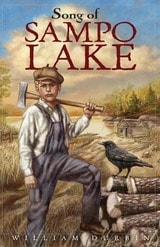
Song of Sampo Lake
William Durbin
University of Minnesota Press, 2011
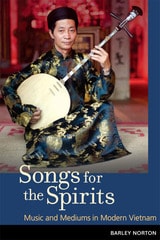
Songs for the Spirits
Music and Mediums in Modern VietnamBarley Norton
University of Illinois Press, 2008

Songs of Degrees
Essays on Contemporary Poetry and PoeticsJohn Taggart
University of Alabama Press, 1994
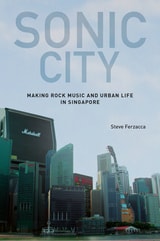
Sonic City
Making Rock Music and Urban Life in SingaporeSteve Ferzacca
National University of Singapore Press, 2020
Grounded in debates from sound studies, Ferzacca draws on Bruno Latour’s ideas of the social—continually emergent, constantly in-the-making, “associations of heterogeneous elements” of human and non-human “mediators and intermediaries”—to portray a community entangled in the confounding relations between vernacular and national heritage projects. Music shops, music gear, music genres, sound, urban space, neighborhoods, State presence, performance venues, practice spaces, regional travel, local, national, regional, and sonic histories afford expected and unexpected opportunities for work, play, and meaning, in the contemporary music scene in this Southeast Asian city-state. The emergent quality of this deep sound is fiercely cosmopolitan, yet entirely Singaporean. What emerges is a vernacular heritage drawing upon Singapore’s unique place in Southeast Asian and world history.
Sonny Montes and Mexican American Activism in Oregon
Glenn Anthony May
Oregon State University Press, 2011

Sophonisba Breckinridge
Championing Women's Activism in Modern AmericaAnya Jabour
University of Illinois Press, 2019

Sopwith Triplane
Nico Braas
Amsterdam University Press, 2022
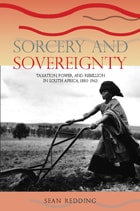
Sorcery and Sovereignty
Taxation, Power, and Rebellion in South Africa, 1880–1963Sean Redding
Ohio University Press, 2006
Rebellions broke out in many areas of South Africa shortly after the institution of white rule in the late nineteenth century and continued into the next century. However, distrust of the colonial regime reached a new peak in the mid-twentieth century, when revolts erupted across a wide area of rural South Africa. All these uprisings were rooted in grievances over taxes. Rebels frequently invoked supernatural powers for assistance and accused government officials of using witchcraft to enrich themselves and to harm ordinary people.
As Sean Redding observes in Sorcery and Sovereignty, beliefs in witchcraft and supernatural powers were part of the political rhetoric; the system of taxation—with all its prescribed interactions between ruler and ruled—was intimately connected to these supernatural beliefs.
In this fascinating study, Redding examines how black South Africans’ beliefs in supernatural powers, along with both economic and social change in the rural areas, resulted in specific rebellions and how gender relations in black South African rural families changed. Sorcery and Sovereignty explores the intersection of taxation, political attitudes, and supernatural beliefs among black South Africans, shedding light on some of the most significant issues in the history of colonized Africa.
Soul Power
Culture, Radicalism, and the Making of a U.S. Third World LeftCynthia A. Young
Duke University Press, 2006
Young analyzes a range of U.S. figures and organizations, examining how each deployed Third World discourse toward various cultural and political ends. She considers a trip that LeRoi Jones, Harold Cruse, and Robert F. Williams made to Cuba in 1960; traces key intellectual influences on Angela Y. Davis’s writing; and reveals the early history of the hospital workers’ 1199 union as a model of U.S. Third World activism. She investigates Newsreel, a late 1960s activist documentary film movement, and its successor, Third World Newsreel, which produced a seminal 1972 film on the Attica prison rebellion. She also considers the L.A. Rebellion, a group of African and African American artists who made films about conditions in the Watts neighborhood of Los Angeles. By demonstrating the breadth, vitality, and legacy of the work of U.S. Third World Leftists, Soul Power firmly establishes their crucial place in the history of twentieth-century American struggles for social change.
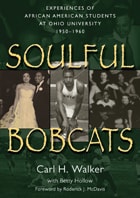
Soulful Bobcats
Experiences of African American Students at Ohio University, 1950–1960Carl H. Walker
Ohio University Press, 2013
During the 1950s, when less than 20 percent of American high school graduates attended college, a group of ambitious young African Americans enrolled at Ohio University, a predominantly white school in Athens, Ohio. Because they were a tiny, barely tolerated minority, they banded together, supported each other, and formed lasting bonds. Years later, at a series of “Soulful Reunions,” they recalled the joys and challenges of living on a white campus before the civil rights era, and eighteen of them decided to share their stories.
The authors of the eighteen autobiographical sketches in Soulful Bobcats were a diverse group. They were athletes, rhetoricians, musicians, and actresses; they aspired to professions in the military, business, education, government, architecture, and the arts. Some grew up in poor families, while others enjoyed the comforts of the middle class. But they had several things in common. They all came from families that believed education was important. They had been taught to avoid trouble, to persist despite setbacks, and to expect to encounter prejudice and even discrimination.
The authors vividly describe instances in which they were humiliated—by other students, by professors, or by townspeople—as well as the few occasions when violence seemed inevitable. In addition, they describe their “first,” including becoming the first African American students at Ohio University to be awarded scholarships for their prowess in football, basketball, track, and tennis; the first to compete for titles such as “Mr. Fraternity” or “Queen of the Military Ball”; the first to appear in theatrical performances alongside their white schoolmates. They also tell of their success in providing a social life for themselves by organizing two Greek letter fraternities and one sorority, holding their own off-campus dances, and joining the few campus organizations that were open to them. Above all, their stories speak to a resilience that allowed these “Soulful Bobcats” to learn from their experiences at Ohio University, to engage in meaningful careers, and to lead rich, fulfilling lives.
Soulside
Inquiries into Ghetto Culture and CommunityUlf Hannerz
University of Chicago Press, 2004
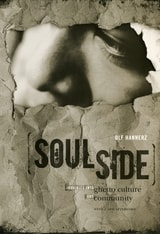
Originally published 35 years ago, Soulside became an urban anthropological classic. The book helped to dispel many false impressions about ghetto life and questioned the idea, precipitated in the influential Moynihan Report and in notions of a "culture of poverty," that the poor had chosen to lead the lives they do. Raising central moral and political questions about American society in a turbulent period, Soulside became an example of public engagement in anthropology. In a new afterword, Ulf Hannerz discusses the book's place in the debates of the time and its relevance to current arguments in anthropology.
Sound Alignments
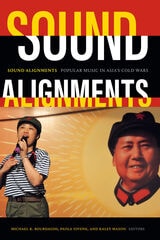
Popular Music in Asia's Cold WarsMichael K. Bourdaghs, Paola Iovene, and Kaley Mason, editors
Duke University Press, 2021
Contributors. Marié Abe, Michael K. Bourdaghs, Paola Iovene, Nisha Kommattam, Jennifer Lindsay, Kaley Mason, Anna Schultz, Hyunjoon Shin, C. J. W.-L. Wee, Hon-Lun (Helan) Yang, Christine R. Yano, Qian Zhang
Sound Writing
Experimental Modernism and the Poetics of ArticulationTobias Wilke
University of Chicago Press, 2022
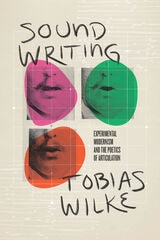
Avant-garde writers and artists of the twentieth century radically reconceived poetic language, appropriating scientific theories and techniques as they turned their attention to the physical process of spoken language. This modernist “sound writing” focused on the bodily production of speech, which it rendered in poetic, legible, graphic form.
Modernist sound writing aims to capture the acoustic phenomenon of vocal articulation by graphic means. Tobias Wilke considers sound writing from its inception in nineteenth-century disciplines like physiology and experimental phonetics, following its role in the aesthetic practices of the interwar avant-garde and through to its reemergence in the postwar period. These projects work with the possibility of crossing over from the audible to the visible, from speech to notation, from body to trace. Employing various techniques and concepts, this search for new possibilities played a central role in the transformation of poetry into a site of radical linguistic experimentation. Considering the works of writers and artists—including Raoul Hausmann, Kurt Schwitters, Viktor Shklovsky, Hugo Ball, Charles Olson, and Marshall McLuhan—Wilke offers a fresh look at the history of the twentieth-century avant-garde.
Sounding Real
Musicality and American Fiction at the Turn of the Twentieth CenturyCristina L. Ruotolo
University of Alabama Press, 2013
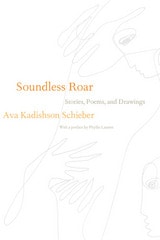
Soundless Roar
Stories, Poems, and DrawingsAva Kadishson Schieber
Northwestern University Press, 2002
Schieber's drawings, paintings, poetry, and prose are all intimate reflections of one another. Her experience forged the unusual sense of time that shapes Schieber's stories. In her preface, Phyllis Lassner writes: "The timetable of Ava's stories often consists of circles within circles, of patterns of an intertwined past, the past present of hiding, and the present looking back at those distinctly separate but inseparable pasts."
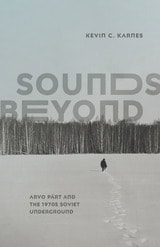
Sounds Beyond
Arvo Pärt and the 1970s Soviet UndergroundKevin C. Karnes
University of Chicago Press, 2021
In Sounds Beyond, Kevin C. Karnes studies the interconnected alternative music and art scenes in the USSR during the second half of the 1970s, revealing the audacious origins of some of Estonian composer Arvo Pärt’s most famous music. Karnes shows how Pärt’s work was created within a vital yet forgotten culture of collective experimentation, the Soviet underground.
Mining archives and oral history from across the former USSR, Sounds Beyond carefully situates modes of creative experimentation within their late socialist contexts. In documenting Pärt’s work, Karnes reveals the rich creative culture that thrived covertly in the USSR and the network of figures that made underground performances possible: students, audio engineers, sympathetic administrators, star performers, and aspiring DJs. Sounds Beyond advances a new understanding of Pärt’s music as an expression of the aesthetic and religious commitments shared, nurtured, and celebrated by many in Soviet underground circles. At the same time, this story attests to the lasting power of Pärt’s music. Dislodging the mythology of the solitary creative genius, Karnes shows that Pärt’s work would be impossible without community.

Sounds English
TRANSNATIONAL POPULAR MUSICNabeel Zuberi
University of Illinois Press, 2001
Zuberi looks at how the sounds, images, and lyrics of English popular music generate and critique ideas of national belonging, recasting the social and even the physical landscapes of cities like Manchester and London. The Smiths and Morrissey play on romanticized notions of the (white) English working class, while the Pet Shop Boys map a "queer urban Britain" in the AIDS era. The techno-culture of raves and dance clubs incorporates both an anti-institutional do-it-yourself politics and emergent leisure practices, while the potent mix of technology and creativity in British black music includes local conditions as well as a sense of global diaspora. British Asian musicians, drawing on Afrodiasporic and South Asian traditions, seek a sense of place in Britain as commercial interests try to pin down an image of them to market.
Sounds English shows how popular music complicates cherished notions of Englishness as it activates cultural outsiders and taps into a sense of not belonging. Alert and readable, Zuberi's wide-ranging discussion includes the performers Oasis, Blur, Tricky, Massive Attack, Goldie, A Guy Called Gerald, Roni Size, Bally Sagoo, Funˆdaˆmental, Echobelly, Cornershop, Talvin Singh, and others.
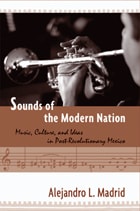
Sounds of the Modern Nation
Music, Culture, and Ideas in Post-Revolutionary MexicoAlejandro L. Madrid
Temple University Press, 2008
Sounds of the Modern Nation explores the development of modernist and avant-garde art music styles and aesthetics in Mexico in relation to the social and cultural changes that affected the country after the 1910-1920 revolution. Alejandro Madrid argues that these modernist works provide insight into the construction of individual and collective identities based on new ideas about modernity and nationality. Instead of depicting a dichotomy between modernity and nationalism, Madrid reflects on the multiple intersections between these two ideas and the dialogic ways through which these notions acquired meaning.
Madrid challenges the view that Latin American modernist music and other art were mere imitations of European trends, advancing instead the argument that Latin American artists resignified European ideas according to their specific historical and cultural circumstances. His work shows how microtonal and futurist music, modernist and avant-garde aesthetics, as well as indigenist and indianist ideas, entered a process of negotiation that ultimately shaped the ideological framework of twentieth-century Mexico.
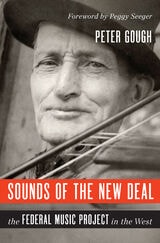
Sounds of the New Deal
The Federal Music Project in the WestPeter Gough
University of Illinois Press, 2015
From the onset, administrators and artists debated whether to represent highbrow, popular, or folk music in FMP activities. Though the administration privileged using "good" music to educate the public, in the West local preferences regularly trumped national priorities and allowed diverse vernacular musics to be heard. African American and Hispanic music found unprecedented popularity while the cultural mosaic illuminated by American folksong exemplified the spirit of the Popular Front movement. These new musical expressions combined the radical sensibilities of an invigorated Left with nationalistic impulses. At the same time, they blended traditional patriotic themes with an awareness of the country's varied ethnic musical heritage and vast--but endangered--store of grassroots music.
Sounds of the New Deal
The Federal Music Project in the WestPeter Gough
University of Illinois Press, 2015
Soundscapes of Liberation
African American Music in Postwar FranceCeleste Day Moore
Duke University Press, 2021
Soundworks
Race, Sound, and Poetry in ProductionAnthony Reed
Duke University Press, 2021
South Africa and the Dream of Love to Come
Queer Sexuality and the Struggle for FreedomBrenna M. Munro
University of Minnesota Press, 2012
After apartheid, South Africa established a celebrated new political order that imagined the postcolonial nation as belonging equally to the descendants of indigenous people, colonizing settlers, transported slaves, indentured laborers, and immigrants. Its constitution, adopted in 1996, was the first in the world to include gays and lesbians as full citizens. Brenna M. Munro examines the stories that were told about sexuality, race, and nation throughout the struggle against apartheid in order to uncover how these narratives ultimately enabled gay people to become imaginable as fellow citizens. She also traces how the gay, lesbian, or bisexual person appeared as a stock character in the pageant of nationhood during the transition to democracy. In the process, she offers an alternative cultural history of South Africa.
Munro asserts that the inclusion of gay people made South Africans feel “modern”—at least for a while. Being gay or being lesbian was reimagined in the 1990s as distinctly South African, but the “newness” that made these sexualities apt symbols for a transformed nation can also be understood as foreign and un-African. Indeed, a Western-style gay identity is often interpreted through the formula “gay equals modernity equals capitalism.” As South Africa’s reentrance into the global economy has failed to bring prosperity to the majority of its citizens, homophobic violence has been on the rise.
Employing a wide array of texts—including prison memoirs, poetry, plays, television shows, photography, political speeches, and the postapartheid writings of Nobel Laureates Nadine Gordimer and J. M. Coetzee—Munro reports on how contemporary queer activists and artists are declining to remain ambassadors for the “rainbow nation” and refusing to become scapegoats for the perceived failures of liberation and liberalism.
South Africa’s Resistance Press
Alternative Voices in the Last Generation under ApartheidLes Switzer
Ohio University Press, 2000
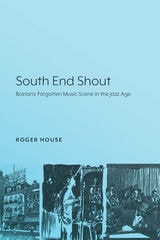
South End Shout
Boston’s Forgotten Music Scene in the Jazz AgeRoger House
Lever Press, 2023
South End Shout: Boston’s Forgotten Music Scene in the Jazz Age details the power of music in the city’s African American community, spotlighting the era of ragtime culture in the early 1900s to the rise of big band orchestras in the 1930s. This story is deeply embedded in the larger social condition of Black Bostonians and the account is brought to life by the addition of 20 illustrations of musicians, theaters, dance halls, phonographs, and radios used to enjoy the music.
South End Shout is part of an emerging field of studies that examines jazz culture outside of the major centers of music production. In extensive detail, author Roger R. House covers the activities of jazz musicians, jazz bands, the places they played, the relationships between Black and white musicians, the segregated local branches of the American Federation of Musicians (AFL-CIO), and the economics of Boston’s music industry. Readers will be captivated by the inclusion of vintage local newspaper reports, classified advertisements, and details of hard-to-access oral history accounts by musicians and residents. These precious documentary materials help to understand how jazz culture evolved as a Boston art form and contributed to the national art form between the world wars.
With this book, House makes an important contribution to American studies and jazz history. Scholars and general readers alike who are interested in jazz and jazz culture, the history of Boston and its Black culture, and 20th century American and urban studies will be enlightened and delighted by this book.