Results by title
4413 books match the query 'Anthropology' and 316 start with s

Surviving HIV/AIDS in the Inner City
How Resourceful Latinas Beat the OddsChase, Sabrina
Rutgers University Press, 2011
Based on her work with minority women living in Newark, New Jersey, Sabrina Marie Chase illuminates the hidden traps and land mines burdening our current health care system as a whole. For the women she studied, alliances with doctors, nurses, and social workers could literally mean the difference between life and death. By applying the theories of sociologist Pierre Bourdieu to the day-to-day experiences of HIV-positive Latinas, Chase explains why some struggled and even died while others flourished and thrived under difficult conditions. These gripping, true-life stories advocate for those living with chronic illness who depend on the health care "safety net." Through her exploration of life and death among Newark's resourceful women, Chase provides the groundwork for inciting positive change in the U.S. health care system.

Surviving against the Odds
Village Industry in IndonesiaS. Ann Dunham
Duke University Press, 2009
President Barack Obama’s mother, S. Ann Dunham, was an economic anthropologist and rural development consultant who worked in several countries including Indonesia. Dunham received her doctorate in 1992. She died in 1995, at the age of 52, before having the opportunity to revise her dissertation for publication, as she had planned. Dunham’s dissertation adviser Alice G. Dewey and her fellow graduate student Nancy I. Cooper undertook the revisions at the request of Dunham’s daughter, Maya Soetoro-Ng. The result is Surviving against the Odds, a book based on Dunham’s research over a period of fourteen years among the rural metalworkers of Java, the island home to nearly half Indonesia’s population. Surviving against the Odds reflects Dunham’s commitment to helping small-scale village industries survive; her pragmatic, non-ideological approach to research and problem solving; and her impressive command of history, economic data, and development policy. Along with photographs of Dunham, the book includes many pictures taken by her in Indonesia.
After Dunham married Lolo Soetoro in 1967, she and her six-year-old son, Barack Obama, moved from Hawai‘i to Soetoro’s home in Jakarta, where Maya Soetoro was born three years later. Barack returned to Hawai‘i to attend school in 1971. Dedicated to Dunham’s mother Madelyn, her adviser Alice, and “Barack and Maya, who seldom complained when their mother was in the field,” Surviving against the Odds centers on the metalworking industries in the Javanese village of Kajar. Focusing attention on the small rural industries overlooked by many scholars, Dunham argued that wet-rice cultivation was not the only viable economic activity in rural Southeast Asia.
Surviving against the Odds includes a preface by the editors, Alice G. Dewey and Nancy I. Cooper, and a foreword by her daughter Maya Soetoro-Ng, each of which discusses Dunham and her career. In his afterword, the anthropologist and Indonesianist Robert W. Hefner explores the content of Surviving against the Odds, its relation to anthropology when it was researched and written, and its continuing relevance today.
Surviving the Americas
Garifuna Persistence from Nicaragua to New York CitySerena Cosgrove, José Idiáquez, Leonard Joseph Bent, and Andrew Gorvetzian
University of Minnesota Press, 2020
In Surviving the Americas, Serena Cosgrove, José Idiáquez, Leonard Joseph Bent, and Andrew Gorvetzian shed light on what it means to be Garifuna today, particularly in Nicaragua. Their research includes over nine months of fieldwork in Garifuna communities in the Pearl Lagoon on the southern Caribbean coast of Nicaragua and in New York City. The resulting ethnography illustrates the unique social issues of the Nicaraguan Garifuna and how their culture, traditions, and reverence for their ancestors continues to persist.
Suspended Waters
Eliana Hernandez-Pachon
Diaphanes, 2026
From the Colombia National Poetry Prize winner, Eliana Hernández-Pachón, comes a poetic essay that asks: what does it mean to possess, to preserve, to let go?
Suspended Waters is a poetic essay that connects four objects made of plant fibers: a death raft woven from reeds that has come ashore in the wrong place, a gold Muisca raft that evokes the legend of El Dorado, Amazonian flutes made of palm that can only be seen by men, and a sheet of paper used for museum records.
Exploring how these objects sustain different worlds through a text pulsing with the life of more-than-human beings and voices both solo and Choral, Colombian writer Eliana Hernández-Pachón evokes worlds of ritual, sanctity, and abundance.

Sustainability and Water Management in the Maya World and Beyond
Jean T. Larmon
University Press of Colorado, 2021
The volume focuses primarily on the Precolumbian Maya but offers several analogous case studies outside the ancient Maya world that illustrate the pervasiveness of water’s role in sustainability, including an ethnographic study of the sustainability of small-scale, farmer-managed irrigation systems in contemporary New Mexico and the environmental consequences of Angkor’s growth into the world’s most extensive preindustrial settlement. The archaeological record offers rich data on past politics of climate change, while epigraphic and ethnographic data show how integrated the ideological, political, and environmental worlds of the Maya were.
While Sustainability and Water Management in the Maya World and Beyond stresses how lessons from the past offer invaluable insight into current approaches of adaptation, it also advances our understanding of those adaptations by making the inevitable discrepancies between past and present climate change less daunting and emphasizing the sustainable negotiations between humans and their surroundings that have been mediated by the changing climate for millennia. It will appeal to students and scholars interested in climate change, sustainability, and water management in the archaeological record.
Contributors: Mary Jane Acuña, Wendy Ashmore, Timothy Beach, Jeffrey Brewer, Christopher Carr, Adrian S. Z. Chase, Arlen F. Chase, Diane Z. Chase, Carlos R. Chiriboga, Jennifer Chmilar, Nicholas Dunning, Maurits W. Ertsen, Roland Fletcher, David Friedel, Robert Griffin, Joel D. Gunn, Armando Anaya Hernández, Christian Isendahl, David Lentz, Sheryl Luzzadder-Beach, Dan Penny, Kathryn Reese-Taylor, Michelle Rich, Cynthia Robin, Sylvia Rodríguez, William Saturno, Vernon Scarborough, Payson Sheets, Liwy Grazioso Sierra, Michael Smyth, Sander van der Leeuw, Andrew Wyatt

Sustaining Activism
A Brazilian Women's Movement and a Father-Daughter CollaborationJeffrey W. Rubin and Emma Sokoloff-Rubin
Duke University Press, 2013
Starting in 2002, Rubin and Sokoloff-Rubin traveled together to southern Brazil, where they interviewed activists over the course of ten years. Their vivid descriptions of women’s lives reveal the hard work of sustaining a social movement in the years after initial victories, when the political way forward was no longer clear and the goal of remaking gender roles proved more difficult than activists had ever imagined. Highlighting the tensions within the movement about how best to effect change, Sustaining Activism ultimately shows that democracies need social movements in order to improve people’s lives and create a more just society.
Sustaining Interdisciplinary Collaboration
A Guide for the AcademyRegina Bendix
University of Illinois Press, 2017

Sustaining the Borderlands in the Age of NAFTA
Development, Politics, and Participation on the US-Mexico BorderSuzanne Simon
Vanderbilt University Press, 2014
Although the key to the side accords' anticipated success lay in their ostensibly generous encouragement of a participatory politics and sustainable development opportunities, Sustaining the Borderlands reveals that the Mexican border populations for which they were largely created are effectively excluded from participating due to the ongoing online, territorial, class, and cultural barriers that shape the borderlands. Rather than experiencing the side accords and their companion institutions as transparent and accessible, residents experienced them as opaque and indecipherable. Simon concludes that the side accords have failed to deliver on their promise of bringing democracy to Mexico because practical mechanisms that would ensure their effective implementation were never put in place.
NAFTA took effect at a time when Mexico was undergoing a democratic transition. The treaty was supposed to encourage this transition and improve environmental and labor conditions on the US-Mexico border. This book demonstrates that, twenty years later, the promises of NAFTA have not come to pass.

Swahili Origins
Swahili Culture and The Shungwaya PhenomenonJames de Vere Allen
Ohio University Press, 1993
Kiswahili has become the lingua franca of eastern Africa. Yet there can be few historic peoples whose identity is as elusive as that of the Swahili. Some have described themselves as Arabs, as Persians or even, in one place, as Portuguese. It is doubtful whether, even today, most of the people about whom this book is written would unhesitatingly and in all contexts accept the name Swahili.
This book was central to the thought and lifework of the late James de Vere Allen. It is his major study of the origin of the Swahili and of their cultural identity. He focuses on how the African element in their cultural patrimony was first modified by Islam and later changed until many Swahili themselves lost sight of it.
They share a language and they share a culture. Their territory stretches from the coast of southern Somalia to the Lamu archipelago in Kenya, to the Rovuma River in modern Mozambique and out into the islands of the Indian Ocean. But they lack a shared historical experience.
James de Vere Allen, in this study of contentious originality, set out to give modern Swahili evidence of their shared history during a period of eight centuries.

Sweatshop
The History of an American IdeaHapke, Laura
Rutgers University Press, 2004
Arguing that the sweatshop is as American as apple pie, Laura Hapke surveys over a century and a half of the language, verbal and pictorial, in which the sweatshop has been imagined and its stories told. Not seeking a formal definition of the sort that policymakers are concerned with, nor intending to provide a strict historical chronology, this unique book shows, rather, how the “real” sweatshop has become intertwined with the “invented” sweatshop of our national imagination, and how this mixture of rhetoric and myth has endowed American sweatshops with rich and complex cultural meaning.
Hapke uncovers a wide variety of tales and images that writers, artists, social scientists, reformers, and workers themselves have told about “the shop.” Adding an important perspective to historical and economic approaches, Sweatshop draws on sources from antebellum journalism, Progressive era surveys, modern movies, and anti-sweatshop websites. Illustrated chapters detail how the shop has been a facilitator of assimilation, a promoter of upward mobility, the epitome of exploitation, a site of ethnic memory, a venue for political protest, and an expression of twentieth-century managerial narratives.
An important contribution to the real and imagined history of garment industry exploitation, this book provides a valuable new context for understanding contemporary sweatshops that now represent the worst expression of an unregulated global economy.
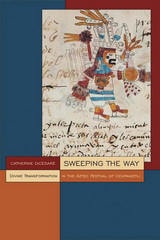
Sweeping the Way
Divine Transformation in the Aztec Festival of OchpaniztliCatherine DiCesare
University Press of Colorado, 2022
Switzerland
A Village HistoryDavid Birmingham
Ohio University Press, 2004
Switzerland: A Village History is an account of an Alpine village that illuminates the broader history of Switzerland and its rural, local underpinnings. It begins with the colonization of the Alps by Romanized Celtic peoples who came from the plain to clear the wilderness, establish a tiny monastic house, and create a dairy economy that became famous for its cheeses. Over ten centuries the village, like the rest of Switzerland, went through the traumas of religious reformation and political revolution. A single currency, a unified postal service, and eventually an integrated army brought improved stability and prosperity to the union of two dozen small republics.
Yet Switzerland’s enduring foundation remains the three thousand boroughs to which the Swiss people feel they truly belong. In Switzerland: A Village History, distinguished scholar David Birmingham tells the story of his childhood village-Château-d’Oex-where records of cheesemaking date to 1328. The evolution of this ancient grazing and forest economy included the rise of the legal profession to keep track of complex deeds, grazing allotments, and animal rights-of-way. Switzerland’s eventual privatization of communal grazing land drove many highlanders to emigrate to the European plains and overseas to the Americas. The twentieth century brought wealth from foreign tourism to Switzerland, punctuated by austerities imposed by Europe’s wars. Alpine peasants were integrated into Swiss union society and began at last to share in some of the prosperity flowing from urban industry.
Switzerland: A Village History replaces the mythology and patriotic propaganda that too often have passed for Swiss history with a rigorous, insightful, and charming account of the daily life, small-scale rivalries, and local loyalties that actually make up Swiss history.

Symbolism and Ritual in a One-Party Regime
Unveiling Mexico's Political CultureLarissa Adler-Lomnitz, Rodrigo Salazar Elena, and Ilya Adler
University of Arizona Press, 2010
Discussing Mexican presidential politics from the perspectives of anthropology, political science, and communications science, the authors analyze the 1988 presidential campaign of Carlos Salinas de Gortari—the last great campaign of the PRI to display the characteristics traditionally found in the twentieth century. These detailed descriptions of campaign events show that their ritualistic nature expressed both a national culture and an aura of domination.
The authors describe the political and cultural context in which this campaign took place—an authoritarian presidential system that dated from the 1920s—and explain how the constitutional provisions of the state interacted with the informal practices of the party to produce highly scripted symbolic rituals. Their analysis probes such topics as the meanings behind the candidate’s behavior, the effects of public opinion polling, and the role of the press, then goes on to show how the system has begun to change since 2000.
By dealing with the campaign from multiple perspectives, the authors reveal it as a rite of passage that sheds light on the political culture of the country. Their study expands our understanding of authoritarianism during the years of PRI dominance and facilitates comparison of current practices with those of the past.

Symbols that Stand for Themselves
Roy Wagner
University of Chicago Press, 1986

Synthetic
How Life Got MadeSophia Roosth
University of Chicago Press, 2017
In Synthetic: How Life Got Made, cultural anthropologist Sophia Roosth reveals how synthetic biologists make new living things in order to understand better how life works. The first book-length ethnographic study of this discipline, Synthetic documents the social, cultural, rhetorical, economic, and imaginative transformations biology has undergone in the post-genomic age. Roosth traces this new science from its origins at MIT to start-ups, laboratories, conferences, and hackers’ garages across the United States—even to contemporary efforts to resurrect extinct species. Her careful research reveals that rather than opening up a limitless new field, these biologists’ own experimental tactics circularly determine the biological features, theories, and limits they fasten upon. Exploring the life sciences emblematic of our time, Synthetic tells the origin story of the astonishing claim that biological making fosters biological knowing.

System and Succession
The Social Bases of Political Elite RecruitmentBy John D. Nagle
University of Texas Press, 1977
System and Succession provides a comparative analysis of the social composition of national political leadership in the United States, Russia, Germany, and Mexico. These systems were chosen as case studies because their forms of government are representative of many others, because they are conveniently suited for comparison, and because they have high internal control over their own means of recruitment. Drawing on a mass of data and an extensive bibliography, Nagle's comprehensive study exhibits a mastery of the intricacies of these four quite divergent political systems. Complete time-series data covering several generations of elite recruitment provide the basis for a new methodological approach to comparative elite analysis.
The author investigates, among other issues, elite displacements associated with revolution, economic crises, and postwar peace and prosperity. Especially important differences along class and generational lines are found in the elite displacements associated with the revolutions in Germany (1918), Russia (1917–1921), and Mexico (1910–1920). The American case serves as a nonrevolutionary control case. The overriding theoretical issue throughout System and Succession is the debate among Marxists, radical democrats, and pluralists over the importance of elite social composition for equitable representation of social or class interests. Nagle develops a convincing argument supporting the Marxist thesis that the importance of class in elite recruitment is a defining characteristic of the political system.
System and Succession will be of particular interest to scholars in comparative politics. Political scientists in other areas, as well as historians and sociologists interested in the four countries examined, will also find this book provocative.