Results by title
5159 books match the query 'Biography' and 320 start with s
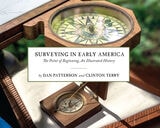
Surveying in Early America
The Point of Beginning, An Illustrated HistoryDan Patterson; Clinton Terry
Ohio University Press, 2020
Published by the University of Cincinnati Press
In Surveying in Early America: The Point of Beginning, An Illustrated History, award-winning photographer Dan Patterson and American historian Clinton Terry vividly examine the profession of surveying in the eighteenth century. Retracing the steps Washington and other surveyors took to map the Ohio River Valley, readers are immersed in historically accurate details of early surveying techniques and practices. Terry's narrative describes the practice of land and survey measurement—methods that did not substantially change until the invention of GPS technology 200 years later. Over 100 full color photographs exclusively shot for the book depict authentic and historically accurate reproductions of tools along with early American reenactors to provide an interpretive look at surveying as a primary means to building the American nation. Working with the Department of the Geographer, Patterson restages actual expeditions, brilliantly displaying the techniques and instruments Washington would have employed 260 years ago. Through the lens of Patterson's camera and Terry's accompanying narrative, readers see what Washington saw as he learned his trade, explored the vast American wilderness, and occasionally laid personal claim to great expanses of land along the way.
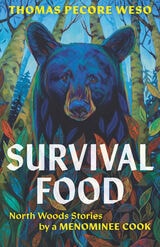
Survival Food
North Woods Stories by a Menominee CookThomas Pecore Weso
Wisconsin Historical Society Press, 2023
In these coming-of-age tales set on the Menominee Indian Reservation of the 1980s and 1990s, Thomas Pecore Weso explores the interrelated nature of meals and memories. As he puts it, “I cannot separate foods from the moments in my life when I first tasted them.” Weso’s stories recall the foods that influenced his youth in northern Wisconsin: subsistence meals from hunted, fished, and gathered sources; the culinary traditions of the German, Polish, and Swedish settler descendants in the area; and the commodity foods distributed by the government—like canned pork, dried beans, and powdered eggs—that made up the bulk of his family’s pantry. His mom called this “survival food.”
These stories from the author’s teen and tween years—some serious, some laugh-out-loud funny—will take readers from Catholic schoolyards to Native foot trails to North Woods bowling alleys, while providing Weso’s perspective on the political currents of the era. The book also contains dozens of recipes, from turtle soup and gray squirrel stew to twice-baked cheesy potatoes. This follow-up to Weso’s Good Seeds: A Menominee Indian Food Memoir is a hybrid of modern foodways, Indigenous history, and creative nonfiction from a singular storyteller.
2024 Wisconsin Library Association Outstanding Achievement Award
2024 PEN Oakland Josephine Miles Award for Excellence
Silver winner of the 2023 Midwest Book Award for Cookbooks/Crafts/Hobbies
Thomas Pecore Weso’s Survival Food was selected by the Wisconsin Center for the Book as the Wisconsin entry in the “Great Reads from Great Places” program of the Library of Congress.
“This book is not only about survival food, but about the singular beauty, creativity, and fortitude that comes out of that survival.”
—Chef Sean Sherman, author, The Sioux Chef’s Indigenous Kitchen
“Survival Food is interesting because it’s one part cookbook, three parts memoir, one part history, and one part multidisciplinary exploration of its setting, northern Wisconsin."
—James Norton, The Cookbook Test
“Nothing brings people together like good food and good stories. There’s an abundance of both in Thomas Pecore Weso’s latest memoir. As Weso attests, food can bring back happy, loving memories of times that were far from happy. Even a tray of funeral sandwiches brings a kind of comfort. This is a wonderful, honest portrait of northeastern Wisconsin, enlightening even to those of us who call this area home.”
—Jared Santek, Founder & Artistic Director, Write On Door County
“Survival Food provides ample nourishment for the mind and body. . . . The stories, told with humor and affection, are complemented by recipes ranging from mouth-watering instructions for cooking wild asparagus to ever-so-interesting advice for preparing bear stew.”
—Lucille Lang Day, author of Birds of San Pancho and Other Poems of Place and coeditor of Red Indian Road West: Native American Poetry from California
“His grandmother cooked according to Native traditions; his mother, ‘a nontraditional college student during my teens,’ resorted to instant meals. His grandfather was town constable and days spent with him brought Weso to the meatloaf, sausage and sauerkraut of German and Polish neighbors. Uncle Buddy’s flash car brings buckwheat pancakes to Weso’s mind, and he lived for a time near Cheese Box Curve—so called after a truck hauling dairy products overturned. Weso includes a few recipes, but mostly, Survival Food is an entertaining look back at life in Wisconsin’s rural north.”
—David Luhrssen, Shepherd Express
“Survival Food: North Woods Stories by a Menominee Cook by Thomas Pecore Weso is a posthumous sequel to his celebrated collection of family stories, Good Seeds: A Menominee Food Memoir. . . . Rich with captivating tales that include driving a convertible on logging roads, agreeing on terms before throwing eggs at passing cars, and his grandmother’s brief stay in a jailhouse she’d later purchase, Weso’s entries offer readers catharsis—demonstrating how to laugh, boast, debate, eat, mourn, and heal.”
—Ryan Winn, College of Menominee Nation, Tribal College Journal
Survival Pending Revolution
The History of the Black Panther PartyPaul Alkebulan
University of Alabama Press, 2007
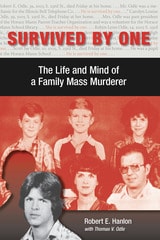
Survived by One
The Life and Mind of a Family Mass MurdererRobert E. Hanlon, PhD with Thomas V. Odle
Southern Illinois University Press, 2013
On November 8, 1985, 18-year-old Tom Odle brutally murdered his parents and three siblings in the small southern Illinois town of Mount Vernon, sending shockwaves throughout the nation. The murder of the Odle family remains one of the most horrific family mass murders in U.S. history. Odle was sentenced to death and, after seventeen years on death row, expected a lethal injection to end his life. However, Illinois governor George Ryan’s moratorium on the death penalty in 2000, and later commutation of all death sentences in 2003, changed Odle’s sentence to natural life.
The commutation of his death sentence was an epiphany for Odle. Prior to the commutation of his death sentence, Odle lived in denial, repressing any feelings about his family and his horrible crime. Following the commutation and the removal of the weight of eventual execution associated with his death sentence, he was confronted with an unfamiliar reality. A future. As a result, he realized that he needed to understand why he murdered his family. He reached out to Dr. Robert Hanlon, a neuropsychologist who had examined him in the past. Dr. Hanlon engaged Odle in a therapeutic process of introspection and self-reflection, which became the basis of their collaboration on this book.
Hanlon tells a gripping story of Odle’s life as an abused child, the life experiences that formed his personality, and his tragic homicidal escalation to mass murder, seamlessly weaving into the narrative Odle’s unadorned reflections of his childhood, finding a new family on death row, and his belief in the powers of redemption.
As our nation attempts to understand the continual mass murders occurring in the U.S., Survived by One sheds some light on the psychological aspects of why and how such acts of extreme carnage may occur. However, Survived by One offers a never-been-told perspective from the mass murderer himself, as he searches for the answers concurrently being asked by the nation and the world.
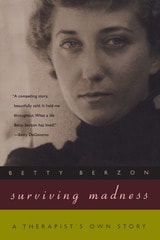
Surviving Madness
A Therapist's Own StoryBetty Berzon
University of Wisconsin Press, 2002
Betty Berzon, renowned psychotherapist and author of the bestselling book Permanent Partners, tells her own incredible story here. Berzon’s journey from psychiatric patient on suicide watch—her wrists tethered to the bed rails in a locked hospital ward—to her present role as a groundbreaking therapist and gay pioneer makes for purely compelling reading.
Berzon is recognized today as a trailblazing co-founder of a number of important lesbian and gay organizations and one of the first therapists to focus on means of developing healthy gay relationships and overcoming homophobia. Her sometimes bumpy road to success never fails to fascinate. Along the way she encounters such luminaries as Anaïs Nin, Eleanor Roosevelt, the Sitwells, Evelyn Hooker, and Paul Monette. Her recollections here provide a collective portrait of her fellow pioneers and a stirring lesson in twentieth-century history.
It is, however, the intimate story of Berzon’s own private passage toward self-discovery—from mental breakdown and suicide attempts, through hospitalization, eventual triumphant recovery, and her own coming out as an open lesbian at the age of forty—that makes this memoir an urgent, insightful, and deeply emotional testament to human survival.
Surviving Mexico's Dirty War
A Political Prisoner's MemoirAlberto Ulloa Bornemann, edited by Arthur Schmidt and Aurora Camacho de Schmidt
Temple University Press, 2007
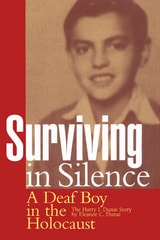
Surviving in Silence
A Deaf Boy in the Holocaust, The Harry I. Dunai StoryEleanor C. Dunai
Gallaudet University Press, 2002
Izrael Zachariah Deutsch was born on March 15, 1934, in Komjata, Czechoslovakia. The second youngest child, Izrael lived a bucolic existence with nine brothers and sisters on a farm, differing from them only in that he was deaf. When he was six, his mother took him to Budapest, Hungary, and enrolled him in a Jewish school for deaf children, where he thrived. Soon, however, the Nazi regime in Germany and the Arrow Cross fascists in Hungary destroyed Izrael’s world forever.
Izrael realized that by being both Jewish and deaf, he faced a double threat of being exported to the gas chambers in Poland. But at every lethal junction, he found a way to survive, first by buying and reselling pastries for extra money that later saved his life in the Budapest ghetto. Still, Izrael was close to death from starvation when he was liberated by Russian soldiers on January 18, 1945.
Izrael survived the war only to learn that his parents and two brothers had been murdered by the Nazis. The rest of his brothers and sisters scattered to distant parts of the world. Forced to remain in Budapest, Izrael finished school and became an accomplished machinist. He avoided any part in the Hungarian uprising in 1956 so that he could secure a visa to leave for Sweden. From Sweden he traveled throughout Europe and Israel, using an amazing network of Holocaust survivors, relatives, and deaf friends to ease his journey. He finally settled in Los Angeles, where he married a deaf Jewish woman he had met years before. Along the way, he changed his name from Izrael Deutsch to Harry Dunai.
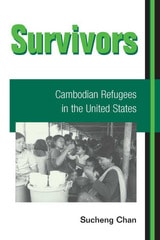
Survivors
CAMBODIAN REFUGEES IN THE UNITED STATESSucheng Chan
University of Illinois Press, 2004
Unparalleled in scope, Survivors begins with the Cambodians' experiences under the brutal Khmer Rouge regime, following them through escape to refugee camps in Thailand and finally to the United States, where they try to build new lives in the wake of massive trauma. Their struggle becomes primarily economic as they continue to negotiate new cultures and deal with rapidly changing gender and intergenerational relations within their own families. Poverty, crime, and racial discrimination all have an impact on their experiences in America, and each is examined in depth.
Although written as a history, this is a thoroughly multidisciplinary study, and Chan makes use of research from anthropology, sociology, psychology, medicine, social work, linguistics and education. She also captures the perspective of individual Cambodians. Drawing on interviews with more than fifty community leaders, a hundred government officials, and staff members in volunteer agencies, Survivors synthesizes the literature on Cambodian refugees, many of whom come from varying socioeconomic backgrounds.
A major scholarly achievement, Survivors is unique in the Asian American canon for its memorable presentation of cutting-edge research and its interpretation of both sides of the immigration process.
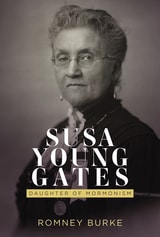
Susa Young Gates
Daughter of MormonismRomney Burke
Signature Books, 2022
After divorcing her first husband, Alma Dunford, the trauma associated with that union was such that she steadfastly refused to mention it ever again. She also lost some of her children over the course of her life and was unable to reconcile her older sister’s departure from the LDS Church and conversion to Catholicism. Yet despite her trials, Susa found fulfillment in her faith through service, as a prolific writer—co-authoring with her daughter Leah Dunford Widtsoe the 1930 biography of her father, Life Story of Brigham Young, founding the Young Women’s Journal in 1889, the Relief Society Magazine in 1915, and in her associations with such prominent women’s advocates such as Susan B. Anthony.
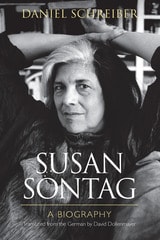
Susan Sontag
A BiographyDaniel Schreiber; Translated from the German by David Dollenmayer
Northwestern University Press, 2014
While known primarily as a cultural critic and novelist, Sontag was also a filmmaker, stage director, and dramatist. It was her status as a pop icon that was unusual for an American intellectual: she was filmed by Andy Warhol and Woody Allen, photographed by Annie Leibovitz and Diane Arbus, and her likeness adorned advertisements for Absolut vodka. Drawing on newly available sources, including interviews with Nadine Gordimer, Robert Wilson, and Sontag’s son, David Rieff, as well as on myriad interviews given by Sontag and her extensive correspondence with her friend and publisher Roger Straus, Schreiber explores the roles that Sontag played in influencing American public cultural and political conversations.
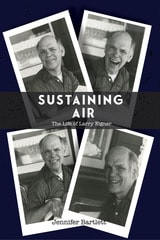
Sustaining Air
The Life of Larry EignerJennifer Bartlett
University of Alabama Press, 2023
The biography of a poet seminal to postwar American poetry
The poet Larry Eigner (1927–1996) was a key figure in New American poetry, which grew out of the Black Mountain School and San Francisco Renaissance, and a major influence on the Language poets. Eigner also had cerebral palsy as the result of an accident at birth. It is fortuitous that the poet lived his life in two locations vibrant in both poetics and disability activism. Except for brief periods attending camp and school, he lived with his parents in Swampscott, Massachusetts, until the age of 51. Later, he moved to Berkeley, California, at the height of the disability rights movement. In the 1950s, Eigner attended Camp Jened, which later became famous in the film Crip Camp.
Bartlett’s biography covers every significant phase of Eigner’s life: his childhood and young adulthood when he began typing poems with one finger on the manual typewriter that was a bar mitzvah gift; his first publications and the maturation of his poetic interests through correspondence with poets of the era; and after his move to Berkeley, the ever-expanding circle of friends, poets, caretakers, and collaborators he established there. The result is a deeply insightful account of an utterly distinctive voice whose influence widens and deepens with each new generation that encounters him.
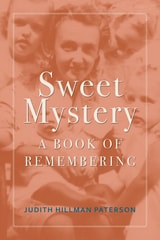
Sweet Mystery
A Book of RememberingJudith Hillman Paterson
University of Alabama Press, 2020
Judith Paterson was just nine years old in 1946 when her mother died of a virulent combination of alcoholism and mental illness at the age of 31. Sweet Mystery: A Book of Remembering is Paterson’s harrowing account of the memories of her mother, told with eloquence and understanding. Set largely in Montgomery, Alabama, the story plays out against a backdrop of relatives troubled almost as much by southern conflicts over race and class as by the fallout from a long family history of drinking, denial, and mental illness.
While rich in the details and flavor of small-town life in the South during the 1940s, Sweet Mystery transcends time and regionalism to evoke universal American themes. Ultimately, it confirms the damaging effects of early trauma on children as well as the innate and familial strengths that enable some children to survive, grow up, and heal.
Originally published in 1996 to critical acclaim in the national media, Sweet Mystery was called “a beautifully written, excruciating collision of form and emotion, joy and pain, willpower and self-examination, control and surrender” by the Washington Post. This edition contains a new afterword written by the author as well as a list of suggested readings.
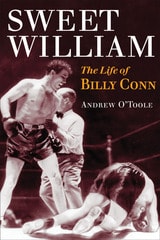
Sweet William
The Life of Billy ConnAndrew O'Toole
University of Illinois Press, 2009
An Irish working-class hero of Pittsburgh, Billy Conn captured hearts through his ebullient personality, stellar boxing record, and good looks. A light heavyweight boxing champion best remembered for his sensational near-defeat of heavyweight champion Joe Louis in 1941, Conn is still regarded as one of the greatest fighters of all time. Andrew O'Toole chronicles the boxing, Hollywood, and army careers of "the Pittsburgh Kid" by drawing from newspaper accounts, Billy's personal scrapbooks, and fascinating interviews with family. Presenting an intimate look at the champion's relationships with his girlfriend, manager, and rivals, O'Toole compellingly captures the personal life of a public icon and the pageantry of sports during the 1930s and '40s.
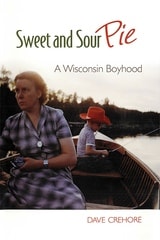
Sweet and Sour Pie
A Wisconsin BoyhoodDave Crehore
University of Wisconsin Press, 2009
Crehore’s stories of his youth in 1950s Wisconsin are peppered with engaging characters and a quiet wit. A grouse-hunting expedition goes awry when an eccentric British businessman bags an escaped bantam rooster with a landing net. Crehore's great-grandfather gets in trouble one Christmas when he sneaks a whoopee-cushion under a guest’s seat. The elderly Frau Blau gets trapped in an outhouse by a shady auctioneer during a farm sale. Through all the adventures—and misadventures—in a small town and in the great outdoors of Wisconsin, family is always at the center. This gently humorous look back at a baby-boomer’s awakening to adulthood will be appreciated by members of any generation.
Finalist, Humor, Midwest Book Awards
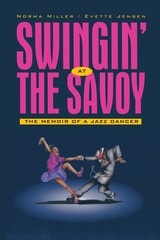
Swingin' at the Savoy
Norma Miller
Temple University Press, 1996
A dance contest winner by 14, Norma Miller became a member of Herbert White's Lindy Hoppers and a celebrated Savoy Ballroom Lindy Hop champion. Swingin' at the Savoy chronicles a significant period in American cultural history and race relations, as it glorifies the home of the Lindy Hop and he birthplace of memorable dance hall fads. Miller shares fascinating anecdotes about her youthful encounters with many of the greatest jazz legends in music history, including Ella Fitzgerald, Count Basie, Benny Goodman, Billie Holiday, Artie Shaw, Duke Ellington, Ethel Waters, and even boxer Joe Louis. Readers will experience the legend of the celebrated Harlem ballroom and the phenomenal Swing generation that changed music and dance history forever.

Swooning Beauty
A Memoir Of PleasureJoanna Frueh
University of Nevada Press, 2006
When her parents died and her marriage disintegrated within the span of a few months, art historian and performance artist Joanna Frueh entered a painful period of grief and mourning. This book is about how she healed herself and in the process explored the range of her potential as a woman.Swooning Beauty is an intimate memoir of discovery and healing. Frueh’s path to recovery lay through a profound examination of her intuitions, desires, fantasies, dreams, and emotions, her capacity for pleasure—visual, sensual, intellectual, gastronomic, and erotic—and her sense of her own heroic female identity. Hers is the passionate voice of a creative, intelligent woman scrutinizing the nature of love in all its forms and the ways of being that make us free, flexible, more fully real and more fully human. The result is an engaging view into the rich and colorful inner life of a woman at the threshold of middle age, of the blossoming of mind and spirit that comes after suffering and self-realization. Pleasure, she concludes, “is the absence of lack. Self-love is a necessary plenitude. Vigilance in love brings us freedom. Freedom is not an absolute whose attainment is humanly impossible. Yogis say that the self that is not ego is free. That self is the spacious heart, the spacious mind.” Frueh offers us wisdom and comfort for the journey into middle age, and the deep pleasure of encountering a generous, lively spirit and a remarkably spacious mind.
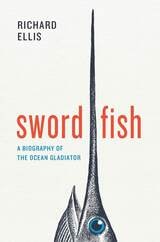
Swordfish
A Biography of the Ocean GladiatorRichard Ellis
University of Chicago Press, 2013

Sylvia Pankhurst
A Life in Radical PoliticsMary Davis
Pluto Press, 1999
Sylvia Pankhurst
Suffragette, Socialist and Scourge of EmpireKatherine Connelly
Pluto Press, 2013
From militant suffragette at the beginning of the twentieth century to campaigner against colonialism in Africa after the Second World War, Sylvia Pankhurst dedicated her life to fighting oppression and injustice.
In this vivid biography Katherine Connelly examines Pankhurst’s role at the forefront of significant developments in the history of radical politics. She guides us through Pankhurst's construction of a suffragette militancy which put working-class women at the heart of the struggle, her championing of the Bolshevik Revolution and her clandestine attempts to sabotage the actions of the British state, as well as her early identification of the dangers of Fascism.
The book explores the dilemmas, debates and often painful personal consequences faced by Pankhurst which were played out in her art, writings and activism. It argues that far from being an advocate of disparate causes, Pankhurst’s campaigns were united by an essential continuity which hold vital lessons for achieving social change. This lively and accessible biography presents Pankhurst as a courageous and inspiring campaigner, of huge relevance to those engaged in social movements today.
Sí, Ella Puede!
The Rhetorical Legacy of Dolores Huerta and the United Farm WorkersBy Stacey K. Sowards
University of Texas Press, 2019
Winner, Marie Hochmuth Nichols Award, Public Address Division, National Communication Association, 2020
Outstanding Book Award, Latina/o Communication Studies Division, National Communication Association, 2020
Since the 1950s, Latina activist Dolores Huerta has been a fervent leader and organizer in the struggle for farmworkers’ rights within the Latina/o community. A cofounder of the United Farm Workers union in the 1960s alongside César Chávez, Huerta was a union vice president for nearly four decades before starting her own foundation in the early 2000s. She continues to act as a dynamic speaker, passionate lobbyist, and dedicated figure for social and political change, but her crucial contributions and commanding presence have often been overshadowed by those of Chávez and other leaders in the Chicana/o movement. In this new study, Stacey K. Sowards closely examines Huerta’s rhetorical skills both in and out of the public eye and defines Huerta’s vital place within Chicana/o history.
Referencing the theoretical works of Pierre Bourdieu, Chela Sandoval, Gloria Anzaldúa, and others, Sowards closely analyzes Huerta’s speeches, letters, and interviews. She shows how Huerta navigates the complex intersections of race, ethnicity, gender, language, and class through the myriad challenges faced by women activists of color. Sowards’s approach to studying Huerta’s rhetorical influence offers a unique perspective for understanding the transformative relationship between agency and social justice.