Results by title
5550 books match the query 'Biography & Autobiography' and 348 start with s

Straddling Worlds
The Jewish-American Journey of Professor Richard W. LeopoldSteven J. Harper
Northwestern University Press, 2008
Author Steven J. Harper pays tribute to a well-respected teacher with this biography of a distinguished William Smith Mason Professor of History at Northwestern University, Richard W. Leopold. Harper had maintained contact with his former professor, as had hundreds of other alumni, meeting with him in the apartment to which his age and health confined him. When Leopold invited him to review his biographical materials to prepare a New York Times obituary, Harper began to catch glimpses of a deeper history in Leopold’s life: that of Jews in America after the turn of the century.
Across two years of Sundays, Leopold’s life came together and Harper began to notice parallels between the life of his professor and the life of his recently deceased father-in-law. Both grew up in less orthodox households but were still identified as Jewish by others; both attended Ivy League colleges, fighting (and beating) anti-Semitism there; and both served their country with distinction in World War II. The two men persevered through a twentieth century Jewish-American experience that they and many others shared, but rarely discussed. Steven Harper has caught them both on the page just in time to document their lives, their culture, and the nation that grew and changed alongside them.
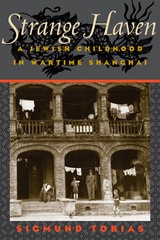
Strange Haven
A Jewish Childhood in Wartime ShanghaiSigmund Tobias
University of Illinois Press, 1998
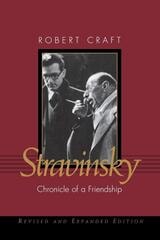
Stravinsky
Chronicle of a FriendshipRobert Craft
Vanderbilt University Press, 1994
For nearly the last twenty-five years of Igor Stravinsky's incredibly full life, the noted musician, conductor, and writer Robert Craft was his closest colleague and friend, a trusted member of his household, and an important part of all of the composer's activities. Throughout these years, Craft kept a detailed diary, impressive in its powers of observation and characterization. That diary forms the basis for Stravinsky: Chronicle of a Friendship, now released in a substantially revised and expanded new edition.
This edition includes nearly twice as many illustrations and more than 35% entirely new textual material. In addition, Craft adds an evocative "Postlude" in which he summarily brings matters forward to the death of Vera Stravinsky, several years after that of the Maestro.
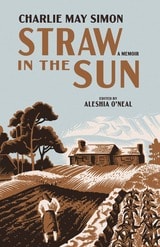
Straw in the Sun
A MemoirCharlie May Simon
University of Arkansas Press, 2025
These opening lines of Charlie May Simon’s Straw in the Sun invite readers on a personal journey of remembrance as Simon recounts her homesteading experiment in Depression-era Arkansas. Years before she established herself as a regional author of national renown, she chose a spot near Cove Creek, now part of Ouachita National Forest, to forge a home from rugged land, meeting both a backbreaking series of challenges and a vivid cast of characters in the process.
Nationally popular upon its release in 1945, Simon’s lyrical memoir was praised from the outset for its warmth and charm. At once an ethnographic narrative of a hill community and an accessible portrait of Ozarks memories at their most idyllic, Straw in the Sun, offered here with a robust introduction from Simon scholar Aleshia O’Neal, is a classic ready for rediscovery by a new generation of readers.
Stream
Living in FluxCallum Angus
Northwestern University Press, 2027
A nonfiction work examining a confluence of bodily and worldwide transition
Stream is an exploration of the large- and small-scale changes taking place in a single body and on our planet as a whole. Using a stream as a biological, technological, and psychological metaphor, Angus layers lyric essay, journal entries, and the detritus of a life spent writing about the climate within and without to consider how we remain fluid in a time of constant change. Each section of Stream flows into the next, weaving through thaws, floods, cataracts, and eddies while asking how a melting of rigid categories, from seasons to gender, might help us approach a changing world anew. From winery workers dying in the fields to endangered desert tortoises unable to outrun the flames, Stream is an outpouring of climatological grief toward those who perpetuate inaction, an elegy for those we’ve lost to the heat, and a tribute to the tributaries that help us see the world from other perspectives.

Street of Dreams
The Nature and Legacy of the 1960sDouglas M. Knight
Duke University Press, 1989
Strictly from Hungary
Ladislas Farago
Westholme Publishing, 2004
Known for his best-selling military histories, Ladislas Farago also wrote a witty tribute to his homeland, Strictly from Hungary. Noting that Hungary has produced some of the world's most renowned artists, scientists, and financiers as well as its share of world-class con-artists, charlatans, and rakes, Farago sets out to explain just how one tiny country can be responsible for so much talent, both good and bad. Using stories from his days as a struggling writer in the bustling café scenes of Budapest and New York City, Farago demonstrates the Hungarian knack for remaining irrepressible and optimistic even in the face of catastrophe. Here we meet Zoltan, a fellow Bohemian who presents his astonished benefactor with a play "about nothing," a theme later made famous by another writer of Hungarian descent, Jerry Seinfeld. Farago also introduces us to "Baby Kiss," a vivacious Hungarian beauty queen, and the story of how she ended up in Fort Worth, Texas; Orkeny, a double agent for America at the height of the Cold War who "spiced up" his reports to keep everyone happy, and the author's own experience getting mustered into the supposedly non-existent Royal Hungarian Army. Farago's reminiscence validates what most Hungarians believe: that Hungary is the center of the world and that everyone has some connection to the land of the Magyars. In that spirit, Farago learns that George Washington himself was "strictly from Hungary." This edition is introduced by the author's son, who shows that the same vibrant spirit described by his father remains the hallmark of the Hungarian temperament.
Stringbean
The Life and Murder of a Country LegendTaylor Hagood
University of Illinois Press, 2023
A beloved member of the country music community, David “Stringbean” Akeman found nationwide fame as a cast member of Hee Haw. The 1973 murder of Stringbean and his wife forever changed Nashville’s sense of itself. Millions of others mourned not only the slain couple but the passing of the way of life that country music had long represented.
Taylor Hagood merges the story of Stringbean’s life with an account of murder and courtroom drama. Mentored by Uncle Dave Macon and Bill Monroe, Stringbean was a bridge to country’s early days. His instrumental savvy and old-time singing style drew upon a deep love for traditional country music that, along with his humor and humanity, won him the reverence of younger artists and made his violent death all the more shocking. Hagood delves into the unexpected questions and uneasy resolutions raised by the atmosphere of retribution surrounding the murder trial and recounts the redemption story that followed decades later.

Strong Advocate
The Life of a Trial LawyerThomas Strong
University of Missouri Press, 2012
In Strong Advocate, Thomas Strong, one of the most successful trial lawyers in Missouri’s history, chronicles his adventures as a contemporary personal injury attorney. Though the profession is held in low esteem by the general public, Strong entered the field with the right motives: to help victims who have been injured by defective products or the negligence of others.

Strong Inside
Perry Wallace and the Collision of Race and Sports in the SouthAndrew Maraniss
Vanderbilt University Press, 2024
2015 RFK Book Awards Special Recognition
2015 Lillian Smith Book Award
2015 AAUP Books Committee "Outstanding" Title
When Strong Inside was first published ten years ago, no one could have predicted the impact the book would have on Vanderbilt University, Nashville, and communities across the nation. What began as a biography of Perry Wallace—the first African American basketball player in the Southeastern Conference (SEC)—became a catalyst for meaningful change and reconciliation between Wallace and the city that had rejected him. In this tenth-anniversary edition, scholars of race and sports Louis Moore and Derrick E. White provide a new foreword that places the story in the context of the study of sports and society, and author Andrew Maraniss adds a concluding chapter filling readers in on how events unfolded between Strong Inside’s publication in 2014 and Perry Wallace’s death in 2017 and exploring Wallace’s continuing legacy.
Wallace entered kindergarten the year that Brown v. Board of Education upended “separate but equal.” As a twelve-year-old, he sneaked downtown to watch the sit-ins at Nashville’s lunch counters. A week after Martin Luther King Jr.’s “I Have a Dream” speech, Wallace entered high school, and later saw the passage of the Civil Rights and Voting Rights acts. On March 19, 1966, his Pearl High School basketball team won Tennessee’s first integrated state tournament—the same day Adolph Rupp’s all-white Kentucky Wildcats lost to the all-Black Texas Western Miners in an iconic NCAA title game.
The world seemed to be opening up at just the right time, and when Vanderbilt recruited him, Wallace courageously accepted the assignment to desegregate the SEC. His experiences on campus and in the hostile gymnasiums of the Deep South turned out to be nothing like he ever imagined.
Strong Inside
Perry Wallace and the Collision of Race and Sports in the SouthAndrew Maraniss
Vanderbilt University Press, 2014
2015 RFK Book Awards Special Recognition
2015 Lillian Smith Book Award
2015 AAUP Books Committee "Outstanding" Title
Based on more than eighty interviews, this fast-paced, richly detailed biography of Perry Wallace, the first African American basketball player in the SEC, digs deep beneath the surface to reveal a more complicated and profound story of sports pioneering than we've come to expect from the genre. Perry Wallace's unusually insightful and honest introspection reveals his inner thoughts throughout his journey.
Wallace entered kindergarten the year that Brown v. Board of Education upended "separate but equal." As a 12-year-old, he sneaked downtown to watch the sit-ins at Nashville's lunch counters. A week after Martin Luther King Jr.'s "I Have a Dream" speech, Wallace entered high school, and later saw the passage of the Civil Rights and Voting Rights acts. On March 16, 1966, his Pearl High School basketball team won Tennessee's first integrated state tournament--the same day Adolph Rupp's all-white Kentucky Wildcats lost to the all-black Texas Western Miners in an iconic NCAA title game.
The world seemed to be opening up at just the right time, and when Vanderbilt recruited him, Wallace courageously accepted the assignment to desegregate the SEC. His experiences on campus and in the hostile gymnasiums of the Deep South turned out to be nothing like he ever imagined.
On campus, he encountered the leading civil rights figures of the day, including Stokely Carmichael, Martin Luther King Jr., Fannie Lou Hamer, and Robert Kennedy--and he led Vanderbilt's small group of black students to a meeting with the university chancellor to push for better treatment.
On the basketball court, he experienced an Ole Miss boycott and the rabid hate of the Mississippi State fans in Starkville. Following his freshman year, the NCAA instituted "the Lew Alcindor rule," which deprived Wallace of his signature move, the slam dunk.
Despite this attempt to limit the influence of a rising tide of black stars, the final basket of Wallace's college career was a cathartic and defiant dunk, and the story Wallace told to the Vanderbilt Human Relations Committee and later The Tennessean was not the simple story of a triumphant trailblazer that many people wanted to hear. Yes, he had gone from hearing racial epithets when he appeared in his dormitory to being voted as the university's most popular student, but, at the risk of being labeled "ungrateful," he spoke truth to power in describing the daily slights and abuses he had overcome and what Martin Luther King had called "the agonizing loneliness of a pioneer."
Stuart Symington
A LifeJames C. Olson
University of Missouri Press, 2003
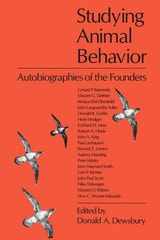
Studying Animal Behavior
Autobiographies of the FoundersEdited by Donald A. Dewsbury
University of Chicago Press, 1989
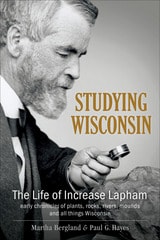
Studying Wisconsin
The Life of Increase Lapham, early chronicler of plants, rocks, rivers, mounds and all things WisconsinMartha Bergland
Wisconsin Historical Society Press, 2014
With masterful storytelling, Bergland and Hayes demonstrate how Lapham blended his ravenous curiosity with an equable temperament and a passion for detail to create a legacy that is still relevant today.
—John Gurda
In this long overdue tribute to Wisconsin’s first scientist, authors Martha Bergland and Paul G. Hayes explore the remarkable life and achievements of Increase Lapham (1811–1875). Lapham’s ability to observe, understand, and meticulously catalog the natural world marked all of his work, from his days as a teenage surveyor on the Erie Canal to his last great contribution as state geologist.
Self-taught, Lapham mastered botany, geology, archaeology, limnology, mineralogy, engineering, meteorology, and cartography. A prolific writer, his 1844 guide to the territory was the first book published in Wisconsin. Asked late in life which field of science was his specialty, he replied simply, “I am studying Wisconsin.”
Lapham identified and preserved thousands of botanical specimens. He surveyed and mapped Wisconsin’s effigy mounds. He was a force behind the creation of the National Weather Service, lobbying for a storm warning system to protect Great Lakes sailors. Told in compelling detail through Lapham’s letters, journals, books, and articles, Studying Wisconsin chronicles the life and times of Wisconsin’s pioneer citizen-scientist.
Su Friedrich
Barbara Mennel
University of Illinois Press, 2023
With acclaimed films like Sink or Swim and The Odds of Recovery, Su Friedrich’s body of work stands at the forefront of avant-garde and Queer cinema. Barbara Mennel examines the career of an experimental auteur whose merger of technical innovation and political critique connects with both cinephiles and activists. Friedrich’s integration of cinematic experimentation with lesbian advocacy serves as a beginning rather than an end point of analysis. With that in mind, Mennel provides an essential overview of the filmmaker’s oeuvre while highlighting the defining characteristics of her artistic and political signature. She also situates Friedrich within the cultural, political, and historical contexts that both shape the films and are shaped by them. Finally, Mennel expands our notion of auteurism to include directors who engage in collaborative and creative processes rooted in communities.
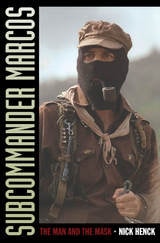
Subcommander Marcos
The Man and the MaskNick Henck
Duke University Press, 2007
In this, the first English-language biography of Subcommander Marcos, Nick Henck describes the thought, leadership, and personality of this charismatic rebel spokesperson. He traces Marcos’s development from his provincial middle-class upbringing, through his academic career and immersion in the clandestine world of armed guerrillas, to his emergence as the iconic Subcommander. Henck reflects on what motivated an urbane university professor to reject a life of comfort in Mexico City in favor of one of hardship as a guerrilla in the mountainous jungles of Chiapas, and he examines how Marcos became a conduit through which impoverished indigenous Mexicans could communicate with the world.
Henck fully explores both the rebel leader’s renowned media savvy and his equally important flexibility of mind. He shows how Marcos’s speeches and extensive writings demonstrate not only the Subcommander’s erudition but also his rejection of Marxist dogmatism. Finally, Henck contextualizes Marcos, locating him firmly within the Latin American guerrilla tradition.
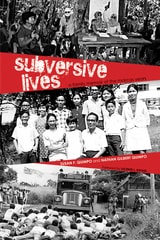
Subversive Lives
A Family Memoir of the Marcos YearsSusan F. Quimpo
Ohio University Press, 2016
From the 1960s to the 1990s, seven members of the Quimpo family dedicated themselves to the anti-Marcos resistance in the Philippines, sometimes at profound personal cost. In this unprecedented memoir, eight siblings (plus one by marriage) tell their remarkable stories in individually authored chapters that comprise a family saga of revolution, persistence, and, ultimately, vindication, even as easy resolution eluded their struggles.
Subversive Lives tells of attempts to smuggle weapons for the New People’s Army (the armed branch of the Communist Party of the Philippines); of heady times organizing uprisings and strikes; of the cruel discovery of one brother’s death and the inexplicable disappearance of another (now believed to be dead); and of imprisonment and torture by the military. These stories show the sacrifices and daily heroism of those in the movement. But they also reveal its messy legacies: sons alienated from their father; daughters abused by the military; friends betrayed; and revolutionary affection soured by intractable ideological differences.
The rich and distinctive contributions span the martial law years of Ferdinand Marcos’s rule. Subversive Lives is a riveting and accessible primer for those unfamiliar with the era, and a resonant history for those with a personal connection to what it meant to be Filipino at that time, or for anyone who has fought political repression.
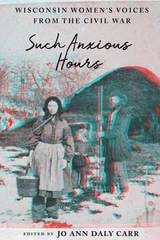
Such Anxious Hours
Wisconsin Women's Voices from the Civil WarJo Ann Daly Carr
University of Wisconsin Press, 2020
In Such Anxious Hours, Jo Ann Daly Carr places this material in historical context, detailing what was happening simultaneously in the nation, state, and local communities. Civil War history enthusiasts will appreciate these enlightening perspectives that demonstrate the variety of experiences in the Midwest during the bloody conflict.
Suddenly Jewish
Jews Raised as Gentiles Discover Their Jewish RootsBarbara Kessel
Brandeis University Press, 2007
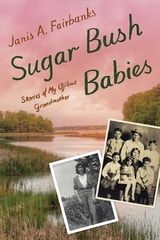
Sugar Bush Babies
Stories of My Ojibwe GrandmotherJanis A. Fairbanks
University of Minnesota Press, 2025
A memoir of lessons learned from an Ojibwe grandmother during the time of Relocation
Why, her mother asked, did Janis keep running away from kindergarten? She wanted to go home. But not to the house they had just moved to in Duluth, with its gravel yard and traffic noise. She was a country girl, and home was the log cabin among the wildflowers on the Leech Lake Indian Reservation in Bena, Minnesota. Knowing they were now going to stay in the city, Janis’s parents offered her a compromise: during the summer, Janis could leave the bustle of Duluth and live with her grandmother on the Fond du Lac Reservation, listening to stories, learning Ojibwe, and finding her place in the world. In Sugar Bush Babies, Janis A. Fairbanks returns to that time of Relocation, dislocation, and discovery, taking us home with her through stories of childhood and lessons learned at her grandmother’s knee, enveloped in love and tradition.
Through the eyes of a child and the teachings of an elder, Fairbanks revisits her life during Indian Relocation from reservations to urban areas, from Ojibwe villages to white communities whose ideas about Indians came from Hollywood Westerns. Recalling her early childhood at Leech Lake, her school days in Duluth, and her summers in Fond du Lac, Janis brings the gifts of living history full circle, continuing the traditions of carrying family lore, women’s wisdom, and Indigenous culture from generation to generation.
There are tales told at nighttime or during thunderstorms; lessons in Native medicine; stories of Grandma’s recollections of boarding school, Daddy’s days as a lumberjack, and Mother’s special powers; memories of wash days and dancing, of powwows and Girl Scout camp, of snaring rabbits, selling lilacs, and attending the circus. A lyrical memoir, Sugar Bush Babies conveys the eloquence of women speaking and sharing through generations and the lasting power of tradition.

Sui Sin Far / Edith Maude Eaton
A Literary BiographyAnnette White-Parks; Foreward by Roger Daniels
University of Illinois Press, 1995
Annette White-Parks offers the first full-length biography of the woman now remembered as North America's first published Asian writer. White-Parks reveals an author who defied the in vogue style of "yellow peril" literature to show Chinatowns and their inhabitants as complex, feeling human beings. Her insider's sympathy focused in particular on Chinese American women and children. Confronted with social divisions and discrimination, Sui Sin Far experimented with trickster characters and irony, sharing the coping mechanisms used by other writers who struggled to overcome the marginalization forced on them because of their race, gender, or class.

Suicide or Murder?
The Strange Death of Governor Meriwether LewisVardis Fisher
Ohio University Press, 1962
The death of Meriwether Lewis is one of the great mysteries of American history. Was he murdered at Grinder’s Stand or did he commit suicide? Vardis Fisher meticulously reconstructs the events and presents his own version of the case with the precision and persuasiveness of a fine trial lawyer. But Fisher was also a great novelist and it is his sense of character that serves him best here. We know Lewis’ complex sensibility as well as we know that of any man of his time—his journals are so self-revealing, so exacting in the record they make of his musings, doubts, and elations. Fisher offers us this complex Lewis and, with equal perceptiveness, sets the rough, frontier scene at Grinder’s Stand. The result is a fine mystery, well solved, that leans toward tragedy.
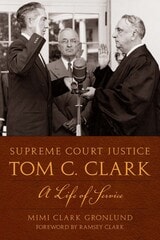
Supreme Court Justice Tom C. Clark
A Life of ServiceBy Mimi Clark Gronlund
University of Texas Press, 2010
An associate justice on the renowned Warren Court whose landmark ruling in Brown v. Board of Education overturned racial segregation in schools and other public facilities, Tom C. Clark was a crusader for justice throughout his long legal career. Among many tributes Clark received, Supreme Court Chief Justice Warren Burger opined that "no man in the past thirty years has contributed more to the improvement of justice than Tom Clark."
Supreme Court Justice Tom C. Clark is the first biography of this important American jurist. Written by his daughter, Mimi Clark Gronlund, and based on interviews with many of Clark's judicial associates, friends, and family, as well as archival research, it offers a well-rounded portrait of a lawyer and judge who dealt with issues that remain in contention today—civil rights, the rights of the accused, school prayer, and censorship/pornography, among them. Gronlund explores the factors in her father's upbringing and education that helped form his judicial philosophy, then describes how that philosophy shaped his decisions on key issues and cases, including the internment of Japanese Americans during World War II, the investigation of war fraud, the Truman administration's loyalty program (an anti-communist effort), the Brown decision, Mapp v. Ohio (protections against unreasonable search and seizure), and Abington v. Schempp (which overturned a state law that required reading from the Bible each day in public schools).
Supremely Tiny Acts
A Memoir of a DaySonya Huber
The Ohio State University Press, 2021
“I think we have to get to the real, to catch the facts we have, to hold on to what we see. . . .in this time where lies are currency,” Sonya Huber writes in her book-length essay Supremely Tiny Acts: A Memoir of a Day. On the theory that naming the truths of quotidian experience can counter the dangerous power of lies, she carefully recounts two anxiety-fueled days one fall. On the first, she is arrested as part of a climate protest in Times Square. On the other, she must make it to her court appearance while also finding time to take her son to get his learner's permit. Paying equal attention to minor details, passing thoughts, and larger political concerns around activism and parenting in the Trump-era United States, Huber asks: How can one simultaneously be a good mother, a good worker, and a good citizen? As she reflects on the meaning of protest and on whiteness and other forms of privilege within political activism, Huber offers a wry, self-aware, and stirring testament to the everyday as a seedbed for meaningful change.
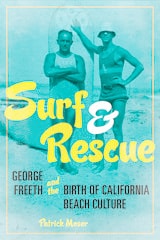
Surf and Rescue
George Freeth and the Birth of California Beach CulturePatrick Moser
University of Illinois Press, 2022
A compelling merger of biography and sports history, Surf and Rescue brings to light the forgotten figure whose novel way of seeing the beach sparked the imaginations of people around the world.
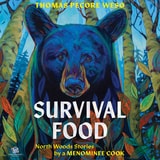
Survival Food
North Woods Stories by a Menominee CookThomas Pecore Weso
Wisconsin Historical Society Press, 2023
In these coming-of-age tales set on the Menominee Indian Reservation of the 1980s and 1990s, Thomas Pecore Weso explores the interrelated nature of meals and memories. As he puts it, “I cannot separate foods from the moments in my life when I first tasted them.” Weso’s stories recall the foods that influenced his youth in northern Wisconsin: subsistence meals from hunted, fished, and gathered sources; the culinary traditions of the German, Polish, and Swedish settler descendants in the area; and the commodity foods distributed by the government—like canned pork, dried beans, and powdered eggs—that made up the bulk of his family’s pantry. His mom called this “survival food.”
These stories from the author’s teen and tween years—some serious, some laugh-out-loud funny—will take readers from Catholic schoolyards to Native foot trails to North Woods bowling alleys, while providing Weso’s perspective on the political currents of the era. The book also contains dozens of recipes, from turtle soup and gray squirrel stew to twice-baked cheesy potatoes. This follow-up to Weso’s Good Seeds: A Menominee Indian Food Memoir is a hybrid of modern foodways, Indigenous history, and creative nonfiction from a singular storyteller.
2024 Wisconsin Library Association Outstanding Achievement Award
2024 PEN Oakland Josephine Miles Award for Excellence
Silver winner of the 2023 Midwest Book Award for Cookbooks/Crafts/Hobbies
Thomas Pecore Weso’s Survival Food was selected by the Wisconsin Center for the Book as the Wisconsin entry in the “Great Reads from Great Places” program of the Library of Congress.
“This book is not only about survival food, but about the singular beauty, creativity, and fortitude that comes out of that survival.”
—Chef Sean Sherman, author, The Sioux Chef’s Indigenous Kitchen
“Survival Food is interesting because it’s one part cookbook, three parts memoir, one part history, and one part multidisciplinary exploration of its setting, northern Wisconsin."
—James Norton, The Cookbook Test
“Nothing brings people together like good food and good stories. There’s an abundance of both in Thomas Pecore Weso’s latest memoir. As Weso attests, food can bring back happy, loving memories of times that were far from happy. Even a tray of funeral sandwiches brings a kind of comfort. This is a wonderful, honest portrait of northeastern Wisconsin, enlightening even to those of us who call this area home.”
—Jared Santek, Founder & Artistic Director, Write On Door County
“Survival Food provides ample nourishment for the mind and body. . . . The stories, told with humor and affection, are complemented by recipes ranging from mouth-watering instructions for cooking wild asparagus to ever-so-interesting advice for preparing bear stew.”
—Lucille Lang Day, author of Birds of San Pancho and Other Poems of Place and coeditor of Red Indian Road West: Native American Poetry from California
“His grandmother cooked according to Native traditions; his mother, ‘a nontraditional college student during my teens,’ resorted to instant meals. His grandfather was town constable and days spent with him brought Weso to the meatloaf, sausage and sauerkraut of German and Polish neighbors. Uncle Buddy’s flash car brings buckwheat pancakes to Weso’s mind, and he lived for a time near Cheese Box Curve—so called after a truck hauling dairy products overturned. Weso includes a few recipes, but mostly, Survival Food is an entertaining look back at life in Wisconsin’s rural north.”
—David Luhrssen, Shepherd Express
“Survival Food: North Woods Stories by a Menominee Cook by Thomas Pecore Weso is a posthumous sequel to his celebrated collection of family stories, Good Seeds: A Menominee Food Memoir. . . . Rich with captivating tales that include driving a convertible on logging roads, agreeing on terms before throwing eggs at passing cars, and his grandmother’s brief stay in a jailhouse she’d later purchase, Weso’s entries offer readers catharsis—demonstrating how to laugh, boast, debate, eat, mourn, and heal.”
—Ryan Winn, College of Menominee Nation, Tribal College Journal
Survival Food
North Woods Stories by a Menominee CookThomas Pecore Weso
Wisconsin Historical Society Press, 2025
In these coming-of-age tales set on the Menominee Indian Reservation of the 1980s and 1990s, Thomas Pecore Weso explores the interrelated nature of meals and memories. As he puts it, “I cannot separate foods from the moments in my life when I first tasted them.” Weso’s stories recall the foods that influenced his youth in northern Wisconsin: subsistence meals from hunted, fished, and gathered sources; the culinary traditions of the German, Polish, and Swedish settler descendants in the area; and the commodity foods distributed by the government—like canned pork, dried beans, and powdered eggs—that made up the bulk of his family’s pantry. His mom called this “survival food.”
These stories from the author’s teen and tween years—some serious, some laugh-out-loud funny—will take readers from Catholic schoolyards to Native foot trails to North Woods bowling alleys, while providing Weso’s perspective on the political currents of the era. The book also contains dozens of recipes, from turtle soup and gray squirrel stew to twice-baked cheesy potatoes. This follow-up to Weso’s Good Seeds: A Menominee Indian Food Memoir is a hybrid of modern foodways, Indigenous history, and creative nonfiction from a singular storyteller.
2024 Wisconsin Library Association Outstanding Achievement Award
2024 PEN Oakland Josephine Miles Award for Excellence
Silver winner of the 2023 Midwest Book Award for Cookbooks/Crafts/Hobbies
Thomas Pecore Weso’s Survival Food was selected by the Wisconsin Center for the Book as the Wisconsin entry in the “Great Reads from Great Places” program of the Library of Congress.
“This book is not only about survival food, but about the singular beauty, creativity, and fortitude that comes out of that survival.”
—Chef Sean Sherman, author, The Sioux Chef’s Indigenous Kitchen
“Survival Food is interesting because it’s one part cookbook, three parts memoir, one part history, and one part multidisciplinary exploration of its setting, northern Wisconsin."
—James Norton, The Cookbook Test
“Nothing brings people together like good food and good stories. There’s an abundance of both in Thomas Pecore Weso’s latest memoir. As Weso attests, food can bring back happy, loving memories of times that were far from happy. Even a tray of funeral sandwiches brings a kind of comfort. This is a wonderful, honest portrait of northeastern Wisconsin, enlightening even to those of us who call this area home.”
—Jared Santek, Founder & Artistic Director, Write On Door County
“Survival Food provides ample nourishment for the mind and body. . . . The stories, told with humor and affection, are complemented by recipes ranging from mouth-watering instructions for cooking wild asparagus to ever-so-interesting advice for preparing bear stew.”
—Lucille Lang Day, author of Birds of San Pancho and Other Poems of Place and coeditor of Red Indian Road West: Native American Poetry from California
“His grandmother cooked according to Native traditions; his mother, ‘a nontraditional college student during my teens,’ resorted to instant meals. His grandfather was town constable and days spent with him brought Weso to the meatloaf, sausage and sauerkraut of German and Polish neighbors. Uncle Buddy’s flash car brings buckwheat pancakes to Weso’s mind, and he lived for a time near Cheese Box Curve—so called after a truck hauling dairy products overturned. Weso includes a few recipes, but mostly, Survival Food is an entertaining look back at life in Wisconsin’s rural north.”
—David Luhrssen, Shepherd Express
“Survival Food: North Woods Stories by a Menominee Cook by Thomas Pecore Weso is a posthumous sequel to his celebrated collection of family stories, Good Seeds: A Menominee Food Memoir. . . . Rich with captivating tales that include driving a convertible on logging roads, agreeing on terms before throwing eggs at passing cars, and his grandmother’s brief stay in a jailhouse she’d later purchase, Weso’s entries offer readers catharsis—demonstrating how to laugh, boast, debate, eat, mourn, and heal.”
—Ryan Winn, College of Menominee Nation, Tribal College Journal
Survived by One
The Life and Mind of a Family Mass MurdererRobert E. Hanlon, PhD with Thomas V. Odle
Southern Illinois University Press, 2013
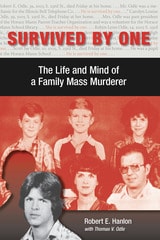
On November 8, 1985, 18-year-old Tom Odle brutally murdered his parents and three siblings in the small southern Illinois town of Mount Vernon, sending shockwaves throughout the nation. The murder of the Odle family remains one of the most horrific family mass murders in U.S. history. Odle was sentenced to death and, after seventeen years on death row, expected a lethal injection to end his life. However, Illinois governor George Ryan’s moratorium on the death penalty in 2000, and later commutation of all death sentences in 2003, changed Odle’s sentence to natural life.
The commutation of his death sentence was an epiphany for Odle. Prior to the commutation of his death sentence, Odle lived in denial, repressing any feelings about his family and his horrible crime. Following the commutation and the removal of the weight of eventual execution associated with his death sentence, he was confronted with an unfamiliar reality. A future. As a result, he realized that he needed to understand why he murdered his family. He reached out to Dr. Robert Hanlon, a neuropsychologist who had examined him in the past. Dr. Hanlon engaged Odle in a therapeutic process of introspection and self-reflection, which became the basis of their collaboration on this book.
Hanlon tells a gripping story of Odle’s life as an abused child, the life experiences that formed his personality, and his tragic homicidal escalation to mass murder, seamlessly weaving into the narrative Odle’s unadorned reflections of his childhood, finding a new family on death row, and his belief in the powers of redemption.
As our nation attempts to understand the continual mass murders occurring in the U.S., Survived by One sheds some light on the psychological aspects of why and how such acts of extreme carnage may occur. However, Survived by One offers a never-been-told perspective from the mass murderer himself, as he searches for the answers concurrently being asked by the nation and the world.
Surviving Alex
A Mother’s Story of Love, Loss, and AddictionPatricia A. Roos
Rutgers University Press, 2024
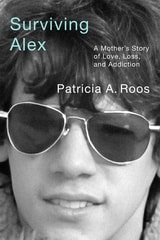
Weaving together a personal narrative and a sociological perspective, Surviving Alex movingly describes how even children from “good families” fall prey to addiction, and recounts the hellish toll it takes on families. Drawing from interviews with Alex’s friends, family members, therapists, teachers, and police officers—as well as files from his stays in hospitals, rehab facilities, and jails—Roos paints a compelling portrait of a young man whose life veered between happiness, anxiety, success, and despair. And as she explores how a punitive system failed her son, she calls for a community of action that would improve care for substance users and reduce addiction, realigning public health policy to address the overdose crisis.
Surviving Madness
A Therapist's Own StoryBetty Berzon
University of Wisconsin Press, 2002
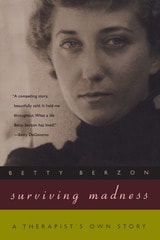
Betty Berzon, renowned psychotherapist and author of the bestselling book Permanent Partners, tells her own incredible story here. Berzon’s journey from psychiatric patient on suicide watch—her wrists tethered to the bed rails in a locked hospital ward—to her present role as a groundbreaking therapist and gay pioneer makes for purely compelling reading.
Berzon is recognized today as a trailblazing co-founder of a number of important lesbian and gay organizations and one of the first therapists to focus on means of developing healthy gay relationships and overcoming homophobia. Her sometimes bumpy road to success never fails to fascinate. Along the way she encounters such luminaries as Anaïs Nin, Eleanor Roosevelt, the Sitwells, Evelyn Hooker, and Paul Monette. Her recollections here provide a collective portrait of her fellow pioneers and a stirring lesson in twentieth-century history.
It is, however, the intimate story of Berzon’s own private passage toward self-discovery—from mental breakdown and suicide attempts, through hospitalization, eventual triumphant recovery, and her own coming out as an open lesbian at the age of forty—that makes this memoir an urgent, insightful, and deeply emotional testament to human survival.
Surviving Mexico's Dirty War
A Political Prisoner's MemoirAlberto Ulloa Bornemann, edited by Arthur Schmidt and Aurora Camacho de Schmidt
Temple University Press, 2007
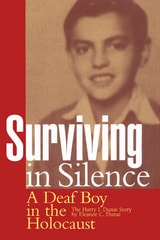
Surviving in Silence
A Deaf Boy in the Holocaust, The Harry I. Dunai StoryEleanor C. Dunai
Gallaudet University Press, 2002
Izrael Zachariah Deutsch was born on March 15, 1934, in Komjata, Czechoslovakia. The second youngest child, Izrael lived a bucolic existence with nine brothers and sisters on a farm, differing from them only in that he was deaf. When he was six, his mother took him to Budapest, Hungary, and enrolled him in a Jewish school for deaf children, where he thrived. Soon, however, the Nazi regime in Germany and the Arrow Cross fascists in Hungary destroyed Izrael’s world forever.
Izrael realized that by being both Jewish and deaf, he faced a double threat of being exported to the gas chambers in Poland. But at every lethal junction, he found a way to survive, first by buying and reselling pastries for extra money that later saved his life in the Budapest ghetto. Still, Izrael was close to death from starvation when he was liberated by Russian soldiers on January 18, 1945.
Izrael survived the war only to learn that his parents and two brothers had been murdered by the Nazis. The rest of his brothers and sisters scattered to distant parts of the world. Forced to remain in Budapest, Izrael finished school and became an accomplished machinist. He avoided any part in the Hungarian uprising in 1956 so that he could secure a visa to leave for Sweden. From Sweden he traveled throughout Europe and Israel, using an amazing network of Holocaust survivors, relatives, and deaf friends to ease his journey. He finally settled in Los Angeles, where he married a deaf Jewish woman he had met years before. Along the way, he changed his name from Izrael Deutsch to Harry Dunai.
Surviving the Slaughter
The Ordeal of a Rwandan Refugee in ZaireMarie Beatrice Umutesi; Foreword by Catharine Newbury
University of Wisconsin Press, 2004
Though the world was stunned by the horrific massacres of Tutsi by the Hutu majority in Rwanda beginning in April 1994, there has been little coverage of the reprisals that occurred after the Tutsi gained political power. During this time hundreds of thousands of Hutu were systematically hunted and killed.
Surviving the Slaughter: The Ordeal of a Rwandan Refugee in Zaire is the eyewitness account of Marie Béatrice Umutesi. She tells of life in the refugee camps in Zaire and her flight across 2000 kilometers on foot. During this forced march, far from the world’s cameras, many Hutu refugees were trampled and murdered. Others died from hunger, exhaustion, and sickness, or simply vanished, ignored by the international community and betrayed by humanitarian organizations. Amidst this brutality, day-to-day suffering, and desperate survival, Umutesi managed to organize the camps to improve the quality of life for women and children.
In this first-hand account of inexplicable brutality, day-to-day suffering, and survival, Marie Béatrice Umutesi sheds light on a backlash of violence that targeted the Hutu refugees of Rwanda after the victory of the Rwandan Patriotic Front in 1994. Umutesi’s documentation of the flight and terror of these years provides the world a veritable account of a history that is still widely unknown. After translations from its original French into three other languages, this important book is available in English for the first time. It is more than a testimony to the lives and humanity lost; it is a call for those politicians, military personnel, and humanitarian organizations responsible for the atrocious crimes—and the devastating silence—to be held accountable.
“Umutesi’s tale, told with honesty and eloquence, is a tribute to the human spirit, a searing indictment of the agents who perpetrated these horrors, and a reproach to those who turned away.”—Catharine Newbury, African Studies Review
“Restores a human dimension that has been lacking in the history of the genocide and massacres in Rwanda.”—Danielle de Lame, African Studies Review
“A vivid account of the grueling nightmare experienced by tens of thousands of Rwandan civilians whom the world had deliberately forsaken. . . . An outstanding call for justice.”—Aloys Habimama, African Studies Review
“A towering work. . . . An epic for our times, a tale to ponder for the lessons it conveys, testimony so powerful and moving that it reaches an unintended literary greatness.”—Jan Vansina, African Studies Review
“Of all the current books and films ten years after the Rwandan genocide, none is more effective than Surviving the Slaughter . . . . This book carries one along, often as if running with the refugees.”—Anne Serafin, Multicultural Review
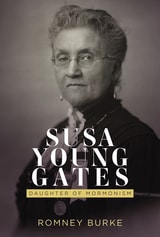
Susa Young Gates
Daughter of MormonismRomney Burke
Signature Books, 2022
After divorcing her first husband, Alma Dunford, the trauma associated with that union was such that she steadfastly refused to mention it ever again. She also lost some of her children over the course of her life and was unable to reconcile her older sister’s departure from the LDS Church and conversion to Catholicism. Yet despite her trials, Susa found fulfillment in her faith through service, as a prolific writer—co-authoring with her daughter Leah Dunford Widtsoe the 1930 biography of her father, Life Story of Brigham Young, founding the Young Women’s Journal in 1889, the Relief Society Magazine in 1915, and in her associations with such prominent women’s advocates such as Susan B. Anthony.
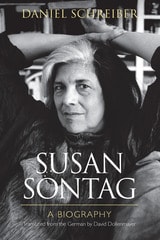
Susan Sontag
A BiographyDaniel Schreiber; Translated from the German by David Dollenmayer
Northwestern University Press, 2014
While known primarily as a cultural critic and novelist, Sontag was also a filmmaker, stage director, and dramatist. It was her status as a pop icon that was unusual for an American intellectual: she was filmed by Andy Warhol and Woody Allen, photographed by Annie Leibovitz and Diane Arbus, and her likeness adorned advertisements for Absolut vodka. Drawing on newly available sources, including interviews with Nadine Gordimer, Robert Wilson, and Sontag’s son, David Rieff, as well as on myriad interviews given by Sontag and her extensive correspondence with her friend and publisher Roger Straus, Schreiber explores the roles that Sontag played in influencing American public cultural and political conversations.
Sustainability
A Love StoryNicole Walker
The Ohio State University Press, 2018
This book is for the burnt-out environmentalist, the lazy environmentalist, the would-be environmentalist. It’s for those who believe the planet is dying. For those who believe they are dying. And for those who question what it means to live and love sustainably, and maybe even with hope.
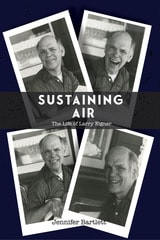
Sustaining Air
The Life of Larry EignerJennifer Bartlett
University of Alabama Press, 2023
The biography of a poet seminal to postwar American poetry
The poet Larry Eigner (1927–1996) was a key figure in New American poetry, which grew out of the Black Mountain School and San Francisco Renaissance, and a major influence on the Language poets. Eigner also had cerebral palsy as the result of an accident at birth. It is fortuitous that the poet lived his life in two locations vibrant in both poetics and disability activism. Except for brief periods attending camp and school, he lived with his parents in Swampscott, Massachusetts, until the age of 51. Later, he moved to Berkeley, California, at the height of the disability rights movement. In the 1950s, Eigner attended Camp Jened, which later became famous in the film Crip Camp.
Bartlett’s biography covers every significant phase of Eigner’s life: his childhood and young adulthood when he began typing poems with one finger on the manual typewriter that was a bar mitzvah gift; his first publications and the maturation of his poetic interests through correspondence with poets of the era; and after his move to Berkeley, the ever-expanding circle of friends, poets, caretakers, and collaborators he established there. The result is a deeply insightful account of an utterly distinctive voice whose influence widens and deepens with each new generation that encounters him.
Sweet Dreams
The World of Patsy ClineEdited by Warren R. Hofstra
University of Illinois Press, 2013
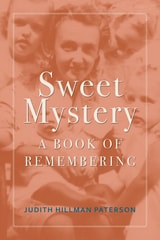
Sweet Mystery
A Book of RememberingJudith Hillman Paterson
University of Alabama Press, 2020
Judith Paterson was just nine years old in 1946 when her mother died of a virulent combination of alcoholism and mental illness at the age of 31. Sweet Mystery: A Book of Remembering is Paterson’s harrowing account of the memories of her mother, told with eloquence and understanding. Set largely in Montgomery, Alabama, the story plays out against a backdrop of relatives troubled almost as much by southern conflicts over race and class as by the fallout from a long family history of drinking, denial, and mental illness.
While rich in the details and flavor of small-town life in the South during the 1940s, Sweet Mystery transcends time and regionalism to evoke universal American themes. Ultimately, it confirms the damaging effects of early trauma on children as well as the innate and familial strengths that enable some children to survive, grow up, and heal.
Originally published in 1996 to critical acclaim in the national media, Sweet Mystery was called “a beautifully written, excruciating collision of form and emotion, joy and pain, willpower and self-examination, control and surrender” by the Washington Post. This edition contains a new afterword written by the author as well as a list of suggested readings.
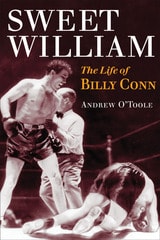
Sweet William
The Life of Billy ConnAndrew O'Toole
University of Illinois Press, 2009
An Irish working-class hero of Pittsburgh, Billy Conn captured hearts through his ebullient personality, stellar boxing record, and good looks. A light heavyweight boxing champion best remembered for his sensational near-defeat of heavyweight champion Joe Louis in 1941, Conn is still regarded as one of the greatest fighters of all time. Andrew O'Toole chronicles the boxing, Hollywood, and army careers of "the Pittsburgh Kid" by drawing from newspaper accounts, Billy's personal scrapbooks, and fascinating interviews with family. Presenting an intimate look at the champion's relationships with his girlfriend, manager, and rivals, O'Toole compellingly captures the personal life of a public icon and the pageantry of sports during the 1930s and '40s.
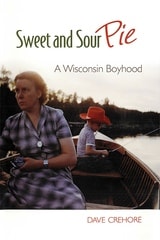
Sweet and Sour Pie
A Wisconsin BoyhoodDave Crehore
University of Wisconsin Press, 2009
Crehore’s stories of his youth in 1950s Wisconsin are peppered with engaging characters and a quiet wit. A grouse-hunting expedition goes awry when an eccentric British businessman bags an escaped bantam rooster with a landing net. Crehore's great-grandfather gets in trouble one Christmas when he sneaks a whoopee-cushion under a guest’s seat. The elderly Frau Blau gets trapped in an outhouse by a shady auctioneer during a farm sale. Through all the adventures—and misadventures—in a small town and in the great outdoors of Wisconsin, family is always at the center. This gently humorous look back at a baby-boomer’s awakening to adulthood will be appreciated by members of any generation.
Finalist, Humor, Midwest Book Awards
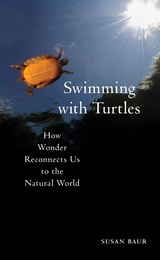
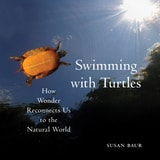
Swimming with Turtles
How Wonder Reconnects Us to the Natural WorldSusan Baur
University of Massachusetts Press, 2026
A memoir of discovery, loss, and wonder that shows us how to slow down
When psychologist and author Susan Baur first slipped into a Cape Cod pond with a snorkel, she wasn’t looking for transformation, just a swim. But beneath the surface, she discovered something extraordinary: minnows hiding among water lilies; fresh-water jellies like jewels and—most striking of all—painted, musk, and snapping turtles. Whether the turtles were buried in mud, teetering on a submerged branch, or drifting like ancient astronauts, they pulled her into a mysterious happiness she could not explain.
Learning to move slowly enough to see them became both her new discipline and her greatest joy. Each dive required patience, curiosity, and humility, and she learned to read the water, follow a subtle shadow, and anticipate the turtles’ rhythms without disturbing their world. As she mastered the art of swimming with turtles, Baur also fell in love with an older man whose companionship deepened her connection to the natural world. When he passed away, grief drove her deeper into the water. There, among the turtles, she found solace and purpose: a reason to keep diving, looking, and learning.
Over nearly two decades, Baur became a self-taught naturalist, children’s author (of The Turtle Sisters series), and unlikely environmental advocate, founding Old Ladies Against Underwater Garbage to protect the ponds she had grown to love. With humor, heart, and vivid observation, Baur shows that wonder isn’t reserved for the young or the lucky—it waits beneath the surface for anyone willing to slow down, look closely, and stay a while.
Swimming with Turtles
How Wonder Reconnects Us to the Natural WorldWritten by Susan Baur. Narrated by Moe Egan
University of Massachusetts Press, 2026
A memoir of discovery, loss, and wonder that shows us how to slow down
When psychologist and author Susan Baur first slipped into a Cape Cod pond with a snorkel, she wasn’t looking for transformation, just a swim. But beneath the surface, she discovered something extraordinary: minnows hiding among water lilies; fresh-water jellies like jewels and—most striking of all—painted, musk, and snapping turtles. Whether the turtles were buried in mud, teetering on a submerged branch, or drifting like ancient astronauts, they pulled her into a mysterious happiness she could not explain.
Learning to move slowly enough to see them became both her new discipline and her greatest joy. Each dive required patience, curiosity, and humility, and she learned to read the water, follow a subtle shadow, and anticipate the turtles’ rhythms without disturbing their world. As she mastered the art of swimming with turtles, Baur also fell in love with an older man whose companionship deepened her connection to the natural world. When he passed away, grief drove her deeper into the water. There, among the turtles, she found solace and purpose: a reason to keep diving, looking, and learning.
Over nearly two decades, Baur became a self-taught naturalist, children’s author (of The Turtle Sisters series), and unlikely environmental advocate, founding Old Ladies Against Underwater Garbage to protect the ponds she had grown to love. With humor, heart, and vivid observation, Baur shows that wonder isn’t reserved for the young or the lucky—it waits beneath the surface for anyone willing to slow down, look closely, and stay a while.

Swing Low, Sweet Chariot
The Mortality Cost of Colonizing Liberia in the Nineteenth CenturyAntonio McDaniel
University of Chicago Press, 1995
McDaniel compares the mortality rates of the emigrants to those of other migrants to tropical areas. He finds that, contrary to popular belief, black immigrants during this period died at unprecedented rates. Moreover, he shows that though the emigrant's mortality levels were exceptionally high, their mortality patterns were consistent with those of other populations.
McDaniel concludes that the greater the variance between the environment left and the environment entered, the higher the probability of contracting a new disease, and, in some cases, of death from these diseases. Additionally, a migrant's health can be affected by dietary changes, differences in local pathogens, inappropriate immunities, and increased risk of accidents due to unfamiliar surroundings.

Swooning Beauty
A Memoir Of PleasureJoanna Frueh
University of Nevada Press, 2006
When her parents died and her marriage disintegrated within the span of a few months, art historian and performance artist Joanna Frueh entered a painful period of grief and mourning. This book is about how she healed herself and in the process explored the range of her potential as a woman.Swooning Beauty is an intimate memoir of discovery and healing. Frueh’s path to recovery lay through a profound examination of her intuitions, desires, fantasies, dreams, and emotions, her capacity for pleasure—visual, sensual, intellectual, gastronomic, and erotic—and her sense of her own heroic female identity. Hers is the passionate voice of a creative, intelligent woman scrutinizing the nature of love in all its forms and the ways of being that make us free, flexible, more fully real and more fully human. The result is an engaging view into the rich and colorful inner life of a woman at the threshold of middle age, of the blossoming of mind and spirit that comes after suffering and self-realization. Pleasure, she concludes, “is the absence of lack. Self-love is a necessary plenitude. Vigilance in love brings us freedom. Freedom is not an absolute whose attainment is humanly impossible. Yogis say that the self that is not ego is free. That self is the spacious heart, the spacious mind.” Frueh offers us wisdom and comfort for the journey into middle age, and the deep pleasure of encountering a generous, lively spirit and a remarkably spacious mind.

Sybil Thorndike
A Star Of LifeJonathan Croall
Haus Publishing, 2009

Sylvia Pankhurst
Suffragette, Socialist and Scourge of EmpireKatherine Connelly
Pluto Press, 2013
From militant suffragette at the beginning of the twentieth century to campaigner against colonialism in Africa after the Second World War, Sylvia Pankhurst dedicated her life to fighting oppression and injustice.
In this vivid biography Katherine Connelly examines Pankhurst’s role at the forefront of significant developments in the history of radical politics. She guides us through Pankhurst's construction of a suffragette militancy which put working-class women at the heart of the struggle, her championing of the Bolshevik Revolution and her clandestine attempts to sabotage the actions of the British state, as well as her early identification of the dangers of Fascism.
The book explores the dilemmas, debates and often painful personal consequences faced by Pankhurst which were played out in her art, writings and activism. It argues that far from being an advocate of disparate causes, Pankhurst’s campaigns were united by an essential continuity which hold vital lessons for achieving social change. This lively and accessible biography presents Pankhurst as a courageous and inspiring campaigner, of huge relevance to those engaged in social movements today.
Syracuse
Sicily's City of StoriesJoachim Sartorius
Haus Publishing, 2026
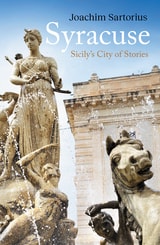
Twenty-five hundred years ago, the city of Syracuse on the eastern coast of Sicily was, for the Ancient Greeks, one of the centers of the classical world. It was in Syracuse that Aeschylus premiered his plays, and to Syracuse that Plato would visit from Athens, where the tyrant Dionysius bought Euripides's lyre at auction, and the languishing nymph Arethusa hid in the papyrus grove.
Living in the city, the poet Joachim Sartorius learned that this history and myth are still present today. At Sartorius's side, we walk with nymphs and cyclops through the old town of Ortigia and meet the people of the city: its notables, police officers, artists, and barbers.
Unraveling the depths of Sicilian history and bringing the juxtaposition, superimposition, and commingling of cultures, styles, and attitudes to life, Sartorius shows a city of ancient luminosity, bringing us, through the baroque, to the contemporary world.