Results by title
5448 books match the query 'History and criticism' and 403 start with s
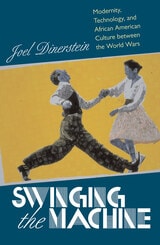
Swinging the Machine
Modernity, Technology, and African American Culture between the World WarsJoel Dinerstein
University of Massachusetts Press, 2003
In any age and any given society, cultural practices reflect the material circumstances of people's everyday lives. According to Joel Dinerstein, it was no different in America between the two World Wars—an era sometimes known as the “machine age”—when innovative forms of music and dance helped a newly urbanized population cope with the increased mechanization of modern life. Grand spectacles such as the Ziegfeld Follies and the movies of Busby Berkeley captured the American ethos of mass production, with chorus girls as the cogs of these fast, flowing pleasure vehicles.
Yet it was African American culture, Dinerstein argues, that ultimately provided the means of aesthetic adaptation to the accelerated tempo of modernity. Drawing on a legacy of engagement with and resistance to technological change, with deep roots in West African dance and music, black artists developed new cultural forms that sought to humanize machines. In “The Ballad of John Henry,” the epic toast “Shine,” and countless blues songs, African Americans first addressed the challenge of industrialization. Jazz musicians drew on the symbol of the train within this tradition to create a set of train-derived aural motifs and rhythms, harnessing mechanical power to cultural forms. Tap dance and the lindy hop brought machine aesthetics to the human body, while the new rhythm section of big band swing mimicked the industrial soundscape of northern cities. In Dinerstein's view, the capacity of these artistic innovations to replicate the inherent qualities of the machine-speed, power, repetition, flow, precision-helps explain both their enormous popularity and social function in American life.
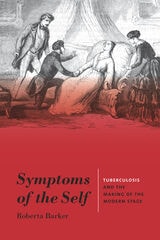
Symptoms of the Self
Tuberculosis and the Making of the Modern StageRoberta Barker
University of Iowa Press, 2022
Symptoms of the Self offers the first full study of the stage consumptive. In the nineteenth and early twentieth centuries in France, Britain, and North America, tuberculosis was a leading killer. Its famous dramatic and operatic victims—Marguerite Gautier in La Dame aux Camélias and her avatar Violetta in La Traviata, Mimì in La Bohème, Little Eva in Uncle Tom’s Cabin, and Edmund Tyrone in Long Day’s Journey into Night, to name but a few—are among the most iconic figures of the Western stage. Its classic symptoms, the cough and the blood-stained handkerchief, have become global performance shorthand for life-threatening illness.
The consumptive character became a vehicle through which standards of health, beauty, and virtue were imposed; constructions of class, gender, and sexuality were debated; the boundaries of nationhood were transgressed or maintained; and an exceedingly fragile whiteness was held up as a dominant social ideal. By telling the story of tuberculosis on the transatlantic stage, Symptoms of the Self uncovers some of the wellsprings of modern Western theatrical practice—and of ideas about the self that still affect the way human beings live and die.
Syncopations
The Stress of Innovation in Contemporary American PoetryJed Rasula
University of Alabama Press, 2004
Syncopations is an analysis of the sustaining vitality behind contemporary American poetry from 1975 to the present day by one of the most astute observers and critics in the field. The 12 essays reflect Jed Rasula’s nearly 30 years of advocacy on behalf of “opening the field” of American poetry.
From the Beats and the Black Mountain poets in the 1950s and 1960s to the impact of language poetry, the specter of an avant-garde has haunted the administrative centers of poetic conservatism. But the very concept of avant-garde is misleading, implying organized assault. Incentives for change can be traced to other factors, including the increased participation of women, critical theory’s self-reflection, and a growing interest in the book as a unit of composition. Syncopations addresses these and other issues evident in the work of such poets and critics as Clayton Eshleman, Marjorie Perloff, Ronald Johnson, Clark Coolidge, Nathaniel Mackey, and Robin Blaser. Its chapters range in modes and include close readings, sociological analysis, philosophical-aesthetic meditations, and career appraisals.
By examining both exemplary innovators and the social context in which innovation is either resisted, acclaimed, or taken for granted, Rasula delivers an important conceptual chronicle of the promise of American poetry.