Results by title
193 books match the query '1945-' and 46 start with t

Tattered Kimonos in Japan
Remaking Lives from Memories of World War IIRobert Rand
University of Alabama Press, 2024
Examines Japan’s war generation—Japanese men and women who survived World War Two and rebuilt their lives from memories of that conflict.
Since John Hersey’s Hiroshima—the classic account, published in 1946, of the aftermath of the atomic bombing of that city—very few books have examined the meaning and impact of World War II through the eyes of Japanese men and women who survived that conflict. Tattered Kimonos in Japan does just that: It is an intimate journey into contemporary Japan from the perspective of the generation of Japanese soldiers and civilians who survived World War II, by a writer whose American father and Japanese father-in-law fought on opposite sides of the conflict.
The author, a former NPR senior editor, is Jewish, and he approaches the subject with the sensibilities of having grown up in a community of Holocaust survivors. Mindful of the power of victimhood, memory, and shared suffering, he travels across Japan, including Hiroshima and Nagasaki, meeting a compelling group of men and women whose lives, even now, are defined by the trauma of war, and by lingering questions of responsibility and repentance for Japan’s wartime aggression.
The image of a tattered kimono from Hiroshima is the thread that drives the narrative arc of this emotional story about a writer’s encounter with history, inside the Japan of his father’s generation, on the other side of his father’s war. This is a book about history with elements of family memoir. It offers a fresh and truly unique perspective for readers interested in World War II, Japan, or Judaica; readers seeking cross-cultural journeys; and readers intrigued by Japanese culture, particularly the kimono.

Terence Davies
Michael Koresky
University of Illinois Press, 2014
Film critic Michael Koresky explores the unique emotional tenor of Davies's work by focusing on four paradoxes within the director's oeuvre: films that are autobiographical yet fictional; melancholy yet elating; conservative in tone and theme yet radically constructed; and obsessed with the passing of time yet frozen in time and space. Through these contradictions, the films' intricate designs reveal a cumulative, deeply personal meditation on the self. Koresky also analyzes how Davies's ongoing negotiation of--and struggle with--questions of identity related to his past and his homosexuality imbue the details and jarring juxtapositions in his films with a queer sensibility, which is too often overlooked due to the complexity of Davies's work and his unfashionable ambivalence toward his own sexual orientation.
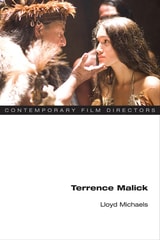
Terrence Malick
Lloyd Michaels
University of Illinois Press, 2008
For a director who has made a limited number of feature films over four-plus decades, Terrence Malick sustains an extraordinary reputation as one of America’s most original and independent directors. Lloyd Michaels analyzes Malick’s first four features in depth, emphasizing both repetitive formal techniques such as voiceover and long lens cinematography as well as recurrent themes drawn from the director’s academic training in modern philosophy. Like Heidegger, Malick seems to regard the human experience of nature as a mystery revealed primarily through moods rather than cognition. Like Wittgenstein, he is less concerned with apprehending the world than with simply acknowledging its beingness
Michaels's critical approach explores Malick’s synthesis of the romance of mythic American experience and the aesthetics of European art film. He pays particular attention to paradigmatic moments: the billboard sequence in Badlands, the opening credits for Days of Heaven, the philosophical colloquies between Witt and Welsh in The Thin Red Line, and the epilogue of The New World. Michaels also sheds light on the two dark decades separating Days of Heaven from The Thin Red Line, when the director mostly lived as an expatriate in Paris. Two 1975 interviews with the famously elusive Malick round out the volume.
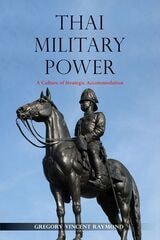
Thai Military Power
A Culture of Strategic AccommodationGregory Vincent Raymond
National University of Singapore Press, 2018

The ASEAN Miracle
A Catalyst for PeaceKishore Mahbubani and Jeffery Sng
National University of Singapore Press, 2017
In 1967, leaders from Indonesia, Malaysia, the Philippines, Singapore, and Thailand struck a landmark agreement, forming ASEAN. They had realized that political and economic cooperation would bring greater stability and prosperity to the region. Fifty years and five additional countries later, the alliance has remained one of the world’s most successful collaborations. Kishore Mahbubani and Jeffery Sng explain how this partnership has benefited the ten member countries and why it should serve as a model for other regions of the world, challenging our assumptions about international cooperation. As the world turns to Asia and the United States and China jostle for dominance, the ASEAN region will have an undeniably powerful role in shaping our global systems. Mahbubani and Sng offer an important primer for understanding this immensely successful—and woefully underappreciated—regional organization.

The Aesthetics of Mythmaking in German Postwar Culture
André Fischer
Northwestern University Press, 2024
Myths are a central part of our reality. But merely debunking them lets us forget why they are created in the first place and why we need them. André Fischer draws on key examples from German postwar culture, from novelists Hans Henny Jahnn and Hubert Fichte, to sculptor and performance artist Joseph Beuys, and filmmaker Werner Herzog, to show that mythmaking is an indispensable human practice in times of crisis.
Against the background of mythologies based in nineteenth-century romanticism and their ideological continuation in Nazism, fresh forms of mythmaking in the narrative, visual, and performative arts emerged as an aesthetic paradigm in postwar modernism. Boldly rewriting the cultural history of an era and setting in transition, The Aesthetics of Mythmaking in German Postwar Culture counters the predominant narrative of an exclusively rational Vergangenheitsbewältigung (“coming to terms with the past”). Far from being merely reactionary, the turn toward myth offered a dimension of existential orientation that had been neglected by other influential aesthetic paradigms of the postwar period. Fischer’s wide-ranging, transmedia account offers an inclusive perspective on myth beyond storytelling and instead develops mythopoesis as a formal strategy of modernism at large.

The Aftermath of War
Jean-Paul Sartre
Seagull Books, 2008
The American Economy in Transition
Edited by Martin Feldstein
University of Chicago Press, 1980
This unusual volume marks the sixtieth anniversary of the National Bureau of Economic Research. In contrast to the technical and specialized character of most NBER studies, the current book is designed to provide the general reader with a broad and critical overview of the American economy. The result is a volume of essays that range from monetary policy to productivity development, from population change to international trade.
The Art of Return
The Sixties and Contemporary CultureJames Meyer
University of Chicago Press, 2019
In this innovative work, James Meyer turns to art criticism, theory, memoir, and fiction to examine the fascination with the long sixties and contemporary expressions of these cultural memories across the globe. Meyer draws on a diverse range of cultural objects that reimagine this revolutionary era stretching from the 1950s to the 1970s, including reenactments of civil rights, antiwar, and feminist marches, paintings, sculptures, photographs, novels, and films. Many of these works were created by artists and writers born during the long Sixties who were driven to understand a monumental era that they missed. These cases show us that the past becomes significant only in relation to our present, and our remembered history never perfectly replicates time past. This, Meyer argues, is precisely what makes our contemporary attachment to the past so important: it provides us a critical opportunity to examine our own relationship to history, memory, and nostalgia.
The Burden of the Past
Problems of Historical Perception in Japan-Korea RelationsKan Kimura; Translated by Marie Speed
University of Michigan Press, 2019
Utilizing Japanese and South Korean newspaper databases to review discussion of the two countries’ disputed historical perceptions from the end of World War II to the present, The Burden of the Past provides readers with the historical framework and the major players involved, offering much-needed clarity on such polarizing issues. By seeing behind the public discourse and political rhetoric, this book offers a firmer footing for a discussion and the steps toward resolution.

The Challenge of Catholic-Jewish Theological Dialogue
Matthew Tapie
Catholic University of America Press, 2024

The Chippewa
Biography of a Wisconsin WaterwayRichard D. Cornell
Wisconsin Historical Society Press, 2017

The Contours of America’s Cold War
Matthew Farish
University of Minnesota Press, 2010
Geographic knowledge generated for the Cold War was a form of power, Farish argues, and it was given an urgency in the panels, advisory boards, and study groups established to address the challenges of an atomic world. He investigates how the scales of the city, the continent, the region, the globe, and, by extension, outer space, were brought together as strategic spaces, categories that provided a cartographic orientation for the Cold War and influenced military deployments, diplomacy, espionage, and finance.
Farish analyzes the surprising range of knowledge production involved in the project of claiming and classifying American space. Backed by military and intelligence funding, physicists and policy makers, soldiers and social scientists came together to study and shape the United States and its place in a divided world.

The Courtship of Eva Eldridge
A Story of Bigamy in the Marriage Mad FiftiesDiane Simmons
University of Iowa Press, 2016
Everyone got married in the 1950s, then moved to the suburbs to have the children of the soon-to-be-famous baby boom. For Americans who had survived the Great Depression and World War II, prosperous married life was a triumph. The unwed were objects of pity, scorn, even suspicion. And so in the 1950s, Eva Eldridge, no longer so young and marginally employed, was the perfect target for handsome Vick, who promised everything: storybook romance, marital respectability, and the lively social life she loved. When he disappeared not long after their honeymoon, she was devastated.
Eva hadn’t always been so vulnerable. Growing up pretty and popular in rural Oregon, she expected to marry young and live a life much like that of her parents, farming and rearing children. But then the United States threw its weight into World War II and as men headed to battle, the government started recruiting women to work in their places. Eva, like many other young women, found that life in the city with plenty of money, personal freedom, and lots of soldiers and sailors eager to pay court was more exhilarating than life down on the farm. After the war, she was ambivalent about getting married and settling down—at least until Vick arrived.
Refusing to believe her brand-new husband had abandoned her, Eva set about tracking down a man who, she now believed, was more damaged by wartime trauma than she had known. But instead of a wounded hero, she found a long string of women much like herself—hard-working, intelligent women who had loved and married Vick and now had no idea where—or even who—he was.
Drawing on a trove of some eight hundred letters and papers, Diane Simmons tells the story of Eva’s poignant struggle to get her dream husband back, as well as the stories of the women who had stood at the altar with Vick before and after her. Eva’s remarkable life illuminates women’s struggle for happiness at a time when marriage—and the perfect husband—meant everything.

The Crisis of Socialism in Europe
Christiane Lemke and Gary Marks, eds.
Duke University Press, 1991
The collection begins with an historical overview of socialism in Western Europe and moves toward the suggestion of a framework for a post-socialist discourse. Among the topics covered are: the birth and death of communism and a regime type in Eastern Europe; how different forms of national communism were smothered by Sovietization in the postwar period; the origins of revolutions in Eastern Europe; the potential for social democracy in Hungary; the role of the Left in a reunified German; and directions for the Left in general.
Contributors. Geoff Eley, Konrad Jarausch, Herbert Kitschelt, Christiane Lemke, Andrei Markovits, Gary Marks, Wolfgang Merkel, Norman Naimark, Iván and Szonja Szelénya, Sharon Wolchik
The Division of Europe after World War II
1946By W. W. Rostow
University of Texas Press, 1981
Should the negotiation of the post–World War II peace treaties in Europe have been pursued separately or should they have been approached within the framework of a general European settlement? The debate on this fundamental foreign policy issue, which has left only faint tracks in the documentary record, is fully explored here for the first time.
W. W. Rostow, in his second book in the Ideas and Action Series, describes a meeting that took place on the eve of the departure of Secretary of State James Byrnes for Paris to participate in treaty negotiations. The meeting was probably the only occasion during 1946 when the peace treaty issue as a whole was explicitly addressed at a high level with lucid alternatives on the table. The plan laid before Secretary of State Byrnes by his senior subordinates, Under Secretary Dean Acheson and Assistant Secretary for Economic Affairs Will Clayton, aimed to halt the movement toward the split of Europe and the emergence of hostile blocs. It outlined an all-European settlement, including economic and security institutions linked to the United Nations. Only one part of the proposal gained Byrnes's support and came to life: the United Nations Economic Commission for Europe in Geneva. But the Acheson-Clayton proposal foreshadowed the Marshall Plan.
The book's larger theme is the process by which the Cold War came about. Rostow's interpretation differs from either conventional or revisionist views, emphasizing as it does the process of incremental deterioration that occurred in 1946 and the role of uncertainty and weakness in American policy.
This second volume in the Ideas and Action Series will interest general readers as well as those with a particular interest in World War II. It should be of special value to political scientists, economists, military historians, and policy makers, and may serve as a case study in a variety of courses.
The Dragon's Tail
Americans Face the Atomic AgeRobert A. Jacobs
University of Massachusetts Press, 2010
When President Harry Truman introduced the atomic bomb to the world in 1945, he described it as a God-given harnessing of “the basic power of the universe.” Six days later a New York Times editorial framed the dilemma of the new Atomic Age for its readers: “Here the long pilgrimage of man on Earth turns towards darkness or towards light.” American nuclear scientists, aware of the dangers their work involved, referred to one of their most critical experiments as “tickling the dragon's tail.”
Even after Hiroshima and Nagasaki, most Americans may not have been sure what an atomic bomb was or how it worked. But they did sense that it had fundamentally changed the future of the human race. In this book, Robert Jacobs analyzes the early impact of nuclear weapons on American culture and society. He does so by examining a broad range of stories, or “nuclear narratives,” that sought to come to grips with the implications of the bomb's unprecedented and almost unimaginable power.
Beginning with what he calls the “primary nuclear narrative,” which depicted atomic power as a critical agent of social change that would either destroy the world or transform it for the better, Jacobs explores a variety of common themes and images related to the destructive power of the bomb, the effects of radiation, and ways of surviving nuclear war. He looks at civil defense pamphlets, magazines, novels, and films to recover the stories the U.S. government told its citizens and soldiers as well as those presented in popular culture.
According to Jacobs, this early period of Cold War nuclear culture—from 1945 to the banning of above-ground testing in 1963—was distinctive for two reasons: not only did atmospheric testing make Americans keenly aware of the presence of nuclear weapons in their lives, but radioactive fallout from the tests also made these weapons a serious threat to public health, separate from yet directly linked to the danger of nuclear war.
The End of the Cold War
European Unity, Socialism, and the Shift in Global PowerBogdan Denitch
University of Minnesota Press, 1990
The End of the Cold War was first published in 1990. Minnesota Archive Editions uses digital technology to make long-unavailable books once again accessible, and are published unaltered from the original University of Minnesota Press editions.
Against the backdrop of unprecedented change in the world political and social order, Bogdan Denitch charts the unique opportunities and potential pitfalls that accompany the increased economic and political integration of the European Community. Historically, any move toward unification has had broad ramifications. This, coming as it does in the wake of recent democratic upheavals in Europe, will bring to a close an entire era -- an era of a world dominated by superpowers and the cold war that defined there confrontations.
The European Identity
Historical and Cultural Realities We Cannot DenyStephen Green
Haus Publishing, 2015
Green points out that Europeans can readily define the differences that separate them from others around the globe, but they have yet to clearly define their own similarities across member states. He argues that Europe has something distinctive and vitally important to offer: the experience of a unique journey through centuries of exploration and conflict, errors and lessons, soul-searching and rebuilding—an evolution of universal significance.
Coming at a time when the divisions in European culture have been laid bare by recent financial crises and calls for independence, The European Identity identifies one of the biggest challenges for all of the member states of the European Union.
The European Radical Left
Movements and Parties since the 1960sGiorgos Charalambous
Pluto Press, 2021
Is today’s left really new? How has the European radical left evolved?
Giorgos Charalambous answers these questions by looking at three moments of rapid political change - the late 1960s to late 1970s; the turn of the millennium; and post-2008. He challenges the conventional understanding of a ‘new left’, drawing out continuities with earlier movements and parties.
Charalambous examines the ‘Long ‘68’, symbolised by the May uprisings in France, which saw the rise of new left forces and the widespread criticism by younger radical activists of traditional communist and socialist parties. He puts this side by side with the turn of the millennium when the Global Justice Movement rose to prominence and changed the face of the international left, and also the period after the financial crash of 2008 and the rise of anti-austerity politics which initiated the most recent wave of new left parties such as Podemos in Spain and Syriza in Greece.
With a unique ‘two-level’ perspective, Charalambous approaches the left through both social movements and party politics, looking at identities, rhetoric and organization, and bringing a fresh new approach to radical history, as well as assessing challenges for both activists and scholars.

The Future of the Family
Daniel Patrick Moynihan
Russell Sage Foundation, 2004

The German Problem Transformed
Institutions, Politics, and Foreign Policy, 1945-1995Thomas Banchoff
University of Michigan Press, 1999

The Gold Leaf Lady and Other Parapsychological Investigations
Stephen E. Braude
University of Chicago Press, 2007

The Great Deception
Anglo-American Power and World OrderMark Curtis
Pluto Press, 1998
The Human Meaning of Social Change
Angus and Converse, Philip E. Campbell
Russell Sage Foundation, 1972
The Left Unraveled
Social Democracy & the New Left Challenge in Britain & West GermanyThomas A. Koelble
Duke University Press, 1991
By focusing on the established parties rather than on external developments, Koelble departs from conventional methodology regarding the fortunes of political parties. In examining the fundamental processes of decision making and coalition building within the SPD and the Labour Party, he argues that it is the organizational structures within parties that shape political results by setting limits, creating opportunities, and determining strategies.

The Long Détente
Changing Concepts of Security and Cooperation in Europe, 1950s–1980sPoul Villaume
Central European University Press, 2017
The Macroeconomics of Populism in Latin America
Edited by Rudiger Dornbusch and Sebastian Edwards
University of Chicago Press, 1991
Economists and political scientists from the United States and Latin America detail in this volume how and why such programs go wrong and what leads policymakers to repeatedly adopt these policies despite a history of failure. Authors examine this pattern in Argentina, Brazil, Chile, Mexico, Nicaragua, and Peru—and show how Colombia managed to avoid it. Despite differences in how each country implemented its policies, the macroeconomic consequences were remarkably similar.
Scholars of Latin America will find this work a valuable resource, offering a distinctive macroeconomic perspective on the continuing controversy over the dynamics of populism.

The Madisonian Turn
Political Parties and Parliamentary Democracy in Nordic EuropeTorbjörn Bergman and Kaare Strøm, editors
University of Michigan Press, 2013
"The Madisonian Turn is an outstanding assessment of the functioning of democratic institutions in the Nordic countries. If democracy is in trouble in Scandinavia, then it is surely facing problems everywhere, so the book will be read carefully by those concerned about contemporary governance in all modern democracies."
---Michael Gallagher, Trinity College, Dublin
"This welcome and timely re-evaluation of Nordic politics constitutes a major contribution to comparative government, and is likely to stand as the definitive treatment of politics in the region for many years to come."
---Peter Mair, European University Institute
"This book is unique in its comparative scope and the wealth of information on the state of parliamentary democracy in the Nordic countries. It is particularly useful for the comparativists who do not come from these countries, because the original literature which it covers in detail is often not accessible for the English-speaking audience."
---Hanspeter Kriesi, University of Zurich
"The strength of The Madisonian Turn is to interface detailed empirical evidence on the dynamics of democratic politics in Scandinavia with an elaboration and test of rival theories of change in the politics of postindustrial democracies. This book is an inspiration for students of Northern Europe, but also for scholars of comparative legislatures and political parties more generally."
---Herbert Kitschelt, Duke University
Parliamentary democracy is the most common regime type in the contemporary political world, but the quality of governance depends on effective parliamentary oversight and strong political parties. Denmark, Finland, Iceland, Norway, and Sweden have traditionally been strongholds of parliamentary democracy. In recent years, however, critics have suggested that new challenges such as weakened popular attachment, the advent of cartel parties, the judicialization of politics, and European integration have threatened the institutions of parliamentary democracy in the Nordic region.
This volume examines these claims and their implications. The authors find that the Nordic states have moved away from their previous resemblance to a Westminster model toward a form of parliamentary democracy with more separation-of-powers features---a Madisonian model. These features are evident both in vertical power relations (e.g., relations with the European Union) and horizontal ones (e.g., increasingly independent courts and central banks). Yet these developments are far from uniform and demonstrate that there may be different responses to the political challenges faced by contemporary Western democracies.
Torbjörn Bergman is Professor of Political Science at Umeå University, Sweden.
Kaare Strøm is Professor of Political Science at the University of California, San Diego.
Jacket Credit: Heidi Hobde Dailey

The Metropolitan Frontier
Cities in the Modern American WestCarl Abbott
University of Arizona Press, 1993
The Metropolitan Frontier places this last half-century of Western history in its urban context, making it the first comprehensive overview of urban growth in the region. Integrating the urban experience of all nineteen Western states, Carl Abbott ranges for evidence from Honolulu to Houston and from Fargo to Fairbanks to show how Western cities organize the region's vast spaces and connect them to the even larger sphere of the world economy. His survey moves from economic change to social and political response, examining the initial boom of the 1940s, the process of change in the following decades, and the ultimate impact of Western cities on their environments, on the Western regional character, and on national identity.
Today, a steadily decreasing number of Western workers are engaged in rural industries, but Western cities continue to grow. As ecological and social crises begin to affect those cities, Abbott’s study will prove required reading for historians, geographers, sociologists, urban planners, and all citizens concerned with America’s future.
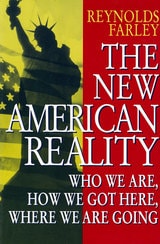
The New American Reality
Who We Are, How We Got Here, Where We Are GoingReynolds Farley
Russell Sage Foundation, 1996

The Newark Frontier
Community Action in the Great SocietyMark Krasovic
University of Chicago Press, 2016
The Newark Frontier shows how, during the Great Society, urban liberalism adapted and grew, defining itself less by centralized programs and ideals than by administrative innovation and the small-scale, personal interactions generated by community action programs, investigative commissions, and police-community relations projects. Paying particular attention to the fine-grained experiences of Newark residents, Krasovic reveals that this liberalism was rooted in an ethic of experimentation and local knowledge. He illustrates this with stories of innovation within government offices, the dynamic encounters between local activists and state agencies, and the unlikely alliances among nominal enemies. Krasovic makes clear that postwar liberalism’s eventual fate had as much to do with the experiments waged in Newark as it did with the violence that rocked the city in the summer of 1967.

The Other Fifties
Interrogating Midcentury American IconsJoel Foreman
University of Illinois Press, 1997
conventional norms and values. Brushing away the haze of an era, The Other Fifties will help readers understand the decade not as placid or repressed, but as a time when emancipatory desires struggled to articulate themselves.
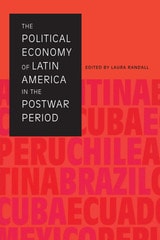
The Political Economy of Latin America in the Postwar Period
Edited by Laura Randall
University of Texas Press, 1998
The historic and increasing interdependence of the Latin American and U.S. economies makes an understanding of the political economies of Latin American nations particularly timely and important. After World War II, many nations initially implemented import substituting industrialization policies. Their outcomes, and the shift in policies, are related to the domestic policies and world economic conditions that led to government deficits, inflation, foreign borrowing, debt renegotiation, and renewed emphasis on common markets and other devices to stimulate trade and investment.
In The Political Economy of Latin America in the Postwar Period, important policy measures are evaluated, such as indexation of prices and contracts; special provisions for financing the government through the Central Bank; stabilization; and deregulation of the economy.
The introduction presents trends in Latin American growth and the factors that influence them. This is followed by parallel studies of the economic development of Argentina, Brazil, Chile, Cuba, Ecuador, Mexico, and Peru from 1945 to the mid-1990s. Noted experts bring their considerable experience to analyzing the content and impact of the economic theories that guided policymaking and their effects on output, income, and quality of life.
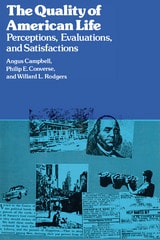
The Quality of American Life
Perceptions, Evaluations, and SatisfactionsAngus Campbell
Russell Sage Foundation, 1976

The Search for Justice
Lawyers in the Civil Rights Revolution, 1950–1975Peter Charles Hoffer
University of Chicago Press, 2019
The Search for Justice is a look the role of the lawyers throughout the period, focusing on one of the central issues of the time: school segregation. The most notable participants to address this issue were the public interest lawyers of the NAACP’s Legal Defense Fund, whose counselors brought lawsuits and carried out appeals in state and federal courts over the course of twenty years. But also playing a part in the story were members of the bar who defended Jim Crow laws explicitly or implicitly and, in some cases, also served in state or federal government; lawyers who sat on state and federal benches and heard civil rights cases; and, finally, law professors who analyzed the reasoning of the courts in classrooms and public forums removed from the fray. With rich, copiously researched detail, Hoffer takes readers through the interactions of these groups, setting their activities not only in the context of the civil rights movement but also of their full political and legal legacies, including the growth of corporate private legal practice after World War II and the expansion of the role of law professors in public discourse, particularly with the New Deal. Seeing the civil rights era through the lens of law enables us to understand for the first time the many ways in which lawyers affected the course and outcome of the movement.

The Sign of the Burger
Mcdonald'S And The Culture Of PowerJoe Kincheloe
Temple University Press, 2002
"I didn't want to remain a hick from the mountains... In my cultural naivete I saw McDonald's as a place somehow where modern culture capital could be dispensed. Keeping these memories in mind as years later I monitored scores of conversations about the Golden Arches in the late 1990's, it became apparent that McDonald's is still considered a marker of a modern identity."
So begins a complicated journey into the power of one of the most recognizable signs of American capitalism: The Golden Arches. The Sign of the Burger examines how McDonald's captures our imagination: as a shorthand for explaining the power of American culture; as a symbol of the strength of consumerism; as a bellwether for the condition of labor in a globalized economy; and often, for better or worse, a powerful educational tool that often defines the nature of culture for hundreds of millions the world over.
While many books have offered simple complaints of the power of McDonald's, Joe Kincheloe explores the real ways McDonald's affects us. We see him as a young boy in Appalachia, watching the Golden Arches going up as the—hopeful—arrival of the modern into his rural world. And we travel with him around the world to see how this approach of the modern affects other people, either through excitement or through attempts at resisting McDonald's power, often in unfortunate ways. Through it all, Kincheloe makes clear, with lucidity and depth, the fact that McDonald's growth will in many ways determine both the nature of accepting and protesting its ever-expanding presence in our global world.
postamble();
The Sovereign Trickster
Death and Laughter in the Age of DuterteVicente L. Rafael
Duke University Press, 2022
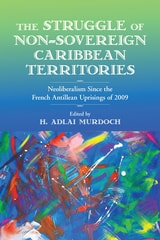
The Struggle of Non-Sovereign Caribbean Territories
Neoliberalism since the French Antillean Uprisings of 2009H. Adlai Murdoch
Rutgers University Press, 2021

The Subject of Murder
Gender, Exceptionality, and the Modern KillerLisa Downing
University of Chicago Press, 2013

The Victory Album
Reflections on the Good Life after the Good WarPhilip D. Beidler
University of Alabama Press, 2010
The Welfare State and Beyond
Success and Problems in ScandinaviaGunnar Heckscher
University of Minnesota Press, 1984
The Welfare State and Beyond was first published in 1984. Minnesota Archive Editions uses digital technology to make long-unavailable books once again accessible, and are published unaltered from the original University of Minnesota Press editions.
The welfare state emerged in a number of industrialized countries after the First World War as a middle ground between capitalism and socialism. The aim of architects of the welfare state was to abolish the injustices and hardships that accompanied capitalism and to do so without wholesale social or economic revolution. Establishment of the welfare state created something close to euphoria among many observers; it was, it seemed, the answer to many, if not all, troubling social questions. But it eventually became obvious that this type of society was not immune to problems.
In The Welfare State and Beyond Gunnar Heckscher examines four Nordic countries—Denmark, Finland, Norway, and Sweden—not to either criticize or defend the welfare state but to shed some light on a number of questions: Has the welfare state achieved what it attempted? Are the results generally held to be satisfactory? What important problems remain unsolved and what types of solutions have been proposed? Although Heckscher has been associated with the Conservative party in Sweden, his objective, clear-eyed analysis cites both the accomplishments of the welfare state and the troubling problems that still await resolution.
The Welfare State in Transition
Reforming the Swedish ModelEdited by Richard B. Freeman, Robert H. Topel, and Birgitta Swedenborg
University of Chicago Press, 1997
This volume presents ten essays that examine Sweden's economic problems from a U.S. perspective. Exploring such diverse topics as income equalization and efficiency, welfare and tax policy, wage determination and unemployment, and international competitiveness and growth, they consider how Sweden's welfare state succeeded in eliminating poverty and became a role model for other countries. They then reflect on Sweden's past economic problems, such as the increase in government spending and the fall in industrial productivity, warning of problems to come. Finally they review the consequences of the collapse of Sweden's economy in the early 1990s, exploring the implications of its efforts to reform its welfare state and reestablish a healthy economy.
This volume will be of interest to policymakers and analysts, social scientists, and economists interested in welfare states.
Through French Windows
An Introduction to France in the NinetiesJames Corbett
University of Michigan Press, 1994

Through the Poet’s Eye
The Travels of Zagajewski, Herbert, and BrodskyBozena Shallcross
Northwestern University Press, 2009
Trams or Tailfins?
Public and Private Prosperity in Postwar West Germany and the United StatesJan L. Logemann
University of Chicago Press, 2012