Results by title
163 books match the query '1945-1989' and 33 start with t
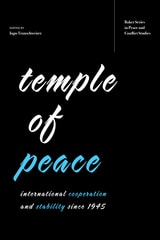
Temple of Peace
International Cooperation and Stability since 1945Ingo Trauschweizer
Ohio University Press, 2021
This collection raises timely questions about peace and stability as it interrogates the past and present status of international relations.
The post–World War II liberal international order, upheld by organizations such as the United Nations, the North Atlantic Treaty Organization, and similar alliances, aspired to ensure decades of collective security, economic stability, and the rule of law. All of this was a negotiated process that required compromise—and yet it did not make for a peaceful world.
When Winston Churchill referred to the UN framework as “the temple of peace” in his famous 1946 Iron Curtain speech, he maintained that international alliances could help provide necessary stability so free people could prosper, both economically and politically. Though the pillars of international order remain in place today, in a world defined as much by populism as protest, leaders in the United States no longer seem inclined to serve as the indispensable power in an alliance framework that is built on shared values, human rights, and an admixture of hard and soft power.
In this book, nine scholars and practitioners of diplomacy explore both the successes and the flaws of international cooperation over the past seventy years. Collectively, the authors seek to address questions about how the liberal international order was built and what challenges it has faced, as well as to offer perspectives on what could be lost in a post-American world.
The American Way of Peace
An InterpretationJan S. Prybyla
University of Missouri Press, 2005
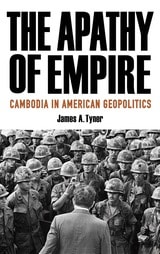
The Apathy of Empire
Cambodia in American GeopoliticsJames A. Tyner
University of Minnesota Press, 2024
What America’s intervention in Cambodia during the Vietnam War reveals about Cold War–era U.S. national security strategy
The Apathy of Empire reveals just how significant Cambodia was to U.S. policy in Indochina during the Vietnam War, broadening the lens to include more than the often-cited incursion in 1970 or the illegal bombing after the Paris Peace Accords in 1973. This theoretically informed and thoroughly documented case study argues that U.S. military intervention in Cambodia revealed America’s efforts to construct a hegemonic spatial world order.
James Tyner documents the shift of America’s post-1945 focus from national defense to national security. He demonstrates that America’s expansionist policies abroad, often bolstered by military power, were not so much about occupying territory but instead constituted the construction of a new normal for the exercise of state power. During the Cold War, Vietnam became the geopolitical lodestar of this unfolding spatial order. And yet America’s grand strategy was one of contradiction: to build a sovereign state (South Vietnam) based on democratic liberalism, it was necessary to protect its boundaries—in effect, to isolate it—through both covert and overt operations in violation of Cambodia’s sovereignty. The latter was deemed necessary for the former.
Questioning reductionist geopolitical understandings of states as central or peripheral, Tyner explores this paradox to rethink the formulation of the Cambodian war as sideshow, revealing it instead as a crucial site for the formation of this new normal.
Retail e-book files for this title are screen-reader friendly.
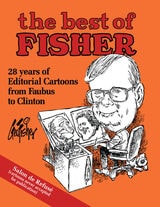
The Best of Fisher
28 years of Editorial Cartoons from Faubus to ClintonGeorge Fisher
University of Arkansas Press, 1993
The Changing American Mind
How and Why American Public Opinion Changed Between 1960 and 1988William G. Mayer
University of Michigan Press, 1992
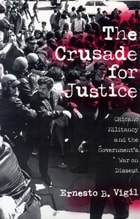
The Crusade for Justice
Chicano Militancy and the Government's War on DissentErnesto B. Vigil
University of Wisconsin Press, 1999
This definitive account of the Chicano movement in 1960s Denver reveals the intolerance and brutality that inspired and accompanied the urban Chicano organization known as the Crusade for Justice. Ernesto Vigil, an expert in the discourse of radical movements of this time, joined the Crusade as a young draft resistor where he met Rodolfo “Corky” Gonzales, the founder of the CFJ. Vigil follows the movement chronologically from Gonzales’s early attempts to fight discrimination as a participant in local democratic politics to his radical stance as an organizer outside mainstream politics.
Drawing extensively upon FBI documentation that became available under the Freedom of Information Act, Vigil exposes massive surveillance of the Crusade for Justice by federal agents and local police and the damaging effects of such methods on ethnic liberation movements. Vigil complements these documents and the story of Gonzales’s development as a radical with the story of his personal involvement in the movement. The Crusade for Justice describes one of the most important Chicano organizations against prejudice.
The Dilemmas of Dissidence in East-Central Europe
Citizen Intellectuals and Philosopher KingsBarbara J. Falk
Central European University Press, 2003
The Dynamics of Nuclear Proliferation
Stephen M. Meyer
University of Chicago Press, 1984
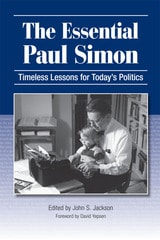
The Essential Paul Simon
Timeless Lessons for Today's PoliticsEdited by John S. Jackson. Foreword by David Yepsen
Southern Illinois University Press, 2012
While Simon covered a broad spectrum of topics in his written works, his mission throughout the years remained the same: to urge his constituents to study and understand issues that affected their daily lives and to make the complexities of politics accessible to the average citizen. An indispensable volume for voters and politicians alike, The Essential Paul Simon compiles some of the most thought-provoking writings from one of the keenest political minds in our nation’s history. Years after their publication, Simon’s eloquent and energetic conversations continue to provide witty, informative guidance through the maze of American politics and inspire the development of spirited public discussion and debate.
Certificate of Excellence from the Illinois State Historical Society, 2013
The First Cold War
The Legacy of Woodrow Wilson in U.S. - Soviet RelationsDonald E. Davis & Eugene P. Trani
University of Missouri Press, 2002
The Foreign and Domestic Dimensions of Modern Warfare
Vietnam, Central America, and Nuclear StrategyHoward Mumford Jones
University of Alabama Press, 1988
An exploration of the nuclear arms race and the dangers arising with the advent of “limited warfare”
After the development of the atomic bomb in 1945, Americans became engaged in a "new kind of war" against totalitarianism. Enemies and objectives slipped out of focus, causing political and military aims to mesh as a struggle to contain communism both at home and abroad encompassed civilians as well as soldiers. In matters relating to Vietnam, Central America, and the nuclear arms race, the domestic and foreign dimensions of each issue became inseparable. Policymakers in Washington had to formulate strategies dictated by "limited war" in their search for peace.
Contributors to this volume demonstrate the multifaceted nature of modern warfare. Robert H. Ferrell establishes the importance of studying military history in understanding the post-World War II era. On Vietnam, Colonel Harry G. Summers, Jr., gives an intriguing argument regarding the U. S. Army; George C. Herring examines how America's decisions in 1954 assured deepened involvement; and Captain Mark Clodfelter uncovers new evidence concerning "Linebacker I." On the home front, Robert F. Burk analyzes the impact of the Cold War on the battle for racial justice; Charles DeBenedetti puts forth a challenging interpretation of the antiwar movement; and James C. Schneider provides perspective on the relationship between the Vietnam War and the Great Society. On Central America, two writers downplay communism in explaining the region's troubles. Ralph Lee Woodward, Jr., fits the Nicaraguan revolution in the long span of history, and Thomas M. Leonard shows how the Reagan administration forced Costa Rica to side with the United States's anti-Sandinista policy. Finally, on nuclear strategy, Donald M. Snow offers a thought-provoking assessment of the "star wars" program, and Daniel S. Papp recommends measures to promote understanding among the superpowers.
These essays demonstrate that the making of foreign policy is immensely complicated, not subject to easy solution or to simple explanation. Despite these complexities, the central objective of policymakers remained clear: to safeguard what was perceived as the national interest.

The Great Deception
Anglo-American Power and World OrderMark Curtis
Pluto Press, 1998

The Hangman's House
Andrea Tompa
Seagull Books, 2020
Our narrator, a teenage “Girl,” observes life through tangled, almost interminable sentences, trying to understand and process the many questions in her life: why her family is falling apart; why her mother has three jobs; why her father becomes an alcoholic; why her grandmother dreams of “Hungarian times”; and, most troubling, why there is persecution all around. Brutal though the times are, Girl’s narration is far from a mere indictment. It is suffused with love, tenderness and irony.
Written by a woman and featuring a young woman narrator, The Hangman's House focuses intently on how women play the principal roles in holding together the resilient fabric of society. Evocative of the celebrated wry humor that distinguishes the best of Hungarian literature, Tompa’s novel is a tour de force that will introduce a brilliant writer to English-language readers.
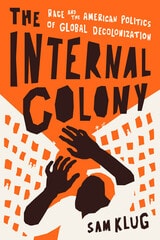
The Internal Colony
Race and the American Politics of Global DecolonizationSam Klug
University of Chicago Press, 2025
In The Internal Colony, Sam Klug reveals the central but underappreciated importance of global decolonization to the divergence between mainstream liberalism and the Black freedom movement in postwar America. Klug reconsiders what has long been seen as a matter of primarily domestic policy in light of a series of debates concerning self-determination, postcolonial economic development, and the meanings of colonialism and decolonization. These debates deeply influenced the discord between Black activists and state policymakers and formed a crucial dividing line in national politics in the 1960s and 1970s.
The result is a history that broadens our understanding of ideological formation—particularly how Americans conceptualized racial power and political economy—by revealing a much wider and more dynamic network of influences. Linking intellectual, political, and social movement history, The Internal Colony illuminates how global decolonization transformed the terms of debate over race and social class in the twentieth-century United States.
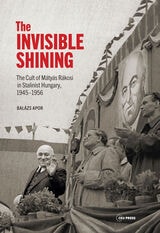
The Invisible Shining
The Cult of Mátyás Rákosi in Stalinist Hungary, 19451956Balazs Apor
Central European University Press, 2018
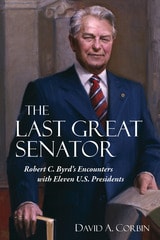
The Last Great Senator
Robert C. Byrd's Encounters with Eleven U.S. PresidentsDavid Corbin
West Virginia University Press, 2015
No person involved in so much history received so little attention as the late Robert C. Byrd, the longest-serving U.S. senator. In The Last Great Senator, David A. Corbin examines Byrd’s complex and fascinating relationships with eleven presidents of the United States, from Eisenhower to Obama. Furthermore, Byrd had an impact on nearly every significant event of the last half century, including the Cold War, the civil rights movement, the Vietnam War, Kennedy’s New Frontier, the Watergate scandal, the Reagan Revolution, the impeachment of President Clinton, and the Iraq War. Holding several Senate records, Byrd also cast more votes than any other U.S. senator.
In his sweeping portrait of this eloquent and persuasive man’s epic life and career, Corbin describes Senator Byrd’s humble background in the coalfields of southern West Virginia (including his brief membership in the Ku Klux Klan). He covers Byrd’s encounters and personal relationship with each president and his effect on events during their administrations. Additionally, the book discusses Byrd’s interactions with other notable senators, including Lyndon B. Johnson, Richard Russell, Mike Mansfield, and especially Robert and Edward Kennedy. Going beyond the boundaries of West Virginia and Capitol Hill, The Last Great Senator presents Byrd in a larger historical context, where he rose to the height of power in America.
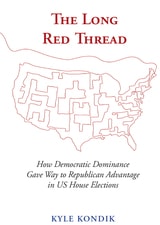
The Long Red Thread
How Democratic Dominance Gave Way to Republican Advantage in US House ElectionsKyle Kondik
Ohio University Press, 2021
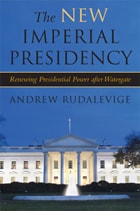
The New Imperial Presidency
Renewing Presidential Power after WatergateAndrew Rudalevige
University of Michigan Press, 2006
"Well written and, while indispensable for college courses, should appeal beyond academic audiences to anyone interested in how well we govern ourselves. . . . I cannot help regarding it as a grand sequel for my own The Imperial Presidency."
---Arthur Schlesinger, Jr.
Has the imperial presidency returned? This question has been on the minds of many contemporary political observers, as recent American administrations have aimed to consolidate power.
In The New Imperial Presidency, Andrew Rudalevige suggests that the congressional framework meant to advise and constrain presidential conduct since Watergate has slowly eroded. Rudalevige describes the evolution of executive power in our separated system of governance. He discusses the abuse of power that prompted what he calls the "resurgence regime" against the imperial presidency and inquires as to how and why---over the three decades that followed Watergate---presidents have regained their standing.
Chief executives have always sought to interpret constitutional powers broadly. The ambitious president can choose from an array of strategies for pushing against congressional authority; finding scant resistance, he will attempt to expand executive control. Rudalevige's important and timely work reminds us that the freedoms secured by our system of checks and balances do not proceed automatically but depend on the exertions of public servants and the citizens they serve. His story confirms the importance of the "living Constitution," a tradition of historical experiences overlaying the text of the Constitution itself.
The Other Arab-Israeli Conflict
Making America's Middle East Policy, from Truman to ReaganSteven L. Spiegel
University of Chicago Press, 1985
The Other Side of the Sixties
Young Americans for Freedom and the Rise of Conservative PoliticsAndrew III, John A
Rutgers University Press, 1997
The Polarizers
Postwar Architects of Our Partisan EraSam Rosenfeld
University of Chicago Press, 2017
In The Polarizers, Sam Rosenfeld details why bipartisanship was seen as a problem in the postwar period and how polarization was then cast as the solution. Republicans and Democrats feared that they were becoming too similar, and that a mushy consensus imperiled their agendas and even American democracy itself. Thus began a deliberate move to match ideology with party label—with the toxic results we now endure. Rosenfeld reveals the specific politicians, intellectuals, and operatives who worked together to heighten partisan discord, showing that our system today is not (solely) a product of gradual structural shifts but of deliberate actions motivated by specific agendas. Rosenfeld reveals that the story of Washington’s transformation is both significantly institutional and driven by grassroots influences on both the left and the right.
The Polarizers brilliantly challenges and overturns our conventional narrative about partisanship, but perhaps most importantly, it points us toward a new consensus: if we deliberately created today’s dysfunctional environment, we can deliberately change it.
The Politics of Information
Problem Definition and the Course of Public Policy in AmericaFrank R. Baumgartner and Bryan D. Jones
University of Chicago Press, 2014
With The Politics of Attention, leading policy scholars Frank R. Baumgartner and Bryan D. Jones demonstrated the central role attention plays in how governments prioritize problems. Now, with The Politics of Information, they turn the focus to the problem-detection process itself, showing how the growth or contraction of government is closely related to how it searches for information and how, as an organization, it analyzes its findings. Better search processes that incorporate more diverse viewpoints lead to more intensive policymaking activity. Similarly, limiting search processes leads to declines in policy making. At the same time, the authors find little evidence that the factors usually thought to be responsible for government expansion—partisan control, changes in presidential leadership, and shifts in public opinion—can be systematically related to the patterns they observe.
Drawing on data tracing the course of American public policy since World War II, Baumgartner and Jones once again deepen our understanding of the dynamics of American policy making.
The Politics of Preference
Democratic Institutions and Affirmative Action in the United States and IndiaSunita Parikh
University of Michigan Press, 1997
The Superpowers and Africa
The Constraints of a Rivalry, 1960-1990Zaki Laidi
University of Chicago Press, 1990
The lapse of European influence in the 1960s left a diplomatic void, which the superpowers rushed to fill. Just as Dien Bien Phû and the Suez crisis thrust Asia and the Near East, respectively, into the diplomatic spotlight, so the Angolan crisis lent a multifaceted cast to Africa's international relations. The ebb and flow of African crises is now linked to the rhythm of superpower relations, but Laidï is quick to warn that Africa's internal political circumstances shape the boundaries for external influence and constrain any efforts of the superpowers to exert total control.
Laidï's provocative study, here in its first English translation, addresses diplomatic strategy, often neglected economic considerations, the growing influence of the Bretton Woods institutions, and the decline of French influence in Africa.
The Supreme Court and McCarthy-Era Repression
One Hundred DecisionsRobert M. Lichtman
University of Illinois Press, 2015
The Two Reconstructions
The Struggle for Black EnfranchisementRichard M. Valelly
University of Chicago Press, 2004
The Reconstruction era marked a huge political leap for African Americans, who rapidly went from the status of slaves to voters and officeholders. Yet this hard-won progress lasted only a few decades. Ultimately a "second reconstruction"—associated with the civil rights movement and the Voting Rights Act—became necessary.
How did the first reconstruction fail so utterly, setting the stage for the complete disenfranchisement of Southern black voters, and why did the second succeed? These are among the questions Richard M. Valelly answers in this fascinating history. The fate of black enfranchisement, he argues, has been closely intertwined with the strengths and constraints of our political institutions. Valelly shows how effective biracial coalitions have been the key to success and incisively traces how and why political parties and the national courts either rewarded or discouraged the formation of coalitions.
Revamping our understanding of American race relations, The Two Reconstructions brilliantly explains a puzzle that lies at the heart of America’s development as a political democracy.
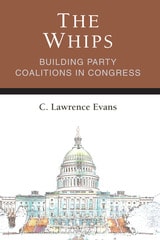
The Whips
Building Party Coalitions in CongressC. Lawrence Evans
University of Michigan Press, 2018
The party whips are essential components of the U.S. legislative system, responsible for marshalling party votes and keeping House and Senate party members in line. In The Whips, C. Lawrence Evans offers a comprehensive exploration of coalition building and legislative strategy in the U.S. House and Senate, ranging from the relatively bipartisan, committee-dominated chambers of the 1950s to the highly polarized congresses of the 2000s. In addition to roll call votes and personal interviews with lawmakers and staff, Evans examines the personal papers of dozens of former leaders of the House and Senate, especially former whips. These records allowed Evans to create a database of nearly 1,500 internal leadership polls on hundreds of significant bills across five decades of recent congressional history.
The result is a rich and sweeping understanding of congressional party leaders at work. Since the whips provide valuable political intelligence, they are essential to understanding how coalitions are forged and deals are made on Capitol Hill.
The World Turned
Essays on Gay History, Politics, and CultureJohn D Emilio
Duke University Press, 2002
In this collection of essays, D’Emilio brings his historian’s eye to bear on these profound changes in American society, culture, and politics. He explores the career of Bayard Rustin, a civil rights leader and pacifist who was openly gay a generation before almost everyone else; the legacy of radical gay and lesbian liberation; the influence of AIDS activist and writer Larry Kramer; the scapegoating of gays and lesbians by the Christian Right; the gay-gene controversy and the debate over whether people are "born gay"; and the explosion of attention focused on queer families. He illuminates the historical roots of contemporary debates over identity politics and explains why the gay community has become, over the last decade, such a visible part of American life.
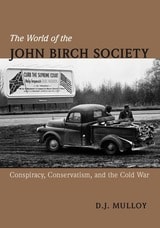
The World of the John Birch Society
Conspiracy, Conservatism, and the Cold WarD. J. Mulloy
Vanderbilt University Press, 2014
Named One of "Six Books for Insight on a Trump Presidency" by the Washington Post
As far as members of the hugely controversial John Birch Society were concerned, the Cold War revealed in stark clarity the loyalties and disloyalties of numerous important Americans, including Dwight Eisenhower, John Kennedy, and Earl Warren. Founded in 1958 as a force for conservative political advocacy, the Society espoused the dangers of enemies foreign and domestic, including the Soviet Union, organizers of the US civil rights movement, and government officials who were deemed "soft" on communism in both the Republican and Democratic parties. Sound familiar? In The World of the John Birch Society, author D. J. Mulloy reveals the tactics of the Society in a way they've never been understood before, allowing the reader to make the connections to contemporary American politics, up to and including the Tea Party. These tactics included organized dissemination of broad-based accusations and innuendo, political brinksmanship within the Republican Party, and frequent doomsday predictions regarding world events. At the heart of the organization was Robert Welch, a charismatic writer and organizer who is revealed to have been the lifeblood of the Society's efforts.
The Society has seen its influence recede from the high-water mark of 1970s, but the organization still exists today. Throughout The World of the John Birch Society, the reader sees the very tenets and practices in play that make the contemporary Tea Party so effective on a local level. Indeed, without the John Birch Society paving the way, the Tea Party may have encountered a dramatically different political terrain on its path to power.

Three-Way Street
Strategic Reciprocity in World PoliticsJoshua S. Goldstein and John R. Freeman
University of Chicago Press, 1990
The authors demonstrate that three major schools of international relations theory—all game-theoretic, psychological, and quantitative-empirical approaches—have all advocated a strategy that employs cooperative initiatives and reciprocal responses in order to elicit cooperation from other countries. Critics have questioned whether such approaches can model how countries actually behave, but Goldstein and Freeman provide a wealth of detailed empirical evidence showing the existence and effectiveness of strategic reciprocity among the three countries between 1948 and 1989. Specifically, they establish that relations among the three countries have improved in recent decades through a "two steps forward, one step back" pattern. Their innovative and remarkably accessible synthesis of leading theoretical perspectives brilliantly illuminates the nature and workings of international cooperation.
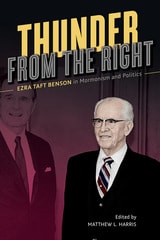
Thunder from the Right
Ezra Taft Benson in Mormonism and PoliticsEdited by Matthew L. Harris
University of Illinois Press, 2019
To Agree or Not to Agree
Leadership, Bargaining, and Arms ControlLisa A. Baglione
University of Michigan Press, 1999
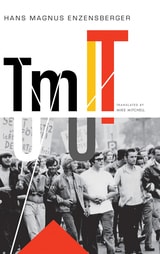
Tumult
Hans Magnus Enzensberger
Seagull Books, 2016
Hans Magnus Enzensberger, widely regarded as Germany’s greatest living poet, was already well known in the 1960s, the tempestuous decade of which Tumult is an autobiographical record. Derived from old papers, notes, jottings, photos, and letters that the poet stumbled upon years later in his attic, the volume is not so much about the man, but rather the many places he visited and people whom he met on his travels through the Soviet Union and Cuba during the 1960s. The book is made up of four long-form pieces written from 1963 to 1970, each episode concluding with a poem and postscript written in 2014. Translated by Mike Mitchell, the book is a lively and deftly written travelogue offering a glimpse into the history of leftist thought. Dedicated to “those who disappeared,” Tumult is a document of that which remains one of humanity’s headiest times.