Results by title
93 books match the query '1946-' and 21 start with t
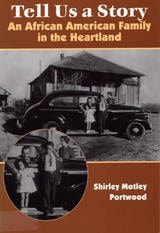
Tell Us a Story
An African American Family in the HeartlandShirley Motley Portwood
Southern Illinois University Press, 2000
Illinois State Historical Society's Certificate of Excellence (2002)
Supplemented by recollections from the present era, Tell Us a Story is a colorful mosaic of African American autobiography and family history set in Springfield, Illinois, and in rural southern Illinois, Missouri, and Arkansas from the 1920s through the 1950s.
Shirley Motley Portwood shares rural, African American family and community history through a collection of vignettes about the Motley family. Initially transcribed accounts of the Motleys’ rich oral history, these stories have been passed among family members for nearly fifty years. In addition to her personal memories, Portwood presents interviews with her father, three brothers, and two sisters plus notes and recollections from their annual family reunions. The result is a composite view of the Motley family.
A historian, Portwood enhances the Motley family story by investigating primary data such as census, marriage, school, and land records, newspaper accounts, city directories, and other sources. The backbone of this saga, however, is oral history gathered from five generations, extending back to Portwood's grandparents, born more than one hundred years ago. Information regarding two earlier generations—her great- grandfather and great-great-grandparents, who were slaves—is based on historical research into state archives, county and local records, plantation records, and manuscript censuses.
A rich source for this material—the Motley family reunions—are week-long retreats where four generations gather at the John Motley house in Burlington, Connecticut, the Portwood home in Godfrey, Illinois, or other locations. Here the Motleys, all natural storytellers, pass on the family traditions. The stories, ranging from humorous to poignant, reveal much about the culture and history of African Americans, especially those from nonurban areas. Like many rural African Americans, the Motleys have a rich and often joyful family history with traditions reaching back to the slave past. They have known the harsh poverty that made even the necessities difficult to obtain and the racial prejudice that divided whites and blacks during the era of Jim Crow segregation and inequality; yet they have kept a tremendous faith in self-improvement through hard work and education.
The Boy from Altheimer
From the Depression to the BoardroomWilliam H. Bowen
University of Arkansas Press, 2006
The Clinton Riddle
Perspectives on the Forty-second PresidentTodd G. Shields
University of Arkansas Press, 2004
The Clinton Wars
The Constitution, Congress, and War PowersRyan C. Hendrickson
Vanderbilt University Press, 2002
Ryan Hendrickson examines the behavior of the Clinton administration and Congress in dealing with the range of American military operations that occurred during the Clinton presidency. He uses a case-study approach, laying out the foreign background and domestic political controversies in separate chapters on Somalia, Haiti, Bosnia, Kosovo, and Iraq. Of special interest after the World Trade Center attacks is the chapter "Terrorism: Usama Bin Laden."
The author analyzes a number of factors that influence the domestic decision-making process. We see the president relying on congressional consultation and approval during periods of political or personal weakness, and, conversely, in better times we see a president with a freer hand. Also influential is the ability of the public to comprehend and support the reasons for a particular action, with troops in Bosnia requiring more explanation than cruise missiles over Baghdad. Consideration is given to the relevance and effectiveness of the War Powers Resolution of 1973, a Watergate-era attempt by Congress to restore what it perceived to be its legitimate constitutional role in the decision to use force abroad.
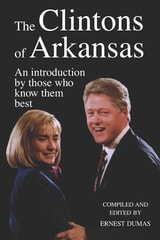
The Clintons of Arkansas
An Introduction by Those Who Know Them BestErnest Dumas
University of Arkansas Press, 1993
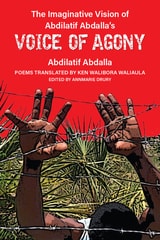
The Imaginative Vision of Abdilatif Abdalla’s Voice of Agony
Abdilatif Abdalla, edited by Annmarie Drury
University of Michigan Press, 2024
Yet, Imaginative Vision is also something more. Even as it centers on a literary translation of a singularly beautiful and influential book of poetry, it tells English-language readers the story of that book. Supporting materials illuminate the circumstances of its inception when Abdilatif, aged 22, was arrested and tried. They explore what the volume meant to its first readers and its affiliations with subsequent extraordinary works of prison literature by Alamin Mazrui and Ngũgĩ wa Thiong’o. They trace its links to literary art of the past, including the nineteenth-century poet Muyaka bin Haji, and to writing that followed. And they explain social and historical aspects of the Swahili coastal world that nurtured Abdilatif’s political engagement and stunning verbal art. Under the editorship of scholar, translator, and poet Annmarie Drury, contributors bring insights from their diverse backgrounds to present contextualizing material that illuminates the poems at the heart of this book.
The Myth of the Imperial Presidency
How Public Opinion Checks the Unilateral ExecutiveDino P. Christenson and Douglas L. Kriner
University of Chicago Press, 2020
With robust empirical data and compelling case studies, the authors reveal the extent to which domestic public opinion limits executive might. Presidents are emboldened to pursue their own agendas when they enjoy strong public support, and constrained when they don’t, since unilateral action risks inciting political pushback, jeopardizing future initiatives, and further eroding their political capital. Although few Americans instinctively recoil against unilateralism, Congress and the courts can sway the public’s view via their criticism of unilateral policies. Thus, other branches can still check the executive branch through political means. As long as presidents are concerned with public opinion, Christenson and Kriner contend that fears of an imperial presidency are overblown.
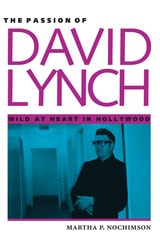
The Passion of David Lynch
Wild at Heart in HollywoodBy Martha P. Nochimson
University of Texas Press, 1997
Filmmaker David Lynch asserts that when he is directing, ninety percent of the time he doesn't know what he is doing. To understand Lynch's films, Martha Nochimson believes, requires a similar method of being open to the subconscious, of resisting the logical reductiveness of language. In this innovative book, she draws on these strategies to offer close readings of Lynch's films, informed by unprecedented, in-depth interviews with Lynch himself.
Nochimson begins with a look at Lynch's visual influences—Jackson Pollock, Francis Bacon, and Edward Hopper—and his links to Alfred Hitchcock and Orson Welles, then moves into the heart of her study, in-depth analyses of Lynch's films and television productions. These include Twin Peaks: Fire Walk with Me, Wild at Heart, Twin Peaks, Blue Velvet, Dune, The Elephant Man, Eraserhead, The Grandmother, The Alphabet, and Lynch's most recent, Lost Highway.
Nochimson's interpretations explode previous misconceptions of Lynch as a deviant filmmaker and misogynist. Instead, she shows how he subverts traditional Hollywood gender roles to offer an optimistic view that love and human connection are really possible.
The Personality of Power
A Theory of Fascism for Anti-fascist LifeBrian Massumi
Duke University Press, 2025
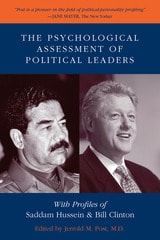
The Psychological Assessment of Political Leaders
With Profiles of Saddam Hussein and Bill ClintonJerrold M. Post, Editor
University of Michigan Press, 2005
In an age when world affairs are powerfully driven by personality, politics require an understanding of what motivates political leaders such as Hussein, Bush, Blair, and bin Laden. Through exacting case studies and the careful sifting of evidence, Jerrold Post and his team of contributors lay out an effective system of at-a-distance evaluation. Observations from political psychology, psycholinguistics and a range of other disciplines join forces to produce comprehensive political and psychological profiles, and a deeper understanding of the volatile influences of personality on global affairs.
Even in this age of free-flowing global information, capital, and people, sovereign states and boundaries remain the hallmark of the international order -- a fact which is especially clear from the events of September 11th and the War on Terrorism.
Jerrold M. Post, M.D., is Professor of Psychiatry, Political Psychology, and International Affairs, and Director of the Political Psychology Program at George Washington University. He is the founder of the CIA's Center for the Analysis of Personality and Political Behavior.
The Queer Limit of Black Memory
Black Lesbian Literature and IrresolutionMatt Richardson
The Ohio State University Press, 2013
The Rise of Trump
America's Authoritarian SpringMatthew C. MacWilliams
Amherst College Press, 2016
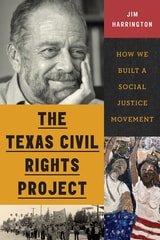
The Texas Civil Rights Project
How We Built a Social Justice MovementJim Harrington
University of Texas Press, 2025
Texas civil rights icon Jim Harrington recounts his lifelong fight for equality, winning major reforms for farmworkers and disabled Texans and helping build a movement for social justice.
Jim Harrington arrived in South Texas in 1973, ready to file class action lawsuits and “save the world.” Over the following fifty years, he built one of Texas’s key civil rights organizations and played an essential role in many of its greatest victories.
Harrington takes readers on his journey from a Midwest seminary to a United Farm Workers office in the Rio Grande Valley and on to founding the Texas Civil Rights Project. He fought for the rights of a wide range of Texans, bringing justice to victims of police brutality, injured farmworkers, silenced students, and people with disabilities excluded from full participation in society, building a movement for social justice, and a family, along the way. These major gains were tempered by heartbreaking losses, and Harrington recounts the difficult work of persevering in the face of injustice.
Framed by a foreword from Judge Lora Livingston and an afterword by Congressman Greg Casar, The Texas Civil Rights Project is at once a history of the struggle for equality over the last fifty years, a celebration of the individuals and grassroots organizations who fought hard to improve the lives of others, and a memoir of a singular force who pushed the Texas justice system to live up to its ideals.
The Thinking Woman
Julienne van Loon
Rutgers University Press, 2021
While women have struggled to gain recognition in the discipline of philosophy, there is no shortage of brilliant female thinkers. What can these women teach us about ethics, politics, and the nature of existence, and how might we relate these big ideas back to the smaller everyday concerns of domestic life, work, play, love, and relationships?
Australian novelist Julienne van Loon goes on a worldwide quest to answer these questions, by engaging with eight world-renowned thinkers who have deep insights on humanity and society: media scholar Laura Kipnis, novelist Siri Hustvedt, political philosopher Nancy Holmstrom, psychoanalytic theorist Julia Kristeva, domestic violence reformer Rosie Batty, peace activist Helen Caldicott, historian Marina Warner, and feminist philosopher Rosi Braidotti. As she speaks to these women, she reflects on her own experiences. Combining the intimacy of a memoir with the intellectual stimulation of a theoretical text, The Thinking Woman draws novel connections between the philosophical, personal, and political. Giving readers a new appreciation for both the ethical complexities and wonder of everyday life, this book is inspiration to all thinking people.
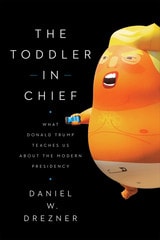
The Toddler in Chief
What Donald Trump Teaches Us about the Modern PresidencyDaniel W. Drezner
University of Chicago Press, 2020
Every president faces criticism and caricature. Donald Trump, however, is unique in that he is routinely characterized in ways more suitable for a toddler. What’s more, it is not just Democrats, pundits, or protestors who compare the president to a child; Trump’s staffers, subordinates, and allies on Capitol Hill also describe Trump like a small, badly behaved preschooler.
In April 2017, Daniel W. Drezner began curating every example he could find of a Trump ally describing the president like a toddler. So far, he’s collected more than one thousand tweets—a rate of more than one a day. In The Toddler-in-Chief, Drezner draws on these examples to take readers through the different dimensions of Trump’s infantile behavior, from temper tantrums to poor impulse control to the possibility that the President has had too much screen time. How much damage can really be done by a giant man-baby? Quite a lot, Drezner argues, due to the winnowing away of presidential checks and balances over the past fifty years. In these pages, Drezner follows his theme—the specific ways in which sharing some of the traits of a toddler makes a person ill-suited to the presidency—to show the lasting, deleterious impact the Trump administration will have on American foreign policy and democracy.
The “adults in the room” may not be able to rein in Trump’s toddler-like behavior, but, with the 2020 election fast approaching, the American people can think about whether they want the most powerful office turned into a poorly run political day care facility. Drezner exhorts us to elect a commander-in-chief, not a toddler-in-chief. And along the way, he shows how we must rethink the terrifying powers we have given the presidency.
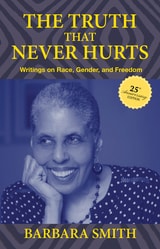
The Truth That Never Hurts 25th anniversary edition
Writings on Race, Gender, and FreedomBarbara Smith
Rutgers University Press, 2024
Barbara Smith has been doing groundbreaking work since the early 1970s, describing a Black feminism for Black women. Her work in Black women's literary traditions; in examining the sexual politics of the lives of women of color; in representing the lives of Black lesbians and gay men; and in making connections between race, class, sexuality and gender is gathered in The Truth That Never Hurts. This collection contains some of her major essays on Black women's literature, Black lesbian writing, racism in the women's movement, Black-Jewish relations, and homophobia in the Black community. Her forays into these areas ignited dialogue about topics that few other writers were addressing at the time, and which, sadly, remain pertinent to this day. This twenty-fifth anniversary edition, in a beautiful new package, also contains the essays from the original about the 1968 Chicago convention demonstrations; attacks on the NEA; the Anita Hill-Clarence Thomas Senate hearings; and police brutality against Rodney King and Abner Louima, which, after twenty-five years, still have the urgency they did when they were first written.
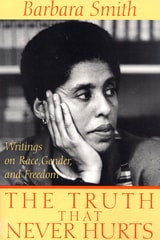
The Truth That Never Hurts
Writings on Race, Gender, and FreedomSmith, Barbara
Rutgers University Press, 2000
Smith’s essay “Toward a Black Feminist Criticism,” is often cited as a major catalyst in opening the field of black women’s literature. Pieces about racism in the women’s movement, black and Jewish relations, and homophobia in the Black community have ignited dialogue about topics that few other writers address. The collection also brings together topical political commentaries on the 1968 Chicago convention demonstrations; attacks on the NEA; the Anita Hill–Clarence Thomas Senate hearings; and police brutality against Rodney King and Abner Louima. It also includes a never-before-published personal essay on racial violence and the bonds between black women that make it possible to survive.
The Vote
Bush, Gore, and the Supreme CourtEdited by Cass R. Sunstein and Richard A. Epstein
University of Chicago Press, 2001
The contributors to this volume were highly visible in the national media while the controversy raged, and here they present fully fleshed-out arguments for the positions they promoted on the airwaves. Readers will find in The Vote equally impassioned defenses for and indictments of the Court's actions, and they will come to understand the practical and theoretical implications of the Court's ruling in the realms of both law and politics. No doubt a spate of books will appear on the 2000 presidential election, but none will claim as distinguished a roster of contributors better qualified to place these recent events in their appropriate historical, legal, and political contexts.
Leading constitutional scholars render their verdicts on the 2000 presidential election controversy
Contributors:
Richard A. Epstein
Elizabeth Garrett
Samuel Issacharoff
Pamela S. Karlan
Michael W. McConnell
Frank I. Michelman
Richard H. Pildes
Richard A. Posner
David A. Strauss
Cass R. Sunstein
John Yoo
An earlier electronic edition of The Vote was available on the University of Chicago Press Web site.
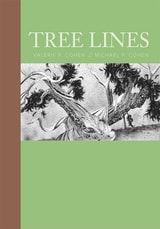
Tree Lines
Valerie P Cohen
University of Nevada Press, 2017
The drawings are black-and-white, pen-and-ink representations of high alpine ecosystems. The prose is stripped bare, abbreviated in an epigrammatic style that is poetic and spontaneous. Trees represented here are the Western Juniper or Sierra Juniper, the Limber, and the Bristlecone Pine—three species of long-lived, slow-growing conifers that grow across the Great Basin. While they represent only a small portion of the vegetative culture high in the western mountains, the Cohens use representation as abstraction as is utilized by writers and artists to convey a unique kind of microcosm of our natural environment. This book compares to such classics as Leopold’s A Sand County Almanac, and Berger’s Ways of Seeing, which open up lines of observation, analysis, and art for a new generation of readers.
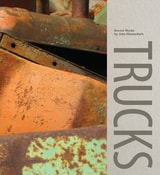
Trucks
Recent Works by John HimmelfarbJohn Himmelfarb
The Artist Book Foundation, 2014
With sculpture, paintings, prints, and drawings, award-winning artist John Himmelfarb explores the iconic American truck. An in-depth consideration of the vehicles that are intrinsically and culturally significant to the American landscape, Trucks: Recent Works by John Himmelfarb showcases the artist's diverse and lighthearted approach, adeptly shifting between mediums, style, and message during his decade-long contemplation of trucks and their specific functions. Under his skillful hands, the utilitarian vehicles of commerce and construction become unique and provocative art forms.
In 2005 and 2006, the truck as narrative becomes center stage for Himmelfarb's work. With his seamless, animated traverse of multiple mediums, viewers cannot help but smile as they appreciate the common truck through unique perspectives. In 2007, another tectonic change occurs in Himmelfarb's pursuit of his theme: as a result of a three-month residency at the John Michael Kohler Arts Center's Arts/Industry program, he begins his first meaningful foray into three-dimensional works.
Twilight of the American State
Pierre Schlag
University of Michigan Press, 2023
Finalist: 2024 Order of the Coif Book Award | March 3, 2025
The sudden emergence of the Trump nation surprised nearly everyone, including journalists, pundits, political consultants, and academics. When Trump won in 2016, his ascendancy was widely viewed as a fluke. Yet time showed it was instead the rise of a movement—angry, militant, revanchist, and unabashedly authoritarian.
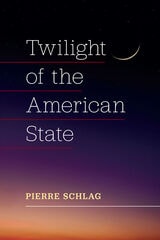
How did this happen? Twilight of the American State offers a sweeping exploration of how law and legal institutions helped prepare the grounds for this rebellious movement. The controversial argument is that, viewed as a legal matter, the American state is not just a liberal democracy, as most Americans believe. Rather, the American state is composed of an uneasy and unstable combination of different versions of the state—liberal democratic, administered, neoliberal, and dissociative. Each of these versions arose through its own law and legal institutions. Each emerged at different times historically. Each was prompted by deficits in the prior versions. Each has survived displacement by succeeding versions. All remain active in the contemporary moment—creating the political-legal dysfunction America confronts today.
Pierre Schlag maps out a big picture view of the tribulations of the American state. The book abjures conventional academic frameworks, sets aside prescriptions for quick fixes, dispenses with lamentations about polarization, and bypasses historical celebrations of the American Spirit.