Results by title
52 books match the query '1949-' and 14 start with t
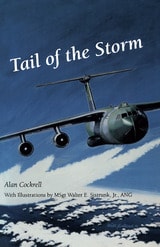
Tail of the Storm
Flying Missions in the First Gulf WarAlan Cockrell
University of Alabama Press, 1995
A Gulf War memoir that captures the poetry and peril of flight.
Within days of Saddam Hussein’s invasion of Kuwait, the far reaching arm of American airpower sprang into action. The skyscapes of the North Atlantic, Europe, and the Mediterranean became laced with the contrails of great jets flowing day and night toward the Persian Gulf. From the skies, manpower and material poured onto the bleak sands under the ominous clouds of the gathering storm, and in only a few weeks the size of the effort eclipsed that of the Berlin Airlift.
The thousands of crewmembers flying the jets, as well as those servicing and managing them, became the backbone of history’s largest air logistical operation. Many of these men and women were Air Force reservists, and the author participated as a pilot of a C-141B Starlifter with the Mississippi Air National Guard.
Cockrell writes lyrically about flying and about the emotional and intellectual satisfaction enjoyed by those who fly. His focus is on the people recalled to active duty, who flew thousands of hours, coping with fatigue, cracked wings, missile attacks, and, in some cases, deteriorating businesses and families at home. Tail of the Storm gives expression to their love of flight, as well as their dedication to the endangered values of duty, honor, country. This story is good reading—not only for those who share the author’s enthusiasm for flying but also for those who read for pleasure and have a curiosity about a pilot’s world.
The Black Rock Desert
Text by William L. Fox; Photographs by Mark Klett
University of Arizona Press, 2002
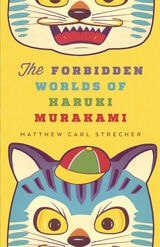
The Forbidden Worlds of Haruki Murakami
Matthew Carl Strecher
University of Minnesota Press, 2014
In an “other world” composed of language—it could be a fathomless Martian well, a labyrinthine hotel or forest—a narrative unfolds, and with it the experiences, memories, and dreams that constitute reality for Haruki Murakami’s characters and readers alike. Memories and dreams in turn conjure their magical counterparts—people without names or pasts, fantastic animals, half-animals, and talking machines that traverse the dark psychic underworld of this writer’s extraordinary fiction.
Fervently acclaimed worldwide, Murakami’s wildly imaginative work in many ways remains a mystery, its worlds within worlds uncharted territory. Finally in this book readers will find a map to the strange realm that grounds virtually every aspect of Murakami’s writing. A journey through the enigmatic and baffling innermost mind, a metaphysical dimension where Murakami’s most bizarre scenes and characters lurk, The Forbidden Worlds of Haruki Murakami exposes the psychological and mythological underpinnings of this other world. Matthew Carl Strecher shows how these considerations color Murakami’s depictions of the individual and collective soul, which constantly shift between the tangible and intangible but in this literary landscape are undeniably real.
Through these otherworldly depths The Forbidden Worlds of Haruki Murakami also charts the writer’s vivid “inner world,” whether unconscious or underworld (what some Japanese critics call achiragawa, or “over there”), and its connectivity to language. Strecher covers all of Murakami’s work—including his efforts as a literary journalist—and concludes with the first full-length close reading of the writer’s newest novel, Colorless Tsukuru Tazaki and His Years of Pilgrimage.
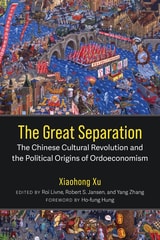
The Great Separation
The Chinese Cultural Revolution and the Political Origins of OrdoeconomismXiaohong Xu Edited by Roi Livne, Robert Jansen and Yang Zhang
University of Michigan Press, 2026
With a keen attention to how culture and elite conflict shape politics, The Great Separation upends deterministic understandings of the Chinese Cultural Revolution and the market reforms that followed. This ambitious posthumous volume by sociologist Xiaohong Xu turns the existing scholarship on China’s “neoliberalism” on its head by demonstrating that the effort to separate mass politics from economic policy had its origins well before the Reform and Opening-up era.
Over the course of the Cultural Revolution, unfolding factional dynamics and interpretive struggles enabled Chairman Mao and his radical colleagues to mobilize workers to advance their own political goals while neutralizing the masses’ economic demands, symbolically separating the political from the economic. This set the stage for a more thoroughgoing depoliticization of the economy after 1989, when China faced challenges from students and workers whose economic grievances had rapidly morphed into political demands for democracy. The result was what Xu calls ordoeconomism: an ideology that valorizes economic development, rejects mass politics, and views the state as the apolitical guardian of the economy. As Xu demonstrates, while ordoeconomism may share some affinities with neoliberalism, it is a distinctively Chinese approach that must be understood on its own terms.
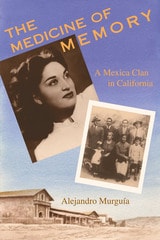
The Medicine of Memory
A Mexica Clan in CaliforniaBy Alejandro Murguía
University of Texas Press, 2002
"People who live in California deny the past," asserts Alejandro Murguía. In a state where "what matters is keeping up with the current trends, fads, or latest computer gizmo," no one has "the time, energy, or desire to reflect on what happened last week, much less what happened ten years ago, or a hundred." From this oblivion of memory, he continues, comes a false sense of history, a deluded belief that the way things are now is the way they have always been.
In this work of creative nonfiction, Murguía draws on memories—his own and his family's reaching back to the eighteenth century—to (re)construct the forgotten Chicano-indigenous history of California. He tells the story through significant moments in California history, including the birth of the mestizo in Mexico, destruction of Indian lifeways under the mission system, violence toward Mexicanos during the Gold Rush, Chicano farm life in the early twentieth century, the Chicano Movement of the 1960s, Chicano-Latino activism in San Francisco in the 1970s, and the current rebirth of Chicano-Indio culture. Rejecting the notion that history is always written by the victors, and refusing to be one of the vanquished, he declares, "This is my California history, my memories, richly subjective and atavistic."

The Other Arab-Israeli Conflict
Making America's Middle East Policy, from Truman to ReaganSteven L. Spiegel
University of Chicago Press, 1985
The Picture in Question
Mark Tansey and the Ends of RepresentationMark C. Taylor
University of Chicago Press, 1999
The Real, the True, and the Told
Postmodern Historical Narrative and the Ethics of RepresentationEric L. Berlatsky
The Ohio State University Press, 2011
The Return of the Moguls
How Jeff Bezos and John Henry Are Remaking Newspapers for the Twenty-First CenturyDan Kennedy
University Press of New England, 2018
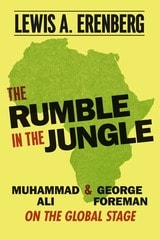
The Rumble in the Jungle
Muhammad Ali and George Foreman on the Global StageLewis A. Erenberg
University of Chicago Press, 2019
TheRumble in the Jungle orbits around Ali and Foreman, placing them at the convergence of the American Civil Rights movement and the Great Society, the rise of Islamic and African liberation efforts, and the ongoing quest to cast off the shackles of colonialism. With his far-reaching take on sports, music, marketing, and mass communications, Erenberg shows how one boxing match became nothing less than a turning point in 1970s culture.
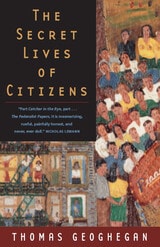
The Secret Lives of Citizens
Pursuing the Promise of American LifeThomas Geoghegan
University of Chicago Press, 2000
"This is unlike any public-policy book I've ever read: part Catcher in the Rye, part The Road to Wigan Pier, part The Federalist Papers, it is mesmerizing, rueful, painfully honest, and never, ever dull."—Nicholas Lemann, author of The Big Test
"Extraordinary. It has the essential trait of a memorable book, in that after reading it you look at daily life in a lastingly different way." —James Fallows, author of Breaking the News
"[Geoghegan] has written a book that is not only compelling to read but that provokes us to seriously reflect on the choices we make and how we spend our time." —Jonathan Coleman, Washington Post Book World
"Geoghegan's language is playful. . . . Personal reminiscence mixing with historical anecdote, dipping into complex themes . . . shifting from wistful nostalgia to dark comedy." —Robert B. Reich, New York Times Book Review
"A truly strange and wonderful book." — William Finnegan
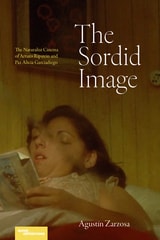
The Sordid Image
The Naturalist Cinema of Arturo Ripstein and Paz Alicia GarciadiegoAgustín Zarzosa
Northwestern University Press, 2026
Drawing on the cinematic oeuvre of Ripstein and Garciadiego to reconceptualize the idea of the sordid
The sordid is not an ideology, an affect, or even a form of taste or sensibility. It is, Agustín Zarzosa argues, an image and an evocation of the process of degradation. The Sordid Image: The Naturalist Cinema of Arturo Ripstein and Paz Alicia Garciadiego offers the first sustained study of this pivotal filmmaker-screenwriter pair, drawing on their multidecade collaborations to reframe an enduring problem of film theory: how to represent marginalized people.
Together, Ripstein and Garciadiego have constructed a recognizable cinematic world filled with social outcasts, characterized by self-degradation and unreason, and set within squalid environments. Inscribing the Ripsteinian universe within the literary and cinematic traditions of naturalism, this book theorizes the notion of the sordid to examine the partners’ unique and epoch-defining films. We can, Zarzosa contends, understand the sordid as a cinematic image, with its specific components and pleasures, recasting questions of authorship, mise-en-scène, spectatorship, genre, and language.

The Transformation of Chinese Socialism
Chun Lin
Duke University Press, 2006

Three-Way Street
Strategic Reciprocity in World PoliticsJoshua S. Goldstein and John R. Freeman
University of Chicago Press, 1990
The authors demonstrate that three major schools of international relations theory—all game-theoretic, psychological, and quantitative-empirical approaches—have all advocated a strategy that employs cooperative initiatives and reciprocal responses in order to elicit cooperation from other countries. Critics have questioned whether such approaches can model how countries actually behave, but Goldstein and Freeman provide a wealth of detailed empirical evidence showing the existence and effectiveness of strategic reciprocity among the three countries between 1948 and 1989. Specifically, they establish that relations among the three countries have improved in recent decades through a "two steps forward, one step back" pattern. Their innovative and remarkably accessible synthesis of leading theoretical perspectives brilliantly illuminates the nature and workings of international cooperation.