Results by title
53 books match the query '1970-' and 5 start with t
The Cynical Society
The Culture of Politics and the Politics of Culture in American LifeJeffrey C. Goldfarb
University of Chicago Press, 1991
The Fictional Christopher Nolan
By Todd McGowan
University of Texas Press, 2012
From Memento and Insomnia to the Batman films, The Prestige, and Inception, lies play a central role in every Christopher Nolan film. Characters in the films constantly find themselves deceived by others and are often caught up in a vast web of deceit that transcends any individual lies. The formal structure of a typical Nolan film deceives spectators about the events that occur and the motivations of the characters. While Nolan’s films do not abandon the idea of truth altogether, they show us how truth must emerge out of the lie if it is not to lead us entirely astray.
The Fictional Christopher Nolan discovers in Nolan’s films an exploration of the role that fiction plays in leading to truth. Through close readings of all the films through Inception, Todd McGowan demonstrates that the fiction or the lie comes before the truth, and this priority forces us to reassess our ways of thinking about the nature of truth. Indeed, McGowan argues that Nolan’s films reveal the ethical and political importance of creating fictions and even of lying. While other filmmakers have tried to discover truth through the cinema, Nolan is the first filmmaker to devote himself entirely to the fictionality of the medium, and McGowan discloses how Nolan uses its tendency to deceive as the basis for a new kind of philosophical filmmaking. He shows how Nolan’s insistence on the priority of the fiction aligns his films with Hegel’s philosophy and understands Nolan as a thoroughly Hegelian filmmaker.

The Nail in the Tree
Essays on Art, Violence, and ChildhoodCarol Ann Davis
Tupelo Press, 2020
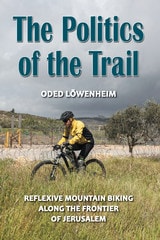
The Politics of the Trail
Reflexive Mountain Biking along the Frontier of JerusalemOded Löwenheim
University of Michigan Press, 2014
In The Politics of the Trail, Löwenheim confronts this tension by focusing on his encounters with three places along the trail: the separation fence between Israel and the Palestinians; the ruins of the Palestinian village Qalunya, demolished in 1948; and the trail connecting the largest 9/11 memorial site outside of the U.S. with a top-secret nuclear-proof bunker for the Israeli cabinet. He shares the stories of the people he meets along the way and considers how his own subjectivity is shaped by the landscape and culture of conflict. Moreover, he deconstructs, challenges, and resists the concepts and institutions that constitute such a culture and invites conversation about the idea of conflict as a culture.
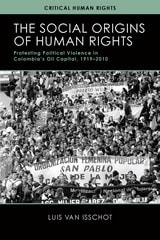
The Social Origins of Human Rights
Protesting Political Violence in Colombia’s Oil Capital, 1919–2010Luis van Isschot
University of Wisconsin Press, 2015
Built by Standard Oil in 1919, and home to the largest petroleum refinery in the country, Barrancabermeja has long been a critical battleground in Colombia’s armed conflict. One of the most militarized urban areas on earth, the city has been a regional base for the Colombian armed forces as well as for leftist guerrillas and a national paramilitary movement. In the midst of a dirty war in which the majority of victims were civilians, urban and rural social movements from Barrancabermeja and the surrounding area came together to establish a human rights movement. These frontline activists called upon the Colombian state to protect basic human rights and denounced the deeper socioeconomic inequalities they saw as sources of conflict. Through close study of the complex dynamics at work in Barrancabermeja, van Isschot shows how the efforts we describe as “human rights” activism derive in large part from these lived experiences of authoritarianism, war, poverty, and social exclusion. Through its social and historical approach, his analysis both complements and challenges the work of scholars who look at rights issues primarily through a legal lens.