Results by title
157 books match the query 'African Americans in literature' and 26 start with t
Taboo Subjects
Race, Sex, and PsychoanalysisGwen Bergner
University of Minnesota Press, 2005
Telling Narratives
Secrets in African American LiteratureLeslie W. Lewis
University of Illinois Press, 2007
Telling Narratives analyzes key texts from nineteenth- and early twentieth-century African American literature to demonstrate how secrets and their many tellings have become slavery's legacy. By focusing on the ways secrets are told in texts by Jessie Fauset, Charles W. Chesnutt, Pauline Hopkins, Frederick Douglass, and others, Leslie W. Lewis suggests an alternative model to the feminist dichotomy of "breaking silence" in response to sexual violence. This fascinating study also suggests that masculine bias problematically ignores female experience in order to equate slavery with social death. In calling attention to the sexual behavior of slave masters in African American literature, Lewis highlights its importance to slavery’s legacy and offers a new understanding of the origins of self-consciousness within African American experience.
Ten Is the Age of Darkness
The Black BildungsromanGeta LeSeur
University of Missouri Press, 1995
In Ten Is the Age of Darkness, Geta LeSeur explores how black authors of the United States and English- speaking Caribbean have taken a European literary tradition and adapted it to fit their own needs for self-expression. LeSeur begins by defining the structure and models of the European genre of the bildungsroman, then proceeds to show how the circumstances of colonialism, oppression, race, class, and gender make the maturing experiences of selected young black protagonists different from those of their white counterparts.
Examining the parallels and differences in attitudes toward childhood in the West Indies and the United States, as well as the writers' individual perspectives in each work of fiction, LeSeur reaches intriguing conclusions about family life, community participation in the nurturing of children, the timing and severity of the youngsters' confrontation of adult society, and the role played by race in the journey toward adulthood.
LeSeur's readings of African American novels provide new insights into the work of Langston Hughes, James Baldwin, Toni Morrison, Paule Marshall, and Richard Wright, among others. When read as examples of the bildungsroman rather than simply as chronicles of black experiences, these works reveal an even deeper significance and have a more powerful impact. LeSeur convincingly demonstrates that such African American novels as Baldwin's Go Tell It on the Mountain, Wright's Black Boy, and Morrison's The Bluest Eye concentrate to a large extent on protest, while such African West Indian works as George Lamming's In the Castle of My Skin, Austin Clarke's Amongst Thistles and Thorns, Jamaica Kincaid's Annie John, and Erna Brodber's Jane and Louisa Will Soon Come Home reflect a more naive, healthy re-creation of what childhood can and should be, despite economic and physical impoverishment. She also gives a special space within the genre to Paule Marshall's BrownGirl, Brownstones and Ntozake Shange's Betsey Brown and the importance of "woman time," "woman voice," and mothers.
While enlarging our understanding of both the similarities and the differences in the black experiences of the Carribean and American youngsters coming of age, Ten Is the Age of Darkness also suggests that children of color in similar spheres share many common experiences. LeSeur concludes that the bildungsromane by black writers provide uniquely revealing contributions to the Afro-World literary canon and point the way for others to examine literary pieces in Third World communities of color.

The Absent Man
The Narrative Craft of Charles W. ChesnuttCharles Duncan
Ohio University Press, 1998
As the first African-American fiction writer to achieve a national reputation, Ohio native Charles W. Chesnutt (1858–1932) in many ways established the terms of the black literary tradition now exemplified by such writers as Toni Morrison, Alice Walker, and Charles Johnson.
Following the highly autobiographical nonfiction produced by Frederick Douglass, Harriet Jacobs, and other slave narrative writers, Chesnutt’s complex, multi-layered short fiction transformed the relationship between African-American writers and their readers. But despite generous praise from W. D. Howells and other important critics of his day, and from such prominent readers as William L. Andrews, Henry Louis Gates, Jr., and Eric Sundquist in ours, Chesnutt occupies a curiously ambiguous place in American literary history.
In The Absent Man, Charles Duncan demonstrates that Chesnutt’s uneasy position in the American literary tradition can be traced to his remarkable narrative subtlety. Profoundly aware of the delicacy of his situation as a black intellectual at the turn of the century, Chesnutt infused his work with an intricate, enigmatic artistic vision that defies monolithic or unambiguously political interpretation, especially with regard to issues of race and identity that preoccupied him throughout his career.
In this first book-length study of the innovative short fiction, Duncan devotes particular attention to elucidating these sophisticated narrative strategies as the grounding for Chesnutt’s inauguration of a tradition of African-American fiction.
The Addison Gayle Jr. Reader
Edited by Nathaniel Norment Jr.
University of Illinois Press, 2008
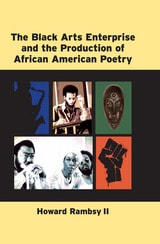
The Black Arts Enterprise and the Production of African American Poetry
Howard Rambsy II
University of Michigan Press, 2013
The outpouring of creative expression known as the Black Arts Movement of the 1960s and 1970s spawned a burgeoning number of black-owned cultural outlets, including publishing houses, performance spaces, and galleries. Central to the movement were its poets, who in concert with editors, visual artists, critics, and fellow writers published a wide range of black verse and advanced new theories and critical approaches for understanding African American literary art.
The Black Arts Enterprise and the Production of African American Poetry offers a close examination of the literary culture in which BAM's poets (including Amiri Baraka, Nikki Giovanni, Sonia Sanchez, Larry Neal, Haki Madhubuti, Carolyn Rodgers, and others) operated and of the small presses and literary anthologies that first published the movement's authors. The book also describes the role of the Black Arts Movement in reintroducing readers to poets such as Langston Hughes, Robert Hayden, Margaret Walker, and Phillis Wheatley.
Focusing on the material production of Black Arts poetry, the book combines genetic criticism with cultural history to shed new light on the period, its publishing culture, and the writing and editing practices of its participants. Howard Rambsy II demonstrates how significant circulation and format of black poetic texts—not simply their content—were to the formation of an artistic movement. The book goes on to examine other significant influences on the formation of Black Arts discourse, including such factors as an emerging nationalist ideology and figures such as John Coltrane and Malcolm X.
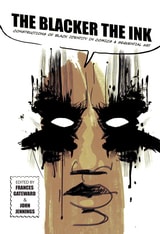
The Blacker the Ink
Constructions of Black Identity in Comics and Sequential ArtGateward, Frances
Rutgers University Press, 2015
Winner of the 2016 Ray and Pat Browne Award for Best Edited Collection in Popular Culture and American Culture by the Popular Culture Association/American Culture Association
Winner of the 2016 PEN Oakland-Josephine Miles Award for Excellence in Literature
When many think of comic books the first thing that comes to mind are caped crusaders and spandex-wearing super-heroes. Perhaps, inevitably, these images are of white men (and more rarely, women). It was not until the 1970s that African American superheroes such as Luke Cage, Blade, and others emerged. But as this exciting new collection reveals, these superhero comics are only one small component in a wealth of representations of black characters within comic strips, comic books, and graphic novels over the past century.
The Blacker the Ink is the first book to explore not only the diverse range of black characters in comics, but also the multitude of ways that black artists, writers, and publishers have made a mark on the industry. Organized thematically into “panels” in tribute to sequential art published in the funny pages of newspapers, the fifteen original essays take us on a journey that reaches from the African American newspaper comics of the 1930s to the Francophone graphic novels of the 2000s. Even as it demonstrates the wide spectrum of images of African Americans in comics and sequential art, the collection also identifies common character types and themes running through everything from the strip The Boondocks to the graphic novel Nat Turner.
Though it does not shy away from examining the legacy of racial stereotypes in comics and racial biases in the industry, The Blacker the Ink also offers inspiring stories of trailblazing African American artists and writers. Whether you are a diehard comic book fan or a casual reader of the funny pages, these essays will give you a new appreciation for how black characters and creators have brought a vibrant splash of color to the world of comics.
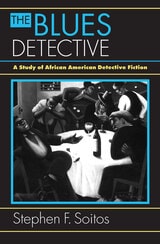
The Blues Detective
A Study of African American Detective FictionStephen Soitos
University of Massachusetts Press, 1996
This illuminating book makes the case for a tradition of African American detective fiction—novels written by black Americans about black detectives and incorporating distinctly African American tropes and themes. Beginning with Pauline Hopkins in 1901, black authors consciously altered and subverted the formulas of detective fiction in significant ways. Such writers as J. E. Bruce, Rudolph Fisher, Chester Himes, Ishmael Reed, and Clarence Major created a new genre that responded to the social and political concerns of the black community.
Examining the work of these authors, Stephen Soitos frames his analysis in terms of four uniquely African American tropes: altered detective personas, double-consciousness detection, black vernaculars, and hoodoo. He argues that black writers created sleuths who were in fact “blues detectives,” engaged not only in solving crimes, but also in exploring the mysteries of black life and culture.
Soitos grounds his study in African American literary theory, particularly the work of Houston Baker, Bernard Bell, and Henry Louis Gates, Jr. He offers both a new way of conceiving black detective fiction and a series of insightful readings of books in this genre.
The Color of Sex
Whiteness, Heterosexuality, and the Fictions of White SupremacyMason Stokes
Duke University Press, 2001
The Color of Sex reveals what happens when race and sexuality meet, when white desire encounters its own ambivalence. As Stokes argues, whiteness and heterosexuality exist in anxious relation to one another. Mutually invested in “the normal,” they support each other in their desperate insistence on the cultural logic of exclusion. At the same time, however, they threaten one another in their attempt to create and sustain a white future, since reproducing whiteness necessarily involves the risk of contamination
Charting the curious movements of this “white heterosexuality,” The Color of Sex inaugurates a new moment in our ongoing attempt to understand the frenzied interplay of race and sexuality in America. As such, it will appeal to scholars interested in race theory, sexuality studies, and American history, culture, and literature.
The Contemporary African American Novel
Its Folk Roots and Modern Literary BranchesBernard W. Bell
University of Massachusetts Press, 2004
The Death-Bound-Subject
Richard Wright's Archaeology of DeathAbdul R. JanMohamed
Duke University Press, 2005
Drawing on psychoanalytic, Marxist, and phenomenological analyses, and on Orlando Patterson’s notion of social death, JanMohamed develops comprehensive, insightful, and original close readings of Wright’s major publications: his short-story collection Uncle Tom’s Children; his novels Native Son, The Outsider, Savage Holiday, and The Long Dream; and his autobiography Black Boy/American Hunger. The Death-Bound-Subject is a stunning reevaluation of the work of a major twentieth-century American writer, but it is also much more. In demonstrating how deeply the threat of death is involved in the formation of black subjectivity, JanMohamed develops a methodology for understanding the presence of the death-bound-subject in African American literature and culture from the earliest slave narratives forward.
The Freedom to Remember
Narrative, Slavery, and Gender in Contemporary Black Women's FictionMitchell, Angelyn
Rutgers University Press, 2002
The Freedom to Remember examines contemporary literary revisions of slavery in the United States by black women writers. The narratives at the center of this book include: Octavia E. Butler’s Kindred, Sherley Anne Williams’s Dessa Rose, Toni Morrison’s Beloved, J. California Cooper’s Family, and Lorene Cary’s The Price of a Child.
Recent studies have investigated these works only from the standpoint of victimization. Angelyn Mitchell changes the conceptualization of these narratives, focusing on the theme of freedom, not slavery, defining these works as “liberatory narratives.” These works create a space to problematize the slavery/freedom dichotomy from which contemporary black women writers have the “safe” vantage point to reveal aspects of enslavement that their ancestors could not examine. The nineteenth-century female emancipatory narrative, by contrast, was written to aid the cause of abolition by revealing the unspeakable realitiesof slavery. Mitchell shows how the liberatory narrative functions to emancipate its readers from the legacies of slavery in American society: by facilitating a deeper discussion of the issues and by making them new through illumination and interrogation.
The Fugitive's Properties
Law and the Poetics of PossessionStephen M. Best
University of Chicago Press, 2004
Best also argues that legal principles dealing with fugitives and indebted persons provided a sophisticated precursor to intellectual property law as it dealt with rights in appearance, expression, and other abstract aspects of personhood. In this conception of property as fleeting, indeed fugitive, American law preserved for much of the rest of the century slavery's most pressing legal imperative: the production of personhood as a market commodity. By revealing the paradoxes of this relationship between fugitive slave law and intellectual property law, Best helps us to understand how race achieved much of its force in the American cultural imagination. A work of ambitious scope and compelling cross-connections, The Fugitive's Properties sets new agendas for scholars of American literature and legal culture.
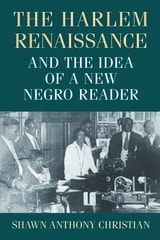
The Harlem Renaissance and the Idea of a New Negro Reader
Shawn Anthony Christian
University of Massachusetts Press, 2016
Many scholars have written about the white readers and patrons of the Harlem Renaissance, but during the period many black writers, publishers, and editors worked to foster a cadre of African American readers, or in the poet Sterling Brown's words, a “reading folk.” Black newspapers featured columns that reviewed the latest African American fiction. Magazines held writing contests to urge black readers to participate in the literary culture. Through newspapers, journals, and anthologies, writers such as James Weldon Johnson, Jessie Fauset, and Gwendolyn Bennett spoke directly to their fellow African Americans to cultivate interest in literature and the intellectual tools for reading it.
In The Harlem Renaissance and the Idea of a New Negro Reader, Shawn Anthony Christian argues that print-based addresses to African Americans are a defining but understudied component of the Harlem Renaissance. Especially between 1919 and 1930, these writers promoted diverse racial representation as a characteristic of “good literature” both to exhibit black literacy and to foster black readership. Drawing on research from print culture studies, histories of racial uplift, and studies of modernism, Christian demonstrates the importance of this focus on the African American reader in influential periodicals such as The Crisis and celebrated anthologies such as The New Negro. Christian illustrates that the drive to develop and support black readers was central in the poetry, fiction, and drama of the era.

The Journey Back
Houston A. Baker Jr.
University of Chicago Press, 1984
The Matter of Black Living
The Aesthetic Experiment of Racial Data, 1880–1930Autumn Womack
University of Chicago Press, 2022
As the nineteenth century came to a close and questions concerning the future of African American life reached a fever pitch, many social scientists and reformers approached post-emancipation Black life as an empirical problem that could be systematically solved with the help of new technologies like the social survey, photography, and film. What ensued was nothing other than a “racial data revolution,” one which rendered African American life an inanimate object of inquiry in the name of social order and racial regulation. At the very same time, African American cultural producers and intellectuals such as W. E. B. Du Bois, Kelly Miller, Sutton Griggs, and Zora Neale Hurston staged their own kind of revolution, un-disciplining racial data in ways that captured the dynamism of Black social life.
The Matter of Black Living excavates the dynamic interplay between racial data and Black aesthetic production that shaped late nineteenth-century social, cultural, and literary atmosphere. Through assembling previously overlooked archives and seemingly familiar texts, Womack shows how these artists and writers recalibrated the relationship between data and Black life. The result is a fresh and nuanced take on the history of documenting Blackness. The Matter of Black Living charts a new genealogy from which we can rethink the political and aesthetic work of racial data, a task that has never been more urgent.
The Muse is Music
Jazz Poetry from the Harlem Renaissance to Spoken WordMeta DuEwa Jones
University of Illinois Press, 2013
This wide-ranging, ambitiously interdisciplinary study traces jazz's influence on African American poetry from the Harlem Renaissance to contemporary spoken word poetry. Examining established poets such as Langston Hughes, Ntozake Shange, and Nathaniel Mackey as well as a generation of up-and-coming contemporary writers and performers, Meta DuEwa Jones highlights the intersections of race, gender, and sexuality within the jazz tradition and its representation in poetry. Applying prosodic analysis to emphasize the musicality of African American poetic performance, she examines the gendered meanings evident in collaborative performances and in the criticism, images, and sounds circulating within jazz cultures.
The Past as Present in the Drama of August Wilson
Harry J. Elam, Jr.
University of Michigan Press, 2004
The Psychic Hold of Slavery
Legacies in American Expressive CultureSoyica Diggs Colbert, Robert J. Patterson, and Aida Levy-Hussen
Rutgers University Press, 2016

The Unruly Voice
Rediscovering Pauline Elizabeth HopkinsEdited by John Cullen Gruesser
University of Illinois Press, 1996
The work and times of the Black writer, editor, and intellectual
John Cullen Gruesser edits essays that explore the literary and journalistic career of Pauline Elizabeth Hopkins. A Black woman writer at the turn of the twentieth century, Hopkins worked as the unacknowledged editor-in-chief of the Colored American Magazine but also wrote short fiction, novels, nonfiction articles, and a play believed to be the first by a Black woman. Versatile and politically committed, she was fired when her strong editorial stands and non-conciliatory politics offended the new owner of Colored American Magazine.
A rare examination of an overlooked figure in Black letters, The Unruly Voice explores Hopkins’s writing and her significance for contemporary readers.
Contributors: Elizabeth Ammons; Kristina Brooks; Lois Lamphere Brown; C. K. Doreski; John Cullen Gruesser; Jennie A. Kassanoff; Kate McCullough; Nelly Y. McKay; and Cynthia D. Schrager
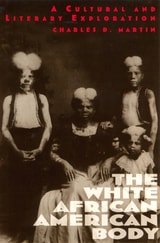
The White African American Body
Martin, Charles D.
Rutgers University Press, 2002
Blacks with white skin. Since colonial times, showmen have exhibited the bodies of African Americans with white or gradually whitening skin in taverns, dime museums, and circus sideshows. The term "white Negro" has served to describe an individual born with albinism as well as those who have vitiligo, a disorder that robs the skin of its pigment in ever-growing patches. In The White African American Body, Charles D. Martin examines the proliferation of the image of the white Negro in American popular culture, from the late eighteenth century to the present day.
This enigmatic figure highlights the folly of the belief in immutable racial differences. If skin is a race marker, what does it mean for blacks literally to be white? What does this say not only about blacks but also about whites? Scientists have probed this mystery, philosophers have pondered its meaning, and artists have profited from the sale of images of these puzzling figures.
Lavishly illustratedwith many rarely seen photographsThe White African American Body shows how the white Negro occupied, and still occupies, the precarious position between white and black, and how this figure remains resilient in American culture.
The Writings of Jesmyn Ward
Matters of Black Southern Life and DeathMartyn Bone
University of Iowa Press, 2025
Martyn Bone thoughtfully examines key themes running throughout Ward’s writing: Black life in the U.S. South; the legacies of slavery and segregation; neoliberalism as the contemporary form of capitalism; environmental crisis in the Anthropocene; and human-animal relations. Bone also connects Ward’s work to major figures in the U.S. literary canon, with particular focus on William Faulkner, Zora Neale Hurston, and Toni Morrison.
To Be Suddenly White
Literary Realism and Racial PassingSteven J. Belluscio
University of Missouri Press, 2006
To Be Suddenly White offers new readings of traditional passing narratives from the African American literary tradition, such as James Weldon Johnson’s The Autobiography of an Ex-Coloured Man, Nella Larsen’s Passing, and George Schuyler’s Black No More. It is also the first full-length work to consider a number of Jewish American and Italian American prose texts, such as Mary Antin’s The Promised Land, Anzia Yezierska’s Bread Givers, and Guido d’Agostino’s Olives on the Apple Tree, as racial passing narratives in their own right. Belluscio also demonstrates the contradictions that result from the passing narrative’s exploration of racial subjectivity, racial difference, and race itself.
When they are seen in comparison, ideological differences begin to emerge between African American passing narratives and “white ethnic” (Jewish American and Italian American) passing narratives. According to Belluscio, the former are more likely to engage in a direct critique of ideas of race, while the latter have a tendency to become more simplistic acculturation narratives in which a character moves from a position of ethnic difference to one of full American identity.
The desire “to be suddenly white” serves as a continual point of reference for Belluscio, enabling him to analyze how writers, even when overtly aware of the problematic nature of race (especially African American writers), are also aware of the conditions it creates, the transformations it provokes, and the consequences of both. Byexamining the content and context of these works, Belluscio elucidates their engagement with discourses of racial and ethnic differences, assimilation, passing, and identity, an approach that has profound implications for the understanding of American literary history.
To Make Negro Literature
Writing, Literary Practice, and African American AuthorshipElizabeth McHenry
Duke University Press, 2021
Traces, Codes, and Clues
Reading Race in Crime FictionReddy, Maureen T
Rutgers University Press, 2002
Detective fiction featuring white women and people of color such as Barbara Neelys Blanche White and Walter Mosleys Easy Rawlinshas become tremendously popular. Although they are considered "light reading," mysteries also hold important cultural and social "clues." Much recent scholarly work has demonstrated that race is both a cultural fiction not a biological reality and a central organizing principle of experience. Popular writers are likely to reflect the conventions of their own historical situations.
In Traces, Codes, and Clues: Reading Race in Crime Fiction, Maureen T. Reddy explores the ways in which crime fiction manipulates cultural constructions such as race and gender to inscribe dominant cultural discourses. She notes that even those writers who appear to set out to revise outdated conventions repeatedly reproduce the genres most conservative elements. The greatest obstacle to transforming crime fiction, Reddy states, is the fact that the genre itself is deeply embedded in the discourse of white (and male) superiority. There is, therefore, an absolute necessity to break away from that discourse through reversal or other strategies in order to produce work that defies, and thus helps readers to defy, the dominant ideology of race.

Two Guns From Harlem
The Detective Fiction of Chester HimesRobert E. Skinner
University of Wisconsin Press, 1989
Two Guns from Harlem probes Himes’s early life and career for the roots of this series and for its heroes, Coffin Ed Johnson and Grave Digger Jones. Skinner discusses how Himes’s experience as a black man, combined with his unique outlook on sociology, politics, violence, sex, and race relations, resulted not only in an unusual portrait of black America but also opened the way for the creation of the
ethnic and female hard-boiled detectives who followed.