61 books match the query 'American West' and 4 start with t
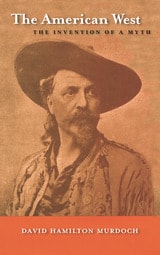
cover of The American West: The Invention Of A Myth

The American West

The Invention Of A Myth

David Hamilton Murdoch

University of Nevada Press, 2001
Americans have chosen to invest one small part of their history, the settlement of the western wilderness, with extraordinary significance. The lost frontier of the 1800s remains not merely a source of excitement and romance but of inspiration, providing a set of unique and imperishable core-values: individualism, self-reliance, and a clear sense of right and wrong. As a construct of the imagination, our creation of the West is exceptional. Since this construct has little to do with history, David H. Murdoch argues that our beliefs about the West amount to a modern functional myth. In addition to presenting a sustained analysis of how and why the myth originated, Murdoch demonstrates that the myth was invented, for the most part deliberately, and then outgrew the purposes of its inventors. The American West answers the questions that have too often been either begged or ignored. Why should the West become the focus for myth in the first place, and why, given the long process of western settlement, is the cattleman's West so central and the cowboy, of all prototypes, the mythic hero? And why should the myth have retained its potency up to the last decade of the twentieth century?
[more]
cover of The Brothers Robidoux and the Opening of the American West

The Brothers Robidoux and the Opening of the American West

Robert J. Willoughby

University of Missouri Press, 2012
 Written in a unique biographical format, Robert Willoughby interweaves the stories of six brothers who shaped the American trans-Mississippi West during the first five decades of the nineteenth century. After migrating from French Canada to St. Louis, the brothers Robidoux—Joseph, Francois, Antoine, Louis, Michel, and Isadore—and their father, Joseph, became significant members in the business, fur trading, and land speculation communities, frequently interacting with upper-class members of the French society.
            Upon coming of age, the brothers followed their father into the fur business and American Indian trade. The oldest of the six, Joseph, led the group on an expedition up the Missouri River as Lewis and Clark had once done, designating a path of trade sites along their journey until they reached their destination at present-day Omaha, Nebraska. Eventually the younger brothers set out on their own westward expedition in the mid 1820s, reaching both Colorado and Santa Fe, New Mexico. Joseph eventually became a town founder in northwest Missouri near Blacksnake Creek. Antoine and Louis traveled as far as California, finally settling in Santa Fe where they became prominent citizens. As a trapper and trader, Michel endured many hardships and close calls during his journey across the West. Francois and Isadore made their home in New Mexico, maintaining a close relationship with Joseph in Missouri.
Though frequently under contract by others, the brothers did their best work when allowed to freelance and make their own rules. The brothers would ultimately pass on their prosperous legacy of ranging, exploring, trading, and town-building to a new generation of settlers. As the nature of the fur trade changed, so did the brothers’ business model. They began focusing on outfitting western migrants, town folk, and farmers. Their practices made each of them wealthy; however, they all died poor.
            To understand the opening of the American West, one must first know about men like the brothers Robidoux. Their lives are the framework for stories about the American frontier. By using primary sources located at the Missouri Historical Society, the Mexican Archives of New Mexico, and the Huntington Library, as well as contemporary accounts written by those who knew them, Willoughby has now told the Robidouxs’ story.
[more]
cover of The Disappearances: A Story of Exploration, Murder, and Mystery in the American West

The Disappearances

A Story of Exploration, Murder, and Mystery in the American West

Scott Thybony

University of Utah Press, 2016

In 1935, during the wind-swept years of the Dust Bowl, three people went missing on separate occasions in the rugged canyon country of southeastern Utah, a place “wild, desolate, mysterious.” A thirteen-year old girl, Lucy Garrett, was tricked into heading west with the man who had murdered her father under the pretense of reuniting with him. At the same time, a search was underway for Dan Thrapp, a young scientist on leave from the American Museum of Natural History. Others were scouring the same region for an artist, Everett Ruess, who had disappeared into “the perfect labyrinth.” 

Intrigued by this unusual string of coincidental disappearances, Scott Thybony set out to learn what happened. His investigations took him from Island in the Sky to Skeleton Mesa, from Texas to Tucson, and from the Green River to the Red. He traced the journey of Lucy Garrett from the murder of her father to her dramatic courtroom testimony. Using the pages of an old journal he followed the route of Dan Thrapp as he crossed an expanse of wildly rugged country with a pair of outlaws. Thrapp’s story of survival in an unforgiving land is a poignant counterpoint to the fate of the artist Everett Ruess, which the New York Times has called “one of the most enduring mysteries of the modern West.” Thybony draws on extensive research and a lifetime of exploration to create a riveting story of these three lives.
[more]
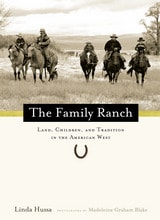
cover of The Family Ranch: Land, Children, and Tradition in the American West

The Family Ranch

Land, Children, and Tradition in the American West

Linda Hussa

University of Nevada Press, 2010

Ranch families in the twenty-first century face many challenges, from competition with government-subsidized agribusiness corporations to tax laws that encourage development over agriculture and prevent the smooth transfer of land from one generation to the next. As a stabilizing force in the American West, ranch families play a critical role in our country, perhaps more so today than ever before, yet their stories have rarely been told. They contribute to our nation with the food they raise, the environments they protect, and the resources they manage, and they preserve our western heritage while holding the West open for the rest of us. In The Family Ranch, award-winning author Linda Hussa offers readers a personal, inside view into the lives of six diverse ranching families and the land that shapes their days and nights. Photographer Madeleine Graham Blake provides engaging and often moving images that portray each family at work and at play. With chapters on the critical issues that face each of them—from grazing rights and water use, to children's education and the emerging rural marketplace—these family profiles are set in a larger context. This is family ranching as it is now, a tracing of how it always was, but made far more complex in modern times. By combining their traditions with the tools of modern technology, these people strengthen the ideal of family and give the business of ranching a vibrant and viable future.The Family Ranch is rich in remarkable stories of what happens when parents, children, work, and nature come together for a lifetime of commitment. It speaks to urban and rural people in important ways, illuminating the realities of the western ranch and the people who make their living, and their lives, on it. Essential reading for people who love the West and care about its future. The Family Ranch inspires thoughts about tradition, values, and responsibility that are applicable to all communities.

[more]