Results by title
266 books match the query 'Anecdotes' and 51 start with t

Take Down Flag & Feed Horses
Bill Everhart
University of Illinois Press, 1998
ensures biological diversity.
One of an elite cadre of Park Service employees who served in the system for many years, Everhart would smile knowingly at a comrade's recollection of an old-timer who left often unnecessary instructions that regularly concluded with, "Take down flag & feed horses (TDF &; FH)." His book, a gentle excursion through places and among people, will be attractive to a wide range of readers.
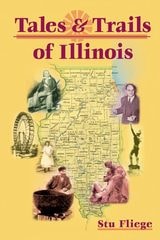
Tales and Trails of Illinois
Stu Fliege
University of Illinois Press, 2002
Stu Fliege highlights historical events, such as the Herrin Massacre and Chicago’s Iroquois Theatre fire, and covers the diverse terrain of Illinois’s natural and constructed wonders, from Lusk Creek Canyon to Robert Allerton Park. Readers will meet a colorful cast of characters including pioneers, squatters, miners, gangsters, and utopian leaders. They’ll travel back in time to when salt production was the state’s main industry and learn of the Illinois ingenuity that spawned inventions including barbed wire, the steel plow, and the Ferris wheel. From Oquawka’s elephant memorial to Murphysboro’s mysterious mud monster, the book also offers quirky facts and spooky stories that aren’t found in the average history book.
Liberally illustrated and clearly written, Tales and Trails of Illinois is a helpful learning tool for Illinoisans of all ages, perfect for families, history buffs, libraries, and the classroom.
Tales from the Big Thicket
Francis Edward Abernethy
University of North Texas Press, 2002
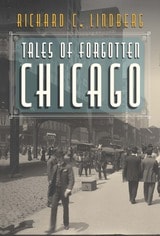
Tales of Forgotten Chicago
Richard C. Lindberg
Southern Illinois University Press, 2020
Tales of Forgotten Chicago contains twenty-one fascinating, little-known stories about a great city and its people. Richard C. Lindberg has dug deeply to reveal lost historical events and hidden gems from Chicago’s past.
Spanning the Civil War through the 1960s, the volume showcases forgotten crimes, punishments, and consequences: poisoned soup that nearly killed three hundred leading citizens, politicians, and business and religious leaders; a woman in showbiz and her street-thug husband whose checkered lives inspired a 1955 James Cagney movie; and the first police woman in Chicago, hired as a result of the senseless killing of a young factory girl in a racially tinged case of the 1880s.
Also included are tales of industry and invention, such as America’s first automobile race, the haunting of a wealthy Gilded Age manufacturer’s mansion, and the identity of the telephone’s rightful inventor. Chapters on the history of early city landmarks spotlight the fight to save Lakefront Park and how “Lucky” Charlie Weeghman’s north side baseball park became Wrigley Field. Other chapters explore civic, cultural, and political happenings: the great Railroad Fairs of 1948 and 1949; Richard J. Daley’s revival of the St. Patrick’s Day parade; political disrupter Lar “America First” Daly; and the founding of the Special Olympics in Chicago by Anne Burke and others. Finally, some are just wonderful tales, such asa touching story about the sinking of Chicago's beloved Christmas tree ship.
Engrossing and imaginative, this collection opens new windows into the past of the Windy City.
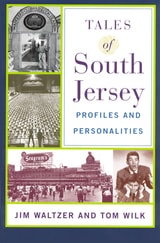
Tales of South Jersey
Profiles and PersonalitiesWaltzer, Jim
Rutgers University Press, 2001
There's much more to southern New Jersey than the Pine Barrens and the Jersey Devil, and this collection by journalists Jim Waltzer and Tom Wilk tells readers all about it. Oceanside and bayside towns offer a box seat from which to observe the regions rich history and the summery lore of the wonders of nature. Landlocked towns boast their own homespun and hell-raising traditions and idiosyncrasies.
Waltzer and Wilk have compiled almost fifty stories about the state's southernmost counties. Although the focus is on Atlantic City and its remarkable people, outsize structures, and quirky events, the storytelling ranges across the wider region to provide an insiders look at history as it was being made. You'll encounter gangsters and gamblers, baseball hitters and hurricanes, famous piers and hotels, landmark theaters and eateries, splashy events and unheralded oddities ¾ in sum, a cross-section of the regions character and characters.
The authors divide their book into six sections: entertainment, famous and infamous events, innovations and innovators, leisure and recreation, room and board, and sports legends. Within each section are the rich and varied stories Waltzer and Wilk have collected for New Jerseyans reading pleasure.
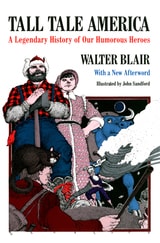
Tall Tale America
A Legendary History of our Humorous HeroesWalter Blair
University of Chicago Press, 1987

Tall Walls and High Fences
Bob Alexander
University of North Texas Press, 2020
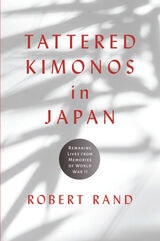
Tattered Kimonos in Japan
Remaking Lives from Memories of World War IIRobert Rand
University of Alabama Press, 2024
Examines Japan’s war generation—Japanese men and women who survived World War Two and rebuilt their lives from memories of that conflict.
Since John Hersey’s Hiroshima—the classic account, published in 1946, of the aftermath of the atomic bombing of that city—very few books have examined the meaning and impact of World War II through the eyes of Japanese men and women who survived that conflict. Tattered Kimonos in Japan does just that: It is an intimate journey into contemporary Japan from the perspective of the generation of Japanese soldiers and civilians who survived World War II, by a writer whose American father and Japanese father-in-law fought on opposite sides of the conflict.
The author, a former NPR senior editor, is Jewish, and he approaches the subject with the sensibilities of having grown up in a community of Holocaust survivors. Mindful of the power of victimhood, memory, and shared suffering, he travels across Japan, including Hiroshima and Nagasaki, meeting a compelling group of men and women whose lives, even now, are defined by the trauma of war, and by lingering questions of responsibility and repentance for Japan’s wartime aggression.
The image of a tattered kimono from Hiroshima is the thread that drives the narrative arc of this emotional story about a writer’s encounter with history, inside the Japan of his father’s generation, on the other side of his father’s war. This is a book about history with elements of family memoir. It offers a fresh and truly unique perspective for readers interested in World War II, Japan, or Judaica; readers seeking cross-cultural journeys; and readers intrigued by Japanese culture, particularly the kimono.
Teaching Black History to White People
By Leonard N. Moore
University of Texas Press, 2021
Leonard Moore has been teaching Black history for twenty-five years, mostly to white people. Drawing on decades of experience in the classroom and on college campuses throughout the South, as well as on his own personal history, Moore illustrates how an understanding of Black history is necessary for everyone.
With Teaching Black History to White People, which is “part memoir, part Black history, part pedagogy, and part how-to guide,” Moore delivers an accessible and engaging primer on the Black experience in America. He poses provocative questions, such as “Why is the teaching of Black history so controversial?” and “What came first: slavery or racism?” These questions don’t have easy answers, and Moore insists that embracing discomfort is necessary for engaging in open and honest conversations about race. Moore includes a syllabus and other tools for actionable steps that white people can take to move beyond performative justice and toward racial reparations, healing, and reconciliation.
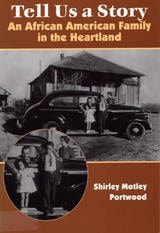
Tell Us a Story
An African American Family in the HeartlandShirley Motley Portwood
Southern Illinois University Press, 2000
Illinois State Historical Society's Certificate of Excellence (2002)
Supplemented by recollections from the present era, Tell Us a Story is a colorful mosaic of African American autobiography and family history set in Springfield, Illinois, and in rural southern Illinois, Missouri, and Arkansas from the 1920s through the 1950s.
Shirley Motley Portwood shares rural, African American family and community history through a collection of vignettes about the Motley family. Initially transcribed accounts of the Motleys’ rich oral history, these stories have been passed among family members for nearly fifty years. In addition to her personal memories, Portwood presents interviews with her father, three brothers, and two sisters plus notes and recollections from their annual family reunions. The result is a composite view of the Motley family.
A historian, Portwood enhances the Motley family story by investigating primary data such as census, marriage, school, and land records, newspaper accounts, city directories, and other sources. The backbone of this saga, however, is oral history gathered from five generations, extending back to Portwood's grandparents, born more than one hundred years ago. Information regarding two earlier generations—her great- grandfather and great-great-grandparents, who were slaves—is based on historical research into state archives, county and local records, plantation records, and manuscript censuses.
A rich source for this material—the Motley family reunions—are week-long retreats where four generations gather at the John Motley house in Burlington, Connecticut, the Portwood home in Godfrey, Illinois, or other locations. Here the Motleys, all natural storytellers, pass on the family traditions. The stories, ranging from humorous to poignant, reveal much about the culture and history of African Americans, especially those from nonurban areas. Like many rural African Americans, the Motleys have a rich and often joyful family history with traditions reaching back to the slave past. They have known the harsh poverty that made even the necessities difficult to obtain and the racial prejudice that divided whites and blacks during the era of Jim Crow segregation and inequality; yet they have kept a tremendous faith in self-improvement through hard work and education.
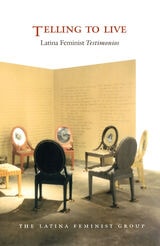
Telling to Live
Latina Feminist TestimoniosLatina Feminist Group
Duke University Press, 2001
The complex and rich tapestry of narratives that comprises this book introduces us to an intergenerational group of Latina women who negotiate their place in U.S. society at the cusp of the twenty-first century. These are the stories of women who struggled to reach the echelons of higher education, often against great odds, and constructed relationships of sustenance and creativity along the way. The stories, poetry, memoirs, and reflections of this diverse group of Puerto Rican, Chicana, Native American, Mexican, Cuban, Dominican, Sephardic, mixed-heritage, and Central American women provide new perspectives on feminist theorizing, perspectives located in the borderlands of Latino cultures.
This often heart wrenching, sometimes playful, yet always insightful collection will interest those who wish to understand the challenges U.S. society poses for women of complex cultural heritages who strive to carve out their own spaces in the ivory tower.
Contributors. Luz del Alba Acevedo, Norma Alarcón, Celia Alvarez, Ruth Behar, Rina Benmayor, Norma E. Cantú, Daisy Cocco De Filippis, Gloria Holguín Cuádraz, Liza Fiol-Matta, Yvette Flores-Ortiz, Inés Hernández-Avila, Aurora Levins Morales, Clara Lomas, Iris Ofelia López, Mirtha N. Quintanales, Eliana Rivero, Caridad Souza, Patricia Zavella
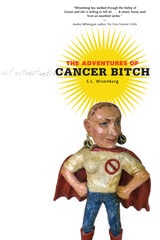
The Adventures of Cancer Bitch
S. L. Wisenberg
University of Iowa Press, 2009
Wisenberg’s writing has been compared to a mix of Leon Wieseltier and Fran Lebowitz, and in this book, she has Wieseltier’s erudition and Lebowitz’s self-deprecating cleverness: “If anybody ever offers you the choice between suffering and depression, take the suffering. And I don't mean physical suffering. I mean emotional suffering. I am hereby endorsing psychic suffering over depression.”
From The Adventures of Cancer Bitch:
I found that when you invite people to a pre-mastectomy party, they show up. Even those with small children. The kids were so young that they didn't notice that most of the food had nipples. . . . I talked to everyone—about what I'm not sure. Probably about my surgery. Everyone told me how well I looked. I felt giddy. I was going to go under, but not yet; I was going to be cut, but not yet; I was going to be bald, but not yet. As my friend who had bladder cancer says: The thing about cancer is you feel great until they start treating you for it.
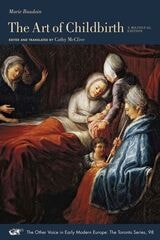
The Art of Childbirth
A Seventeenth-Century Midwife’s Epistolary Treatise to Doctor Vallant: A Bilingual EditionMarie Baudoin
Iter Press, 2022
In 1671, Marie Baudoin (1625–1700), head midwife and governor of the Hôtel-Dieu of Clermont-Ferrand, sent a treatise on the art of childbirth to her powerful Parisian patron, Dr. Vallant. The story of how Baudoin’s knowledge and expertise as a midwife came to be expressed, recorded, and archived raises the question: Was Baudoin exceptional because she was herself extraordinary, or because her voice has reached us through Vallant’s careful archival practices? Either way, Baudoin’s treatise invites us to reconsider the limits of what we thought we knew midwives “could be and do” in seventeenth-century France. Grounding Marie Baudoin’s text in a microanalysis of her life, work, and the Jansenist network between Paris and Clermont-Ferrand, this book connects historiographies of midwifery, Jansenism, hospital administration, public health, knowledge and record-keeping, and women’s work, underscoring both Baudoin’s capabilities and the archival accidents and intentions behind the preservation of her treatise in a letter.
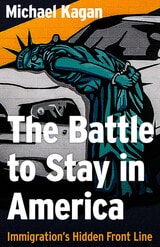
The Battle to Stay in America
Immigration's Hidden Front LineMichael Kagan
University of Nevada Press, 2025
The Battle to Stay in America is the story of a community coming to grips with the federal government’s crackdown on immigrants, and learning how to defend itself. Informative and personal, this is a story about mothers and fathers, lawyers and activists, local police and federal agencies, and a struggle for the identity of a nation. This is the quintessential story of the war on immigrants, as fought and felt on the front lines in the heart of America.
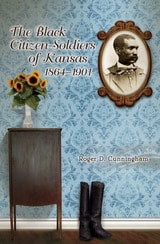
The Black Citizen-Soldiers of Kansas, 1864-1901
Roger D. Cunningham
University of Missouri Press, 2008
Roger Cunningham examines a lost history to show that, in addition to black regulars, hundreds of other black militiamen and volunteers from the Sunflower State provided military service from the Civil War until the dawn of the twentieth century. He tells how African Americans initially filled segregated companies hurriedly organized to defend the state from the threat of Confederate invasion, with some units ordered into battle around Kansas City. Then after the state constitution was amended to admit blacks into the Kansas National Guard, but its generals still refused to integrate, blacks served in reserve militia and independent companies and in all-black regiments that were raised for the Spanish-American and Philippine wars.
Cunningham has researched service records, African American newspapers, and official correspondence to give voice to these citizen-soldiers. He shares stories of real people like William D. Matthews, a captain in the First Kansas Colored Infantry who was refused a commission when his regiment was mustered into the Union army; Charles Grinsted, who commanded the first black militia company after the Civil War; and other unsung heroes.
More than a military history, Cunningham’s account records the quest of black men, many of them former slaves, for inclusion in American society. Many came from the bottom of the socioeconomic order and found that as militiamen they could gain respect within their communities. And by marching in public ceremonies and organizing fund-raising activities to compensate for lack of financial support from the state, they also strengthened the ties that bound African American communities together.
The Body of Brooklyn
David Lazar
University of Iowa Press, 2003
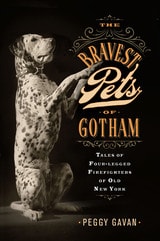
The Bravest Pets of Gotham
Tales of Four-Legged Firefighters of Old New YorkPeggy Gavan
Rutgers University Press, 2024
The Bravest Pets of Gotham takes readers on a fun historical tour of Old New York, sharing touching and comical stories about the bond between FDNY firefighters and their four-legged or feathered friends. The book contains more than one hundred astonishing, emotional, and sometimes hilariously absurd tales of the FDNY animal mascots whose extraordinary intelligence, acts of bravery, and funny antics deserve to be remembered. Some anecdotes depict fire companies that broke the one-pet rule and welcomed a veritable menagerie of animals into their firehouses, including goats, turtles, and even monkeys. Whether you are an animal lover, a history buff, or a fan of firefighting, The Bravest Pets of Gotham is full of stories that will thrill and amuse you.
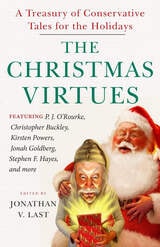
The Christmas Virtues
A Treasury of Conservative Tales for the HolidaysJonathan V. Last
Templeton Press, 2015
The Christmas season is a minefield of terrors: The family get-togethers with weird uncles, the sloppy office parties, the annoying 10-page Look-at-Us holiday letters—and we haven’t even mentioned the Black Friday mobs and that wretched Alvin and the Chipmunks song that plays every 90 minutes on Pandora, whether you like it or not. Rum-pah-pah-pum.
And don’t forget the PC police lurking around every corner looking to beat the last bits of joy and comradery out of our society. Merry Christmas? Really?
But it doesn’t have to be this way. 'Tis the season to recapture the wonder of Christmas, in our hearts and in our homes and even out in the public square. The Christmas Virtues is a humorous companion for, and guide to, navigating the trials and tribulations of the holiday season. It’s a reminder of how we can embrace the joy, hope, and love of Christmas—of the real Christmas.
And a call for us to stand up for Christmas because America needs it now, more than ever.
So sit back and enjoy the following tales by your favorite authors:
- Rob Long’s "The Christmas Spirit: In Defense of Ebenezer Scrooge.”
- P. J. O’Rourke’s “The Commercialization of Christmas: God Moves (The Merchandise) in a Mysterious Way.”
- Andrew Ferguson’s “Jingle Bell Rock: Taking the Christ Out of Christmas Songs”
- Matt Labash’s “Home for the Holidays: The Trials and Tribulations of Family.”
- Stephen F. Hayes’ "here Comes Santa Claus: The Wonder of Christmas Morning."
- Toby Young’s “The ghosts of Christmas: Holidays Past and Present”
- Jonah Goldberg’s “The War on Christmas: It’s Real, and It’s Spectacular.”
- Christopher Buckley’s “Saint Joseph: The Forgotten ‘Father Christmas.’”
- Kirsten Powers’ “The first Noel: Christmas with Jesus.”
- James Lileks' "Boxing Day and the Christmas Hangover."
- And More
The Cockroach Papers
A Compendium of History and LoreRichard Schweid
University of Chicago Press, 2015
Traveling from New York City to Louisiana, Mexico, Nicaragua, and Morocco, Schweid blends stories of his own squirm-inducing roach encounters with meticulous research to spin a tale both humorous and harrowing. As he investigates roaches’ more nefarious interactions with our species—particularly with those of us living at the margins of society—Schweid also explores their astonishing diversity, how they mate, what they’ll eat, and what we’ve written about them (from Kafka and Nelson Algren to archy and mehitabel). Knowledge soon turns into respect, and Schweid looks beyond his own fears to arrive at an uncomfortable truth: We humans are no more peaceful, tidy, or responsible about taking care of the Earth or each other than these tiny creatures that swarm in the dark corners of our minds, homes, and cereal boxes.
The Culture of Calamity
Disaster and the Making of Modern AmericaKevin Rozario
University of Chicago Press, 2007
Turn on the news and it looks as if we live in a time and place unusually consumed by the specter of disaster. The events of 9/11 and the promise of future attacks, Hurricane Katrina and the destruction of New Orleans, and the inevitable consequences of environmental devastation all contribute to an atmosphere of imminent doom. But reading an account of the San Francisco earthquake of 1906, with its vivid evocation of buildings “crumbling as one might crush a biscuit,” we see that calamities—whether natural or man-made—have long had an impact on the American consciousness.
Uncovering the history of Americans’ responses to disaster from their colonial past up to the present, Kevin Rozario reveals the vital role that calamity—and our abiding fascination with it—has played in the development of this nation. Beginning with the Puritan view of disaster as God’s instrument of correction, Rozario explores how catastrophic events frequently inspired positive reactions. He argues that they have shaped American life by providing an opportunity to take stock of our values and social institutions. Destruction leads naturally to rebuilding, and here we learn that disasters have been a boon to capitalism, and, paradoxically, indispensable to the construction of dominant American ideas of progress.
As Rozario turns to the present, he finds that the impulse to respond creatively to disasters is mitigated by a mania for security. Terror alerts and duct tape represent the cynical politician’s attitude about 9/11, but Rozario focuses on how the attacks registered in the popular imagination—how responses to genuine calamity were mediated by the hyperreal thrills of movies; how apocalyptic literature, like the best-selling Left Behind series, recycles Puritan religious outlooks while adopting Hollywood’s style; and how the convergence of these two ways of imagining disaster points to a new postmodern culture of calamity. The Culture of Calamity will stand as the definitive diagnosis of the peculiarly American addiction to the spectacle of destruction.
The Dadly Virtues
Adventures from the Worst Job You'll Ever LoveJonathan V. Last
Templeton Press, 2015
The Dadly Virtues is a tongue-in-cheek collection of encouragement and guidance for any stage of fatherhood, from pacifying babies to prepping for senior prom, from cutting the cord to getting the first, “Best Grandpa” t-shirt. P.J. O’Rourke sets the stage with the chapter, “What Do Men Get from Fatherhood? Besides What They Put In …” and then is followed by:
•Matthew Continetti’s, “Newborn Terror: The Moment You Realize that ‘Bundle of Joy’ Is a Euphemism for Something Very Different.”
•Stephen F. Hayes’ “Siblings: The Best Gift You’ll Ever Give Your Kids.”
•Jonah Goldberg’s “Get Your Kid a Dog: The Moral Case for Pets.”
•Tucker Carlson’s “In Praise of Adventure: How to Fill a Child’s Life with Excitement and Danger (without Getting Them Killed).”
•Michael Graham’s, “Dating: Enjoy the Movie and Please Keep the Impregnation to a Minimum.”
•Christopher Caldwell’s “College: It’s Not as Bad as You Think; It’s Worse.”
•Andrew Ferguson’s “Emerging Adults and Empty Nesters: Just When You Had Fatherhood All Figured Out.”
•Toby Young’s “The Dark Side: Bad Parenting and the Things We Think, but Do Not Say.”
•Joseph Epstein’s “Thanks, Grandpa: Grandfatherhood and the Spirit of the Age.”
•And more.
Father-to-be, two-time-dad, or granddad, each essay will make you laugh and, at the same time, reinforce your commitment to the virtuous—the dadly—life.
The Difficulty of Being a Dog
Roger Grenier
University of Chicago Press, 2000
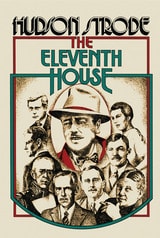
The Eleventh House
MemoirsHudson Strode, Introduction by Don Noble
University of Alabama Press, 1975
Why should Hudson Strode matter to readers today? Because his life was a masterclass in reinvention and a backstage pass to the Jazz Age’s wittiest salons. Strode wasn’t just a professor in Tuscaloosa; he was a cultural impresario who turned a modest Southern life into a global adventure. He taught generations of writers, staged Shakespeare with bravura, and wrote travel books that earned him a knighthood from the King of Sweden.
But the real allure? The gossip. Strode dined with Lady Astor, traded quips with H. L. Mencken, and sipped cocktails with Zelda and Scott Fitzgerald when they were the incandescent couple of the 1920s. He met Hemingway in Cuba, Robinson Jeffers in Carmel, and Isak Dinesen in Denmark—then wrote about them with candor and charm. His memoir brims with stories of literary giants, royal encounters, and the occasional eyebrow-raising escapade (ask him about the brothel in Birmingham).
For contemporary readers, The Eleventh House is both a captivating autobiography and a time capsule of ambition, art, and audacity. Strode’s world—where Southern gentility collided with European modernism and Jazz Age excess—feels startlingly relevant in an era obsessed with reinvention and celebrity culture. If you’ve ever wondered what it was like to gossip with the Fitzgeralds or watch the devil admire himself in a porch mirror, this memoir delivers.
Step inside Hudson Strode’s The Eleventh House. It’s witty, worldly, and just scandalous enough to keep you turning pages.
The Heart of Things
A Midwestern AlmanacJohn Hildebrand
Wisconsin Historical Society Press, 2014
In this remarkable book of days, John Hildebrand charts the overlapping rings—home, town, countryside—of life in the Midwest. Like E. B. White, Hildebrand locates the humor and drama in ordinary life: church suppers, Friday night football, outdoor weddings, garden compost, family reunions, roadside memorials, camouflage clothing. In these wry, sharply observed essays, the Midwest isn’t The Land Time Forgot but a more complicated (and vastly more interesting) place where the good life awaits once we figure exactly out what it means. From his home range in northwestern Wisconsin, Hildebrand attempts to do just that by boiling down a calendar year to its rich marrow of weather, animals, family, home—in other words, all the things that matter.
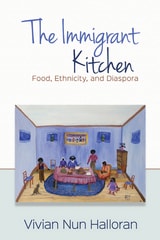
The Immigrant Kitchen
Food, Ethnicity, and DiasporaVivian Nun Halloran
The Ohio State University Press, 2016
The Immigrant Kitchen describes how these memoirs function as a complex and engaging mass media genre that caters to multiple reading constituencies. Specifically, they entertain readers with personal anecdotes and recollections, teach new culinary skills through recipes, share insight into different cultural mores through ethnographic and reportorial discussions of life in other countries, and attest to the impact that an individual’s legal immigration into the United States continues to have down through the generations of his or her American-born families.
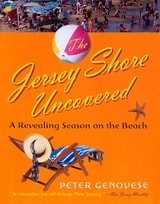
The Jersey Shore Uncovered
A Revealing Season on the BeachGenovese, Peter
Rutgers University Press, 2003
This is not your typical Jersey Shore book.
Yes, you'll find the obvious-beaches and boardwalks, lifeguards and lighthouses, fishing and food. But Peter Genovese will also take you off the beaten track for an insider's look at this famous (and infamous) 127-mile stretch from Sandy Hook to Cape May.
Birders, tiki hut builders, beach cleaners, wheel-of-chance operators, she-crab soup makers-they're all here. You'll check out an Airstream-only trailer park and visit a Point Pleasant Beach house where the music of Frank Sinatra plays nearly 24/7. Genovese will introduce you to the owner of the Stone Pony and to participants at the grueling Atlantic City Around-the-Island Swim as they describe their battles with tides, exhaustion, and face-stinging jellyfish. All of that, plus you'll find out why Ocean Grove residents write their names on their flowerpots.
Beach reading just doesn't get any better than this.
Spend a summer with Peter Genovese as he chronicles a typical wild and wacky, kitschy and classy season along the New Jersey coastline.
Lifeguards, surfers, beachgoers, birders, ice cream vendors, seashell sellers, banner pilots-they're all here. You'll be on the scene when Atlantic City's mayor officially begins summer by "unlocking the ocean," get a whiff of the state barbeque championship, watch the nation's longest-running all-women lifeguard competition, and even spend a weekend, Survivor-style, on a Barnegat Bay island.
The Ocean City Baby Parade, Clownfest, the state's hottest bikini contest, and the World Series of Surf Fishing are all covered. You'll also meet the folks at the Diamondback Terrapin Conservation Project, the Cape May Migratory Bird Refuge, and the Marine Mammal Stranding Center.
Genovese introduces you to Little Miss Chaos and the King of Corn, the Jersey Shore Hot Dog Queen, and Lucky Leo. You'll go on patrol with the New Jersey State Marine Police, meet the man behind Big Mike's E-Z Bail Bonds, and find salvation at the Boardwalk Chapel.
The Jersey Shore Uncovered flawlessly depicts the timeless allure of New Jersey beach culture. Along with his stories, Genovese brings readers hundreds of color and black-and-white photos that brilliantly capture exactly what makes this 127-mile stretch of shoreline unique. Whether you've never been to a New Jersey beach or you're a Jersey native who spends your summers "down the Shore," you're certain to learn a thing or two from this book. So get settled in your beach chair, put on some suntan lotion, and enjoy.
The Killdeer
And Other Stories From the Farming LifeMichael Cotter
Parkhurst Brothers, Inc., 2014
--Rex Ellis, Director of Museum programs, Smithsonian Institution, Washington, D.C.
The Land of Milk and Uncle Honey
Memories from the Farm of My YouthAlan Guebert with Mary Grace Foxwell
University of Illinois Press, 2015
Here are Guebert's tireless parents, measuring the year not in months but in seasons for sewing, haying, and doing the books; Jackie the farmhand, needing ninety minutes to do sixty minutes' work and cussing the entire time; Hoard the dairyman, sore fingers wrapped in electrician's tape, sharing wine and the prettiest Christmas tree ever; and the unflappable Uncle Honey, spreading mayhem via mistreated machinery, flipped wagons, and the careless union of diesel fuel and fire.
Guebert's heartfelt and humorous reminiscences depict the hard labor and simple pleasures to be found in ennobling work, and show that in life, as in farming, Uncle Honey had it right with his succinct philosophy for overcoming adversity: "the secret's not to stop."
https://www.youtube.com/watch?v=DooGQqUlXI4&index=1&list=FLPxtuez-lmHxi5zpooYEnBg
The Moon in the Water
Reflections on an Aging ParentKathy J. Phillips
Vanderbilt University Press, 2008
In a series of moving vignettes, the author begins by describing a particular representation of Water-Moon Kuan Yin, a Buddhist teacher and goddess associated with compassion, who often sits on a precarious overhang or floats on a flimsy petal. Then Kuan Yin steps out of the frame to join the author in the mundane challenges of caring for her father-transferring his health insurance, struggling with a wheelchair van, managing adult diapers, or playing in the fictions of dementia. From perplexed to poignant to funny, the vignettes record the working-class English of a fading but still wise dad, and they find other human versions of Kuan Yin in a doctor who will still make house calls or kind strangers in the street.
The book includes ten illustrations: both classical representations of Kuan Yin and also the author's own drawings, which adapt Kuan Yin in an act of practical spirituality, reading art through life and life through art. Each vignette invites the harried caregiver to take a deep breath and meditate on the trials and joys of caring for an aging parent.
The Moon, Come to Earth
Dispatches from LisbonPhilip Graham
University of Chicago Press, 2009
A dispatch from a foreign land, when crafted by an attentive and skilled writer, can be magical, transmitting pleasure, drama, and seductive strangeness.
In The Moon, Come to Earth, Philip Graham offers an expanded edition of a popular series of dispatches originally published on McSweeney’s, an exuberant yet introspective account of a year’s sojourn in Lisbon with his wife and daughter. Casting his attentive gaze on scenes as broad as a citywide arts festival and as small as a single paving stone in a cobbled walk, Graham renders Lisbon from a perspective that varies between wide-eyed and knowing; though he’s unquestionably not a tourist, at the same time he knows he will never be a local. So his lyrical accounts reveal his struggles with (and love of) the Portuguese language, an awkward meeting with Nobel laureate José Saramago, being trapped in a budding soccer riot, and his daughter’s challenging transition to adolescence while attending a Portuguese school—but he also waxes loving about Portugal’s saudade-drenched music, its inventive cuisine, and its vibrant literary culture. And through his humorous, self-deprecating, and wistful explorations, we come to know Graham himself, and his wife and daughter, so that when an unexpected crisis hits his family, we can’t help but ache alongside them.
A thoughtful, finely wrought celebration of the moment-to-moment excitement of diving deep into another culture and confronting one’s secret selves, The Moon, Come to Earth is literary travel writing of a rare intimacy and immediacy.
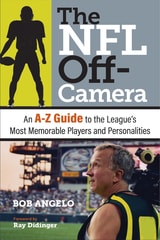
The NFL Off-Camera
An A–Z Guide to the League's Most Memorable Players and PersonalitiesBob Angelo
Temple University Press, 2023
Angelo effuses about his meeting with the larger-than-life Jim Brown and appreciates the trash talking John Randle. He poignantly reflects on “Bullet” Bob Hayes, the world's fastest man who “could not outrun his demons,” and showcases the mercurial Duane Thomas and the free-wheeling Tony Siragusa. The NFL Off-Camera reveals why Angelo sparred with Hall-of-Fame player turned broadcaster Frank Gifford and demonstrates why Super Bowl champion head coach Sean Payton is his “least favorite person in pro football.”
From Jared Allen to Jim Zorn, The NFL Off-Camera explores nearly 100 of the game’s outsized personalities and debunks some of football's most enduring myths. Angelo’s original, unfiltered look at Pro Football is as hard-hitting and exciting as any one of his NFL Films.
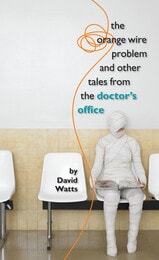
The Orange Wire Problem and Other Tales from the Doctor’s Office
David Watts
University of Iowa Press, 2009
With disarming candor and the audacity to admit that practicing medicine can be a crazy thing, Watts fills each page with riveting details, moving accounts, or belly-laughs. As the stories in this work unfold, we are witness to the moral dilemmas and personal rewards of ministering to the sick. Whether the subject is the potential benefits of therapeutic deception or telling a child about death, Watts’s ear for the right word, the right tone, and the right detail never fails him.
From The Orange Wire Problem and Other Tales from the Doctor’s Office:
We were lingering in the outer office. He mentioned again, no biopsy. I knew that. And I knew there would be no chemotherapy.
Maybe it's like that Orange Wire Problem, I said.
Yes exactly, he said, and four years from now when we're all sitting around the campfire we'll remember the Orange Wire Problem. . .
And I thought to myself, my brother did that. Spoke of the time ahead as he was dying of lung cancer. Six months from now he had said, we'll be glad we did all those drug therapies—as if to speak of the future laid claim to the future.
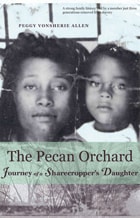
The Pecan Orchard
Journey of a Sharecropper's DaughterPeggy Vonsherie Allen
University of Alabama Press, 2011
This is a true story of the struggle, survival, and ultimate success of a large black family in south Alabama who, in the middle decades of the 20th century, lifted themselves out of poverty to achieve the American dream of property ownership. Descended from slaves and sharecroppers in the Black Belt region, this family of hard-working parents and their thirteen children is mentored by its matriarch, Moa, the author’s beloved great grandmother, who passes on to the family, along with other cultural wealth, her recipe for moonshine.
Without rancor or blame, and even with occasional humor, The Pecan Orchard offers a window into the inequities between blacks and whites in a small southern town still emerging from Jim Crow attitudes.
Told in clean, straightforward prose, the story radiates the suffocating midday heat of summertime cotton fields and the biting winter wind sifting through porous shanty walls. It conveys the implicit shame in “Colored Only” restrooms, drinking fountains, and eating areas; the beaming satisfaction of a job well done recognized by others; the “yessum” manners required of southern society; and the joyful moments, shared memories, and loving bonds that sustain—and even raise—a proud family.
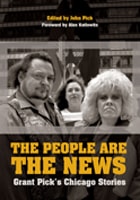
The People Are the News
Grant Pick’s Chicago StoriesJohn Pick
Northwestern University Press, 2009
This distinctive collection features writings from Grant Pick’s long, distinguished career in literary journalism. Pick had a uniquely open eye and ear for people who were in difficult situations, doing extraordinary things, or both. Most of his stories focus on interesting but overlooked Chicagoans, like the struggling owner of a laundrymat on the west side or the successful doctor who, as he faced his own death from cancer, strove to enlighten his colleagues in the field of medicine. As only a lifetime Chicagoan could, he described in tender detail the worlds in which people lived or worked, providing a look not just at one city’s citizens but at humanity as a whole.
Pick’s widow and son curate this showcase of some of his most well-remembered work, such as “The Rag Man of Lincoln Park” and “Brother Bill.” In these and all of his other works, Pick wrote from the front lines, speaking to people whom others might encounter everyday but never really see. He faithfully characterized his subjects, never denying them dignity or value and never judging them. In the mirror he held up to his city, Chicago could see the shared humanity of all its citizens.
The Second City Unscripted
Revolution and Revelation at the World-Famous Comedy TheaterMike Thomas
Northwestern University Press, 2012
Since its modest beginning in 1959, The Second City in Chicago has become a world-renowned bastion of hilarity. A training ground for many of today’s top comedic talents—including Alan Arkin, Dan Aykroyd, Stephen Colbert, Tina Fey, Bill Murray, and Amy Sedaris— it was an early blueprint for improv-based sketch revues in North America and abroad. Its immeasurable influence also extends to television, film, and the Broadway stage. Mike Thomas interviewed scores of key figures who have contributed to Second City’s vast legacy —its stars as well as those who worked and continue to work behind the scenes—to create this entertaining and informative oral history. The story is equal parts legendary highlights, gossip, and insight into how the theater’s brand of comedy was and is created. Unprecedented in scope and rife with colorful tales well told, The Second City Unscripted is an essential account of this iconic show business institution.
The Simple Beauty of the Unexpected
A Natural Philosopher’s Quest for Trout and the Meaning of EverythingMarcelo Gleiser
Dartmouth College Press, 2016
The Simple Beauty of the Unexpected
A Natural Philosopher’s Quest for Trout and the Meaning of EverythingMarcelo Gleiser
Brandeis University Press, 2022
Marcelo Gleiser has had a passion for science and fishing since he was a boy growing up on the beaches of Rio de Janeiro. As a world-famous theoretical physicist with hundreds of scientific articles and several books of popular science to his credit, he felt it was time to once again connect with nature in less theoretical ways. After seeing a fly-fishing class on the Dartmouth College green, he decided to learn to fly-fish, a hobby, he says, that teaches humility. In The Simple Beauty of the Unexpected, Gleiser travels the world to scientific conferences, fishing wherever he goes. At each stop, he ponders the myriad ways physics informs the act of fishing; how, in its turn, fishing serves as a lens into nature’s inner workings; and how science engages with questions of meaning and spirituality, inspiring a sense of mystery and awe of the not yet known. Personal and engaging, The Simple Beauty of the Unexpected is a scientist’s tribute to nature, an affirmation of humanity’s deep connection with and debt to Earth, and an exploration of the meaning of existence, from atom to trout to cosmos.
This softcover edition features a new essay by Gleiser on how we need a profound change of worldview if we are to have a vibrant future for our species in this fragile environment. He describes how this book was an incubator for his current thinking.
The Staff and the Serpent
Pertinent and Impertinent Observatioins on the World of MedicineAllen B. Weisse, M.D.
Southern Illinois University Press, 1998
If laughter is good medicine, then the twenty-two essays offered here by Dr. Allen B. Weisse should prove a hearty antidote to a host of ills suffered by doctors, students and would-be students of medicine, amateur and professional medical historians, and, of course, patients, those of us who wonder what the medical profession is all about and how it affects us.
Often humorous and always informative, these essays cover a broad range of medical subjects. Weisse tackles medical ethics, offers advice to medical and premedical students and their families, delves into unusual episodes in medical history, confronts considerations of aging and self-image, and discusses the vagaries of rewards and recognition available from medical research. He also examines honesty in medical thinking, investigates ways of dealing with bureaucracies, and considers ways of learning to live with oneself. Finally, he evaluates the changing nature of medicine and medical research and looks into the roles of minorities and women in medicine.
Weisse knows whereof he speaks, enlivening each essay with personal anecdotes. When he explains past and current medical school admissions policies, for example, he approaches the subject with the combined knowledge of a former premedical student, a medical student, a faculty member, and an admissions chairperson over the past thirty years. As a medical researcher whose chief turned against him, he certainly knows what he is talking about in "Betrayal." He also writes with authority in his humorous account of how he, as a senior physician, struggles to keep on top of the overwhelming onslaught of medical advances ("Confessions of Creeping Obsolescence"). And in an essay to boost all of our spirits, he tells how an ivory tower physician (Weisse himself) gets drawn up in the service of the IRS bureaucracy and winds up tweaking its nose a bit ("In the Service of the IRS").
Perhaps nothing better illustrates the vigor, wit, and élan that characterize Weisse’s essays than his titles. "On Chinese Restaurants" deals with unusual syndromes and the way in which they have evolved and affected the way we look at ourselves. Other titles are "Pneumocystis and Me," "The Vanishing Male," "Say It Isn’t ‘No," "Bats in the Belfry or Bugs in the Belly?: Helicobacter and the Resurrection of Johannes Fibiger," and "PC: Politically Correct or Potentially Corrupting?"
Finally, two words in this book’s subtitle succinctly characterize Weisse’s essays: pertinent and impertinent—germane and irreverent information rakishly presented.
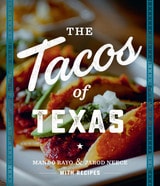
The Tacos of Texas
By Mando Rayo and Jarod Neece
University of Texas Press, 2016
Rooted in tradición mexicana and infused with Texas food culture, tacos are some of Texans’ all-time favorite foods. In The Tacos of Texas, the taco journalists Mando Rayo and Jarod Neece take us on a muy sabroso taco tour around the state as they discover the traditions, recipes, stories, and personalities behind puffy tacos in San Antonio, trompo tacos in Dallas, breakfast tacos in Austin, carnitas tacos in El Paso, fish tacos in Corpus Christi, barbacoa in the Rio Grande Valley, and much more.
Starting with the basics—tortillas, fillings, and salsas—and how to make, order, and eat tacos, the authors highlight ten taco cities/regions of Texas. For each place, they describe what makes the tacos distinctive, name their top five places to eat, and listen to the locals tell their taco stories. They hear from restaurant owners, taqueros, abuelitas, chefs, and patrons—both well-known and everyday folks—who talk about their local taco history and culture while sharing authentic recipes and recommendations for the best taco purveyors.
Whether you can’t imagine a day without tacos or you’re just learning your way around the trailers, trucks, and taqueros that make tacos happen, The Tacos of Texas is the indispensable guidebook, cookbook, and testimonio.
The Way Home
Essays on the Outside WestJames McVey
University of Utah Press, 2010
"A sense of place can be a complicated matter," writes James McVey in the prologue to his new collection of essays, The Way Home. Based on twenty years of living and traveling in the West, the collection includes essays on river running, backcountry skiing, fly fishing, and backpacking—all describing various attempts to engage in meaningful contact with the elements of wild nature, and to have a deep firsthand knowledge of a place. With an essayists breadth McVey engages ecology, geology, anthropology, psychology, and history as well as his own personal outdoor experiences to peer into the particulars of living in as complicated a place as the West. While the essays function within the tradition of western nature writing, they transcend regional issues insofar as they maintain a broader philosophical context that accounts for such global concerns as mass extinction and climate change.
The essays use backcountry experiences as occasions for reflection on such topics as nature and culture, conservation, and the human relation to the wild. They combine the naturalist’s commitment to landscape with the adventurer’s attention to technique and skill. The outdoor experiences function as ritualized activity, the purpose of which is to explore a specific relation with a place. As such, the essays consider certain nonrational ways of knowing the world, including a perception of aesthetics based on sensory participation with the more-than-human world. This gets to the heart of the essential connection in this work between its adventure themes and nature concerns--a connection very much concerned with issues of lifestyle and worldview. McVey describes his own journey in the West, traveling through the varying philosophical revelations wilderness presents—"a lifetime of questions"—finally landing on a conservation ethic, a feeling of home.
Things You Need to Hear
Collected Memories of Growing Up in Arkansas, 1890–1980Margaret Jones Bolsterli
University of Arkansas Press, 2016
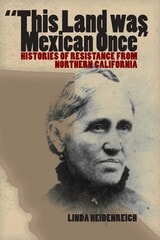
This Land Was Mexican Once
Histories of Resistance from Northern CaliforniaBy Linda Heidenreich
University of Texas Press, 2007
The territory of Napa County, California, contains more than grapevines. The deepest roots belong to Wappo-speaking peoples, a group whose history has since been buried by the stories of Spanish colonizers, Californios (today's Latinos), African Americans, Chinese immigrants, and Euro Americans. Napa's history clearly is one of co-existence; yet, its schoolbooks tell a linear story that climaxes with the arrival of Euro Americans. In "This Land was Mexican Once," Linda Heidenreich excavates Napa's subaltern voices and histories to tell a complex, textured local history with important implications for the larger American West, as well.
Heidenreich is part of a new generation of scholars who are challenging not only the old, Euro-American depiction of California, but also the linear method of historical storytelling—a method that inevitably favors the last man writing. She first maps the overlapping histories that comprise Napa's past, then examines how the current version came to dominate—or even erase—earlier events. So while history, in Heidenreich's words, may be "the stuff of nation-building," it can also be "the stuff of resistance." Chapters are interspersed with "source breaks"—raw primary sources that speak for themselves and interrupt the linear, Euro-American telling of Napa's history. Such an inclusive approach inherently acknowledges the connections Napa's peoples have to the rest of the region, for the linear history that marginalizes minorities is not unique to Napa. Latinos, for instance, have populated the American West for centuries, and are still shaping its future. In the end, "This Land was Mexican Once" is more than the story of Napa, it is a multidimensional model for reflecting a multicultural past.
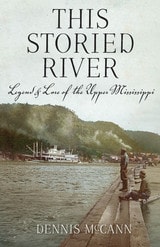
This Storied River
Legend & Lore of the Upper MississippiDennis McCann
Wisconsin Historical Society Press, 2017
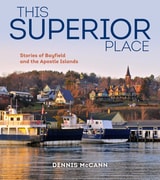
This Superior Place
Stories of Bayfield and the Apostle IslandsDennis McCann
Wisconsin Historical Society Press, 2013
Picturesque little Bayfield on Lake Superior is Wisconsin’s smallest city by population but one of its most popular visitor destinations. This book captures those unique qualities that keep tourists coming back year after year and offers a historically reliable look at the community as it is today and how it came to be. Abundantly illustrated with both historical and contemporary images, This Superior Place showcases, as author Dennis McCann writes, “a community where the past was layered with good times and down times, where natural beauty was the one resource that could not be exhausted by the hand of man, and where history is ever present.”
Because Bayfield serves as “the gateway to the Apostle Islands,” the book also includes chapters on the Apostle Islands National Lakeshore, Madeline Island, and the nearby Red Cliff Ojibwe community. It also covers the significant eras in the city’s history: lumbering, quarrying, commercial fishing, and the advent of the orchards visitors see today. It is not a guidebook as such but more of a visual and written tour of the city and the major elements that came together to make it what it is. Colorful stories from the past, written in Dennis McCann’s casual, humorous style, give a sense of the unique characters and events that have shaped this charming city on the lake.
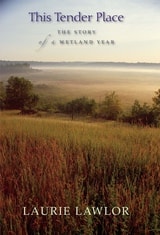
This Tender Place
The Story of a Wetland YearLaurie Lawlor
University of Wisconsin Press, 2007
After the deaths of her father and father-in-law, Laurie Lawlor discovers an unlikely place for healing and transformation in a wetland in southeastern Wisconsin—a landscape of abundant and sometimes inaccessible beauty that has often been ignored, misunderstood, and threatened by human destruction. In her decade-long personal wetland journey, she examines the sky, delves underwater, and peers between sedges in all seasons and all times of day.
This Tender Place is a celebration of nature, the elements, and humanity. From the wetland’s genesis during the ice age to its survival in the twenty-first century, Lawlor chronicles the universal ties among people, wild places, and healthy wetlands.
An engaging and deeply intimate record, This Tender Place is at its heart a story of refuge and renewal refracted through the lens of life within the wetlands—one of the most productive, yet most endangered, ecosystems in the world.
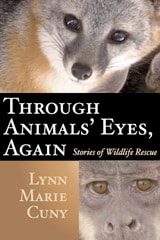
Through Animals' Eyes, Again
Stories of Wildlife RescueLynn Marie Cuny
University of North Texas Press, 2006
Through Animals' Eyes
True Stories from a Wildlife SanctuaryLynn Marie Cuny
University of North Texas Press, 1998
Thundering Sneakers
By Prudence Mackintosh
University of Texas Press, 2002
Transit Talk
New York's Bus and Subway Workers Tell Their StoriesRobert W. Snyder
Rutgers University Press, 1998
There are nearly 44,000 transit workers like those you will meet in Transit Talk , and every day they help five million of us travel to work, to school, to weddings, to funerals, to hospitals, to vacations. These workers labor daily on subway tracks inches from high-voltage powerlines, risking their lives for passengers they'U never know. The city can feel large and fragmented, but the transportation system and its workers create common threads in the lives of all New Yorkers, threads we take for granted.
Together, their stories create a human tableau of life and labor in the city within a city that is the MTA New York City Transit. Transit workers find satisfaction in fixing a damaged subway car, gain wisdom from mastering a dangerous workplace, nurse emotional wounds from tending to someone injured in an accident, battle frustration from difficulties with management, and express satisfaction when reflecting on a productive career. They tell of how years spent in the same shop create bonds between workers. They talk of the burden of laboring in a twenty-four-hour system with night shifts and weekend workdays that take them away from families. You'U hear painful tales of informing next-of-kin of a death on the tracks as well as joyous anecdotes of workers delivering a baby in a subway car.
Turn Here Sweet Corn
Organic Farming WorksAtina Diffley
University of Minnesota Press, 2013
When the hail starts to fall, Atina Diffley doesn’t compare it to golf balls. She’s a farmer. It’s “as big as a B-size potato.” As her bombarded land turns white, she and her husband Martin huddle under a blanket and reminisce: the one-hundred-mile-per-hour winds; the eleven-inch rainfall (“that broccoli turned out gorgeous”); the hail disaster of 1977. The romance of farming washed away a long time ago, but the love? Never. In telling her story of working the land, coaxing good food from the fertile soil, Atina Diffley reminds us of an ultimate truth: we live in relationships—with the earth, plants and animals, families and communities.
A memoir of making these essential relationships work in the face of challenges as natural as weather and as unnatural as corporate politics, her book is a firsthand history of getting in at the “ground level” of organic farming. One of the first certified organic produce farms in the Midwest, the Diffleys’ Gardens of Eagan helped to usher in a new kind of green revolution in the heart of America’s farmland, supplying their roadside stand and a growing number of local food co-ops. This is a story of a world transformed—and reclaimed—one square acre at a time.
And yet, after surviving punishing storms and the devastating loss of fifth-generation Diffley family land to suburban development, the Diffleys faced the ultimate challenge: the threat of eminent domain for a crude oil pipeline proposed by one of the largest privately owned companies in the world, notorious polluters Koch Industries. As Atina Diffley tells her David-versus-Goliath tale, she gives readers everything from expert instruction in organic farming to an entrepreneur’s manual on how to grow a business to a legal thriller about battling corporate arrogance to a love story about a single mother falling for a good, big-hearted man.