Results by title
104 books match the query 'Animals & Nature' and 19 start with t
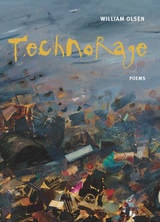
TechnoRage
PoemsWilliam Olsen
Northwestern University Press, 2017
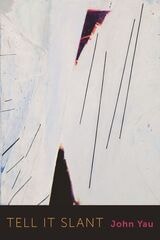
Tell it Slant
John Yau
Omnidawn, 2023
Emily Dickinson begins one of her poems with the oft-quoted line, “Tell all the truth but tell it slant." For Asian Americans, the word “slant” can be heard and read two ways, as both a racializing and an obscuring term. It is this sense of doubleness—culminating in the instability of language and an untrustworthy narrator—that shapes, informs, and inflects the poems in John Yau’s new collection, all of which focus on the questions of who is speaking and who is being spoken for and to. Made up of eight sections, each exploring the idea of address—as place, as person, as memory, and as event —Tell It Slant does as Dickinson commands, but with a further twist. Yau summons spirits who help the author “tell all the truth,” among whom are reimagined traces of poets, movie stars, and science fiction writers, including Charles Baudelaire, Thomas de Quincey, Philip K. Dick, Li Shangyin, and Elsa Lanchester.
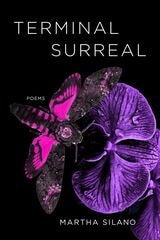
Terminal Surreal
PoemsMartha Silano
Acre Books, 2025
In her masterful poetry collection Terminal Surreal, Martha Silano confronts the reality of mortality with gorgeous attention to imagery and scene. The book follows a trajectory from early symptoms before diagnosis with amyotrophic lateral sclerosis (ALS) to full-blown illness and its effects on friends and family, including her children, who appear in poems like “After Dropping My Son Off at College” and “My Nineteen-Year-Old Daughter Is My Personal Assistant.”
With a devoted naturalist’s eye, Silano revels in birds, trees, and flowers in a way that reminds readers we are connected to the world around us. The book touches on the medical, the metaphysical, and even the cosmological (through encounters in medical offices and on a moon of Mars). With Nutter Butters and Lorna Doones, abecedarians and self-elegies, Silano’s singular, feisty, contemporary voice propels these poems of grief and acceptance as they explore the transformational power of art.
When I Learn Catastrophically
is an anagram of amyotrophic lateral sclerosis.
When I learn I probably have a couple years,
maybe (catastrophically) less, crossword puzzles
begin to feel meaningless, though not the pair
of mergansers, not the red cardinal of my heart.
The sky does all sorts of marvelously uncatastrophic
things that winter I shimmy between science
& song, between widgeons & windows, weather
& its invitation to walk. Walking, which becomes
my lose less, my less morsels, my lose smile
while more sore looms. . . .
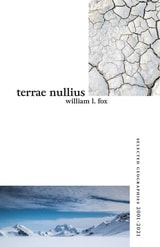
Terrae Nullius
Selected Geographies 2001-2021William L. Fox
University of Nevada Press, 2027
The Alaska Pipeline becomes a line of poetry, a line in the land—the beginning of an epic and the end of an era. A map in the Antarctic becomes the ground beneath the reader’s feet, erasing itself with every step. A monk in a monastery beneath Mount Everest writes a prayer as the mountain traces a contrail across the upper atmosphere, inscribing a path to be followed.
In each place, William L. Fox reveals how the world leaves its mark on us—and how, through language, we move toward a sense of belonging. His spare, minimalist poems inhabit the planet’s wide empty spaces: Nevada’s Great Basin, the Antarctic and Arctic, the red deserts of interior Australia, the immense playas of Chile’s Atacama, and beyond. Between and within these lines, the poems explore how land becomes landscape, how terrain becomes territory, and how meaning is made.

The Air in the Air Behind It
Brandon Rushton
Tupelo Press, 2022
—Donna Stonecipher
The Decline and Fall of the Roman Empire
Matthew Tuckner
Four Way Books, 2025
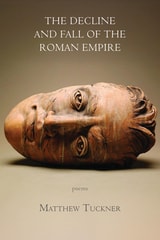
The Decline and Fall of the Roman Empire is a book-length sequence of 53 poems with identical eponymous titles. Heartbreaking and searingly lucid, this debut collection from poet Matthew Tuckner chronicles his best friend's illness and subsequent death from cancer. Its brilliance is not only in recognizing the vastness and particularity of grief — how the loss of a beloved is so personally all encompassing that it splits time irrevocably, separating our personal history into distinct eras of before and after as the governing principles of our lives crumble — but also in joining the discrete experience of one person's sickness to a carcinogenic imperial core, the late-capitalist global order that ensnares all people in toxic landscapes that make us sick.
Describing a trip to Japan, Tuckner evokes the brute force of appetite alongside the delicacy of life as he recalls "memories of its greedy koi fish, a ceramic bowl / of goji berries perfectly balanced on a tree branch." Beholden to a ticking clock, we catalogue, becoming evidentiary and encyclopedic in our impulses. "We fatten the time until it bursts into artifacts: / sixteen photographs of a single puddle // taking shape in the red glow of your darkroom." In borrowing the title of Edward Gibbon's seminal 6-volume history, Tuckner anchors the associative detours of his sprawling intellect and executes a stunning metacommentary on his own lyrics: time collapses every era into a spattering of sentences, tyrannical as it forcibly converts the present to the past, and yet the barbarous recursion of human feeling resists oblivion, evoking the eternity of emotional significance. Tuckner's shrewd balance of irony and tenderness make this cerebral inversion possible: this friendship is the poet's canon event, the Rome at which every road in his mind arrives, and yet it is also the singular dialect that will not cede to death's subsuming lingua franca.
Damien Hirst's taxidermy art, The John Keats House, superfund sites in Rome, NY, the 2023 Ohio Train Derailment, a children's book titled Oil Spill! — these poems travel widely in their topics to understand the specific ravages of disease on the human body, and in turn, the ravages of human beings on the planet. Its trenchant criticism isn't pessimistic, though — its redemption is the restorative, unending love that made these elegies possible. Equally gutted and mesmerized by our infinite, arbitrary ability to discern meaning in mess, these poems ask us to bear witness to what we can develop if we will sit in the darkness. To read the photo essay of a storm's aftermath. It tells an ancient story that becomes brand new, the one about "a puddle you glimpsed the moon in & stopped for. // A puddle that was just plain rain until it fell."
The Garden Party
PoemsMegan J. Arlett
Northwestern University Press, 2027
A stroll through deceptively tranquil spaces and the restlessness of social convention
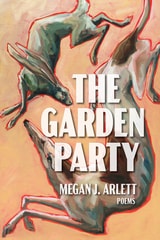
Depicting the uneasy performance of class and femininity in the stilted, suffocating spaces of a social life suffused with English propriety, Megan J. Arlett’s The Garden Party is a poetic meditation on desire and agency. From the imagined space of the titular garden party to the interior of an art gallery, from the rolling hills of Sussex to Trinidad under British colonial rule, Arlett paints the conventions of polite society as both strange and arbitrary, allowing the restlessness of the poems’ speakers to rise to the surface. Through free verse, received forms, and ekphrasis, these poems stage a conversation with other artists, eras, and art media, moving through natural and constructed locations that are sometimes historical and often imagined. This collection considers what it means to love a place despite its histories and flaws and offers ways of navigating this tension through art. The Garden Party is a striking yet quiet rebellion against order and expectation.
The Long Now Conditions Permit
PoemsJami Macarty
University of Nevada Press, 2025
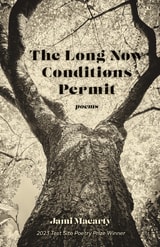
With ethical attention, Jami Macarty’s collection engages the political, ecological, and personal forces that shape and mark our lives, offering an ecofeminist ethic of care as an antidote to extractive capitalism and patriarchal norms. Each poem meditates on power, insists on articulating what is being lost—and what must be saved and reclaimed.
Amid the exploitation and violence, these poems find moments of grace: the scent of a sea rose, a desert walk in spring, the company of birds, Earth entire. The Long Now Conditions Permit is both tender elegy and urgent call, exhorting readers to grapple with the devastating failings of humanity and the saving possibilities of love.
The Marvels
David Orr
Four Way Books, 2026
In his second collection, The Marvels, David Orr writes from the conviction that the available world is enough: its worn shirts, coffee cups, rainbows, buses, obsolete machines, failed plans, neighborly borders, and minor acts of courtesy. These poems are clear-eyed without being cold, comic without being merely light. They attend to ordinary things not as symbols waiting to be elevated, but as the actual substance of our shared existence.
Praised by The Washington Post for his “quirky, engaging poetry,” Orr brings formal control, wry wit, whimsy, and an exacting intelligence to the relentless dailiness of life. In “Coffee Cups,” two mugs have been scoured blank by the dishwasher: “Nothing makes them special now. / What they do is all they are.” Yet the household still reaches for them first, “hoping to save the others.” In “Decency,” a nearly useless blue shirt becomes kin to the small social gestures that certify “this shared space as shared”: a held door, a blessing after a sneeze, the habitual signs by which strangers acknowledge one another. And in the title poem, marvels are planted along a property line, where two neighbors meet to prune, argue, trade tools, and admire what grows between them.
Unillusioned but not disenchanted, The Marvels finds its force in persistence, use, courtesy, memory, and care. The poems do not look past the real for consolation. They look steadily at the world we have — its comedy, damage, repetition, and thin but durable fabrics of connection — until its sufficiency comes into view.
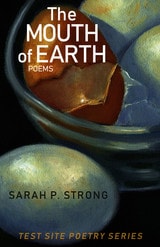
The Mouth of Earth
PoemsSarah P. Strong
University of Nevada Press, 2020
The Mouth of Earth serves as both a survival guide for those seeking connection with our planet and one another as well as a compassionate tribute to what we have lost or are losing—the human consequences of such destruction in a time of climate crisis and lost connectivity. Strong’s powerful poems offer us, if not consolation, at least a way toward comprehension in an age of loss, revealing both our ongoing denial of our planet’s fragility and the compelling urgency of our hunger for connection with all life.
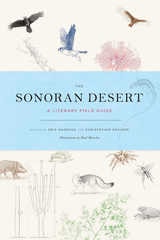
The Sonoran Desert
A Literary Field GuideEdited by Eric Magrane and Christopher Cokinos, Illustrations by Paul Mirocha
University of Arizona Press, 2016
Both literary anthology and hands-on field guide, The Sonoran Desert is a groundbreaking book that melds art and science. It captures the stunning biodiversity of the world’s most verdant desert through words and images. More than fifty poets and writers—including Christopher Cokinos, Alison Hawthorne Deming, Ken Lamberton, Eric Magrane, Jane Miller, Gary Paul Nabhan, Alberto Ríos, Ofelia Zepeda, and many others—have composed responses to key species of this striking desert. Each creative contribution is joined by an illustration by award-winning artist Paul Mirocha and scientific information about the creature or plant authored by the book’s editors.
From the saguaro to the mountain lion, from the black-tailed jackrabbit to the mesquite, the species represented here have evoked compelling and creative responses from each contributor. Just as writers such as Edward Abbey and Ellen Meloy have memorialized the desert, this collection is sure to become a new classic, offering up the next generation of voices of this special and beautiful place, the Sonoran Desert.
The Stone Circle Poems
The Collected Poems of Terry WootenTerry Wooten
Parkhurst Brothers, Inc., 2015
The Table
Seasons on a Colorado RanchLara Richardson
University Press of Colorado, 2024
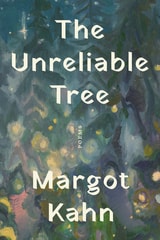
The Unreliable Tree
PoemsMargot Kahn
Northwestern University Press, 2025
Born from a state of fragmented time, the poems in The Unreliable Tree call out the intimate feelings mothers so often fear to share. With a precise and tender eye, Margot Kahn tracks her early years of parenthood alongside the seasons of her family’s orchard. As she chronicles the changes in her marriage, her friendships, and her own shifting identity, Kahn questions the risks we take for devotion and the labors we devote to love. These poems shine a light on the patience and perseverance required to care—for homes, for people, for heritage—and ultimately question the choices we make: to hold on to others around us, and to hold on to ourselves. Compassionate, unflinching, lyric, and raw, The Unreliable Tree portrays the world of early motherhood with humility and complicated beauty.
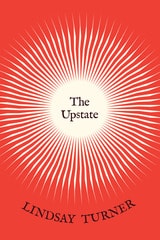
The Upstate
Lindsay Turner
University of Chicago Press, 2023
Set in a landscape of red sunsets and wildfire smoke, Queen Anne’s lace on the roadsides, and toxic chemicals in the watershed, Lindsay Turner’s The Upstate is a book about southern Appalachia in a contemporary moment of change and development. Layering a personal lyric voice with a broader awareness of labor issues and political and ecological crises, The Upstate redefines a regional poetics as one attuned to national and global systems. These poems observe and emote, mourning acts of devastation and raging in their own quiet way against their continuation.
The poems in The Upstate arise from moments of darkness and desperation, mobilizing a critical intelligence against the status quo of place and history, all while fiercely upholding belief in the role of poetry to affect these conditions. Turner’s poems weave spells around beloved places and people, yearning to shield them from destruction and to profess faith in the delicate beauties of the world at hand.
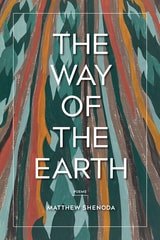
The Way of the Earth
PoemsMatthew Shenoda
Northwestern University Press, 2022
The Way of the Earth is the fourth collection from award-winning poet Matthew Shenoda. In this, his most personal collection to date, he explores the temporal and fleeting nature of human life and the earth we inhabit. Through ruminations on the intersections of culture and ecology, the death of loved ones, and the growing inequities in our midst, Shenoda explores what it means to be a person both grounded to the earth and with a yearning beyond it. Memories of landscapes and histories echo throughout the sensations of the present: the sight of egrets wading in the marshes, the smell of the ocean, a child’s hand nestled in a warm palm. “Time never goes back,” Shenoda writes, “but the imagination must.”
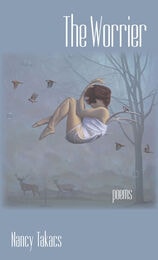
The Worrier
poemsNancy Takacs
University of Massachusetts Press, 2017
What do you know?
How I hide my flaws.
What do you know?
How butterflies
sweeten themselves
opening and closing their wings together
in a little hill
on the beach.
—"The Worrier bed"
The Worrier poems, like a string of worry beads, are dialogues between two interior voices exploring topics as varied as fur coats, marriage, scars, vanishing bees, a silent film star, toads, and volunteers. Strongly imagistic, and often placed in wild landscapes of Utah and Wisconsin, these poems strangely soothe with their surprising offbeat answers to Takacs's worries about intimacy, loss, and turmoil in midlife and beyond; about disappearing wilderness, and compassion, in the world at large. Despite worrying, the poems seem fearless in what they tackle, and in their language and form, creating lightness, promise.

To Think of a Match
PoemsHalee Kirkwood
Northwestern University Press, 2027
A gripping oscillation between the manufactured and the natural, between capitalism and truth
To Think of a Match is a collection of daydreams from behind the eyes of retail clerks, corporate mascots, ghosts of 49ers, and sundry others. Situated in Minnesota’s Twin Cities, home of the Mall of America and the glistening Bde Maka Ska, these poems explore the intimate collisions of class and labor, spiraling out from the recent history of the Gold Rush and into the near future of asteroid mineral mining and beyond. Halee Kirkwood searches for possibilities of a postcapitalist future in our most squirmy, slimy, and wriggly forms of earthly life. What can invertebrates teach us about the ways humanity organizes labor, creativity, and community? What does it mean to have a body caught between economies and ecologies? Contending with subjects ranging from Sappho to Petco and envisioning a new pastoral that is honest about the human and nonhuman domains we are building today, To Think of a Match yearns for a poetics that thrives between shifts.
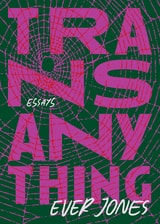
Transanything
EssaysEver Jones
Northwestern University Press, 2025
Transanything reveals a world in metamorphosis. A hermit crab retires its shell, lovers drift apart, and seasons churn, all amid Ever Jones’s own narrative of midlife gender transition.
Jones takes up a tradition of writing—about the American landscape, solitude, wilderness, and the West—long intertwined with colonialism and heteropatriarchy, and makes it wholly their own. A self-proclaimed “nature essay” misbehaves, wandering away from the hummingbird outside Jones’s window. In their chronicle of a week in Yellowstone, Jones navigates trails frequented by grizzlies and a campground where their identity is regarded as equally dangerous. Elk, bison, and bark spiders roam this book’s pages, but it is the gray wolf—the embattled apex predator of the American West, narrow survivor of settler colonial violence, and vessel for American myths of independence—who emerges as Jones’s shapeshifting coprotagonist.
Taking on a global web of colonial systems that seek to divide us, Jones disrupts loneliness and forges space for queerness and transness to be aliveness—to be transanything.