Results by title
54 books match the query 'Anthropologists' and 9 start with t
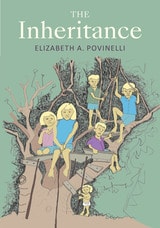
The Inheritance
Elizabeth A. Povinelli
Duke University Press, 2021
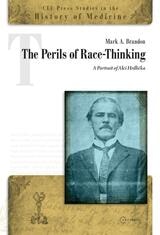
The Perils of Race-Thinking
A Portrait of Ales HrdlickaMark A. Brandon
Central European University Press, 2023
Eugenics and scientific racism are experiencing a resurgence, and an understanding of the ideas of Aleš Hrdlička can help combat them. Today, the racial science of the early twentieth century is both untenable and contemptible. This book is about an arch figure of that period: Aleš Hrdlička served as Curator of Physical Anthropology at the prestigious Smithsonian Institution from 1910 to 1941. Although his ideas about race are today considered pseudoscience, the uncomfortable truth is that he was an internationally respected scientist in his own day.
The Perils of Race-Thinking advances a bold new interpretation of modern racial ideology by exploring Hrdlička’s intellectual world. Using previously untapped Czech-language sources, Brandon irrevocably alters the discussion about this important figure by placing Czech nationalism at the center of his racial thinking. Defying disciplinary categories, Perils of Race-Thinking joins critical analysis of this key American anthropologist with an incisive revisionist perspective of interwar Czechoslovakia to unearth transnational racial presumptions lurking behind the worst crimes of the twentieth century.
At the center of Hrdlička’s race beliefs was his commitment to Czech and Slovak unity and independence. From this center, his next level of concern was what he believed to be a millennial racial struggle between Germans and Slavs. On a global scale, he viewed the Slavs, and especially the Soviet Union, as a eugenic bastion of White strength holding off the “rising tide of color.”
Step by step, Perils of Race-Thinking mercilessly dismantles Hrdlička’s racial system and exposes it as mysticism dressed up in the language of science. Convinced that human individuals belonged “naturally” in racial groups, Hrdlička embraced a revolutionary program of reordering the globe according to a harrowing morality of “Darwinist” struggle. Yet despite a lifetime of measuring body parts, even Hrdlička could not decide how many races there were or how to tell them apart.
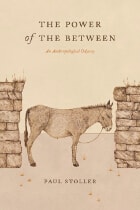
The Power of the Between
An Anthropological OdysseyPaul Stoller
University of Chicago Press, 2008
Beginning with his early days with the Peace Corps in Africa and culminating with a recent bout with cancer, The Power of the Between is an evocative account of the circuitous path Stoller’s life has taken, offering a fascinating depiction of how a career is shaped over decades of reading and research. Stoller imparts his accumulated wisdom not through grandiose pronouncements but by drawing on his gift for storytelling. Tales of his apprenticeship to a sorcerer in Niger, his studies with Claude Lévi-Strauss in Paris, and his friendships with West African street vendors in New York City accompany philosophical reflections on love, memory, power, courage, health, and illness.
Graced with Stoller’s trademark humor and narrative elegance, The Power of the Between is both the story of a distinguished career and a profound meditation on coming to terms with the impermanence of all things.
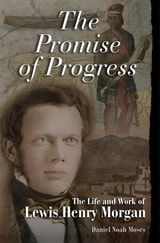
The Promise of Progress
The Life and Work of Lewis Henry MorganDaniel Noah Moses
University of Missouri Press, 2009
The Restless Anthropologist
New Fieldsites, New VisionsEdited by Alma Gottlieb
University of Chicago Press, 2012
The Uncaring, Intricate World
A Field Diary, Zambezi Valley, 1984-1985Pamela Reynolds
Duke University Press, 2019
Threatening Anthropology
McCarthyism and the FBI’s Surveillance of Activist AnthropologistsDavid H. Price
Duke University Press, 2004
Price draws on extensive archival research including correspondence, oral histories, published sources, court hearings, and more than 30,000 pages of fbi and government memorandums released to him under the Freedom of Information Act. He describes government monitoring of activism and leftist thought on college campuses, the surveillance of specific anthropologists, and the disturbing failure of the academic community—including the American Anthropological Association—to challenge the witch hunts. Today the “war on terror” is invoked to license the government’s renewed monitoring of academic work, and it is increasingly difficult for researchers to access government documents, as Price reveals in the appendix describing his wrangling with Freedom of Information Act requests. A disquieting chronicle of censorship and its consequences in the past, Threatening Anthropology is an impassioned cautionary tale for the present.
Truth's Fool
Derek Freeman and the War over Cultural AnthropologyPeter Hempenstall
University of Wisconsin Press, 2017
Truth's Fool documents an intellectual journey that was much larger and more encompassing than Freeman's attack on Mead's work. It peels back the prickly layers to reveal the man in all his complexity. Framing this story within anthropology's development in Britain and America, Peter Hempenstall recounts Freeman's mission to turn the discipline from its cultural-determinist leanings toward a view of human culture underpinned by biological and behavioral drivers. Truth's Fool engages the intellectual questions at the center of the Mead–Freeman debate and illuminates the dark spaces of personal, professional, and even national rivalries.
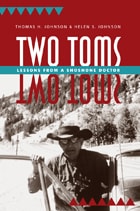
Two Toms
Lessons from a Shoshone DoctorThomas H. Johnson
University of Utah Press, 2011
In 1969, Tom Wesaw was an 83-year-old Shoshone doctor and religious leader on the Wind River Reservation in Wyoming. He could no longer drive, which posed problems in making house calls. The arrival of young anthropologist Tom Johnson changed that. Johnson would drive Wesaw, and cook, pump water, and build fires for sweat lodges. In exchange, the elder Tom would show the younger Tom his work. The two were together so often that the people of Wind River began to refer to them affectionately by one name: Two Toms. By the light of the lamp Wesaw gave him, Johnson would write down what he learned. The Shoshone doctor wanted his student to share everything he saw and heard. Now, in Two Toms: Lessons from a Shoshone Doctor, he has.