Results by title
59 books match the query 'Antiques & Collectibles' and 15 start with t

Tarnished Promises
Indian Peace Medals in North AmericaSamuel J. Redman
University Press of Colorado, 2026
Using a collection of medals held at the Denver Museum of Nature & Science, Tarnished Promises presents an updated overview of the history and story of peace medals through an examination of their legacy in the modern world. Accompanying the history and analysis are images of thirteen exemplar peace medals from the DMNS collections and their accompanying object biographies.
Peace medals paradoxically worked as tools of colonialism and also Native American agency, sovereignty, power, resistance, and change in response to growing challenges. Their widespread adoption by Native people in North America both prefigured and coincided with the many ways in which Native Americans and First Nations peoples worked to adapt to the unwelcome and undesirable changes wrought by expanding western colonialism. The unique individual histories behind the medals and the larger peace medal story suggest how material objects can hold several, sometimes contradictory, meanings and be influenced by varied strands of culture and historical memory. Tarnished Promises tells this complex story in two parts, with the first detailing the history of Indian peace medals from 1670 to the present day and the second part exploring their meaning at different points in time and to different peoples.
The first book-length treatment of peace medals using an anticolonialist perspective, Tarnished Promises is significant to scholars and the general public interested in numismatics, American history, Indigenous studies, and museum collections.
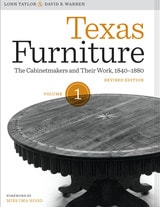
Texas Furniture, Volume One
The Cabinetmakers and Their Work, 1840-1880, Revised editionBy Lonn Taylor and David B. Warren
University of Texas Press, 2012
The art of furniture making flourished in Texas during the mid-nineteenth century. To document this rich heritage of locally made furniture, Miss Ima Hogg, the well-known philanthropist and collector of American decorative arts, enlisted Lonn Taylor and David B. Warren to research early Texas Furniture and its makers. They spent more than a decade working with museums and private collectors throughout the state to examine and photograph representative examples. They also combed census records, newspapers, and archives for information about cabinetmakers. These efforts resulted in the 1975 publication of Texas Furniture, which quickly became the authoritative reference on this subject.
Now updated with an expanded Index of Texas Cabinetmakers that includes information that has come to light since the original publication and corrects errors, Texas Furniture presents a catalog of more than two hundred pieces of furniture, each superbly photographed and accompanied by detailed descriptions of the piece’s maker, date, materials, measurements, history, and owner, as well as an analysis by the authors. The book also includes chapters on the material culture of nineteenth-century Texas and on the tools and techniques of nineteenth-century Texas cabinetmakers, with a special emphasis on the German immigrant cabinetmakers of the Hill Country and Central Texas. The index of Texas cabinetmakers contains biographical information on approximately nine hundred men who made furniture in Texas, and appendices list information on the state’s largest cabinet shops taken from the United States census records.
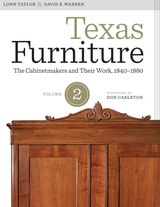
Texas Furniture, Volume Two
The Cabinetmakers and Their Work, 1840–1880By Lonn Taylor and David B. Warren
University of Texas Press, 2012
The art of furniture making flourished in Texas during the mid-nineteenth century. To document this rich heritage of locally made furniture, Miss Ima Hogg, the well-known philanthropist and collector of American decorative arts, enlisted Lonn Taylor and David B. Warren to research early Texas furniture and its makers. After more than a decade of investigation, they published Texas Furniture in 1975, and it quickly became the authoritative reference on this subject. An updated edition, Texas Furniture, Volume One, was issued in the spring of 2012.
Texas Furniture, Volume Two presents over 150 additional pieces of furniture that were not included in Volume One, each superbly photographed in color and accompanied by detailed descriptions of the piece’s maker, date, materials, measurements, history, and owner, as well as an analysis by the authors. Taylor and Warren have also written a new introduction for this volume, in which they amplify the story of early Texas furniture. In particular, they compare and contrast the two important traditions of cabinetmaking in Texas, Anglo-American and German, and identify previously unknown artisans. The authors also discuss nineteenth-century Texans’ desire for refinement and gentility in furniture, non-commercial furniture making, and marquetry work. And they pay tribute to the twentieth-century collectors who first recognized the value of locally made Texas furniture and worked to preserve it. A checklist of Texas cabinetmakers, which contains biographical information on approximately nine hundred men who made furniture in Texas, completes the volume.

The Art of Advertising, The
Julie Anne Lambert
Bodleian Library Publishing, 2020
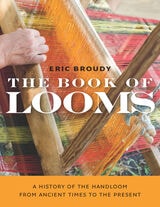
The Book of Looms
A History of the Handloom from Ancient Times to the PresentEric Broudy
Brandeis University Press, 2021
The handloom—often no more than a bundle of sticks and a few lengths of cordage—has been known to almost all cultures for thousands of years. Eric Broudy places the wide variety of handlooms in their historical context. What influenced their development? How did they travel from one geographic area to another? Were they invented independently by different cultures? How have modern cultures improved on ancient weaving skills and methods? Broudy shows how virtually every culture has woven on handlooms. He highlights the incredible technical achievement of early cultures that created magnificent textiles with the crudest of tools and demonstrates that modern technology has done nothing to surpass their skill or inventiveness.

The Collected Letters of Thomas and Jane Welsh Carlyle
January 1854-June 1855, Volume 29Kenneth J. Fielding, Ian Campbell, Sheila McIntosh, and David Sorensen
Duke University Press, 0
Back volumes are available for purchase. To ensure that you don't miss a single issue, subscribe to The Collected Letters of Thomas and Jane Welsh Carlyle today. For more information, click here.
Volume 29 resumes themes begun in earlier letters: Thomas's flirtatious exchanges with Lady Ashburton, the recent death of his mother, the improvement of his soundproof room, and his struggle to pursue his research for Frederick the Great. Other notable items include Dickens's dedication of Hard Times to Thomas and Thomas's support of G. H. Lewes during the scandal over Lewes's affair with George Eliot. The highlight of the volume is a passionate and humorous letter by Jane, subtitled "Budget of a Femme Incomprise," in which she defends the rising cost of running their house.
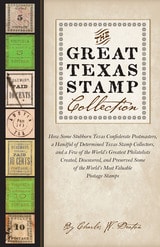
The Great Texas Stamp Collection
How Some Stubborn Texas Confederate Postmasters, a Handful of Determined Texas Stamp Collectors, and a Few of the World's Greatest Philatelists Created, Discovered, and Preserved Some of the World's Most Valuable Postage StampsBy Charles W. Deaton
University of Texas Press, 2012
Among the many difficulties the newly formed Confederate States of America endured in the summer of 1861 was the failure of its post office department to provide sufficient numbers of that item most crucial to its service: the postage stamp. Faced with the resulting din of customer complaints, a handful of industrious Texas postmasters solved the problem by simply making their own homemade stamps.
In this thoroughly researched history of these rare and highly coveted stamps, The Great Texas Stamp Collection traces their journey from creation through their rediscovery years later by local, and then international, stamp collectors—a journey that culminated in the sale of a few pieces at a recent auction in New York that fetched more than $250,000. Weaving the larger contexts of Texas and U.S. postal history together with individual tales of greed, intrigue, forgery, and discovery, Deaton’s book is rich with characters from European royalty to early stamp dealers to common criminals, while also providing detailed examinations of the stamps themselves, including a complete census of the stamps now known as the Texas Confederate Postmasters’ Provisionals.
Appealing at once to devoted philatelists, Texas and U.S. history buffs, and amateur collectors of all kinds, The Great Texas Stamp Collection offers a unique vantage point from which to view our history as well as the very nature of collecting.
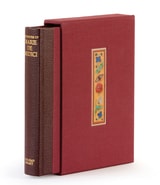
The Hours of Marie de Medici
A FacsimileMarie de Medici
Bodleian Library Publishing, 2016
At the turn of the fifteenth century, private devotionals became a specialty of the renowned Ghent–Bruges illuminators. Wealthy patrons who commissioned work from these artists often spared no expense in the presentation of their personal prayer books, or “books of hours,” from detailed decoration to luxurious bindings and embroidery.
This manuscript owes its name to the French queen, Marie de Medici, widow of King Henri IV. The manuscript was painted by an artist known as the David Master, one of the renowned Flemish illuminators of the sixteenth century. Fine architectural interiors, gorgeous landscapes, and detailed city scenes form the subjects of three full-size illuminations and forty-two full-page miniatures. It is one of the finest examples of medieval illumination in a personal prayer book and the most copiously illustrated work of the David Master to survive.
Together with a scholarly introduction that gives an overview of Flemish illumination and examines each of the illustrations in detail, this full-color facsimile limited edition, bound in linen with a leather quarter binding and beautifully presented in a slipcase, faithfully reproduces all 176 leaves of the original manuscript.

The Last Bookseller
A Life in the Rare Book TradeGary Goodman
University of Minnesota Press, 2023
A wry, unvarnished chronicle of a career in the rare book trade—now in paperback
When Gary Goodman wandered into a run-down, used-book shop that was going out of business in East St. Paul in 1982, he had no idea the visit would change his life. He walked in as a psychiatric counselor and walked out as the store’s new owner. In The Last Bookseller Goodman describes his sometimes desperate, sometimes hilarious career as a used and rare book dealer in Minnesota—the early struggles, the travels to estate sales and book fairs, the remarkable finds, and the bibliophiles, forgers, book thieves, and book hoarders he met along the way.
Here we meet the infamous St. Paul Book Bandit, Stephen Blumberg, who stole 24,000 rare books worth more than fifty million dollars; John Jenkins, the Texas rare book dealer who (probably) was murdered while standing in the middle of the Colorado River; and the eccentric Melvin McCosh, who filled his dilapidated Lake Minnetonka mansion with half a million books. In 1990, with a couple of partners, Goodman opened St. Croix Antiquarian Books in Stillwater, one of the Twin Cities region’s most venerable bookshops until it closed in 2017. This store became so successful and inspired so many other booksellers to move to town that Richard Booth, founder of the “book town” movement in Hay-on-Wye in Wales, declared Stillwater the First Book Town in North America.
The internet changed the book business forever, and Goodman details how, after 2000, the internet made stores like his obsolete. In the 1990s, the Twin Cities had nearly fifty secondhand bookshops; today, there are fewer than ten. As both a memoir and a history of booksellers and book scouts, criminals and collectors, The Last Bookseller offers an ultimately poignant account of the used and rare book business during its final Golden Age.
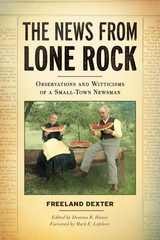
The News from Lone Rock
Observations and Witticisms of a Small-Town NewsmanFreeland Dexter
Wisconsin Historical Society Press, 2016
At the turn of the twentieth century, the bustling railroad town of Lone Rock, Wisconsin, was home to about a thousand residents, and Freeland Dexter seemed to know the business of every single one. Dexter reported all the news from Lone Rock—from the significant to the trivial, the tragic to the comical—for the Weekly Home News of neighboring Spring Green from 1884 to 1912.
This collection of Dexter’s most fascinating, amusing, and poignant stories and observations brings back to life the colorful characters of his time and takes readers on a journey to a world that was both simpler and changing fast. Whether he was reporting who grew the biggest watermelon, teasing the local lovebirds, or taking a side on the ever-controversial question of whether the town should go dry, Dexter wrote with a distinctive wit and an obvious affection for his town and its people. The News from Lone Rock also provides an illuminating window into a time period of rapid technological progress, showing how the introduction of electric light, telephones, and cars changed lives and connected this quaint village more and more to the outside world.
The Odes of Horace
A FacsimileWilliam Morris
Bodleian Library Publishing, 2016
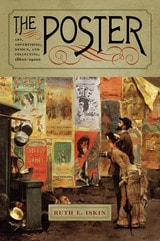
The Poster
Art, Advertising, Design, and Collecting, 1860s–1900sRuth E. Iskin
Dartmouth College Press, 2014
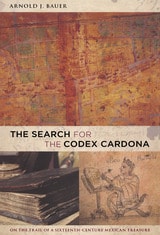
The Search for the Codex Cardona
Arnold J. Bauer
Duke University Press, 2009
Bauer first saw the Codex Cardona in 1985 in the Crocker Nuclear Laboratory at the University of California, Davis, where scholars from Stanford and the University of California were attempting to establish its authenticity. Allowed to gently lift a few pages of this ancient treasure, Bauer was hooked. By 1986, the Codex had again disappeared from public view. Bauer’s curiosity about the Codex and its whereabouts led him down many forking paths—from California to Seville and Mexico City, to the Firestone Library in Princeton, to the Getty Museum in Los Angeles and Christie’s in New York—and it brought him in contact with an international cast of curators, agents, charlatans, and erudite book dealers. The Search for the Codex Cardona is a mystery that touches on issues of cultural patrimony, the workings of the rare books and manuscripts trade, the uncertainty of archives and evidence, and the ephemerality of the past and its remains.

The Vernor's Story
From Gnomes to NowLawrence L. Rouch
University of Michigan Press, 2003

True Faith, True Light
The Devotional Art of Ed StilleyKelly Mulhollan
University of Arkansas Press, 2015
But one day Ed’s life was permanently altered. While plowing his field, he became convinced he was having a heart attack. Ed stopped his work and lay down on the ground. Staring at the sky, he saw himself as a large tortoise struggling to swim across a river. On his back were five small tortoises—his children—clinging to him for survival. And then, as he lay there in the freshly plowed dirt, Ed received a vision from God, telling him that he would be restored to health if he would agree to do one thing: make musical instruments and give them to children.
And so he did. Beginning with a few simple hand tools, Ed worked tirelessly for twenty-five years to create over two hundred instruments, each a crazy quilt of heavy, rough-sawn wood scraps joined with found objects. A rusty door hinge, a steak bone, a stack of dimes, springs, saw blades, pot lids, metal pipes, glass bottles, aerosol cans—Ed used anything he could to build a working guitar, fiddle, or dulcimer. On each instrument Ed inscribed “True Faith, True Light, Have Faith in God.”
True Faith, True Light: The Devotional Art of Ed Stilley documents Ed Stilley’s life and work, giving us a glimpse into a singular life of austere devotion.