57 books match the query 'Antisemitism' and 20 start with t

cover of Tainted Greatness: Antisemitism and Cultural Heroes

Tainted Greatness

Antisemitism and Cultural Heroes

Nancy Harrowitz

Temple University Press, 1994
[more]
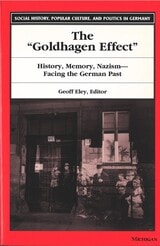
cover of The "Goldhagen Effect": History, Memory, Nazism--Facing the German Past

The "Goldhagen Effect"

History, Memory, Nazism--Facing the German Past

Geoff Eley, Editor

University of Michigan Press, 2000
Stepping back from the immediate controversy surrounding the merits and shortcomings of Daniel Jonah Goldhagen's Hitler's Willing Executioners, this edited volume intervenes in the continuing discussion by exploring aspects of the public's reception to Goldhagen's book--what the authors call the "Goldhagen Effect." The first essay, by Omer Bartov, examines the extent to which the book's reception in the United States, Germany, France, and Israel reflected differing attitudes toward the Holocaust, thereby highlighting the role that the genocide of Jews has come to play in a variety of national contexts. Atina Grossman then analyzes the "Goldhagen Effect" in Germany, looking at Germans' shifting reactions to the American and German editions of the book and the accompanying publicity tour. Grossman considers these responses in the broader context of Germans' ambivalent relationship to their history. Next, Pieter Judson turns his attention to the reception to Hitler's Willing Executioners in Austria, exploring why most Austrians--particularly those on the far right--calmly accepted Goldhagen's conclusions. Finally, Jane Caplan describes some of the ways in which Goldhagen's book resonates with contemporary American sensibilities and suggests why the book experienced such popular success in America.The revised and expanded essays in this volume were originally presented in a symposium organized by Kathleen Canning for the University of Michigan Center for European Studies to discuss the response of academia and the broader intellectual public to Goldhagen's work. The "Goldhagen Effect" will be of interest to historians and others in the humanities and social sciences, as well as to the informed general reader.
[more]
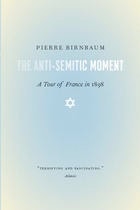
cover of The Anti-Semitic Moment: A Tour of France in 1898

The Anti-Semitic Moment

A Tour of France in 1898

Pierre Birnbaum

University of Chicago Press, 2011

In 1898, the Dreyfus Affair plunged French society into a yearlong frenzy. In Paris and provincial villages throughout the country, angry crowds paraded through the streets, threatening to attack Jews and destroy Jewish-owned businesses. Anger about the imagined power of Jewish capital, as well as fears of treason and racial degeneration, made anti-Semitism a convenient banner behind which social and political factions could fall in line. Anti-Semitic feelings that had been simmering in France for decades came boiling to the surface.

Here Pierre Birnbaum guides readers on a tour of France during this crisis. He shows that in the midst of violence, Jewish citizens bravely and effectively defended themselves and were aided by a police force determined to maintain order. Birnbaum paints a vivid portrait of French Jewish culture at the time and explains why the French state remained strong in this time of widespread unrest.
[more]
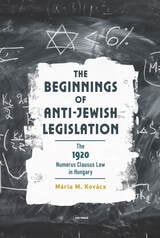
cover of The Beginnings of Anti-Jewish Legislation: The 1920 Numerus Clausus Law in Hungary

The Beginnings of Anti-Jewish Legislation

The 1920 Numerus Clausus Law in Hungary

Mária M. Kovács

Central European University Press, 2024

The Nazi 1933 Civil Service Law and the 1935 Nuremberg Laws are often considered the first anti-Jewish decrees in interwar Europe. Mária M. Kovács convincingly argues that Hungary’s numerus clausus law of 1920, which introduced a Jewish quota at Hungary’s institutions of higher learning, was, in fact, interwar Europe’s first antisemitic law. By defining—and discriminating against—Jews as a separate “racial” or “national” group, it abrogated the principle of equal rights that had been enshrined into law; as such, it marked an abrupt reversal of Jewish emancipation in Hungary. Moreover, the numerus clausus law set the stage for subsequent “Jewish Laws” (in the late 1930s and early 1940s) that sought to solve Hungary’s “Jewish Question” by means of extraordinary legal measures that targeted Jews alone. This book examines the origins and implementation of the numerus clausus, as well as the attempts to dampen its impact on Hungary’s international reputation, focusing on the debates surrounding it promulgation (1920), its modification (1928) and its eventual application to other areas of Jewish life (1938–45).

[more]
cover of The Critics and the Prioress: Antisemitism, Criticism, and Chaucer's Prioress's Tale

The Critics and the Prioress

Antisemitism, Criticism, and Chaucer's Prioress's Tale

Heather Blurton and Hannah Johnson

University of Michigan Press, 2017

Of all the Canterbury Tales, Geoffrey Chaucer’s Prioress’s Tale, in which a young schoolboy is murdered by Jews for singing a song in praise of the Virgin Mary, poses a problem to contemporary readers because of the antisemitism of the story it tells. Both the Tale’s antisemitism and its “Chaucerianism”—its fitness or aptness as part of the Chaucerian canon—are significant topics of reflection for modern readers, who worry about the Tale’s ethical implications as well as Chaucer’s own implications. Over the past fifty years, scholars have asked: Is the antisemitism in the tale that of the Prioress? Or of Chaucer the pilgrim? Or of Chaucer the author? Or, indeed, whether one ought to discuss antisemitism in the Prioress’s Tale at all, considering the potential anachronism of expecting medieval texts to conform to contemporary ideologies.

The Critics and the Prioress responds to a critical stalemate between the demands of ethics and the entailments of methodology. The book addresses key moments in criticism of the Prioress’s Tale—particularly those that stage an encounter between historicism and ethics—in order to interrogate these critical impasses while suggesting new modes for future encounters. It is an effort to identify, engage, and reframe some significant—and perennially repeated—arguments staked out in this criticism, such as the roles of gender, aesthetics, source studies, and the appropriate relationship between ethics and historicism.

The Critics and the Prioress will be an essential resource for Chaucer scholars researching as well as teaching the Prioress’s Tale. Scholars and students of Middle English literature and medieval culture more generally will also be interested in this book’s rigorous analysis of contemporary scholarly approaches to expressions of antisemitism in Chaucer’s England.
 
[more]
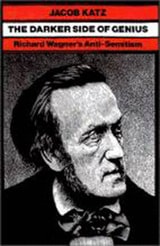
cover of The Darker Side of Genius: Richard Wagner’s Anti-Semitism

The Darker Side of Genius

Richard Wagner’s Anti-Semitism

Jacob. Katz

University Press of New England, 2002

For some, Richard Wagner is infamous as the favorite composer of Hitler, who seems to have admired Wagner as an early exponent of his own racist ideology and worldview. Impressed by this assumption victims of Hitler have also associated Wagner and his music with Nazism to such an extent that in Israel a ban on public performance of that music is upheld to this day. Jacob Katz, a scholar of international repute, approaches the highly charged issue of Richard Wagner’s anti-Semitism with the tools of a critical historian, asking two central questions: What role did anti-Semitism play in the life and work of Richard Wagner? And how did his anti-Jewish thoughts and sentiments contribute to the development of political anti-Semitism and Nazism? In this first comprehensive and judicious treatment of Wagner’s anti-Semitism, Katz analyzes the composer’s attitudes in their own time and place and in the context of Wagner’s life and aspirations. He traces Wagner’s feelings toward Jews chronologically, showing that the composer was ultimately obsessed by a deep-seated Judeophobia generated by conflict with his Jewish mentors and competitors. But he argues against reading the later emergence of Nazism back into Wagner’s life and work. While not absolving Wagner from responsibility for his views, Katz contends that contemporary Jews have paradoxically and uncritically adopted the Nazis’ assumptions about Wagner. Katz argues that Wagner’s music is untainted by his anti-Semitism, that there is, in fact, very little in Wagner’s art that, without forced speculation, can be related to his racist views.
[more]
cover of The Fatal Embrace: Jews and the State

The Fatal Embrace

Jews and the State

Benjamin Ginsberg

University of Chicago Press, 1993
In this provocative book, Benjamin Ginsberg examines the cycle of Jewish success and anti-Semitic attack throughout the history of the Diaspora, with a concentrated focus on the "special case" of America. For Ginsberg, the essential issue is not anti-Jewish feeling, but the conditions under which such sentiment is likely to be used in the political arena. The Fatal Embrace identifies the political dynamics that, historically, have set the stage for the persecution of Jews.
[more]
cover of The Flood: A Novel

The Flood

A Novel

Carol Ascher

Northwestern University Press, 1997
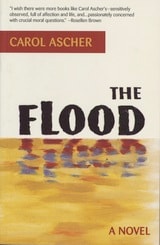
Nine-year-old Eva Hoffman is the daughter of Austrian Jewish refugees who have found a precarious safety among a small community of European exiles attached to a psychoanalytic hospital in Topeka, Kansas. It is 1951, and the landmark school desegregation case, Brown v. Topeka Board of Education, is being tried in the local court. As the rising river inundates the town, the Hoffmans open their home to refugees from the flood, and Eva learns the complexities of prejudice—and courage—both within and outside her family.
[more]
cover of The Individual in History: Essays in Honor of Jehuda Reinharz

The Individual in History

Essays in Honor of Jehuda Reinharz

Edited by ChaeRan Y. Freeze, Sylvia Fuks Fried, and Eugene R. Sheppard

Brandeis University Press, 2015
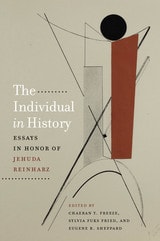
Jehuda Reinharz, born in Haifa in 1944, spent his childhood in Israel and his adolescence in Germany, and moved with his family to the United States when he was seventeen. These three diverse geographies and the experiences they engendered shaped his formative years and the future of a prolific scholar who devoted his life to the study of the central role of leadership as Jews faced the challenges of emancipation and integration in Germany, the rise of modern antisemitism, the formation of Zionist youth culture and politics, and the transformation of Jewish politics in Palestine and the State of Israel. In this volume, eminent scholars in their respective fields extend the lines of Reinharz’s research interests and personal activism by focusing on the ideological, political, and scholarly contributions of a diverse range of individuals in Jewish history. Essays are clustered around five central themes: ideology and politics; statecraft; intellectual, social and cultural spheres; witnessing history; and in the academy. This volume offers a panoramic view of modern Jewish history through engaging essays that celebrate Reinharz’s rich contribution as a path-breaking and prolific scholar, teacher, and leader in the academy and beyond.
[more]
cover of The Jewish Question Again

The Jewish Question Again

Edited by Joyce Dalsheim and Gregory Starrett

Prickly Paradigm Press, 2020

Anti-Semitism is on the rise. How is this still possible? Once again, we are witness to a surge in right-wing authoritarianism, ethnonationalism, and white supremacism, and the racist, xenophobic, and misogynist violence they spread. Like historic newsreels brought back to life, renewed waves of refugees are turned away at borders, placed in cages, or washed up lifeless on the shore.

Such striking similarities between present and past suggest that we are not done with the issues raised by the historical Jewish Question: that is, what is the place of “the Jew”—the minority, the relic, the rootless stranger, the racialized other, the exiled, the displaced, the immigrant, the diasporic? In The Jewish Question Again, leading scholars grapple with our inability to keep these struggles in the past and why we continue to repeat these atrocities. This book explores the haunting recurrence of the Jewish Question today and begs why we find ourselves here yet again.
 
[more]
cover of The Jewish Response to German Culture: From the Enlightenment to the Second World War

The Jewish Response to German Culture

From the Enlightenment to the Second World War

Jehuda Reinharz

Brandeis University Press, 1991
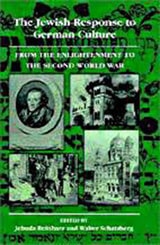
Seventeen scholars explore the interaction between a Jewish culture with its ancient heritage and an expansive German culture in the process of modernization.
[more]
cover of The Jews in Polish Culture

The Jews in Polish Culture

Aleksander Hertz

Northwestern University Press, 1988

Jews in Polish Culture was and in large measure remains an essentially pioneering work. Despite the passage of many years, the book's thrust has retained its initial, original freshness. 
[more]
cover of The Merchant of Havana: The Jew in the Cuban Abolitionist Archive

The Merchant of Havana

The Jew in the Cuban Abolitionist Archive

Stephen Silverstein

Vanderbilt University Press, 2016

LAJSA Book Award Winner, 2017, Latin American Jewish Studies Association

As Cuba industrialized in the nineteenth century, an epochal realignment of the social order occurred. In this period of change, two seemingly disparate, yet nevertheless intertwined, ideological forces appeared: anti-Semitism and abolitionism. As the antislavery movement became organized in Cuba, the argument grew that Jews participated in the African slave trade and in New World slavery, and that this participation gave Jews extraordinary influence in the new Cuban economy and culture. What was remarkable about this anti-Semitism was the decidedly small Jewish population on the island in this era. This form of anti-Semitism, Silverstein reveals, sprang almost exclusively from mythological beliefs.
[more]
cover of The Resistible Rise of Antisemitism: Exemplary Cases from Russia, Ukraine, and Poland

The Resistible Rise of Antisemitism

Exemplary Cases from Russia, Ukraine, and Poland

Laura Engelstein

Brandeis University Press, 2020

Antisemitism emerged toward the end of the nineteenth century as a powerful political movement with broad popular appeal. It promoted a vision of the world in which a closely-knit tribe called “the Jews” conspired to dominate the globe through control of international finance at the highest levels of commerce and money lending in the towns and villages. This tribe at the same time maneuvered to destroy the very capitalist system it was said to control through its devotion to the cause of revolution. It is easy to draw a straight line from this turn-of-the-century paranoid thinking to the murderous delusions of twentieth-century fascism. Yet the line was not straight.

Antisemitism as a political weapon did not stand unchallenged, even in Eastern Europe, where its consequences were particularly dire. In this region, Jewish leaders mobilized across national borders and in alliance with non-Jewish public figures on behalf of Jewish rights and in opposition to anti-Jewish violence. Antisemites were called to account and forced on the defensive. In Imperial and then Soviet Russia, in newly emerging Poland, and in aspiring Ukraine—notorious in the West as antisemitic hotbeds—antisemitism was sometimes a moral and political liability. These intriguing essays explore the reasons why, and they offer lessons from surprising places on how we can continue to fight antisemitism in our times.
[more]
cover of The Right to Difference: French Universalism and the Jews

The Right to Difference

French Universalism and the Jews

Maurice Samuels

University of Chicago Press, 2016

Universal equality is a treasured political concept in France, but recent anxiety over the country’s Muslim minority has led to an emphasis on a new form of universalism, one promoting loyalty to the nation at the expense of all ethnic and religious affiliations. This timely book offers a fresh perspective on the debate by showing that French equality has not always demanded an erasure of differences. Through close and contextualized readings of the way that major novelists, philosophers, filmmakers, and political figures have struggled with the question of integrating Jews into French society, Maurice Samuels draws lessons about how the French have often understood the universal in relation to the particular.

Samuels demonstrates that Jewish difference has always been essential to the elaboration of French universalism, whether as its foil or as proof of its reach. He traces the development of this discourse through key moments in French history, from debates over granting Jews civil rights during the Revolution, through the Dreyfus Affair and Vichy, and up to the rise of a “new antisemitism” in recent years. By recovering the forgotten history of a more open, pluralistic form of French universalism, Samuels points toward new ways of moving beyond current ethnic and religious dilemmas and argues for a more inclusive view of what constitutes political discourse in France.
 
[more]
cover of The Road to the Open

The Road to the Open

Arthur Schnitzler

Northwestern University Press, 1991
Turn-of-the-century Vienna was the scene of tremendous social and artistic upheaval. Arthur Schnitzler's novel The Road to the Open brilliantly captures the complex world of Freud, Mahler, Strauss, and Klimt, dealing masterfully with the basic issues of Austrian anti-Semitism, the Viennese intellectual community, post-Wagnerian music, and the psychology of Vienna's middle class.
[more]
cover of The Spectral Jew: Conversion and Embodiment in Medieval Europe

The Spectral Jew

Conversion and Embodiment in Medieval Europe

Steven F. Kruger

University of Minnesota Press, 2006

Medieval European culture encompassed Judaic, Christian, Muslim, and pagan societies, forming a complex matrix of religious belief, identity, and imagination. Through incisive readings of a broad range of medieval texts and informed by poststructuralist, queer, and feminist theories, The Spectral Jew traces the Jewish presence in Western Europe to show how the body, gender, and sexuality were at the root of the construction of medieval religious anxieties, inconsistencies, and instabilities. 

Looking closely at how medieval Jewish and Christian identities are distinguished from each other, yet intimately intertwined, Kruger demonstrates how Jews were often corporealized in ways that posited them as inferior to Christians—archaic and incapable of change—even as the two mutually shaped each other. But such attempts to differentiate Jews and Christians were inevitably haunted by the knowledge that Christianity had emerged out of Judaism and was, in its own self-understanding, a community of converts. 

Examining the points of contact between Christian and Jewish communities, Kruger discloses the profound paradox of the Jew as different in all ways, yet capable of converting to fully Christian status. He draws from central medieval authors and texts such as Peter Damian, Guibert of Nogent, the Barcelona Disputation, and the Hebrew chronicles of the First Crusade, as well as lesser known writings such as the disputations of Ceuta, Majorca, and Tortosa and the immensely popular Dialogues of Peter Alfonsi. 

By putting the conversion narrative at the center of this analysis, Kruger exposes it as a disruption of categories rather than a smooth passage and reveals the prominent role Judaism played in the medieval Christian imagination. 

Steven F. Kruger is professor of English and medieval studies at Queens College and the Graduate Center, CUNY. He is author of several books and editor with Glenn Burger of Queering the Middle Ages (Minnesota, 2001).
[more]
cover of The Un-Americans: Jews, the Blacklist, and Stoolpigeon Culture

The Un-Americans

Jews, the Blacklist, and Stoolpigeon Culture

Joseph Litvak

Duke University Press, 2009

In a bold rethinking of the Hollywood blacklist and McCarthyite America, Joseph Litvak reveals a political regime that did not end with the 1950s or even with the Cold War: a regime of compulsory sycophancy, in which the good citizen is an informer, ready to denounce anyone who will not play the part of the earnest, patriotic American. While many scholars have noted the anti-Semitism underlying the House Un-American Activities Committee’s (HUAC’s) anti-Communism, Litvak draws on the work of Theodor W. Adorno, Hannah Arendt, Alain Badiou, and Max Horkheimer to show how the committee conflated Jewishness with what he calls “comic cosmopolitanism,” an intolerably seductive happiness, centered in Hollywood and New York, in show business and intellectual circles. He maintains that HUAC took the comic irreverence of the “uncooperative” witnesses as a crime against an American identity based on self-repudiation and the willingness to “name names.” Litvak proposes that sycophancy was (and continues to be) the price exacted for assimilation into mainstream American culture, not just for Jews, but also for homosexuals, immigrants, and other groups deemed threatening to American rectitude.

Litvak traces the outlines of comic cosmopolitanism in a series of performances in film and theater and before HUAC, performances by Jewish artists and intellectuals such as Zero Mostel, Judy Holliday, and Abraham Polonsky. At the same time, through an uncompromising analysis of work by informers including Jerome Robbins, Elia Kazan, and Budd Schulberg, he explains the triumph of a stoolpigeon culture that still thrives in the America of the early twenty-first century.
[more]
cover of The Word Unheard: Legacies of Anti-Semitism in German Literature and Culture

The Word Unheard

Legacies of Anti-Semitism in German Literature and Culture

Martha B. Helfer

Northwestern University Press, 2011

The publication of Martha B. Helfer’s The Word Unheard: Legacies of Anti-Semitism in German Literature and Culture marks a stunningly original new direction in the interpretation of canonical works of eighteenth- and nineteenth-century German literature. 

Between 1749 and 1850—the formative years of the so-called Jewish Question in Germany—the emancipation debates over granting full civil and political rights to Jews provided the topical background against which all representations of Jewish characters and concerns in literary texts were read. Helfer focuses sharply on these debates and demonstrates through close readings of works by Gotthold Lessing, Friedrich Schiller, Achim von Arnim, Annette von Droste- Hülshoff, Adalbert Stifter, and Franz Grillparzer how disciplinary practices within the field of German studies have led to systematic blind spots in the scholarship on anti-Semitism to date. 

While all the authors discussed are well known and justly celebrated, the particular works addressed represent an effective mix of enduring classics and less recognized, indeed often scandalously overlooked, texts whose consideration leads to a reevaluation of the author’s more mainstream oeuvre. Although some of the works and authors chosen have previously been noted for their anti-Semitic proclivities, the majority have not, and some have even been marked by German scholarship as philo-Semitic—a view that The Word Unheard undertakes not so much to refute as to complicate, and in the process to question not only these texts but also the deafness of the German scholarly tradition. With implications that reach into many disciplines, The Word Unheard will be a foundational study for all scholars of modern Germany.
[more]
cover of Toward the Final Solution: A History of European Racism

Toward the Final Solution

A History of European Racism

George L. Mosse, With a critical introduction by Christopher R. Browning

University of Wisconsin Press, 2020

Originally published in 1978, Toward the Final Solution was one of the first in-depth studies of the evolution of racism in Europe, from the Age of Enlightenment through the Holocaust and Hitler’s Final Solution. George L. Mosse details how antisemitism and dangerous prejudices have long existed in the European cultural tradition, revealing an appalling and complex history. With the global renewal of extreme, right-wing nationalism, this instrumental work remains as important as ever for understanding how bigotry impacts political, cultural, and intellectual life. This edition of Mosse’s classic book includes a new critical introduction by Christopher R. Browning, author of Ordinary Men: Reserve Police Battalion 101 and the Final Solution in Poland.
[more]