Results by title
69 books match the query 'Art, American' and 11 start with t
The Art of Remembering
Essays on African American Art and HistoryGwendolyn DuBois Shaw
Duke University Press, 2024
The Art of Return
The Sixties and Contemporary CultureJames Meyer
University of Chicago Press, 2019
In this innovative work, James Meyer turns to art criticism, theory, memoir, and fiction to examine the fascination with the long sixties and contemporary expressions of these cultural memories across the globe. Meyer draws on a diverse range of cultural objects that reimagine this revolutionary era stretching from the 1950s to the 1970s, including reenactments of civil rights, antiwar, and feminist marches, paintings, sculptures, photographs, novels, and films. Many of these works were created by artists and writers born during the long Sixties who were driven to understand a monumental era that they missed. These cases show us that the past becomes significant only in relation to our present, and our remembered history never perfectly replicates time past. This, Meyer argues, is precisely what makes our contemporary attachment to the past so important: it provides us a critical opportunity to examine our own relationship to history, memory, and nostalgia.
The Artist in American Society
The Formative YearsNeil Harris
University of Chicago Press, 1982
The Beauty of a Social Problem
Photography, Autonomy, EconomyWalter Benn Michaels
University of Chicago Press, 2015
Although he discusses well-known figures like Walker Evans and Jeff Wall, Michaels’s focus is on a group of younger artists, including Viktoria Binschtok, Phil Chang, Liz Deschenes, and Arthur Ou. All born after 1965, they have always lived in a world where, on the one hand, artistic ambition has been synonymous with the critique of autonomous form and intentional meaning, while, on the other, the struggle between capital and labor has essentially been won by capital. Contending that the aesthetic and political conditions are connected, Michaels argues that these artists’ new commitment to form and meaning is a way for them to depict the conditions that have taken US economic inequality from its lowest level, in 1968, to its highest level today. As Michaels demonstrates, these works of art, unimaginable without the postmodern critique of autonomy and intentionality, end up departing and dissenting from that critique in continually interesting and innovative ways.
The Colorful Apocalypse
Journeys in Outsider ArtGreg Bottoms
University of Chicago Press, 2007
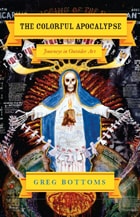
The Reverend Howard Finster was twenty feet tall, suspended in darkness. Or so he appeared in the documentary film that introduced a teenaged Greg Bottoms to the renowned outsider artist whose death would help inspire him, fourteen years later, to travel the country. Beginning in Georgia with a trip to Finster’s famous Paradise Gardens, his journey—of which The Colorful Apocalypse is a masterly chronicle—is an unparalleled look into the lives and visionary works of some of Finster’s contemporaries: the self-taught evangelical artists whose beliefs and oeuvres occupy the gray area between madness and Christian ecstasy.
With his prodigious gift for conversation and quietly observant storytelling, Bottoms draws us into the worlds of such figures as William Thomas Thompson, a handicapped ex-millionaire who painted a 300-foot version of the book of Revelation; Norbert Kox, an ex-member of the Outlaws biker gang who now lives as a recluse in rural Wisconsin and paints apocalyptic visual parables; and Myrtice West, who began painting to express the revelatory visions she had after her daughter was brutally murdered. These artists’ works are as wildly varied as their life stories, but without sensationalizing or patronizing them, Bottoms—one of today’s finest young writers—gets at the heart of what they have in common: the struggle to make sense, through art, of their difficult personal histories.
In doing so, he weaves a true narrative as powerful as the art of its subjects, a work that is at once an enthralling travelogue, a series of revealing biographical portraits, and a profound meditation on the chaos of despair and the ways in which creativity can help order our lives.
The De-Definition of Art
Harold Rosenberg
University of Chicago Press, 1983

The Fine Arts in America
Joshua C. Taylor
University of Chicago Press, 1979
"[Taylor] describes changing definitions of art as much as he describes art itself, and he shows how the shifting forms of patronage affected the forms of art. He analyzes artists' associations . . . and he shows how museums and schools have expanded the audience for art. In short, he places artists and their work in cultural context. This treatment of the social history of art is the most original and intriguing aspect of Taylor's sketch."—Journal of American History
"This is a brilliantly subtle book. It builds with one insight after another, and suddenly the reader finds that a whole new way of looking at American art is being proposed. . . . After decades of thinking and looking and teaching, Dr. Taylor has written it all down. This work will become a classic interpretation almost overnight."—Peter Marzio, director, Corcoran Gallery of Art
"Interest in American art is unlikely to abate. . . . Mr. Taylor's short book is an invaluable guide through this activity and to its traditions."—Neil Harris, Wall Street Journal
The Living Line
Modern Art and the Economy of EnergyRobin Veder
Dartmouth College Press, 2015
The Old Guard and the Avant-Garde
Modernism in Chicago, 1910-1940Edited by Sue Ann Prince
University of Chicago Press, 1990
"This is fresh and fascinating research about the ups and downs of modernism in Chicago, a city where art students reportedly once hung Matisse in effigy. Regional studies like this one broaden our understanding of how the art world has worked outside of New York and gives depth to a story we know too narrowly. Applause all the way around."—Wanda M. Corn, Stanford University
The Politics of Urban Beauty
New York and Its Art CommissionMichele H. Bogart
University of Chicago Press, 2006
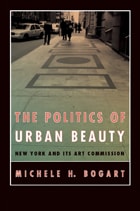
Since its founding in 1898, the Art Commission of the City of New York (ACNY) has served as the city’s aesthetic gatekeeper, evaluating all works of art intended for display on city property. And over the years, the commission’s domain has expanded dramatically to include everything from parks and courthouses to trash cans and sidewalks. In ThePolitics of Urban Beauty, Michele H. Bogart argues that this unprecedented authority has made the commission host to some complex negotiations—involving artists, architects, business leaders, activists, and politicians—about not only the role of art in urban design, but also the shape and meaning of the city and its public spaces.
A former vice president of the ACNY, Bogart tells its story here from an insider’s perspective, tracing the commission’s history from its origins as an outgrowth of progressive reform to its role in New York’s reconstruction after 9/11. Drawing on archival correspondence, drawings, and photographs from commission collections, Bogart presents bracing examples of works—ranging from New Deal murals to Louis Kahn’s unbuilt Memorial to Six Million Jewish Martyrs—that illuminate the ACNY’s subtle yet powerful role in shaping New York’s identity.
The Politics of Urban Beauty is thus a fascinating history of a New York art world that paralleled—and sometimes unpredictably intersected with—the more familiar realm of prominent architects, painters, galleries, and museums. Bogart’s fresh view adds a critical dimension to our understanding of “the city beautiful” and makes an important and lively contribution to the study of art history, urban design, and New York City itself.
The Transformation of the Avant-Garde
The New York Art World, 1940-1985Diana Crane
University of Chicago Press, 1989
Crane's account is built around discussions of seven styles: Abstract Expressionism in the forties; Pop art and Minimalism in the sixties; Figurative painting, Photorealism, and Pattern painting in the early seventies; and Neo-Expressionism in the early eighties. Demonstrating that the New York art world moved toward increasing acceptance of dominant American cultural trends, Crane offers a fascinating look not only at the intricacies of New York's artistic inner circle but also at the sociology of work and professions, the economics of culture markets such as "dealing art," and the sociology of culture.