Results by title
138 books match the query 'Art and society' and 28 start with t
Technics Improvised
Activating Touch in Global Media ArtTimothy Murray
University of Minnesota Press, 2022
Seeing new media art as an entry point for better understanding of technology and worldmaking futures
In this challenging work, a leading authority on new media art examines that curatorial and aesthetic landscape to explore how art resists and rewires the political and economic structures that govern technology. How do inventive combinations of artistic and theoretical improvisation counter the extent to which media art remains at risk, not just from the quarantines of a global pandemic but also from the very viral and material conditions of technology? How does global media art speak back to the corporate closures of digital euphoria as clothed in strategies of digital surveillance, ecological deprivation, and planned obsolescence? In Technics Improvised, Timothy Murray asks these questions and more.
At the intersection of global media art, curatorial practice, tactical media, and philosophy, Murray reads a wide range of creative performances and critical texts that envelop artistic and digital materials in unstable, political relations of touch, body, archive, exhibition, and technology. From video to net art and interactive performance, he considers both canonical and unheralded examples of activist technics that disturb the hegemony of biopolitical/digital networks by staging the very touch of the unsettling discourse erupting from within. In the process, critical dialogues emerge between a wide range of artists and theorists, from Hito Steyerl, Ricardo Dominguez, Joan Jonas, Isaac Julien, Ryoji Ikeda, and Shadi Nazarian to Gilles Deleuze, Jean-Luc Nancy, Elizabeth Povinelli, Jean-François Lyotard, Erin Manning, Achille Mbembe, and Samuel Weber.
Brilliantly conceived and argued and eloquently written, Technics Improvised points the way to how artistic and theoretical practice can seize on the improvisational accidents of technics to activate creativity, thought, and politics anew.
Temporary Monuments
Art, Land, and America's Racial EnterpriseRebecca Zorach
University of Chicago Press, 2024
Art has long played a key role in constructing how people understand and imagine America. Starting with contemporary controversies over public monuments in the United States, Rebecca Zorach carefully examines the place of art in the occupation of land and the upholding of White power in the US, arguing that it has been central to the design of America’s racial enterprise. Confronting closely held assumptions of art history, Zorach looks to the intersections of art, nature, race, and place, working through a series of symbolic spaces—the museum, the wild, islands, gardens, home, and walls and borders—to open and extend conversations on the political implications of art and design.
Against the backdrop of central moments in American art, from the founding of early museums to the ascendancy of abstract expressionism, Zorach shows how contemporary artists—including Dawoud Bey, Theaster Gates, Maria Gaspar, Kerry James Marshall, Alan Michelson, Dylan Miner, Postcommodity, Cauleen Smith, and Amanda Williams—have mined the relationship between environment and social justice, creating works that investigate and interrupt White supremacist, carceral, and environmentally toxic worlds. The book also draws on poetry, creative nonfiction, hip-hop videos, and Disney films to illuminate crucial topics in art history, from the racial politics of abstraction to the origins of museums and the formation of canons.
The Age of the Cathedrals
Art and Society, 980-1420Georges Duby
University of Chicago Press, 1981
"If Age of the Cathedrals has a fault, it is that Professor Duby knows too much, has too many new ideas and takes such a delight in setting them out. . . insights whiz to and fro like meteorites."—John Russell, New York Times Book Review

The Anthropology Art and Cultural Production
Histories, Themes, PerspectivesMaruska Svasemaruska Svasek
Pluto Press, 2007
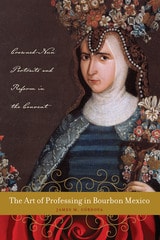
The Art of Professing in Bourbon Mexico
Crowned-Nun Portraits and Reform in the ConventBy James M. Córdova
University of Texas Press, 2014
In the eighteenth century, New Spaniards (colonial Mexicans) so lauded their nuns that they developed a local tradition of visually opulent portraits, called monjas coronadas or “crowned nuns,” that picture their subjects in regal trappings at the moment of their religious profession and in death. This study identifies these portraits as markers of a vibrant and changing society that fused together indigenous and Euro-Christian traditions and ritual practices to construct a new and complex religious identity that was unique to New Spain.
To discover why crowned-nun portraits, and especially the profession portrait, were in such demand in New Spain, this book offers a pioneering interpretation of these works as significant visual contributions to a local counter-colonial discourse. James M. Córdova demonstrates that the portraits were a response to the Spanish crown’s project to modify and modernize colonial society—a series of reforms instituted by the Bourbon monarchs that threatened many nuns’ religious identities in New Spain. His analysis of the portraits’ rhetorical devices, which visually combined Euro-Christian and Mesoamerican notions of the sacred, shows how they promoted local religious and cultural values as well as client-patron relations, all of which were under scrutiny by the colonial Church. Combining visual evidence from images of the “crowned nun” with a discussion of the nuns’ actual roles in society, Córdova reveals that nuns found their greatest agency as Christ’s brides, a title through which they could, and did, challenge the Church’s authority when they found it intolerable.
The Art of Remembering
Essays on African American Art and HistoryGwendolyn DuBois Shaw
Duke University Press, 2024
The Art of Solidarity
Visual and Performative Politics in Cold War Latin AmericaEdited by Jessica Stites Mor and Maria del Carmen Suescun Pozas
University of Texas Press, 2018
The Cold War claimed many lives and inflicted tremendous psychological pain throughout the Americas. The extreme polarization that resulted from pitting capitalism against communism held most of the creative and productive energy of the twentieth century captive. Many artists responded to Cold War struggles by engaging in activist art practice, using creative expression to mobilize social change. The Art of Solidarity examines how these creative practices in the arts and culture contributed to transnational solidarity campaigns that connected people across the Americas from the early twentieth century through the Cold War and its immediate aftermath.
This collection of original essays is divided into four chronological sections: cultural and artistic production in the pre–Cold War era that set the stage for transnational solidarity organizing; early artistic responses to the rise of Cold War polarization and state repression; the centrality of cultural and artistic production in social movements of solidarity; and solidarity activism beyond movements. Essay topics range widely across regions and social groups, from the work of lesbian activists in Mexico City in the late 1970s and 1980s, to the exchanges and transmissions of folk-music practices from Cuba to the United States, to the uses of Chilean arpilleras to oppose and protest the military dictatorship. While previous studies have focused on politically engaged artists or examined how artist communities have created solidarity movements, this book is one of the first to merge both perspectives.

The Art of the Macchia and the Risorgimento
Representing Culture and Nationalism in Nineteenth-Century ItalyAlbert Boime
University of Chicago Press, 1993
In the first extended sociopolitical interpretation in English of this important group, Albert Boime places the Macchiaioli in the cultural context of the Risorgimento—the political movement that unified Italy, freed from foreign rule, under a secular, constitutional government. Anglo-American art criticism has generally neglected these painters (probably because of their overt political affiliation and nationalist expression), but Boime shows that these artists, while deeply political, nevertheless created aesthetically superior work.
Boime's study departs from previous research on the Macchiaioli by systematically investigating the group's writings, sources, and patronage in relation to the Risogimento. The book also examines both contemporary and later critical responses, revealing how French art criticism has obscured the achievements of Macchiaioli art. Richly illustrated, The Art of the Macchia and the Risorgimento will appeal to anyone interested in nineteenth-century European art or the history of Italy.
The Artist in American Society
The Formative YearsNeil Harris
University of Chicago Press, 1982
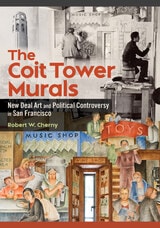
The Coit Tower Murals
New Deal Art and Political Controversy in San FranciscoRobert W. Cherny
University of Illinois Press, 2024
Created in 1934, the Coit Tower murals were sponsored by the Public Works of Art Project (PWAP), the first of the New Deal art programs. Twenty-five master artists and their assistants worked there, most of them in buon fresco, Nearly all of them drew upon the palette and style of Diego Rivera. The project boosted the careers of Victor Arnautoff, Lucien Labaudt, Bernard Zakheim, and others, but Communist symbols in a few murals sparked the first of many national controversies over New Deal art.
Sixty full-color photographs illustrate Robert Cherny’s history of the murals from their conception and completion through their evolution into a beloved San Francisco landmark. Cherny traces and critiques the treatment of the murals by art critics and historians. He also probes the legacies of Coit Tower and the PWAP before surveying San Francisco’s recent controversies over New Deal murals.
An engaging account of an artistic landmark, The Coit Tower Murals tells the full story behind a public art masterpiece.
The End of Expressionism
Art and the November Revolution in Germany, 1918-1919Joan Weinstein
University of Chicago Press, 1990
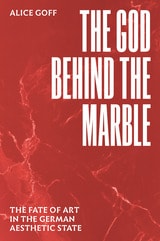
The God behind the Marble
The Fate of Art in the German Aesthetic StateAlice Goff
University of Chicago Press, 2024
For German philosophers at the turn of the nineteenth century, beautiful works of art acted as beacons of freedom, instruments of progress that could model and stimulate the moral autonomy of their beholders. Amid the Revolutionary and Napoleonic wars, Germans struggled to uphold these ideals as they contended with the destruction of art collections, looting, and questions about cultural property. As artworks fell prey to the violence they were supposed to transcend, some began to wonder how art could deliver liberation if it could also quickly become a spoil of war. Alice Goff considers a variety of works—including forty porphyry columns from the tomb of Charlemagne, the Quadriga from the Brandenburg Gate in Berlin, the Laocoön group from Rome, a medieval bronze reliquary from Goslar, a Last Judgment from Danzig, and the mummified body of an official from the Rhenish hamlet of Sinzig—following the conflicts over the ownership, interpretation, conservation, and exhibition of German collections during the Napoleonic period and its aftermath.
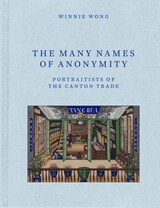
The Many Names of Anonymity
Portraitists of the Canton TradeWinnie Wong
University of Chicago Press, 2025
Challenging contemporary procedures for establishing attribution, chronology, and authenticity in Chinese art, Winnie Wong explores the means, methods, and stakes of recovering the names of an anonymous community of artists. To examine how Western art history has misconstrued and miscategorized names and identities in Chinese art, she looks to conflicting features of modernity: the European attachment of singular names to individuals and their works, and the Chinese use of socially contingent names that often are not attached to material labor and sometimes operate against it. Wong charts the genealogy of this naming problem by bringing to life the artists of the Qing Empire’s trade with Europeans at the port of Guangzhou, centering on a group of portraitists known by names that were recorded in a pidgin language: Chin Qua, Chit Qua, Spoilum, Lam Qua, and Ting Qua.
Many of these paintings survive today, yet scholars have identified only a handful of the painters’ identities. Pushing against Western norms that have shaped our understanding of authorship, Wong reveals that these artists shared names, created works in multiples, and signed their pieces with different names or none at all. This lavishly illustrated volume explores portraiture across media, including unfired clay, reverse painting on glass, watercolor on paper, oil on canvas, and the daguerreotype, to propose new ways of studying anonymity, copying, and the emergence of author names in the Sino-European visual culture of the long eighteenth century.
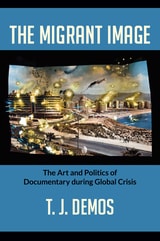
The Migrant Image
The Art and Politics of Documentary during Global CrisisT. J. Demos
Duke University Press, 2013
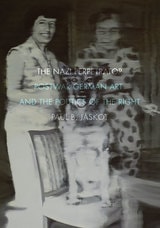
The Nazi Perpetrator
Postwar German Art and the Politics of the RightPaul B. Jaskot
University of Minnesota Press, 2012
Who was responsible for the crimes of the Nazis? Party leaders and members? Rank-and-file soldiers and bureaucrats? Ordinary Germans? This question looms over German disputes about the past like few others. It also looms over the art and architecture of postwar Germany in ways that have been surprisingly neglected. In The Nazi Perpetrator, Paul B. Jaskot fundamentally reevaluates pivotal developments in postwar German art and architecture against the backdrop of contentious contemporary debates over the Nazi past and the difficulty of determining who was or was not a Nazi perpetrator.
Like their fellow Germans, postwar artists and architects grappled with the Nazi past and the problem of defining the Nazi perpetrator—a problem that was thoroughly entangled with contemporary conservative politics and the explosive issue of former Nazis living in postwar Germany. Beginning with the formative connection between Nazi politics and art during the 1930s, The Nazi Perpetrator traces the dilemma of identifying the perpetrator across the entire postwar period. Jaskot examines key works and episodes from West Germany and, after 1989, reunified Germany, showing how the changing perception of the perpetrator deeply impacted art and architecture, even in cases where artworks and buildings seem to have no obvious relation to the Nazi past. The book also reinterprets important periods in the careers of such major figures as Gerhard Richter, Anselm Kiefer, and Daniel Libeskind.
Combining political history with a close analysis of specific works, The Nazi Perpetrator powerfully demonstrates that the ongoing influence of Nazi Germany after 1945 is much more central to understanding a wide range of modern German art and architecture than cultural historians have previously recognized.
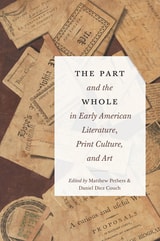
The Part and the Whole in Early American Literature, Print Culture, and Art
Matthew Pethers
Bucknell University Press, 2024
The essays in this pathbreaking collection consider the significance of varied early American fragmentary genres and practices—from diaries and poetry, to almanacs and commonplace books, to sermons and lists, to Indigenous ruins and other material shards and fragments—often overlooked by critics in a scholarly privileging of the “whole.” Contributors from literary studies, book history, and visual culture discuss a host of canonical and non-canonical figures, from Edward Taylor and Washington Irving to Mary Rowlandson and Sarah Kemble Knight, offering insight into the many intellectual, ideological, and material variations of “form” that populated the early American cultural landscape. As these essays reveal, the casting of the fragmentary as aesthetically eccentric or incomplete was a way of reckoning with concerns about the related fragmentation of nation, society, and self. For a contemporary audience, they offer new ways to think about the inevitable gaps and absences in our cultural and historical archive.
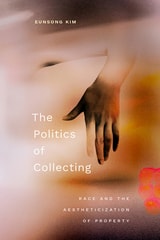
The Politics of Collecting
Race and the Aestheticization of PropertyEunsong Kim
Duke University Press, 2024
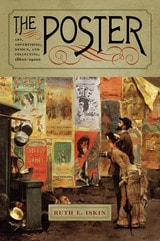
The Poster
Art, Advertising, Design, and Collecting, 1860s–1900sRuth E. Iskin
Dartmouth College Press, 2014
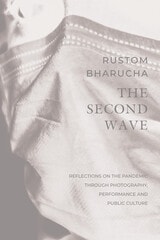
The Second Wave
Reflections on the Pandemic through Photography, Performance and Public CultureRustom Bharucha
Seagull Books, 2022
Focusing on the second wave of the Covid-19 pandemic in India between April and December 2021, Rustom Bharucha’s timely essay reflects on four interconnected realities that haunted this ongoing crisis—death, grief, mourning, and extinction. How do we cope with multiple deaths and the dislocation of rituals when the act of mourning is either postponed or denied? What roles do political surveillance, censorship, the regulation of lockdowns, and the sheer indifference to the lives of people play in the containment of civil liberties? Through vivid examples of photography, theater, dance, visual arts, and the cultures of everyday life, this meditative essay illuminates both the horror of the pandemic as well as its unexpected intimacies and revelations of shared suffering. Against the destruction of nature and the disrespect for the nonhuman, The Second Wave offers lessons in resilience through its reflections on the ethos of waiting and the need to re-envision breath as a vital resource of self-renewal and resistance.
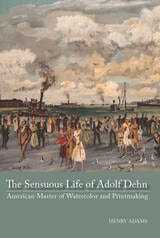
The Sensuous Life of Adolf Dehn
American Master of Watercolor and PrintmakingHenry Adams
University of Missouri Press, 2020
In this wide-ranging biography, Henry Adams explores how a once central figure can come to be forgotten. Noting that Dehn’s watercolor Spring in Central Park has been widely reproduced on calendars, postcards, and other Metropolitan Museum of Art souvenirs, Adams asks why it is that some artists are celebrated as key figures while others, even those who created images that form an integral part of our visual culture, are relatively unknown. With his account of the life of the prolific and influential Dehn, and a look at the circles of artists and writers in which Dehn moved, Adams helps to fill in what he calls the “secret or subterranean history of art.”
The Sovereign Self
Aesthetic Autonomy from the Enlightenment to the Avant-GardeGrant H. Kester
Duke University Press, 2023
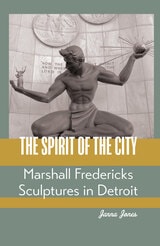
The Spirit of the City
Marshall Fredericks Sculptures in DetroitJanna Jones
Michigan State University Press, 2023
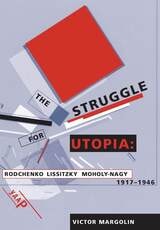
The Struggle for Utopia
Rodchenko, Lissitzky, Moholy-Nagy, 1917-1946Victor Margolin
University of Chicago Press, 1997
"An ambitious effort. This book puts the masters of European Modernism into perfect focus as inventors, propagators, and practitioners of a visual language that continues to hold sway over contemporary graphic style."—Steven Heller
"Worth the wait. . . . Margolin usefully presents what he calls the 'failed hope' of this movement in this valuable effort."—Publishers Weekly
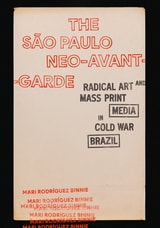
The São Paulo Neo-Avant-Garde
Radical Art and Mass Print Media in Cold War BrazilMari Rodríguez Binnie
University of Texas Press, 2024
How artists challenged a military dictatorship through mass print technologies in 1970s and 1980s São Paulo.
Throughout the 1970s and into the 1980s, during Brazil's military dictatorship, artists shifted their practices to critique the government and its sanitized images of Brazil, its use of torture, and its targeted persecutions. Mari Rodríguez Binnie's The São Paulo Neo-Avant-Garde examines these artworks and their engagement with politics and mainstream art institutions and practices.
As Binnie skillfully shows, artists appropriated processes like photocopy, offset lithography, and thermal and heliographic printing, making newly available technologies of mass production foundational to their work of resistance against both the dictatorship and the established art world. Often working collaboratively, these artists established alternative networks of exchange locally and internationally to circulate their work. As democracy was reestablished in Brazil, and in the decades that followed, their works largely fell out of sight. Here, in the first English-language book to focus entirely on conceptual practices in São Paulo in the 1970s and 1980s, Binnie unearths a scene critical to the development of contemporary Brazilian Art.
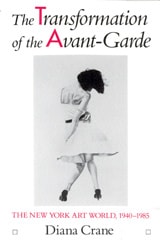
The Transformation of the Avant-Garde
The New York Art World, 1940-1985Diana Crane
University of Chicago Press, 1989
Crane's account is built around discussions of seven styles: Abstract Expressionism in the forties; Pop art and Minimalism in the sixties; Figurative painting, Photorealism, and Pattern painting in the early seventies; and Neo-Expressionism in the early eighties. Demonstrating that the New York art world moved toward increasing acceptance of dominant American cultural trends, Crane offers a fascinating look not only at the intricacies of New York's artistic inner circle but also at the sociology of work and professions, the economics of culture markets such as "dealing art," and the sociology of culture.
Thinking with Things
Toward a New Vision of ArtBy Esther Pasztory
University of Texas Press, 2005
What is "art"? Why have human societies through all time and around the globe created those objects we call works of art? Is there any way of defining art that can encompass everything from Paleolithic objects to the virtual images created by the latest computer technology? Questions such as these have preoccupied Esther Pasztory since the beginning of her scholarly career. In this authoritative volume, she distills four decades of research and reflection to propose a pathbreaking new way of understanding what art is and why human beings create it that can be applied to all cultures throughout time.
At its heart, Pasztory's thesis is simple and yet profound. She asserts that humans create things (some of which modern Western society chooses to call "art") in order to work out our ideas—that is, we literally think with things. Pasztory draws on examples from many societies to argue that the art-making impulse is primarily cognitive and only secondarily aesthetic. She demonstrates that "art" always reflects the specific social context in which it is created, and that as societies become more complex, their art becomes more rarefied.
Pasztory presents her thesis in a two-part approach. The first section of the book is an original essay entitled "Thinking with Things" that develops Pasztory's unified theory of what art is and why we create it. The second section is a collection of eight previously published essays that explore the art-making process in both Pre-Columbian and Western societies. Pasztory's work combines the insights of art history and anthropology in the light of poststructuralist ideas. Her book will be indispensable reading for everyone who creates or thinks about works of art.
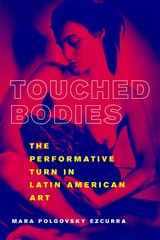
Touched Bodies
The Performative Turn in Latin American ArtMara Polgovsky Ezcurra
Rutgers University Press, 2019
Winner of the 2019 Art Journal Prize from the College Art Association
What is the role of pleasure and pain in the politics of art? In Touched Bodies, Mara Polgovsky Ezcurra approaches this question as she examines the flourishing of live and intermedial performance in Latin America during times of authoritarianism and its significance during transitions to democracy. Based on original documents and innovative readings, her book brings politics and ethics to the discussion of artistic developments during the “long 1980s”. She describes the rise of performance art in the context of feminism, HIV-activism, and human right movements, taking a close look at the work of Diamela Eltit and Raúl Zurita from Chile, León Ferrari and Liliana Maresca from Argentina, and Marcos Kurtycz, the No Grupo art collective, and Proceso Pentágono from Mexico. The comparative study of the work of these artists attests to a performative turn in Latin American art during the 1980s that, like photography and film before, recast the artistic field as a whole, changing the ways in which we perceive art and understand its role in society.
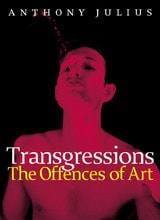
Transgressions
The Offences of ArtAnthony Julius
University of Chicago Press, 2002
Transgressions is the first book to address this controversial subject. Here Anthony Julius traces the history of subversion in art from the outraged response to Manet's Le Déjeuner sur l'Herbe to the scandal caused by the grant programs of the National Endowment for the Arts a century and a half later. Throughout the book, and supported by the work of such artists as Marcel Duchamp, the Chapman brothers, Andres Serrano, Damien Hirst, Gilbert & George, Paul McCarthy, Jeff Koons, Hans Haacke, and Anselm Kiefer, Julius shows how the modern period has been characterized by three kinds of transgressive art: an art that perverts established art rules; an art that defiles the beliefs and sentiments of its audience; and an art that challenges and disobeys the rules of the state.
The evidence assembled, Julius concludes his hard-hitting dissection of the landscapes of contemporary art by posing some important questions: what is art's future when its boundary-exceeding, taboo-breaking endeavors become the norm? And is anything of value lost when we submit to art's violation?
Transgressions is not a comfortable—still less a comforting—read, but it has a powerful urgency that makes it an essential document for anyone involved in our cultural life at the beginning of the twenty-first century.