Results by title
133 books match the query 'Artists' and 15 start with t
The Artist in American Society
The Formative YearsNeil Harris
University of Chicago Press, 1982
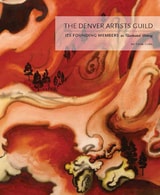
The Denver Artists Guild
Its Founding Members; An Illustrated HistoryStan Cuba
University Press of Colorado, 2015
In 1928, the newly organized Denver Artists Guild held its inaugural exhibition in downtown Denver. Little did the participants realize that their initial effort would survive the Great Depression and World War II—and then outlive all of the group’s fifty-two charter members.
The guild’s founders worked in many media and pursued a variety of styles. In addition to the oils and watercolors one would expect were masterful pastels by Elsie Haddon Haynes, photographs by Laura Gilpin, sculpture by Gladys Caldwell Fisher and Arnold Rönnebeck, ceramics by Anne Van Briggle Ritter and Paul St. Gaudens, and collages by Pansy Stockton. Styles included realism, impressionism, regionalism, surrealism, and abstraction. Murals by Allen True, Vance Kirkland, John E. Thompson, Louise Ronnebeck, and others graced public and private buildings—secular and religious—in Colorado and throughout the United States. The guild’s artists didn’t just contribute to the fine and decorative arts of Colorado; they enhanced the national reputation of the state.
Then, in 1948, the Denver Artists Guild became the stage for a great public debate pitting traditional against modern. The twenty-year-old guild split apart as modernists bolted to form their own group, the Fifteen Colorado Artists. It was a seminal moment: some of the guild’s artists became great modernists, while others remained great traditionalists.
Enhanced by period photographs and reproductions of the founding members’ works, The Denver Artists Guild chronicles a vibrant yet overlooked chapter of Colorado’s cultural history. The book includes a walking tour of guild members’ paintings and sculptures viewable in Denver and elsewhere in Colorado, by Leah Naess and author Stan Cuba.
In honor of the book’s release, the Byers-Evans House Gallery will showcase a collection of founding guild members’ works starting June 26, 2015. The exhibit, also titled The Denver Artists Guild: Its Founding Members, contains paintings from artists such as the famed Paschal Quackenbush, Louise Ronnebeck, Albert Byron Olson, Elisabeth Spalding, Waldo Love and Vance Kirkland. The show will be on display through September 26, 2015.
The Left Bank
Writers, Artists, and Politics from the Popular Front to the Cold WarHerbert Lottman
University of Chicago Press, 1998
"Surprisingly fresh and intense. . . . A retrospective travelogue of the Left Bank in the days when it was the setting for almost all French intellectual activity. . . . Absorbing."—Naomi Bliven, New Yorker
"As an introduction to a period in French history already legendary, The Left Bank is superb."—Michael Dirda, Washington Post Book World
"An intellectual history. A history of the interaction between politics and letters. And a rumination on the limitless credulity of intellectuals."—Christopher Hitchens, New Statesman
The Lizard's Tale
A NovelJosé Donoso, translated from the Spanish by Suzanne Levine
Northwestern University Press, 2011
José Donoso was the leading Chilean representative of the Latin American “Boom” of the sixties and seventies that included Gabriel García Márquez, Mario Vargas Llosa, and Manuel Puig, among others. Written as a draft in 1973, set aside, and forgotten, The Lizard’s Tale was discovered among Donoso’s papers at Princeton University by his daughter after his death. Edited for publication by critic and poet Julio Ortega, it was published posthumously in Spanish under the title Lagartija sin cola in 2007. Suzanne Jill Levine, who knew Donoso and translated two of his earlier works, brings the book to an English-language audience for the first time.
Defeated and hiding in his Barcelona apartment, painter Antonio Muñoz-Roa—Donoso’s alter ego—relates the story of his flight with Luisa, his cousin, lover, and benefactor, after his scandalous desertion from the “Informalist” movement (a witty reference to a contemporary Spanish art movement and possibly an allusion to the Boom as well), in which he had been a member of a certain standing. Frustrated, old, and alone, the artist looks back on his years in the small town of Dors, a place he unsuccessfully tried to rescue from the crushing advance of modernity, and on the decline of his own family, also threatened by the changing times. In Levine’s able hands, Donoso’s clear prose shines through, forming a compact, powerful, and still-relevant meditation on the commercialization of art and the very places we inhabit.
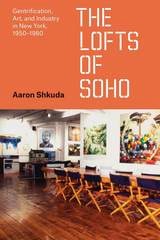
The Lofts of SoHo
Gentrification, Art, and Industry in New York, 1950–1980Aaron Shkuda
University of Chicago Press, 2016
American cities entered a new phase when, beginning in the 1950s, artists and developers looked upon a decaying industrial zone in Lower Manhattan and saw, not blight, but opportunity: cheap rents, lax regulation, and wide open spaces. Thus, SoHo was born. From 1960 to 1980, residents transformed the industrial neighborhood into an artist district, creating the conditions under which it evolved into an upper-income, gentrified area. Introducing the idea—still potent in city planning today—that art could be harnessed to drive municipal prosperity, SoHo was the forerunner of gentrified districts in cities nationwide, spawning the notion of the creative class.
In The Lofts of SoHo, Aaron Shkuda studies the transition of the district from industrial space to artists’ enclave to affluent residential area, focusing on the legacy of urban renewal in and around SoHo and the growth of artist-led redevelopment. Shkuda explores conflicts between residents and property owners and analyzes the city’s embrace of the once-illegal loft conversion as an urban development strategy. As Shkuda explains, artists eventually lost control of SoHo’s development, but over several decades they nonetheless forced scholars, policymakers, and the general public to take them seriously as critical actors in the twentieth-century American city.
The New Public Art
Collectivity and Activism in Mexico since the 1980sMara Polgovsky Ezcurra
University of Texas Press, 2023
Essays on the rise of community-focused art projects and anti-monuments in Mexico since the 1980s.
Mexico has long been lauded and studied for its post-revolutionary public art, but recent artistic practices have raised questions about how public art is created and for whom it is intended. In The New Public Art, Mara Polgovsky Ezcurra, together with a number of scholars, artists, and activists, looks at the rise of community-focused art projects, from collective cinema to off-stage dance and theatre, and the creation of anti-monuments that have redefined what public art is and how people have engaged with it across the country since the 1980s.
The New Public Art investigates the reemergence of collective practices in response to privatization, individualism, and alienating violence. Focusing on the intersection of art, politics, and notions of public participation and belonging, contributors argue that a new, non-state-led understanding of "the public" came into being in Mexico between the mid-1980s and the late 2010s. During this period, community-based public art bore witness to the human costs of abuses of state and economic power while proposing alternative forms of artistic creation, activism, and cultural organization.
The Opioid Epidemic and US Culture
Expression, Art, and Politics in an Age of AddictionTravis D. Stimeling
West Virginia University Press, 2020
Written for an audience of people working on the front lines of the opioid crisis, the book is essential reading for social workers, addiction counselors, halfway house managers, and people with opioid use disorder. It will also appeal to the community of scholars interested in understanding how aesthetics shape our engagement with critical social issues, particularly in the fields of literary and film criticism, museum studies, and ethnomusicology.
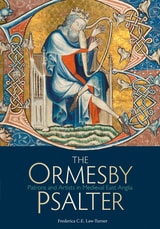
The Ormesby Psalter
Patrons and Artists in Medieval East AngliaFrederica C. E. Law-Turner
Bodleian Library Publishing, 2005
Housed in Oxford’s Bodleian Library for over 150 years, this enigmatic masterpiece is perhaps the most magnificent yet enigmatic of the great Gothic psalters produced in East Anglia in the first half of the fourteenth century. Manuscript expert Frederica C. E. Law-Turner places the psalter within a wider historical context and then deciphers its lush illuminations—scenes that vary wildly in tone from the comic to the bawdy to the mythic. Full-color photographs illustrate the text’s many characters: falcons and hunting dogs at bay, kings and courtesans, and other animals dressed in human garb. Created over a period of decades by previously unrecognized scribes and artists, the Ormesby Psalter is an exceptional amalgam of medieval art and history. For scholars of medieval life, as well as art historians, this new study will be an invaluable resource.
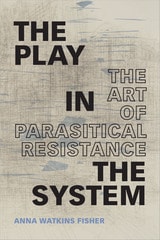
The Play in the System
The Art of Parasitical ResistanceAnna Watkins Fisher
Duke University Press, 2020
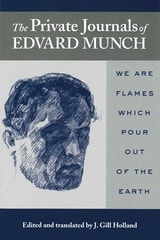
The Private Journals of Edvard Munch
We Are Flames Which Pour Out of the EarthEdvard Munch, edited and translated by J. Gill Holland
University of Wisconsin Press, 2005
This English translation of Edvard Munch's private diaries, the most extensive edition to appear in any language, captures the eloquent lyricism of the original Norwegian text. The journal entries in this volume span the period from the 1880s, when Munch was in his twenties, until the 1930s, reflecting the changes in his life and his work. The book is illustrated with fifteen of Munch's drawings, many of them rarely seen before. While these diaries have been excerpted before, no translation has captured the real passion and poetry of Munch's voice. This is a translation that lets Munch speak for himself and evokes the primal passion of his diaries. J. Gill Holland's exceptional work adds a whole new level to our understanding of the artist and the depth of his scream.
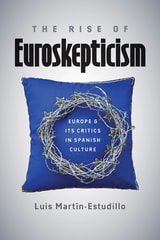
The Rise of Euroskepticism
Europe and Its Critics in Spanish CultureLuis Martín-Estudillo
Vanderbilt University Press, 2018
Covering from 1915 to the present, this book deals with the role that artists and intellectuals have played regarding projects of European integration. Consciously or not, they partake of a tradition of Euroskepticism. Because Euroskepticism is often associated with the discourse of political elites, its literary and artistic expressions have gone largely unnoticed. This book addresses that gap.
Taking Spain as a case study, author Luis Martín-Estudillo analyzes its conflict over its own Europeanness or exceptionalism, as well as the European view of Spain. He ranges from canonical writers like Unamuno, Ortega y Gasset, and Zambrano to new media artists like Valeriano López, Carlos Spottorno, and Santiago Sierra. Martín-Estudillo provides a new context for the current refugee crisis, the North-South divide among EU countries, and the generalized disaffection toward the project of European integration.
The eclipsed critical tradition he discusses contributes to a deeper understanding of the notion of Europe and its institutional embodiments. It gives resonance to the intellectual and cultural history of Europe's "peripheries" and re-evaluates Euroskeptic contributions as one of the few hopes left to imagine ways to renew the promise of a union of the European nations.
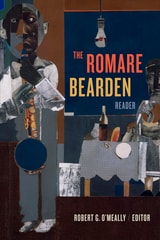
The Romare Bearden Reader
Robert G. O'Meally, editor
Duke University Press, 2019
Contributors. Elizabeth Alexander, Romare Bearden, Mary Lee Corlett, Rachel DeLue, David C. Driskell, Brent Hayes Edwards, Ralph Ellison, Henri Ghent, Farah Jasmine Griffin, Harry Henderson, Kobena Mercer, Toni Morrison, Albert Murray, Robert G. O’Meally, Richard Powell, Richard Price, Sally Price, Myron Schwartzman, Robert Burns Stepto, Calvin Tomkins, John Edgar Wideman, August Wilson
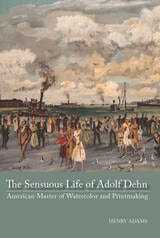
The Sensuous Life of Adolf Dehn
American Master of Watercolor and PrintmakingHenry Adams
University of Missouri Press, 2020
In this wide-ranging biography, Henry Adams explores how a once central figure can come to be forgotten. Noting that Dehn’s watercolor Spring in Central Park has been widely reproduced on calendars, postcards, and other Metropolitan Museum of Art souvenirs, Adams asks why it is that some artists are celebrated as key figures while others, even those who created images that form an integral part of our visual culture, are relatively unknown. With his account of the life of the prolific and influential Dehn, and a look at the circles of artists and writers in which Dehn moved, Adams helps to fill in what he calls the “secret or subterranean history of art.”
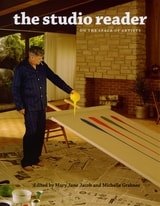
The Studio Reader
On the Space of ArtistsEdited by Mary Jane Jacob and Michelle Grabner
University of Chicago Press, 2010
The image of a tortured genius working in near isolation has long dominated our conceptions of the artist’s studio. Examples abound: think Jackson Pollock dripping resin on a cicada carcass in his shed in the Hamptons. But times have changed; ever since Andy Warhol declared his art space a “factory,” artists have begun to envision themselves as the leaders of production teams, and their sense of what it means to be in the studio has altered just as dramatically as their practices.
The Studio Reader pulls back the curtain from the art world to reveal the real activities behind artistic production. What does it mean to be in the studio? What is the space of the studio in the artist’s practice? How do studios help artists envision their agency and, beyond that, their own lives? This forward-thinking anthology features an all-star array of contributors, ranging from Svetlana Alpers, Bruce Nauman, and Robert Storr to Daniel Buren, Carolee Schneemann, and Buzz Spector, each of whom locates the studio both spatially and conceptually—at the center of an art world that careens across institutions, markets, and disciplines. A companion for anyone engaged with the spectacular sites of art at its making, The Studio Reader reconsiders this crucial space as an actual way of being that illuminates our understanding of both artists and the world they inhabit.

Theatre for Lifelong Learning
A Handbook for Instructors, Older Adults, Communities, and ArtistsLinda Lau and Rae Mansfield
Intellect Books, 2024
Theatre for Lifelong Learning is a step-by-step guide for anyone interested in teaching theatre courses and creating theatre with older adults. This book provides instructors with syllabi, discussion questions, classroom management strategies, resource lists, and activities to teach courses from beginning to end. Special topics include playwriting, play development, storytelling, theatre appreciation, theatre criticism, theatre history, and theatre theory.
Older adult theatre courses support emotional well-being and the development of artistic communities and anyone can contribute to lifelong learning as an instructor. If you are new to theatre and theatre education, Theatre for Lifelong Learning offers tips throughout to assist you in creating accessible environments and making courses your own. If you have a background in performing arts, this book enriches your experience with interdisciplinary approaches to share your expertise. If you are an educator, it provides useful strategies to adapt your current skill set for the theatre classroom.
Regardless of your experience, you can help older adults connect, engage, and create. You may find yourself learning, exploring, and experimenting alongside your students. Teaching older adults theatre will contribute to your own enjoyment. In theatre, everyone gets to have fun!