Results by title
197 books match the query 'Arts' and 45 start with t
Teaching the Bible through Popular Culture and the Arts
Mark Roncace
SBL Press, 2007
Technocrats of the Imagination
Art, Technology, and the Military-Industrial Avant-GardeJohn Beck and Ryan Bishop
Duke University Press, 2020
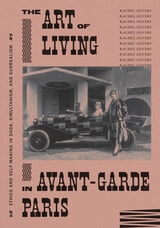
The Art of Living in Avant-Garde Paris
Ethics and Self-Making in Dada, Simultanism, and SurrealismRachel Silveri
University of Chicago Press, 2026
With The Art of Living in Avant-Garde Paris, Rachel Silveri takes a fresh look at the desire to unify art and life, an ambition long regarded as foundational to the European historical avant-gardes. She reveals how many early twentieth-century artists saw their own everyday lives—their bodies, identities, and relationships—as a type of creative material and a central component to their avant-garde practice. These artists abandoned traditional forms of artmaking and venues of art viewing, instead aspiring to integrate art with everyday life, creating an “art of living.”
Considering Tristan Tzara’s performances of Dadaist identity, Sonia Delaunay’s simultaneous fashions and self-branding, and the collective endeavor to open and operate the Surrealist Research Bureau, Silveri offers a new narrative about how the artists of interwar Paris developed experiential life practices that resisted dominant forms of “lifestyle” and normative discourses surrounding gender, ethnicity, and office work. This book argues that ethical questions of “How should I live?” and “How should I relate to others?” were as important to the avant-garde as politics, and that aspirations to change the world played out in daily practices of self-making.
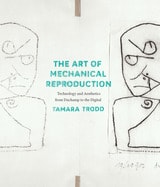
The Art of Mechanical Reproduction
Technology and Aesthetics from Duchamp to the DigitalTamara Trodd
University of Chicago Press, 2015
The Art of Mechanical Reproduction weaves a rich history of the experimental networks in which artists as diverse as Paul Klee, Hans Bellmer, Ellsworth Kelly, Robert Smithson, Gerhard Richter, Chris Marker, and Tacita Dean have worked, and it shows for the first time how extensively technological innovations of the moment have affected their work. Original and broad-ranging, The Art of Mechanical Reproduction challenges some of the most respected and entrenched criticism of the past several decades—and allows us to think about these artists anew.
The Arts and Design in Research Universities (pack of 12)
Gabriel Harp
A2RU Intervals, 2018
This arresting graphic provides a visual overview of the impacts of arts integration and interdisciplinarity in the university. It can be a tool for case-making, communication, and further inquiry.
This listing is for a pack of 12 maps.
The Arts and Design in Research Universities (pack of 5)
Gabriel Harp
A2RU Intervals, 2018
This arresting graphic provides a visual overview of the impacts of arts integration and interdisciplinarity in the university. It can be a tool for case-making, communication, and further inquiry.
This listing is for a pack of 5 maps.
The Arts and Design in Research Universities
Interdisciplinary Impacts and PracticesGabriel Harp
A2RU Intervals, 2018
This arresting graphic provides a visual overview of the impacts of arts integration and interdisciplinarity in the university. It can be a tool for case-making, communication, and further inquiry.
The Arts of Democratization
Styling Political Sensibilities in Postwar West GermanyJennifer M. Kapczynski and Caroline A. Kita, Editors
University of Michigan Press, 2022
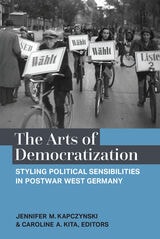
These essays highlight the contradictory and competing impulses that ran through the project to democratize postwar society and cast a critical eye toward the internal biases that shaped the model of Western democracy. In so doing, the contributions probe critical questions that we continue to grapple with today. How did postwar thinkers understand what it meant to be democratic? Did they conceive of democratic subjectivity in terms of acts of participation, a set of beliefs or principles, or perhaps in terms of particular feelings or emotions? How did the work to define democracy and its subjects deploy notions of nation, race and gender or sexuality? As this book demonstrates, the case of West Germany offers compelling ways to think more broadly about the emergence of democracy. The Arts of Democratization offers lessons that resonate with the current moment as we consider what interventions may be necessary to resuscitate democracy today.

The Arts of Indigenous Health and Well-Being
Nancy Van Styvendale
University of Manitoba Press, 2021
The Arts of the Microbial World
Fermentation Science in Twentieth-Century JapanVictoria Lee
University of Chicago Press, 2021
The Arts of the Microbial World explores the significance of fermentation phenomena, both as life processes and as technologies, in Japanese scientific culture. Victoria Lee’s careful study documents how Japanese scientists and skilled workers sought to use the microbe’s natural processes to create new products, from soy-sauce mold starters to MSG, vitamins to statins. In traditional brewing houses as well as in the food, fine chemical, and pharmaceutical industries across Japan, they showcased their ability to deal with the enormous sensitivity and variety of the microbial world.
Charting developments in fermentation science from the turn of the twentieth century, when Japan was an industrializing country on the periphery of the world economy, to 1980 when it had emerged as a global technological and economic power, Lee highlights the role of indigenous techniques in modern science as it took shape in Japan. In doing so, she reveals how knowledge of microbes lay at the heart of some of Japan’s most prominent technological breakthroughs in the global economy.
At a moment when twenty-first-century developments in the fields of antibiotic resistance, the microbiome, and green chemistry suggest that the traditional eradication-based approach to the microbial world is unsustainable, twentieth-century Japanese microbiology provides a new, broader vantage for understanding and managing microbial interactions with society.

The Arts, Education, and Aesthetic Knowing
Edited by Bennett Reimer and Ralph A. Smith
University of Chicago Press, 1992
The Ascetic Imperative in Culture and Criticism
Geoffrey Galt Harpham
University of Chicago Press, 1988
The Bachelor of Arts
R. K. Narayan
University of Chicago Press, 1978
Offering rare insight into the complexities of Indian middle-class society, R. K. Narayan traces life in the fictional town of Malgudi. The Dark Room is a searching look at a difficult marriage and a woman who eventually rebels against the demands of being a good and obedient wife. In Mr. Sampath, a newspaper man tries to keep his paper afloat in the face of social and economic changes sweeping India. Narayan writes of youth and young adulthood in the semiautobiographical Swami and Friends and The Bachelor of Arts. Although the ordinary tensions of maturing are heightened by the particular circumstances of pre-partition India, Narayan provides a universal vision of childhood, early love and grief.
"The experience of reading one of his novels is . . . comparable to one's first reaction to the great Russian novels: the fresh realization of the common humanity of all peoples, underlain by a simultaneous sense of strangeness—like one's own reflection seen in a green twilight."—Margaret Parton, New York Herald Tribune
The Chicagoan
A Lost Magazine of the Jazz AgeNeil Harris
University of Chicago Press, 2008
The Creative Underclass
Youth, Race, and the Gentrifying CityTyler Denmead
Duke University Press, 2019
The Cuban Hustle
Culture, Politics, Everyday LifeSujatha Fernandes
Duke University Press, 2020
The Culture of Spontaneity
Improvisation and the Arts in Postwar AmericaDaniel Belgrad
University of Chicago Press, 1998
"A compelling narrative, putting living flesh on shorthand intuitions that connect North Beach to Black Mountain College, Fenollosa to Pollock, Jackson Lears's No Place of Grace to Todd Gitlin's The Sixties."—Joel Smith, Boston Review
"An invaluable introduction to postwar modernism across the arts."—Thomas Augst, Boston Book Review
"Belgrad's extensive probing of the artists and movements with their profound sociological roots is timely as well as comprehensive....A major contribution for serious scholars."—Choice
The Eagle and the Virgin
Nation and Cultural Revolution in Mexico, 1920–1940Mary Kay Vaughan and Stephen E. Lewis, eds.
Duke University Press, 2006
Contributors explore the nation-building efforts of the government, artists, entrepreneurs, and social movements; their contradictory, often conflicting intersection; and their inevitably transnational nature. Scholars of political and social history, communications, and art history describe the creation of national symbols, myths, histories, and heroes to inspire patriotism and transform workers and peasants into efficient, productive, gendered subjects. They analyze the aesthetics of nation building made visible in murals, music, and architecture; investigate state projects to promote health, anticlericalism, and education; and consider the role of mass communications, such as cinema and radio, and the impact of road building. They discuss how national identity was forged among social groups, specifically political Catholics, industrial workers, middle-class women, and indigenous communities. Most important, the volume weighs in on debates about the tension between the eagle (the modernizing secular state) and the Virgin of Guadalupe (the Catholic defense of faith and morality). It argues that despite bitter, violent conflict, the symbolic repertoire created to promote national identity and memory making eventually proved capacious enough to allow the eagle and the virgin to coexist peacefully.
Contributors. Adrian Bantjes, Katherine Bliss, María Teresa Fernández, Joy Elizabeth Hayes, Joanne Hershfield, Stephen E. Lewis, Claudio Lomnitz, Rick A. López, Sarah M. Lowe, Jean Meyer, James Oles, Patrice Olsen, Desmond Rochfort, Michael Snodgrass, Mary Kay Vaughan, Marco Velázquez, Wendy Waters, Adriana Zavala
The Electronic Word
Democracy, Technology, and the ArtsRichard A. Lanham
University of Chicago Press, 1993
This highly acclaimed collection of Richard Lanham's witty, provocative, and engaging essays surveys the effects of electronic text on the arts and letters. Lanham explores how electronic text fulfills the expressive agenda of twentieth-century visual art and music, revolutionizes the curriculum, democratizes the instruments of art, and poses anew the cultural accountability of humanism itself.
Persuading us with uncommon grace and power that the move from book to screen gives cause for optimism, not despair, Lanham proclaims that "electronic expression has come not to destroy the Western arts but to fulfill them."
The Electronic Word is also available as a Chicago Expanded Book for your Macintosh®. This hypertext edition allows readers to move freely through the text, marking "pages," annotating passages, searching words and phrases, and immediately accessing annotations, which have been enhanced for this edition. In a special prefatory essay, Lanham introduces the features of this electronic edition and gives a vividly applied critique of this dynamic new edition.
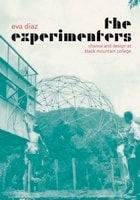
The Experimenters
Chance and Design at Black Mountain CollegeEva Díaz
University of Chicago Press, 2014
Díaz’s focus is on experimentation. Albers, Cage, and Fuller, she shows, taught new models of art making that favored testing procedures rather than personal expression. These methodologies represented incipient directions for postwar art practice, elements of which would be sampled, and often wholly adopted, by Black Mountain students and subsequent practitioners. The resulting works, which interrelate art and life in a way that imbues these projects with crucial relevance, not only reconfigured the relationships among chance, order, and design—they helped redefine what artistic practice was, and could be, for future generations.
Offering a bold, compelling new angle on some of the most widely studied creative figures of modern times, The Experimenters does nothing less than rewrite the story of art in the mid-twentieth century.
The Freak-garde
Extraordinary Bodies and Revolutionary Art in AmericaRobin Blyn
University of Minnesota Press, 2013
Since the 1890s, American artists have employed the arts of the freak show to envision radically different ways of being. The result is a rich avant-garde tradition that critiques and challenges capitalism from within.
The Freak-garde traces the arts of the freak show from P. T. Barnum to Matthew Barney and demonstrates how a form of mass culture entertainment became the basis for a distinctly American avant-garde tradition. Exploring a wide range of writers, filmmakers, photographers, and artists who have appropriated the arts of the freak show, Robin Blyn exposes the disturbing power of human curiosities and the desires they unleash. Through a series of incisive and often startling readings, Blyn reveals how such figures as Mark Twain, Djuna Barnes, Tod Browning, Lon Chaney, Nathanael West, and Diane Arbus use these desires to propose alternatives to the autonomous and repressed subject of liberal capitalism. Blyn explains how, rather than grounding revolutionary subjectivities in imaginary realms innocent of capitalism, freak-garde works manufacture new subjectivities by exploiting potentials inherent to capitalism.
Defying conventional wisdom, The Freak-garde ultimately argues that postmodernism is not the death of the avant-garde but the inheritor of a vital and generative legacy. In doing so, the book establishes innovative approaches to American avant-garde practices and embodiment and lays the foundation for a more nuanced understanding of the disruptive potential of art under capitalism.

The Great Orchestrator
Arthur Judson and American Arts ManagementJames M. Doering
University of Illinois Press, 2013

The Hajj and the Arts of Pilgrimage
Essays in Honour of Nasser David KhaliliEdited by Qaisra M. Khan and Nahla Nassar
Gingko, 2023
Hajj and the Arts of Pilgrimage consists of twenty-seven essays addressing objects in the remarkable collection of Nasser David Khalili. The collection features more than five thousand objects relating to the arts of pilgrimage, from the eighth century to today, and includes Qur’ans, illustrated manuscripts, rare books, scientific instruments, textiles, coins, paintings, prints, and photo-postcards, as well as archival material, unique historical documents, and examples of the work of some of the earliest Muslim photographers of Hajj. Together the essays collected in Hajj and the Arts of Pilgrimage provide a comprehensive overview of Hajj, illustrating the religious, spiritual, cultural, and artistic aspects of pilgrimage to the Holy Sanctuaries of Islam and the cosmopolitan nature of Hajj itself. Each essay is written by a prominent specialist in the field and beautifully illustrated with full-color images of objects from the collection, some of which have never been seen in print before. Taking readers from the early history of Islam to the fascinating story of the Western view of Muslim pilgrimage, these essays will transform our perception of Hajj.
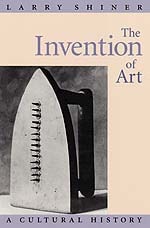
The Invention of Art
A Cultural HistoryLarry Shiner
University of Chicago Press, 2001
With The Invention of Art, Larry Shiner challenges our conventional understandings of art and asks us to reconsider its history entirely, arguing that the category of fine art is a modern invention—that the lines drawn between art and craft resulted from key social transformations in Europe during the long eighteenth century.
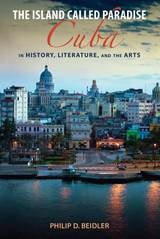
The Island Called Paradise
Cuba in History, Literature, and the ArtsPhilip D. Beidler
University of Alabama Press, 2014
In The Island Called Paradise, Philip D. Beidler shares his personal discovery of the vast, rich, and astonishing history of the island of Cuba and the interrelatedness of Cuba and the US.
Cuba first entered Beidler’s consciousness in the early 1960s when he watched with mesmerized anxiety the televised reports of the Cuban missile crisis, a conflict that reduced a multifaceted, centuries-old history between North America and Cuba to the stark duotones of Cold War politics. Fifty years later, when Beidler traveled to the US’s island neighbor, he found a Cuba unlike the nation portrayed in truculent political rhetoric or in the easy preconceptions of US popular culture. Instead he found an entrancing people and landscape with deep historical connections to the US and a dazzling culture that overwhelmed his creative spirit.
In twelve original essays, Beidler reintroduces to English-speaking readers many of the central figures, both real and literary, of Cuban and Cuban-American history. Meet Cecilia Valdés, the young mixed-race heroine of a 1839 novel that takes readers to the poor streets and sumptuous salons of Spanish colonial Cuba, and Narciso López, a real-life Venezuelan adventurer and filibustero who attempted to foment a Cuban uprising against Spain. Both would have been familiar figures to nineteenth-century Americans. Beidler also visits the twentieth-century lives of “the two Ernestos” (Ernest Hemingway and Che Guevara), and the pop-culture Cuban icon Ricky Ricardo.
A country not with one history but multiple layers of history, Cuba becomes a fertile island for Beidler’s exploration. Art, he argues, perpetually crosses walls erected by politics, history, and nationality. At its core, The Island Called Paradise renews and refreshes our knowledge of an older Atlantic world even as we begin to envision a future in which the old bonds between our nations may be restored.
The Language of Images
W. J. T. Mitchell
University of Chicago Press, 1980
The Life and Work of Francis Willey Kelsey
Archaeology, Antiquity, and the ArtsJohn Griffiths Pedley
University of Michigan Press, 2011
President of the Archaeological Institute of America, professor at the University of Michigan from 1889 to 1927, and president of the American Philological Association, Francis Kelsey was crucially involved in the founding or growth of major educational institutions. He came to maturity in a period of great technological change in communications, transportation, and manufacturing. Kelsey took full advantage of such innovations in his ceaseless drive to promote education for all, to further the expansion of knowledge, and to champion the benefits of the study of antiquity.
A vigorous traveler around the United States, Europe, and the Mediterranean, Kelsey strongly believed in the value of personally viewing sites ancient and modern and collecting artifacts that could be used by the new museums and universities that were springing up in the United States. This collecting habit put him in touch with major financiers of the day, including Charles Freer, Andrew Carnegie, and J. P. Morgan, as he sought their help for important projects.
Drawing heavily on Kelsey's daily diaries now held at the University of Michigan's Bentley Historical Library, John Griffiths Pedley gives us a biography that records the wide-ranging activities of a gifted and energetic scholar whose achievements mirrored the creative and contributive innovations of his contemporary Americans.
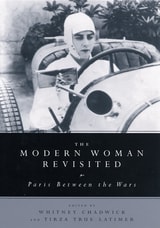
The Modern Woman Revisited
Paris Between the WarsChadwick, Whitney
Rutgers University Press, 2003
The contributions of female artists to the development of literary and artistic modernism in early twentieth century France remain poorly understood. It was during this period that a so-called “modern woman” began occupying urban spaces associated with the development of modern art and modernism’s struggles to define subjectivities and sexualities. Whereas most studies of modernism’s formal innovations and its encouragement of artistic autonomy neglect or omit necessary discussions of gender, race, class, and sexual orientation, the contributors of The Modern Woman Revisited inject these perspectives into the discussion.
Between the two World Wars, Paris served as the setting for unparalleled freedom for expatriate as well as native-born French women, who enjoyed unprecedented access to education and opportunities to participate in public artistic and intellectual life. Many of these women made lasting contributions in art and literature. Some of the artists discussed include Colette, Tamara de Lempicka, Sonia Delaunay, Djuna Barnes, Augusta Savage, and Lee Miller.
Inthis book, an internationally recognized roster of art historians, literary critics, and other scholars offers a nuanced portrait of what it meant to be a modern woman during this decisive period of modernism’s development. Individual essays explore the challenges faced by women in the early decades of the twentieth century, as well as the strategies these women deployed to create their art and to build meaningful lives and careers. The introduction underscores the importance of the contributors’ efforts to engender larger questions about modernity, sexuality, race, and class.
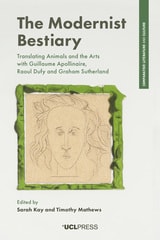
The Modernist Bestiary
Translating Animals and the Arts with Guillaume Apollinaire, Raoul Dufy and Graham SutherlandEdited by Sarah Kay and Timothy Mathews
University College London, 2020
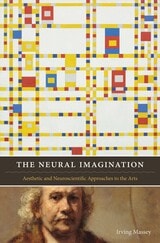
The Neural Imagination
Aesthetic and Neuroscientific Approaches to the ArtsBy Irving Massey
University of Texas Press, 2009
Art and technology have been converging rapidly in the past few years; an important example of this convergence is the alliance of neuroscience with aesthetics, which has produced the new field of neuroaesthetics.
Irving Massey examines this alliance, in large part to allay the fears of artists and audiences alike that brain science may "explain away" the arts. The first part of the book shows how neuroscience can enhance our understanding of certain features of art. The second part of the book illustrates a humanistic approach to the arts; it is written entirely without recourse to neuroscience, in order to show the differences in methodology between the two approaches. The humanistic style is marked particularly by immersion in the individual work and by evaluation, rather than by detachment in the search for generalizations. In the final section Massey argues that, despite these differences, once the reality of imagination is accepted neuroscience can be seen as the collaborator, not the inquisitor, of the arts.
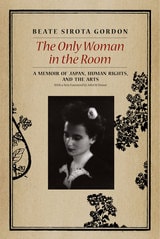
The Only Woman in the Room
A Memoir of Japan, Human Rights, and the ArtsBeate Sirota Gordon
University of Chicago Press, 2014
Sirota was born in Vienna, but in 1929 her family moved to Japan so that her father, a noted pianist, could teach, and she grew up speaking German, English, and Japanese. Russian, French, Italian, Latin, and Hebrew followed, and at fifteen Sirota was sent to complete her education at Mills College in California. The formal declaration of World War II cut Gordon off from her parents, and she supported herself by working for a CBS listening post in San Francisco that would eventually become part of the FCC. Translating was one of Sirota’s many talents, and when the war ended, she was sent to Japan as a language expert to help the American occupation forces. When General MacArthur suddenly created a team that included Sirota to draft the new Japanese Constitution, he gave them just eight days to accomplish the task. Colonel Roest said to Beate Sirota, “You’re a woman, why don’t you write the women’s rights section?”; and she seized the opportunity to write into law guarantees of equality unparalleled in the US Constitution to this day.
But this was only one episode in an extraordinary life, and when Gordon died in December 2012, words of grief and praise poured from artists, humanitarians, and thinkers the world over. Illustrated with forty-seven photographs, The Only Woman in the Room captures two cultures at a critical moment in history and recounts, after a fifty-year silence, a life lived with purpose and courage. This edition contains a new afterword by Nicole A. Gordon and an elegy by Geoffrey Paul Gordon.
The Outward Mind
Materialist Aesthetics in Victorian Science and LiteratureBenjamin Morgan
University of Chicago Press, 2017
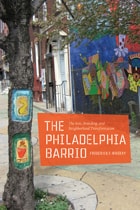
The Philadelphia Barrio
The Arts, Branding, and Neighborhood TransformationFrederick F. Wherry
University of Chicago Press, 2011
How does a so-called bad neighborhood go about changing its reputation? Is it simply a matter of improving material conditions or picking the savviest marketing strategy? What kind of role can or should the arts play in that process? Does gentrification always entail a betrayal of a neighborhood’s roots? Tackling these questions and offering a fresh take on the dynamics of urban revitalization, The Philadelphia Barrio examines one neighborhood’s fight to erase the stigma of devastation.
Frederick F. Wherry shows how, in the predominantly Latino neighborhood of Centro de Oro, entrepreneurs and community leaders forged connections between local businesses and cultural institutions to rebrand a place once nicknamed the Badlands. Artists and performers negotiated with government organizations and national foundations, Wherry reveals, and took to local galleries, stages, storefronts, and street parades in a concerted, canny effort to reanimate the spirit of their neighborhood.
Complicating our notions of neighborhood change by exploring the ways the process is driven by local residents, The Philadelphia Barrio presents a nuanced look at how city dwellers can make commercial interests serve the local culture, rather than exploit it.
The Play in the System
The Art of Parasitical ResistanceAnna Watkins Fisher
Duke University Press, 2020
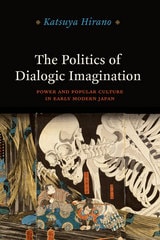
The Politics of Dialogic Imagination
Power and Popular Culture in Early Modern JapanKatsuya Hirano
University of Chicago Press, 2013
The Portuguese-Speaking Diaspora
Seven Centuries of Literature and the ArtsBy Darlene J. Sadlier
University of Texas Press, 2016
Long before the concept of “globalization,” the Portuguese constructed a vast empire that extended into Africa, India, Brazil, and mid-Atlantic territories, as well as parts of China, Southeast Asia, and Japan. Using this empire as its starting point and spanning seven centuries and four continents, The Portuguese-Speaking Diaspora examines literary and artistic works about the ensuing diaspora, or the dispersion of people within the Portuguese-speaking world, resulting from colonization, the slave trade, adventure seeking, religious conversion, political exile, forced labor, war, economic migration, and tourism.
Based on a broad array of written and visual materials, including historiography, letters, memoirs, plays, poetry, fiction, cartographic imagery, paintings, photographs, and films, The Portuguese-Speaking Diaspora is the first detailed analysis of the different and sometimes conflicting cultural productions of the imperial diaspora in its heyday and an important context for understanding the more complex and broader-based culture of population travel and displacement from the former colonies to present-day “homelands.” The topics that Darlene J. Sadlier discusses include exploration and settlement by the Portuguese in different parts of the empire; the Black Atlantic slave trade; nineteenth-century travel and Orientalist imaginings; the colonial wars; and the return of populations to Portugal following African independence. A wide-ranging study of the art and literature of these and other diasporic movements, this book is a major contribution to the growing field of Lusophone studies.
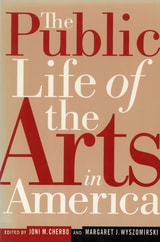
The Public Life of the Arts in America
The Public Life of the Arts in America, Revised EditionCherbo, Joni Maya
Rutgers University Press, 2000
Art and entertainment constitute America’s second-largest export. Most Americans—96%, to be exact—are somehow involved in the arts, whether as audience participants, hobbyists, or via broadcast, recording, video, or the Internet. The contribution of the arts to the U.S. economy is stunning: the nonprofit arts industry alone contributes over 857 billion dollars per year, and America’s fine and performing arts enjoy world-class status.
Despite its size, quality, and economic impact, the arts community is not articulate about how they serve public interests, and few citizens have an appreciation of the myriad of public policies that influence American arts and culture. The contributors to this volume argue that U.S. policy can—and should—support the arts and that the arts, in turn serve a broad rather than an elite public. Indeed, increased support for the arts and culture equals good economic and trade policy; it also contributes to the quality of life and community, and helps sustain the creativity of American artists and organizations.
By encouraging policy-makers to systematically start investigating the crucial role and importance of all of the arts in the United States, The Arts and Public Purpose moves the field forward with fresh ideas, new concepts, and important new data.
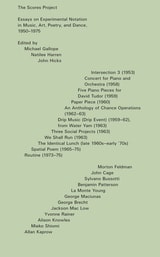
The Scores Project
Essays on Experimental Notation in Music, Art, Poetry, and Dance, 1950–1975Michael Gallope
J. Paul Getty Trust, The, 2025
Individuals working in and across the fields of visual art, music, poetry, theater, and dance in the mid–twentieth century began to use experimental scores in ways that revolutionized artistic practice and opened up new forms of interdisciplinary collaboration. Their experimental methods—associated with the neo-avant-garde, neo-Dadaism, intermedia, Fluxus, and postmodernism—exploded in notoriety during the 1960s in locales from New York to Europe, East Asia, and Latin America, becoming foundational to global trends in contemporary art and performance.
The Scores Project provides an in-depth view of this historical moment. Through expert commentaries from an interdisciplinary team of scholars with accompanying illustrations, this publication examines a series of experimental scores by John Cage, George Brecht, Sylvano Bussotti, Morton Feldman, Allan Kaprow, Alison Knowles, Jackson Mac Low, Benjamin Patterson, Yvonne Rainer, Mieko Shiomi, David Tudor, and La Monte Young. Ambitious, provocative, and playful, The Scores Project is an illuminating resource to scholars and students who seek to understand this innovative and historically complex moment in the history of art.
An expanded edition of this open-access publication is available for free online at www.getty.edu/publications/scores/. It includes more than 2,800 images, audio/video files, and interactive features. Also available are free PDF and EPUB downloads of the book.

The Unfulfilled Promise
Public Subsidy of the Arts in AmericaEdward Arian
Temple University Press, 1993
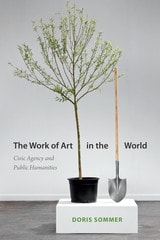
The Work of Art in the World
Civic Agency and Public HumanitiesDoris Sommer
Duke University Press, 2014
The Writer in Petrograd and the House of Arts
Martha Weitzel Hickey
Northwestern University Press, 2009
Thinking Out of Sight
Writings on the Arts of the VisibleJacques Derrida
University of Chicago Press, 2021
The book is divided into three sections. The first demonstrates Derrida’s preoccupation with visibility, image, and space. The second contains interviews and collaborations with artists on topics ranging from the politics of color to the components of painting. Finally, the book delves into Derrida’s writings on photography, video, cinema, and theater, ending with a text published just before his death about his complex relationship to his own image. With many texts appearing for the first time in English, Thinking out of Sight helps us better understand the critique of representation and visibility throughout Derrida’s work, and, most importantly, to assess the significance of his insights about art and its commentary.
Touched Bodies
The Performative Turn in Latin American ArtMara Polgovsky Ezcurra
Rutgers University Press, 2019
Winner of the 2019 Art Journal Prize from the College Art Association
What is the role of pleasure and pain in the politics of art? In Touched Bodies, Mara Polgovsky Ezcurra approaches this question as she examines the flourishing of live and intermedial performance in Latin America during times of authoritarianism and its significance during transitions to democracy. Based on original documents and innovative readings, her book brings politics and ethics to the discussion of artistic developments during the “long 1980s”. She describes the rise of performance art in the context of feminism, HIV-activism, and human right movements, taking a close look at the work of Diamela Eltit and Raúl Zurita from Chile, León Ferrari and Liliana Maresca from Argentina, and Marcos Kurtycz, the No Grupo art collective, and Proceso Pentágono from Mexico. The comparative study of the work of these artists attests to a performative turn in Latin American art during the 1980s that, like photography and film before, recast the artistic field as a whole, changing the ways in which we perceive art and understand its role in society.
Transpacific Experiments
Intermedia Art and Music in 1960s JapanMiki Kaneda
University of Michigan Press, 2026
Intermedia art—an avant-garde multimedia practice that combines sound and moving images—took root in Japan alongside other places in the 1960s. In Transpacific Experiments, Miki Kaneda analyzes intermedia as a practice that gives form to errant possibilities, unfolding in spaces of the everyday, to offer nuanced insights into the global flow of ideas, influence, and discourses of appropriation. The stories of intermedia art throughout the study offer feminist and transnational perspectives on experimental music and art that disorient existing narratives about the experimental and political in unexpected ways.
Transpacific Experiments contends that social, cultural, and political arrangements local to Japan had a greater influence on the transnational experimental music scene than previously acknowledged. Kaneda’s perspective extends, exceeds, and at times unsettles frameworks for experimental practices, revealing the limitations of any single political or aesthetic lens.
Trustees of Culture
Power, Wealth, and Status on Elite Arts BoardsFrancie Ostrower
University of Chicago Press, 2002
Her new study demonstrates that members of elite arts boards walk a fine line between maintaining their status and serving the needs of the large-scale organizations they oversee. As class members whose status depends in part on the prestige of the boards on which they serve, trustees seek to perpetuate arts boards as exclusive elite enclaves. But in response to pressures to increase and diversify the audiences for arts institutions, elite board members act in a surprisingly open manner in terms of organizational accessibility and operations.
Written with clarity and grace, Trustees of Culture will contribute significantly to our understanding of organizational governance; the politics of fundraising; elite arts participation and philanthropy; as well as the consequences of wider social policies that continue to emphasize private financial support. Ostrower's study will prove to be indispensable reading for not just sociologists of culture, but anyone interested in how the arts are financially and institutionally supported.