Results by title
51 books match the query 'Athens' and 14 start with t
Tan Men/Pale Women
Color and Gender in Archaic Greece and Egypt, a Comparative ApproachMary Ann Eaverly
University of Michigan Press, 2013
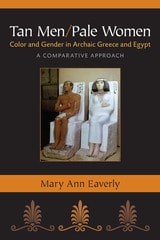
One of the most obvious stylistic features of Athenian black-figure vase painting is the use of color to differentiate women from men. By comparing ancient art in Egypt and Greece, Tan Men/Pale Women uncovers the complex history behind the use of color to distinguish between genders, without focusing on race. Author Mary Ann Eaverly considers the significance of this overlooked aspect of ancient art as an indicator of underlying societal ideals about the role and status of women. Such a commonplace method of gender differentiation proved to be a complex and multivalent method for expressing ideas about the relationship between men and women, a method flexible enough to encompass differing worldviews of Pharaonic Egypt and Archaic Greece. Does the standard indoor/outdoor explanation—women are light because they stay indoors—hold true everywhere, or even, in fact, in Greece? How “natural” is color-based gender differentiation, and, more critically, what relationship does color-based gender differentiation have to views about women and the construction of gender identity in the ancient societies that use it?
The depiction of dark men and light women can, as in Egypt, symbolize reconcilable opposites and, as in Greece, seemingly irreconcilable opposites where women are regarded as a distinct species from men. Eaverly challenges traditional ideas about color and gender in ancient Greek painting, reveals an important strategy used by Egyptian artists to support pharaonic ideology and the role of women as complementary opposites to men, and demonstrates that rather than representing an actual difference, skin color marks a society’s ideological view of the varied roles of male and female.
The Athenian Adonia in Context
The Adonis Festival as Cultural PracticeLaurialan Reitzammer
University of Wisconsin Press, 2018
Reitzammer uncovers correlations of the Adonia to Athenian wedding rituals and civic funeral oration and provides illuminating evidence that the festival was a significant cultural template for such diverse works as Aristophanes’ drama Lysistrata and Plato’s dialogue Phaedrus. Her fresh approach is a timely contribution to studies of the ways gender and sexuality intersect with religion and ritual in ancient Greece.

The Athens of America
Boston, 1825-1845Thomas H. O'Connor
University of Massachusetts Press, 2006
Many people are generally familiar with the fact that Boston was once known as “the Athens of America.” Very few, however, are clear about exactly why, except for their recollections of the famous writers and poets who gave the city a reputation for literature and learning.
In this book, historian Thomas H. O'Connor sets the matter straight by showing that Boston's eminence during the first half of the nineteenth century was the result of a much broader community effort. After the nation emerged from its successful struggle for independence, most Bostonians visualized their city not only as the Cradle of Liberty, but also as the new world's Cradle of Civilization.
According to O'Connor, a leadership elite, composed of men of prominent family background, Unitarian beliefs, liberal education, and managerial experience in a variety of enterprises, used their personal talents and substantial financial resources to promote the cultural, intellectual, and humanitarian interests of Boston to the point where it would be the envy of the nation. Not only did writers, scholars, and philosophers see themselves as part of this process, but so did physicians and lawyers, ministers and teachers, merchants and businessmen, mechanics and artisans, all involved in creating a well-ordered city whose citizens would be committed to the ideals of social progress and personal perfectibility.
To accomplish their noble vision, leading members of the Boston community joined in programs designed to cleanse the old town of what they felt were generations of accumulated social stains and human failures, and then to create new programs and more efficient institutions that would raise the cultural and intellectual standards of all its citizens. Like ancient Athens, Boston would be a city of great statesmen, wealthy patrons, inspiring artists, and profound thinkers, headed by members of the “happy and respectable classes” who would assume responsibility for the safety, welfare, and education of the “less prosperous portions of the community.”
Designed for the general reader and the historical enthusiast, The Athens of America is an interpretive synthesis that explores the numerous secondary sources that have concentrated on individual subjects and personalities, and draws their various conclusions into a single comprehensive narrative.
The Codrus Painter
Iconography and Reception of Athenian Vases in the Age of PericlesAmalia Avramidou
University of Wisconsin Press, 2011
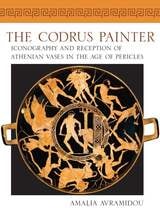
The Codrus Painter was a painter of cups and vases in fifth-century B.C.E. Athens with a distinctive style; he is named after Codrus, a legendary Athenian king depicted on one of his most characteristic vases. He was active as an artist during the rule of Pericles, as the Parthenon was built and then as the troubled times of the Peloponnesian War began. In contrast to the work of fellow artists of his day, the vases of the Codrus Painter appear to have been created almost exclusively for export to markets outside Athens and Greece, especially to the Etruscans in central Italy and to points further west.
Amalia Avramidou offers a thoroughly researched, amply illustrated study of the Codrus Painter that also comments on the mythology, religion, arts, athletics, and daily life of Greece depicted on his vases. She evaluates his style and the defining characteristics of his own hand and of the minor painters associated with him. Examining the subject matter, figure types, and motifs on the vases, she compares them with sculptural works produced during the same period. Avramidou’s iconographic analysis not only encompasses the cultural milieu of the Athenian metropolis, but also offers an original and intriguing perspective on the adoption, meaning, and use of imported Attic vases among the Etruscans.

The Community Table
Effective Fundraising through EventsSusan Cole Urano
Ohio University Press, 2016
In resource-challenged Athens County, Ohio, staff and volunteers at the nonprofit Athens County Foundation came up with a daring idea: to host a locally sourced, gourmet dinner for four hundred people. The meal would be held on the brick-paved main street of the city of Athens, to raise funds for the food bank, and increase awareness of the persistent local struggle with food insecurity, as well as raise the visibility of the foundation. The logistical challenges were daunting, but the plan would unite the community around the common theme of providing for its own.
Since then, Bounty on the Bricks has become a touchstone event that raises close to one hundred thousand dollars for the food bank. In The Community Table, Athens County Foundation executive director Susan Urano translates her years of nonprofit experience with large-scale annual fundraisers into a step-by-step guide for development professionals, community leaders, and volunteers.
Urano guides readers to consider when to mount a fundraiser, who the stakeholders are, what social and financial value the event will bring to the community, and how partnerships might augment the payoff. Using real-life examples, she explains how organizers can learn from mistakes and illustrates methods of team building, conflict resolution, and problem solving. Sample ideas, timelines, budgets, publicity plans, and committee structures round out The Community Table.

The Law of Ancient Athens
David D. Phillips
University of Michigan Press, 2013
The Law of Ancient Athens contains the principal literary and epigraphical sources, in English, for Athenian law in the Archaic and Classical periods, from the first known historical trial (late seventh century) to the fall of the democracy in 322 BCE.
This accessible and important volume is designed for teachers, students, and general readers interested in the ancient Greek world, the history of law, and the history of democracy, an Athenian invention during this period. Offering a comprehensive treatment of Athenian law, it assumes no prior knowledge of the subject and is organized in user-friendly fashion, progressing from the person to the family to property and obligations to the gods and to the state. David D. Phillips has translated all sources into English, and he has added significant introductory and explanatory material.
Topics covered in the book include homicide and wounding; theft; marriage, children, and inheritance; citizenship; contracts and commerce; impiety; treason and other offenses against the state; and sexual offenses including rape and prostitution. The volume’s unique feature is its presentation of the actual primary sources for Athenian laws, with many key or disputed terms rendered in transliterated Greek. The translated sources, together with the topical introductions, notes, and references, will facilitate both research in the field and the teaching of increasingly popular courses on Athenian law and law in the ancient world.

The Phratries of Attica
S. D. Lambert
University of Michigan Press, 1998
The Poetics of Appearance in the Attic Korai
By Mary Stieber
University of Texas Press, 2004
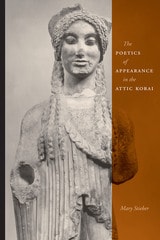
Some of the loveliest works of Archaic art were the Athenian korai—sculptures of beautiful young women presenting offerings to the goddess Athena that stood on the Acropolis. Sculpted in the sixth and early fifth centuries B.C., they served as votives until Persians sacked the citadel in 480/79 B.C. Subsequently, they were buried as a group and forgotten for nearly twenty-four centuries, until archaeologists excavated them in the 1880s. Today, they are among the treasures of the Acropolis Museum.
Mary Stieber takes a fresh look at the Attic korai in this book. Challenging the longstanding view that the sculptures are generic female images, she persuasively argues that they are instead highly individualized, mimetically realistic representations of Archaic young women, perhaps even portraits of real people. Marshalling a wide array of visual and literary evidence to support her claims, she shows that while the korai lack the naturalism that characterizes later Classical art, they display a wealth and realism of detail that makes it impossible to view them as generic, idealized images. This iconoclastic interpretation of the Attic korai adds a new dimension to our understanding of Archaic art and to the distinction between realism and naturalism in the art of all periods.
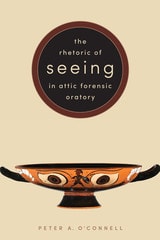
The Rhetoric of Seeing in Attic Forensic Oratory
By Peter A. O'Connell
University of Texas Press, 2017
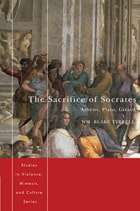
The Sacrifice of Socrates
Athens, Plato, GirardWm. Blake Tyrrell
Michigan State University Press, 2012
When Athenians suffered the shame of having lost a war from their own greed and foolishness, around 404 BCE the public’s blame was directed at Socrates, a man whose unique appearance and behavior, as well as his disapproval of the democracy, made him a ready target. Socrates was subsequently put on trial and sentenced to death. However, as René Girard has pointed out, no individual can be held responsible for a communal crisis. Plato’s Apology depicts Socrates as both the bane and the cure of Greek society, while his Crito shows a sacrificial Socrates, what some might consider a pharmakos figure, the human drug through whom Plato can dispense his philosophical remedies. With tremendous insight and satisfying complexity, this book analyzes classical texts through the lens of Girard’s mimetic mechanism.
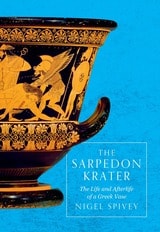
The Sarpedon Krater
The Life and Afterlife of a Greek VaseNigel Spivey
University of Chicago Press, 2019
Spivey takes the reader on a dramatic journey, beginning with the krater’s looting from an Etruscan tomb in 1971 and its acquisition by the Metropolitan Museum of Art, New York, followed by a high-profile lawsuit over its status and its eventual return to Italy. He explains where, how, and why the vase was produced, retrieving what we know about the life and legend of Sarpedon. Spivey also pursues the figural motif of the slain Sarpedon portrayed on the vase and traces how this motif became a standard way of representing the dead and dying in Western art, especially during the Renaissance.
Fascinating and informative, The Sarpedon Krater is a multifaceted introduction to the enduring influence of Greek art on the world.
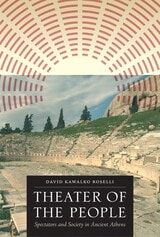
Theater of the People
Spectators and Society in Ancient AthensBy David Kawalko Roselli
University of Texas Press, 2011
Greek drama has been subject to ongoing textual and historical interpretation, but surprisingly little scholarship has examined the people who composed the theater audiences in Athens. Typically, scholars have presupposed an audience of Athenian male citizens viewing dramas created exclusively for themselves—a model that reduces theater to little more than a medium for propaganda. Women's theater attendance remains controversial, and little attention has been paid to the social class and ethnicity of the spectators. Whose theater was it?
Producing the first book-length work on the subject, David Kawalko Roselli draws on archaeological and epigraphic evidence, economic and social history, performance studies, and ancient stories about the theater to offer a wide-ranging study that addresses the contested authority of audiences and their historical constitution. Space, money, the rise of the theater industry, and broader social forces emerge as key factors in this analysis. In repopulating audiences with foreigners, slaves, women, and the poor, this book challenges the basis of orthodox interpretations of Greek drama and places the politically and socially marginal at the heart of the theater. Featuring an analysis of the audiences of Aeschylus, Sophocles, Euripides, Aristophanes, and Menander, Theater of the People brings to life perhaps the most powerful influence on the most prominent dramatic poets of their day.
Timon of Athens
William Shakespeare
Arizona Center for Medieval and Renaissance Studies, 2021
Never performed in Shakespeare’s lifetime, Timon of Athens presents an intriguing puzzle for contemporary audiences. The disjointed plot and many gaps in the story have led scholars to believe it was a collaboration between Shakespeare and Thomas Middleton, a younger writer known for his satires, and productions for decades have faced choices about the most effective way to present the play. In this translation, Cavander acts as a third playwright in this collaborative process. Wrangling the voices of Shakespeare and Middleton on the page, Cavander unveils poetic lines and phrases that have sat stubbornly in the cobwebs, cutting these voices through the time barrier and into the world as we know it.
This translation was written as part of the Oregon Shakespeare Festival’s Play On! project, which commissioned new translations of thirty-nine Shakespeare plays. These translations present the work of "The Bard" in language accessible to modern audiences while never losing the beauty of Shakespeare’s verse. These volumes make these works available for the first time in print—a new First Folio for a new era.
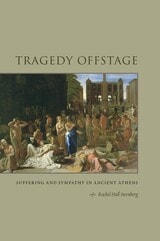
Tragedy Offstage
Suffering and Sympathy in Ancient AthensBy Rachel Hall Sternberg
University of Texas Press, 2006
Humane ideals were central to the image Athenians had of themselves and their city during the classical period. Tragic plays, which formed a part of civic education, often promoted pity and compassion. But it is less clear to what extent Athenians embraced such ideals in daily life. How were they expected to respond, emotionally and pragmatically, to the suffering of other people? Under what circumstances? At what risk to themselves?
In this book, Rachel Hall Sternberg draws on evidence from Greek oratory and historiography of the fifth and fourth centuries BCE to study the moral universe of the ancient Athenians: how citizens may have treated one another in times of adversity, when and how they were expected to help. She develops case studies in five spheres of everyday life: home nursing, the ransom of captives, intervention in street crimes, the long-distance transport of sick and wounded soldiers, and slave torture. Her close reading of selected narratives suggests that Athenians embraced high standards for helping behavior—at least toward relatives, friends, and some fellow citizens. Meanwhile, a subtle discourse of moral obligation strengthened the bonds that held Athenian society together, encouraging individuals to bring their personal behavior into line with the ideals of the city-state.