Results by title
235 books match the query 'Attitudes' and 38 start with t

TV Snapshots
An Archive of Everyday LifeLynn Spigel
Duke University Press, 2022

Talk of Love
How Culture MattersAnn Swidler
University of Chicago Press, 2001
Teaching Fear
How We Learn to Fear Crime and Why It MattersNicole E. Rader
Temple University Press, 2023
Where do lessons of “stranger danger” and safety come from—and do they apply differently for women? A gender-fear paradox shows that although women are less likely to be victims of most crimes (sexual assault aside), their fear of crime is greater. Moreover, girls and women—especially White women—are taught to fear the wrong things and given impossible tools to prevent victimization. In Teaching Fear, Nicole Rader zooms in on the social learning process, tracing the ways that families, schools, and the media have become obsessed with crime myths, especially regarding girls and women.
Based on in-depth research and family studies, Rader reveals the dubious and dangerous origins of many of the most prominent safety guidelines that teach young girls to be more afraid of crime. These guidelines carry over to adulthood, influencing women’s behaviors and the way they order their worlds, with dangerous consequences. As women teach their learned behavior and conditioned fear to others, gendered crime myths are recirculated from generation to generation, making them a staple in our society.
Teaching Fear includes suggestions for taking precautionary measures and crime prevention strategies. Rader also provides guidance for instilling safety values and demonstrating how we can “teach fear better” to break this cycle and truly create greater security.

Teenage Dreams
Girlhood Sexualities in the U.S. Culture WarsCharlie Jeffries
Rutgers University Press, 2022
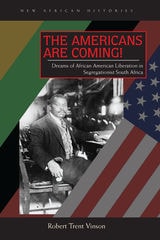
The Americans Are Coming!
Dreams of African American Liberation in Segregationist South AfricaRobert Trent Vinson
Ohio University Press, 2011
For more than half a century before World War II, black South Africans and “American Negroes”—a group that included African Americans and black West Indians—established close institutional and personal relationships that laid the necessary groundwork for the successful South African and American antiapartheid movements. Though African Americans suffered under Jim Crow racial discrimination, oppressed Africans saw African Americans as free people who had risen from slavery to success and were role models and potential liberators.
Many African Americans, regarded initially by the South African government as “honorary whites” exempt from segregation, also saw their activities in South Africa as a divinely ordained mission to establish “Africa for Africans,” liberated from European empires. The Jamaican-born Marcus Garvey’s Universal Negro Improvement Association, the largest black-led movement with two million members and supporters in forty-three countries at its height in the early 1920s, was the most anticipated source of liberation. Though these liberation prophecies went unfulfilled, black South Africans continued to view African Americans as inspirational models and as critical partners in the global antiapartheid struggle.
The Americans Are Coming! is a rare case study that places African history and American history in a global context and centers Africa in African Diaspora studies.
The Art of Life and Death
Radical Aesthetics and Ethnographic PracticeAndrew Irving
HAU, 2016
Encompassing twenty years of working alongside persons living with HIV/AIDS in New York, Irving documents the radical but often unspoken and unvoiced transformations in perception, knowledge, and understanding that people experience in the face of death. By bringing an “experience-near” ethnographic focus to the streams of inner dialogue, imagination, and aesthetic expression that are central to the experience of illness and everyday life, this monograph offers a theoretical, ethnographic, and methodological contribution to the anthropology of time, finitude, and the human condition. With relevance well-beyond the disciplinary boundaries of anthropology, this book ultimately highlights the challenge of capturing the inner experience of human suffering and hope that affect us all—of the trauma of the threat of death and the surprise of continued life.
The Art of Time
Levinas, Ethics, and the Contemporary Peninsular NovelNina L. Molinaro
Bucknell University Press, 2019
Academicians and journalists in Spain and abroad have recently fastened on an emerging cluster of peninsular writers who, they argue, pertain to a discernible literary generation, provisionally referred to as Generación X. These writers are distinct from their predecessors; they and their literary texts are closely related to the specific socio-political and historical circumstances in Spain and their novels relate stories of more and less proximity, more and less responsibility, and more and less temporality. In short, they trace the temporal movement of alterity through narrative.
Published by Bucknell University Press. Distributed worldwide by Rutgers University Press.
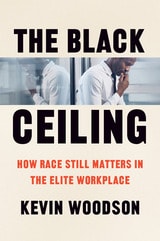
The Black Ceiling
How Race Still Matters in the Elite WorkplaceKevin Woodson
University of Chicago Press, 2023
America’s elite law firms, investment banks, and management consulting firms are known for grueling hours, low odds of promotion, and personnel practices that push out any employees who don’t advance. While most people who begin their careers in these institutions leave within several years, work there is especially difficult for Black professionals, who exit more quickly and receive far fewer promotions than their White counterparts, hitting a “Black ceiling.”
Sociologist and law professor Kevin Woodson knows firsthand what life at a top law firm feels like as a Black man. Examining the experiences of more than one hundred Black professionals at prestigious firms, Woodson discovers that their biggest obstacle in the workplace isn’t explicit bias but racial discomfort, or the unease Black employees feel in workplaces that are steeped in Whiteness. He identifies two types of racial discomfort: social alienation, the isolation stemming from the cultural exclusion Black professionals experience in White spaces, and stigma anxiety, the trepidation they feel over the risk of discriminatory treatment. While racial discomfort is caused by America’s segregated social structures, it can exist even in the absence of racial discrimination, which highlights the inadequacy of the unconscious bias training now prevalent in corporate workplaces. Firms must do more than prevent discrimination, Woodson explains, outlining the steps that firms and Black professionals can take to ease racial discomfort.
Offering a new perspective on a pressing social issue, The Black Ceiling is a vital resource for leaders at preeminent firms, Black professionals and students, managers within mostly White organizations, and anyone committed to cultivating diverse workplaces.
The Decline of Comity in Congress
Eric M. Uslaner
University of Michigan Press, 1996
The Difference That Disability Makes
Rod Michalko
Temple University Press, 2002
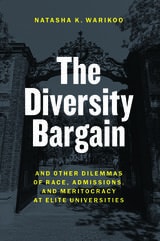
The Diversity Bargain
And Other Dilemmas of Race, Admissions, and Meritocracy at Elite UniversitiesNatasha Warikoo
University of Chicago Press, 2016
What Warikoo uncovers—talking with both white students and students of color at Harvard, Brown, and Oxford—is absolutely illuminating; and some of it is positively shocking. As she shows, many elite white students understand the value of diversity abstractly, but they ignore the real problems that racial inequality causes and that diversity programs are meant to solve. They stand in fear of being labeled a racist, but they are quick to call foul should a diversity program appear at all to hamper their own chances for advancement. The most troubling result of this ambivalence is what she calls the “diversity bargain,” in which white students reluctantly agree with affirmative action as long as it benefits them by providing a diverse learning environment—racial diversity, in this way, is a commodity, a selling point on a brochure. And as Warikoo shows, universities play a big part in creating these situations. The way they talk about race on campus and the kinds of diversity programs they offer have a huge impact on student attitudes, shaping them either toward ambivalence or, in better cases, toward more productive and considerate understandings of racial difference.
Ultimately, this book demonstrates just how slippery the notions of race, merit, and privilege can be. In doing so, it asks important questions not just about college admissions but what the elite students who have succeeded at it—who will be the world’s future leaders—will do with the social inequalities of the wider world.
The Farm & Wilderness Summer Camps
Progressive Ideals in the Twentieth CenturyEmily K. Abel
Rutgers University Press, 2024

The Good Men Who Won the War
Army of the Cumberland Veterans and Emancipation MemoryRobert E. Hunt
University of Alabama Press, 2010
Robert Hunt examines how Union veterans of the Army of the Cumberland employed the extinction of slavery in the trans-Appalachian South in their memory of the Civil War. Hunt argues that rather than ignoring or belittling emancipation, it became central to veterans’ retrospective understanding of what the war, and their service in it, was all about. The Army of the Cumberland is particularly useful as a subject for this examination because it invaded the South deeply, encountering numerous ex-slaves as fugitives, refugees, laborers on military projects, and new recruits. At the same time, the Cumberlanders were mostly Illinoisans, Ohioans, Indianans, and, significantly, Kentucky Unionists, all from areas suspicious of abolition before the war.
Hunt argues that the collapse of slavery in the trans-Appalachian theater of the Civil War can be usefully understood by exploring the post-war memories of this group of Union veterans. He contends that rather than remembering the war as a crusade against the evils of slavery, the veterans of the Army of the Cumberland saw the end of slavery as a by-product of the necessary defeat of the planter aristocracy that had sundered the Union; a good and necessary outcome, but not necessarily an assertion of equality between the races.
Some of the most provocative discussions about the Civil War in current scholarship are concerned with how memory of the war was used by both the North and the South in Reconstruction, redeemer politics, the imposition of segregation, and the Spanish-American War. This work demonstrates that both the collapse of slavery and the economic and social post-War experience convinced these veterans that they had participated in the construction of the United States as a world power, built on the victory won against corrupt Southern plutocrats who had impeded the rightful development of the country.
The Impact of College Diversity
Struggles and Successes at Age 30Elizabeth Aries
Temple University Press, 2023
The Impact of College Diversity details how exposure to diversity in college helped shape Black and white graduates process issues of economic and racial privilege and inequality at age 30. She investigates how college diversity experiences also facilitate the attainment of upward social mobility in lower-income students and the role that mobility played in their relationships with family and friends in their home communities. Aries further examines how interactions with peers of another race and class influenced development of citizenship skills and civic engagement, as well as Black students’ ability to cope with the challenges they faced in the professional world.
Aries concludes her study with a discussion of why elite colleges have been beneficial in promoting upward mobility in lower-income students, and the importance of achieving equity and inclusion in making diversity initiatives successful.

The Insistent Call
Rhetorical Moments in Black Anticolonialism, 1929-1937Aric Putnam
University of Massachusetts Press, 2012
Throughout the nineteenth century, African heritage played an important role in black America, as personal memories and cultural practices continued to shape the everyday experience of people of African descent living under the shadow of slavery. Resisting efforts to de-Africanize their values, customs, and beliefs, Black Americans invoked their African roots in public arguments about their identity and place in the “new” world. At the outset of the twentieth century many still saw Africa primarily as the source of a common cultural and spiritual past. But after the 1920s, the meaning of African heritage changed as people of African descent expressed new relationships between themselves, the United States, and the African Diaspora.
In The Insistent Call, Aric Putnam studies the rhetoric of newspapers, literature, and political pamphlets that expressed this shift. He demonstrates that as people of African descent debated the United States' occupation of Haiti, the Liberian labor crisis, and the Italian invasion of Ethiopia, they formed a new collective identity, one that understood the African Diaspora in primarily political rather than cultural terms. In addition to uncovering a neglected period in the history of Black rhetoric, Putnam shows how rhetoric that articulates the interests of a population not defined by the boundaries of a state can still motivate collective action and influence policies.

The Intestines of the State
Youth, Violence, and Belated Histories in the Cameroon GrassfieldsNicolas Argenti
University of Chicago Press, 2007
Beginning his study with a political analysis of youth in the Grassfields from the eighteenth century to the present, Argenti pays special attention to the repeated violent revolts staged by young victims of political oppression. He then combines this history with extensive ethnographic fieldwork in the Oku chiefdom, discovering that the specter of past violence lives on in the masked dance performances that have earned intense devotion from today’s youth. Argenti contends that by evoking the imagery of past cataclysmic events, these masquerades allow young Oku men and women to address the inequities they face in their relations with elders and state authorities today.
The Invisible Professor
The Precarious Lives of the New Faculty MajorityNatalie M. Dorfeld
University Press of Colorado, 2023
This edited collection, the first in the Practices & Possibilities series to be published in its Voices from the Field section, offers a rich set of narratives by writing instructors who are serving or have worked in contingent positions. Intended for anyone considering a career in the humanities, The Invisible Professor seeks to reach individuals in three phases of their careers: those thinking of entering the profession, those knee-deep in it and looking for ways to improve conditions, and those who have vacated academic positions for more humane alternative tracks.
As academia comes to a crossroads, with a disheartening shift towards a more disposable business model, multiple solutions are desperately needed. Faculty members in contingent positions are the new faculty majority on college campuses, and they are most likely the first professors students will meet. They deserve respect and a livable wage.
The Lettered Barriada
Workers, Archival Power, and the Politics of Knowledge in Puerto RicoJorell A. Meléndez-Badillo
Duke University Press, 2021
Duke University Press Scholars of Color First Book Award recipient

The Library Workplace Idea Book
Proactive Steps for Positive ChangeAmanda H. McLellan
American Library Association, 2020
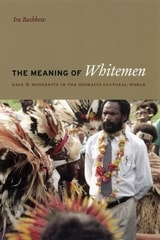
The Meaning of Whitemen
Race and Modernity in the Orokaiva Cultural WorldIra Bashkow
University of Chicago Press, 2006
While Papua New Guinea’s resident white population has been severely reduced due to postcolonial white flight, the whiteman remains a significant racial and cultural other here—not only as an archetype of power and wealth in the modern arena, but also as a foil for people’s evaluations of themselves within vernacular frames of meaning. As Ira Bashkow explains, ideas of self versus other need not always be anti-humanistic or deprecatory, but can be a creative and potentially constructive part of all cultures.
A brilliant analysis of whiteness and race in a non-Western society, The Meaning of Whitemen turns traditional ethnography to the purpose of understanding how others see us.

The Midnight Meal and Other Essays About Doctors, Patients, and Medicine
Jerome Lowenstein
University of Michigan Press, 2005
In this expanded edition, an accomplished physician and teacher of medicine discusses the importance of being a caring doctor, especially now that the focus of medicine is increasingly on technological innovation and health care costs.
With wisdom and compassion, Dr. Jerome Lowenstein tells stories about relationships between medical students and their teachers, physicians and their patients. He reflects on what doctors learn from treating chronic illness; how they respond to patients' needs for reassurance; how they bear the burden of treating patients with life-threatening or degenerative disease; whether the distinction between traditional and "alternative" medical treatment is ultimately beneficial or destructive; and many other issues. Dr. Lowenstein's ruminations on humanistic approaches to learning and practicing medicine will be treasured by physicians, medical students, and patients alike.
The New Jewish Leaders
Reshaping the American Jewish LandscapeEdited by Jack Wertheimer
Brandeis University Press, 2011

The Obama Effect
How the 2008 Campaign Changed White Racial AttitudesSeth K. Goldman
Russell Sage Foundation, 2014
The Pandemic Workplace
How We Learned to Be Citizens in the OfficeIlana Gershon
University of Chicago Press, 2024
In The Pandemic Workplace, anthropologist Ilana Gershon turns her attention to the US workplace and how it changed—and changed us—during the pandemic. She argues that the unprecedented organizational challenges of the pandemic forced us to radically reexamine our attitudes about work and to think more deeply about how values clash in the workplace. These changes also led us as workers to engage more with the contracts that bind us as we rethought when and how we allow others to tell us what to do.
Based on over two hundred interviews, Gershon’s book reveals how negotiating these tensions during the pandemic made the workplace into a laboratory for democratic living—the key place where Americans are learning how to develop effective political strategies and think about the common good. Exploring the explicit and unspoken ways we are governed (and govern others) at work, this accessible book shows how the workplace teaches us to be democratic citizens.
The Paradoxes of Integration
Race, Neighborhood, and Civic Life in Multiethnic AmericaJ. Eric Oliver
University of Chicago Press, 2010
The United States is rapidly changing from a country monochromatically divided between black and white into a multiethnic society. The Paradoxes of Integration helps us to understand America’s racial future by revealing the complex relationships among integration, racial attitudes, and neighborhood life.
J. Eric Oliver demonstrates that the effects of integration differ tremendously, depending on which geographical level one is examining. Living among people of other races in a larger metropolitan area corresponds with greater racial intolerance, particularly for America’s white majority. But when whites, blacks, Latinos, and Asian Americans actually live in integrated neighborhoods, they feel less racial resentment. Paradoxically, this racial tolerance is usually also accompanied by feeling less connected to their community; it is no longer "theirs." Basing its findings on our most advanced means of gauging the impact of social environments on racial attitudes, The Paradoxes of Integration sensitively explores the benefits and at times, heavily borne, costs of integration.

The Poco Field
An American Story of PlaceTalmage A. Stanley
University of Illinois Press, 2012

The Politics of Population in Brazil
Elite Ambivalence and Public DemandBy Peter McDonough and Amaury DeSouza
University of Texas Press, 1981
The population of Brazil increased tenfold, from 10 to over 100 million, between 1880 and 1980, nearly half of this increase occurring since the end of World War II. The Politics of Population in Brazil examines the attitudes toward population planning of Brazilian government officials and other elites—bishops, politicians, labor leaders, and business owners—in comparison with mass public opinion. The authors' findings that elites seriously underestimate the desire for family planning services, while the public views birth control as a basic issue, represent an important contribution on a timely issue.
A major reason for this disparity is that the elites tend to define the issue as a matter of national power and collective growth, and the public sees it as a bread-and-butter question affecting the daily lives of families. McDonough and DeSouza document not only the real gulf between elite and mass opinion but also the propensity of the elites to exaggerate this gap through their stereotyping of public opinion as conservative and disinterested in family planning.
Despite these differences, the authors demonstrate that population planning is less conflict ridden than many other controversies in Brazilian politics and probably more amenable to piecemeal bargaining than some earlier studies suggest. In part, this is because attitudes on the issue are not closely identified with opinions regarding left-versus-right disputes. In addition, for the public in general, religious sentiment affects attitudes toward family planning only indirectly. This separation, which reflects the historical lack of penetration of Brazilian society on the part of the church, further attenuates the issue's potential for galvanizing deep-seated antagonisms. As the authors note, this situation stands in contrast to the fierce debates that moral issues have generated in Spain and Ireland.
The study is noteworthy not only for its original approach—the incorporation of mass and elite data and the departure from the standard concerns with fertility determinants in population—but also for its sophisticated methodology and lucid presentation.
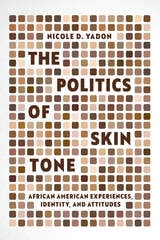
The Politics of Skin Tone
African American Experiences, Identity, and AttitudesNicole D. Yadon
University of Chicago Press, 2025
A nuanced examination of the salience of skin tone within African American politics.
Research shows that skin tone is associated with significant differences in life experiences. On average, African Americans with darker skin earn lower wages, suffer worse health outcomes, and endure more negative criminal justice experiences than lighter-skinned African Americans. Nicole D. Yadon conceptualizes skin tone as one facet of the multidimensional construct of race that powerfully influences racialized experiences which, in turn, can influence political identities and attitudes.
Drawing on evidence from one hundred in-depth interviews, multiple surveys, and a survey experiment, The Politics of Skin Tone investigates the political associations of skin tone. Yadon finds that skin tone correlates with political attitudes, particularly on issues where color-based disparities are especially pronounced such as criminal justice. Moreover, a sizable number of African Americans adopt a skin tone-based identity. In an era of shifting racial boundaries and growing color-based discrimination, The Politics of Skin Tone examines the implications for both scholars and policymakers.
The Politics of Survival
Marc Abélès
Duke University Press, 2010
Abélès examines the new global politics, which assumes many forms and is enacted by diverse figures with varied sympathies: the officials at meetings of the WTO and the demonstrators outside them, celebrity activists, and online contributors to international charities. He makes an impassioned case that our accounts of globalization need to reckon with the preoccupations and affiliations now driving global politics. The Politics of Survival was first published in France in 2006. This English-language edition has been revised and includes a new preface.
The Price of Nice
How Good Intentions Maintain Educational InequityAngelina E. Castagno
University of Minnesota Press, 2019
How being “nice” in school and university settings works to reinforce racialized, gendered, and (dis)ability-related inequities in education and society
Being nice is difficult to critique. Niceness is almost always portrayed and felt as a positive quality. In schools, nice teachers are popular among students, parents, and administrators. And yet Niceness, as a distinct set of practices and discourses, is not actually good for individuals, institutions, or communities because of the way it maintains and reinforces educational inequity.
In The Price of Nice, an interdisciplinary group of scholars explores Niceness in educational spaces from elementary schools through higher education to highlight how this seemingly benign quality reinforces structural inequalities. Grounded in data, personal narrative, and theory, the chapters show that Niceness, as a raced, gendered, and classed set of behaviors, functions both as a shield to save educators from having to do the hard work of dismantling inequity and as a disciplining agent for those who attempt or even consider disrupting structures and ideologies of dominance.
Contributors: Sarah Abuwandi, Arizona State U; Colin Ben, U of Utah; Nicholas Bustamante, Arizona State U; Aidan/Amanda J. Charles, Northern Arizona U; Jeremiah Chin, Arizona State U; Sally Campbell Galman, U of Massachusetts; Frederick Gooding Jr., Texas Christian U; Deirdre Judge, Tufts U; Katie A. Lazdowski; Román Liera, U of Southern California; Sylvia Mac, U of La Verne; Lindsey Malcolm-Piqueux, California Institute of Technology; Giselle Martinez Negrette, U of Wisconsin–Madison; Amber Poleviyuma, Arizona State U; Alexus Richmond, Arizona State U; Frances J. Riemer, Northern Arizona U; Jessica Sierk, St. Lawrence U; Bailey B. Smolarek, U of Wisconsin–Madison; Jessica Solyom, Arizona State U; Megan Tom, Arizona State U; Sabina Vaught, U of Oklahoma; Cynthia Diana Villarreal, U of Southern California; Kristine T. Weatherston, Temple U; Joseph C. Wegwert, Northern Arizona U; Marguerite Anne Fillion Wilson, Binghamton U; Jia-Hui Stefanie Wong, Trinity College; Denise Gray Yull, Binghamton U.
The Reluctant Supervisor
Recognizing and Rethinking Power in Writing Center Supervisory PracticesRachel Azima
Utah State University Press, 2026
The discipline of writing center studies has long emphasized collaboration in every context, including leadership. But what does this emphasis mean for supervision, which is inherently hierarchical? The Reluctant Supervisor attends to how power—institutional, racial, and otherwise—operates in work relationships, staff policies, and administrative decisions.
Giving sustained attention to writing center administrators as supervisors (in addition to their roles as leaders, directors, mentors, and teachers), contributors write from the specificities of their local contexts, institutional positions, and embodied histories in ways that deepen our understanding of writing center supervisory practice.
The Reluctant Supervisor wrestles with the tensions, contradictions, and challenges necessary to name, own, and recognize supervision as a fundamental part of writing center work. It provides valuable perspectives for aspiring, new, and experienced writing center professionals and others in higher education looking to develop a more reflective supervisory practice—especially those who want to center equity and justice in their workplaces.

The Restless Anthropologist
New Fieldsites, New VisionsEdited by Alma Gottlieb
University of Chicago Press, 2012
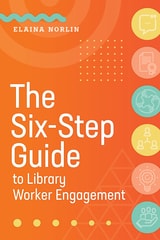
The Six-Step Guide to Library Worker Engagement
Elaina Norlin
American Library Association, 2021
Gallup’s 2019 State of the American Workplace Report found that 70 percent of employees are disengaged at work. Why is worker engagement so important? Engaged workers lead to engaged libraries — vibrant institutions that nurture their workers’ dedication, creativity, and innovation so they can serve their communities most effectively. This guide walks library managers and administrators through concrete steps to change their organization’s culture so that it fosters worker engagement, using first-hand accounts from library staff to illustrate both successes and failures. Readers will discover
- why libraries often fall short at hiring good leadership and ways to develop better recruitment strategies moving forward;
- how lack of trust pushes workplace culture towards incivility, hostility, and lower morale, and what library leaders can do to rebuild it;
- methods for using recognition and praise as tools for sustaining a positive work environment;
- the rationale for eliminating annual performance reviews in favor of less formal one-on-one conversations and “just in time” continuous feedback;
- the secrets behind high performing teams, strategies to support dysfunctional teams, and tips on how to develop remote teamwork; and
- why viewing diversity, equity, and inclusion (DEI) as separate from workplace culture is counterproductive, since it is actually the positive result of a strong foundation, with advice on combating the factors that contribute to low retention rates of BIPOC librarians.
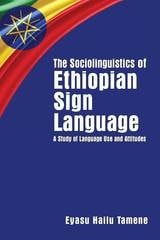
The Sociolinguistics of Ethiopian Sign Language
A Study of Language Use and AttitudesEyasu Hailu Tamene
Gallaudet University Press, 2017
Tamene collects data from three principal groups of people: deaf participants, teachers of deaf students, and parents of deaf children. He examines EthSL use within families, in formal and informal settings, and in various community spaces. He documents the awareness among different groups of the services available for deaf people, such as sign language interpreters and Deaf associations. He finds that members of the Deaf community show positive attitudes toward the use of EthSL and investigates the factors that impact those attitudes. His work indicates that there are still critical gaps in recognition and support for the use of EthSL, which can pose a threat to the vitality of the language. The Sociolinguistics of Ethiopian Sign Language will help to advance public understanding of EthSL and contribute to improved educational and social outcomes for the Deaf community in Ethiopia.
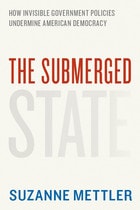
The Submerged State
How Invisible Government Policies Undermine American DemocracySuzanne Mettler
University of Chicago Press, 2011
“Keep your government hands off my Medicare!” Such comments spotlight a central question animating Suzanne Mettler’s provocative and timely book: why are many Americans unaware of government social benefits and so hostile to them in principle, even though they receive them? The Obama administration has been roundly criticized for its inability to convey how much it has accomplished for ordinary citizens. Mettler argues that this difficulty is not merely a failure of communication; rather it is endemic to the formidable presence of the “submerged state.”
In recent decades, federal policymakers have increasingly shunned the outright disbursing of benefits to individuals and families and favored instead less visible and more indirect incentives and subsidies, from tax breaks to payments for services to private companies. These submerged policies, Mettler shows, obscure the role of government and exaggerate that of the market. As a result, citizens are unaware not only of the benefits they receive, but of the massive advantages given to powerful interests, such as insurance companies and the financial industry. Neither do they realize that the policies of the submerged state shower their largest benefits on the most affluent Americans, exacerbating inequality. Mettler analyzes three Obama reforms—student aid, tax relief, and health care—to reveal the submerged state and its consequences, demonstrating how structurally difficult it is to enact policy reforms and even to obtain public recognition for achieving them. She concludes with recommendations for reform to help make hidden policies more visible and governance more comprehensible to all Americans.
The sad truth is that many American citizens do not know how major social programs work—or even whether they benefit from them. Suzanne Mettler’s important new book will bring government policies back to the surface and encourage citizens to reclaim their voice in the political process.
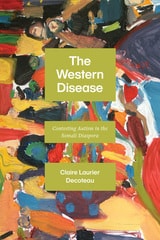
The Western Disease
Contesting Autism in the Somali DiasporaClaire Laurier Decoteau
University of Chicago Press, 2021
Because autism is an increasingly common diagnosis, North Americans are familiar with its symptoms and treatments. But what we know and think about autism is shaped by our social relationship to health, disease, and the medical system. In The Western Disease Claire Laurier Decoteau explores the ways that recent immigrants from Somalia to Canada and the US make sense of their children’s diagnosis of autism. Having never heard of autism before migrating to North America, they often determine that it must be a Western disease. Given its apparent absence in Somalia, they view it as Western in nature, caused by environmental and health conditions unique to life in North America.
Following Somali parents as they struggle to make sense of their children's illness and advocate for alternative care, Decoteau unfolds how complex interacting factors of immigration, race, and class affect Somalis’ relationship to the disease. Somalis’ engagement with autism challenges the prevailing presumption among Western doctors that their approach to healing is universal. Decoteau argues that centering an analysis on autism within the Somali diaspora exposes how autism has been defined and institutionalized as a white, middle-class disorder, leading to health disparities based on race, class, age, and ability. The Western Disease asks us to consider the social causes of disease and the role environmental changes and structural inequalities play in health vulnerability.
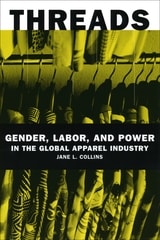
Threads
Gender, Labor, and Power in the Global Apparel IndustryJane L. Collins
University of Chicago Press, 2003
To dispel these misunderstandings, Jane L. Collins visited two very different apparel firms and their factories in the United States and Mexico. Moving from corporate headquarters to factory floors, her study traces the diverse ties that link First and Third World workers and managers, producers and consumers. Collins examines how the transnational economics of the apparel industry allow firms to relocate or subcontract their work anywhere in the world, making it much harder for garment workers in the United States or any other country to demand fair pay and humane working conditions.
Putting a human face on globalization, Threads shows not only how international trade affects local communities but also how workers can organize in this new environment to more effectively demand better treatment from their distant corporate employers.

Tongzhi Living
Men Attracted to Men in Postsocialist ChinaTiantian Zheng
University of Minnesota Press, 2015
Tongzhi, which translates into English as “same purpose” or “same will,” was once widely used to mean “comrade.” Since the 1990s, the word has been appropriated by the LGBT community in China and now refers to a broad range of people who do not espouse heteronormativity.
Tongzhi Living, the first study of its kind, offers insights into the community of same-sex-attracted men in the metropolitan city of Dalian in northeast China. Based on ethnographic fieldwork by Tiantian Zheng, the book reveals an array of coping mechanisms developed by tongzhi men in response to rapid social, cultural, and political transformations in postsocialist China. According to Zheng, unlike gay men in the West over the past three decades, tongzhi men in China have adopted the prevailing moral ideal of heterosexuality and pursued membership in the dominant culture at the same time they have endeavored to establish a tongzhi culture. They are, therefore, caught in a constant tension of embracing and contesting normality as they try to create a new and legitimate space for themselves.
Tongzhi men’s attempts to practice both conformity and rebellion paradoxically undercut the goals they aspire to reach, Zheng shows, perpetuating social prejudice against them and thwarting the activism they believe they are advocating.