Results by title
67 books match the query 'Austria' and 16 start with t
The Authoritarian State (CW4)
An Essay on the Problem of the Austrian StateEric Voegelin, Edited & Intro by Gilbert Weiss, Translated by Ruth Hein, & Historical Commentary by Erika Weinzierl
University of Missouri Press, 1999
Published in Vienna in 1936, The Authoritarian State by Eric Voegelin has remained virtually unknown to the public until now. Sales of the German edition were halted following the Nazi invasion of Austria in 1938, and the entire printing was later destroyed by wartime bombing. In this volume, Voegelin offers a critical examination of the most prominent European theories of state and constitutional law of the period while providing a political and historical analysis of the Austrian situation. He discusses the dismissal of Parliament in 1933, the civil war, the murder of Federal Chancellor Dollfuss, the adoption of the "Authoritarian Constitution" of 1934, and the predicament of being sandwiched between Hitler and Mussolini.
A radical critique of Hans Kelsen's pure theory of law lies at the heart of this work, marking Voegelin's definitive departure from Neo-Kantian epistemology. For the first time, Voegelin elaborates on the important distinction between theoretical concepts and political symbols as a basis for explaining the nontheoretical and speculative character of ideologies, both left and right. He shows that total and authoritarian are symbols of ideological self-interpretation that have no theoretical value, a distinction basic to his later work in The New Science of Politics.
Available for the first time in English, The Authoritarian State is a valuable addition to the Voegelin canon and to the field of intellectual history in general.
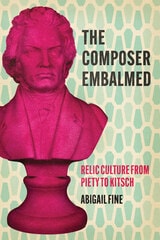
The Composer Embalmed
Relic Culture from Piety to KitschAbigail Fine
University of Chicago Press, 2025
During the nineteenth century, music institutions promoted artworks they deemed timeless and made composers into figureheads of a lasting Western canon. Alongside this institutional face of the canon was a more intimate impulse to preserve, touch, and embrace the residues of the dead. In Germany and Austria between 1870 and 1930, music lovers venerated the bodies, houses, and belongings of composers as relics, shrines, and talismans. In The Composer Embalmed, Abigail Fine documents the vernacular and eccentric ways that composers have been remembered.
Fine navigates a wealth of unknown archival material to recover the stories of devotees: from pilgrims who felt time stop in historic houses to music-loving doctors who made skulls into sacred specimens, dilettantes who displayed Beethoven’s mask as a relic of the “beautiful death,” and interwar critics of those dilettantes who disparaged piety as a false religion, a kitsch replica. In isolation, these practices may look like simple acts of affection. But in the aggregate, Fine asserts, acts of devotion constituted what we might broadly understand as relic culture—a culture that sought to possess the body of the departed genius, and that superimposed habits of anthropological collecting onto artifacts of Austro-German heritage. By excavating objects, ephemera, amateur lyric, visitors’ books, letters, and travelogues, The Composer Embalmed reveals the underbelly of the canon, where guilty pleasures blur the boundary between sanctity and desecration.
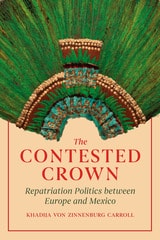
The Contested Crown
Repatriation Politics between Europe and MexicoKhadija von Zinnenburg Carroll
University of Chicago Press, 2022
In The Contested Crown, Khadija von Zinnenburg Carroll meditates on the case of a spectacular feather headdress believed to have belonged to Montezuma, emperor of the Aztecs. This crown has long been the center of political and cultural power struggles, and it is one of the most contested museum claims between Europe and the Americas. Taken to Europe during the conquest of Mexico, it was placed at Ambras Castle, the Habsburg residence of the author’s ancestors, and is now in Vienna’s Welt Museum. Mexico has long requested to have it back, but the Welt Museum uses science to insist it is too fragile to travel.
Both the biography of a cultural object and a history of collecting and colonizing, this book offers an artist’s perspective on the creative potentials of repatriation. Carroll compares Holocaust and colonial ethical claims, and she considers relationships between indigenous people, international law and the museums that amass global treasures, the significance of copies, and how conservation science shapes collections. Illustrated with diagrams and rare archival material, this book brings together global history, European history, and material culture around this fascinating object and the debates about repatriation.
The Eighth
Mahler and the World in 1910Stephen Johnson
University of Chicago Press, 2020
September 12, 1910: The world premiere of Gustav Mahler’s Eighth Symphony and the artistic breakthrough for which the composer had yearned all his life. Munich’s new Musik Festhalle was filled to capacity on two successive evenings for the performances, which were received with rapturous applause. Representatives of many European royal houses were in attendance, along with an array of stars from the musical and literary world, including Thomas Mann and the young Arnold Schoenberg. Also present were Alma Mahler, the composer’s wife, and Alma’s longtime lover, the architect Walter Gropius. Knowledge of their relationship would precipitate an emotional crisis in Mahler that, compounded with his heart condition and the loss of his young daughter Maria, would lead to his premature death the next year.
In The Eighth, Stephen Johnson provides a masterful account of the symphony’s far-reaching consequences and its effect on composers, conductors, and writers of the time. The Eighth looks behind the scenes at the demanding one-week rehearsal period leading up to the premiere—something unheard of at the time—and provides fascinating insight into Mahler’s compositional habits, his busy life as a conductor, his philosophical and literary interests, and his personal and professional relationships. Johnson expertly contextualizes Mahler’s work among the prevailing attitudes and political climate of his age, considering the art, science, technology, and mass entertainment that informed the world in 1910. The Eighth is an absorbing history of a musical masterpiece and the troubled man who created it.
The Formation of a Modern Rabbi
The Life and Times of the Viennese Scholar and Preacher Adolf JellinekSamuel Joseph Kessler
SBL Press, 2022
An intellectual biography that critically engages Adolf Jellinek’s scholarship and communal activities
Adolf Jellinek (1821–1893), the Czech-born, German-educated, liberal chief rabbi of Vienna, was the most famous Jewish preacher in Central Europe in the second half of the nineteenth century. As an innovative rhetorician, Jellinek helped mold and define the modern synagogue sermon into an instrument for expressing Jewish religious and ethical values for a new era. As a historian, he made groundbreaking contributions to the study of the Zohar and medieval Jewish mysticism. Jellinek was emblematic of rabbi-as-scholar-preacher during the earliest, formative years of communal synagogues as urban religious space. In a world that was rapidly losing the felt and remembered past of premodern Jewish society, the rabbi, with Jellinek as prime exemplar, took hold of the Sabbath sermon as an instrument to define and mold Judaism and Jewish values for a new world.
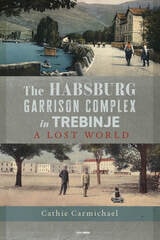
The Habsburg Garrison Complex in Trebinje
A Lost WorldCathie Carmichael
Central European University Press, 2024
Following the imposition of Habsburg rule on Ottoman Bosnia in 1878, a new garrison was constructed in the old citadel of Trebinje. By using a micro-historical approach, this innovative book tells the story of the garrison in times of peace and war, describing the way in which the Austro-Hungarian administration rapidly transformed Trebinje into a tree-lined city dominated by the army.
Yet, the Habsburg "civilizing mission," marked by the building of hospitals, schools, roads, and railways was accompanied by ruthless violence against those who resisted the new foreign occupiers, especially after 1914. The tragic violence is described in the book alongside accounts of daily life. By personalizing historical events, the narrative reveals the perspective of people who found themselves in Trebinje and its garrison complex: the ordinary soldier, the condemned “insurgent,” the career officer, the cook, the shepherdess, the hotelier, or the journalist—all willing or unwilling participants in an extra-European style colonial project in the heart of Europe.
The Habsburg Monarchy, 1809-1918
A History of the Austrian Empire and Austria-HungaryA. J. P. Taylor
University of Chicago Press, 1976
The Haydn Economy
Music, Aesthetics, and Commerce in the Late Eighteenth CenturyNicholas Mathew
University of Chicago Press, 2022
In this far-reaching work of music history and criticism, Nicholas Mathew reimagines the world of Joseph Haydn and his contemporaries, with its catastrophic upheavals and thrilling sense of potential. In the process, Mathew tackles critical questions of particular moment: how we tell the history of the European Enlightenment and Romanticism; the relation of late eighteenth-century culture to incipient capitalism and European colonialism; and how the modern market and modern aesthetic values were—and remain—inextricably entwined.
The Haydn Economy weaves a vibrant material history of Haydn’s career, extending from the sphere of the ancient Esterházy court to his frenetic years as an entrepreneur plying between London and Vienna to his final decade as a venerable musical celebrity, during which he witnessed the transformation of his legacy by a new generation of students and acolytes, Beethoven foremost among them. Ultimately, Mathew asserts, Haydn’s historical trajectory compels us to ask what we might retain from the cultural and political practices of European modernity—whether we can extract and preserve its moral promise from its moral failures. And it demands that we confront the deep histories of capitalism that continue to shape our beliefs about music, sound, and material culture.
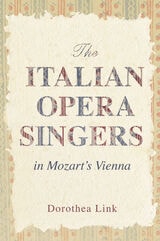
The Italian Opera Singers in Mozart's Vienna
Dorothea Link
University of Illinois Press, 2022
Authoritative and insightful, The Italian Opera Singers in Mozart's Vienna offers a singular look at a musical milieu and a key to addressing the performance-practice problem of how to cast the Mozart roles today.
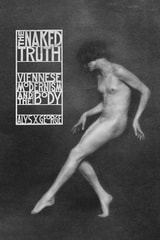
The Naked Truth
Viennese Modernism and the BodyAlys X. George
University of Chicago Press, 2020
Viennese modernism is often described in terms of a fin-de-siècle fascination with the psyche. But this stereotype of the movement as essentially cerebral overlooks a rich cultural history of the body. The Naked Truth, an interdisciplinary tour de force, addresses this lacuna, fundamentally recasting the visual, literary, and performative cultures of Viennese modernism through an innovative focus on the corporeal.
Alys X. George explores the modernist focus on the flesh by turning our attention to the second Vienna medical school, which revolutionized the field of anatomy in the 1800s. As she traces the results of this materialist influence across a broad range of cultural forms—exhibitions, literature, portraiture, dance, film, and more—George brings into dialogue a diverse group of historical protagonists, from canonical figures such as Egon Schiele, Arthur Schnitzler, Joseph Roth, and Hugo von Hofmannsthal to long-overlooked ones, including author and doctor Marie Pappenheim, journalist Else Feldmann, and dancers Grete Wiesenthal, Gertrud Bodenwieser, and Hilde Holger. She deftly blends analyses of popular and “high” culture, laying to rest the notion that Viennese modernism was an exclusively male movement. The Naked Truth uncovers the complex interplay of the physical and the aesthetic that shaped modernism and offers a striking new interpretation of this fascinating moment in the history of the West.
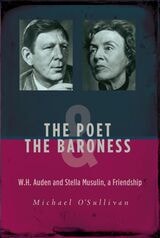
The Poet & the Baroness
W.H. Auden and Stella Musulin, a FriendshipMichael O'Sullivan
Central European University Press, 2023
For long periods in history, the Austrian capital found itself on the geographical edge of western civilisation. Yet from the 18th century on, Vienna has been a vibrant centre of European culture. This city is the scene of the formidable meeting of the two outstanding intellectuals that are at the core of this book.
The warm relationship between W.H. Auden, the celebrated British-American poet (1907–1973), and his fellow expatriate, the Welsh-Austrian journalist, translator and writer Stella Musulin (1915–1996) lasted while Auden resided in the nearby small town of Kirchstetten starting in 1958. It was here that the poet was laid to rest in the autumn of 1973. This book is based on the unpublished letters of Auden to Musulin and her private journals.
The study of this inspiring material yields new insights into Auden’s last, prolific, creative period and underscores the ‘Austrian Auden.’ In addition, Michael O’Sullivan pays tribute to the closest ‘Austrian’ friend of the poet. Baroness Stella von Musulin was an intellectual whose two books for Faber & Faber are acknowledged as classics: Vienna in the Age of Metternich and Austria: People & Landscape (with a foreword by Auden). The author situates the close relationship of two individuals in the context of Austria’s complex political, social, and cultural history in the Cold War years.
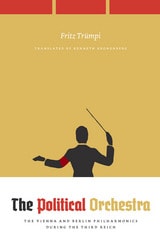
The Political Orchestra
The Vienna and Berlin Philharmonics during the Third ReichFritz Trümpi
University of Chicago Press, 2016
Trümpi looks first at the decades preceding National Socialist rule, when the competing orchestras, whose rivalry mirrored a larger rivalry between Berlin and Vienna, were called on to represent “superior” Austro-German music and were integrated into the administrative and social structures of their respective cities—becoming vulnerable to political manipulation in the process. He then turns to the Nazi period, when the orchestras came to play a major role in cultural policies. As he shows, the philharmonics, in their own unique ways, strengthened National Socialist dominance through their showcasing of Germanic culture in the mass media, performances for troops and the general public, and fictional representations in literature and film. Accompanying these propaganda efforts was an increasing politicization of the orchestras, which ranged from the dismissal of Jewish members to the programming of ideologically appropriate repertory—all in the name of racial and cultural purity.
Richly documented and refreshingly nuanced, The Political Orchestra is a bold exploration of the ties between music and politics under fascism.
The Road to the Open
Arthur Schnitzler
Northwestern University Press, 1991
The Streets of Europe
The Sights, Sounds, and Smells That Shaped Its Great CitiesBrian Ladd
University of Chicago Press, 2020
Merchants’ shouts, jostling strangers, aromas of fresh fish and flowers, plodding horses, and friendly chatter long filled the narrow, crowded streets of the European city. As they developed over many centuries, these spaces of commerce, communion, and commuting framed daily life. At its heyday in the 1800s, the European street was the place where social worlds connected and collided.
Brian Ladd recounts a rich social and cultural history of the European city street, tracing its transformation from a lively scene of trade and crowds into a thoroughfare for high-speed transportation. Looking closely at four major cities—London, Paris, Berlin, and Vienna—Ladd uncovers both the joys and the struggles of a past world. The story takes us up to the twentieth century, when the life of the street was transformed as wealthier citizens withdrew from the crowds to seek refuge in suburbs and automobiles. As demographics and technologies changed, so did the structure of cities and the design of streets, significantly shifting our relationships to them. In today’s world of high-speed transportation and impersonal marketplaces, Ladd leads us to consider how we might draw on our history to once again build streets that encourage us to linger.
By unearthing the vivid descriptions recorded by amused and outraged contemporaries, Ladd reveals the changing nature of city life, showing why streets matter and how they can contribute to public life.
The Subject in Art
Portraiture and the Birth of the ModernCatherine M. Soussloff
Duke University Press, 2006
Soussloff combines a historically grounded examination of art and art historical thinking in Vienna with subsequent theories of portraiture and a careful historiography of philosophical and psychoanalytic approaches to human consciousness from Hegel to Sartre and from Freud to Lacan. She chronicles the emergence of a social theory of art among the art historians of the Vienna School, demonstrates how the Expressionist painter Oskar Kokoschka depicted the Jewish subject, and explores the development of pictorialist photography. Reflecting on the implications of the visualized, modern subject for textual and linguistic analyses of subjectivity, Soussloff concludes that the Viennese art historians, photographers, and painters will henceforth have to be recognized as precursors to such better-known theorists of the subject as Sartre, Foucault, and Lacan.
Toward the Final Solution
A History of European RacismGeorge L. Mosse, With a critical introduction by Christopher R. Browning
University of Wisconsin Press, 2020