Results by title
72 books match the query 'Being' and 19 start with t
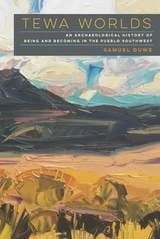
Tewa Worlds
An Archaeological History of Being and Becoming in the Pueblo SouthwestSamuel Duwe
University of Arizona Press, 2020
Tewa Worlds tells a history of eight centuries of the Tewa people, set among their ancestral homeland in northern New Mexico. Bounded by four sacred peaks and bisected by the Rio Grande, this is where the Tewa, after centuries of living across a vast territory, reunited and forged a unique type of village life. It later became an epicenter of colonialism, for within its boundaries are both the ruins of the first Spanish colonial capital and the birthplace of the atomic bomb. Yet through this dramatic change the Tewa have endured and today maintain deep connections with their villages and a landscape imbued with memory and meaning.
Anthropologists have long trekked through Tewa country, but the literature remains deeply fractured among the present and the past, nuanced ethnographic description, and a growing body of archaeological research. Samuel Duwe bridges this divide by drawing from contemporary Pueblo philosophical and historical discourse to view the long arc of Tewa history as a continuous journey. The result is a unique history that gives weight to the deep past, colonial encounters, and modern challenges, with the understanding that the same concepts of continuity and change have guided the people in the past and present, and will continue to do so in the future.
Focusing on a decade of fieldwork in the northern portion of the Tewa world—the Rio Chama Valley—Duwe explores how incorporating Pueblo concepts of time and space in archaeological interpretation critically reframes ideas of origins, ethnogenesis, and abandonment. It also allows archaeologists to appreciate something that the Tewa have always known: that there are strong and deep ties that extend beyond modern reservation boundaries.
The Ambuiguity of Being
Lonergan and the Problems of the SupernaturalJonathan R. Heaps
Catholic University of America Press, 2024
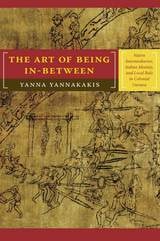
The Art of Being In-between
Native Intermediaries, Indian Identity, and Local Rule in Colonial OaxacaYanna Yannakakis
Duke University Press, 2008
Through interpretation of a wide array of historical sources—including descriptions of public rituals, accounts of indigenous rebellions, idolatry trials, legal petitions, court cases, land disputes, and indigenous pictorial histories—Yannakakis weaves together an elegant narrative that illuminates political and cultural struggles over the terms of local rule. As cultural brokers, native intermediaries at times reconciled conflicting interests, and at other times positioned themselves in opposing camps over the outcome of municipal elections, the provision of goods and labor, landholding, community ritual, the meaning of indigenous “custom” in relation to Spanish law, and representations of the past. In the process, they shaped an emergent “Indian” identity in tension with other forms of indigenous identity and a political order characterized by a persistent conflict between local autonomy and colonial control. This innovative study provides fresh insight into colonialism’s disparate cultures and the making of race, ethnicity, and the colonial state and legal system in Spanish America.
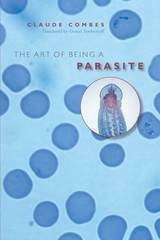
The Art of Being a Parasite
Claude Combes
University of Chicago Press, 2005
The Art of Being a Parasite is an extensive collection of these and other wonderful and weird stories that illuminate the ecology and evolution of interactions between species. Claude Combes illustrates what it means to be a parasite by considering every stage of its interactions, from invading to reproducing and leaving the host. An accessible and engaging follow-up to Combes's Parasitism, this book will be of interest to both scholars and nonspecialists in the fields of biodiversity, natural history, ecology, public health, and evolution.
The Being of the Beautiful
Plato's Theaetetus, Sophist, and StatesmanPlato
University of Chicago Press, 1984
“The translations are masterpieces of literalness. . . . They are honest, accurate, and give the reader a wonderful sense of the Greek.”—Drew A. Hyland, Review of Metaphysics
The Business of Being a Writer
Jane Friedman
University of Chicago Press, 2018
The Business of Being a Writer offers the business education writers need but so rarely receive. It is meant for early-career writers looking to develop a realistic set of expectations about making money from their work or for working writers who want a better understanding of the industry. Writers will gain a comprehensive picture of how the publishing world works—from queries and agents to blogging and advertising—and will learn how they can best position themselves for success over the long term.
Jane Friedman has more than twenty years of experience in the publishing industry, with an emphasis on digital media strategy for authors and publishers. She is encouraging without sugarcoating, blending years of research with practical advice that will help writers market themselves and maximize their writing-related income. It will leave them empowered, confident, and ready to turn their craft into a career.
The Business of Being a Writer, Second Edition
Jane Friedman
University of Chicago Press, 2025
Writers talk about their work in many ways: as an art, as a calling, as a lifestyle. Too often missing from these conversations is the fact that writing is also a business, and those who want to make a living from their writing must understand the basic business principles underlying the industry. The Business of Being a Writer offers the business education writers need but so rarely receive.
Jane Friedman is one of today’s leading experts on the publishing industry. Through her website, social media presence, online courses, email newsletters, and other media, she helps writers understand how to navigate the industry with confidence and intentionality. This book advises writers on how to build a platform in a way that aligns with their values, how to spot critical mindset issues that might sabotage their efforts before they even begin, how to publish strategically, and what it means to diversify income streams beyond book sales. For this second edition, Friedman has updated every topic to reflect how the industry has evolved over the past half decade. New features include a section on business and legal issues commonly faced by writers, exercises at the end of each chapter, and a wealth of sample materials posted on a companion website.
Reaching beyond the mechanical aspects of publishing, The Business of Being a Writer will help both new and experienced writers approach their careers with the same creative spirit as their writing. Friedman is encouraging without sugarcoating reality, blending years of research with practical advice that will help writers market themselves and maximize their writing-related income. Her book will leave them empowered, confident, and ready to turn their craft into a sustainable career.
The Cost of Being a Girl
Working Teens and the Origins of the Gender Wage GapYasemin Besen-Cassino
Temple University Press, 2017
The gender wage gap is one of the most persistent problems of labor markets and women’s lives.
Most approaches to explaining the gap focus on adult employment despite the fact that many Americans begin working well before their education is completed. In her critical and compelling new book, The Cost of Being a Girl, Yasemin Besen-Cassino examines the origins of the gender wage gap by looking at the teenage labor force, where comparisons between boys and girls ought to show no difference, but do.
Besen-Cassino’s findings are disturbing. Because of discrimination in the market, most teenage girls who start part-time work as babysitters and in other freelance jobs fail to make the same wages as teenage boys who move into employee-type jobs. The “cost” of being a girl is also psychological; when teenage girls work retail jobs in the apparel industry, they have lower wages and body image issues in the long run.
Through in-depth interviews and surveys with workers and employees, The Cost of Being a Girl puts this alarming social problem—which extends to race and class inequality—in to bold relief. Besen-Cassino emphasizes that early inequalities in the workplace ultimately translate into greater inequalities in the overall labor force.
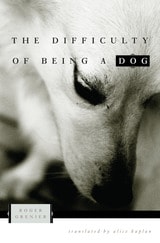
The Difficulty of Being a Dog
Roger Grenier
University of Chicago Press, 2000
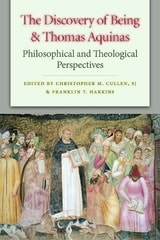
The Discovery of Being and Thomas Aquinas
Christopher M. Cullen, SJ
Catholic University of America Press, 2019
The collection of essays within The Discovery of Being and Thomas Aquinas is divided into three major parts: the first set of essays concerns the foundation of metaphysics within Thomism; the second set exemplifies the use of metaphysics in fundamental philosophical issues within Thomism; and the third set employs metaphysics in central theological issues.
The Discovery of Being and Thomas Aquinas allows major scholars of the different types of Thomism to engage in a full-scale defense of their position, as well as expanding Thomistic metaphysics to the discipline of theology in important ways.

The Exciting Life of Being a Woman
Amelia Lee
Intellect Books, 2012
The Intimate Strangeness of Being
Metaphysics after DialecticWilliam Desmond
Catholic University of America Press, 2012
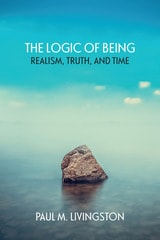
The Logic of Being
Realism, Truth, and TimePaul M. Livingston
Northwestern University Press, 2017
Livingston's formal and phenomenological analysis articulates and defends a realist position about being, time, and their relationship that understands that all of these are structured and constituted in a way that does not depend on the human mind, consciousness, or subjectivity. This approach provides a basis for new logically and phenomenologically based accounts of the structure of linguistic truth in relation to the appearance of objects and of the formal structure of time as given.
Livingston draws on philosophers from Plato and Aristotle to Davidson and Heidegger in this exploration. In it, readers and scholars will discover innovative connections between continental and analytic philosophy.
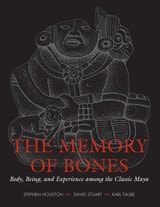
The Memory of Bones
Body, Being, and Experience among the Classic MayaBy Stephen Houston, David Stuart, and Karl Taube
University of Texas Press, 2006
All of human experience flows from bodies that feel, express emotion, and think about what such experiences mean. But is it possible for us, embodied as we are in a particular time and place, to know how people of long ago thought about the body and its experiences? In this groundbreaking book, three leading experts on the Classic Maya (ca. AD 250 to 850) marshal a vast array of evidence from Maya iconography and hieroglyphic writing, as well as archaeological findings, to argue that the Classic Maya developed a coherent approach to the human body that we can recover and understand today.
The authors open with a cartography of the Maya body, its parts and their meanings, as depicted in imagery and texts. They go on to explore such issues as how the body was replicated in portraiture; how it experienced the world through ingestion, the senses, and the emotions; how the body experienced war and sacrifice and the pain and sexuality that were intimately bound up in these domains; how words, often heaven-sent, could be embodied; and how bodies could be blurred through spirit possession.
From these investigations, the authors convincingly demonstrate that the Maya conceptualized the body in varying roles, as a metaphor of time, as a gendered, sexualized being, in distinct stages of life, as an instrument of honor and dishonor, as a vehicle for communication and consumption, as an exemplification of beauty and ugliness, and as a dancer and song-maker. Their findings open a new avenue for empathetically understanding the ancient Maya as living human beings who experienced the world as we do, through the body.

The New Peoples
Being and Becoming MétisJacqueline Peterson
University of Manitoba Press, 1985
The Romantic Absolute
Being and Knowing in Early German Romantic Philosophy, 1795-1804Dalia Nassar
University of Chicago Press, 2013
Scholars today interpret philosophical romanticism along two competing lines: one emphasizes the romantics’ concern with epistemology, the other their concern with metaphysics. Through careful textual analysis and systematic reconstruction of the work of three major romantics—Novalis, Friedrich Schlegel, and Friedrich Schelling—Nassar shows that neither interpretation is fully satisfying. Rather, she argues, one needs to approach the absolute from both perspectives. Rescuing these philosophers from frequent misunderstanding, and even dismissal, she articulates not only a new angle on the philosophical foundations of romanticism but on the meaning and significance of the notion of the absolute itself.
The Science of Being as Being
Metaphysical InvestigationsGregory T. Doolan
Catholic University of America Press, 2012
The Texture of Being
Essays in First PhilosophyKenneth L. Schmitz
Catholic University of America Press, 2007
The Voiding of Being
The Doing and Undoing of Metaphysics in ModernityWilliam Desmond
Catholic University of America Press, 2020