Results by title
221 books match the query 'Beyond' and 28 start with t
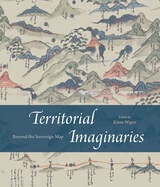
Territorial Imaginaries
Beyond the Sovereign MapEdited by Kären Wigen
University of Chicago Press, 2025
This strikingly colorful volume contends that modern mapping has never been sufficient to illustrate the complex reality of territory and political sovereignty, whether past or present. For Territorial Imaginaries, editor Kären Wigen has assembled an impressive slate of experts, spanning disciplines from political science to art history, to contribute perspectives and case studies covering three main themes: mapping before the nation-state, rethinking and critiquing mapping practices, and robust traditions of counter-cartography.
Each contributor proposes alternative ways to think about mapping, and the essays are supported with rich archival documentation. Among the far-reaching case studies are Barbara Mundy’s cartographic history of Indigenous dispossession in the Americas, Peter Bol’s examination of two Chinese maps created five hundred years apart, and Ali Yaycıoğlu’s exploration of tensions between top-down and bottom-up mapping of Habsburg and Ottoman border claims.
That Which Roots Us
Environmental Issues in the Pacific Northwest & BeyondMarion Dresner
University of Nevada Press, 2023
A work of natural and environmental history.
That Which Roots Us is a work of natural and environmental history that explores the origins of and resolutions to some of the United States’ environmental problems. Marion Dresner discusses the roots of Euro-American environmental exploitative action, starting with the environmental consequences of having treated Pacific Northwest forests as commodities. She shares her experiences visiting sites where animal-centered ice age culture changed to human-centered culture thousands of years ago with the advent of farming. The book explores the origins of the romantic philosophical movement, which arose out of the debilitating conditions of the industrial era. Those romantic attitudes toward nature inspired the twentieth-century preservation movement and America’s progressively modern conservation attitudes.
The book is centered around environmental issues in the Pacific Northwest, contrasting utilitarian views of nature with Native American practices of respect and reciprocity. The elements that make That Which Roots Us a truly unique and important contribution to environmental literature are the author’s personal recollections and interactions with the landscape. Ultimately, Dresner offers hope for a new stewardship of the land and a focus on science literacy and direct experience in the natural world as the most grounded way of knowing the planet.
The Ambivalence of Power in the Twenty-First Century Economy
Cases from Russia and BeyondEdited by Vadim Radaev and Zoya Kotelnikova
University College London, 2022
This book explores the ambivalent nature of power as wielded in economic practices from an empirical perspective. It offers a collection of country-based cases and critically assesses the existing conceptions of power from a cross-disciplinary perspective. Analyzing power at the macro, meso, and micro levels allows the volume to highlight the complexity of political economy in the twenty-first century. Each chapter addresses key elements of a given political economy (from the ambivalence of the cases of former communist countries that do not conform with the grand narratives about democracy and markets to the dual utility of new technologies such as face-recognition), thus providing mounting evidence for the centrality of understanding ambivalence in the analysis of power.
The Ark and Beyond
The Evolution of Zoo and Aquarium ConservationEdited by Ben A. Minteer, Jane Maienschein, and James P. Collins
University of Chicago Press, 2018
While early menageries were anything but the centers of conservation that many zoos are today, a concern with wildlife preservation has been an integral component of the modern, professionally run zoo since the nineteenth century. From captive breeding initiatives to rewilding programs, zoos and aquariums have long been at the cutting edge of research and conservation science, sites of impressive new genetic and reproductive techniques. Today, their efforts reach even further beyond recreation, with educational programs, community-based conservation initiatives, and international, collaborative programs designed to combat species extinction and protect habitats at a range of scales. Addressing related topics as diverse as zoo animal welfare, species reintroductions, amphibian extinctions, and whether zoos can truly be “wild,” this book explores the whole range of research and conservation practices that spring from zoos and aquariums while emphasizing the historical, scientific, and ethical traditions that shape these efforts. Also featuring an inspiring foreword by the late George Rabb, president emeritus of the Chicago Zoological Society / Brookfield Zoo, The Ark and Beyond illuminates these institutions’ growing significance to the preservation of global biodiversity in this century.
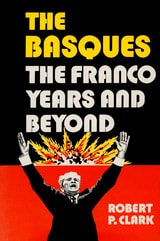
The Basques
The Franco Years and BeyondRobert P. Clark
University of Nevada Press, 1979
The Book of the Twelve and Beyond
Collected Essays of James D. NogalskiJames D. Nogalski
SBL Press, 2017
A critical collection for specialists and serious students of prophetic literature
This book contains a collection of essays dealing with texts in the Book of the Twelve written by James D. Nogalski beginning in 1993. Essays use various methodological approaches to prophetic literature, including redaction criticism, form criticism, text criticism, intertextuality, and literary analysis. The variety of methods employed by one scholar, as well as the diverse texts treated, makes this volume useful for exploring changes in the field of prophetic studies in the last quarter century.
Features
- A helpful entry into the issues surrounding the historical and literary interpretation of the Book of the Twelve as a redacted corpus
- A collection of sixteen essays using a variety of methods
- Bracketed page numbers coordinating these essays with the pages in original publications
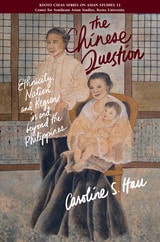
The Chinese Question
Ethnicity, Nation, and Region in and Beyond the PhilippinesCaroline S. Hau
National University of Singapore Press, 2014
With the revaluing of Chineseness has come a repositioning of “Chinese” racial and cultural identity. Philippine mestizos (people of mixed ancestry) form an important sub-group of the Filipino elite, but their Chineseness was occluded as they disappeared into the emergent Filipino nation. In the twentieth century, mestizos defined themselves and based claims to privilege on “white” ancestry, but mestizos are now actively reclaiming their “Chinese” heritage. At the same time, so-called “pure Chinese” are parlaying their connections into cultural, social, symbolic, or economic capital, and leaders of mainland Chinese state companies have entered into politico-business alliances with the Filipino national elite. As the meanings of “Chinese” and “Filipino” evolve, intractable contradictions are appearing in the concepts of citizenship and national belonging.
Through an examination of cinematic and literary works, The Chinese Question shows how race, class, ideology, nationality, territory, sovereignty, and mobility are shaping the discourses of national integration, regional identification, and global cosmopolitanism.
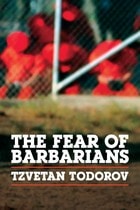
The Fear of Barbarians
Beyond the Clash of CivilizationsTzvetan Todorov
University of Chicago Press, 2010
The relationship between Western democracies and Islam, rarely entirely comfortable, has in recent years become increasingly tense. A growing immigrant population and worries about cultural and political assimilation—exacerbated by terrorist attacks in the United States, Europe, and around the world—have provoked reams of commentary from all parts of the political spectrum, a frustrating majority of it hyperbolic or even hysterical.
In The Fear of Barbarians, the celebrated intellectual Tzvetan Todorov offers a corrective: a reasoned and often highly personal analysis of the problem, rooted in Enlightenment values yet open to the claims of cultural difference. Drawing on history, anthropology, and politics, and bringing to bear examples ranging from the murder of Theo van Gogh to the French ban on headscarves, Todorov argues that the West must overcome its fear of Islam if it is to avoid betraying the values it claims to protect. True freedom, Todorov explains, requires us to strike a delicate balance between protecting and imposing cultural values, acknowledging the primacy of the law, and yet strenuously protecting minority views that do not interfere with its aims. Adding force to Todorov's arguments is his own experience as a native of communist Bulgaria: his admiration of French civic identity—and Western freedom—is vigorous but non-nativist, an inclusive vision whose very flexibility is its core strength.
The record of a penetrating mind grappling with a complicated, multifaceted problem, The Fear of Barbarians is a powerful, important book—a call, not to arms, but to thought.
The Ivory Tower, Harry Potter, and Beyond
More Essays on the Works of J. K. RowlingEdited with an Introduction by Lana A. Whited
University of Missouri Press, 2024
The Magic Key
The Educational Journey of Mexican Americans from K-12 to College and BeyondEdited by Ruth Enid Zambrana and Sylvia Hurtado
University of Texas Press, 2015
Mexican Americans comprise the largest subgroup of Latina/os, and their path to education can be a difficult one. Yet just as this group is often marginalized, so are their stories, and relatively few studies have chronicled the educational trajectory of Mexican American men and women. In this interdisciplinary collection, editors Zambrana and Hurtado have brought together research studies that reveal new ways to understand how and why members of this subgroup have succeeded and how the facilitators of success in higher education have changed or remained the same.
The Magic Key’s four sections explain the context of Mexican American higher education issues, provide conceptual understandings, explore contemporary college experiences, and offer implications for educational policy and future practices. Using historical and contemporary data as well as new conceptual apparatuses, the authors in this collection create a comparative, nuanced approach that brings Mexican Americans’ lived experiences into the dominant discourse of social science and education. This diverse set of studies presents both quantitative and qualitative data by gender to examine trends of generations of Mexican American college students, provides information on perceptions of welcoming university climates, and proffers insights on emergent issues in the field of higher education for this population. Professors and students across disciplines will find this volume indispensable for its insights on the Mexican American educational experience, both past and present.
The Mystery of Death and Beyond
Kenneth Baker, S.J.
St. Augustine's Press, 2016
Man is unlike all other animals, because he has a soul endowed with intelligence and free will. Because man’s soul is spiritual, it is immortal. Death is the separation of that soul from the body; the body decays and returns to the dust from which it was taken, but the soul continues to live and is in the hands of God. But what happens to the soul after death? There are two possibilities—heaven or hell. We know from divine revelation and from the infallible teaching of the Church that the soul after death goes immediately to heaven (perhaps first for a time to purgatory to be totally cleansed and sanctified), or immediately to hell, a state or place of eternal misery.
The next life is a life without time—it is a perpetual now, with no before and after. It has a beginning but not end. It is also unchangeable, that is, souls in heaven are there forever and they cannot lose it; souls in hell are there forever and they can never be freed from it.
This is a very serious and certain reality for each one of us. The most important thing we will ever do is to die, and to die in the state of God’s grace so that we are his friends and will be admitted to his presence, which is what is meant by heaven. Therefore we must prepare ourselves to die in the grace of God, which is our ticket to heaven. We do that by doing God’s will for us, which means to keep his commandments, especially to love God above all things and practice love of neighbor.
This short book will help people think about their death and how important it is for their permanent happiness. It will help them to arrange their life in such a way that they will live it as God wants them to live it and so ultimately obtain eternal life with God because: “no eye has seen, nor ear heard, nor the heart of man conceived, what God has prepared for those who love him” (1 Cor. 2:9).
The Narrow Bridge
Beyond the HolocaustIsaac Neuman, with Michael Palencia-Roth
University of Illinois Press, 2000
As a boy studying Torah, Isaac Neuman learned to seek the spiritual lessons hidden in everyday life. Likewise, in this narrative of occupation and holocaust, he uncovers a core of human decency and spiritual strength that inhumanity, starvation, and even death failed to extinguish.
Unlike many Holocaust memoirs that focus on physical suffering and endurance, The Narrow Bridge follows a spiritual journey. Neuman describes the world of Polish Jewry before and during the Holocaust, recreating the strong religious and secular personalities of his childhood and early youth in Zdunska Wola, Poland: the outcast butcher, Haskel Traskalawski; the savvy criminal-turned-entrepreneur Nochem Ellia; the trusted Dr. Lemberg, liaison to the German occupation government; and Neuman's beloved teacher, Reb Mendel. Through their stories, Neuman reveals the workings of a community tested to the limits of faith and human dignity.
With his brother Yossel, Neuman was transported to the Poznan area, first to the Yunikowo work camp in May 1941, then on to St. Martin's Cemetery camp, where they removed gold jewelry and fillings from exhumed corpses. A string of concentration camps followed, each more oppressive than the last: Fürstenfelde, Auschwitz, Fünfteichen, Gross Rosen, Mauthausen, Wels, and Ebensee. In the midst of these horrors, the brothers kept their feet on the "narrow bridge" of life by holding to their faith, their memories, and each other. In the end, only Isaac survived.
The Narrow Bridge celebrates symbolic victories of faith over brute force. The execution of Zdunska Wola's Jewish spiritual and intellectual leaders is trumped by an act of breathtaking courage and conviction. A secret Passover Seder is cobbled together from hoarded bits of wax, piecemeal prayers, and matzoh baked in delousing ovens. A dying fellow inmate gives Neuman his warm coat as they both lie freezing on the ground.
Such rituals of faith and acts of kindness, combined with boyhood memories and a sense of spiritual responsibility, sustained Neuman through the Holocaust and helped him to reconstruct his life after the war. His story is a powerful testimony to an unquenchable faith and a spirit tried by fire.
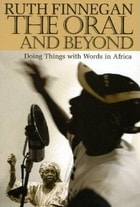
The Oral and Beyond
Doing Things with Words in AfricaRuth Finnegan
University of Chicago Press, 2007
The Oral and Beyond looks simultaneously backwards and forwards, reviewing and critiquing the achievements of scholarship on African oral literature, revisiting issues of perennial contention, and highlighting some of the most interesting new ideas and approaches in the field. Exploring such fundamental questions as how texts and textuality relate to performance, how ideology inflects language, and how traditional forms adapt to modern media and popular culture, Finnegan essentially crafts an intellectual history of her field. At the same time, she propels the ethnography of language forward, bringing the techniques and knowledge developed through her fieldwork in Africa to bear on issues that transcend African studies and reach into the larger world of anthropology and beyond.
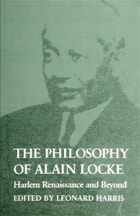
The Philosophy of Alain Locke
Harlem Renaissance and Beyondedited by Leonard Harris
Temple University Press, 1991
This collection of essays by American philosopher Alain Locke (1885-1954) makes readily available for the first time his important writings on cultural pluralism, value relativism, and critical relativism. As a black philosopher early in this century, Locke was a pioneer: having earned both undergraduate and doctoral degrees at Harvard, he was a Rhodes scholar at Oxford, studied at the University of Berlin, and chaired the Philosophy Department at Howard University for almost four decades. He was perhaps best known as a leading figure in the Harlem Renaissance.
Locke’s works in philosophy—many previously unpublished—conceptually frame the Harlem Renaissance and New Negro movement and provide an Afro-American critique of pragmatism and value absolutism, and also offer a view of identity, communicative competency, and contextualism. In addition, his major works on the nature of race, race relations, and the role of race-conscious literature are presented to demonstrate the application of his philosophy. Locke’s commentaries on the major philosophers of his day, including James, Royce, Santayana, Perry, and Ehrenfels help tell the story of his relationship to his former teachers and his theoretical affinities.
In his substantial Introduction and interpretive concluding chapter, Leonard Harris describes Locke’s life, evaluates his role as an American philosopher and theoretician of the Harlem Renaissance, situates him in the pragmatist tradition, and outlines his affinities with modern deconstructionist ideas. A chronology of the philosopher’s life and bibliography of his works are also provided. Although much has been written about Alain Locke, this is the first book to focus on his philosophical contributions.
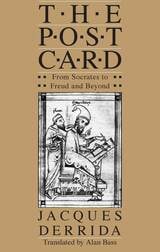
The Post Card
From Socrates to Freud and BeyondJacques Derrida
University of Chicago Press, 1987
You were reading a somewhat retro loveletter, the last in history. But you have not yet received it. Yes, its lack or excess of address prepares it to fall into all hands: a post card, an open letter in which the secret appears, but indecipherably.
What does a post card want to say to you? On what conditions is it possible? Its destination traverses you, you no longer know who you are. At the very instant when from its address it interpellates, you, uniquely you, instead of reaching you it divides you or sets you aside, occasionally overlooks you. And you love and you do not love, it makes of you what you wish, it takes you, it leaves you, it gives you.
On the other side of the card, look, a proposition is made to you, S and p, Socrates and plato. For once the former seems to write, and with his other hand he is even scratching. But what is Plato doing with his outstretched finger in his back? While you occupy yourself with turning it around in every direction, it is the picture that turns you around like a letter, in advance it deciphers you, it preoccupies space, it procures your words and gestures, all the bodies that you believe you invent in order to determine its outline. You find yourself, you, yourself, on its path.
The thick support of the card, a book heavy and light, is also the specter of this scene, the analysis between Socrates and Plato, on the program of several others. Like the soothsayer, a "fortune-telling book" watches over and speculates on that-which-must-happen, on what it indeed might mean to happen, to arrive, to have to happen or arrive, to let or to make happen or arrive, to destine, to address, to send, to legate, to inherit, etc., if it all still signifies, between here and there, the near and the far, da und fort, the one or the other.
You situate the subject of the book: between the posts and the analytic movement, the pleasure principle and the history of telecommunications, the post card and the purloined letter, in a word the transference from Socrates to Freud, and beyond. This satire of epistolary literature had to be farci, stuffed with addresses, postal codes, crypted missives, anonymous letters, all of it confided to so many modes, genres, and tones. In it I also abuse dates, signatures, titles or references, language itself.
J. D.
"With The Post Card, as with Glas, Derrida appears more as writer than as philosopher. Or we could say that here, in what is in part a mock epistolary novel (the long section is called "Envois," roughly, "dispatches" ), he stages his writing more overtly than in the scholarly works. . . . The Post Card also contains a series of self-reflective essays, largely focused on Freud, in which Derrida is beautifully lucid and direct."—Alexander Gelley, Library Journal
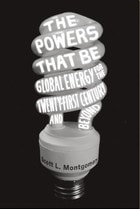
The Powers That Be
Global Energy for the Twenty-first Century and BeyondScott L. Montgomery
University of Chicago Press, 2010
Thirty years ago, our global energy landscape did not look remarkably different from what it does today. Three or four decades from now, it certainly will: dwindling oil reserves will clash with skyrocketing demand, as developing nations around the world lead their citizens into the modern energy economy, and all the while, the grave threat of catastrophic climate change looms ever larger. Energy worries are at an all-time high—just how will we power our future?
With The Powers That Be, Scott L. Montgomery cuts through the hype, alarmism, and confusion to give us a straightforward, informed account of where we are now, and a map of where we’re going. Starting with the inescapable fact of our current dependence on fossil fuels—which supply 80% of all our energy needs today—Montgomery clearly and carefully lays out the many alternative energy options available, ranging from the familiar, like water and solar, to such nascent but promising sources as hydrogen and geothermal power. What is crucial, Montgomery explains, is understanding that our future will depend not on some single, wondrous breakthrough; instead, we should focus on developing a more diverse, adaptable energy future, one that draws on a variety of sources—and is thus less vulnerable to disruption or failure.
An admirably evenhanded and always realistic guide, Montgomery enables readers to understand the implications of energy funding, research, and politics at a global scale. At the same time, he doesn’t neglect the ultimate connection between those decisions and the average citizen flipping a light switch or sliding behind the wheel of a car, making The Powers That Be indispensible for our ever-more energy conscious age.
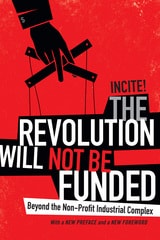
The Revolution Will Not Be Funded
Beyond the Non-Profit Industrial ComplexINCITE! Women of Color Against Violence
Duke University Press, 2017
Contributors. Christine E. Ahn, Robert L. Allen, Alisa Bierria, Nicole Burrowes, Communities Against Rape and Abuse (CARA), William Cordery, Morgan Cousins, Ruth Wilson Gilmore, Stephanie Guilloud, Adjoa Florência Jones de Almeida, Tiffany Lethabo King, Paul Kivel, Soniya Munshi, Ewuare Osayande, Amara H. Pérez, Project South: Institute for the Elimination of Poverty and Genocide, Dylan Rodríguez, Paula X. Rojas, Ana Clarissa Rojas Durazo, Sisters in Action for Power, Andrea Smith, Eric Tang, Madonna Thunder Hawk, Ije Ude, Craig Willse
The Role of 6G and Beyond on the Road to Net-Zero Carbon
Muhammad Ali Imran
The Institution of Engineering and Technology, 2023
The Strength of Our Commitments
National Human Rights Institutions in Europe and BeyondCorina Lacatus
University of Chicago Press, 2024
A deep dive into the mechanics of national human rights institutions and the forces that make or break their success.
In the years since World War II, the endeavor to promote human rights has gained momentum and become increasingly important within international relations. Yet these efforts often run into serious problems of enforcement.
Many countries formed national human rights institutions (NHRIs) with independent mandates to support and monitor government compliance with international human rights law. Be they commissions, ombudsmen, or tribunals, these institutions vary in their power and impact. For this book, Corina Lacatus surveyed NHRIs in Europe and around the world to determine their effectiveness and explain why some succeed while others fail.
The Strength of Our Commitments explores the relationship between the domestic and international support an institution receives and its ability to secure resources, credibility, and tangibly improve human rights conditions. Lacatus shows that NHRIs can be models of resilience, even in the face of opposition from political elites. Although their impact on human rights is difficult to measure, The Strength of Our Commitments shows how NHRIs’ strength comes from clearly defined formal powers, strong institutional leadership, and independence from political interference.
The Text and Beyond
Essays in Literary LinguisticsCynthia Bernstein
University of Alabama Press, 1997
A groundbreaking collection that bridges linguistics and literature, offering powerful tools to uncover how language shapes meaning, identity, and power in literary texts.
The Text and Beyond: Essays in Literary Linguistics, edited by Cynthia Bernstein, presents a groundbreaking collection of essays that demonstrate how linguistic tools can enrich literary analysis. The volume brings together scholars who explore the intersections of language, literature, and culture—examining how syntax, discourse, gender, power, and regional dialects shape meaning in texts. From Tennessee Williams to Harry Crews, from Dickens to immigrant literature, the essays offer models for integrating linguistic theory with literary interpretation. This book is essential for scholars of stylistics, discourse analysis, and anyone interested in the evolving relationship between language and literature.
The Vital Realities for 2020 and Beyond
Writings on Water Wars, Nuclear Devastation, Endless War, Economic Revolution, and Surveillance Versus FreedomRoger Armbrust
Parkhurst Brothers, Inc., 2019

The Welfare State and Beyond
Success and Problems in ScandinaviaGunnar Heckscher
University of Minnesota Press, 1984
The Welfare State and Beyond was first published in 1984. Minnesota Archive Editions uses digital technology to make long-unavailable books once again accessible, and are published unaltered from the original University of Minnesota Press editions.
The welfare state emerged in a number of industrialized countries after the First World War as a middle ground between capitalism and socialism. The aim of architects of the welfare state was to abolish the injustices and hardships that accompanied capitalism and to do so without wholesale social or economic revolution. Establishment of the welfare state created something close to euphoria among many observers; it was, it seemed, the answer to many, if not all, troubling social questions. But it eventually became obvious that this type of society was not immune to problems.
In The Welfare State and Beyond Gunnar Heckscher examines four Nordic countries—Denmark, Finland, Norway, and Sweden—not to either criticize or defend the welfare state but to shed some light on a number of questions: Has the welfare state achieved what it attempted? Are the results generally held to be satisfactory? What important problems remain unsolved and what types of solutions have been proposed? Although Heckscher has been associated with the Conservative party in Sweden, his objective, clear-eyed analysis cites both the accomplishments of the welfare state and the troubling problems that still await resolution.
Theorizing Art Cinemas
Foreign, Cult, Avant-Garde, and BeyondBy David Andrews
University of Texas Press, 2013
The term “art cinema” has been applied to many cinematic projects, including the film d’art movement, the postwar avant-gardes, various Asian new waves, the New Hollywood, and American indie films, but until now no one has actually defined what “art cinema” is. Turning the traditional, highbrow notion of art cinema on its head, Theorizing Art Cinemas takes a flexible, inclusive approach that views art cinema as a predictable way of valuing movies as “art” movies—an activity that has occurred across film history and across film subcultures—rather than as a traditional genre in the sense of a distinct set of forms or a closed historical period or movement.
David Andrews opens with a history of the art cinema “super-genre” from the early days of silent movies to the postwar European invasion that brought Italian Neorealism, the French New Wave, and the New German Cinema to the forefront and led to the development of auteur theory. He then discusses the mechanics of art cinema, from art houses, film festivals, and the academic discipline of film studies, to the audiences and distribution systems for art cinema as a whole. This wide-ranging approach allows Andrews to develop a theory that encompasses both the high and low ends of art cinema in all of its different aspects, including world cinema, avant-garde films, experimental films, and cult cinema. All of these art cinemas, according to Andrews, share an emphasis on quality, authorship, and anticommercialism, whether the film in question is film festival favorite or a midnight movie.

Time, Duration and Change in Contemporary Art
Beyond the ClockKate Bretkelly-Chalmers
Intellect Books, 2018
This book examines alternative frameworks of time, duration, and change in prominent philosophical, scientific, and technological traditions, including physics, psychology, phenomenology, neuroscience, media theory, and selected environmental sciences. It suggests that art makes a crucial contribution to these discourses not by “visualizing” time, but by entangling viewers in different sensory, material, and imaginary temporalities.
To the Lexicon and Beyond
Sociolinguistics in European Deaf CommunitiesMieke Van Herreweghe
Gallaudet University Press, 2004
Volume 10 of the series explores sociolinguistics in various European Deaf communities. Editors Van Herreweghe and Vermeerbergen present a wide array of research inspired by the Sociolinguistics Symposium 14 held at Ghent University, Belgium, in April 2002. Noted contributors from Finland, Belgium, Ireland, the Netherlands, Germany, Sweden, Spain and the United Kingdom offer insights gleaned from the languages of their countries.
Part One of this five-part volume investigates multilingualism and language contact among Finland-Swedish Deaf People. Part Two looks at regional variation and the evolution of signs in Flemish Sign Language, as well as gender-influenced variation in Irish Sign Language. Language policy and planning receives consideration in the third part, with a study of sign language lexical variation in the Netherlands and an analysis of the risks of codification in Flemish Sign Language. Part Four examines the implementation of bilingual programs for deaf students throughout Europe, and updates research on language use visually oriented in Swedish Deaf education classrooms.
The final part of To the Lexicon and Beyond: Sociolinguistics in European Deaf Communities presents data on language attitudes, including a census of sign language users in Spain that reveal a changing language community. The last chapter of this fascinating assembly assays British Deaf communities and language identity in relation to issues of transnationality in the 21st century.
Tragic Wisdom and Beyond
Gabriel Marcel
Northwestern University Press, 1980

Trust, Ethnicity, and Identity
Beyond the New Institutional Economics of Ethnic Trading Networks, Contract Law, and Gift-ExchangeJanet Tai Landa
University of Michigan Press, 1995
Trust, Ethnicity, and Identity deals with the economic role of laws and institutions in achieving social order in a decentralized economy. Specifically, this book considers the coordinating role of three major nonprice institutions--ethnic trading networks, contract law, and gift-exchange--in economizing on transaction costs and thus facilitating the process of exchange in decentralized economies in different historical contexts.
The major unifying theme of the book is this: identity matters when traders operate in an environment characterized by contract uncertainty, where the legal framework for the enforcement of contracts is not well developed. This in turn points out the importance of trust embedded in particularistic exchange relations such as kinship or ethnicity.
One unique facet of this book is that the author uses a property rights--public choice approach--part of the New Institutional Economics--to provide a unifying theoretical framework to explain such diverse exchange institutions as contract law, ethnic trading networks, and gift-exchange, In addition, it goes beyond the New Institutional Economics paradigm by incorporating some crucial concepts from sociology, anthropology, and bioeconomics, such as social structure, social norms, culture, reciprocity, and kin-related altruism. This broad interdisciplinary framework gives Landa's work a relevance beyond economics to law, political science, sociology, anthropology, and bioeconomics.
Trusted Communications with Physical Layer Security for 5G and Beyond
Trung Q. Duong
The Institution of Engineering and Technology, 2017